Natural fertilizer for houseplants can supply nutrients that support healthy leaves, roots, and flowering. For many indoor gardeners, worm castings and well-finished compost are practical starting points. Liquid organic fertilizers, such as fish emulsion, may be useful when plants need more nutrients during active growth. However, no fertilizer can compensate for poor light, soggy roots, or unsuitable potting soil.
Choosing the best natural fertilizer for houseplants depends on what you grow, how quickly it grows, and whether its potting mix already contains nutrients. This guide compares nine options, explains how to apply them safely, and helps you avoid common mistakes with homemade plant food.
Key Takeaways
- Worm castings and mature compost are useful, generally mild additions to indoor potting mixes.
- Fish emulsion can supply nutrients more readily, but its odor and concentration make careful application important.
- Liquid kelp is usually a supplement rather than a complete fertilizer.
- Eggshells, coffee grounds, and banana peels are not reliable substitutes for a balanced houseplant fertilizer.
- Fertilize primarily when a plant is actively growing, and adjust the amount to its species and growing conditions.
- Too much natural fertilizer for houseplants can still damage roots, encourage pests, or create unpleasant odors.
What Is the Best Natural Fertilizer for Houseplants?
For beginners, a small amount of quality worm castings is often a convenient natural fertilizer for houseplants. Finished compost can also improve a potting mix, provided it is clean, mature, and used sparingly. Neither material necessarily supplies every nutrient a plant needs in the right proportion.
For actively growing foliage plants that need more predictable nutrition, a commercially prepared organic fertilizer with a stated N-P-K analysis may be easier to manage. Fish emulsion is one option, although its smell makes it less convenient indoors.
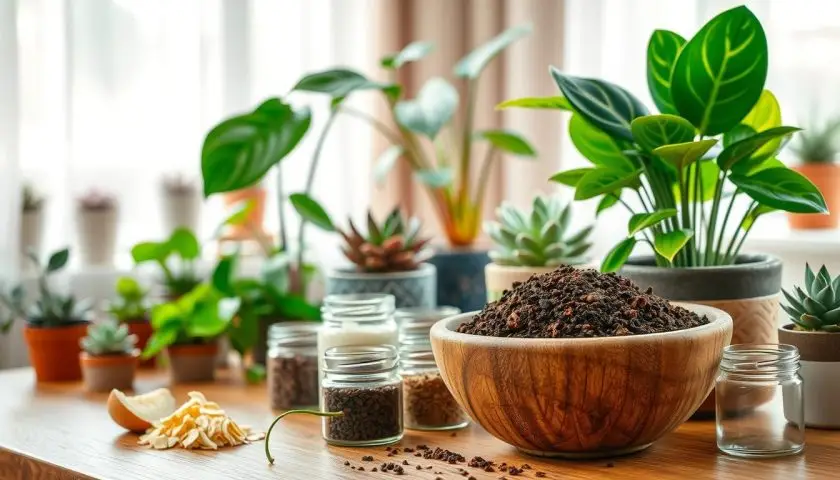
The important distinction is between fertilizers that supply measurable nutrients and soil amendments that mainly improve the growing medium. Both can be useful, but they serve different purposes.
Why natural does not automatically mean safe
Natural ingredients can still cause problems. Concentrated liquid fertilizer may injure roots, unfinished compost can encourage fungus gnats, and raw kitchen scraps may become moldy. Even worm castings can contribute excessive soluble salts when overused.
Before adding natural fertilizer for houseplants, examine the plant’s light exposure, moisture, drainage, and recent growth. A plant struggling because of overwatering will not recover simply because more nutrients are added.
Understanding the Nutrients Houseplants Need
Plants manufacture sugars through photosynthesis, but they also require mineral nutrients to develop new tissues. A suitable natural fertilizer for houseplants can replenish nutrients gradually depleted from a container’s potting mix.
Nitrogen, phosphorus, and potassium
Fertilizer packaging commonly displays three numbers called the N-P-K analysis. These refer to nitrogen, available phosphate, and soluble potash.
- Nitrogen (N): Supports leafy growth and chlorophyll production.
- Phosphorus (P): Plays a role in energy transfer, roots, and reproduction.
- Potassium (K): Helps regulate water balance and important plant processes.
Plants also require calcium, magnesium, sulfur, and smaller quantities of micronutrients such as iron, manganese, and zinc.
Why the N-P-K label matters
Two organic products can look similar but contain very different nutrient concentrations. A product with a clearly stated nutrient analysis gives you a better idea of what you are adding.
For example, a kelp extract with very little nitrogen should not automatically replace a complete fertilizer. Likewise, powdered eggshells are primarily a potential calcium amendment, not a source of balanced nutrition.
How light and watering affect fertilizer needs
Houseplants in bright, suitable light often grow more actively than the same species kept in dim conditions. Faster growth can increase nutrient demand. Plants receiving insufficient light may use added nutrients slowly, increasing the risk of buildup in their pots.
Before feeding, review your indoor plant lighting conditions and houseplant watering routine.
9 Natural Fertilizer Options for Houseplants
The following nine materials appear in many discussions of natural fertilizer for houseplants. Some are genuine fertilizer products, while others work better as amendments or ingredients for compost. Knowing that difference helps you choose an appropriate option.
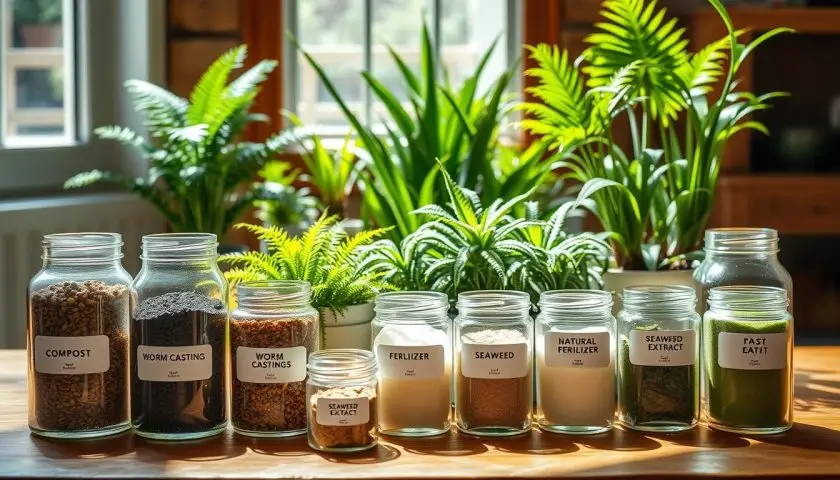
1. Worm Castings: Gentle Nutrition for Indoor Pots
Worm castings are the processed material left after earthworms digest organic matter. They contain plant nutrients and decomposed organic material that can improve the properties of a potting mix.
Worm castings are a popular natural fertilizer for houseplants because they are relatively easy to handle and often have less odor than other animal-derived products.
How to use worm castings
Apply a light top-dressing to the potting mix or incorporate a modest amount when repotting. Use the product’s instructions, and avoid packing a thick, water-retaining layer around the stem.
Choose clean, mature castings intended for gardening. Because nutrient and salt concentrations vary, do not assume that unlimited amounts are harmless.
Best uses and limitations
Worm castings are particularly convenient for foliage plants such as pothos, philodendrons, and many indoor palms. They may supplement an existing feeding program but are not guaranteed to provide complete nutrition for every plant.
2. Finished Compost: A Useful Potting-Mix Amendment
Finished compost consists of organic materials that have decomposed into a stable, soil-like product. It can contribute small quantities of nutrients while improving moisture retention and the physical characteristics of some potting mixes.
When choosing natural fertilizer for houseplants, compost is most useful as an amendment rather than a concentrated fertilizer.
How to apply finished compost
Use only fully mature, screened compost with an earthy smell. Add a modest quantity to a suitable container mix rather than replacing most of the mix with compost.
Keep drainage in mind. A mix that holds too much moisture may be unsuitable for cacti, succulents, or other plants sensitive to constantly wet roots.
Our guide to choosing plant potting mixes explains why different plants need different soil structures.
Why unfinished compost is risky indoors
Unfinished compost may continue decomposing, create unpleasant odors, or attract insects. Do not place raw food scraps directly into a houseplant pot and expect them to behave like finished compost.
3. Fish Emulsion: Liquid Organic Fertilizer
Fish emulsion is a liquid fertilizer produced from processed fish materials. Depending on the formulation, it can provide nitrogen and other nutrients to actively growing plants.
For gardeners seeking a liquid natural fertilizer for houseplants, fish emulsion is an option worth considering when its smell and storage requirements are acceptable.
How to apply fish emulsion
Choose a product with an appropriate label for container plants. Dilute it according to the manufacturer’s directions, using a lower labeled rate when appropriate for indoor plants.
Apply it to the potting mix when the plant needs watering and the root zone is not excessively dry. Avoid using concentrated fertilizer directly on roots.
Potential drawbacks
Fish emulsion can produce a noticeable odor, particularly in enclosed rooms. Spills may attract pets, and overapplication can damage roots.
Store the container securely away from children and animals. Do not assume that an organic source prevents fertilizer burn.
4. Liquid Seaweed or Kelp Extract: A Supplemental Option
Liquid kelp products are derived from seaweed. Their nutrient analyses vary considerably, and some contain relatively small amounts of the primary nutrients that houseplants require.
Kelp extract may be included in a natural fertilizer for houseplants routine, but many formulations should be treated as supplements rather than complete fertilizers.
How to use liquid kelp
Check the guaranteed analysis before application. If the product supplies little nitrogen, phosphorus, or potassium, do not rely on it as the plant’s only nutrient source.
Follow the label’s dilution and frequency instructions. Avoid adding multiple supplements at the same time without understanding their combined nutrient contribution.
Who might benefit?
Gardeners who already use an appropriate complete fertilizer may choose kelp as an additional product. For beginners, however, one clearly labeled fertilizer is often simpler than several overlapping treatments.
5. Used Freshwater Aquarium Water: An Occasional Supplement
Water removed during freshwater aquarium maintenance may contain dissolved nutrients. Its composition depends on the aquarium’s fish population, feeding practices, filtration, and water treatments.
Used aquarium water is sometimes described as a homemade natural fertilizer for houseplants, but it should be viewed as an unpredictable supplement rather than a measured fertilizer.
When aquarium water may be suitable
Consider only water from a healthy freshwater aquarium that has not received medications, salt treatments, or other additives unsuitable for plants.
Use water at an appropriate temperature, and avoid material with unusual odors or signs of contamination.
When to avoid aquarium water
Do not use saltwater aquarium water. Avoid water from medicated tanks or systems where the chemical composition is uncertain.
Because nutrient levels are unknown, aquarium water cannot reliably replace a fertilizer with a stated nutrient analysis.
6. Alfalfa Meal: A Slow-Release Organic Material
Alfalfa meal is made from dried, ground alfalfa plants. It contains organic nutrients that become available as the material decomposes.
Although sometimes used as natural fertilizer for houseplants, alfalfa meal is generally more practical in outdoor soil than in small indoor containers.
How to use alfalfa meal cautiously
If using a commercial product labeled for containers, follow its directions and begin conservatively. Do not add large quantities of raw meal to a small pot.
Its decomposition depends on moisture, temperature, and microbial activity, so nutrient release is not immediate or completely predictable.
Indoor limitations
Excess alfalfa meal can encourage surface mold, unpleasant odors, or insects when potting soil remains damp. For many indoor gardeners, a prepared organic fertilizer is more convenient.
7. Powdered Eggshells: A Slow Calcium Amendment
Eggshells consist largely of calcium carbonate. They are often promoted as natural fertilizer for houseplants, but they contain little of the nitrogen, phosphorus, and potassium needed for balanced growth.
How to prepare eggshells
Remove egg residue, wash the shells, dry them thoroughly, and grind them into fine particles if you intend to use them as an amendment.
Even finely ground shells release calcium gradually, depending partly on the growing medium’s chemistry.
Why eggshells are not a complete fertilizer
Adding calcium when a plant does not need it may offer no benefit and could alter the growing medium over time. A suspected calcium deficiency should not be diagnosed from leaf appearance alone.
Eggshells are better understood as a possible soil amendment than a primary natural fertilizer for houseplants.
8. Used Coffee Grounds: Better in Finished Compost
Used coffee grounds contain organic matter and some nutrients, but placing a thick layer directly onto indoor potting soil can create problems.
The fine particles may compact, interfere with surface drying, or support mold growth. Coffee grounds also do not provide a predictable nutrient balance.
How to use coffee grounds more safely
Compost used coffee grounds with other appropriate materials until the mixture is mature. Then use a modest amount of the finished compost in a suitable potting mix.
Do coffee grounds acidify houseplant soil?
Used coffee grounds do not consistently acidify potting soil in a predictable way. They should not be used as a substitute for measuring pH or choosing a growing medium appropriate to the plant.
For indoor containers, coffee grounds are usually more useful as a compost ingredient than as direct natural fertilizer for houseplants.
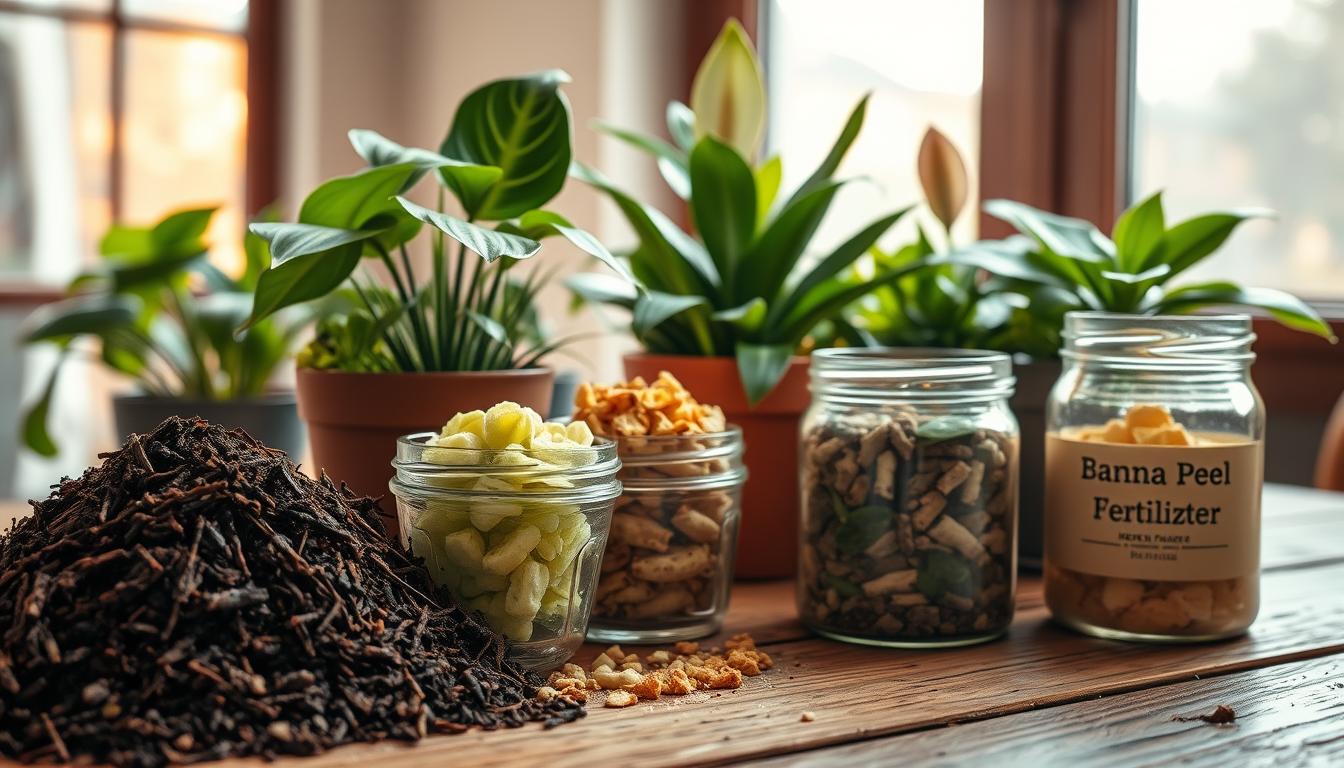
9. Banana Peels: Compost Them Instead of Soaking Them
Banana peels contain nutrients, including potassium, but homemade banana-peel water has an uncertain nutrient concentration. Soaking a peel does not produce a reliably balanced fertilizer.
Why banana-peel water is unreliable
The amount of nutrients transferred into water depends on the material, preparation, and soaking conditions. The resulting liquid does not have a guaranteed N-P-K analysis.
A better way to use banana scraps
Add banana peels to a managed compost system and allow them to decompose fully. Finished compost can then be used appropriately as a potting-mix amendment.
Do not bury fresh banana peels in indoor pots. They may encourage insects, odors, and unwanted microbial activity.
Banana scraps can contribute to compost production, but they are not a dependable standalone natural fertilizer for houseplants.
Natural Fertilizer for Houseplants: Comparison Table
This table summarizes the nine options by their main purpose, ease of indoor use, and limitations.
| Option | Main Use | Indoor Suitability | Important Limitation |
|---|---|---|---|
| Worm castings | Mild nutrients and organic matter | Good | Variable nutrient and salt content |
| Finished compost | Potting-mix amendment | Good in small amounts | Not a complete fertilizer |
| Fish emulsion | Liquid nutrient supply | Moderate | Odor and overfeeding risk |
| Liquid kelp | Supplement | Good when labeled for containers | May provide little N-P-K |
| Freshwater aquarium water | Occasional supplemental watering | Conditional | Unknown nutrient and chemical content |
| Alfalfa meal | Slow nutrient release | Limited | Mold and decomposition concerns |
| Powdered eggshells | Potential calcium amendment | Limited | Slow release; no balanced nutrients |
| Used coffee grounds | Compost ingredient | Best after composting | Compaction and mold risk |
| Banana peels | Compost ingredient | Best after composting | Unreliable as peel water |
How to Choose Natural Fertilizer for Houseplants
Choosing natural fertilizer for houseplants is easier when you start with the plant’s needs instead of a trending homemade recipe.
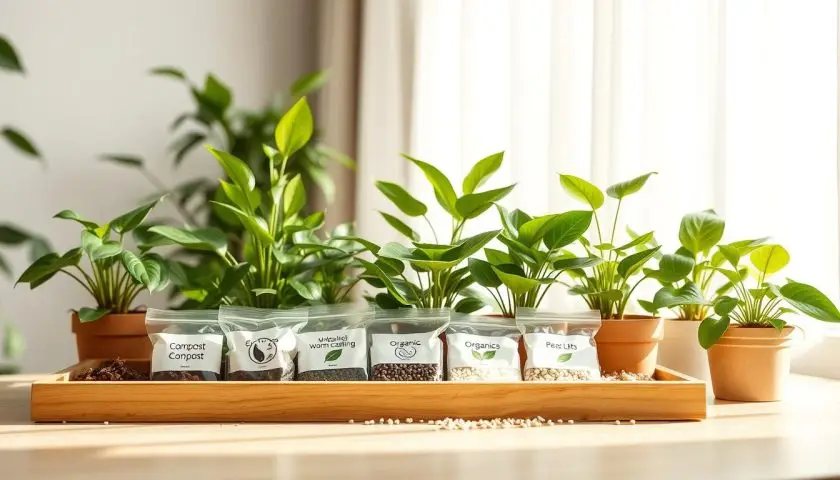
Match the fertilizer to the plant type
Actively growing tropical foliage plants may benefit from periodic balanced nutrition. Succulents and cacti often require less fertilizer, particularly when growth is slow.
Flowering plants may have different nutrient requirements, but adding extra phosphorus without evidence of a need is not automatically beneficial.
Check the potting mix first
Many commercial potting mixes already contain fertilizer. Feeding immediately after repotting may duplicate nutrients already present in the mix.
Check the packaging for starter fertilizer or controlled-release granules. Their presence should influence your feeding plan.
If you are repotting several plants, our Soil Calculator can help estimate the amount of potting mix needed for suitable rectangular containers.
Choose products with clear instructions
A commercial natural fertilizer for houseplants with a stated nutrient analysis and application rate is often easier to use than a homemade mixture with unknown strength.
Look for information about dilution, recommended plants, frequency, storage, and safety precautions.
Consider odor and pest risks
Fish-based products can smell strongly. Unfinished compost and raw organic meals can attract insects or support surface mold.
For indoor living spaces, choose stable products that are easy to store and apply without creating excessive moisture or mess.
How to Apply Natural Fertilizer for Houseplants Safely
Even a suitable natural fertilizer for houseplants can cause problems if applied too frequently or to an unhealthy plant. Follow these seven steps before and after feeding.
Step 1: Confirm the plant is actively growing
Look for new leaves, roots, or shoots. A plant growing very slowly because of low light may need little additional fertilizer.
Do not use fertilizer as the first response to unexplained yellowing, wilting, or leaf loss.
Step 2: Inspect moisture and drainage
Check whether the pot has drainage holes and whether the potting mix is excessively wet, compacted, or unusually dry.
If roots are damaged by persistent wetness, address the underlying problem first. Our root rot identification and treatment guide explains common warning signs.
Step 3: Read the fertilizer label
Review the nutrient analysis and application instructions. Products with different concentrations should not be used at identical rates.
When the label offers an appropriate reduced rate for indoor plants, starting conservatively can help prevent overfeeding.
Step 4: Apply liquid fertilizer to appropriately moist soil
Follow the product’s watering instructions. Avoid pouring concentrated fertilizer onto severely dried-out potting mix.
Do not add unnecessary water to a pot that is already saturated simply to follow a feeding schedule.
Step 5: Apply dry amendments sparingly
Use a light application of worm castings or finished compost where appropriate. Keep organic materials away from the crown or stem base if they would trap moisture there.
Do not bury large amounts of decomposing material in small indoor containers.
Step 6: Allow excess water to drain
After applying liquid fertilizer, let excess water drain through a suitable container. Empty standing water from saucers so roots do not remain submerged.
Step 7: Monitor the plant before feeding again
Record the fertilizer used, its concentration, and the application date. Observe new growth and watch for leaf-tip browning, wilting, or unusual deposits on the potting mix.
Adjust your natural fertilizer for houseplants routine based on the plant’s response rather than automatically repeating the same dose.
When Should You Fertilize Houseplants?
The best time to use natural fertilizer for houseplants is generally during active growth. For many plants in temperate homes, this occurs mainly during spring and summer, although indoor temperature and artificial lighting can change the pattern.
Spring: Check growth before restarting feeding
As daylight increases, many houseplants begin producing new growth. This is a sensible time to review whether their existing potting mix still supplies enough nutrients.
Begin conservatively, especially if the plant has been growing slowly.
Summer: Adjust feeding to growth and light
Plants growing vigorously in appropriate conditions may benefit from periodic feeding. The correct interval depends on the fertilizer formulation, plant species, and growing environment.
Follow the product’s instructions rather than assuming every houseplant needs fertilizer weekly.
Autumn: Reduce feeding when growth slows
Shorter days can reduce growth. If the plant is producing fewer leaves and using less water, its nutrient requirements may also decline.
Winter: Often little or no fertilizer is needed
Many indoor plants rest or grow slowly during winter. Fertilizing a dormant plant can contribute to unnecessary nutrient accumulation.
Plants under suitable grow lights that continue growing actively may have different requirements, so observe the individual plant.
After repotting: Check the new mix
Fresh potting mix may already contain nutrients. There is no universal waiting period that applies to every plant and product.
Read the mix label and consider the plant’s condition before adding another natural fertilizer for houseplants.
Signs of Too Much Fertilizer in Houseplants
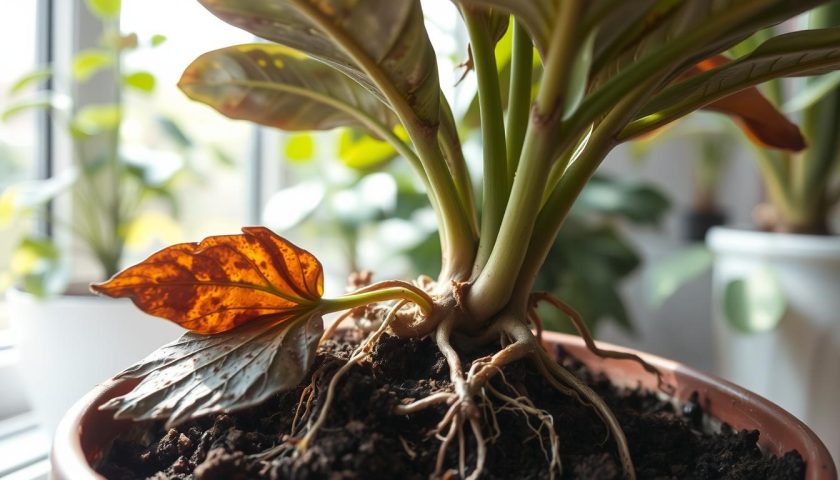
Excess fertilizer can interfere with water uptake and injure sensitive roots. The symptoms may resemble other plant problems, so they should be assessed together rather than treated as proof of one diagnosis.
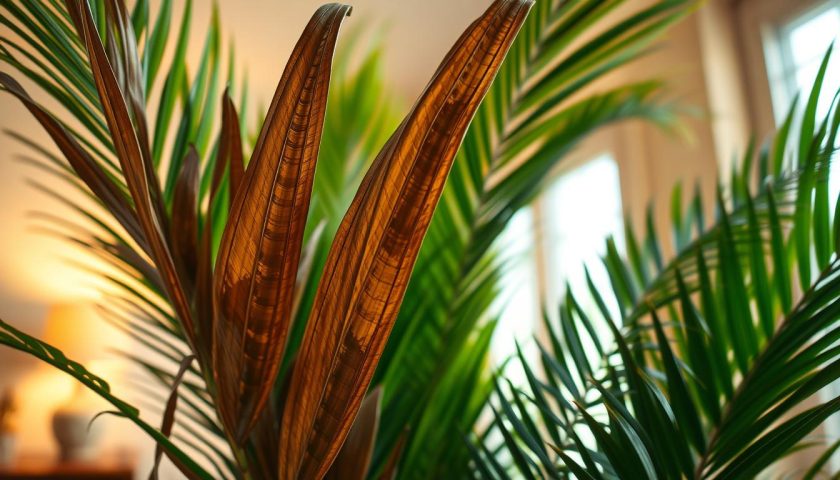
Brown or crispy leaf tips
Brown tips may develop when soluble salts accumulate, but low humidity, irregular watering, and other environmental stresses can produce similar symptoms.
White deposits on the soil or pot
A pale crust may indicate mineral deposits from fertilizer or irrigation water. The appearance alone does not reveal the exact source.
Wilting despite moist soil
Root damage can reduce water uptake even when the potting mix is wet. Overfertilization is one possibility, but overwatering and poor drainage should also be considered.
Yellowing leaves or stalled growth
Excess nutrients, inadequate light, pests, and watering problems can all contribute to yellow foliage.
Our guide to yellow leaves on plants explains why multiple causes should be investigated before changing fertilizer.
What to Do If You Overfertilize a Houseplant
If you suspect that natural fertilizer for houseplants has been overapplied, stop feeding while you investigate.
- Check the fertilizer label and compare the amount used with the recommended application.
- Inspect drainage and soil moisture before adding more water.
- If excessive soluble salts are likely and the pot drains freely, flushing the mix with clean water may help remove them.
- Allow the container to drain completely and empty its saucer.
- If drainage is poor or the potting mix has deteriorated, consider repotting into an appropriate fresh mix.
- Resume feeding only when the plant is stable and growing.
Flushing is not appropriate for every situation. A plant already suffering from waterlogged soil may need drainage correction rather than additional soaking.
Common Mistakes When Using Natural Fertilizer for Houseplants
Most problems with natural fertilizer for houseplants result from using too much, choosing an unsuitable material, or treating fertilizer as a solution to unrelated care issues.
Assuming organic fertilizer cannot burn roots
Organic products can still supply excessive nutrients or soluble salts. Always follow appropriate application rates.
Adding raw kitchen scraps directly to pots
Fresh banana peels, coffee grounds, and other food scraps can decompose unpredictably in small containers. Compost them properly instead.
Using kelp or eggshells as complete fertilizer
These materials may supply selected nutrients, but their composition does not necessarily meet all plant requirements.
Feeding plants with damaged roots
A plant with root rot cannot make effective use of added nutrients until its growing conditions improve.
Following a rigid calendar
Feeding every seven or fourteen days regardless of plant growth can lead to overapplication. Use the product label and the plant’s actual needs.
Mixing several products without checking their analyses
Combining fish emulsion, organic granules, and other supplements can result in more nutrients than intended.
Ignoring light and potting-mix conditions
A healthy fertilizer routine begins with suitable light, appropriate moisture, and a well-draining growing medium. Browse more practical advice in our Plant Care guides.
Natural Fertilizer for Houseplants: Troubleshooting Table
| Observation | Possible Explanation | What to Check First |
|---|---|---|
| Brown leaf tips | Salt buildup, watering stress, or dry air | Fertilizer history, moisture, and drainage |
| Yellowing leaves | Watering problems, pests, light, or nutrients | Roots, leaf undersides, and light conditions |
| White crust on potting mix | Mineral accumulation | Water quality and fertilizer frequency |
| Fungus gnats after feeding | Damp organic material | Surface moisture and unfinished amendments |
| Strong unpleasant odor | Fish-based fertilizer or decomposing material | Product condition and soil aeration |
| Little new growth | Low light, dormancy, root restriction, or nutrients | Growing conditions before feeding |
| Wilting in wet soil | Root stress or poor aeration | Drainage and root health |
Expert Guidance on Houseplant Fertilization
The Iowa State University Extension houseplant care guide explains that most houseplants require relatively little fertilizer and that feeding should be adjusted to active growth, growing conditions, and the product being used.
That principle applies whether you choose a commercial organic product, worm castings, or another natural fertilizer for houseplants: supplying more nutrients than a plant can use does not guarantee better growth.
Frequently Asked Questions
What is the best natural fertilizer for houseplants for beginners?
Worm castings are a practical starting option for many beginners because they are convenient to apply in modest amounts. A clearly labeled commercial organic houseplant fertilizer may be better when predictable, complete nutrition is required.
Can I use natural fertilizer for houseplants every week?
Not automatically. Frequency depends on the product concentration, plant species, light exposure, and growth rate. Some diluted fertilizers may be used more frequently under label directions, while slow-release amendments need less frequent application.
Are coffee grounds good for indoor plants?
Used coffee grounds are better added to a compost system than spread directly over indoor potting soil. Thick layers may compact or encourage mold, and their nutrient contribution is unpredictable.
Does banana-peel water work as houseplant fertilizer?
Banana-peel water may contain some dissolved substances, but its nutrient concentration is inconsistent. It is not a reliable substitute for a fertilizer with a known nutrient analysis.
Can eggshells replace calcium fertilizer?
Eggshells contain calcium carbonate, but they break down slowly and do not provide balanced nutrition. Their usefulness depends on whether additional calcium is needed and on the chemistry of the growing medium.
Is freshwater aquarium water safe for houseplants?
Water from an untreated, healthy freshwater aquarium may occasionally be suitable. Avoid saltwater, medicated water, and water containing uncertain additives. Its nutrient content is not standardized.
Should I fertilize houseplants immediately after repotting?
Check whether the fresh potting mix already contains fertilizer. Many mixes supply nutrients for an initial period, making immediate additional feeding unnecessary.
Can natural fertilizer for houseplants cause root burn?
Yes. Organic fertilizers can contribute excessive soluble salts or nutrient concentrations when misused. Applying the correct amount and maintaining good drainage reduces the risk.
Do flowering houseplants need a different fertilizer?
Some flowering plants have different nutrient demands, but extra phosphorus is not always necessary. Choose a formulation suitable for the species and avoid adding nutrients without a clear need.
When should I stop fertilizing indoor plants?
Reduce or stop feeding when growth slows significantly, during dormancy, or while a plant is experiencing serious root or environmental stress. Resume when conditions improve and active growth returns.
Conclusion
The best natural fertilizer for houseplants is one that matches the plant’s nutrient requirements and can be applied safely in its container. Worm castings and mature compost are useful mild amendments, while prepared organic fertilizers can offer more predictable nutrient delivery.
Fish emulsion and kelp products have particular uses, but eggshells, coffee grounds, and banana peels should not be mistaken for complete fertilizers. Composting kitchen scraps is generally more useful than adding them directly to indoor pots.
Above all, remember that natural fertilizer for houseplants works best alongside appropriate light, watering, drainage, and potting soil. Start conservatively, monitor new growth, and adjust your routine to the plant rather than the calendar.