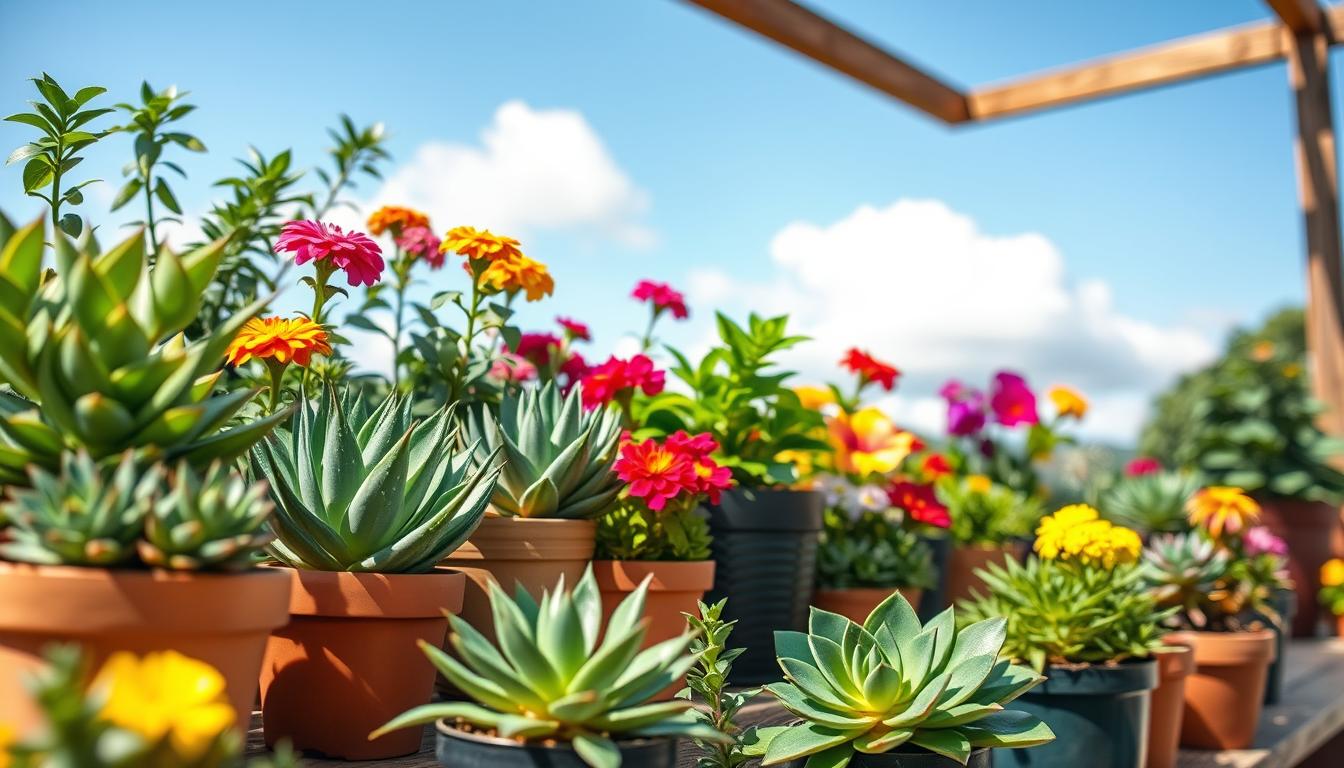
Low-maintenance outdoor potted plants full sun make it easier to create a colorful patio, balcony, deck, or entryway without turning container gardening into a daily chore. The best choices tolerate strong sunlight and warm conditions while fitting the drainage, watering, space, and climate conditions of your growing area.
Portulaca, lantana, lavender, rosemary, sedum, agave, yucca, thyme, and several other sun-loving plants can all perform well in containers when their basic needs are met. Even tough plants still need occasional watering, suitable potting mix, drainage holes, and extra attention during extreme weather.
Key Takeaways
- Choose plants that genuinely suit full-sun and hot container conditions.
- Use containers with drainage holes so excess water can escape.
- Match plants with similar moisture requirements when combining them in one container.
- Remember that small pots, wind, reflected heat, and some container materials can make potting mix dry faster.
- Drought-tolerant plants still need water, particularly while becoming established.
- Check mature plant size before choosing a pot or permanent location.
- Consider winter hardiness because roots in containers may be more exposed to cold than roots in the ground.
What Makes a Good Full-Sun Container Plant?
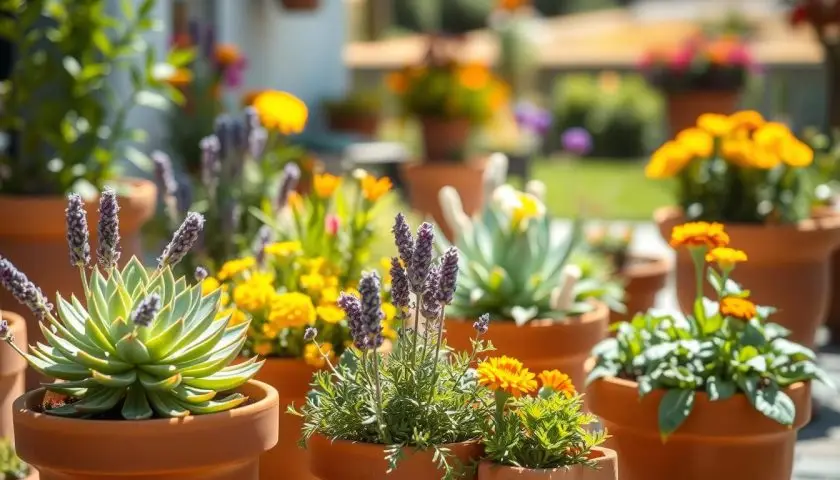
A good full-sun container plant should be able to cope with the conditions created by both strong light and life inside a pot. Containers behave differently from garden beds because their limited volume can heat up and dry out quickly.
For the lowest-maintenance setup, start by matching the plant to your actual growing conditions rather than choosing it only for appearance.
Full Sun Means Strong Direct Light
Plants sold full sun are intended for locations receiving substantial direct sunlight. However, the intensity of that exposure varies with climate, season, window or wall orientation, and reflected heat.
A sunny open garden and a dark paved patio beside a heat-reflecting wall can create very different growing conditions even if both receive plenty of direct sunlight.
Drainage Is Essential
Containers should allow excess water to escape. This is particularly important for drought-tolerant choices such as lavender, rosemary, sedum, aloe, and agave.
Use a suitable container potting mix rather than dense garden soil, and avoid leaving pots standing in drainage water.
Low Maintenance Does Not Mean No Maintenance
Even the toughest full sun potted plants need monitoring. Newly planted specimens need time to establish, while extreme heat, high winds, prolonged rain, or unusually cold weather can change their care requirements.
For more general outdoor-growing advice, explore our outdoor plant guides.
15 Low-Maintenance Outdoor Potted Plants Full Sun
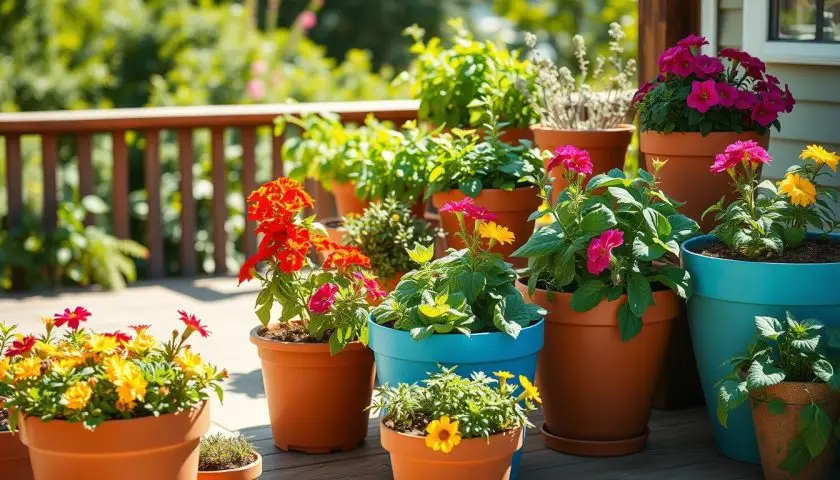
The following selection includes flowering plants, herbs, succulents, structural foliage plants, ornamental grasses, and an edible fruiting option. Their exact performance depends on your climate and growing conditions, so use the individual care notes to choose the best match.
1. Portulaca
Portulaca, commonly called moss rose, is one of the strongest choices for a hot, sunny container. Its succulent foliage helps it cope with dry conditions, while its colorful flowers add bright seasonal interest.
Why It Works in Sunny Pots
Portulaca thrives in heat and strong sunlight. Its water-storing foliage makes it particularly useful in locations where less drought-tolerant flowers struggle.
Soil and Water
Use a fast-draining growing medium and avoid keeping the roots consistently wet. Water according to the condition of the potting mix rather than automatically watering on a fixed schedule.
Maintenance
Its maintenance requirements are relatively modest, making it a practical flowering choice for busy gardeners.
2. Lantana
Lantana produces clusters of colorful flowers and handles heat well. Once established, it can also tolerate periods of drier conditions.
Why It Works in Containers
Its combination of heat tolerance, flowers, and drought tolerance makes lantana useful for sunny patios and balconies.
Give It Enough Space
Lantana can develop substantial growth, so choose a container that accommodates the mature size of your particular plant.
Important Considerations
The uploaded draft notes that lantana can be invasive in some regions and may be harmful if eaten. Check local guidance before planting and consider accessibility if children or pets use the area.
3. Geranium
Geraniums are classic container plants that provide bold flowers in sunny outdoor spaces. Both upright and trailing forms can be used depending on your planter.
Zonal Geraniums
Zonal types have a more upright, bushy habit and work well as focal plants in containers.
Ivy Geraniums
Ivy geraniums have a trailing habit that makes them useful for hanging baskets, elevated pots, and window boxes.
Care
Provide well-drained potting mix and water according to moisture conditions in the container. Removing spent blooms can help keep the display tidy and support continued flowering.
4. Zinnia
Zinnias are colorful annuals that grow well in strong sunlight and can be started from seed or purchased as nursery plants.
Choose Container-Friendly Varieties
Compact varieties are particularly useful for pots because their mature size is easier to accommodate.
Provide Airflow
Give plants enough room for air to move around the foliage. When watering, direct water toward the growing medium rather than repeatedly soaking the leaves.
Maintenance
Removing faded flowers can keep plants looking neat and may support continued bloom production.
5. Lavender
Lavender combines fragrance, flowers, attractive foliage, and drought tolerance, making it a strong candidate for low-maintenance container plants in sunny locations.
Drainage Matters
Lavender performs best in a sharply draining growing medium. Avoid pots that remain wet for extended periods.
Airflow Is Important
Good airflow becomes particularly useful in humid conditions. Avoid crowding lavender tightly between other pots.
Water Carefully
Allow the growing medium to dry appropriately between waterings rather than repeatedly giving the plant small amounts of water.
6. Rosemary
Rosemary is both ornamental and edible. Its fragrant foliage and woody growth make it an attractive option for sunny patios and kitchen container gardens.
Light and Soil
Provide strong sunlight and a well-draining potting medium.
Watering
Rosemary does not perform well when its root zone remains continuously soggy. Let moisture conditions in the pot guide your watering.
Harvesting
Harvest fresh growth without removing excessive amounts of the plant at once. In climates where rosemary is not winter hardy, container growing also makes seasonal protection easier.
7. Sedum
Sedum offers succulent foliage with very modest water requirements once established. Different varieties provide upright or trailing growth habits.
Why It Is Low Maintenance
The succulent foliage stores moisture, helping the plant tolerate dry periods.
Container Choice
Use a container and potting medium that drain efficiently. Depending on the type of sedum, you can use it as a compact specimen, trailing edge plant, or upright focal point.
Avoid Overwatering
Excess moisture is a bigger concern than allowing an established sedum to experience some dryness.
8. Aloe Vera
Aloe vera provides sculptural succulent foliage and requires relatively little routine watering when grown under suitable conditions.
Light
Provide a bright, sunny location appropriate for the plant’s current level of acclimation.
Soil
Use a gritty, freely draining medium and a pot with drainage holes.
Cold Protection
Aloe is sensitive to freezing conditions, so gardeners in cold climates may need to move container-grown plants to a protected location.
The draft also flags aloe as a plant that should be positioned carefully where pets or young children have access.
9. Agave
Agave provides dramatic architectural foliage while requiring relatively little water under suitable sunny, dry conditions.
Excellent Drainage Is Essential
Use a fast-draining medium and avoid keeping the root zone wet.
Use a Stable Container
As an agave becomes larger, a stable pot can help prevent the plant from tipping over.
Handle Carefully
Many agaves have sharp leaf tips. Position them away from busy walkways and use appropriate protection when handling or repotting.
Cold tolerance varies among agave species, so check the requirements of the particular plant you are growing.
10. Yucca
Yucca is an excellent structural plant for a sunny container. Its upright form adds height and works well as a patio focal point.
Sun and Water
Yucca tolerates sunny, relatively dry conditions once established. Provide a fast-draining growing medium.
Use a Stable Planter
Large specimens can become top-heavy, especially on exposed balconies or patios. A stable container helps reduce the risk of tipping in strong winds.
Choose the Location Carefully
Some yuccas have stiff, pointed foliage, so avoid positioning them where people or pets frequently brush past.
11. Ornamental Grasses
Ornamental grasses introduce movement, texture, and height into container arrangements.
Choose a Compact Variety
Container-friendly grasses are easier to manage than very large landscape varieties. The source suggests examples such as blue fescue and fountain grass.
Drainage and Maintenance
Provide suitable drainage and remove dead foliage when appropriate for the particular grass.
Check Local Suitability
Some ornamental grasses can spread aggressively or be unsuitable in particular regions. Check local recommendations before choosing a species.
12. Thyme
Thyme is a compact edible herb that suits small sunny containers and combines well with other plants that prefer relatively dry conditions.
Sun and Soil
Provide plenty of sunlight and a freely draining growing medium.
Harvesting
Sprigs can be harvested for cooking throughout active growth without removing too much of the plant at once.
Choose Compatible Companions
If you combine thyme with other plants in the same container, pair it with species that have similar moisture requirements rather than much thirstier plants.
13. Black-Eyed Susan
Black-Eyed Susan brings bright, daisy-like flowers to sunny containers and can create an attractive seasonal focal point.
Container Size
Choose a sufficiently large, stable pot to accommodate the plant’s roots and mature top growth.
Wind Exposure
Taller plants in exposed locations may benefit from additional stability or support.
Winter Considerations
If you are growing a perennial type, remember that roots in pots can experience colder winter conditions than roots insulated by the surrounding ground.
14. Calibrachoa
Calibrachoa provides masses of small flowers and a trailing growth habit that makes it especially attractive in hanging baskets and window boxes.
Light
Give the plant strong light appropriate to the variety and growing conditions.
Moisture and Drainage
Unlike the more drought-tolerant succulents in this list, calibrachoa benefits from more consistent moisture while still requiring excellent drainage.
Maintenance
Because it can flower heavily, its feeding and watering needs may be greater than those of agave, sedum, or lavender. It is therefore best kept separate from very drought-tolerant plants unless their care requirements are compatible.
15. Strawberry Plants
Strawberries provide an edible option for a sunny container garden. They can be grown in conventional pots, hanging baskets, or dedicated strawberry planters.
Light
Provide plenty of direct sunlight to support healthy growth and fruit production.
Watering
Strawberries generally need more consistent moisture than drought-tolerant plants such as lavender, thyme, or agave.
Managing Growth
Depending on the type, plants may produce runners that can be managed according to whether your goal is fruit production or propagation.
Quick Comparison of the 15 Full-Sun Potted Plants
| Plant | Main Feature | Relative Water Need | Good Container Use |
|---|---|---|---|
| Portulaca | Heat-tolerant flowers | Low | Hot, dry pots |
| Lantana | Colorful flower clusters | Low to moderate | Large sunny containers |
| Geranium | Reliable flowers | Moderate | Patio pots and baskets |
| Zinnia | Annual color | Moderate | Sunny seasonal displays |
| Lavender | Fragrance and flowers | Low | Dry, sunny pots |
| Rosemary | Edible fragrant foliage | Low | Herb containers |
| Sedum | Succulent foliage | Low | Dry containers |
| Aloe Vera | Sculptural succulent foliage | Low | Warm sunny patios |
| Agave | Architectural form | Very low | Statement containers |
| Yucca | Upright structure | Low | Large focal pots |
| Ornamental Grasses | Movement and texture | Varies | Large or exposed pots |
| Thyme | Edible ground-hugging herb | Low | Small sunny pots |
| Black-Eyed Susan | Perennial-style flowers | Moderate | Large sunny pots |
| Calibrachoa | Trailing flowers | Moderate | Hanging baskets |
| Strawberry | Edible fruit | Moderate | Pots and hanging baskets |
Best Low-Maintenance Potted Plants for Different Needs
Best Choices for Very Hot, Dry Locations
Portulaca, lavender, rosemary, sedum, agave, thyme, and established yucca are among the strongest options in this list when your main challenge is heat and fast-drying containers.
Still, drought tolerance does not mean a newly planted specimen should be neglected while it establishes roots.
Best Flowering Plants
For seasonal color, consider portulaca, lantana, geraniums, zinnias, calibrachoa, and Black-Eyed Susan.
These plants vary in water and feeding requirements, so do not assume every flowering plant should be cared for identically.
Best Plants for Beginners
Sedum, thyme, portulaca, rosemary, and some yuccas can be relatively straightforward when their drainage and climate requirements are met.
Best Edible Choices
Rosemary, thyme, and strawberries allow a sunny container garden to provide a harvest as well as ornamental value.
Best Structural Plants
Agave and yucca create strong architectural shapes, while ornamental grasses provide softer movement and texture.
How to Match Plants to a Sunny Container Location
Before buying plants, study the location where your containers will sit. A little planning can significantly reduce future maintenance.
Measure Sun Exposure
Observe when direct sunlight reaches the area and how conditions change throughout the day.
Also consider reflected heat. Brick walls, paving, metal railings, and other hard surfaces can create hotter conditions around a container.
Consider Wind
Windy balconies, decks, and rooftops can dry potting mix faster and may cause tall plants or lightweight containers to tip.
Choose stable pots for yucca, ornamental grasses, Black-Eyed Susan, and other taller plants.
Consider Rainfall and Shelter
A pot beneath a roof overhang may receive little rainfall even during wet weather, while an exposed container may become saturated during prolonged storms.
Check the potting mix rather than assuming rainfall has provided the correct amount of moisture.
Check Winter Conditions
Decide whether each plant will be treated as an annual, overwintered indoors, or left outside as a perennial.
Container-grown roots can be more exposed to cold than roots of the same plant growing in the ground.
Choose the Right Container for Full-Sun Plants
Container choice has a major effect on how much maintenance your plants require.
Always Prioritize Drainage
Choose a pot with drainage holes. Decorative containers without drainage can trap water around roots.
A layer of gravel at the bottom should not be treated as a replacement for a functioning drainage hole.
Consider Container Material
| Container Material | Main Advantage | Important Consideration |
|---|---|---|
| Terracotta | Porous and breathable | Can dry relatively quickly |
| Plastic/Resin | Lightweight and easy to move | May retain moisture longer |
| Glazed Ceramic | Decorative and relatively stable | Can be heavy |
| Metal | Modern appearance | Can become very hot in direct sun |
Match Pot Size to Mature Plant Size
A tiny container can dry rapidly and restrict a plant as it grows, while an unnecessarily oversized pot can hold more moisture than a small root system is using.
Choose a container appropriate for the current plant while allowing reasonable room for growth.
Use the Right Potting Mix
Container plants need a growing medium that provides both moisture management and root aeration.
A general container mix can be adjusted according to the plant. Lavender, rosemary, thyme, sedum, aloe, and agave benefit from especially free-draining conditions, while strawberries and many flowering annuals need a mix capable of retaining more usable moisture without becoming waterlogged.
For help estimating how much growing medium a container requires, use our Soil Calculator.
You can also learn more about different growing media in our guide to choosing the right soil mix for plants.
How to Plant Full-Sun Container Plants
1. Check the Drainage Holes
Make sure water can escape freely from the container before adding the plant.
2. Add Suitable Potting Mix
Use a mix matched to the plant’s moisture and drainage requirements rather than filling the container with dense garden soil.
3. Inspect the Root Ball
Remove the plant from its nursery container and inspect the roots. If they are densely circling the outside, gently loosen them where appropriate.
4. Plant at an Appropriate Depth
Avoid unnecessarily burying stems, crowns, or succulent growth points.
5. Water After Planting
Water the newly planted container thoroughly and allow excess water to drain.
6. Monitor While the Plant Establishes
Even drought-tolerant plants may require more attention immediately after planting than they will once established.
How to Water Sunny Outdoor Containers
There is no single watering schedule that works for every low-maintenance outdoor potted plant full sun.
Pot size, container material, plant species, temperature, wind, rainfall, root development, and potting mix all affect drying speed.
Check the Potting Mix
Assess moisture before watering instead of automatically watering every container on the same day.
Water Thoroughly When Needed
When a plant requires water, apply enough to moisten the root zone and allow excess water to leave through the drainage holes.
Group Plants With Similar Needs
If several plants share a large container, make sure their moisture preferences are compatible.
For example, combining drought-oriented succulents with plants requiring consistently higher moisture can make routine care unnecessarily difficult.
For broader watering principles, see our complete plant watering guide.
Seasonal Care for Full-Sun Potted Plants
During Extreme Summer Heat
Check containers more frequently because intense heat and wind can accelerate moisture loss. Temporary protection may be useful when conditions become substantially more extreme than those to which a plant is accustomed.
During Storms
Move lightweight containers to a protected position when severe winds are expected. Check drainage after prolonged heavy rain.
During Cold Weather
Tender plants such as aloe may require frost protection or relocation. Perennial container plants may also need additional root protection depending on species and climate.
When Plants Become Root-Bound
Rapid drying, crowded roots, declining growth, or roots circling densely around the container can indicate that a plant needs attention.
Repot according to the needs of the particular species rather than automatically moving every plant into a much larger container.
Common Mistakes With Full-Sun Potted Plants
Overwatering Drought-Tolerant Plants
Lavender, rosemary, sedum, aloe, agave, and similar plants can struggle when their roots remain wet for too long.
Yellowing, soft growth, persistent wetness, or declining roots can justify checking drainage and watering practices, although these symptoms can have more than one cause.
Using Pots Without Drainage
Drainage holes allow excess water to escape. Do not rely on gravel at the bottom of a sealed container as a substitute.
Putting Heat-Sensitive Plants Against Hot Surfaces
Dark paving and sun-heated walls can increase heat around pots. Monitor plants closely if the root zone becomes unusually hot.
Mixing Plants With Very Different Water Needs
A drought-tolerant agave and a moisture-demanding flowering plant may be difficult to maintain successfully in the same container.
Assuming Every Yellow Leaf Means Overwatering
Yellow foliage can have several causes, including moisture problems, roots, nutrition, pests, stress, or natural leaf aging.
Use our guide to yellow leaves on plants when troubleshooting rather than diagnosing from one symptom alone.
Ignoring Root Problems
Containers that remain saturated can put roots under stress. If you suspect deterioration below the soil line, see our guide to identifying and treating root rot.
Frequently Asked Questions
What are the best low-maintenance outdoor potted plants for full sun?
Good options from this guide include portulaca, lantana, geraniums, zinnias, lavender, rosemary, sedum, aloe vera, agave, yucca, ornamental grasses, thyme, Black-Eyed Susan, calibrachoa, and strawberries. The best choice depends on your climate, container size, watering conditions, and desired appearance.
Which full-sun potted plants need the least water?
Agave, sedum, established lavender, thyme, rosemary, and some yuccas are among the more drought-tolerant choices in this list. Water needs still vary with establishment, temperature, wind, pot size, and growing medium.
Which low-maintenance plants provide the most flowers?
Portulaca, lantana, geraniums, zinnias, calibrachoa, and Black-Eyed Susan are useful choices when flowers are the main goal.
Can I leave full-sun potted plants outside all winter?
That depends on the plant, your climate, and the conditions around the container. Some plants tolerate cold better than others, while tender plants may need protection. Container roots can also be more exposed to freezing temperatures than roots in the ground.
Do outdoor potted plants need special soil?
Use a growing medium intended for container culture rather than dense garden soil. Adjust drainage and moisture retention to suit the plant. Succulents and Mediterranean herbs generally need faster drainage than strawberries and many flowering annuals.
How often should I water outdoor pots in full sun?
There is no universal interval. Check moisture and consider plant type, pot size, weather, wind, container material, rainfall, and root development before watering.
What are the best full-sun plants for a small balcony?
Thyme, compact zinnias, portulaca, sedum, rosemary, and trailing calibrachoa can work well where space is limited, provided their light and container requirements are met.
What can I grow in a sunny pot that is also edible?
Rosemary, thyme, and strawberries are the edible choices included in this list. Keep plants intended for eating separate from inappropriate chemical treatments and follow suitable food-growing practices.
Can I combine several full-sun plants in one container?
Yes, but choose plants with compatible moisture, soil, light, and space requirements. Combining plants with dramatically different watering needs can make maintenance more difficult.
Why are my full-sun potted plants wilting?
Wilting can result from dry potting mix, root problems, extreme heat, transplant stress, or other environmental conditions. Check the root-zone moisture and overall plant condition before automatically adding more water.
Final Thoughts
The best low-maintenance outdoor potted plants full sun are not simply the plants that survive intense sunlight. They are plants whose light, water, soil, mature size, and climate requirements match the conditions on your patio, balcony, deck, or entryway.
For hot and dry containers, portulaca, lavender, rosemary, sedum, agave, thyme, and yucca are strong options. For more color, consider lantana, geraniums, zinnias, calibrachoa, and Black-Eyed Susan. Aloe provides succulent structure, ornamental grasses add movement, and strawberries bring an edible harvest to the display.
Start with well-draining containers, choose an appropriate potting mix, group plants with compatible needs, and monitor moisture instead of relying on a rigid schedule. With the right setup, a sunny container garden can stay attractive without demanding constant attention.