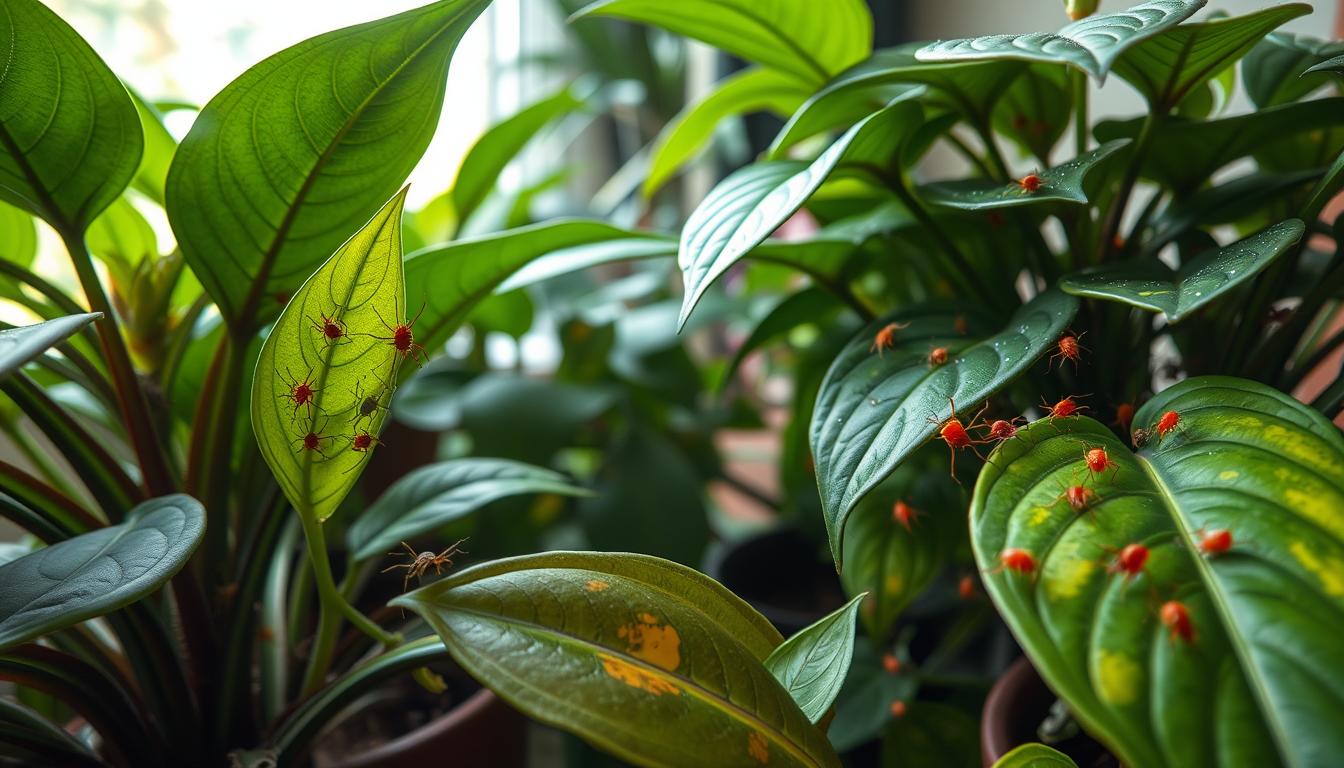
Spider mites on plants show up as tiny pale dots (stippling) on leaves, a dull or dusty look, and fine, silky webbing under leaves and around stem joints. To treat them, isolate the plant, rinse it thoroughly in the shower (especially leaf undersides), then spray every surface with an insecticidal soap or horticultural oil labelled for houseplants. Repeat every 5–7 days for at least three to four weeks, because eggs survive the first treatment, and raise humidity to make conditions less friendly for mites.
Spider mites are among the most common and frustrating houseplant pests. They are so small that most people only notice them once leaves start to fade and webbing appears. This guide explains how to recognise spider mites on houseplants, how to tell them apart from other problems, how to treat them step by step, and how to stop them coming back.
At Patch Plants, botanist Sawera Shahid sees most spider mite outbreaks in winter, when central heating dries the air and plants are checked less often. Her advice is to turn a leaf over every time you water: a ten-second look underneath catches mites weeks before the damage shows on top. Learn more about our guides on the About Patch Plants page.
Key Takeaways
- Spider mites are tiny sap-feeding pests, not insects; the two-spotted spider mite is the most common indoors.
- Look for pale stippling, a dusty or bronzed look, and fine webbing on leaf undersides and stem joints.
- Confirm them with the white paper test or a magnifying glass.
- Isolate the plant, rinse it well, then treat with insecticidal soap or horticultural oil, covering leaf undersides.
- Repeat treatments every 5–7 days for several weeks; mites can go from egg to adult in about two weeks.
- Hot, dry air favours mites; higher humidity and regular leaf cleaning help prevent them.
What Are Spider Mites?
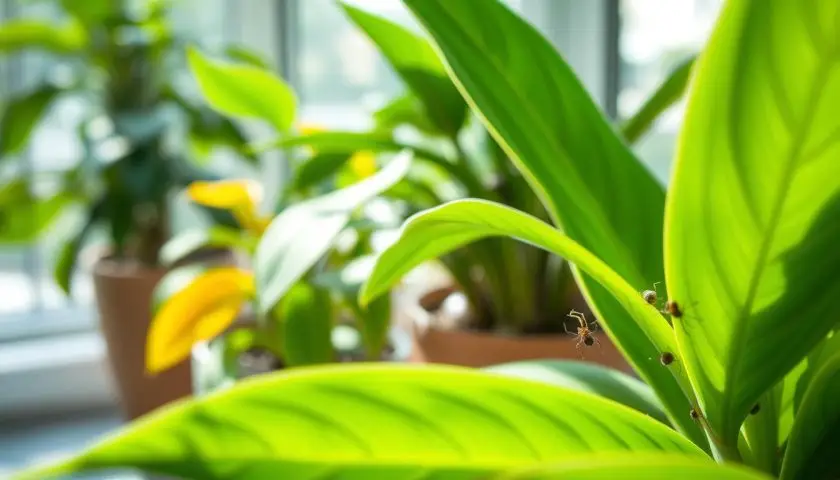
Spider mites are tiny arachnids, relatives of spiders and ticks, that feed by piercing plant cells and sucking out the contents. The two-spotted spider mite (Tetranychus urticae) is the species most often found on houseplants. Adults are smaller than a full stop, oval, and pale yellow-green to reddish, often with two darker spots on the body. Their eggs are tiny, round and translucent, laid on the undersides of leaves.
Spider mites on plants breed very quickly in warm, dry conditions. Colorado State University Extension’s PlantTalk notes that spider mites develop from egg to adult in about two weeks and attack many kinds of indoor plants, which is why a small problem can become a heavy infestation within a month.
Plants that are especially prone include calathea, English ivy, croton, dracaena, schefflera, alocasia and indoor palms such as parlour palm.
Signs of Spider Mites on Plants
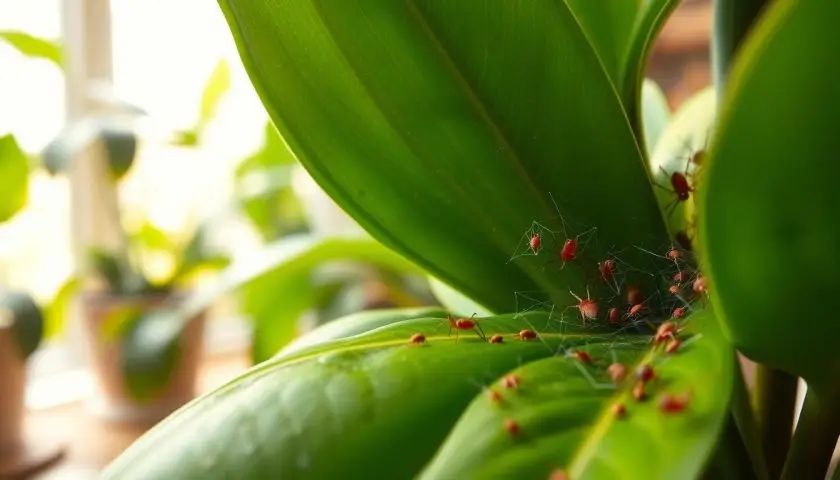
| Stage | What you see |
|---|---|
| Early | Tiny pale or yellow dots (stippling) on the upper leaf surface; leaves look dull or dusty |
| Moderate | Large pale, bronzed or silvery-grey areas; moving specks on leaf undersides |
| Heavy | Fine, dense webbing between leaves, stems and growing tips; yellowing, browning, curling and leaf drop |
Where to look: spider mites on plants hide on leaf undersides, especially along the main veins, in leaf joints and on soft new growth. They often start on lower or older leaves.
The White Paper Test
- Hold a sheet of white paper under the leaves.
- Tap or gently shake the stems over it.
- Watch for a minute: tiny specks that start crawling are almost certainly mites. Specks that smear red or green when wiped are also a giveaway.
A cheap hand lens or the zoom on your phone camera makes mites and eggs much easier to see.
Spider Mites on Plants or Something Else?
| Symptom | Likely cause | Confirming clue |
|---|---|---|
| Pale stippling and fine webbing | Spider mites | Moving specks on leaf undersides |
| Silvery streaks with tiny black dots | Thrips | Slender insects that run or jump |
| Sticky leaves and clusters on new growth | Aphids | Visible soft-bodied insects |
| Sticky leaves and hard bumps on stems | Scale | Bumps that scrape off |
| White cottony tufts in joints | Mealybugs | Fluffy white masses |
| Yellowing from the base, wet soil | Overwatering | No webbing or pests; soggy soil |
| Crispy edges, dry soil | Underwatering or dry air | No stippling or pests |
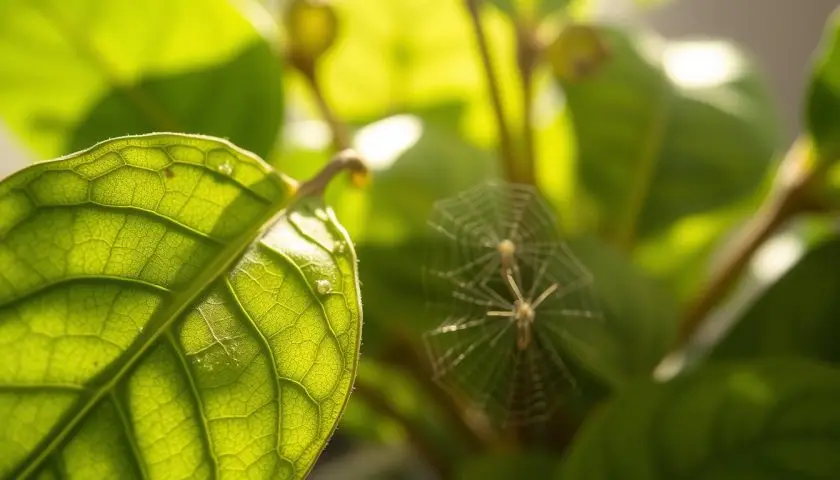
A single loose web between two leaves is usually a harmless house spider. Spider mite webbing is fine, dense and messy, and comes with stippled leaves. If you see white dots, also check our guide to white spots on plant leaves, and for general yellowing, yellow leaves on plants.
How to Get Rid of Spider Mites on Houseplants
- Isolate the plant. Move it to another room, away from other plants, and check its neighbours closely for stippling.
- Prune the worst growth. Cut off heavily webbed or badly damaged leaves with clean scissors, bag them and put them in the bin. Wipe the blades with rubbing alcohol afterwards.
- Rinse thoroughly. In the shower or sink, spray the plant with lukewarm water, concentrating on leaf undersides and stem joints. Cover the soil with a plastic bag to stop it washing out. Wiping large leaves with a damp cloth also removes many mites and eggs.
- Apply a treatment. Once dry, spray an insecticidal soap or horticultural oil labelled for houseplants. Test on one leaf first and wait 24 hours. Cover every surface, especially the undersides, because these products only kill the mites they touch.
- Repeat. Treat again every 5–7 days, or as the label directs, for at least three to four weeks to catch newly hatched mites.
- Clean the area. Wipe shelves, windowsills, saucers and pots with warm soapy water.
- Keep checking. Use the white paper test weekly. Only return the plant to its usual spot after two to three weeks with no signs of live mites.
If a plant is mostly bare, brown and covered in webbing, it can be more practical to take healthy cuttings, if any, and discard the rest in a sealed bag.
Treatments for Spider Mites on Plants Compared
| Method | Best for | Limitations | How often |
|---|---|---|---|
| Water rinse or wiping | Light infestations; first step for all | No lasting effect | Every few days at first |
| Insecticidal soap | Active infestations on most plants | Kills only mites it touches; can mark sensitive leaves | Every 5–7 days for several weeks |
| Horticultural or neem oil | Stubborn infestations | Can scorch leaves in heat or bright sun; not for some sensitive plants | As the label directs, usually every 7–14 days |
| Predatory mites | Large collections, conservatories, repeat problems | Need suitable warmth and humidity; don’t combine with sprays | Release as directed; may need topping up |
CSU PlantTalk notes that some predatory mites develop faster than two-spotted spider mites and can help control them, and that repeat applications of sprays are often needed for mites. Whatever you use, follow the product label and only use products approved for indoor plants.
Treating Delicate or Fuzzy-Leaved Plants
Plants with hairy or fuzzy leaves, such as African violets, and some ferns and calatheas can be marked by soaps and oils. For these, rely more on gentle rinsing, wiping with a damp cloth and higher humidity, and test any spray on one leaf first.
What to Avoid
- Kitchen washing-up liquid and homemade mixtures: many contain degreasers and fragrances that can damage leaves; insecticidal soaps are formulated for plants.
- Spraying in hot sun or very warm rooms: oils and soaps can scorch leaves.
- Outdoor pesticides indoors: only use products labelled for indoor plants.
- One-off treatments: eggs survive, and mites bounce back within days.
Humidity and Recovery
Spider mites thrive in warm, dry, dusty conditions, so heated homes in winter are ideal for them. Raising humidity around your plants and keeping leaves clean makes life harder for mites, although it won’t clear an active infestation on its own.
- Group plants together or use a humidifier, and check levels with a hygrometer. See our humidity hacks guide and DIY humidity tray guide.
- Keep plants away from radiators and hot-air vents.
- Water consistently; drought-stressed plants are more vulnerable. See our complete watering guide.
- Don’t feed until new, healthy growth appears; then resume at half strength.
Damaged, stippled leaves won’t turn green again. Recovery shows as clean new leaves; you can remove the worst old ones once new growth is established. If a plant keeps declining, our guide on how to revive a dying plant can help.
How to Prevent Spider Mites on Plants
- Quarantine new plants for two to three weeks and check them closely before they join your collection.
- Inspect weekly, turning leaves over and checking stem joints, especially in winter.
- Clean leaves regularly with a damp cloth or a lukewarm shower, using a fresh cloth for each plant. See how to clean plant leaves.
- Keep humidity up and plants away from heat sources.
- Treat early: a quick rinse at the first sign of stippling is far easier than tackling heavy webbing.
For outdoor plants, see our guide to keeping pests away from outdoor plants, and for other leaf symptoms, leaf curl, browning and droop.
Frequently Asked Questions
How do I know if my plant has spider mites?
Look for tiny pale dots on the leaves, a dull or dusty appearance and fine webbing under leaves or in stem joints. Confirm by tapping a leaf over white paper and watching for tiny moving specks.
What kills spider mites on houseplants?
A thorough rinse followed by insecticidal soap or horticultural oil labelled for houseplants, sprayed on every surface, especially leaf undersides. Repeat every 5–7 days for several weeks to kill mites that hatch after each treatment.
Why do spider mites keep coming back?
Usually because eggs survived, leaf undersides were missed, treatment stopped too soon, or the plant went back next to others too early. Keep treating for at least three to four weeks and clean nearby surfaces.
Can spider mites spread to other plants?
Yes. They move between touching leaves, on hands, tools and clothes, and on air currents. Isolate infested plants and check their neighbours.
Does humidity get rid of spider mites?
No, but it helps. Mites prefer hot, dry air, so higher humidity slows them down and helps prevent new outbreaks. Active infestations still need rinsing and repeated treatment.
Final Thoughts
Spider mites are tiny, but they are manageable when caught early. Check leaf undersides regularly, isolate any plant with stippling or webbing, rinse it well, treat every surface and keep repeating for several weeks. Combined with good humidity and clean leaves, that routine keeps spider mites on plants under control and helps your collection stay healthy all year. Explore more of our plant care guides for help with other pests and problems.