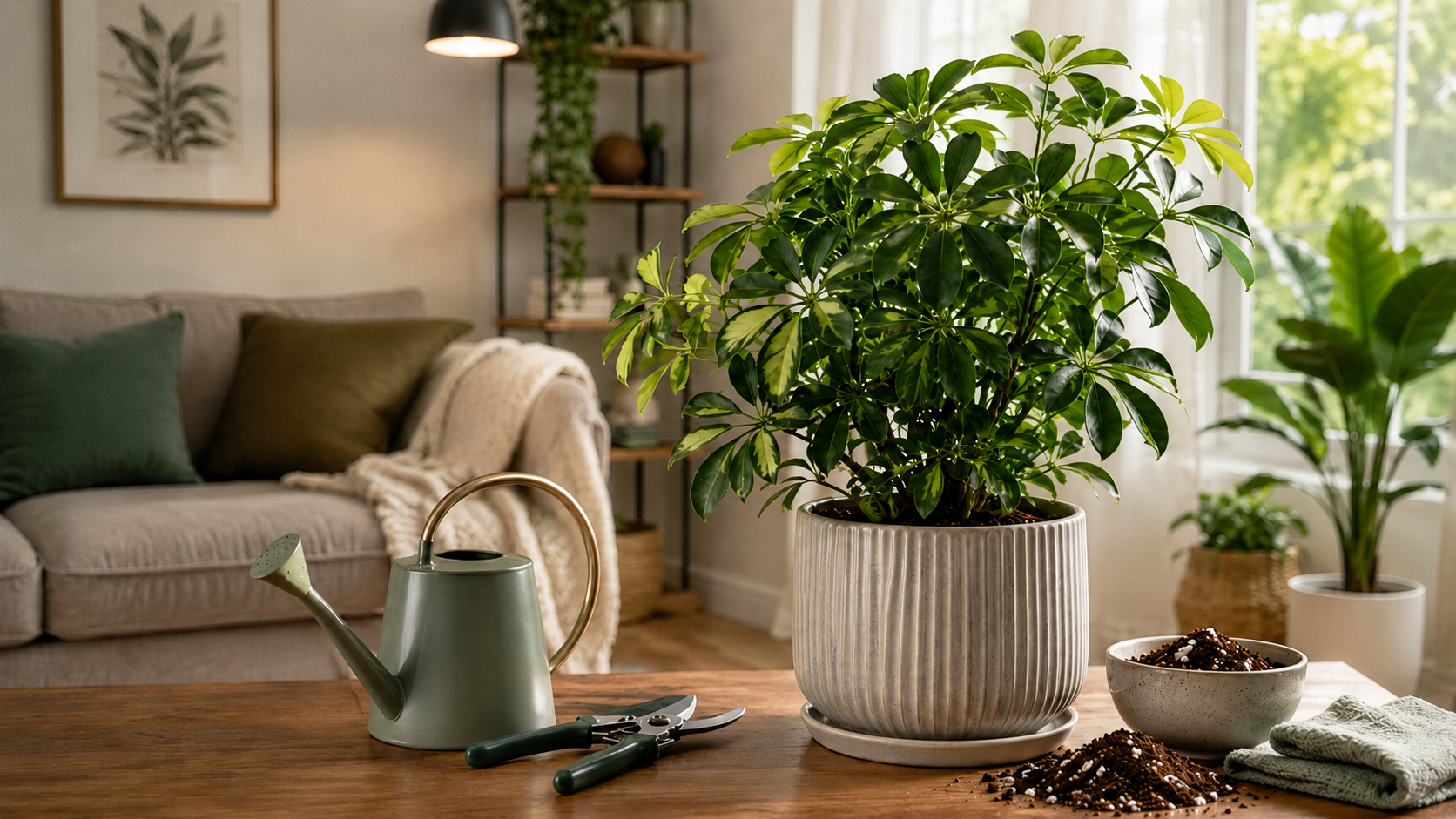
Schefflera plant care is simple once you understand the rhythm of this glossy indoor tree. Give it steady light, careful watering, a draining pot, and the occasional trim, and it can stay full, upright, and attractive for years.
Schefflera is often called Umbrella Plant or Umbrella Tree because the leaflets spread out like the ribs of an umbrella. It can grow into a bold indoor statement plant, but it also responds well to pruning if you want a smaller, bushier shape. This guide covers light, watering, pruning, soil, feeding, repotting, pests, and common problems.
Care Snapshot
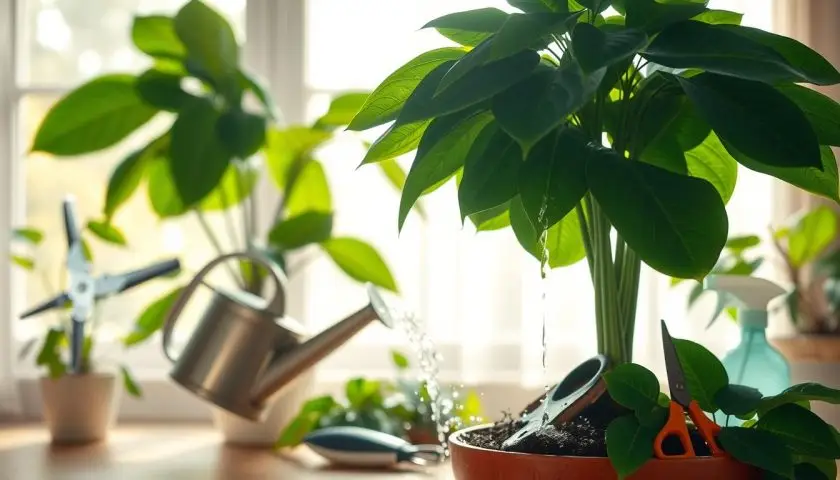
The easiest schefflera plant care routine is to place the plant in medium to bright indirect light, water thoroughly when the upper soil begins to dry, empty the saucer after watering, use a well-draining potting mix, and prune tall stems just above a leaf node. Keep it away from cold drafts, heat vents, soggy soil, and harsh afternoon sun.
Key Takeaways
- Schefflera plant care works best with medium to bright indirect light.
- Water deeply, then let the upper soil dry slightly before watering again.
- Never let the pot sit in standing water because root rot can follow quickly.
- Prune tall or leggy stems above a leaf node to encourage a fuller shape.
- Low light, overwatering, cold drafts, and pests can all cause leaf drop.
- Variegated Schefflera usually needs brighter light than solid green types.
- Use this guide with complete guide to indoor light, complete watering tips, and pruning basics.
Schefflera Plant Care at a Glance
| Care Area | Best Choice | Common Mistake |
|---|---|---|
| Light | Medium to bright indirect light | Deep shade or harsh afternoon sun |
| Water | Water thoroughly after upper soil dries slightly | Watering on a fixed calendar |
| Soil | Airy, well-draining indoor potting mix | Dense soil that stays wet |
| Pot | Drainage holes and stable saucer | Closed decorative pot with standing water |
| Temperature | Warm, stable indoor conditions | Cold windows, AC vents, or heat vents |
| Feeding | Balanced fertilizer during active growth | Feeding heavily in low light or winter |
| Pruning | Cut above a leaf node | Removing too much growth at once |
Know the Schefflera Type You Are Growing
The two common indoor names are Dwarf Schefflera and Umbrella Tree. Plant labels may use Schefflera arboricola, Heptapleurum arboricola, or Schefflera. Care is similar, but size and leaf pattern can differ.
Dwarf Schefflera
Dwarf Schefflera is the most common indoor type. It has glossy leaflets, a compact habit compared with larger umbrella trees, and can be trained as a bushy floor plant or small indoor tree.
Variegated Schefflera
Variegated Schefflera has yellow, cream, or gold markings on the leaves. It usually needs brighter indirect light to hold strong colour. In low light, variegation can fade and stems may stretch.
Larger umbrella tree types
Larger Schefflera types can become tall indoor trees if the ceiling height allows. They are best for bright rooms, offices, entryways, and corners where the plant has room to spread.
Choose a Healthy Schefflera Before You Bring It Home
A strong plant is easier to care for than one already stressed by pests, soggy soil, or low light. Check the whole plant before buying or moving it into your main plant collection.
Signs of a healthy plant
- Glossy leaves with strong colour.
- Firm stems that are not soft or blackened.
- No sticky residue on leaves or floor.
- No cottony clusters, webbing, bumps, or crawling pests.
- Soil that is slightly moist or partly dry, not sour and swampy.
- Roots that are not circling tightly in a dry hard mass.
Where Schefflera looks best indoors
Use Schefflera as a floor plant in a bright living room, office, bedroom corner, hallway with good light, or near a filtered window. Keep it where you can rotate, water, clean, and prune it easily.
For more indoor tree ideas, read oversized indoor plants, tropical house plants, and statement plants for minimalist interiors.
Best Light for Schefflera Plants
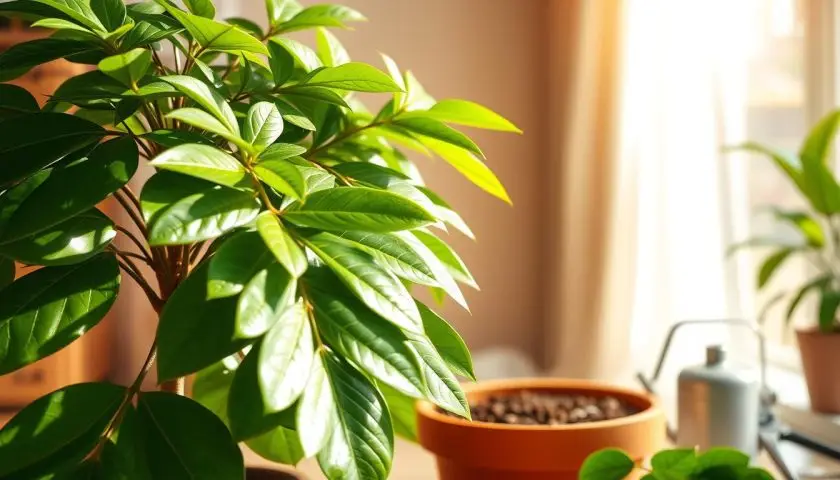
Schefflera light is one of the biggest factors in leaf colour, stem strength, and overall shape. The plant can tolerate medium light, but it looks fuller and stronger in bright indirect light.
Best indoor light
- Bright indirect light near an east-facing or filtered south-facing window.
- Medium light a few feet back from a bright window.
- Gentle morning sun if the plant is acclimated.
- Filtered light through sheer curtains in bright rooms.
- Grow light support in dark offices or apartments.
Too little light signs
- Long gaps between leaves.
- Stems leaning toward the window.
- Yellowing lower leaves.
- Leaf drop without a clear watering issue.
- Faded variegation on variegated types.
- Weak, thin new growth.
Too much direct sun signs
- Bleached leaf patches.
- Brown crispy edges.
- Leaves curling away from the window.
- Dry soil much faster than usual.
- Sudden wilting during hot afternoons.
Rotate for even growth
Rotate the pot every week or two so the plant does not lean toward the light. This is especially helpful for tall indoor Schefflera trees.
For deeper light help, read complete guide to indoor light, house plants that like direct sunlight, and low light house plants.
Schefflera Watering: How to Get It Right
Schefflera watering should be thorough but not constant. The plant dislikes sitting wet for long periods. Most leaf drop problems start when the soil stays too wet or the plant is watered on a fixed schedule without checking the soil.
Simple watering rule
Water when the upper soil begins to dry. Water slowly until excess drains from the bottom, then empty the saucer. Do not leave the pot sitting in water.
| Condition | Watering Response | Care Note |
|---|---|---|
| Bright warm room | Check more often | Soil dries faster in active growth |
| Medium light room | Check before watering | Growth and drying are slower |
| Winter or low light | Water less often | Avoid soggy roots |
| Freshly repotted plant | Water carefully | Extra soil can stay wet longer |
| Root-bound plant | May dry quickly | Check roots if water runs straight through |
How to check soil moisture
- Use your finger to check the upper soil.
- Use a wooden stick and see if damp soil clings to it.
- Lift the pot to feel weight when wet versus dry.
- Check deeper if the plant is in a large pot.
- Do not water just because the surface looks pale.
Overwatering signs
- Yellow leaves with damp soil.
- Lower leaves dropping suddenly.
- Soft or blackened stems near the soil line.
- Sour smell from the potting mix.
- Fungus gnats around the pot.
- Wilting even when the soil is wet.
Underwatering signs
- Leaves droop while soil is dry.
- Pot feels very light.
- Leaf edges become dry and crisp.
- Soil pulls away from the pot edge.
- Growth slows during active season.
For watering support, read complete watering guide, signs you are overwatering, and worst times to water plants.
Best Soil and Pot for Schefflera
The best soil for schefflera plant care is airy, draining, and stable. Dense wet soil can suffocate roots and make leaf drop worse.
Simple potting mix
- 2 parts quality indoor potting mix.
- 1 part perlite or pumice for drainage.
- 1 part fine bark or chunky houseplant mix for airflow.
- Optional compost or worm castings in small amounts.
Pot choice
- Use drainage holes every time.
- Choose a pot only slightly larger than the root ball.
- Use a stable pot for tall plants.
- Keep decorative cover pots empty after watering.
- Avoid oversized pots that keep unused soil wet.
Why drainage matters
Schefflera roots need oxygen. When water sits at the bottom of the pot, roots can rot, leaves can yellow, and the plant may drop foliage even though it looks like it needs water.
For potting help, read best soil mix guide, how to repot a plant, and repotting mistakes to avoid.
Temperature and Humidity for Schefflera
Schefflera prefers normal warm indoor conditions. It does not like cold blasts, air conditioning vents, radiators, or sudden changes in placement.
Good indoor placement
- Keep away from cold window glass in winter.
- Avoid air conditioning vents.
- Avoid heat vents and radiators.
- Do not place beside doors that open to cold air.
- Keep the plant in stable room temperatures.
Humidity tips
Schefflera usually tolerates normal home humidity, but dry air can contribute to brown tips and pest issues. If your home is very dry, group plants, use a pebble tray, or use a humidifier nearby.
For humidity help, read humidity hacks without a humidifier, DIY humidity tray, and misting for plants.
Feeding Schefflera Plant Growth
Feeding schefflera plant growth is helpful during active seasons, but it should match light and growth speed. A plant in bright light uses nutrients faster than a plant in a dim corner.
When to feed
- Feed during spring and summer when growth is active.
- Use a balanced houseplant fertilizer.
- Follow the label instead of guessing strength.
- Feed less often in lower light.
- Pause feeding in winter if growth slows.
Feeding mistakes
- Do not fertilize bone-dry soil.
- Do not feed a stressed, wilting, or root-rotted plant.
- Do not use extra fertilizer to fix low light.
- Do not feed heavily after repotting if the fresh mix already contains fertilizer.
Overfertilizing signs
- Brown leaf tips.
- White crust on the soil surface.
- Leaf edge burn.
- Sudden root stress after feeding.
- Weak growth despite regular fertilizer.
For feeding basics, read fertilizing indoor vs outdoor plants.
Pruning Schefflera for Shape and Fullness
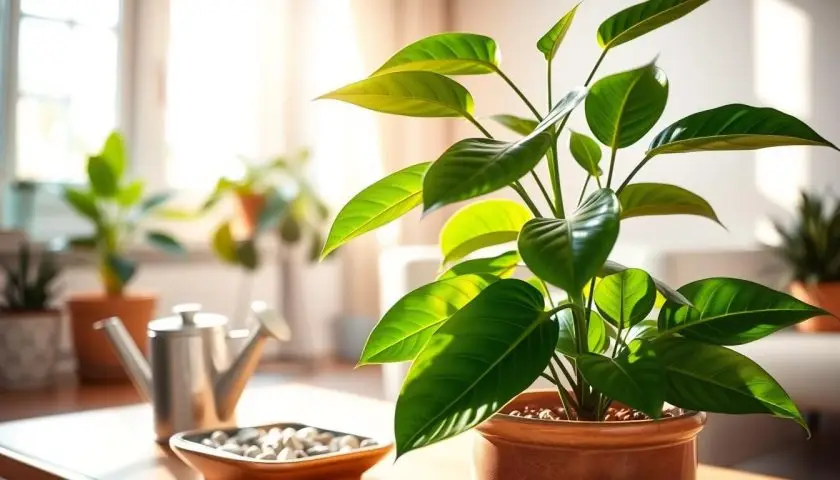
Pruning schefflera helps control height, improve fullness, remove damaged growth, and keep the plant from becoming thin and top-heavy. Schefflera responds well to trimming when it is healthy and actively growing.
When to prune Schefflera
- Prune lightly any time you need to remove dead or damaged leaves.
- Do bigger shaping during spring or summer when growth is active.
- Avoid heavy pruning when the plant is stressed, cold, or dropping leaves.
- Wait after repotting before doing major pruning.
How to prune Schefflera
- Clean your pruning shears before cutting.
- Remove dead, yellow, or damaged stems first.
- Find a leaf node on the stem.
- Cut just above the node.
- Shorten one or two tall stems at a time.
- Step back and check the shape before cutting more.
- Keep the plant in bright indirect light after pruning.
How to fix a leggy Schefflera
A leggy Schefflera usually needs more light and selective pruning. Move it into brighter indirect light first, then shorten long bare stems above nodes. New branching is more likely when the plant has enough light to fuel growth.
How much can you prune?
Do not remove most of the plant at once unless it is healthy and actively growing. A safer approach is to trim gradually, wait for new growth, then shape again.
For more pruning support, read pruning basics, how to clean plant leaves, and how to revive a dying plant.
Does Schefflera Need Support?
Many Schefflera plants stand upright on their own, but tall indoor trees can lean if they grow toward light or become top-heavy. Support can help while you correct the real cause.
When support helps
- The plant leans strongly toward one side.
- The main stem is tall and thin.
- The pot is too light for the canopy.
- The plant was recently repotted and feels loose.
- The room has light from one direction only.
Support tips
Use a bamboo stake or slim plant pole and soft ties. Do not tie stems tightly. Rotate the pot regularly and improve light so the plant does not keep stretching in one direction.
Repotting Schefflera
Schefflera repotting is needed when roots crowd the container or the mix stops draining well. It does not need a huge pot upgrade. A slightly larger pot is safer than a large oversized one.
Signs it needs repotting
- Roots grow from drainage holes.
- Water runs straight through without wetting the mix.
- The pot dries too quickly after watering.
- Growth slows despite good care.
- The plant becomes top-heavy and unstable.
- The potting mix is compacted or sour.
How to repot
- Water lightly a day before repotting if the plant is very dry.
- Choose a pot one size larger with drainage holes.
- Remove the plant gently from the old pot.
- Loosen only the outer roots if they are tightly circling.
- Add fresh airy mix to the new pot.
- Set the plant at the same soil depth.
- Backfill gently and water thoroughly.
- Keep in stable light while it settles.
After repotting
Do not fertilize immediately if the fresh mix already contains nutrients. Give the plant time to settle and avoid placing it in harsh sun after repotting.
Propagating Schefflera From Cuttings
Schefflera propagation is possible from healthy stem cuttings. Success is easier when the parent plant is actively growing and the cutting has firm, clean stems.
Water propagation
- Cut a healthy stem below a node.
- Remove lower leaves.
- Place the cutting in clean water.
- Keep it in bright indirect light.
- Change the water regularly.
- Move to potting mix once roots are several inches long.
Soil propagation
- Take a healthy stem cutting.
- Remove lower leaves.
- Place the cutting in moist airy potting mix.
- Keep the mix lightly moist, not soggy.
- Keep the cutting warm with indirect light.
- Wait for new growth before treating it like a normal plant.
Propagation mistakes
- Using weak or pest-infested stems.
- Keeping cuttings in direct hot sun.
- Letting soil stay swampy.
- Moving cuttings into large pots too soon.
- Expecting roots overnight.
For similar propagation and transplanting basics, read how to propagate houseplants and how to transplant a Spider Plant.
Common Schefflera Problems
Most Schefflera problems come from watering, light, drafts, root stress, or pests. Before changing everything at once, check the soil, light, pot drainage, and leaf undersides.
| Problem | Likely Cause | First Fix |
|---|---|---|
| Yellow leaves | Overwatering, low light, root stress, old leaves | Check soil moisture and drainage |
| Leaf drop | Too much water, chilling, low humidity, pests, sudden change | Stabilize care and inspect leaves |
| Brown tips | Dry air, fertilizer salts, underwatering, direct sun | Review watering, humidity, and feeding |
| Leggy stems | Low light and lack of pruning | Move brighter and prune above nodes |
| Sticky leaves | Scale, mealybugs, or aphids | Isolate and inspect closely |
| Wilting in wet soil | Root rot or poor drainage | Check roots and potting mix |
Schefflera yellow leaves
Schefflera yellow leaves often mean the roots are too wet for the light level. Check the soil before watering again. If the pot has no drainage or the saucer stays full, fix that first.
Schefflera leaf drop
Schefflera leaf drop can happen after a move, a cold draft, low light, overwatering, low humidity, or pest activity. Look for patterns. Dropping lower leaves with wet soil points toward overwatering. Sticky residue points toward pests.
Brown tips
Brown tips may come from dry indoor air, fertilizer buildup, inconsistent watering, or sun scorch. Flush the soil if salts are building up, adjust watering, and avoid placing the plant in hot direct sun.
Leggy growth
Leggy Schefflera needs better light and pruning. Do not prune heavily while the plant is still in a dark spot because weak new growth may return.
For more symptom help, read yellow leaves on plants, leaf curl, browning and droop, root rot guide, and how to revive a dying plant.
Schefflera Pests and Disease Prevention
Schefflera pests often hide on stems, leaf undersides, and new growth. Check the plant often, especially if leaves look sticky, dusty, stippled, or curled.
Common pests
- Scale: Brown or tan bumps on stems and leaf veins.
- Mealybugs: White cottony clusters in leaf joints.
- Spider mites: Fine webbing and speckled leaves, especially in dry air.
- Aphids: Soft insects on new growth.
- Fungus gnats: Small black flies around wet potting mix.
Simple pest routine
- Isolate the plant if pests are visible.
- Wipe leaves and stems with a damp cloth.
- Remove badly infested leaves if needed.
- Check leaf undersides every few days.
- Use houseplant-safe treatment only according to the label.
- Repeat inspections because pests can hide in joints.
Prevent root rot
- Use drainage holes.
- Do not let water sit in the saucer.
- Use airy potting mix.
- Water less often in lower light.
- Repot if the mix stays wet for too long.
For pest and cleaning support, read how to clean plant leaves, how to keep pests away from plants, and Plant Care hub.
Simple Schefflera Maintenance Schedule
| Task | How Often | What to Check |
|---|---|---|
| Check soil moisture | Before watering | Dry upper soil, wet lower soil, pot weight |
| Rotate pot | Every 1 to 2 weeks | Leaning growth and uneven light |
| Wipe leaves | Every few weeks | Dust, pests, sticky residue |
| Inspect pests | Weekly | Leaf undersides, stems, new growth |
| Prune | As needed in active growth | Leggy stems and damaged leaves |
| Feed | During active growth | Healthy growth and enough light |
| Repot | When root-bound | Roots, drainage, compacted mix |
Seasonal Schefflera Care
| Season | Main Focus | Care Tip |
|---|---|---|
| Spring | New growth, pruning, feeding | Trim leggy stems and resume light feeding |
| Summer | Watering and pest checks | Check more often in bright warm rooms |
| Autumn | Adjust light and watering | Move away from cold windows as nights cool |
| Winter | Lower water and draft protection | Water less often and avoid heat vents |
For seasonal indoor care, read indoor light guide, worst watering times, and humidity hacks.
Common Mistakes With Schefflera Plant Care
| Mistake | What Happens | Better Choice |
|---|---|---|
| Watering every week without checking | Roots may stay too wet | Check soil first |
| Keeping water in the saucer | Root rot and leaf drop increase | Empty saucers after watering |
| Growing in deep shade | Weak stems and yellow leaves | Use medium to bright indirect light |
| Placing near vents | Leaf drop and brown tips | Choose a stable location |
| Pruning too much at once | Stress and bare stems | Prune gradually during active growth |
| Ignoring sticky leaves | Pests spread quietly | Inspect for scale, mealybugs, and aphids |
| Using dense soil | Poor drainage and root stress | Use an airy indoor mix |
Helpful PATCH Guides for Schefflera Plant Care
Use these related PATCH guides to improve light, watering, pruning, pest control, repotting, styling, and general houseplant care.
Core Plant Care Guides
- Plant Care hub
- Complete guide to indoor light
- Complete watering guide
- Signs you are overwatering
- Worst times to water plants
- Pruning basics
- How to clean plant leaves
- Fertilizing indoor vs outdoor plants
Soil, Potting and Humidity Guides
- Best soil mix guide
- How to repot a plant
- Repotting mistakes to avoid
- Self-watering pots guide
- Humidity hacks without a humidifier
- DIY humidity tray
- Misting for plants
Problem and Rescue Guides
- Yellow leaves on plants
- Why plant leaves turn yellow
- Leaf curl, browning and droop
- Root rot guide
- How to revive a dying plant
- How to keep pests away from plants
Indoor Plant Choice Guides
- Indoor Plants hub
- Tropical house plants
- Oversized indoor plants
- Statement plants for minimalist interiors
- Best indoor plants for beginners
- Best indoor plants for first-time plant parents
- Best indoor plants for tiny apartments
- Low light house plants
- Small low light indoor plants
- House plants that like direct sunlight
Styling and Room Guides
- Style indoor plants by room
- Decorate your bedroom with plants
- Create an indoor jungle without overcrowding
- Indoor plants as room dividers
- Scandi home with plants
- Feng Shui indoor plants
- Improve your home office with plants
- Office-friendly plants
Specific Plant Guides
- Snake Plant care guide
- Tall Snake Plant
- Spider Plant care guide
- Spider Plant light requirements
- How to transplant a Spider Plant
- Peace Lily care guide
- How often to water Peace Lily
- ZZ Plant care guide
- Dracaena care guide
- Rubber Plant care guide
- Fiddle Leaf Fig care guide
- Monstera care guide
- Philodendron care guide
- Pothos plant care guide
- Calathea care guide
- Parlor Palm dying
- Croton Petra Plant
- Elephant Ear plant indoors
- Purple Passion Plant care
- Goldfish Plant care
Frequently Asked Questions
How do you care for a Schefflera plant indoors?
Give Schefflera medium to bright indirect light, water thoroughly when the upper soil begins to dry, empty the saucer after watering, use a draining potting mix, keep it away from drafts, feed during active growth, and prune tall stems above leaf nodes.
What are the best light conditions for Schefflera?
Schefflera grows best in medium to bright indirect light. Variegated Schefflera needs brighter light to keep strong colour. Avoid deep shade and harsh direct afternoon sun.
How often should I water Schefflera?
Water when the upper soil begins to dry. The exact timing depends on light, pot size, temperature, season, and soil mix. Always check the soil before watering.
Why is my Schefflera dropping leaves?
Leaf drop is often linked to overwatering, low light, low humidity, cold drafts, sudden location changes, or pests. Check soil moisture, drainage, temperature, and leaf undersides.
Why are my Schefflera leaves turning yellow?
Yellow leaves often come from overwatering, poor drainage, low light, root stress, old leaves, or pest pressure. Wet soil and yellow leaves usually mean you should check the roots and pot drainage.
How do I prune a leggy Schefflera?
Cut long stems just above a leaf node using clean pruning shears. Move the plant into brighter indirect light and prune gradually so new growth comes back stronger and fuller.
Can Schefflera grow in low light?
Schefflera can tolerate medium or softer light, but it usually grows weak and leggy in very low light. For best shape and fewer yellow leaves, use bright indirect light.
What soil is best for Schefflera?
Use an airy indoor potting mix with drainage materials such as perlite, pumice, or bark. Avoid dense soil that stays wet for a long time.
When should I repot Schefflera?
Repot when roots crowd the pot, water drains poorly, the plant dries too quickly, or the mix becomes compacted. Choose a pot only slightly larger than the current one.
What pests attack Schefflera?
Common Schefflera pests include scale insects, mealybugs, spider mites, aphids, and fungus gnats. Check leaf undersides, stems, new growth, and sticky residue.
Final Thoughts
Schefflera plant care is not complicated, but it does need consistency. The plant wants enough light to grow strong stems, enough water to moisten the root ball, enough drying time to prevent rot, and enough pruning to stay full instead of leggy.
Clemson Extension explains that scheffleras prefer medium to bright light, should be watered thoroughly and then allowed to dry slightly before watering again, should never sit in water, and can be pruned above a leaf to maintain a smaller size: Clemson Extension Schefflera guide.
For the best results, place your Schefflera in bright filtered light, check the soil before watering, empty the saucer, prune gradually, and inspect leaves often. Most problems are easier to fix early than after the plant has dropped half its leaves.
Final Recap
Schefflera plant care starts with medium to bright indirect light, a draining pot, airy potting mix, and careful watering. Water thoroughly when the upper soil begins to dry, then empty the saucer so roots do not sit in water. Keep the plant away from cold drafts, heat vents, and harsh afternoon sun. Feed lightly during active growth, but feed less in low light and winter. Prune tall or leggy stems above a leaf node to encourage branching and control height. Repot only when roots are crowded or the mix stops draining well. Watch for yellow leaves, leaf drop, brown tips, sticky residue, root rot, scale, mealybugs, spider mites, and aphids. With stable care and regular checks, Schefflera can become a long-lasting, glossy indoor tree.