
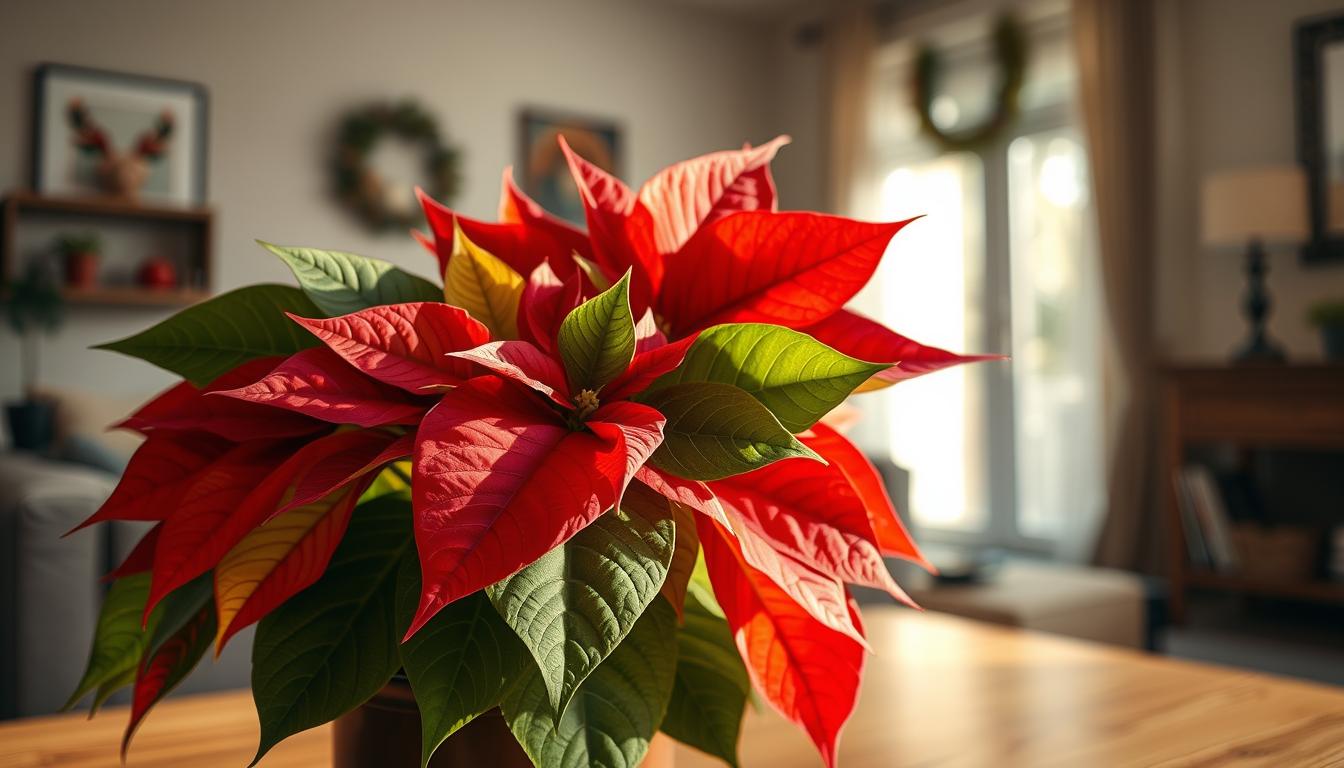
Poinsettia toxic to cats is a common worry at Christmas, but the risk is usually mild. The ASPCA lists poinsettia (Euphorbia pulcherrima) as toxic to dogs, cats and horses, yet describes it as “generally over-rated in toxicity”. The irritant sap can cause mouth and stomach irritation, occasionally with vomiting. A pet that chews a leaf usually needs watching, not panic, but you should still call your vet if symptoms are severe or do not settle.
I am Sawera Shahid, a botanist at Patch Plants. This guide explains what poinsettia sap does, what to look for in cats and dogs, what to do if your pet chews the plant, and which other holiday plants are more serious for holiday plant safety.
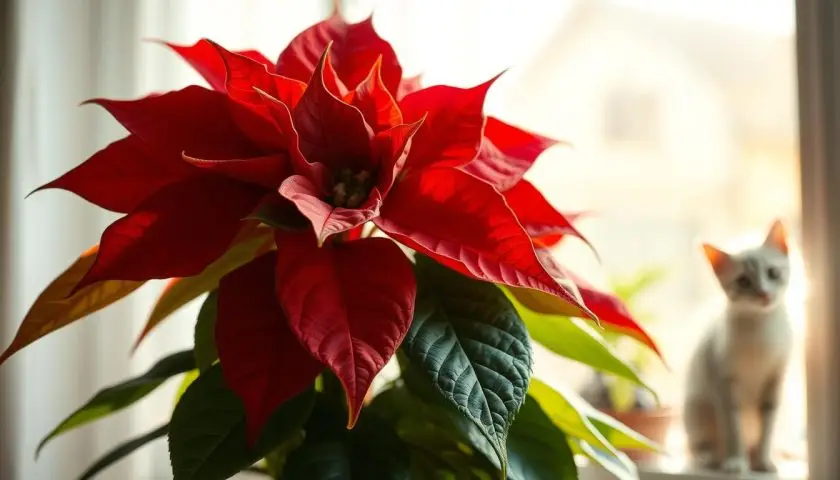
Is Poinsettia Toxic to Cats and Dogs?
Yes, but mildly. The ASPCA names the irritant sap as the toxic principle, and lists the clinical signs as mouth and stomach irritation, occasionally with vomiting. The RHS agrees that poinsettia is considerably less toxic than other Euphorbia species, but says to avoid ingesting it and to avoid contact with the milky sap, which can irritate skin and eyes.
| Level | What You May See | What to Do |
|---|---|---|
| Mild | Drooling, lip licking, pawing at the mouth | Remove the plant and watch your pet closely |
| Moderate | Vomiting, reluctance to eat | Call your vet for advice |
| Severe or unusual | Collapse, trouble breathing, seizures, repeated vomiting | Seek veterinary help immediately. This is not typical of poinsettia alone |
If your cat has already been chewing poinsettia leaves, the same advice applies. See our guide to poinsettia care and poinsettia dropping leaves for general plant questions.
Why Poinsettia Toxic to Cats and Dogs Means Sap Irritation
Poinsettia stems and leaves contain a milky sap. When a pet bites the plant, the sap touches the mouth and can irritate it, which is why the first signs are usually drooling, lip licking or pawing at the face. Swallowing plant material can irritate the stomach, and the ASPCA notes vomiting can follow. The ASPCA’s own wording, that the plant is generally over-rated in toxicity, reflects that most reactions are mild.
How much your pet eats matters. A small nibble is less of a concern than a large amount, and small or young pets, or pets with other health problems, deserve closer watching. I cannot tell you a safe amount, so if you are unsure, phone your vet.
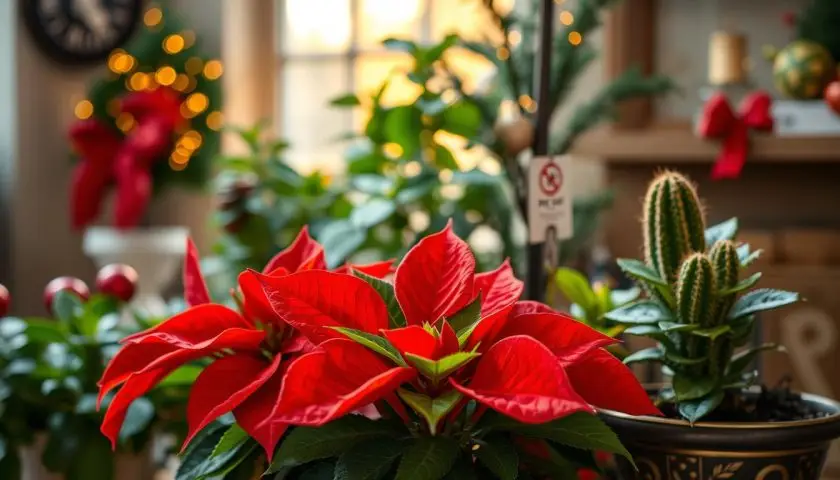
Poinsettia Toxic to Cats: Signs to Watch For
Cats are curious and often chew houseplants. If you notice your cat drooling after chewing a plant, look at the plant, remove any pieces from reach, and check for the following:
- Mouth irritation: drooling, licking lips, pawing at the face.
- Stomach upset: vomiting or reduced appetite.
- Skin or eye contact: the RHS notes the milky sap can irritate skin and eyes, so wipe away sap and watch for redness.
Not every cat that looks unwell has eaten poinsettia. If your cat is weak, vomiting repeatedly or struggling to breathe, do not assume the plant is the cause. Other plants, decorations or foreign objects such as ribbon can be responsible, so call your vet.
Signs of Poinsettia Exposure in Dogs
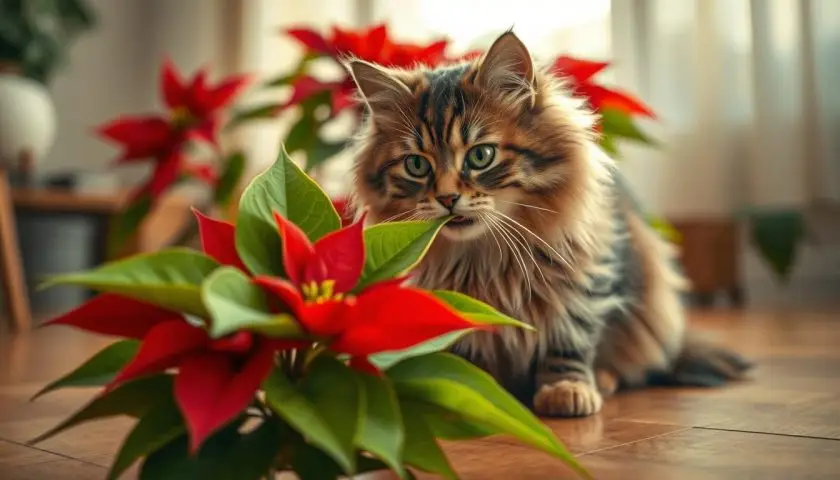
The signs in dogs are similar: drooling, pawing at the mouth and occasional vomiting. Puppies and small dogs may need closer watching because they have less body weight. If your dog has chewed poinsettia and seems fine, keep the plant out of reach and monitor for several hours. If symptoms are severe, if they worsen or if you are not sure what was eaten, call your vet. See our guide to making your plants dog-friendly.
What to Do If Your Pet Chews a Poinsettia Toxic to Cats and Dogs
- Remove the plant from your pet’s reach, and take any loose pieces out of the mouth if your pet allows it. Do not force the mouth open.
- Watch your pet for drooling, pawing, vomiting or changes in behaviour.
- Note the details: the plant, how much may have been eaten, when, and your pet’s weight.
- Call your vet or the ASPCA Animal Poison Control Center on (888) 426-4435. The ASPCA says the line is open 24/7, 365 days a year, and that a consultation fee may apply.
- Do not give home remedies such as milk, oil or medication unless a vet tells you to.
Veterinary poison control services can advise on whether your pet needs to be seen, and a poinsettia toxic to cats is one they handle often. If you do go to a clinic, take a photo of the plant or its label.
Holiday Plant Safety: Poinsettia Versus Other Christmas Plants
Poinsettia is often the plant people worry about, but other holiday plants are more serious. The ASPCA lists these as follows:
| Plant | ASPCA Listing | Main Concern |
|---|---|---|
| Poinsettia | Toxic to dogs and cats, “generally over-rated in toxicity” | Irritant sap: mouth and stomach irritation, occasional vomiting |
| Lilies (Lilium and daylilies) | Toxic to cats, much more severe in cats than dogs | Small amounts can cause severe kidney injury |
| Amaryllis | Toxic to dogs and cats | Lycorine: depression, diarrhoea, abdominal pain, drooling, appetite loss, tremors, and vomiting in dogs and cats |
| Mistletoe (American) | Toxic to dogs and cats | Toxalbumins: vomiting, diarrhoea, difficulty breathing, slow heart rate |
| Holly | Toxic to dogs and cats, low toxicity of leaves and berries | Saponins: vomiting, diarrhoea, depression |
| Christmas cactus | Non-toxic to dogs and cats | No toxic effects listed |
The lily row matters most for cat owners. The ASPCA says that all parts of true lilies are toxic, and that small amounts can cause severe kidney injury in cats. It also says that kidney injury can be prevented with aggressive veterinary treatment, but treatment delayed beyond 18 hours is often fatal. If your cat may have touched or eaten any lily, contact your vet or the ASPCA at (888) 426-4435 immediately, even if your cat seems well. See our guides to amaryllis care and Christmas cactus care.
Mixed arrangements and gift baskets can hide the plants inside, so keep the label or photograph the plant in case you need to describe it to your vet.
How to Keep Pets Safe Around Holiday Plants
- Place plants out of reach: high shelves, hanging planters or rooms your pet cannot enter.
- Check arrangements for lilies before bringing them home if you have a cat.
- Choose safer plants: the ASPCA lists Christmas cactus as non-toxic to dogs and cats.
- Remove fallen leaves from the floor, and keep fertiliser, decorative foil and ribbon away from pets.
- Keep your vet’s number handy, along with an emergency clinic and the ASPCA Animal Poison Control Center on (888) 426-4435.
For more ideas, read how to make your plants cat-friendly.
Frequently Asked Questions
Is poinsettia toxic to cats?
Yes, but mildly. The ASPCA lists it as toxic to cats and dogs but “generally over-rated in toxicity”. The irritant sap causes mouth and stomach irritation, occasionally with vomiting.
Why is my cat drooling after chewing a poinsettia?
The milky sap irritates the mouth. Drooling, lip licking and pawing at the face are common first signs, and they often ease after the plant is removed.
What should I do if my dog eats a poinsettia leaf?
Remove the plant, watch for drooling or vomiting, and call your vet or the ASPCA Animal Poison Control Center on (888) 426-4435 if you are worried or if signs are severe. A consultation fee may apply.
Are lilies more dangerous than poinsettias for cats?
Yes. The ASPCA says small amounts of true lilies can cause severe kidney injury in cats, and delayed treatment is often fatal. Treat any lily exposure as an emergency.
Which holiday plants are safe for pets?
The ASPCA lists Christmas cactus as non-toxic to dogs and cats. Poinsettia, amaryllis, holly and mistletoe are all listed as toxic, to varying degrees.
Final Thoughts
A poinsettia toxic to cats is a real but usually mild concern. As a botanist, my advice is to keep poinsettias out of reach, keep any lilies well away from cats, and call your vet rather than guessing if your pet seems unwell. A little planning means you can enjoy holiday plants safely. For more ideas, explore Patch Plants and our indoor plants section.
Sources: ASPCA, Poinsettia; ASPCA, Which lilies are toxic to pets?; ASPCA, Amaryllis; ASPCA, Mistletoe (American); ASPCA, Holly; ASPCA, Christmas cactus; ASPCA Poison Control; RHS, How to grow poinsettias.