Learning how to plant viola seeds is one of the cheapest ways to fill pots and borders with cool-season colour. Violas are hardy, small-flowered relatives of the pansy, and a single packet gives you dozens of plants. The key is timing: they like cool conditions, struggle in summer heat, and should be sown early enough to make sturdy plants before they go outside.
I am Sawera Shahid, a botanist at Patch Plants. This guide explains when to plant viola seeds, how to sow them, how to care for seedlings, how to transplant them, and what to do about common problems. For more cold-hardy ideas, see our guide to winter plants for outside.
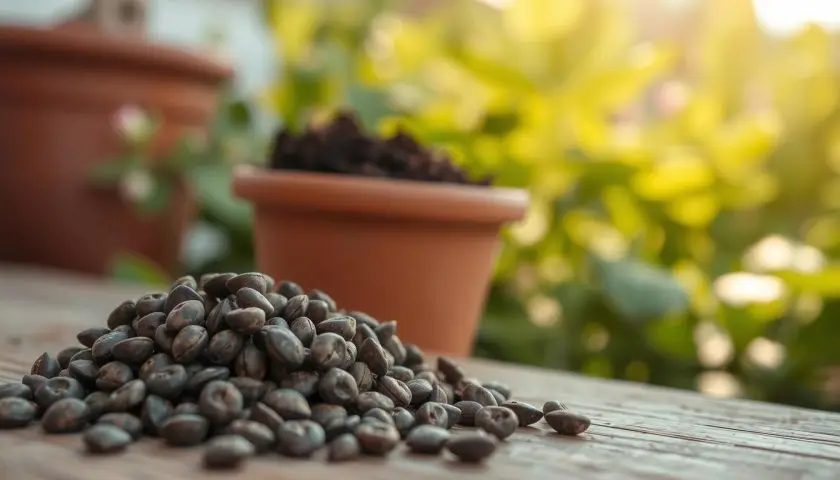
How to Plant Viola Seeds at a Glance
Advice below comes from Iowa State University Extension, the University of Florida (UF/IFAS) Extension, the University of Missouri Extension and Colorado State University Extension. Check the instructions on your own seed packet too, because varieties differ.
| Step | What to Do | Source |
|---|---|---|
| Timing | Sow indoors about 8 to 10 weeks before planting outdoors | Iowa State |
| Temperature | Seeds germinate between 65 and 75°F; grow seedlings cool | UF/IFAS, Iowa State |
| Depth | Cover lightly, about two to four times the seed’s width | Missouri, Colorado State |
| Germination | About 6 to 10 days | Missouri |
| Light | Bright light once seedlings appear | Colorado State |
| Transplant | After the first true leaves, once hardened off | Missouri |
When to Plant Viola Seeds
Iowa State University Extension says to start pansy and viola seeds indoors 8 to 10 weeks before planting outdoors. It gives early to mid-April as the spring planting time in Iowa, which means sowing in late winter, and early September for a fall display. The University of Missouri Extension lists pansy and viola together, and suggests sowing in early to mid-January for planting out in late March or early April, with a crop time of 14 to 15 weeks.
Count backwards from the date you want to plant out in your own area. UF/IFAS Extension gives planting windows for warm climates: February, October, November or December in zone 8, February, November or December in zone 9, and November or December in zones 10 and 11. Planting out too early in heat can cause yellowing and stretched stems, and planting in the cold can stunt growth.
- Cool climates: sow indoors in late winter for spring flowers, or in summer for autumn flowers.
- Warm climates: sow in late summer for planting out in autumn and winter.
- Avoid summer heat: Iowa State Extension says violas often melt in hot summers, so plan them as cool-season plants.
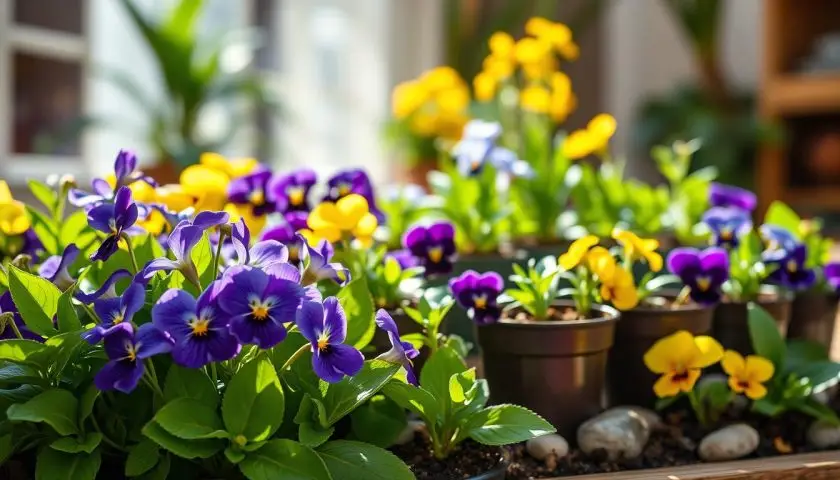
What You Need to Plant Viola Seeds
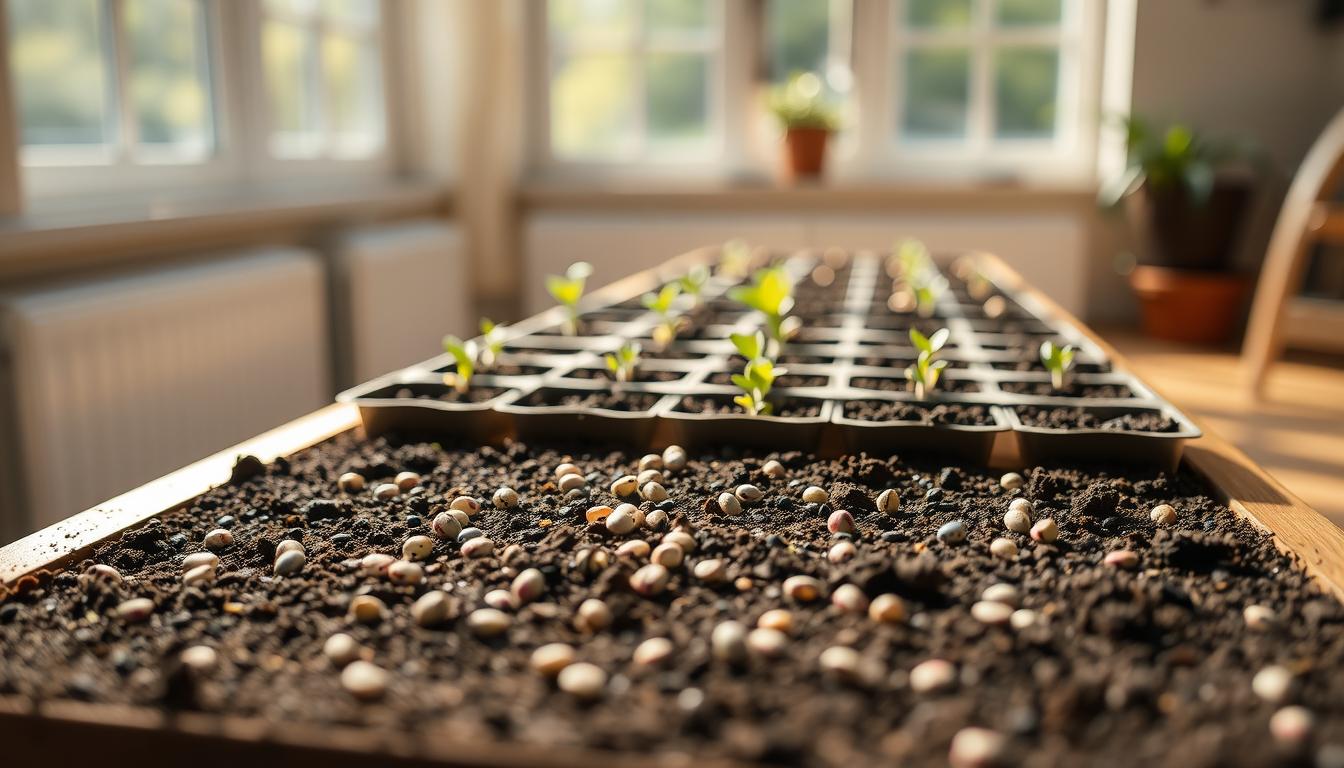
Colorado State University Extension suggests any container with drainage holes, filled with a sterile soilless mix or potting soil that is usually weed free, and says to place two or three seeds per pot in partitioned trays, which you may know as cell trays. The University of Missouri Extension recommends a loose, well-drained, fine-textured mix with little or no fertiliser, and says fine-grade vermiculite is useful for covering seeds because it does not form a crust. Use clean containers, because the same source says sterile containers and pathogen-free mix help prevent damping off.
Buy fresh seed from a reliable supplier. UF/IFAS Extension says buying seeds, seedlings or mature plants is often more effective than saving your own seed.
Step-by-Step: How to Plant Viola Seeds Indoors
- Fill the container. Colorado State Extension says to fill it firmly without packing, leaving space below the rim.
- Sow the seed. Follow the packet. As a general rule, the University of Missouri Extension says to cover seeds to a depth of about twice their width, and Colorado State Extension says no more than about four times the seed’s width, because planting too deep can reduce or prevent germination.
- Water gently. Colorado State Extension suggests misting so seeds are not washed away. The University of Missouri Extension suggests watering from below, standing the container in shallow warm water.
- Cover until germination. Colorado State Extension says to cover containers until the seeds germinate, then remove the cover.
- Keep the temperature right. UF/IFAS Extension says pansy seed germinates between 65 and 75°F. Once seedlings are up, Iowa State Extension says cool conditions of 55 to 65°F are preferred, and that plants get lanky in warm temperatures or low light.
- Give bright light. Move seedlings into bright light as soon as they germinate. Colorado State Extension notes even a sunny window may need supplemental lighting. See our guide to grow lights for indoor plants.
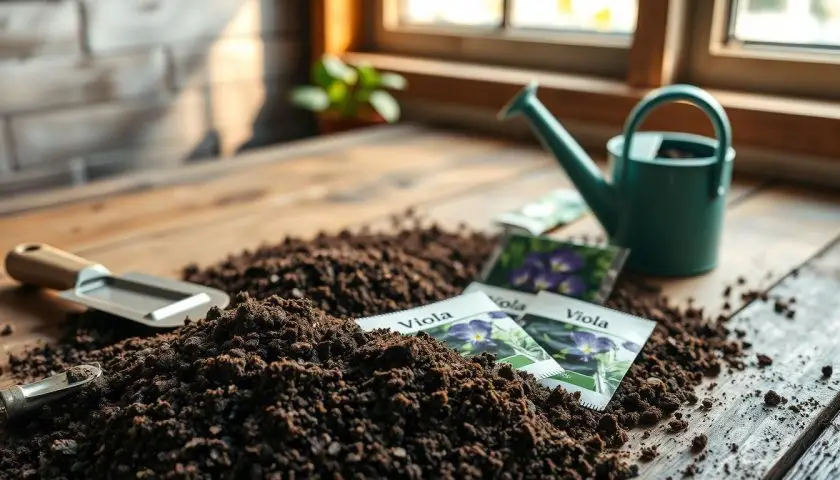
Viola Seed Germination and Caring for Seedlings
Keep the mix evenly moist but never waterlogged, because small pots dry quickly while soggy mix can kill seedlings. Seedlings are most at risk from damping off. The University of Missouri Extension says it is caused by the fungus Rhizoctonia solani, shows as dark, sunken tissue at the base of the stem, and is worsened by excess moisture, high temperatures and poor light. Prevent it with clean containers, fresh mix, good light and moderate watering.
Fungus gnats often appear around constantly wet mix. See our guide to fungus gnats in houseplants if you notice them.
Hardening Off Seedlings and Transplanting Violas
The University of Missouri Extension says to transplant seedlings once they have at least one set of true leaves and are large enough to handle. Lift them carefully, handle them by the leaves, and set each at the same depth it grew in the tray. Shade newly transplanted seedlings for a few days.
Hardening off seedlings is essential before they go outside. Colorado State Extension says to start about a week before planting out, and the University of Missouri Extension says about two weeks, moving plants to a cooler, shady spot and then gradually increasing sun while reducing watering without letting plants wilt. Avoid putting tender seedlings outside on windy days or when temperatures are below 45°F.
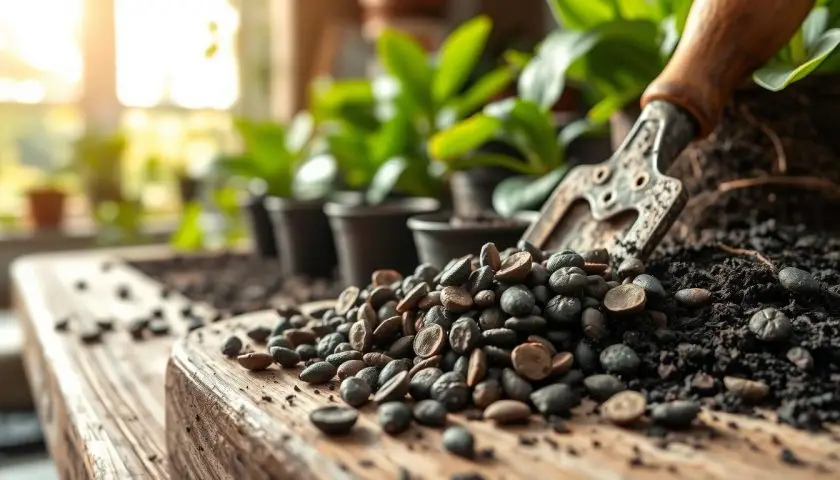
Where to Plant Violas After You Plant Viola Seeds
- Light: Iowa State Extension says full to part sun, with part sun where temperatures run warm. UF/IFAS Extension says pansies need some shade to stay healthy.
- Soil: moist, well-drained soil, per Iowa State Extension. UF/IFAS Extension suggests compost, elevated beds for drainage, and a pH of 5.4 to 5.8.
- Containers: Iowa State Extension says light feeding helps, especially in containers, using a water-soluble fertiliser every 1 to 3 weeks. For compost, see our soil mix guide.
- Watering: keep soil rich and moist but let it dry between waterings to reduce disease risk, according to UF/IFAS Extension. Mulch conserves moisture and insulates roots during cold snaps.
Keeping Violas Flowering
UF/IFAS Extension says to remove old, faded flowers before seed forms to extend the flowering period. Violas handle cold well. Iowa State Extension says pansies handle light freezes well and fall displays last until snow, and that some violas persist by overwintering under snow or reseeding. When summer heat arrives, Iowa State Extension advises removing plants in early summer and replanting in early autumn, noting newer cultivars handle heat better than older ones.
Common Problems When You Plant Viola Seeds
| Problem | Likely Cause | What to Do |
|---|---|---|
| Tall, leggy seedlings | Too warm or too little light | Move to a cooler, brighter spot |
| Seedlings toppling at the base | Damping off | Use clean containers and fresh mix; avoid overwatering |
| Yellowing, stretched plants outdoors | Planted out in heat | Plant out when weather is cool |
| Rotting crowns and roots | Warm, wet weather | Let soil dry between waterings; remove infected plants |
| Chewed leaves | Slugs, cutworms or pansyworms | Inspect plants and remove pests by hand |
UF/IFAS Extension lists aphids, spider mites, pansyworms, slugs and cutworms as insect pests, and crown and root rot, botrytis blight, downy mildew and leaf spot as diseases. Prevent them by buying healthy plants, keeping beds clear of infected plants, sanitising tools and letting the soil dry between waterings. See also spider mites on plants.
Frequently Asked Questions
When should I plant viola seeds?
Indoors, about 8 to 10 weeks before you plan to plant outdoors, according to Iowa State Extension. In warm climates, sow so that plants go out in autumn or winter.
How deep should I plant viola seeds?
Barely cover them. The University of Missouri Extension says about twice the seed’s width, and Colorado State Extension says no more than about four times. Always follow your seed packet.
How long do viola seeds take to germinate?
The University of Missouri Extension lists pansy and viola germination as 6 to 10 days. UF/IFAS Extension says pansy seed germinates between 65 and 75°F.
Do violas like sun or shade?
Full to part sun, according to Iowa State Extension, with part sun in warm areas. UF/IFAS Extension says pansies need some shade to stay healthy.
Are violas safe for pets?
The ASPCA lists pansies (Viola tricolor var. hortensis) as non-toxic to pets. It does not name violas specifically, so keep pets from eating large amounts of any plant and call your vet if they seem unwell.
Final Thoughts
Violas reward good timing more than fancy technique. As a botanist, my advice on how to plant viola seeds is to sow them early, keep seedlings cool and bright, harden them off properly, and plant them out into cool weather. Remove spent flowers, and plan to replace them when summer heat arrives. For more seasonal ideas, explore Patch Plants and our outdoor plants section.
Sources: Iowa State University Extension, Growing Pansies & Violas; UF/IFAS Gardening Solutions, Pansies; University of Missouri Extension, Starting Plants Indoors From Seeds; Colorado State University Extension, Growing Annual Plants from Seed; ASPCA, Which Popular Fall Plants Are Safe for Pets?.