Last Updated: October 1, 2026
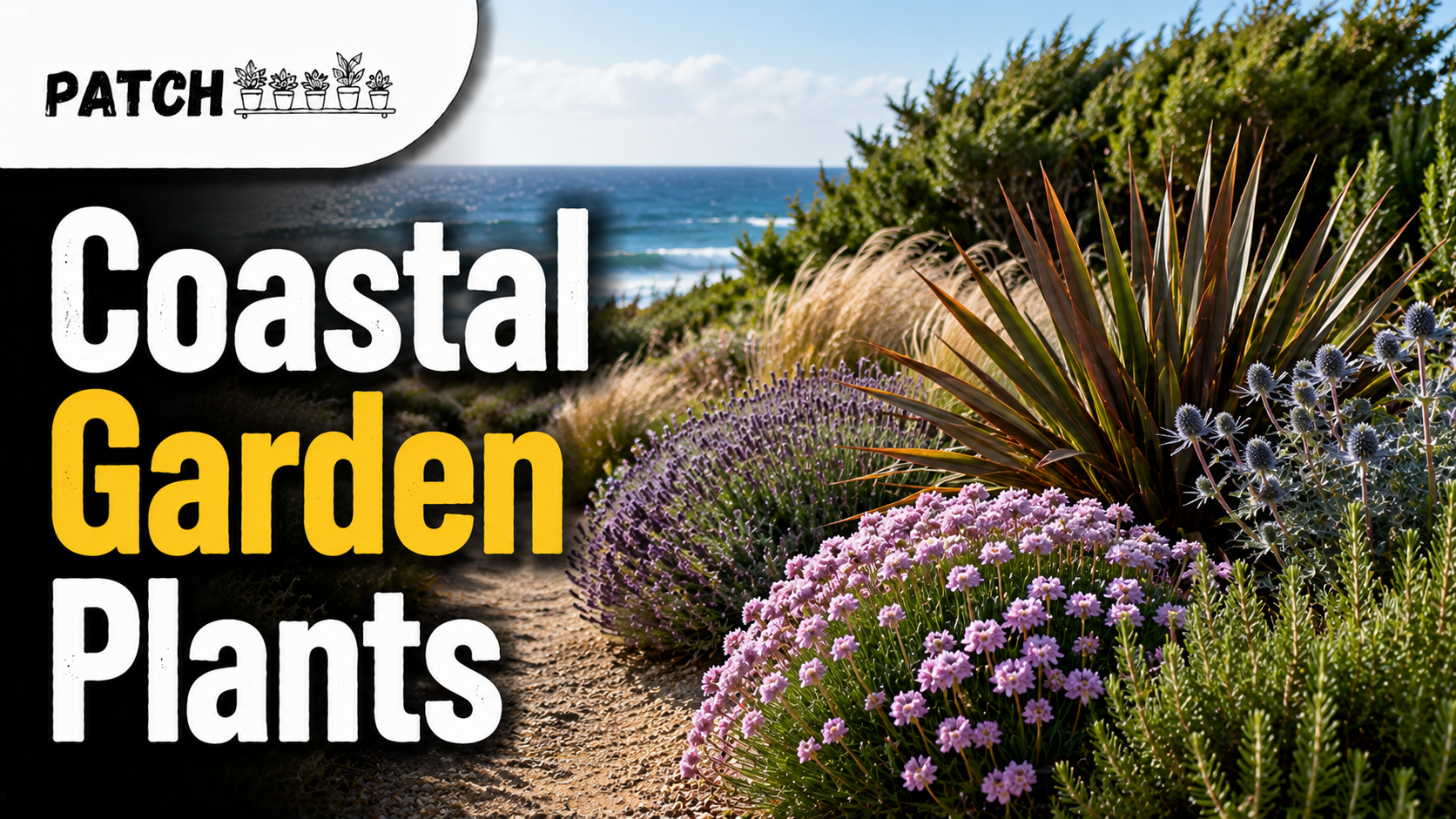
The best coastal garden plants are species that can cope with strong wind, salt exposure, fast-draining soil, and periods of dryness. Good choices include sea thrift, sea holly, lavender, rosemary, New Zealand flax, Griselinia, Escallonia, Pittosporum, sea buckthorn, Tamarix, yarrow, Erigeron, yucca, selected ornamental grasses, and region-appropriate coastal shrubs. For the best results, combine tough plants for the beach with a permeable windbreak and choose each plant according to how exposed your garden actually is.
Key Takeaways
- Coastal garden plants need to tolerate more than wind; salt spray, sandy or stony soil, drainage, exposure, and moisture loss can all influence plant choice.
- Plants for the beach should be matched to local climate and exposure rather than chosen from a universal list.
- Sea thrift, sea holly, Griselinia, Escallonia, sea buckthorn, Tamarix, lavender, rosemary, and New Zealand flax are useful plants to consider for different coastal situations.
- A permeable windbreak is generally more useful than trying to block every gust with a solid barrier.
- Newly planted specimens still need careful watering and establishment even when they are considered wind or coastal tolerant.
What Makes Coastal Gardens Different?
Growing plants near the coast can be very different from maintaining an ordinary sheltered garden. Wind can increase moisture loss from foliage, while sea winds may carry salt inland. Many coastal sites also have sandy, stony, or otherwise fast-draining soils.
That combination explains why successful coastal garden plants often share useful characteristics. Narrow leaves, leathery or waxy surfaces, silver foliage, compact growth, flexible stems, and other adaptations can help plants cope with exposed conditions.
Exposure can also vary dramatically within the same property. A border directly facing the sea may need much tougher plants than a courtyard protected by a building or hedge.
Before choosing individual plants, browse the Patch Plants outdoor plant guides for more ideas suited to different garden conditions.
15 Best Plants for the Beach and Coastal Gardens
If you are searching for plants for the beach, start by thinking about exposure rather than appearance alone. A plant suitable for a protected coastal patio may not survive the same conditions on an open, salt-exposed boundary.
| Plant | Best Use | Useful Coastal Trait |
|---|---|---|
| Sea thrift | Edges, gravel and rock gardens | Compact coastal habit |
| Sea holly | Sunny borders | Tough, distinctive foliage |
| Lavender | Sunny, well-drained borders and pots | Narrow foliage and preference for drainage |
| Rosemary | Herb gardens and containers | Woody growth and narrow leaves |
| New Zealand flax | Architectural planting | Strong strap-like foliage |
| Griselinia | Hedges and shelter | Dense evergreen growth |
| Escallonia | Hedges and flowering screens | Useful coastal shrub |
| Pittosporum | Sheltered coastal hedging | Evergreen structure |
| Sea buckthorn | Exposed sites and shelter planting | Strong coastal tolerance |
| Tamarix | Larger exposed gardens | Fine foliage and coastal suitability |
| Yarrow | Sunny perennial planting | Relatively sturdy growth |
| Erigeron | Edges and ground cover | Low-growing coverage |
| Yucca | Architectural dry planting | Tough foliage |
| Ornamental grasses | Movement and texture | Flexible growth |
| Olearia | Coastal shrub planting | Useful shelter and evergreen structure |
1. Sea Thrift
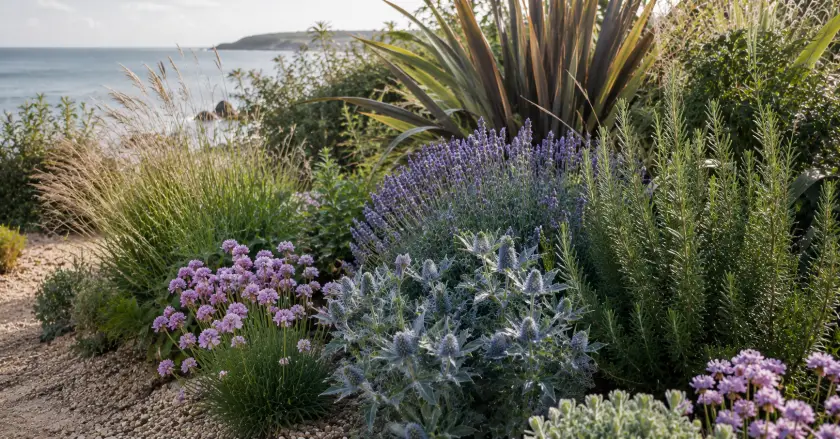
Sea thrift (Armeria maritima) is one of the most recognizable beach plants. Its compact growth and rounded flower heads make it useful around gravel paths, rock gardens, border edges, and other exposed sunny areas.
It is especially useful where you want colour without relying on tall, soft stems that can be damaged by repeated gusts.
2. Sea Holly
Sea holly (Eryngium) combines structural foliage with distinctive blue or silvery flower heads. It fits naturally into gravel gardens and sunny coastal borders.
Sea holly can also complement pollinator-focused planting. If wildlife value is part of your garden plan, see our guide to pollinator-friendly plants for outdoor spaces.
3. Lavender
Lavender works well in sunny coastal designs where drainage is good. Its narrow foliage and compact woody growth make it more suitable for exposed conditions than many soft-leaved flowering plants.
Avoid keeping lavender in persistently wet soil. In difficult ground, raised planting areas or containers can provide better drainage.
4. Rosemary
Rosemary combines ornamental value with an edible harvest. It prefers sun and free-draining conditions, making it a useful option for many coastal herb gardens and sheltered seaside patios.
Use it near paths or seating areas where its aromatic foliage can be appreciated.
5. New Zealand Flax
New Zealand flax (Phormium) brings strong vertical structure to a coastal planting scheme. Its long strap-like foliage moves with the wind and works particularly well in contemporary gardens.
Use it as an architectural focal point rather than filling an entire border with large specimens.
6. Griselinia
Griselinia is widely used for coastal hedging, particularly where some shelter from the harshest direct sea wind is available. Dense evergreen growth can help create a calmer area behind the hedge.
It is particularly valuable when the goal is not simply to add another plant, but to improve growing conditions for the rest of the garden.
7. Escallonia
Escallonia combines evergreen structure with seasonal flowers. It can be useful as part of a coastal hedge or mixed shrub screen.
Rather than relying on one species across the entire boundary, consider mixing suitable shrubs where space and design allow.
8. Pittosporum
Pittosporum can provide attractive evergreen foliage and structure in suitable coastal gardens. It is particularly useful in more protected positions rather than assuming every cultivar will tolerate the harshest frontline exposure.
9. Sea Buckthorn
Sea buckthorn (Hippophae rhamnoides) is a tough option for exposed coastal planting and can contribute to shelter in larger spaces.
Check its mature size and growth habit before planting. Tough plants still need to fit the available space.
10. Tamarix
Tamarix brings fine-textured foliage and an airy appearance to coastal landscapes. It is particularly useful in gardens with enough room for a larger shrub or small tree.
Its softer visual appearance can balance heavier evergreen shelter planting.
11. Yarrow
Yarrow (Achillea) is useful for sunny, relatively dry borders. Its clustered flower heads combine well with grasses and other informal coastal-style plants.
12. Erigeron
Erigeron can fill gaps around edges, walls, paths, and gravel areas. Low-growing plants can be especially useful in exposed gardens because they present less surface area to strong wind.
13. Yucca
Yucca provides bold architectural foliage for sunny, well-drained planting schemes. It can work particularly well in gravel-based coastal designs where its shape contrasts with softer grasses and flowering perennials.
14. Ornamental Grasses
Selected ornamental grasses can add movement without making a windy garden look damaged every time the weather changes. Their flexible growth allows them to move with breezes rather than creating a rigid appearance.
Choose species according to your local climate, soil, mature size, and exposure.
15. Olearia
Olearia includes evergreen shrubs that can be useful in coastal planting and shelter schemes. The correct species or cultivar depends on local climate and how exposed the site is.
How to Choose Plants for the Beach
The phrase plants for the beach covers several very different growing situations. A property a few streets inland may experience wind without direct salt spray, while a garden immediately beside the sea can receive repeated salt-laden winds.
Before buying plants, consider four things:
- Salt exposure: Is the garden directly exposed to sea spray or mainly affected by wind?
- Wind exposure: Is there already a hedge, wall, building, or neighbouring vegetation providing shelter?
- Soil: Does water drain immediately through sandy soil, or does your site have heavier ground?
- Climate: Winter temperatures, summer heat, rainfall, and humidity still matter even beside the sea.
This is why a single universal list of beach plants cannot replace local plant selection.
Use Windbreaks Before Planting Delicate Areas
A windbreak can dramatically change what you are able to grow in an exposed garden. However, the goal is usually to filter wind rather than create an impenetrable wall.
The Royal Horticultural Society recommends wind-filtering screens and lists plants including Griselinia, Escallonia, Pittosporum, sea buckthorn, Tamarix and Olearia among suitable options for different coastal situations. Its guidance also notes that solid structures can create turbulence. Read the RHS guidance on plants for coastal areas.
That makes a mixed, semi-permeable hedge particularly useful. It reduces wind speed while creating sheltered planting space behind it.
Good Shrubs for Coastal Windbreaks
- Griselinia
- Escallonia
- Elaeagnus
- Sea buckthorn
- Olearia
- Pittosporum in suitable protected coastal positions
- Tamarix
Always check mature height and spread before creating a windbreak. A shrub that works on a large boundary may overwhelm a compact patio garden.
How to Layer a Windy Coastal Garden
Instead of placing every plant at the same exposure level, create layers.
Windward layer: Use the toughest shrubs or shelter planting to reduce the force of the prevailing wind.
Middle layer: Add structural plants such as New Zealand flax, rosemary, lavender, sea holly, and suitable grasses.
Sheltered layer: Use lower flowering plants and more decorative choices where the first two layers have reduced exposure.
This approach creates useful microclimates and allows a wider range of plants to grow successfully.
Best Coastal Garden Plants for Pots
Container gardening can work well near the coast, but exposed pots present a different challenge. They can dry quickly and lightweight containers may become unstable in strong wind.
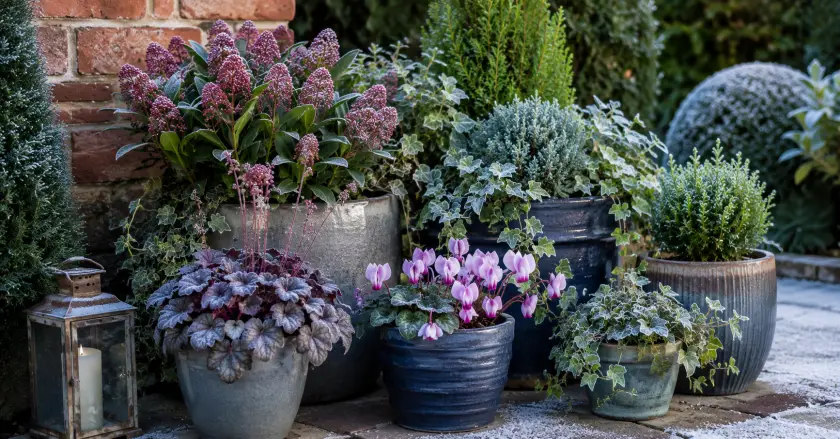
Consider compact lavender, rosemary, sea thrift, dwarf or compact architectural plants, sedum-type planting, and appropriately sized grasses for protected coastal containers.
Use a stable container with drainage holes and choose a pot size appropriate for the mature plant. Grouping containers can also create a more protected arrangement than placing each pot alone.
If you are planning several containers, our container gardening guide provides additional ideas, while the Soil Calculator can help estimate how much growing medium you need for rectangular planters.
Soil and Watering in Coastal Gardens
Do not assume every coastal garden has identical soil. Many coastal sites are sandy or stony and drain rapidly, but local conditions vary.
Organic matter can help improve moisture retention in very free-draining ground. Mulch can also reduce moisture loss, although the material should suit the plants and site.
Even established drought-tolerant-looking plants require attention while their roots are developing. Check the soil rather than watering by a rigid calendar.
For more detail, see our complete plant watering guide and guide to choosing the right soil mix.
Regional Differences Matter
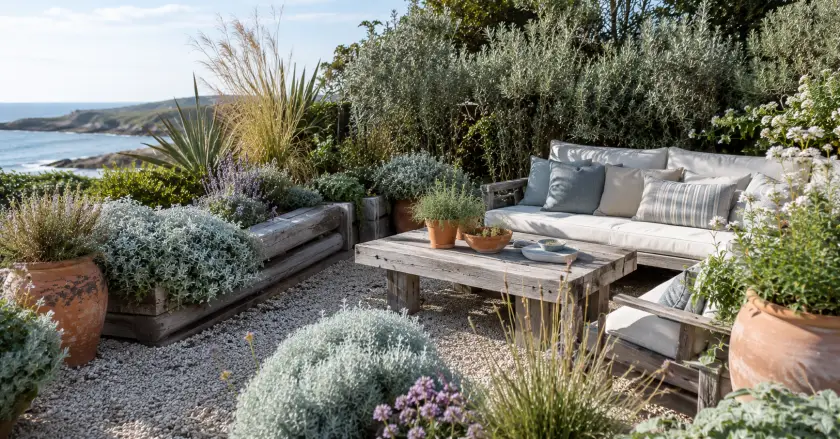
A plant described as coastal tolerant in one country is not automatically appropriate for every coastline.
Cool and Temperate Coastal Gardens
In temperate climates, gardeners may use plants such as sea thrift, sea holly, Griselinia, Escallonia, Tamarix, selected grasses, rosemary, and other locally hardy coastal choices.
Florida and Warm Humid Coasts
Warm coastal climates introduce additional considerations such as intense heat, humidity, tropical storms, and local native ecosystems. Plant recommendations should therefore come from sources appropriate to the specific region rather than simply copying a UK or European coastal planting list.
California Coastal Gardens
California coastal conditions can include dry summers, fog, wind, and significant regional variation. Locally appropriate native and climate-adapted planting should take priority over a generic seaside list.
The principle is simple: use the coastal characteristics discussed in this guide, but match the actual species to your climate and location.
Common Coastal Gardening Mistakes
- Choosing plants only for appearance: Match them to salt, wind, soil, sunlight, and local climate first.
- Using a solid barrier without considering turbulence: A permeable shelter can filter wind more effectively.
- Assuming coastal-tolerant means no watering: New plants still require attention while roots establish.
- Ignoring mature size: Windbreak shrubs can become large and overcrowd small gardens.
- Planting delicate flowers on the exposed edge: Create shelter first, then use more sensitive plants behind it.
- Copying plants from another climate: A successful Florida beach garden and a cool UK seaside garden may require very different species.
Practical Coastal Planting Tips
Start with structure. Establish the shrubs, hedges, and architectural plants before filling every gap with flowers.
Observe the prevailing wind. The most exposed edge of the garden should receive the toughest planting.
Create sheltered pockets. Even a small reduction in exposure can broaden the range of plants you can grow.
Repeat successful plants. If one species performs particularly well in your conditions, repeating it can produce a more coherent design than constantly experimenting with unrelated plants.
Watch new plants closely. Wind can increase moisture loss, so newly planted specimens may need more attention than their established neighbours.
Frequently Asked Questions
What are the best coastal garden plants?
Useful coastal garden plants include sea thrift, sea holly, lavender, rosemary, New Zealand flax, Griselinia, Escallonia, sea buckthorn, Tamarix, Olearia, selected grasses, and other species suited to your local climate. The best choice depends on salt exposure, wind, soil, and winter temperatures.
What are the best plants for the beach?
The best plants for the beach are those adapted to the actual exposure of the site. Sea thrift and sea holly are classic coastal choices, while suitable shrubs and grasses can provide structure and shelter. Gardens receiving direct salt-laden wind need tougher plants than protected properties farther inland.
What plants can survive strong coastal wind?
Plants with compact growth, flexible stems, narrow leaves, leathery or waxy foliage, or other adaptations to exposed conditions often perform better. Suitable choices can include sea thrift, sea holly, selected grasses, New Zealand flax, Griselinia, Escallonia, sea buckthorn, and Tamarix, depending on climate and exposure.
What shrubs make good coastal windbreaks?
Depending on local conditions, useful coastal windbreak shrubs can include Griselinia, Escallonia, Elaeagnus, sea buckthorn, Olearia, Pittosporum, and Tamarix. A mixed permeable screen is often preferable to trying to stop wind completely.
Can lavender grow near the sea?
Lavender can perform well in sunny coastal gardens with good drainage. It is less suited to persistently wet soil, so site conditions still matter even where the climate is otherwise suitable.
Can coastal plants grow in containers?
Yes. Compact lavender, rosemary, sea thrift, suitable grasses, and other wind-tolerant plants can work in coastal containers. Use stable pots, provide drainage, and monitor moisture because exposed containers may dry quickly.
Do coastal plants still need watering?
Yes, particularly while they establish. Wind can increase moisture loss, so check the root zone regularly after planting rather than assuming a coastal-tolerant plant can immediately survive without supplemental water.
Should I use a fence or hedge as a windbreak?
A permeable hedge or wind-filtering screen can reduce wind speed without creating as much turbulence as a completely solid barrier. The best solution depends on your site, available space, and exposure.
Related Coastal and Outdoor Plant Guides
- Outdoor Plants Guides
- Hardy Outdoor Plants That Thrive All Year
- Low-Maintenance Outdoor Plants
- Pollinator-Friendly Outdoor Plants
- Plants for Small Outdoor Spaces
- Best Plants for Container Gardening
- Best Soil Mix Guide
- Complete Plant Watering Guide
- Soil Calculator
Final Thoughts
The best coastal garden plants are not simply plants that look good beside the sea. They are plants suited to the site’s real combination of wind, salt exposure, soil, drainage, sunlight, and climate.
If you are choosing plants for the beach, begin with the toughest exposed areas. Establish suitable shelter, use structural shrubs and grasses, then add flowering plants in the calmer spaces created behind them.
A layered approach gives you more options and reduces the need to constantly replace plants that were never suited to the site in the first place.