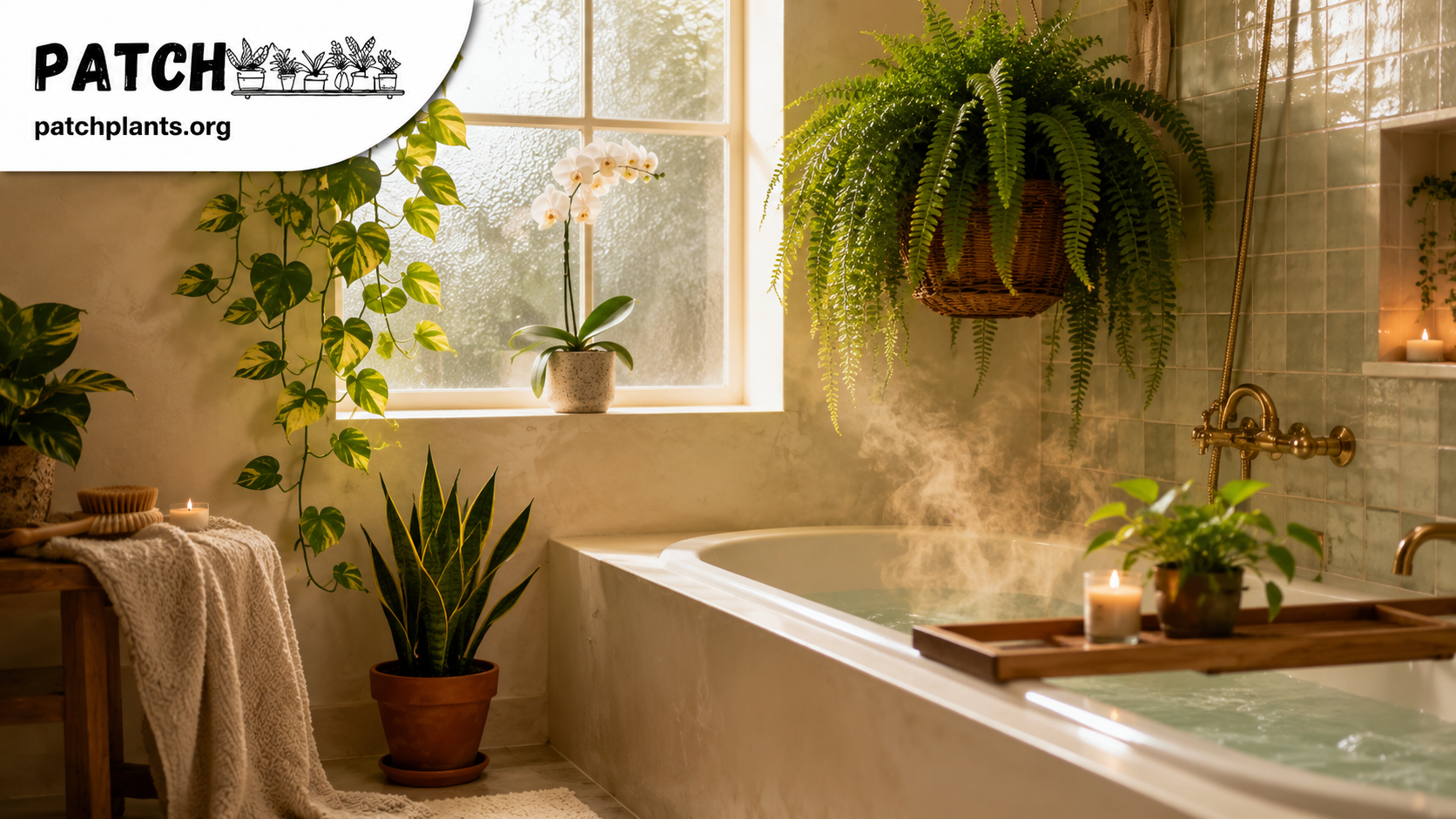
The best plants for your bathroom are those that match the room’s natural light, humidity, temperature, and available space. Bathrooms can be excellent homes for tropical ferns, pothos, orchids, and other moisture-loving plants, but not every houseplant benefits from a steamy environment.
For a bathroom with a window, Boston fern, spider plant, pothos, bird’s nest fern, and Calathea are attractive choices. For limited daylight, consider ZZ plant, snake plant, cast iron plant, or green Chinese evergreen. In a bathroom without windows, these plants still need sufficient artificial light to remain healthy over time.
This guide compares 33 bathroom plants, including hanging varieties, small plants for narrow shelves, large tropical specimens, and options for brighter windowsills. You’ll also learn how to grow plants in a windowless bathroom, manage watering and humidity, avoid mold-related problems, and choose safer plants for homes with pets.
What Are the Best Plants for a Bathroom?
Boston fern, pothos, spider plant, bird’s nest fern, peace lily, Calathea, and moth orchid are among the best plants for a bathroom with suitable natural light. These species generally appreciate the higher humidity found in frequently used bathrooms, although their watering and lighting requirements are different.
For beginners, pothos, ZZ plant, snake plant, and spider plant are practical starting choices. If you have a bright, humid bathroom and can monitor moisture regularly, try Boston fern, Maidenhair Fern, or a Cretan Brake Fern.
If your bathroom has no windows, focus on lighting before plant selection. No living plant thrives indefinitely in total darkness.
Key Takeaways
- Bathroom plants need sufficient light, appropriate watering, drainage, and ventilation as well as suitable humidity.
- Boston fern, bird’s nest fern, Calathea, Cretan Brake Fern, and Maidenhair Fern appreciate humid conditions when there is enough indirect light.
- Snake plant, ZZ plant, cast iron plant, and green Chinese evergreen tolerate lower light, but they cannot survive indefinitely without adequate natural or artificial lighting.
- Pothos, spider plant, heartleaf philodendron, and selected ferns are useful bathroom hanging plants.
- Watermelon Peperomia, Lemon Button Fern, Haworthia, and air plants can fit small shelves when their individual light needs are met.
- Shower steam may benefit some tropical plants, but houseplants are not effective bathroom dehumidifiers or mold-prevention systems.
- Water according to the plant and the moisture in its growing medium instead of following a fixed weekly schedule.
- Pet safety matters: lavender, lucky bamboo, pothos, and several other popular bathroom plants should not be treated as non-toxic.
Quick Comparison: 33 Best Bathroom Plants
| Plant | Preferred Light | Best Bathroom Use | Care Level |
|---|---|---|---|
| 1. Pothos | Low to bright indirect | Hanging shelves | Easy |
| 2. ZZ Plant | Low to bright indirect | Low-light corners | Easy |
| 3. Snake Plant | Low to bright indirect | Narrow floor spaces | Easy |
| 4. Boston Fern | Medium to bright filtered | Humid hanging displays | Moderate |
| 5. Spider Plant | Medium to bright indirect | Hanging baskets | Easy |
| 6. Peace Lily | Low to bright indirect | Foliage and flowers | Easy to moderate |
| 7. Aloe Vera | Bright light | Sunny windowsill | Easy |
| 8. English Ivy | Low to medium indirect | Cooler hanging areas | Moderate |
| 9. Monstera Deliciosa | Bright indirect | Large floor displays | Moderate |
| 10. Bird’s Nest Fern | Medium to bright indirect | Humid shelves | Moderate |
| 11. Lucky Bamboo | Low to medium indirect | Small countertop displays | Easy |
| 12. Calathea | Medium indirect | Patterned foliage | Moderate |
| 13. Heartleaf Philodendron | Low to bright indirect | Trailing shelves | Easy |
| 14. Chinese Evergreen | Low to medium indirect | Shaded corners | Easy |
| 15. Cast Iron Plant | Low to medium indirect | Low-light rooms | Easy |
| 16. Cretan Brake Fern | Bright indirect | Compact humid displays | Moderate |
| 17. Fernwood Mikado | Low to bright indirect | Compact upright accent | Easy |
| 18. Rubber Plant | Medium to bright indirect | Large bright bathrooms | Moderate |
| 19. Watermelon Peperomia | Medium to bright indirect | Small shelves | Easy to moderate |
| 20. Baby’s Tears | Medium indirect | Small trailing pots | Moderate |
| 21. Air Plants | Bright indirect | Mounted displays | Moderate |
| 22. Lavender | Full sun | Very sunny windowsill | Demanding indoors |
| 23. Swiss Cheese Vine | Bright indirect | Hanging or climbing vines | Moderate |
| 24. Tradescantia Zebrina | Bright indirect | Colorful hanging displays | Easy |
| 25. Anthurium | Bright indirect | Flowering display | Moderate |
| 26. Parlor Palm | Low to medium indirect | Soft tropical foliage | Easy to moderate |
| 27. Silver Satin Pothos | Medium to bright indirect | Trailing shelves | Easy to moderate |
| 28. Lemon Button Fern | Medium filtered | Small humid spaces | Moderate |
| 29. Grape Ivy | Medium indirect | Trailing baskets | Easy to moderate |
| 30. Bird of Paradise | Very bright light | Large bathrooms | Moderate |
| 31. Maidenhair Fern | Bright filtered | Humid shelves | Demanding |
| 32. Haworthia | Medium to bright indirect | Bright, ventilated windowsill | Easy |
| 33. Moth Orchid | Bright indirect | Flowering shelf display | Moderate |
Important: These plants do not all need the same growing conditions. The list includes true humidity-loving tropical plants as well as plants suitable only for brighter, well-ventilated bathrooms.
What Makes a Bathroom Suitable for Houseplants?
Bathrooms can provide warmth and temporary increases in humidity from showers and baths. These conditions may suit many tropical houseplants, but light and ventilation are just as important.
Humidity
Bathrooms often have higher humidity than living rooms or bedrooms, especially immediately after hot showers. This can reduce moisture loss from the leaves of humidity-sensitive tropical plants.
However, humidity is not always consistently high. A rarely used guest bathroom may be quite dry, while a heavily used bathroom may experience short bursts of very high humidity followed by drier periods.
Long periods of stagnant, wet air can also encourage mold and fungal problems. Ventilation remains necessary even when growing humidity-loving plants.
Natural Light
Many bathroom windows have frosted glass, which can help diffuse strong light. A bright bathroom with filtered daylight can be suitable for ferns, orchids, pothos, and other tropical plants.
A north-facing window may provide lower but usable light. A south- or west-facing window may require some shading to protect delicate leaves from intense sunshine.
For help identifying your lighting conditions, read our complete indoor light and grow lights guide.
Temperature
Tropical plants often prefer stable warmth. However, some bathrooms become cold overnight or experience sudden temperature changes when windows are opened in winter.
Avoid placing sensitive plants against cold window glass or directly above a heater.
Ventilation
A good bathroom plant setup should not interfere with ventilation. Use the bathroom exhaust fan and maintain airflow to prevent excess condensation and damp surfaces.
The Royal Horticultural Society’s bathroom plant guide recommends choosing plants according to the room’s actual light and humidity rather than assuming every bathroom has suitable conditions.

33 Best Plants for Your Bathroom
1. Pothos — Best Easy Bathroom Hanging Plant
Botanical name: Epipremnum aureum.
Pothos is one of the most versatile plants for bathrooms because its trailing stems work beautifully on shelves, in hanging containers, and beside bright windows.
It tolerates lower indirect light, but highly variegated varieties such as Marble Queen generally need more light than greener forms. A bathroom with bright filtered daylight will support fuller growth.
- Light: Low to bright indirect light.
- Water: Allow the upper growing medium to dry before watering.
- Best placement: Hanging basket or shelf away from direct water spray.
- Pet safety: Toxic if chewed.
See our pothos plant care guide for details on pruning, watering, and propagation.
2. ZZ Plant — Best for Lower-Light Bathrooms
Botanical name: Zamioculcas zamiifolia.
ZZ plant has glossy leaves and water-storing rhizomes that make it one of the more forgiving indoor plants. It tolerates lower illumination and infrequent watering better than many tropical houseplants.
However, a ZZ plant cannot live indefinitely without sufficient light. If the bathroom has no window and inadequate overhead lighting, use a suitable grow light.
- Light: Low to bright indirect light.
- Water: Allow substantial drying between waterings.
- Best placement: Shaded corner with usable light.
- Pet safety: Keep away from pets that chew plants.
For more advice, read our ZZ plant care guide.
3. Snake Plant — Best Upright Bathroom Plant
Botanical name: Dracaena trifasciata, formerly Sansevieria trifasciata.
Snake plant is useful for bathrooms with limited floor space because its sword-shaped leaves grow upright rather than spreading widely.
It handles lower light and less frequent watering, but excessive moisture around the roots can cause rot. Bathroom humidity does not mean the soil should remain constantly damp.
- Light: Low to bright indirect light.
- Water: Allow the potting mix to dry well.
- Best placement: Narrow floor corner or stable countertop.
- Pet safety: Toxic to cats and dogs if ingested.
Read our snake plant care guide.
4. Boston Fern — Best for Humid Hanging Baskets
Botanical name: Nephrolepis exaltata, including Boston fern cultivars.
Boston fern is an excellent choice for a warm bathroom with adequate filtered light. Its arching fronds create a lush effect in hanging baskets, and its foliage often benefits from the humidity of frequently used bathrooms.
Unlike snake plant or ZZ plant, Boston fern prefers more consistent soil moisture. Allowing its roots to become severely dry can result in browning and leaf drop.
- Light: Medium to bright filtered light.
- Water: Maintain suitable, consistent moisture without waterlogging.
- Best placement: Hanging basket near a bright bathroom window.
- Pet safety: Listed as non-toxic to cats and dogs by the ASPCA.
For further information, visit our Boston fern care guide.
5. Spider Plant — Best for Easy Hanging Greenery
Botanical name: Chlorophytum comosum.
Spider plant produces long, arching leaves and small plantlets on hanging stems. These make it particularly attractive in baskets or on elevated bathroom shelves.
It prefers adequate indirect light and can tolerate some lower-light conditions, although it generally produces more vigorous growth with brighter illumination.
- Light: Medium to bright indirect light.
- Water: Let the upper soil dry slightly before watering.
- Best placement: Hanging basket or window-adjacent shelf.
- Pet safety: Listed as non-toxic to cats and dogs by the ASPCA.
Keep the hanging pot secure and out of the way of doors, lights, and shower fixtures.
6. Peace Lily — Best for Elegant Green Foliage
Botanical name: Spathiphyllum species and cultivars.
Peace lily combines broad, dark green foliage with distinctive white spathes. It tolerates lower light, making it useful in bathrooms with soft indirect daylight.
However, flowering is generally better in brighter indirect light. Shower humidity may support foliage health, but it cannot replace the light needed for blooming.
- Light: Low to bright indirect light; brighter for flowers.
- Water: Keep appropriately moist without saturating roots.
- Best placement: Bathroom shelf or floor display with indirect light.
- Pet safety: Contains irritating calcium oxalates.
See our peace lily care guide.
7. Aloe Vera — Best for a Sunny Bathroom Window
Botanical name: Aloe vera.
Aloe vera is a succulent that works only in bathrooms with sufficiently bright light and reliable drainage. It is not a good choice for a dark, frequently damp location.
Although aloe can tolerate some humidity, consistently wet soil and inadequate light can damage its roots.
- Light: Bright light, with suitable direct sunshine after acclimation.
- Water: Allow the growing medium to dry well.
- Best placement: Sunny bathroom windowsill with ventilation.
- Pet safety: Toxic to cats and dogs if ingested.
For more growing advice, read our aloe vera care guide.
8. English Ivy — Best for Cooler Bathrooms
Botanical name: Hedera helix.
English ivy is a trailing or climbing plant that can look attractive in a hanging container near a suitable bathroom window.
It generally prefers cooler conditions and can struggle in very hot, stagnant, or dry environments. Spider mites are another common problem.
- Light: Low to medium or bright indirect light.
- Water: Keep moisture balanced, avoiding waterlogged soil.
- Best placement: Cooler bathroom with indirect light.
- Pet safety: Toxic if ingested.
English ivy can be invasive outdoors in parts of the United States. Keep it contained and avoid disposing of rooted cuttings in natural areas.
9. Monstera Deliciosa — Best Large Tropical Bathroom Plant
Botanical name: Monstera deliciosa.
Monstera is known for large green leaves that develop characteristic splits and holes as the plant matures. A sufficiently large bathroom with bright indirect light can provide a suitable location.
Humidity can support tropical foliage, but large leaves and mature leaf splits also depend on plant maturity, adequate light, root health, and suitable climbing support.
- Light: Bright indirect light.
- Water: Allow the upper growing medium to begin drying.
- Best placement: Large floor area away from splashing water.
- Pet safety: Toxic if chewed.
For species-specific growing information, read our Monstera plant care guide.
10. Bird’s Nest Fern — Best for Broad Tropical Fronds
Botanical name: Asplenium nidus and closely related cultivated forms.
Bird’s nest fern develops broad, glossy fronds from a central rosette. It appreciates warm, humid conditions and filtered light.
Its large foliage makes it suitable for a sturdy bathroom shelf or plant stand. Avoid pouring water into the central crown, particularly in conditions with poor airflow.
- Light: Medium to bright indirect light.
- Water: Maintain moderate moisture with good drainage.
- Best placement: Bright, humid shelf away from direct sun.
- Pet safety: Check the exact botanical identification before purchase.
Unlike a traditional trailing fern, bird’s nest fern grows as an upright rosette.
11. Lucky Bamboo — Best for Small Decorative Displays
Botanical name: Dracaena sanderiana.
Lucky bamboo is not a true bamboo. Its upright green canes make it popular for small counters, shelves, and minimalist displays.
It can be grown in water or suitable potting mix, provided it receives adequate indirect light.
- Light: Low to medium indirect light.
- Water: Refresh water regularly if grown without soil.
- Best placement: Stable bathroom shelf or counter.
- Pet safety: Not pet-safe; Dracaena can be toxic to cats and dogs.
Keep water-grown specimens in clean containers and avoid excessive fertilizer. A bathroom with no window still requires suitable artificial lighting.
12. Calathea — Best for Patterned Leaves
Botanical names: Various plants commonly sold as Calathea, including species now placed in Goeppertia.
Calathea plants are prized for striking leaf patterns and contrasting colors. Many appreciate the humidity available in a bright bathroom.
These plants prefer stable moisture and filtered light, so they require closer attention than ZZ plant or snake plant.
- Light: Medium to bright filtered light.
- Water: Keep appropriately moist without waterlogging.
- Best placement: Warm, bright bathroom shelf.
- Pet safety: Common Calathea species are generally listed as non-toxic; verify the species.
Read our complete Calathea plant care guide for troubleshooting.
13. Heartleaf Philodendron — Best for Cascading Green Vines
Botanical name: Philodendron hederaceum.
Heartleaf philodendron has glossy heart-shaped leaves that look attractive trailing from shelves or hanging baskets.
It tolerates a range of indirect light conditions and can benefit from the warmth of a regularly used bathroom.
- Light: Low to bright indirect light.
- Water: Allow the upper soil to dry appropriately.
- Best placement: Hanging planter or high shelf.
- Pet safety: Contains irritating calcium oxalate crystals.
For care and pruning advice, visit our Philodendron care guide.
14. Chinese Evergreen — Best for Soft Bathroom Light
Botanical name: Aglaonema species and cultivars.
Chinese evergreen is known for decorative foliage in green, silver, cream, pink, and red. Green and silver-green varieties generally tolerate lower light better than highly colorful forms.
It works well in a bathroom receiving gentle daylight, especially where you want an upright plant that does not require frequent pruning.
- Light: Low to medium indirect light for many green varieties.
- Water: Allow the upper growing medium to begin drying.
- Best placement: Shaded floor corner or countertop with daylight.
- Pet safety: Toxic if chewed.
Do not rely on Chinese evergreen to remove bathroom odors or prevent mold.
15. Cast Iron Plant — Best for Very Shaded Bathrooms
Botanical name: Aspidistra elatior.
Cast iron plant is one of the more shade-tolerant houseplants. Its broad, deep green leaves create an understated display in bathrooms where brighter-light plants may struggle.
It grows slowly and does not need permanently damp soil. Its reputation for tolerating shade should not be confused with an ability to live in darkness.
- Light: Low to medium indirect light.
- Water: Allow part of the growing medium to dry.
- Best placement: Shaded bathroom corner with sufficient light.
- Pet safety: Listed as non-toxic to cats and dogs by the ASPCA.
This is one of the most practical options for a low-maintenance bathroom plant collection.
16. Cretan Brake Fern — Best Compact Fern for a Humid Bathroom
Botanical name: Pteris cretica and related cultivated selections, including plants sold as Pteris nipponica.
Cretan Brake Fern provides delicate, upright fronds and attractive green or variegated foliage. It is a useful choice for bathrooms with bright filtered light and suitable humidity.
Compared with drought-tolerant plants, it needs more consistent attention to soil moisture.
- Light: Bright indirect light.
- Water: Keep the growing medium moderately moist without waterlogging.
- Best placement: Bathroom shelf near a filtered-light window.
- Pet safety: Confirm species-specific safety before allowing pet access.
The RHS includes Cretan Brake Fern among suitable bathroom houseplants.

17. Fernwood Mikado — Best Compact Upright Accent
Plant identification: A snake plant selection commonly marketed as ‘Fernwood Mikado’.
Fernwood Mikado has slender, upright leaves grouped in a compact fountain-like form. It provides a modern architectural appearance while occupying relatively little space.
Its care is broadly similar to other snake plants, including the need for well-draining potting mix and appropriate drying between waterings.
- Light: Low to bright indirect light.
- Water: Let the growing medium dry well between waterings.
- Best placement: Narrow bathroom counter or small floor area.
- Pet safety: Use the same precautions as other snake plants.
Although Fernwood Mikado is a distinct cultivated selection, it should not be treated as a separate botanical genus.
18. Rubber Plant — Best for Large Glossy Leaves
Botanical name: Ficus elastica.
Rubber plant has broad glossy leaves that can make a striking display in a large, bright bathroom.
It generally prefers medium to bright indirect light, making it a poor choice for a genuinely dark bathroom.
- Light: Medium to bright indirect light.
- Water: Allow partial drying between waterings.
- Best placement: Bright floor area with enough room for growth.
- Pet safety: Can irritate pets if chewed.
For long-term growing advice, read our rubber plant care guide.
19. Watermelon Peperomia — Best Patterned Small Bathroom Plant
Botanical name: Peperomia argyreia.
Watermelon Peperomia produces rounded green leaves with silver stripes resembling a watermelon rind. Its compact size makes it attractive on shelves and narrow counters.
It enjoys indirect light but should not remain in heavy, waterlogged soil.
- Light: Medium to bright indirect light.
- Water: Allow the upper growing medium to dry partially.
- Best placement: Bright bathroom shelf or window-adjacent counter.
- Pet safety: Listed as non-toxic to cats and dogs by the ASPCA.
See the ASPCA Watermelon Peperomia profile for its botanical identification and pet-safety classification.
20. Baby’s Tears — Best Tiny-Leaved Trailing Plant
Botanical name: Soleirolia soleirolii.
Baby’s Tears forms a dense mat of tiny round leaves that can spill over the edges of a small container.
It appreciates humidity and reasonably consistent soil moisture, making it useful for a bathroom shelf with filtered light.
- Light: Medium indirect or bright filtered light.
- Water: Maintain consistent moisture without leaving roots saturated.
- Best placement: Small hanging pot or shelf.
- Pet safety: Verify by the botanical name before purchase.
Baby’s Tears is a common name also used for other plants. When buying, confirm that the plant is Soleirolia soleirolii, rather than relying on the label alone.
21. Air Plants — Best for Mounted Bathroom Displays
Botanical name: Tillandsia species.
Air plants are epiphytic bromeliads that can grow without conventional potting soil. They are suitable for creative displays on secure holders or mounted surfaces.
They absorb water through specialized structures on their leaves, but shower steam alone may not provide sufficient hydration.
- Light: Bright indirect light for many species.
- Water: Hydrate appropriately and allow the plant to dry thoroughly afterward.
- Best placement: Bright shelf or well-ventilated mounted display.
- Pet safety: Confirm the exact species; many common Tillandsia are regarded as non-toxic.
Never leave the plant permanently wet inside a closed glass container. Poor airflow and water trapped within the leaf base can cause rot.
The RHS air plant guide explains proper watering and the importance of avoiding crown rot.
22. Lavender — Best for a Very Sunny, Well-Ventilated Bathroom
Botanical name: Lavandula species.
Lavender is a fragrant Mediterranean plant that requires strong sunlight and excellent drainage. It is not naturally suited to the dark, consistently damp conditions typical of many bathrooms.
A bright bathroom with a sunny window and good ventilation may support container-grown lavender, but an ordinary tropical houseplant is usually a better option for a humid, shaded bathroom.
- Light: Full sun or very strong plant lighting.
- Water: Allow suitable drying in well-drained soil.
- Best placement: Very sunny, ventilated window.
- Pet safety: Lavender is listed as toxic to cats and dogs by the ASPCA.
If your bathroom is dark or persistently humid, choose a fern or other suitable tropical foliage plant instead.
23. Swiss Cheese Vine — Best Compact Monstera Relative
Botanical name: Monstera adansonii.
Swiss Cheese Vine has smaller leaves with distinctive holes and a climbing or trailing growth habit.
It works well in a bright bathroom where its vines can grow along a suitable support or trail from an elevated planter.
- Light: Bright indirect light.
- Water: Let the upper growing medium begin drying.
- Best placement: Bright hanging shelf or moss pole.
- Pet safety: Contains irritating calcium oxalates.
Keep the pot secure and check that trailing stems do not hang into the shower or areas where pets can reach them.
24. Tradescantia Zebrina — Best for Purple and Silver Foliage
Botanical name: Tradescantia zebrina.
Tradescantia Zebrina produces striped purple, silver, and green leaves on trailing stems. It adds color to a bathroom with adequate indirect light.
It grows quickly under suitable conditions and can be pruned to encourage a fuller appearance.
- Light: Bright indirect light, sometimes with gentle sun.
- Water: Allow the upper growing medium to dry slightly.
- Best placement: Hanging basket or bright shelf.
- Pet safety: Do not assume it is pet-safe; Tradescantia species may cause irritation and should be kept out of reach.
Its colorful leaves may become less vibrant in insufficient light. Avoid leaving stems constantly wet or exposed to harsh cleaning sprays.
25. Anthurium — Best for Colorful Flowering Displays
Botanical name: Anthurium species and flowering cultivars.
Anthurium produces glossy leaves and colorful spathes surrounding its true flowers. It can be an attractive addition to a bright, warm bathroom.
Humidity may support healthy foliage, but good light and roots are important for reliable flowering.
- Light: Bright indirect light.
- Water: Use an airy growing medium and water appropriately.
- Best placement: Warm bathroom counter with filtered daylight.
- Pet safety: Contains irritating calcium oxalate crystals.
For detailed advice, read our Anthurium care guide.
26. Parlor Palm — Best Soft Tropical Foliage
Botanical name: Chamaedorea elegans.
Parlor palm produces delicate green fronds and grows relatively slowly indoors. It is suitable for bathrooms with usable low to medium indirect light.
It appreciates balanced moisture and may benefit from suitable humidity, but prolonged waterlogging can still damage the roots.
- Light: Low to medium indirect light.
- Water: Maintain suitable moisture with drainage.
- Best placement: Floor or stand in a bathroom with enough space.
- Pet safety: Listed as non-toxic to cats and dogs by the ASPCA.
Choose a stable container and allow room for the fronds to spread as the plant matures.
27. Silver Satin Pothos — Best Silver-Patterned Trailing Plant
Botanical name: Scindapsus pictus.
Silver Satin Pothos is a common retail name, but this plant is not the same species as traditional pothos, Epipremnum aureum.
Its velvety leaves have attractive silver markings, and the vines can trail beautifully from bathroom shelves.
- Light: Medium to bright indirect light.
- Water: Allow the upper growing medium to dry.
- Best placement: Hanging basket or shelf near a window.
- Pet safety: Contains irritating calcium oxalates.
Keep the foliage away from hot direct sun and avoid constantly wet potting mix.
28. Lemon Button Fern — Best Compact Fern for Small Bathrooms
Botanical name: Nephrolepis cordifolia ‘Duffii’.
Lemon Button Fern has small, rounded leaflets and a compact appearance. It is a useful alternative when a full Boston fern would take up too much room.
It appreciates filtered light, humidity, and consistent but well-drained soil moisture.
- Light: Medium filtered or bright indirect light.
- Water: Maintain moderate, consistent moisture.
- Best placement: Small shelf or hanging planter near daylight.
- Pet safety: Listed as non-toxic to cats and dogs by the ASPCA.
The ASPCA Duffii Fern profile confirms its non-toxic classification.
29. Grape Ivy — Best for a Trailing Green Display
Botanical name: Cissus rhombifolia.
Grape ivy is a climbing or trailing houseplant with divided glossy foliage. It works well in a bathroom with suitable filtered light and enough space for its stems.
It may be grown in a hanging container or guided along a trellis.
- Light: Medium indirect light.
- Water: Water when the upper soil begins drying.
- Best placement: Hanging basket or bathroom shelf.
- Pet safety: Listed as non-toxic to cats and dogs by the ASPCA.
Prune long stems when needed and check the growing medium rather than watering on a rigid schedule.
30. Bird of Paradise — Best for Spacious, Very Bright Bathrooms
Botanical name: Strelitzia species, including commonly sold S. nicolai and S. reginae.
Bird of Paradise has large paddle-shaped leaves and a dramatic upright form. It can make an attractive floor plant in a spacious bathroom with very bright light.
Although it appreciates suitable warmth, humidity alone cannot compensate for insufficient light. Indoor flowering is not guaranteed, especially for large foliage specimens.
- Light: Very bright light; suitable sunshine may be beneficial.
- Water: Allow appropriate partial drying without severe drought.
- Best placement: Large, bright bathroom away from narrow walkways.
- Pet safety: Can be harmful if ingested.
Before purchasing, review the mature size. A large specimen may be impractical in an ordinary residential bathroom.
31. Maidenhair Fern — Best for a Bright, Humid Bathroom
Botanical name: Adiantum species, including commonly cultivated maidenhair ferns.
Maidenhair Fern has fine, delicate fronds that create an airy appearance. It is attractive but often more demanding than Boston fern or Lemon Button Fern.
It prefers suitable humidity, consistent soil moisture, and filtered light. Repeated drying can cause the delicate fronds to become brown and brittle.
- Light: Bright filtered light without harsh direct sun.
- Water: Maintain consistent moisture without waterlogging.
- Best placement: Humid bathroom shelf near a bright window.
- Pet safety: Verify the exact species if pets have access.
The RHS recommends Maidenhair Fern for suitable bright, humid bathrooms.
32. Haworthia — Best Compact Succulent for a Bright, Ventilated Bathroom
Botanical name: Haworthia and selected closely related cultivated forms.
Haworthia-type succulents are compact plants with firm, often patterned leaves. They may tolerate gentler light than many desert succulents, but they still need adequate illumination and good drainage.
They are not ideal for persistently wet, dark bathrooms. Choose a bright, ventilated windowsill instead.
- Light: Medium to bright indirect light.
- Water: Allow the growing medium to dry appropriately.
- Best placement: Bright windowsill away from direct shower spray.
- Pet safety: Haworthia species are listed as non-toxic to cats and dogs by the ASPCA.
See our succulent care guide and the ASPCA Haworthia listing.
33. Moth Orchid — Best Elegant Flowering Bathroom Plant
Botanical name: Phalaenopsis species and hybrids.
Moth Orchid is one of the best flowering plants for a warm bathroom with bright filtered light. Its long-lasting blooms and compact growth make it attractive on a shelf or counter.
Phalaenopsis orchids usually grow in airy bark-based orchid potting media rather than ordinary dense potting soil.
- Light: Bright indirect light without harsh midday sunshine.
- Water: Water appropriately, drain completely, and avoid persistent saturation.
- Best placement: Bright bathroom shelf away from direct shower water.
- Pet safety: Listed as non-toxic to cats and dogs by the ASPCA.
The RHS Phalaenopsis growing guide explains proper light, watering, and growing-medium requirements.
Best Plants for a Bathroom Without Windows
A bathroom without windows can support living plants if sufficient artificial lighting is provided. However, no houseplant survives indefinitely in complete darkness.
Snake plant, ZZ plant, cast iron plant, and green Chinese evergreen are sensible candidates because they tolerate lower light better than many decorative species.
Ordinary bathroom ceiling lights may or may not provide enough light. A small, dim fixture used only for short periods is generally unsuitable as the sole source of plant lighting.
How to Grow Plants in a Windowless Bathroom
- Choose a shade-tolerant species such as ZZ plant, snake plant, or cast iron plant.
- Assess how much artificial light actually reaches the leaves.
- Install a suitable grow light when ordinary bathroom lighting is inadequate.
- Follow the manufacturer’s instructions for distance and intensity.
- Provide a consistent daily light period and a regular dark period.
- Choose electrical equipment suitable for its bathroom location and local safety requirements.
- Monitor for weak growth, yellow leaves, and long stretched stems.
The University of Minnesota Extension’s indoor lighting guide explains why all plants need light and how artificial lighting can compensate for limited natural daylight.
For more options, browse our low light house plants guide.
Best Bathroom Plants by Space and Placement

Best Plants for Bathroom Window Ledges
Watermelon Peperomia, small Haworthia, Moth Orchid, and compact ferns can suit bathroom windowsills when the available light matches their needs.
Choose a stable container and protect delicate leaves from intense direct sunlight or cold window glass.
Best Bathroom Hanging Plants
Pothos, spider plant, heartleaf philodendron, Boston fern, Tradescantia Zebrina, and Silver Satin Pothos are attractive hanging options.
Secure the hanging pot to an appropriate structural fitting. Do not hang a heavy planter from an ordinary shower curtain rod or an unsuitable ceiling fixture.
For additional ideas, see our hanging plants for shelves and bathrooms guide.
Best Plants for Small Bathrooms
For limited countertop space, choose compact plants such as Lemon Button Fern, Watermelon Peperomia, Fittonia-type tropical plants, Haworthia, or a small Moth Orchid.
Keep plants away from toothbrushes, cosmetics, and areas where water may collect around their containers.
Best Large Bathroom Plants
Monstera, rubber plant, bird of paradise, parlor palm, and larger Chinese Evergreen varieties can provide visual impact in suitable rooms.
Check mature size and available light first. Large foliage plants should not obstruct doors, ventilation, or safe movement.
Best Plants Near the Shower
Boston fern, bird’s nest fern, and certain air plants can benefit from the humidity of a bright bathroom.
However, place them near the shower rather than directly beneath showerheads. Repeated splashing, soap residue, cleaning chemicals, and waterlogged containers can damage roots and leaves.
A secure, well-ventilated position outside direct spray is usually safer than hanging a plant inside the shower enclosure.
Do Bathroom Plants Absorb Moisture and Prevent Mold?
Some plants take up moisture from the environment, and certain epiphytic species absorb water through their foliage. However, keeping a few houseplants in a bathroom is not an effective method of reducing room humidity or preventing mold.
In fact, potted plants can also release water vapor through transpiration, while damp potting mix may add moisture to the immediate environment.
The US Environmental Protection Agency recommends bathroom exhaust fans and ventilation to control moisture and reduce mold risk.
Better Ways to Manage Bathroom Moisture
- Run the bathroom exhaust fan during showers and afterward as appropriate.
- Repair dripping fixtures and plumbing leaks.
- Keep wet surfaces and shower areas clean.
- Allow sufficient airflow around plant containers.
- Avoid leaving standing water in saucers.
- Use a hygrometer when persistent humidity is a concern.
- Address visible mold and its underlying moisture source promptly.
Choose bathroom plants because they suit the growing conditions and make the space attractive, not as replacements for mechanical ventilation or proper cleaning.
How Often Should You Water Bathroom Plants?
Watering frequency depends on the plant’s species, soil mix, pot size, light level, temperature, and growth rate.
Bathroom humidity can sometimes slow moisture loss, but it does not create a universal watering schedule. A Boston fern may need water much sooner than a ZZ plant in the same room.
| Plant Type | General Watering Approach |
|---|---|
| Snake plant, ZZ plant, Haworthia, Aloe | Allow more drying between waterings |
| Pothos, Philodendron, Scindapsus | Water after the upper potting mix begins drying |
| Chinese evergreen, Rubber Plant, Monstera | Provide balanced moisture and adequate drainage |
| Boston fern, Maidenhair Fern, Cretan Brake Fern, Baby’s Tears | Maintain more consistent moisture without saturation |
| Phalaenopsis Orchid | Water according to the bark mix and root condition; drain thoroughly |
| Air plants | Hydrate appropriately and allow thorough drying afterward |
Five Steps for Better Bathroom Watering
- Identify the plant and understand its moisture preference.
- Check the growing medium below the surface before watering.
- Water thoroughly when the plant needs it.
- Allow excess water to drain completely.
- Check again before the next watering rather than relying on a fixed calendar.
For further instructions, see our complete watering guide and signs of overwatering guide.
Best Soil and Containers for Bathroom Plants
Even plants that appreciate humid air need roots that can access oxygen. A bathroom’s atmosphere should not be confused with a need for permanently wet soil.
For Ferns and Moisture-Loving Plants
Use a suitable, moisture-balanced growing medium that retains enough water while still providing drainage. Boston fern, Maidenhair Fern, and similar species are more sensitive to severe drying than succulents.
For Tropical Climbing Plants
Pothos, Philodendron, Monstera, and Scindapsus generally benefit from airy potting mixes with appropriate drainage.
For Orchids and Air Plants
Many Moth Orchids grow in bark-based media that provide root aeration. Air plants do not need conventional potting soil at all.
For Succulents
Haworthia and Aloe Vera need well-draining soil and sufficient light. Avoid heavy mixes that remain wet for long periods.
Use containers with functional drainage holes, and empty decorative outer pots after watering.
For more guidance, visit our soil mix guide and repotting guide.
Are Bathroom Plants Safe for Cats and Dogs?
Not all popular bathroom plants are safe for pets. Some species contain irritating calcium oxalate crystals, saponins, or other compounds that can cause problems when animals chew the leaves.
Bathroom Plants Listed as Non-Toxic
The ASPCA lists the following commonly grown plants as non-toxic to cats and dogs:
- Spider plant
- Boston fern
- Parlor palm
- Cast iron plant
- Watermelon Peperomia
- Lemon Button Fern
- Haworthia
- Moth Orchid (Phalaenopsis)
- Grape Ivy
Bathroom Plants That Require Pet Precautions
- Pothos, Philodendron, Monstera, Scindapsus, Peace Lily, Chinese Evergreen, and Anthurium: Contain irritating calcium oxalates.
- ZZ plant and snake plant: Should be kept away from pets that chew foliage.
- Lucky bamboo: A Dracaena species; not the same as pet-safe true bamboo.
- Lavender: Listed as toxic to cats and dogs by the ASPCA.
- English ivy: Toxic if ingested.
- Aloe Vera: Toxic to cats and dogs.
- Tradescantia: May cause irritation; do not assume it is safe for pets.
- Bird of Paradise: Can be harmful if ingested.
Pet safety should always be checked using the exact botanical name. Two different plants can share similar common names while having different toxicity profiles.
Consult the ASPCA toxic and non-toxic plants database for species-specific information.
Even non-toxic plants can cause stomach upset if eaten. Contact a veterinarian promptly if a pet chews an unfamiliar or potentially harmful plant and develops symptoms.
For additional planning ideas, explore our cat-friendly plant guide and dog-friendly plant guide.
Common Bathroom Plant Problems and Fixes
| Problem | Possible Cause | First Step |
|---|---|---|
| Yellow leaves | Excess water, inadequate light, or natural aging | Check the root zone and light level |
| Brown, crispy edges | Water stress, dry air, salts, or temperature problems | Review moisture and environment |
| Drooping foliage | Dry soil, damaged roots, or temperature stress | Check soil before watering |
| Leggy growth | Insufficient light | Improve indirect light or add a grow light |
| Soft stems or roots | Possible rot | Inspect drainage and root condition |
| Leaves with dark spots | Possible leaf disease, water damage, or environmental stress | Check airflow and whether leaves remain wet |
| Small black flies | Possible fungus gnats associated with damp potting mix | Check moisture management |
| White cotton-like insects | Mealybugs | Isolate and identify the pest |
Why Are My Bathroom Plant Leaves Turning Yellow?
Yellowing leaves can result from overwatering, inadequate light, temperature changes, or natural aging.
Do not assume extra humidity always causes yellow foliage. Examine the root zone, drainage, and light levels first.
For more advice, read our yellow leaves troubleshooting guide.
Why Are the Leaf Tips Turning Brown?
Brown tips may occur because of inconsistent watering, dry indoor air, fertilizer salts, or other environmental stress.
In a bathroom, do not assume low humidity is the cause without checking actual conditions. A guest bathroom may be dry, but a frequently used one can remain relatively humid.
Why Is My Bathroom Plant Not Growing?
Slow growth may occur because the plant receives insufficient light, the room is too cold, or the species naturally grows slowly.
Increasing fertilizer cannot replace inadequate light. Improve the growing environment before feeding more heavily.
What Causes Mold Around Bathroom Plants?
Persistently damp growing media, poor airflow, wet surfaces, and inadequate ventilation can encourage fungal growth.
Improve drainage and ventilation, remove visibly decaying plant material, and address leaks or persistent condensation.
If there is mold on bathroom walls or fixtures, investigate building moisture problems rather than treating the houseplant as a solution.
Bathroom Plant Care Checklist
| Task | When to Check | What to Look For |
|---|---|---|
| Review light | At placement and season changes | Enough daylight or suitable artificial lighting |
| Check soil moisture | Before each watering | Moisture appropriate to species |
| Empty saucers | After watering | No standing water |
| Run ventilation | During and after showers as appropriate | Excess condensation or stagnant damp air |
| Inspect foliage | Regularly | Pests, yellowing, damaged leaves |
| Clean plant surfaces | When dusty or affected by splashes | Soap residue, dust, dirt |
| Review safety | At placement | Pet access, falling pots, electrical fixtures |
| Repot | When roots or potting medium require it | Root crowding, damaged mix, poor drainage |
Common Bathroom Plant Mistakes to Avoid
- Assuming a plant can grow without light: Shade tolerance does not mean an ability to survive in darkness.
- Choosing every plant for humidity alone: Aloe, Lavender, and Haworthia need very different conditions from tropical ferns.
- Using a rigid watering schedule: Different plants use water at different rates.
- Ignoring bathroom ventilation: Houseplants cannot replace an exhaust fan.
- Placing plants in direct shower spray: Soap residue and repeated saturation may damage foliage and roots.
- Using unstable hanging containers: Heavy pots need suitable structural support.
- Ignoring pet safety: Several common bathroom plants are toxic or irritating if chewed.
- Assuming all orchids need identical care: Different orchid genera have different light and moisture requirements.
- Putting sun-loving succulents in dark bathrooms: Low light can weaken growth even when the plant tolerates some humidity.
- Expecting plants to prevent mold: Proper ventilation and moisture control are essential.
Frequently Asked Questions About Bathroom Plants
What are the best plants for a bathroom with no windows?
ZZ plant, snake plant, cast iron plant, and green Chinese evergreen are practical choices because they tolerate lower light. However, a windowless bathroom must provide sufficient artificial illumination, usually through appropriate plant lighting if ordinary ceiling lights are inadequate.
Which plants grow best in a humid bathroom?
Boston fern, bird’s nest fern, Maidenhair Fern, Cretan Brake Fern, Calathea, Moth Orchid, and some tropical climbing plants appreciate humid conditions. They still need adequate light, suitable soil moisture, and airflow.
What are the best bathroom hanging plants?
Pothos, spider plant, Boston fern, heartleaf philodendron, Silver Satin Pothos, and Tradescantia Zebrina are attractive choices for hanging containers. Choose a position with suitable light and a secure hanging fixture away from direct water spray.
Do bathroom plants absorb moisture and prevent mold?
Some plants absorb moisture, but ordinary houseplants cannot meaningfully dehumidify a bathroom or replace ventilation. Use a bathroom exhaust fan, repair leaks, and control persistent condensation to reduce mold risk.
Which bathroom plants are safe for cats and dogs?
Spider plant, Boston fern, parlor palm, cast iron plant, Watermelon Peperomia, Lemon Button Fern, Haworthia, Grape Ivy, and Moth Orchid are listed as non-toxic by the ASPCA. Check the exact species before purchasing, and remember that non-toxic plants can still cause stomach upset if eaten.
Final Thoughts: Choosing the Best Plants for Your Bathroom
The best plants for your bathroom are those suited to the light, temperature, humidity, and space the room actually provides.
For an easy-care bathroom plant, consider pothos, ZZ plant, spider plant, or snake plant. For a bright and humid bathroom, try Boston fern, bird’s nest fern, Maidenhair Fern, or Moth Orchid. If you have a large, bright space, Monstera or a suitable palm may create an attractive focal point.
Remember that even the toughest plants need light, correct watering, and healthy roots. Windowless bathrooms require appropriate artificial lighting, while steamy bathrooms still need ventilation.
Choose plants for their growing requirements rather than expecting them to absorb all moisture or purify the air. A small, healthy collection is often more attractive and easier to maintain than many poorly matched plants.
For more inspiration, explore our low-light indoor plants guide and room-by-room plant styling guide.