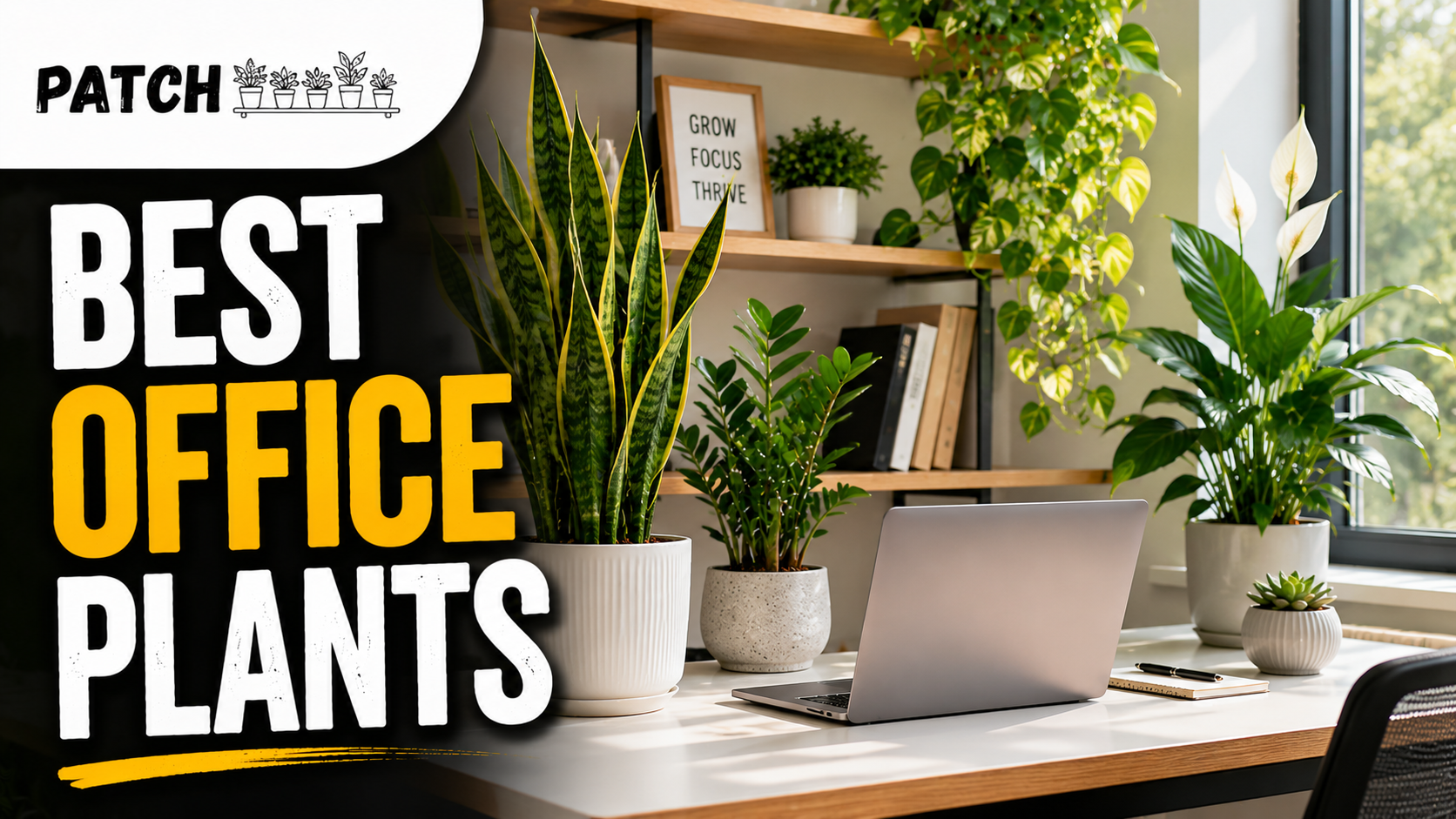
The best office plants make a workspace feel more welcoming without adding unnecessary maintenance. Whether you need a small plant for a desk, greenery for a low-light cubicle, or a large statement plant beside a bright window, the right choice depends on available light, space, watering habits, and office temperature.
For most beginners, snake plant, ZZ plant, pothos, cast iron plant, and Chinese evergreen are practical starting points. Peperomia and baby rubber plant work well on compact desks, while Monstera, rubber plant, and fiddle leaf fig are better suited to brighter areas with more floor space.
This guide compares 35 office plants, including their botanical names, light requirements, watering preferences, and ideal placements. It also explains what really works in a windowless office, which plants are safer around pets, and how to keep office greenery healthy through weekends, holidays, and changing seasons.
What Are the Best Office Plants?
The best office plants for most workplaces are snake plant, ZZ plant, pothos, heartleaf philodendron, Chinese evergreen, cast iron plant, and parlor palm. These plants tolerate a range of indoor conditions and are generally easier to manage than highly demanding tropical or flowering plants.
If your desk receives bright indirect light, consider baby rubber plant, spider plant, jade plant, or African violet. For sunny windowsills, aloe vera, Echeveria, and selected cacti are good alternatives. If the workspace has no windows, adequate artificial lighting is essential even for shade-tolerant plants.
Key Takeaways
- Choose office plants according to actual light exposure, not just their reputation for being low maintenance.
- Snake plant, ZZ plant, cast iron plant, green Chinese evergreen, and pothos are among the most adaptable plants for offices with limited daylight.
- Compact desk plants include Peperomia, baby rubber plant, Fittonia, small ZZ plants, and Haworthia where sufficient light is available.
- Monstera, rubber plant, fiddle leaf fig, and bamboo palm are useful larger plants for suitably bright office spaces.
- Windowless offices need enough artificial light for photosynthesis. No living houseplant can thrive indefinitely in darkness.
- Watering should follow soil moisture and plant type rather than a fixed weekly schedule.
- Some studies associate office greenery with better workplace experiences, but plants are not a substitute for proper ventilation or indoor air filtration.
- Always check pet safety when selecting plants for a home office shared with cats or dogs.
Best Office Plants at a Glance
| Office Situation | Recommended Plants | Light Requirement |
|---|---|---|
| Low-light office | Snake plant, ZZ plant, cast iron plant, green Chinese evergreen | Low but adequate light |
| Small desk | Baby rubber plant, Peperomia, small ZZ plant, Haworthia | Low to bright indirect, depending on species |
| Shelf or cubicle | Pothos, heartleaf philodendron, spider plant | Low to medium or bright indirect |
| Bright office corner | Monstera, rubber plant, fiddle leaf fig, bamboo palm | Medium to bright indirect |
| Sunny windowsill | Jade plant, aloe vera, Echeveria, selected cacti | Strong light |
| Flowering desk display | African violet, Kalanchoe, peace lily | Suitable medium to bright light for blooms |
| Windowless office | Snake plant, ZZ plant, cast iron plant with appropriate artificial lighting | Sufficient artificial plant lighting required |
How to Choose the Right Office Plant
Before buying a plant, identify the conditions in which it will actually grow. A plant that looks beautiful in a nursery may decline if your desk sits far from a window or the office lights remain off throughout the weekend.
1. Check the Available Light
Light is the most important consideration. Offices with bright windows can support many tropical plants and succulents, while shaded cubicles require species that tolerate lower illumination.
According to the University of Minnesota Extension’s indoor lighting guidance, plants need enough light for photosynthesis. Artificial lighting can compensate for insufficient natural sunlight when it delivers appropriate intensity and duration.
2. Match the Plant to Your Watering Routine
If you work from home or travel frequently, choose plants that tolerate some drying between waterings, such as snake plant, ZZ plant, jade plant, or suitable Peperomia species.
If you can check soil moisture regularly, peace lily, Fittonia, Boston fern, and Calathea may be suitable, provided the office has appropriate light and humidity.
3. Consider Desk and Floor Space
A narrow desk may be better suited to a compact plant than a fast-growing trailing vine or large tropical specimen.
Choose larger floor plants only where their mature size will not block pathways, emergency exits, desks, or access to windows.
4. Check Temperature and Airflow
Office heating and air conditioning can create very dry air or drafts. Avoid placing sensitive plants directly beneath vents or against cold window glass.
5. Think About Pets and Shared Spaces
Some popular office plants contain compounds that can irritate cats, dogs, or people if ingested. Select plants with appropriate safety characteristics for the space, especially in home offices.

35 Best Office Plants for Desks, Cubicles and Workspaces
1. Snake Plant — Best Office Plant for Beginners
Botanical name: Dracaena trifasciata, formerly Sansevieria trifasciata.
Snake plant is one of the easiest office plants because it tolerates lower light, normal indoor air, and occasional missed watering. Its tall, upright leaves provide structure without spreading across a large desk or walkway.
Although snake plants tolerate shade, they still require sufficient light to maintain healthy growth. A plant in very weak light may survive for some time but produce little new foliage.
- Light: Low to bright indirect light.
- Water: Let the growing medium dry well between waterings.
- Best for: Beginners, offices with limited space, and low-maintenance floor displays.
- Watch for: Yellowing or soft leaves caused by prolonged wet soil.
Choose a pot with drainage holes and check soil moisture before watering. Read our snake plant care guide for more information.
2. ZZ Plant — Best for Busy Professionals
Botanical name: Zamioculcas zamiifolia.
ZZ plant has glossy green leaflets and thick underground rhizomes that store water. It is especially suitable for people who travel frequently or cannot check their plants every day.
This plant tolerates comparatively low light, but it grows more strongly when given suitable brighter indirect conditions. A windowless office still needs enough artificial lighting to support it.
- Light: Low to bright indirect light.
- Water: Allow substantial drying before watering again.
- Best for: Office corners, desk-side cabinets, and infrequent watering.
- Watch for: Soggy soil and damaged rhizomes.
The main mistake is treating ZZ plant like a moisture-loving fern. For complete care instructions, read our ZZ plant guide.
3. Pothos — Best Trailing Office Plant
Botanical name: Epipremnum aureum.
Pothos is popular for office shelves and cubicle dividers because its stems can trail over the edges of containers. Green and golden varieties tolerate a range of indoor lighting conditions, although brighter filtered light usually supports fuller growth.
Highly variegated cultivars may become less colorful or produce smaller leaves in inadequate light.
- Light: Low to bright indirect light.
- Water: Water after the upper portion of soil begins drying.
- Best for: Shelves, cubicles, bookcases, and hanging planters.
- Watch for: Leggy growth or repeatedly wet potting mix.
Prune elongated vines when needed and keep stems away from electrical equipment. Our pothos plant care guide explains watering and propagation.
4. Peace Lily — Best for Elegant Greenery and Occasional Flowers
Botanical name: Spathiphyllum species and cultivars.
Peace lily produces broad, glossy foliage and distinctive white flower structures. It tolerates relatively low indirect light, although brighter filtered light encourages more reliable flowering.
It is a useful plant for offices with a window and for growers willing to monitor moisture more frequently than they would with a ZZ plant.
- Light: Low to medium indirect light; brighter for flowering.
- Water: Maintain appropriate moisture without saturation.
- Best for: Reception desks, living office corners, and sheltered workspaces.
- Watch for: Drooping from either dry soil or unhealthy roots.
Peace lily contains irritating calcium oxalate crystals, so it is not a pet-safe choice. For more care details, see our peace lily care guide.
5. Spider Plant — Best for Hanging Office Displays
Botanical name: Chlorophytum comosum.
Spider plant produces arching foliage and small plantlets on long stems. It is ideal for elevated shelves and hanging containers where the plantlets have room to develop.
It appreciates medium to bright indirect light. It can tolerate some shade but usually produces denser growth and more plantlets in better lighting.
- Light: Medium to bright indirect light.
- Water: Let the upper soil dry slightly before watering.
- Best for: Hanging baskets, office shelves, and shared workspaces.
- Watch for: Brown leaf tips and root stress.
The ASPCA lists spider plant as non-toxic to cats and dogs. Read our spider plant care guide for propagation and maintenance tips.
6. Rubber Plant — Best Large Office Plant for Glossy Foliage
Botanical name: Ficus elastica.
Rubber plant is a strong choice for bright offices with space for a larger, upright specimen. Its thick, glossy leaves create an attractive contrast against desks, shelves, and neutral-colored walls.
Rubber plants are often advertised as low-light plants, but medium to bright indirect light is generally better for healthy growth.
- Light: Medium to bright indirect light.
- Water: Allow the upper soil to dry appropriately.
- Best for: Bright office corners and larger floor displays.
- Watch for: Leaf drop after abrupt environmental changes.
Use our rubber plant care guide for watering, pruning, and repotting advice.
7. Bamboo Palm — Best for a Tropical Floor Display
Botanical name: Chamaedorea seifrizii.
Bamboo palm has slender, cane-like stems and feathery foliage that give an office a softer tropical appearance.
It can tolerate indoor conditions with adequate indirect light, but a brighter filtered position generally supports stronger, denser growth.
- Light: Medium to bright indirect light; some lower-light tolerance.
- Water: Maintain suitable moisture without waterlogging.
- Best for: Reception areas and larger offices.
- Watch for: Dry frond tips, pests, and inadequate light.
Allow sufficient space around the plant so its fronds do not interfere with office walkways.
8. English Ivy — Best for Cooler Rooms
Botanical name: Hedera helix.
English ivy is a trailing or climbing plant that can be displayed in a hanging basket or on a suitably supported shelf.
It usually appreciates cooler indoor conditions and adequate indirect light. Hot, dry offices can lead to leaf damage and spider mite problems.
- Light: Low to medium or bright indirect light.
- Water: Keep moisture balanced; avoid prolonged saturation.
- Best for: Cooler offices and hanging displays.
- Watch for: Spider mites and dry indoor air.
English ivy is toxic if ingested and can also be invasive outdoors in parts of the United States. Keep it contained and do not dispose of viable stems in natural areas.
9. Aloe Vera — Best for a Sunny Office Windowsill
Botanical name: Aloe vera.
Aloe vera is a succulent with thick leaves arranged in a rosette. It is suitable for bright office windows where the plant can receive strong light and dry adequately between waterings.
It is not a good choice for a dark cubicle or a desk far from any light source.
- Light: Bright light, with suitable direct sun after acclimation.
- Water: Allow the growing medium to dry well.
- Best for: Sunny windowsills and bright home offices.
- Watch for: Rot from excessive watering and leaf scorch after sudden exposure.
Aloe can be harmful if ingested by cats or dogs. Learn more in our aloe vera care guide.
10. Calathea — Best for Decorative Leaf Patterns
Botanical names: Selected Goeppertia species, commonly sold as Calathea.
Calathea plants are grown for their ornamental leaves, which may have stripes, contrasting colors, or distinctive patterns.
They prefer filtered light, stable conditions, and more consistent moisture than many beginner houseplants. This makes them better suited to offices where someone can maintain them regularly.
- Light: Medium to bright indirect light.
- Water: Keep appropriately moist without leaving soil saturated.
- Best for: Humid, well-lit offices and plant enthusiasts.
- Watch for: Dry leaf edges, cold drafts, and inconsistent moisture.
Many Calathea species are now classified in the genus Goeppertia. See our Calathea plant care guide for more detail.
11. Jade Plant — Best Long-Lived Desk Succulent
Botanical name: Crassula ovata.
Jade plant has thick, oval leaves and woody stems. With time, it can develop a miniature tree-like appearance that suits a bright desk or windowsill.
It requires significantly more light than classic low-light office plants. A dark office interior may cause stretched stems and weak growth.
- Light: Bright light, including some suitable direct sunshine.
- Water: Allow the potting mix to dry well between waterings.
- Best for: Bright windowsills and sunny home offices.
- Watch for: Overwatering and insufficient light.
Jade plant is toxic to cats and dogs according to the ASPCA. Our jade plant care guide covers long-term growth.
12. Fittonia — Best Compact Plant With Colorful Veins
Botanical name: Fittonia albivenis and related cultivated forms.
Fittonia, or nerve plant, has small leaves marked with attractive white, pink, or red veins. Its compact habit makes it suitable for small decorative containers.
It appreciates filtered light and relatively consistent moisture, making it better for an office where someone can monitor the plant regularly.
- Light: Medium indirect light.
- Water: Maintain light, even moisture.
- Best for: Small desks, decorative planters, and terrariums.
- Watch for: Sudden wilting when soil becomes too dry.
Fittonia is more moisture-sensitive than ZZ plant or snake plant. Avoid placing it beside a heating vent.
13. Monstera Deliciosa — Best Tropical Statement Plant
Botanical name: Monstera deliciosa.
Monstera is famous for its large, glossy green leaves, which develop characteristic splits and sometimes holes as the plant matures.
It can become a striking floor plant for a bright office with room for climbing support.

- Light: Bright indirect light.
- Water: Let the upper portion of the mix dry before watering.
- Best for: Bright floor corners and reception spaces.
- Watch for: Excessive shade, weak support, and waterlogged roots.
Monstera needs a stable container and may benefit from a suitable climbing pole. Visit our Monstera plant care guide for more growing advice.
14. Chinese Evergreen — Best for Low-Light Foliage
Botanical name: Aglaonema species and cultivars.
Chinese evergreen is a popular office plant because several green and silver-green varieties tolerate relatively low light.
Its broad foliage looks attractive in containers beside desks or on low shelves. Pink, red, and heavily variegated forms generally require brighter indirect light than green varieties.
- Light: Low to medium indirect light for many green forms.
- Water: Let the upper growing medium begin drying.
- Best for: Shaded desks and office corners.
- Watch for: Cold drafts, soggy soil, and loss of color in variegated cultivars.
Chinese evergreen contains irritating calcium oxalates and should be kept away from pets that chew plants.
15. Lucky Bamboo — Best Minimalist Desk Display
Botanical name: Dracaena sanderiana.
Lucky bamboo is not true bamboo. It is a tropical Dracaena commonly grown in water or potting mix and arranged in upright decorative displays.
It works well in compact office spaces receiving low to medium indirect light, as long as the conditions provide sufficient illumination.
- Light: Low to medium indirect light.
- Water: Keep water clean if grown without soil.
- Best for: Small desks, shelves, and minimalist interiors.
- Watch for: Yellowing stems, stagnant water, and direct sun scorch.
Choose a stable container that cannot spill over electronics or paperwork. Lucky bamboo is not considered safe for pets if ingested.
16. Fiddle Leaf Fig — Best for Bright Executive Offices
Botanical name: Ficus lyrata.
Fiddle leaf fig produces large, violin-shaped foliage and can create a strong architectural presence in an office with generous natural light.
It is more sensitive to changing conditions than snake plant, ZZ plant, or rubber plant. Stable lighting, suitable watering, and protection from temperature extremes are important.
- Light: Bright indirect light.
- Water: Check soil moisture and avoid prolonged wet conditions.
- Best for: Bright office corners and reception areas.
- Watch for: Leaf drop and browning after environmental stress.
Read our fiddle leaf fig care guide before choosing one for an office.
17. Boston Fern — Best for Humid Office Areas
Botanical name: Nephrolepis exaltata, including Boston fern cultivars.
Boston fern produces long, arching green fronds. It is an attractive choice for offices with suitable filtered light and humidity.
However, it is less forgiving of dry soil and very low humidity than ZZ plant or pothos.
- Light: Medium to bright indirect light.
- Water: Maintain consistent moisture without waterlogging.
- Best for: Bright, humid offices and hanging displays.
- Watch for: Dry fronds and browning tips.
Boston fern is listed as non-toxic to cats and dogs by the ASPCA. For detailed care, read our Boston fern guide.
18. Dieffenbachia — Best for Large Patterned Leaves
Botanical name: Dieffenbachia species and cultivars.
Dieffenbachia has large, striking leaves with different combinations of green, white, and cream. It provides visual interest without requiring direct sunlight.
Many varieties tolerate medium indirect light and some shade, although heavily patterned forms generally need adequate brightness.
- Light: Low to medium indirect light, depending on cultivar.
- Water: Water when the upper mix begins drying.
- Best for: Medium-sized floor displays and office corners.
- Watch for: Overwatering and exposure to cold air.
Safety: Dieffenbachia contains irritating calcium oxalate crystals. Chewing can cause significant mouth irritation, so keep it away from pets and children.
19. Croton — Best for Bright, Colorful Foliage
Botanical name: Codiaeum variegatum.
Croton has brightly patterned leaves that may combine green, red, orange, yellow, and burgundy tones.
It is a useful plant for offices that receive strong indirect light or appropriate direct sunshine. In dim light, growth and leaf coloration may decline.
- Light: Bright light; some acclimated direct sun may be suitable.
- Water: Keep moisture consistent without soggy soil.
- Best for: Bright creative offices and sunny window areas.
- Watch for: Sudden leaf drop after changes in light or temperature.
A croton is a colorful option, but it is not a good plant for a windowless cubicle.
20. Air Plants — Best for Creative Small Displays
Botanical name: Tillandsia species.
Air plants are epiphytic bromeliads that can grow without conventional potting soil. They are useful for small office displays on suitable holders, shelves, or decorative arrangements.
They still need sufficient light, air movement, and regular hydration. They are not maintenance-free simply because they do not grow in soil.
- Light: Bright indirect light for many species.
- Water: Hydrate appropriately for the species and dry thoroughly afterward.
- Best for: Compact office decorations and creative displays.
- Watch for: Dehydration or rot caused by poor drying and airflow.
Avoid keeping air plants permanently wet inside sealed glass containers.
21. Dragon Tree — Best Tall, Narrow Office Plant
Botanical name: Dracaena reflexa var. angustifolia, commonly sold as Dracaena marginata.
Dragon tree has narrow leaves growing from slender stems. Its upright shape works well beside furniture and in offices where available floor space is limited.
It tolerates some lower light but performs best with suitable indirect illumination.
- Light: Medium to bright indirect light; some lower-light tolerance.
- Water: Allow the upper growing medium to dry.
- Best for: Narrow office corners and tall plant displays.
- Watch for: Brown leaf tips, cold drafts, and excessive watering.
For more about the genus, read our Dracaena care guide.
22. Haworthia — Best Compact Succulent for a Bright Desk
Botanical name: Selected Haworthia and Haworthiopsis species.
Haworthia-type succulents often form small rosettes with patterned, firm leaves. Their compact size makes them attractive office desk plants where larger specimens would take up too much room.
They can tolerate gentler light than some desert succulents, but they still need adequate indirect illumination. Deep shade or a windowless desk without plant lighting is not ideal.
- Light: Medium to bright indirect light, depending on species.
- Water: Let the growing medium dry sufficiently.
- Best for: Small desks and bright shelves.
- Watch for: Overwatering and stretched growth from inadequate light.
Haworthia replaces a duplicate Chinese Evergreen entry from the original article so this list contains 35 distinct plant choices.
23. Heartleaf Philodendron — Best for Trailing Greenery
Botanical name: Philodendron hederaceum.
Heartleaf philodendron is a versatile climbing or trailing plant with glossy, heart-shaped leaves. Its graceful stems can soften the appearance of shelves, cabinets, and cubicle partitions.
Green varieties tolerate a range of indirect light levels, although brighter conditions generally produce fuller foliage.
- Light: Low to medium or bright indirect light.
- Water: Water when the upper growing medium begins drying.
- Best for: Office shelves, hanging pots, and plant stands.
- Watch for: Leggy vines in dim conditions.
Heartleaf philodendron is not pet-safe if chewed. Our Philodendron care guide explains growing and pruning.
24. Cast Iron Plant — Best for Shaded Office Corners
Botanical name: Aspidistra elatior.
Cast iron plant is among the most shade-tolerant houseplants. Its broad, dark green leaves and slow growth make it a practical option for offices where other decorative foliage plants may struggle.
It is still a living plant that needs usable light, but it is often more adaptable to dim conditions than brightly colored or fast-growing tropical species.
- Light: Low to medium indirect light.
- Water: Allow part of the mix to dry before watering.
- Best for: Shaded hallways and office corners.
- Watch for: Waterlogging in very low light.
Cast iron plant is listed as non-toxic to cats and dogs by the ASPCA, making it worth considering for pet-accessible home offices.
25. Purple Shamrock — Best for Unusual Purple Foliage
Botanical name: Oxalis triangularis.
Purple shamrock has triangular purple leaves that fold in response to daily light changes. It may also produce small flowers when conditions are suitable.
It needs more usable light than many low-light foliage plants and can enter a rest period when environmental conditions change.
- Light: Bright indirect light, sometimes with gentle sun.
- Water: Maintain suitable moisture during active growth; reduce when dormant.
- Best for: Bright desks and interesting ornamental displays.
- Watch for: Dormancy being mistaken for permanent plant death.
Because Oxalis species may contain oxalates, keep the plant away from pets that chew foliage.
26. Watermelon Peperomia — Best for Patterned Desk Foliage
Botanical name: Peperomia argyreia.
Watermelon Peperomia has rounded, striped leaves that resemble a watermelon rind. Its compact size makes it a distinctive choice for small desks.
Compared with several other common office plants, it needs more careful moisture management because its roots can suffer if the soil remains wet for long periods.
- Light: Medium to bright indirect light.
- Water: Allow partial drying between waterings.
- Best for: Desks, shelves, and small office planters.
- Watch for: Wet soil and weak growth in dark conditions.
Choose a small container with drainage and avoid soaking the growing medium repeatedly.
27. Lemon Balm — Best for a Sunny Home Office Herb
Botanical name: Melissa officinalis.
Lemon balm is a fragrant herb with fresh, lemon-scented foliage. It is best suited to a home office with strong natural light, not a shaded corporate desk.
Its growth can become weak or leggy without adequate sunlight, so choose a bright window or suitable plant lighting.
- Light: Strong light, including suitable direct sunshine.
- Water: Maintain appropriate moisture in well-drained soil.
- Best for: Sunny home office windowsills.
- Watch for: Leggy stems, poor light, and drying containers.
Harvest leaves only from plants grown with appropriate food-safe practices. A plant’s fragrance may be enjoyable, but it should not be described as a guaranteed stress treatment.
28. Lavender — Best Fragrant Plant for a Very Bright Office
Botanical name: Lavandula species.
Lavender offers silvery-green foliage and fragrant flowers, but it needs much brighter conditions than typical office foliage plants.
A very sunny office window may support container-grown lavender, although prolonged indoor growing can be difficult when light and airflow are insufficient.
- Light: Full sun or very strong plant lighting.
- Water: Allow appropriate drying in a well-draining mix.
- Best for: Sunny home office windows.
- Watch for: Weak growth in inadequate light or roots remaining wet.
See our fragrant indoor plants guide for additional ideas.
29. Echeveria — Best Colorful Rosette Succulent
Botanical name: Echeveria species and cultivars.
Echeveria plants have colorful, symmetrical rosettes and are popular for small decorative containers.
They require strong light to maintain their compact shape. They are not suitable for deep office shade, even though they tolerate dry conditions.
- Light: Strong light; suitable direct sunshine is often beneficial after acclimation.
- Water: Let the growing medium dry appropriately.
- Best for: Very bright office windowsills.
- Watch for: Stretched rosettes and root rot.
For succulent care techniques, read our succulent care guide.
30. Baby Rubber Plant — Best Easy-Care Peperomia
Botanical name: Peperomia obtusifolia.
Baby rubber plant is a compact houseplant with rounded, glossy leaves. Despite its common name, it is not closely related to the large rubber plant, Ficus elastica.
It generally suits small office desks with indirect light and a container that drains freely.
- Light: Medium to bright indirect light; green forms tolerate some shade.
- Water: Let the growing medium dry partially between waterings.
- Best for: Small desks and office shelves.
- Watch for: Soft stems from excessive moisture.
The ASPCA lists baby rubber plant as non-toxic to cats and dogs.
31. Mini Cactus — Best for Sunny Desks
Botanical name: Depends on the cactus species.
A miniature cactus can add sculptural texture to a sunny office desk or windowsill. However, the label “mini cactus” describes size rather than a particular species.
Many desert cacti require strong light, and some have sharp spines that make them unsuitable for crowded desks or high-traffic areas.
- Light: Strong light appropriate to the species.
- Water: Allow suitable drying between waterings.
- Best for: Bright windowsills and uncluttered home offices.
- Watch for: Inadequate light, overwatering, and sharp spines.
Choose the cactus by botanical name whenever possible. Read our cactus care guide for more information.
32. Kalanchoe — Best for Bright, Long-Lasting Flowers
Botanical name: Kalanchoe blossfeldiana.
Flowering Kalanchoe produces colorful clusters of blooms in shades including pink, red, orange, and yellow.
It is a good choice for an office that receives strong light. It is not an ideal plant for dark, windowless workspaces.
- Light: Bright light with suitable indirect or gentle direct sun.
- Water: Let the growing medium dry appropriately between waterings.
- Best for: Bright reception desks and windowsills.
- Watch for: Excessive watering and insufficient light.
Kalanchoe is toxic to cats and dogs according to the ASPCA, so place it away from animals that may chew leaves or flowers.
33. African Violet — Best Compact Flowering Desk Plant
Botanical name: Streptocarpus ionanthus, often sold under the former genus Saintpaulia.
African violet is a compact flowering houseplant with fuzzy leaves and attractive blooms. It performs well in suitable bright indirect light or under a properly positioned grow light.
It may survive in weaker light but often produces fewer flowers when illumination is inadequate.
- Light: Bright indirect light or suitable artificial plant lighting.
- Water: Maintain appropriate moisture without saturating the crown.
- Best for: Bright desks, window-adjacent shelves, and grow-light displays.
- Watch for: Weak flowering and wet-crown problems.
Our African violet care guide covers growing and flowering.
34. Coffee Plant — Best Conversation Starter
Botanical name: Coffea arabica.
Coffee plant has shiny green leaves and can develop fragrant flowers and fruit under suitable mature growing conditions. However, fruiting is not guaranteed indoors.
It is an interesting choice for a bright office or home workspace where consistent care is possible.
- Light: Bright indirect light.
- Water: Maintain suitable, consistent moisture without waterlogging.
- Best for: Bright home offices and plant enthusiasts.
- Watch for: Dry air, inconsistent watering, and inadequate light.
Coffee plant is more demanding than snake plant or ZZ plant. Its leaves and other plant parts should not be treated as pet-safe without checking the exact species and veterinary guidance.
35. Parlor Palm — Best Elegant Office Palm
Botanical name: Chamaedorea elegans.
Parlor palm has arching, feathery foliage and a relatively compact growth habit compared with many larger indoor palms.
It adapts to low to medium indirect light better than numerous sun-loving palm species and can be used in small offices or as a modest floor plant.
- Light: Low to medium indirect light.
- Water: Keep moisture balanced and avoid prolonged saturation.
- Best for: Small offices, reception spaces, and shaded rooms.
- Watch for: Brown frond tips and dry indoor air.
Parlor palm is listed as non-toxic to cats and dogs by the ASPCA.
Best Office Plants for Different Workspaces
The ideal plant depends on whether your office has daylight, how much space is available, and how reliably someone can maintain the plants.
Best Office Plants for Low Light
If your workspace receives limited daylight but is not completely dark, start with snake plant, ZZ plant, cast iron plant, green Chinese evergreen, heartleaf philodendron, pothos, or parlor palm.
These plants tolerate lower light better than most cacti, succulents, or flowering species.
However, low-light tolerance means the plant can cope with relatively limited illumination. It does not mean that the plant can produce new growth indefinitely without sufficient light.
For more suggestions, explore our low light house plants guide.
Best Office Plants for No Windows
Windowless offices can support plants if adequate artificial lighting is available. Snake plant, ZZ plant, cast iron plant, Chinese evergreen, and pothos are practical candidates because of their shade tolerance.
However, a dim ceiling light that operates for only a few hours each day may be insufficient, even for these plants.
How to Set Up a Windowless Office Plant Area
- Choose a shade-tolerant species.
- Assess the amount of artificial light actually reaching the foliage.
- Use an appropriately sized LED grow light if overhead lighting is insufficient.
- Follow the fixture manufacturer’s positioning and intensity guidance.
- Maintain a consistent daily light period, with a normal dark period.
- Monitor new growth for stretching, yellowing, or leaf loss.
Plant lights can supplement office lighting, but they should not cause excessive glare on computer screens or interfere with employees’ comfort.
The University of Minnesota Extension explains how artificial lighting can support indoor plant growth when daylight is inadequate.
Best Small Office Desk Plants
If your workspace has limited surface area, choose plants with compact growth and proportionate containers.
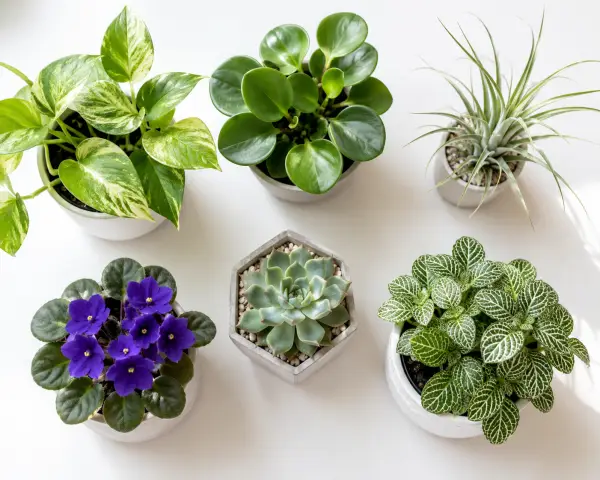
- For lower indirect light: Small ZZ plant or compact snake plant.
- For medium indirect light: Baby rubber plant or Watermelon Peperomia.
- For bright indirect light: African violet or Fittonia with appropriate humidity.
- For a bright, sunny desk: Jade plant, Haworthia, or suitable miniature succulents.
A stable container is particularly important near laptops, keyboards, paperwork, and electrical outlets.
Best Large Office Floor Plants
For larger rooms and reception areas, Monstera deliciosa, rubber plant, fiddle leaf fig, bamboo palm, and suitable Dracaena species can create attractive focal points.
Match the mature plant size to your office rather than buying only for its appearance on the nursery floor.
For more options, read our oversized indoor plants guide.
Best Flowering Office Plants
African violet, Kalanchoe, and peace lily can add flowers to a workspace when light and care conditions are suitable.
African violet and Kalanchoe require enough light for good flowering. Peace lily tolerates lower light for foliage, but usually produces more flowers when moved to brighter indirect conditions.
If the office is very dim, prioritize attractive green foliage rather than expecting reliable blooms.
Best Low-Maintenance Office Plants
Snake plant, ZZ plant, cast iron plant, green Chinese evergreen, and pothos are practical choices for busy workplaces.
Low maintenance does not mean no maintenance. These plants still need adequate light, proper drainage, occasional cleaning, and regular health checks.
How to Care for Office Plants
Office conditions differ from homes because lighting may change on weekends, heating systems can dry the air, and plant care may be shared between several people.
Water According to the Soil, Not the Calendar
Fixed watering schedules often fail because different plants use water at different rates.
A jade plant near a sunny window may need a different routine from a ZZ plant in a shaded cubicle or a Boston fern in a bright, humid reception area.
| Plant Group | Watering Approach |
|---|---|
| Snake plant, ZZ plant, jade plant, aloe vera | Allow substantial drying between waterings |
| Pothos, heartleaf philodendron, Dracaena | Water after upper soil begins drying |
| Chinese evergreen, rubber plant, Monstera | Maintain a suitable balance of moisture and drainage |
| Peace lily, Fittonia, Calathea, Boston fern | Keep moisture more consistent without waterlogging |
| Air plants | Hydrate appropriately and allow thorough drying afterward |
Use our complete plant watering guide for further instructions.
Use Pots With Functional Drainage
Choose containers with drainage holes. If a nursery pot sits inside a decorative cover pot, remove standing water after watering.
Standing water increases the risk of root problems, especially for plants growing slowly in low-light offices.
Protect Plants From Air Conditioning and Heating
Dry air and direct drafts can damage sensitive foliage. Position Boston fern, Fittonia, Calathea, and other humidity-sensitive plants away from strongly blowing vents.
Temperature stability is also important for tropical plants. Avoid placing them against freezing windows or immediately beside frequently opened exterior doors.
Clean Leaves and Inspect for Pests
Dust can reduce the light reaching leaf surfaces. Clean broad leaves carefully with a soft, damp cloth.
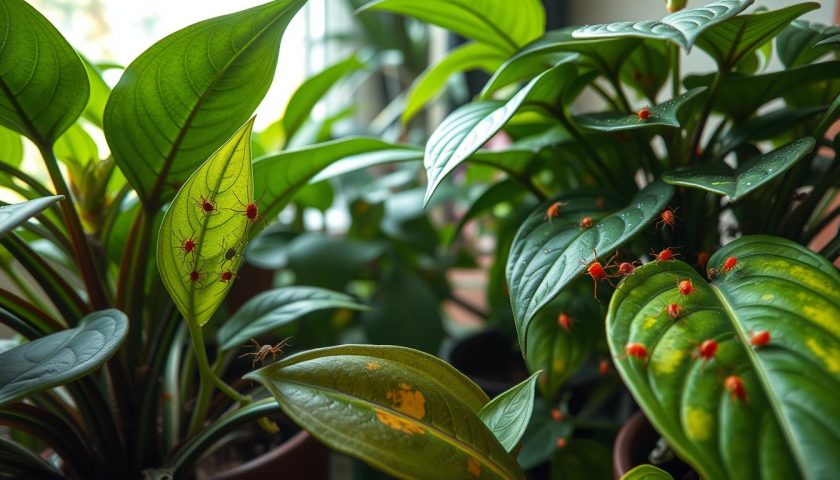
Check the undersides of leaves and stems for spider mites, mealybugs, scale insects, and other common pests.
Quarantine visibly infested plants rather than leaving them beside the rest of an office plant collection.
Feed During Active Growth When Needed
Plants in lower light usually grow more slowly and may need less fertilizer than the same species near a bright window.
Apply appropriate fertilizer according to label instructions. Excess fertilizer cannot compensate for insufficient light and may damage roots.
Repot Only When Necessary
There is no universal rule that every office plant must be repotted once a year.
Repot when roots have significantly crowded the container, the growing medium has deteriorated, or the plant has become unstable. Slow-growing plants may remain in the same pot for longer than fast-growing vines.
For more guidance, read our how to repot a plant guide.
Office Plant Care During Weekends and Holidays
Long weekends and office closures are common causes of plant-care problems. A practical care plan prevents unnecessary watering and reduces the chance of plants drying out while the office is empty.
Before a Long Weekend
- Check the soil moisture of each plant.
- Water only plants that actually need water.
- Remove excess water from saucers.
- Make sure plants will receive adequate light while the office is closed.
- Avoid leaving sensitive plants directly beneath heaters or cold drafts.
Before an Extended Office Closure
If the office will be closed for a week or longer, assign plant care responsibility to someone who understands the different moisture requirements.
Shade-tolerant plants may be suitable for lower light conditions, but windowless offices can become problematic if artificial lights remain off for prolonged periods.
Consider a suitable timed grow light if the office lacks natural daylight and the lighting system normally shuts down outside business hours.
Simple Shared-Office Watering Record
| Plant | Person Responsible | Check Needed |
|---|---|---|
| Snake plant and ZZ plant | Assigned office plant caretaker | Check dryness before occasional watering |
| Pothos and Philodendron | Assigned office plant caretaker | Check upper soil moisture |
| Peace lily and Boston fern | Assigned office plant caretaker | Monitor moisture more closely |
| Succulents and cacti | Assigned office plant caretaker | Check dryness and adequate light |
Recording the last watering date can reduce the risk of several colleagues watering the same plant unnecessarily.
Are Office Plants Really Good for Productivity?
Office plants may improve the appearance and perceived comfort of a workplace. Some studies have reported positive effects on employee satisfaction and selected measures of productivity.
A study published in the Journal of Experimental Psychology: Applied, titled The Relative Benefits of Green Versus Lean Office Space: Three Field Experiments, examined workplaces with and without plants and reported benefits associated with greener office environments.
These findings are encouraging, but results may differ by workplace, work type, lighting, employee preferences, and study design.
It would be inaccurate to promise that adding one office plant will automatically increase every employee’s productivity by a specific percentage.
Choose office greenery as one part of a comfortable, well-designed workspace rather than as a guaranteed solution for stress, concentration, or performance.
Do Office Plants Purify the Air?
Houseplants can remove certain airborne chemicals under controlled experimental conditions. However, ordinary potted plants have not been shown to provide meaningful air cleaning in typical occupied offices at normal plant densities.
A review published in the Journal of Exposure Science & Environmental Epidemiology, Potted Plants Do Not Improve Indoor Air Quality, found that the air-cleaning effects measured in sealed chambers do not translate into practical indoor air purification comparable to normal ventilation.
This does not make office plants useless. They still provide visual appeal and may contribute to a more pleasant working environment.
For improving office air quality, prioritize source control, suitable ventilation, maintenance, and properly selected filtration rather than relying on a few houseplants.
Read our air-purifying indoor plants guide for further discussion.
Which Office Plants Are Safe for Cats and Dogs?
Pet safety matters most in home offices, but it can also affect pet-friendly workplaces.
Do not assume that a plant is safe because it is common or sold for indoor decoration.
Commonly Grown Office Plants Listed as Non-Toxic
- Spider plant
- Parlor palm
- Boston fern
- Cast iron plant
- Baby rubber plant (Peperomia obtusifolia)
- Fittonia
Office Plants That Need Extra Pet Precautions
- Snake plant
- ZZ plant
- Pothos and Philodendron
- Peace lily
- Chinese evergreen and Dieffenbachia
- Monstera deliciosa
- Jade plant
- Aloe vera
- Kalanchoe
- English ivy
- Dracaena and lucky bamboo
Always verify the botanical name against an authoritative toxicity reference before choosing a plant for a home with pets.
The ASPCA provides plant-specific information, including its jade plant toxicity entry, Kalanchoe toxicity entry, and non-toxic baby rubber plant entry.
Even non-toxic plants may cause stomach upset if eaten in large quantities. If your pet chews a potentially harmful plant or develops symptoms, seek veterinary advice promptly.
Common Office Plant Problems and Solutions
| Problem | Possible Cause | What to Check First |
|---|---|---|
| Yellow leaves | Excess watering, low light, or natural aging | Soil moisture and drainage |
| Long, weak stems | Insufficient light | Available daylight or grow-light output |
| Brown leaf tips | Dry air, moisture stress, or fertilizer salts | Airflow, humidity, water, and feeding |
| Soil remains wet for a long time | Low water use, oversized pot, or unsuitable medium | Drainage and root condition |
| Leaves falling after moving a plant | Environmental stress | Recent light and temperature changes |
| Small leaves or no flowers | Insufficient light or other growing stress | Species requirements and plant health |
| White cotton-like patches | Mealybugs | Leaf joints and stems |
| Fine webbing and speckling | Spider mites | Undersides of leaves |
Why Are My Office Plants Turning Yellow?
Yellowing can result from excessive watering, inadequate light, poor drainage, natural leaf aging, or root problems. Check growing conditions before changing your routine.
For more help, read our guide to yellowing plant leaves.
What If My Office Plant Is Drooping?
Drooping may indicate dry soil, but it can also be caused by unhealthy waterlogged roots or temperature stress. Check the growing medium before adding more water.
Why Does a Plant Keep Losing Leaves?
Rapid leaf loss may follow abrupt changes in light, temperature, or watering. Some older leaf loss is normal, but repeated shedding warrants a closer look at roots and environmental conditions.
Why Is My Office Plant Growing Slowly?
Low light, cooler temperatures, seasonal changes, or the plant’s naturally slow growth habit may all contribute.
Do not add excessive fertilizer to force growth. Assess light and root health first.
Office Plant Selection Checklist
| Question | What to Decide |
|---|---|
| Does the office have windows? | Assess the actual usable natural light |
| Are lights switched off at night or on weekends? | Decide whether supplemental plant lighting is needed |
| How much desk or floor space is available? | Choose the right mature plant size |
| Who will water the plants? | Assign a responsible caretaker |
| Is the office air unusually dry? | Select suitable species and address environmental issues |
| Are cats or dogs present? | Check species-specific pet toxicity |
| How long is the office closed during holidays? | Plan watering and lighting around closures |
Frequently Asked Questions About Office Plants
What are the best office plants for low light?
Snake plant, ZZ plant, cast iron plant, green Chinese evergreen, pothos, and heartleaf philodendron are practical low-light office choices. They still require enough natural or artificial light for photosynthesis, even when they tolerate shade.
What are the best plants for an office with no windows?
Snake plant, ZZ plant, cast iron plant, and suitable Chinese evergreen varieties are good candidates when a windowless office has sufficient artificial lighting. No houseplant can thrive indefinitely in complete darkness, so provide an appropriate light source when overhead office lights are inadequate.
What are the easiest office desk plants to maintain?
Small ZZ plants, compact snake plants, baby rubber plants, and suitable Peperomia varieties are manageable choices when their lighting needs are met. Succulents such as jade plant and Haworthia also work well on brighter desks but need more light than typical low-light foliage plants.
Do office plants really improve air quality?
Some plants remove pollutants in laboratory chambers, but ordinary potted plants have not demonstrated meaningful air purification in typical offices. Ventilation and appropriate filtration remain more reliable ways to address indoor air quality.
Can office plants improve focus and productivity?
Some workplace studies report benefits associated with adding greenery, including improvements in employee perceptions and certain productivity measures. However, results differ between workplaces, and no fixed improvement can be guaranteed by adding a particular plant.
Final Thoughts: Choosing the Best Office Plants
The best office plants are not necessarily the most expensive or decorative. They are the plants that match the amount of light, available space, temperature, and maintenance routine of your workspace.
For easy care, start with snake plant, ZZ plant, cast iron plant, or pothos. For a small desk, choose baby rubber plant, compact Peperomia, or a small snake plant. If you have a bright office with extra floor space, consider Monstera, rubber plant, or bamboo palm.
If your office has no windows, provide sufficient artificial lighting instead of expecting shade-tolerant plants to grow in darkness.
A few well-chosen plants can make a workspace more inviting without creating an unnecessary maintenance burden. Start with one healthy specimen, learn its watering and light needs, and expand your collection when the conditions allow.
For further ideas, explore our office-friendly plants guide and best indoor plants for beginners.