🌿 Key Takeaways
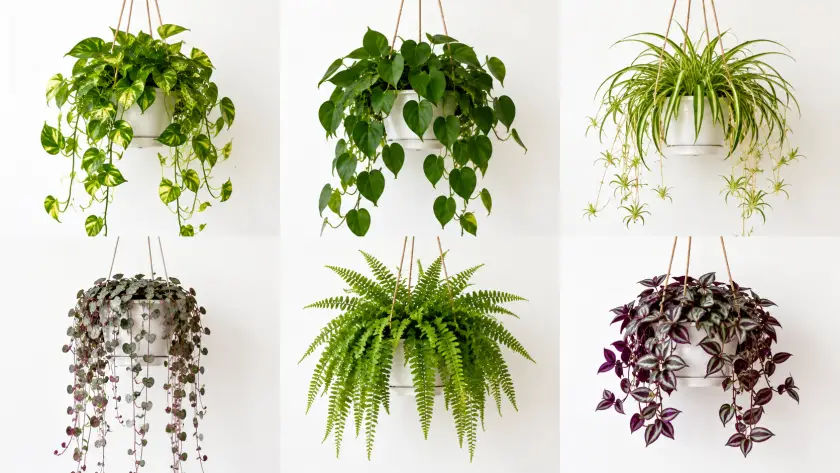
- Best hanging plants for low-light spaces include pothos, heartleaf philodendron, spider plant, string of hearts, Boston fern, English ivy, and trailing peperomia — all thriving in indirect or filtered light
- Best indoor hanging plants transform dim corners, shadowy bathrooms, and windowless shelves into lush green spaces without requiring bright sunlight
- Best plants for hanging baskets in low light: choose species adapted to understory forest conditions where filtered light through tree canopy mimics typical indoor lighting
- Best hanging plants for shade and best hanging plants for low light succeed where other plants fail — north-facing windows, bathroom shower corners, dark hallways, and office spaces with fluorescent lighting only
- Best hanging plants for bathroom include humidity-loving ferns, pothos, philodendron, and spider plants — thriving in steamy shower environments with minimal natural light
- Low light hanging plants indoor need less frequent watering than sun-loving varieties — soil stays moist longer in low light so overwatering becomes the primary risk
- Best trailing plants for hanging baskets create vertical interest and soften hard architectural edges — cascading vines draw the eye upward and make ceilings feel higher
- Best flowering plants for hanging baskets in low light: very limited options as flowering requires energy from bright light — focus on foliage interest instead for reliable low-light performance
- Hanging plants indoors provide air purification, humidity regulation, and psychological benefits of bringing nature inside — particularly valuable in spaces lacking outdoor views
- Browse our full indoor plant care guides for detailed species-specific care instructions for every hanging plant variety
Why Low-Light Hanging Plants Transform Difficult Spaces
Best hanging plants solve the problem that frustrates most indoor gardeners — what to do with dim corners, shadowy bathrooms, windowless offices, and north-facing rooms where direct sunlight never reaches. Not every home has floor-to-ceiling south-facing windows flooding rooms with sunshine. Most of us live with compromised light — filtered through buildings, limited by small windows, or blocked entirely in interior rooms.
This is where low light hanging plants indoor become essential. These are species evolutionarily adapted to forest understory conditions — growing beneath dense tree canopy where sunlight filters through leaves creating dappled, indirect light. In nature, these plants never see direct sun. They’ve developed large thin leaves to maximize photosynthesis from limited light, and they’ve learned to grow slowly and efficiently.
Best indoor hanging plants for low light don’t just survive in dim conditions — they thrive, creating lush cascading displays from ceiling hooks, trailing elegantly from high shelves, and softening shower corners with verdant growth. The vertical dimension they occupy is particularly valuable in small spaces where floor area is limited but ceiling height remains available.
The psychological impact matters too. Studies consistently show that indoor plants reduce stress, improve concentration, and increase feelings of wellbeing — effects that persist regardless of light levels. A hanging plant indoors in a windowless bathroom or dark hallway brings life and movement to spaces that would otherwise feel sterile and closed.
For understanding how light affects all houseplants, our complete guide to indoor light explains measuring light levels, identifying low-light areas, and matching plants to available lighting conditions.
Best Hanging Plants for Low Light — Complete Species Guide

1. Pothos (Epipremnum aureum) — The Ultimate Low-Light Trailing Plant
Pothos earns its reputation as the easiest best hanging plant for beginners and experienced growers alike. Heart-shaped leaves cascade in long vines that can reach 3+ metres if left unpruned, creating dramatic vertical displays from minimal effort.
Why pothos is the best hanging plant for low light:
- Tolerates extremely low light — survives in offices with only fluorescent lighting
- Grows rapidly even in shade — produces new leaves weekly during growing season
- Recovers quickly from neglect — bounces back from underwatering within days
- Propagates easily in water — every cutting roots, creating unlimited new plants
Pothos care for hanging baskets:
- Water when top 5cm of soil dry — every 7–10 days typically
- Tolerates missed waterings without permanent damage
- Feed lightly every 6–8 weeks during spring and summer only
- Trim back to desired length — cuttings root in water for new plants
Varieties for hanging displays:
- Golden pothos: classic variegated green and yellow
- Marble Queen: white and green variegation (needs slightly more light)
- Neon pothos: bright lime green foliage
- Jade pothos: solid dark green, lowest light tolerance
For complete pothos care including propagation and troubleshooting, our pothos care guide covers every detail of growing this versatile trailing plant.
2. Heartleaf Philodendron (Philodendron hederaceum) — Elegant Cascading Vines
Heartleaf philodendron creates the moody, sophisticated aesthetic that pothos cannot quite match. Deep green heart-shaped leaves with velvety texture trail in long elegant vines, and unlike its pothos cousin, this plant actually prefers some shade to bright light.
Best indoor hanging plant characteristics:
- Vines grow 2–3 metres creating dramatic cascades
- Tolerates very low light better than most trailing plants
- Less common than pothos — more distinctive in design
- Climbs or trails depending on support provided
Care requirements:
- Water when top 3–5cm dry — similar to pothos
- Prefers consistent moisture without waterlogging
- Feed monthly during growing season at half strength
- Prune to control length and encourage bushier growth
Styling heartleaf philodendron:
- Hang high to allow maximum trailing length
- Train over room dividers or curtain rods
- Mass several plants for lush vertical display
- Pair with upright plants for textural contrast
For office environments where best hanging plants for indoors must tolerate artificial lighting, our guide on office-friendly plants that survive fluorescent lighting covers workplace-appropriate options including heartleaf philodendron.
3. Spider Plant (Chlorophytum comosum) — Arching Architectural Form
Spider plant offers completely different visual appeal from trailing vines — arching variegated foliage creating fountain-like form, with long stems producing baby plantlets that dangle beneath the mother plant like spiders on silk.
Why spider plant is best hanging plant for beginners:
- Nearly impossible to kill — recovers from extreme neglect
- Produces babies automatically — no propagation effort needed
- Non-toxic to pets — safe for homes with curious cats and dogs
- Air purifying — NASA research confirmed formaldehyde removal
Best plants for hanging baskets positioning:
- Hang at eye level or higher for best display of arching foliage
- Allow space beneath for plantlets to dangle freely
- Rotate weekly for even growth on all sides
- Remove spent flower stems after babies form
Spider plant care:
- Water when top 5cm dry — very forgiving of missed waterings
- Tolerates tap water better than most houseplants
- Feed every 6–8 weeks spring through summer
- Remove brown leaf tips with scissors — caused by fluoride in tap water
For complete spider plant care, our spider plant care guide covers propagation from babies, troubleshooting brown tips, and maximizing growth.
4. String of Hearts (Ceropegia woodii) — Delicate Trailing Succulent
String of hearts brings completely different aesthetic to low light hanging plants indoor — delicate trailing stems adorned with tiny heart-shaped leaves with distinctive purple undersides and silver patterning on green upper surfaces.
Best trailing plants for hanging baskets in minimal light:
- Grows slowly but steadily in low light
- Drought tolerant succulent nature — forgives underwatering
- Unique appearance — not another green trailing vine
- Produces small tubular flowers occasionally
Care requirements differ from foliage vines:
- Water only when soil completely dry — every 10–14 days
- Requires well-draining soil — cactus mix or regular soil with added perlite
- Feed sparingly — every 8 weeks maximum during growing season
- Bright indirect light ideal but tolerates lower light with slower growth
String of hearts in hanging displays:
- Trails to 1–2 metres creating delicate cascades
- Intertwines beautifully with other trailing plants
- Grows aerial tubers along stems — these can be planted to propagate
- Purple undersides create color when backlit by windows
For unusual houseplant options beyond standard varieties, our guide on rare houseplants that are worth the hunt covers distinctive species including string of hearts variations.
5. Boston Fern (Nephrolepis exaltata) — Classic Humidity-Loving Hanging Fern
Boston fern represents the traditional best hanging plants for bathroom choice — lush fronds cascading in all directions creating soft, full appearance. Unlike the previous trailing vines, Boston fern requires higher humidity making it ideal for steamy bathroom environments.
Best hanging plants for shade in humid conditions:
- Thrives in indirect light — direct sun burns delicate fronds
- Loves humidity — bathroom showers provide ideal conditions
- Creates lush full appearance — fills basket completely
- Air purifying — removes formaldehyde and other VOCs
Boston fern care requirements:
- Water frequently to keep soil consistently moist — never allow complete drying
- High humidity essential — 40–60% minimum or fronds crisp and brown
- Feed every 4 weeks during growing season with diluted fertilizer
- Remove dead fronds regularly to maintain appearance
Bathroom positioning:
- Hang near shower where steam provides humidity
- Position away from direct water spray
- Ensure drainage holes in basket — ferns hate waterlogged soil
- Rotate weekly for even growth
For comprehensive bathroom plant guidance, our guide on best plants for your bathroom covers 33 species that thrive in humid, low-light bathroom conditions including multiple fern varieties.
6. English Ivy (Hedera helix) — Fast-Growing Cascading Climber
English ivy creates the lush, romantic cascading effect beloved in Victorian conservatories and modern plant walls alike. Fast-growing vines with distinctive lobed leaves climb or trail depending on available support.
Best hanging plants for rapid coverage:
- Grows 1–2 metres per year in favorable conditions
- Dense foliage fills hanging baskets quickly
- Multiple varieties with different leaf shapes and variegation
- Can be trained to climb or left to trail
Care considerations:
- Water when top 3cm dry — consistent moisture without waterlogging
- Tolerates low light but grows faster in bright indirect light
- Feed monthly during growing season
- Requires regular pruning — becomes invasive if left uncontrolled
English ivy varieties for hanging:
- Glacier ivy: white and green variegation
- Gold Child: yellow-edged leaves
- Needlepoint: narrow delicate leaves
- Irish ivy: large leaf variety
IMPORTANT: English ivy is toxic to cats and dogs. For pet-safe alternatives, our guide on how to make your plants cat-friendly covers non-toxic hanging plant options.
7. Tradescantia Zebrina (Wandering Dude) — Purple Striped Trailing Beauty
Tradescantia zebrina brings vibrant color to best hanging plants for low light — purple and silver striped leaves on trailing stems creating dramatic display. Despite exotic appearance, this plant tolerates lower light better than most colorful foliage varieties.
Best indoor hanging plants for color:
- Purple undersides create color when backlit
- Silver stripes reflect available light making plant appear brighter
- Fast growing — fills hanging basket within months
- Easy propagation — every cutting roots
Care for maximum color:
- Moderate to low light — too much sun fades colors
- Water when top 3cm dry — weekly typically
- Feed every 4–6 weeks during growing season
- Pinch back regularly to encourage bushier growth
Color retention in low light:
- Purple coloring intensifies in lower light
- Silver stripes remain visible even in shade
- Brighter light produces paler green-pink tones
- Completely dark conditions cause etiolation (leggy weak growth)
For additional low-maintenance trailing options, our guide on 35 low-maintenance plants that will thrive covers easy-care species including multiple tradescantia varieties.
8. Peperomia Prostrata (String of Turtles) — Miniature Trailing Succulent
String of turtles provides the miniature, delicate aesthetic that massive trailing vines cannot match. Tiny round leaves patterned like turtle shells trail on delicate stems, creating intricate cascading display perfect for small spaces.
Best trailing plants for hanging baskets in compact form:
- Slow growing — reaches 30–60cm maximum
- Compact size suits small bathrooms, kitchens, shelves
- Unique patterned foliage — conversation piece
- Low light tolerant succulent
Care requirements:
- Water sparingly — allow soil to dry completely between waterings
- Bright indirect light ideal but tolerates lower light
- Well-draining soil essential — cactus mix or amended potting soil
- Feed every 8 weeks maximum during growing season
Styling miniature trailing plants:
- Hang at eye level where intricate leaves are visible
- Group multiple small trailing plants together
- Combine with larger trailing plants for textural variety
- Perfect for bathroom shelves and kitchen window areas
Best Flowering Plants for Hanging Baskets in Low Light

The Flowering Challenge in Low-Light Conditions
Best flowering plants for hanging baskets face significant constraints in low-light environments. Flowering requires enormous energy — producing flowers, nectar, and seeds demands far more resources than producing leaves. Plants generate this energy through photosynthesis, which requires bright light.
This is why best hanging plants for low light focus on foliage rather than flowers. Very few species flower reliably in shade — and those that do produce modest blooms compared to their sun-loving equivalents.
Limited flowering options for low light:
1. Peace Lily (Spathiphyllum) — Not typically grown hanging but can be positioned on high shelves where distinctive white spathes (modified leaves, not true flowers) trail downward. Tolerates very low light and flowers sporadically even in shade. Our peace lily care guide covers care requirements including encouraging blooming.
2. Christmas Cactus (Schlumbergera) — Cascade flowering succulent that blooms reliably in indirect light if given proper dormancy period. Our Christmas cactus care guide explains triggering winter flowering.
3. Lipstick Plant (Aeschynanthus) — Trailing plant with tubular red flowers, tolerates moderate light and blooms periodically throughout year.
Reality check: For best flowering plants for hanging baskets, you need bright indirect light minimum. Low-light spaces should focus on dramatic foliage plants instead — the color and texture variations in leaves provide year-round interest that flowers cannot match.
Best Hanging Plants for Bathroom — Humidity-Loving Species
Why Bathrooms Are Ideal for Specific Hanging Plants
Best hanging plants for bathroom environments thrive where most plants struggle — high humidity from showers combined with typically limited natural light creates conditions that exactly match tropical understory forest environments where many houseplants originate.
Bathroom advantages for hanging plants:
- High humidity from showers and baths — 50–70% typical
- Consistent temperatures — bathrooms rarely experience cold drafts
- Vertical space — ceilings and shower corners often underutilized
- Filtered light — frosted windows provide perfect indirect light
Best hanging plants for bathroom no light (very minimal light):
- Pothos — survives in bathrooms with only small frosted window
- Heartleaf philodendron — tolerates darker bathrooms than pothos
- Spider plant — adapts to minimal light with slower growth
- Boston fern — thrives in steamy dark bathrooms
Positioning hanging plants in bathrooms:
Above shower: Use ceiling hooks with chains allowing easy lowering for watering. Best plants for hanging baskets in shower areas: Boston fern, pothos, philodendron — all love humidity and tolerate water splashing on leaves.
Near window: Brightest bathroom position for plants needing moderate light. Best indoor hanging plants for bathroom windows: string of hearts, tradescantia, peperomia.
Opposite shower: Receives humidity without direct water contact. Suitable for all best hanging plants for bathroom varieties.
For complete bathroom plant selection beyond hanging varieties, our 33 best plants for your bathroom guide covers upright and trailing species for every bathroom light level.
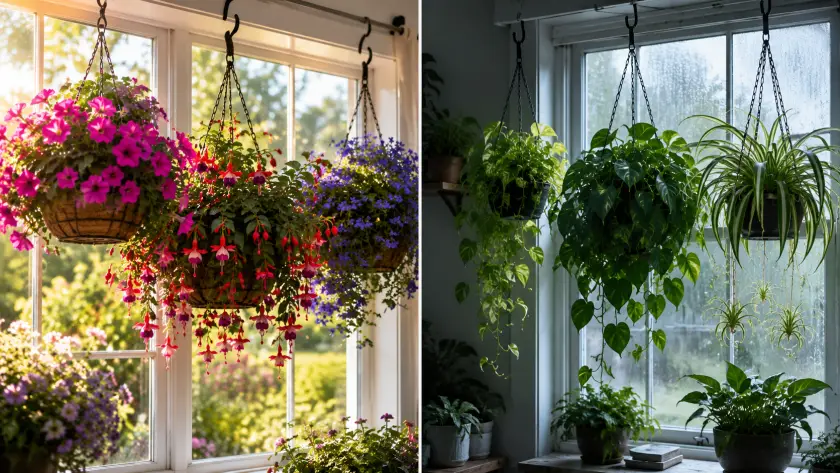
Best Outdoor Hanging Plants vs Indoor Hanging Plants
Light and Environmental Differences
Best outdoor hanging plants and best hanging plants for indoors represent completely different categories despite superficial similarity. Outdoor hanging baskets experience full sun, wind, rain, and dramatic temperature fluctuations. Indoor hanging plants face stable temperatures, controlled watering, and significantly lower light levels.
Why indoor and outdoor hanging plants differ:
Light intensity: Full outdoor sun measures 100,000+ lux. Bright indoor indirect light measures 1,000–5,000 lux maximum. This 20–100x difference means sun-loving outdoor hanging plants like petunias, geraniums, and fuchsias fail completely indoors.
Water cycling: Outdoor baskets dry rapidly from sun and wind requiring daily watering in summer. Indoor baskets stay moist 7–14 days from single watering. Outdoor species adapted to rapid wet-dry cycles rot quickly in consistently moist indoor conditions.
Temperature range: Outdoor hanging baskets experience 15–35°C daily temperature swings. Indoor plants experience 18–24°C stable range. Many outdoor annuals require cool nights to thrive.
Best hanging plants outdoor (NOT suitable indoors):
- Petunias — require full sun, fail in shade
- Fuchsia — need bright light and cool temperatures
- Lobelia — annual requiring full sun
- Million bells — full sun trailing annual
Best hanging plants that work both indoors AND outdoors:
- Pothos — tolerates indoor low light OR outdoor shade
- Spider plant — adapts to indoor or covered patio
- String of hearts — thrives indoors or shaded outdoor areas
For outdoor-specific plant guidance, our guide on best low-maintenance outdoor plants for busy gardeners covers hardy outdoor species including hanging basket options.
Care Requirements for Low-Light Hanging Plants

Watering Low-Light Hanging Plants Correctly
Low light hanging plants indoor require fundamentally different watering approach than sun-loving plants. Low light means slow photosynthesis which means slow water use. Soil stays moist far longer in low-light conditions — overwatering becomes the primary risk.
How low light affects watering:
- Soil dries 2–3x slower in shade compared to bright light
- Plants use less water without energy for rapid growth
- Overwatering risk increases dramatically
- Root rot becomes common problem
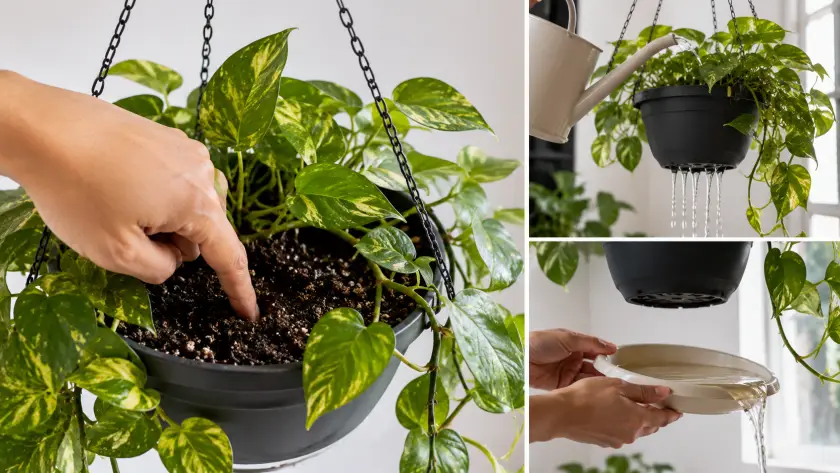
Correct watering for hanging plants in low light:
1. Check soil before every watering — insert finger 5cm deep. Only water if dry at that depth. This single habit prevents most hanging plant deaths.
2. Water thoroughly when needed — add water until flowing from drainage holes. Thorough watering every 10–14 days beats light daily watering which encourages shallow roots.
3. Improve drainage — hanging basket soil should drain freely. Add 20–30% perlite to standard potting mix for best plants for hanging baskets performance.
4. Empty saucers — if hanging basket sits in decorative outer pot or saucer, empty standing water after 15 minutes. Never allow pot to sit in water.
Signs of overwatering hanging plants:
- Yellow leaves dropping from all parts of plant
- Soft mushy stems near soil
- Foul smell from soil — indicating root rot
- Soil stays wet 7+ days after watering
Signs of underwatering:
- Leaves drooping and crispy
- Soil pulling away from pot edges
- Rapid leaf drop from bottom up
For complete watering guidance applicable to all houseplants, our complete watering guide covers soil moisture checking, drainage requirements, and seasonal adjustments.
Fertilizing Hanging Plants in Low Light
Best indoor hanging plants in low light need significantly less fertilizer than sun-grown plants. Slow growth from limited light means slow nutrient use — overfertilizing causes salt buildup and root burn.
Fertilizing schedule for low-light hanging plants:
- Feed every 6–8 weeks during spring and summer only
- Use balanced liquid fertilizer at HALF recommended strength
- Stop feeding completely October through February
- Never fertilize stressed or newly potted plants
Signs of over-fertilizing:
- Brown crispy leaf tips and edges
- White crusty deposit on soil surface
- Sudden leaf drop despite correct watering
- Yellowing between leaf veins
Best fertilizer for hanging plants:
- Balanced liquid fertilizer (NPK 10-10-10)
- Dilute to half strength before application
- Apply to pre-watered soil — never dry soil
- Flush soil with plain water every 3 months to remove salt buildup
For complete fertilizing guidance covering indoor and outdoor plants, our guide on fertilizing indoor vs outdoor plants explains seasonal feeding schedules and nutrient requirements.
Pruning and Maintenance for Hanging Plants
Best trailing plants for hanging baskets benefit from regular light pruning maintaining shape, encouraging bushier growth, and preventing excessive length.
When to prune hanging plants:
- Spring (March–May) — before active growth begins
- Remove dead or yellowing leaves any time
- Trim back excessively long vines as needed
- Prune after flowering for flowering varieties
How to prune hanging plants:
1. Remove dead growth — cut yellowing or brown leaves at base with clean scissors.
2. Trim for length — cut vines just above leaf node (bump where leaf attaches). New growth emerges from node creating bushier appearance.
3. Propagate cuttings — every piece cut from pothos, philodendron, tradescantia, or ivy roots easily in water. Free new plants from pruning waste.
4. Rotate baskets — rotate hanging basket 90 degrees every week for even growth on all sides.
For plant propagation from cuttings including hanging plant varieties, our guide on how to propagate houseplants easily at home covers water propagation and soil propagation methods.
Styling Low-Light Hanging Plants for Maximum Impact

Choosing Hanging Positions That Work
Hanging plants indoors create vertical interest and draw eyes upward making rooms feel larger. Strategic positioning maximizes both plant health and visual impact.
Best positions for low-light hanging plants:
High shelves: Let vines trail off edges creating cascading effect. Best hanging plants for shelves: pothos, heartleaf philodendron, string of hearts, tradescantia. Position trailing plants at front of shelf with upright plants behind.
Ceiling corners: Dark upper corners transform with hanging plants. Use ceiling hooks rated for plant weight plus water (minimum 5kg capacity). Best plants for hanging baskets in corners: spider plant, Boston fern, pothos.
Bathroom showers: Ceiling or wall hooks near shower provide perfect humidity. Best hanging plants for bathroom: Boston fern, pothos, philodendron. Position where plant receives steam but not direct water spray.
Window areas: North-facing windows provide perfect indirect light for best hanging plants for shade. East and west windows work with sheer curtains filtering direct sun.
Kitchen shelves: Upper kitchen cabinets and window shelves suit compact hanging plants. Best trailing plants: string of turtles, small pothos, compact tradescantia.
For room-specific plant styling guidance, our guide on how to style indoor plants by room covers positioning principles for every room type.
Combining Hanging Plants with Other Indoor Plants
Best indoor hanging plants create layered displays when combined with upright floor plants and mid-height shelf plants. The combination creates more visual interest than any single plant type alone.
Layering principles:
High level (ceiling/top shelves): Trailing plants cascading downward — pothos, philodendron, string of hearts
Mid level (eye height): Upright plants with interesting foliage — monstera, fiddle leaf fig, ZZ plant
Low level (floor): Large statement plants — snake plant, money tree, oversized specimens
This three-tier arrangement creates depth and makes small spaces feel larger by using vertical dimension. For inspiration on large plant combinations, our guide on 20 oversized indoor plants covers floor-plant options that pair beautifully with hanging varieties.
Troubleshooting Common Hanging Plant Problems
Yellow Leaves on Hanging Plants
Yellow leaves indicate multiple possible problems — identifying the pattern reveals the cause.
Yellow leaves on lower vines only: Normal aging — lower leaves yellow and drop as plant directs energy to new growth. Remove yellowing leaves.
Yellow leaves throughout plant: Overwatering likely — check soil moisture, improve drainage, reduce watering frequency.
Yellow leaves with green veins: Nutrient deficiency (often magnesium) — feed with balanced fertilizer.
Sudden yellowing after repotting: Transplant shock — reduce watering, avoid fertilizing, plant recovers within 2–4 weeks.
For complete diagnosis of yellowing foliage, our guide on why your plant leaves are turning yellow covers the diagnostic process and solutions.
Brown Crispy Leaf Tips and Edges
Brown crispy tips on best hanging plants indicate low humidity, salt buildup, or fluoride toxicity from tap water.
Solutions:
- Increase humidity — move to bathroom, use humidifier, or group plants together
- Flush soil — pour 3–4x pot volume of water through soil removing salt buildup
- Use filtered water — tap water fluoride causes brown tips on spider plants, dracaena, peace lily
- Reduce fertilizing — overfertilizing causes salt accumulation
Our guide on humidity hacks keep your plants happy without a humidifier covers affordable humidity solutions for hanging plants.
Leggy Weak Growth on Hanging Plants
Leggy growth with long stems between leaves indicates insufficient light — even best hanging plants for low light have minimum light requirements.
Solutions:
- Move to brighter location — closer to windows
- Prune back leggy growth — plant responds with bushier regrowth
- Rotate weekly — ensures even light exposure all sides
- Consider supplemental grow light — for truly dark spaces
For understanding light requirements across all plant types, our complete guide to indoor light covers measuring lux levels and identifying suitable plant positions.
Frequently Asked Questions
What are the best hanging plants for low light?
Best hanging plants for low light: pothos (most tolerant), heartleaf philodendron, spider plant, Boston fern (if humid), English ivy, tradescantia zebrina, string of hearts, and trailing peperomia. All these species evolved in forest understory shade and thrive with only indirect filtered light.
Can hanging plants survive in bathroom with no window?
Best hanging plants for bathroom no light require some light source — even bathrooms without windows typically have artificial lighting for several hours daily. Pothos and heartleaf philodendron tolerate minimal light better than other options. For completely dark bathrooms, no plant survives long-term without supplemental grow light.
How often should you water hanging plants?
Water hanging plants indoors when top 5cm of soil feels dry — typically every 7–14 days depending on light levels, humidity, temperature, and pot size. Low light means slow drying — check soil moisture before each watering to prevent overwatering which is the primary cause of hanging plant death.
Are hanging plants safe for cats and dogs?
Best indoor hanging plants pet safety varies by species. Spider plant is non-toxic to cats and dogs. Pothos, philodendron, and English ivy contain calcium oxalate crystals causing mouth irritation if chewed. Boston fern and string of hearts are non-toxic. Always verify toxicity before choosing hanging plants in homes with pets.
What are the best trailing plants for hanging baskets?
Best trailing plants for hanging baskets: pothos (fastest growing, easiest care), heartleaf philodendron (elegant deep green), string of hearts (delicate succulent), tradescantia zebrina (colorful purple-silver), English ivy (fast growing requires pruning), and peperomia prostrata (miniature turtle-patterned leaves). Choice depends on available light and desired aesthetic.
How do you hang plants from ceiling safely?
Hang plants using ceiling hooks rated for minimum 5kg weight capacity — account for plant weight plus saturated soil weight. Locate ceiling joists for strongest support using stud finder. Use toggle bolts or molly bolts for drywall/plaster ceilings without joist access. Test weight capacity before hanging valuable plants.
Do hanging plants need more water than potted plants?
Hanging plants indoors sometimes dry faster than floor plants because rising warm air increases evaporation. However, low light hanging plants use less water than sun-loving varieties. Check soil moisture individually rather than following schedules — hanging position affects drying rate but light level affects water use more significantly.
Related Guides on Patch Plants
- 💡 Complete Guide to Indoor Light
- 💧 Complete Watering Guide for Healthy Plants
- 🪴 Best Soil Mix for Every Plant Type
- 🌱 How to Propagate Houseplants Easily
- 💧 Fertilizing Indoor vs Outdoor Plants
- 💨 Humidity Hacks for Your Plants
- 🍃 Why Your Plant Leaves Are Turning Yellow
- 🌿 Leaf Curl, Browning and Droop
- 💧 Signs You Are Overwatering
- 🌿 How to Revive a Dying Plant
- 🌿 Pothos Care Guide
- 🌸 Peace Lily Care Guide
- 🐍 Snake Plant Care Guide
- 🌱 Spider Plant Care Guide
- 🌿 Monstera Care Guide
- 🌱 ZZ Plant Care Guide
- 💰 Money Tree Care Guide
- 🎄 Christmas Cactus Care Guide
- 🌿 Fiddle Leaf Fig Care Guide
- 🛁 33 Best Plants for Your Bathroom
- 🏢 Office Plants That Survive Fluorescent Lighting
- 🏠 How to Style Indoor Plants by Room
- 🐾 How to Make Your Plants Cat-Friendly
- 🌿 35 Low-Maintenance Plants That Will Thrive
- 🌿 20 Oversized Indoor Plants
- 🌿 Rare Houseplants That Are Worth the Hunt
- 🌱 Best Low-Maintenance Outdoor Plants
- 🌱 Browse All Indoor Plant Guides
Final Thoughts
Best hanging plants for low-light spaces prove that lush, verdant indoor gardens don’t require floor-to-ceiling windows or sunny southern exposures. Some of the most elegant, low-maintenance, and visually dramatic houseplants actively prefer the filtered light, stable temperatures, and protected conditions that typical homes provide.
Low light hanging plants indoor transform spaces that would otherwise remain empty and unused — dark corners, shadowy bathrooms, north-facing windows, office cubicles, and basement rooms all benefit from the life and movement that cascading foliage brings. The vertical dimension occupied by best indoor hanging plants is particularly valuable in small spaces where every square metre of floor area matters.
The care requirements remain remarkably simple. Best plants for hanging baskets in low light need less frequent watering than sun-loving varieties, minimal fertilizing, occasional pruning, and little else beyond basic attention. Most hanging plant deaths result from over-care rather than neglect — overwatering in particular claims far more plants than underwatering ever could.
The psychological benefits extend beyond mere decoration. Indoor plants — particularly the soft, organic forms of trailing vines — reduce stress, improve air quality, regulate humidity, and provide tangible connection to nature in spaces increasingly dominated by artificial materials and electric light. Hanging plants indoors accomplish all this while occupying space that would otherwise remain completely unused.
Whether starting with bulletproof pothos trailing from a kitchen shelf, sophisticated heartleaf philodendron cascading in a dim hallway, or humidity-loving Boston fern softening a windowless bathroom, best hanging plants for low light reward minimal effort with years of reliable growth and beauty.
According to the Royal Horticultural Society, many popular houseplants including pothos, philodendron, and ferns originate from tropical forest understory environments where dense tree canopy creates conditions remarkably similar to typical indoor lighting — making these plants naturally pre-adapted to low-light interior spaces without requiring significant accommodation or special care. 🌿