
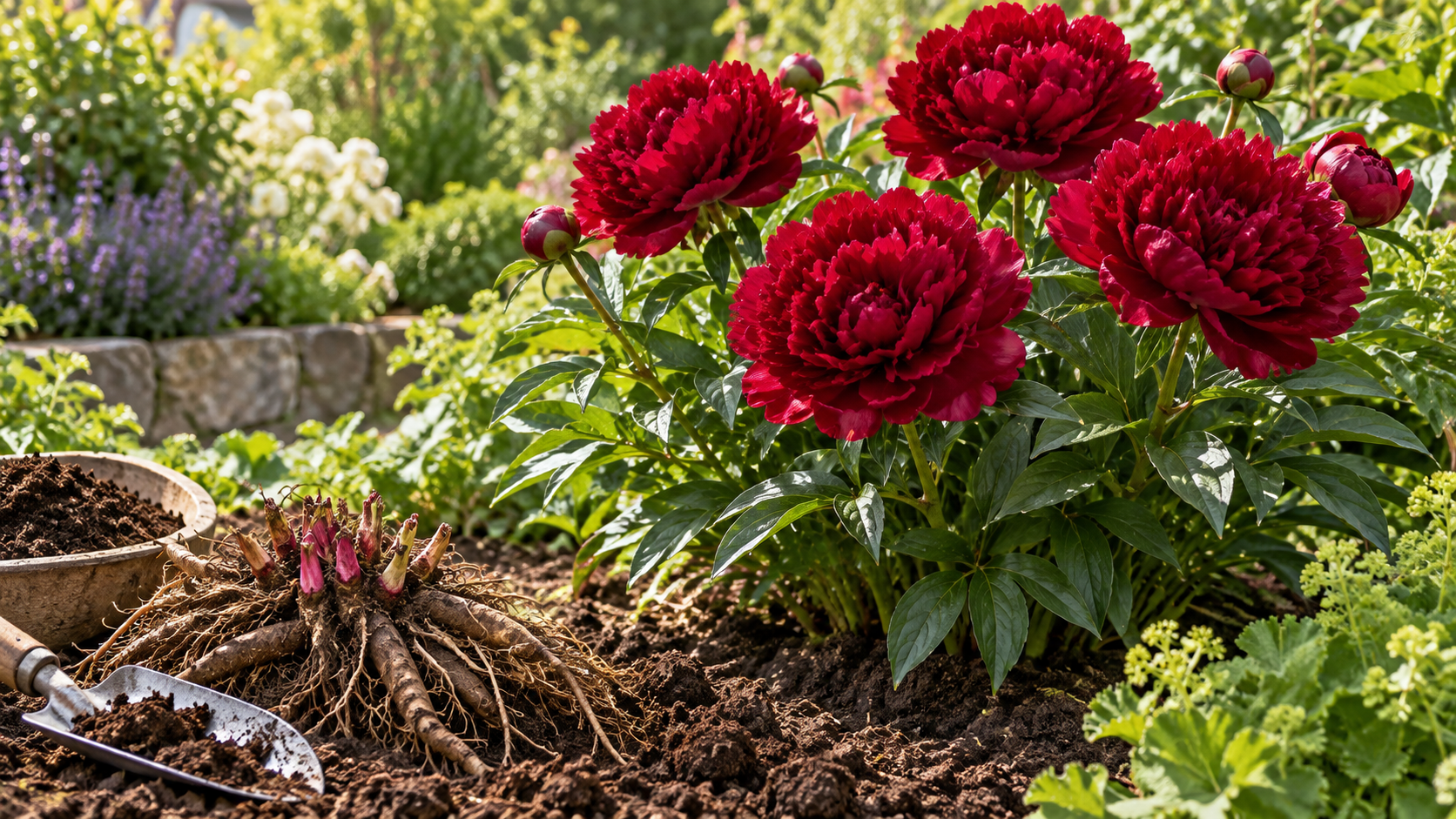
Karl Rosenfield peony planting is mostly about getting a few details right at the beginning. Choose a sunny position, prepare well-draining soil, keep the crown shallow, and give the plant enough room to stay undisturbed for years.
Paeonia lactiflora ‘Karl Rosenfield’ is a classic herbaceous peony known for large, double crimson-red flowers and dark green foliage. Once established in a suitable location, this long-lived perennial can become one of the most reliable flowering plants in a garden border.
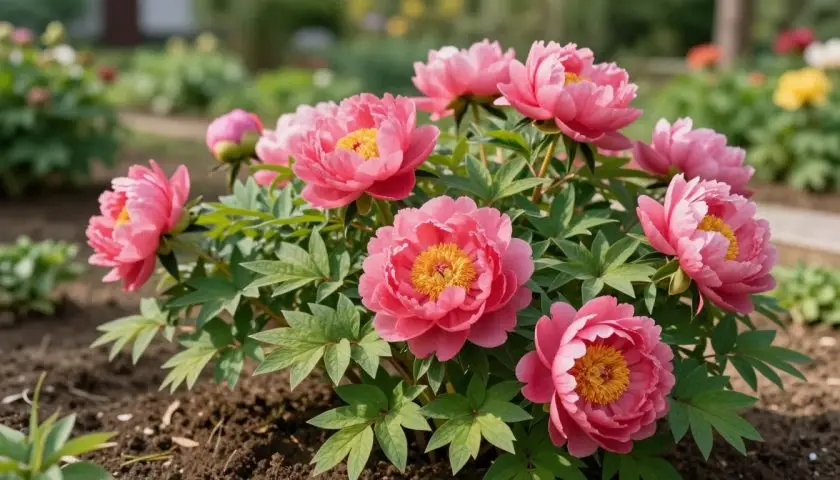
Quick Answer: Plant Karl Rosenfield peonies in a sunny, well-drained location, preferably while the plant is dormant. Position bare-root eyes roughly 1–2 inches below the finished soil surface, water thoroughly after planting, and avoid burying the crown too deeply. Give each plant enough space for air circulation and mature growth.
For more perennial gardening help, explore our Outdoor Plants guides, Plant Care library, and latest articles from Patch Plants.
Karl Rosenfield Peony Planting at a Glance
| Planting Factor | Recommended Approach |
|---|---|
| Botanical name | Paeonia lactiflora ‘Karl Rosenfield’ |
| Plant type | Herbaceous perennial |
| Flower color | Deep crimson red |
| Light | Full sun to partial shade |
| Best flowering | Usually strongest with at least 6 hours of direct sun |
| Soil | Fertile, moisture-retentive but well-draining |
| Planting depth | Eyes approximately 1–2 inches below soil surface |
| Spacing | Allow roughly 3 feet between mature plants |
| Water | Water thoroughly after planting; avoid waterlogging |
| Bloom period | Late spring to early summer |
| Maintenance | Low once established |
These requirements line up with general peony-growing guidance from Iowa State Extension, which recommends well-drained soil, at least six hours of sun for best flowering, good air movement, and shallow planting with buds about 1–2 inches below the soil surface.
What Is a Karl Rosenfield Peony?
Karl Rosenfield is an old and widely grown cultivar of Paeonia lactiflora. It forms a rounded clump of herbaceous stems that emerge in spring, flower, remain leafy through summer, and die back to the ground after frost.
The cultivar is especially valued for large double crimson flowers. Missouri Botanical Garden lists it as a herbaceous peony growing roughly 2.5–3 feet tall and wide, with fragrant red flowers and a late-spring bloom period.
If you are planning a perennial border around it, browse our outdoor growing guides, outdoor plant care guide, and seasonal plant care guide.
Key Takeaways
- Choose a site with strong sunlight and good air movement.
- Use fertile but well-draining soil.
- Keep bare-root peony eyes shallow, around 1–2 inches below the soil surface.
- Avoid planting too deeply because deep crowns often flower poorly.
- Give mature plants enough room to spread naturally.
- Water deeply after planting but do not keep roots permanently saturated.
- Support large flower heads before they become heavy with rain.
- Avoid excessive nitrogen fertilizer.
- Leave healthy foliage in place after flowering so the plant can store energy.
9 Easy Karl Rosenfield Peony Planting Tips
1. Choose a Healthy Karl Rosenfield Peony Root or Nursery Plant
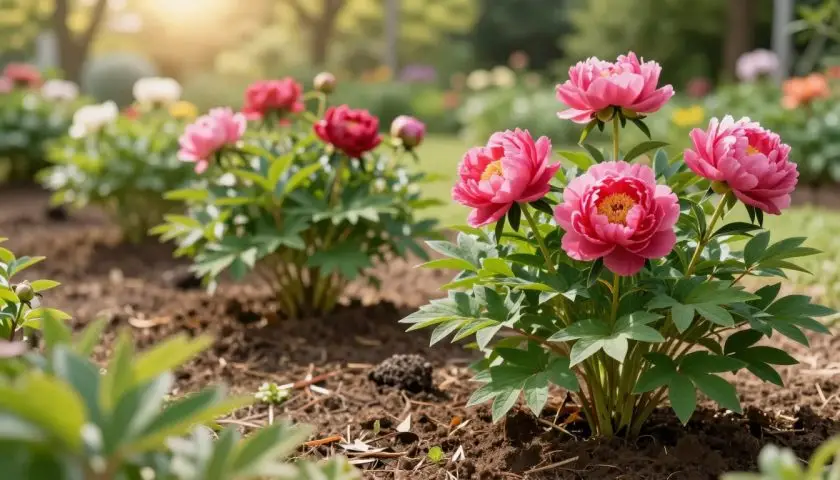
The best planting results start with healthy material. Bare-root divisions should feel firm rather than soft or hollow, and the root system should show healthy buds or “eyes.”
Look for Firm Roots and Visible Eyes
Healthy roots should be reasonably plump and free from obvious mushy or rotten sections. The buds may appear pink, red, or pale depending on growth stage.
Avoid roots with a strong rotten smell, widespread mold, or extensive soft tissue.
After purchasing, avoid allowing bare roots to dry excessively before planting.
For broader plant-establishment advice, see our Plant Care guides, outdoor plant survival guide, and watering guide.
Container-Grown Plants
If you purchase a container-grown Karl Rosenfield peony, inspect the foliage and crown for disease or pest damage. Also check that the pot drains effectively rather than remaining permanently waterlogged.
A container plant should normally be transplanted at approximately the same crown depth at which it was growing previously.
2. Plant During a Suitable Season
Dormant planting is generally easiest for bare-root herbaceous peonies. Fall planting gives roots time to begin settling before winter dormancy.
Fall Planting
Fall is widely preferred for bare-root peonies because the plant can establish roots during cool soil conditions without supporting a full canopy of foliage.
Choose a time after intense summer heat has eased but before the ground becomes frozen or unworkable.
Use our autumn plant care guide, Outdoor Plants hub, and Plant Care section when preparing a fall planting project.
Spring Planting
If you receive a peony in spring, plant it rather than trying to keep the root dormant indefinitely. Spring-planted peonies may simply take more time to settle and reach full flowering performance.
Recently moved or divided peonies can sometimes take two or three years to fully re-establish before flowering heavily again.
Avoid Frozen Ground
Do not attempt to force a bare root into frozen, saturated, or unworkable soil. Wait until conditions allow good contact between soil and roots.
3. Choose a Site With Plenty of Sun and Airflow
Sunlight has a major influence on flowering. Karl Rosenfield can tolerate some partial shade, but abundant direct light generally produces better bloom performance.
Aim for At Least Six Hours of Direct Sun
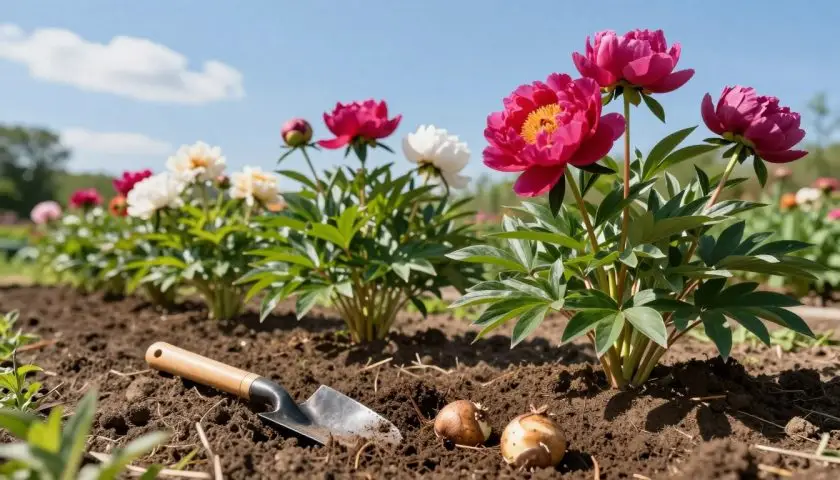
Iowa State Extension recommends at least six hours of direct sunlight per day for most peonies to flower well.
A slightly shaded afternoon position may still work in particularly hot climates, where intense heat can stress flowers and foliage.
Avoid Dense Root Competition
Do not squeeze a peony directly against large established trees or shrubs. Their roots can compete heavily for water and nutrients.
Choose a location where the peony has its own root zone and receives unobstructed light.
Prioritize Air Movement
Good airflow allows foliage to dry more quickly after rain and can reduce conditions favorable to fungal disease.
Avoid burying the plant inside a dense mass of taller vegetation.
Explore our Outdoor Plants guides, outdoor care guide, and Plant Care library when planning the bed.
4. Prepare Fertile, Well-Draining Soil
Peonies can remain in one location for many years, so taking time to improve the soil before planting is worthwhile.
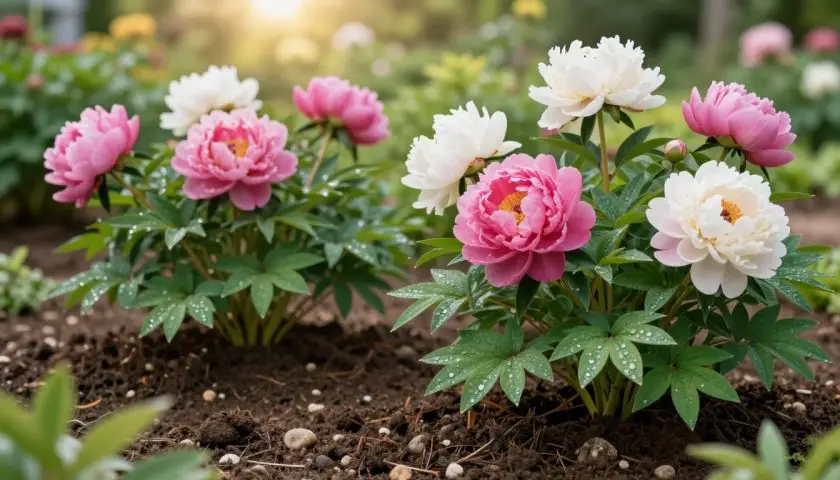
Use Moist but Well-Drained Soil
The ideal soil holds useful moisture without remaining saturated around thick perennial roots. Missouri Botanical Garden recommends rich, fertile, medium-moisture, well-drained soil for Karl Rosenfield.
For more soil guidance, read our complete soil mix guide and browse the Plant Care section.
Improve Heavy Soil Across a Wide Area
If the site has dense clay, do not simply dig a narrow planting hole and fill it with completely different loose soil. That can create an isolated pocket where water behaves differently from the surrounding ground.
Instead, improve the surrounding bed more broadly with suitable organic matter and better structure.
Improve Very Sandy Soil
Organic matter can also help sandy soils retain more moisture and nutrients.
Use Compost Sensibly
Well-decomposed compost can improve structure and fertility. Avoid placing fresh manure directly against new peony roots.
Calculate Soil for Raised Beds and Planters
If poor drainage means you’re building a rectangular raised bed or large planter, use our free Patch Plants Soil Calculator to estimate how much growing medium you’ll need.
You can combine the soil volume calculator with our soil guide before buying amendments.
| Soil Situation | Useful Adjustment |
|---|---|
| Heavy clay | Improve structure across a wider planting area |
| Very sandy soil | Add well-decomposed organic matter |
| Poor drainage | Consider a raised planting area |
| Compacted soil | Loosen and improve before planting |
5. Plant the Peony Eyes at the Correct Depth
Planting depth is one of the most important parts of Karl Rosenfield peony planting.
Keep the Eyes About 1–2 Inches Below the Surface
Position the buds close to the finished soil level. Iowa State and Missouri Botanical Garden both recommend roughly 1–2 inches below the soil surface for common herbaceous peonies.
Do not bury the crown several inches deep.
Why Deep Planting Causes Problems
A deeply planted peony may produce healthy foliage but fail to bloom well. Iowa State specifically lists excessive planting depth as a common reason peonies fail to flower.
Step-by-Step Bare-Root Planting
- Dig a hole wide enough to spread the storage roots naturally.
- Loosen the soil around and beneath the planting area.
- Position the root with the eyes facing upward.
- Keep the eyes roughly 1–2 inches below final grade.
- Spread the roots gently without sharply bending or breaking them.
- Backfill with prepared soil.
- Firm lightly enough to remove major air pockets.
- Check the crown depth again after the soil settles.
- Water thoroughly.
If you’re unsure how soil volume changes during planting, use the Soil Calculator for rectangular beds and planters and our watering guide afterward.
6. Give Each Karl Rosenfield Peony Enough Space
This cultivar usually develops into a broad clump around 2.5–3 feet wide, so avoid tight planting.
Allow Roughly Three Feet Between Plants
About three feet of spacing provides enough room for mature foliage and airflow in many garden layouts.
Where conditions are especially humid or neighboring plants are vigorous, slightly more breathing room can make maintenance easier.
Keep Crowns Clear of Dense Groundcovers
Avoid allowing aggressive neighboring plants to grow directly through the peony crown.
You can combine Karl Rosenfield with compatible perennials, but keep enough open space for air circulation and access.
Can Karl Rosenfield Peonies Grow in Containers?
Yes, but long-term container culture is more demanding than planting in the ground. Choose a large, frost-resistant container with excellent drainage and enough soil volume to buffer temperature and moisture changes.
For rectangular containers, estimate growing-medium volume using the Patch Plants Soil Calculator.
Container gardeners should also read our watering guide, soil guide, and Outdoor Plants guides.
7. Water Thoroughly After Planting
Watering after planting settles soil around the roots and eliminates large air pockets.
Water Deeply, Then Monitor the Soil
Do not immediately turn peony care into a rigid “every three days” schedule. Rainfall, soil type, season, sunlight, wind, and temperature all affect moisture loss.
Check the root zone and water when needed.
Our complete watering guide explains why soil-based watering decisions are safer than fixed calendars.
Avoid Waterlogged Roots
Constant saturation can damage roots. If the site remains wet for long periods after rain, fix the drainage problem rather than simply reducing irrigation.
Read the soil guide and Plant Care library for more help.
Mulch Lightly but Keep the Crown Clear
A modest layer of organic mulch can reduce evaporation and moderate temperature swings, but do not bury the crown or buds beneath a thick pile.
Keep mulch pulled back slightly from emerging stems and crown tissue.
8. Support Heavy Flowers Before They Flop
Karl Rosenfield produces large double flowers. These blooms can become heavy after rain and may pull stems outward.
Install Supports Early
Peony rings, discreet grids, or stakes work best when installed before flower stems are already leaning.
As new shoots grow through a support, the foliage can hide much of the structure.
Protect New Growth From Weather Damage
Strong wind, heavy spring rain, and late frost can damage tender stems and flower buds.
Use temporary frost protection when appropriate and secure supports before severe weather arrives.
Do Not Overfertilize
Excessive nitrogen can encourage leafy growth while reducing flower performance. Iowa State lists excessive nitrogen as another common reason peonies fail to bloom well.
Healthy soil prepared before planting may provide plenty of nutrition during establishment.
9. Maintain Karl Rosenfield Peonies Season by Season
Once established, Karl Rosenfield requires much less intervention than the planting process suggests.
Spring
Watch emerging shoots, reinstall supports early, clear heavy debris from the crown, and check for damaged or diseased growth.
Browse the Outdoor Plants category and Plant Care guides for more spring maintenance advice.
After Flowering
Remove faded flowers if desired, but leave healthy green foliage attached. The leaves continue producing energy that supports next year’s growth.
Summer
During extended drought, water deeply when the root zone becomes dry. Avoid repeatedly wetting the plant without checking soil conditions.
Our watering guide is useful during hot weather.
Fall
After frost has killed the foliage, cut herbaceous stems back and remove dead plant material from the bed.
This keeps the planting area cleaner and reduces old foliage that may harbor disease organisms.
Use our autumn plant care guide for broader fall preparation.
Winter
The crown remains dormant underground. Established peonies are cold-hardy, and the cold dormant period is part of their natural growth cycle.
Missouri Botanical Garden lists Karl Rosenfield for USDA Zones 3–8 and notes that plants need a cold winter dormancy period.
Why Isn’t My Karl Rosenfield Peony Blooming?
If your plant grows plenty of leaves but produces few or no flowers, work through the most common causes before assuming the plant is failing.
It Was Planted Too Deeply
This is one of the first things to check. Eyes several inches below grade can significantly reduce flowering.
It Does Not Receive Enough Sun
A location with less than six hours of useful direct sunlight may reduce bloom performance.
It Was Recently Divided or Transplanted
Moved peonies sometimes need multiple seasons to re-establish before producing their best display.
It Receives Too Much Nitrogen
Heavy nitrogen feeding encourages foliage, sometimes at the expense of flower production.
Flower Buds Were Damaged
Late frost, fungal disease, or severe weather can damage buds before they open.
Karl Rosenfield Peony Soil and Planting Checklist
- Choose fertile, well-draining soil.
- Avoid permanently saturated ground.
- Improve heavy soil across a wider area.
- Use compost only when it is well decomposed.
- Keep the crown shallow.
- Position bare-root eyes about 1–2 inches below grade.
- Allow roughly three feet of space.
- Water thoroughly after planting.
- Keep mulch away from the crown.
- Leave the plant undisturbed once established whenever possible.
For larger beds or raised planters, calculate volume with the Soil Calculator, then compare growing media with our soil mix guide.
Common Karl Rosenfield Peony Problems
| Problem | Possible Cause | What to Check |
|---|---|---|
| Healthy leaves but no flowers | Deep planting, shade, excess nitrogen | Depth, sun, fertilizer |
| Stems flopping | Heavy double flowers or rain | Support system |
| Yellowing foliage | Moisture stress, disease, seasonal decline | Soil and timing |
| Dark or collapsing shoots | Possible disease or frost damage | Weather and plant health |
| Roots rotting | Poor drainage | Soil structure |
| Weak flowering after transplant | Plant still establishing | Time and growing conditions |
For more diagnosis help, explore our Plant Care guides, plant rescue guide, watering guide, and soil guide.
Can You Divide Karl Rosenfield Peonies?
Yes. Herbaceous peonies can be propagated by division, typically when dormant.
However, an established, healthy Karl Rosenfield peony does not need frequent division simply to keep flowering.
Missouri Botanical Garden notes that peonies are long-lived and can remain undisturbed for many years.
When to Divide
Division is useful when you genuinely want more plants, need to relocate an established clump, or must correct a poorly positioned crown.
Fall is generally a convenient time because the foliage is finishing and the plant is moving toward dormancy.
Allow Divisions Time to Recover
Do not expect a freshly divided peony to immediately produce the same number of blooms as an established mature clump.
Helpful Patch Plants Guides for Peony Growers
- Patch Plants – latest growing and plant-care resources.
- Outdoor Plants – outdoor growing guides.
- Plant Care – soil, watering, pruning and troubleshooting.
- Soil Calculator – estimate soil for rectangular beds and planters.
- Best Soil Mix for Every Type of Plant.
- Complete Guide to Watering Plants.
- How to Keep Outdoor Plants Alive.
- Seasonal Plant Care in Autumn.
- Pruning Basics.
- How to Revive a Dying Plant.
Frequently Asked Questions About Karl Rosenfield Peony Planting
When is the best time for Karl Rosenfield peony planting?
Fall is generally the preferred time for planting dormant bare-root peonies because cool conditions allow roots to begin establishing before winter. Spring planting can also work when necessary.
How deep should I plant a Karl Rosenfield peony?
For bare-root herbaceous peonies, position the eyes approximately 1–2 inches below the finished soil surface. Planting substantially deeper can reduce flowering.
How much sun does Karl Rosenfield peony need?
At least six hours of direct sunlight is a useful target for strong flowering. Some afternoon shade can be helpful in particularly hot climates.
What soil is best for Karl Rosenfield peonies?
Use fertile, humus-rich soil that retains useful moisture but drains freely. Permanently wet soil can damage the thick root system.
How far apart should Karl Rosenfield peonies be planted?
About three feet between mature plants works well in many gardens and gives the foliage enough room for airflow and maintenance.
Why isn’t my Karl Rosenfield peony blooming?
Common reasons include planting the crown too deeply, insufficient sunlight, excessive nitrogen fertilizer, recent transplanting, or damaged flower buds.
Can Karl Rosenfield peonies grow in pots?
Yes, but use a large container with excellent drainage. Container-grown peonies need closer attention to moisture and temperature than plants established in the ground.
Should I cut back Karl Rosenfield peonies after flowering?
Remove spent flower heads if desired, but leave healthy green foliage in place through summer. Cut stems back after the foliage dies following frost.
Do Karl Rosenfield peonies need support?
They often benefit from peony rings or discreet supports because their large double flowers can become heavy after rain.
How long does a newly planted peony take to bloom?
A young or recently divided peony may take more than one season to reach strong flowering. Recently moved plants sometimes require two or three years to fully re-establish.
Conclusion
Successful Karl Rosenfield peony planting depends more on location and depth than complicated ongoing maintenance. Start with healthy roots, choose a bright open site, prepare well-drained soil, and keep the eyes close to the soil surface.
Once established, avoid disturbing the plant unnecessarily. Water during dry periods, leave healthy foliage intact after flowering, support heavy blooms, and clean up dead stems after frost.
For the next planting project, use our Soil Calculator, read the soil mix guide, follow our watering advice, and browse more Outdoor Plants guides from Patch Plants.
Karl Rosenfield peony planting is mostly about getting a few details right at the beginning. Choose a sunny position, prepare well-draining soil, keep the crown shallow, and give the plant enough room to stay undisturbed for years.
Paeonia lactiflora ‘Karl Rosenfield’ is a classic herbaceous peony known for large, double crimson-red flowers and dark green foliage. Once established in a suitable location, this long-lived perennial can become one of the most reliable flowering plants in a garden border.
Quick Answer: Plant Karl Rosenfield peonies in a sunny, well-drained location, preferably while the plant is dormant. Position bare-root eyes roughly 1–2 inches below the finished soil surface, water thoroughly after planting, and avoid burying the crown too deeply. Give each plant enough space for air circulation and mature growth.
For more perennial gardening help, explore our Outdoor Plants guides, Plant Care library, and latest articles from Patch Plants.
Karl Rosenfield Peony Planting at a Glance
| Planting Factor | Recommended Approach |
|---|---|
| Botanical name | Paeonia lactiflora ‘Karl Rosenfield’ |
| Plant type | Herbaceous perennial |
| Flower color | Deep crimson red |
| Light | Full sun to partial shade |
| Best flowering | Usually strongest with at least 6 hours of direct sun |
| Soil | Fertile, moisture-retentive but well-draining |
| Planting depth | Eyes approximately 1–2 inches below soil surface |
| Spacing | Allow roughly 3 feet between mature plants |
| Water | Water thoroughly after planting; avoid waterlogging |
| Bloom period | Late spring to early summer |
| Maintenance | Low once established |
These requirements line up with general peony-growing guidance from Iowa State Extension, which recommends well-drained soil, at least six hours of sun for best flowering, good air movement, and shallow planting with buds about 1–2 inches below the soil surface.
What Is a Karl Rosenfield Peony?
Karl Rosenfield is an old and widely grown cultivar of Paeonia lactiflora. It forms a rounded clump of herbaceous stems that emerge in spring, flower, remain leafy through summer, and die back to the ground after frost.
The cultivar is especially valued for large double crimson flowers. Missouri Botanical Garden lists it as a herbaceous peony growing roughly 2.5–3 feet tall and wide, with fragrant red flowers and a late-spring bloom period.
If you are planning a perennial border around it, browse our outdoor growing guides, outdoor plant care guide, and seasonal plant care guide.
Key Takeaways
- Choose a site with strong sunlight and good air movement.
- Use fertile but well-draining soil.
- Keep bare-root peony eyes shallow, around 1–2 inches below the soil surface.
- Avoid planting too deeply because deep crowns often flower poorly.
- Give mature plants enough room to spread naturally.
- Water deeply after planting but do not keep roots permanently saturated.
- Support large flower heads before they become heavy with rain.
- Avoid excessive nitrogen fertilizer.
- Leave healthy foliage in place after flowering so the plant can store energy.
9 Easy Karl Rosenfield Peony Planting Tips
1. Choose a Healthy Karl Rosenfield Peony Root or Nursery Plant
The best planting results start with healthy material. Bare-root divisions should feel firm rather than soft or hollow, and the root system should show healthy buds or “eyes.”
Look for Firm Roots and Visible Eyes
Healthy roots should be reasonably plump and free from obvious mushy or rotten sections. The buds may appear pink, red, or pale depending on growth stage.
Avoid roots with a strong rotten smell, widespread mold, or extensive soft tissue.
After purchasing, avoid allowing bare roots to dry excessively before planting.
For broader plant-establishment advice, see our Plant Care guides, outdoor plant survival guide, and watering guide.
Container-Grown Plants
If you purchase a container-grown Karl Rosenfield peony, inspect the foliage and crown for disease or pest damage. Also check that the pot drains effectively rather than remaining permanently waterlogged.
A container plant should normally be transplanted at approximately the same crown depth at which it was growing previously.
2. Plant During a Suitable Season
Dormant planting is generally easiest for bare-root herbaceous peonies. Fall planting gives roots time to begin settling before winter dormancy.
Fall Planting
Fall is widely preferred for bare-root peonies because the plant can establish roots during cool soil conditions without supporting a full canopy of foliage.
Choose a time after intense summer heat has eased but before the ground becomes frozen or unworkable.
Use our autumn plant care guide, Outdoor Plants hub, and Plant Care section when preparing a fall planting project.
Spring Planting
If you receive a peony in spring, plant it rather than trying to keep the root dormant indefinitely. Spring-planted peonies may simply take more time to settle and reach full flowering performance.
Recently moved or divided peonies can sometimes take two or three years to fully re-establish before flowering heavily again.
Avoid Frozen Ground
Do not attempt to force a bare root into frozen, saturated, or unworkable soil. Wait until conditions allow good contact between soil and roots.
3. Choose a Site With Plenty of Sun and Airflow
Sunlight has a major influence on flowering. Karl Rosenfield can tolerate some partial shade, but abundant direct light generally produces better bloom performance.
Aim for At Least Six Hours of Direct Sun
Iowa State Extension recommends at least six hours of direct sunlight per day for most peonies to flower well.
A slightly shaded afternoon position may still work in particularly hot climates, where intense heat can stress flowers and foliage.
Avoid Dense Root Competition
Do not squeeze a peony directly against large established trees or shrubs. Their roots can compete heavily for water and nutrients.
Choose a location where the peony has its own root zone and receives unobstructed light.
Prioritize Air Movement
Good airflow allows foliage to dry more quickly after rain and can reduce conditions favorable to fungal disease.
Avoid burying the plant inside a dense mass of taller vegetation.
Explore our Outdoor Plants guides, outdoor care guide, and Plant Care library when planning the bed.
4. Prepare Fertile, Well-Draining Soil
Peonies can remain in one location for many years, so taking time to improve the soil before planting is worthwhile.
Use Moist but Well-Drained Soil
The ideal soil holds useful moisture without remaining saturated around thick perennial roots. Missouri Botanical Garden recommends rich, fertile, medium-moisture, well-drained soil for Karl Rosenfield.
For more soil guidance, read our complete soil mix guide and browse the Plant Care section.
Improve Heavy Soil Across a Wide Area
If the site has dense clay, do not simply dig a narrow planting hole and fill it with completely different loose soil. That can create an isolated pocket where water behaves differently from the surrounding ground.
Instead, improve the surrounding bed more broadly with suitable organic matter and better structure.
Improve Very Sandy Soil
Organic matter can also help sandy soils retain more moisture and nutrients.
Use Compost Sensibly
Well-decomposed compost can improve structure and fertility. Avoid placing fresh manure directly against new peony roots.
Calculate Soil for Raised Beds and Planters
If poor drainage means you’re building a rectangular raised bed or large planter, use our free Patch Plants Soil Calculator to estimate how much growing medium you’ll need.
You can combine the soil volume calculator with our soil guide before buying amendments.
| Soil Situation | Useful Adjustment |
|---|---|
| Heavy clay | Improve structure across a wider planting area |
| Very sandy soil | Add well-decomposed organic matter |
| Poor drainage | Consider a raised planting area |
| Compacted soil | Loosen and improve before planting |
5. Plant the Peony Eyes at the Correct Depth
Planting depth is one of the most important parts of Karl Rosenfield peony planting.
Keep the Eyes About 1–2 Inches Below the Surface
Position the buds close to the finished soil level. Iowa State and Missouri Botanical Garden both recommend roughly 1–2 inches below the soil surface for common herbaceous peonies. Do not bury the crown several inches deep.
Why Deep Planting Causes Problems
A deeply planted peony may produce healthy foliage but fail to bloom well. Iowa State specifically lists excessive planting depth as a common reason peonies fail to flower.
Step-by-Step Bare-Root Planting
- Dig a hole wide enough to spread the storage roots naturally.
- Loosen the soil around and beneath the planting area.
- Position the root with the eyes facing upward.
- Keep the eyes roughly 1–2 inches below final grade.
- Spread the roots gently without sharply bending or breaking them.
- Backfill with prepared soil.
- Firm lightly enough to remove major air pockets.
- Check the crown depth again after the soil settles.
- Water thoroughly.
If you’re unsure how soil volume changes during planting, use the Soil Calculator for rectangular beds and planters and our watering guide afterward.
6. Give Each Karl Rosenfield Peony Enough Space
This cultivar usually develops into a broad clump around 2.5–3 feet wide, so avoid tight planting.
Allow Roughly Three Feet Between Plants
About three feet of spacing provides enough room for mature foliage and airflow in many garden layouts.
Where conditions are especially humid or neighboring plants are vigorous, slightly more breathing room can make maintenance easier.
Keep Crowns Clear of Dense Groundcovers
Avoid allowing aggressive neighboring plants to grow directly through the peony crown.
You can combine Karl Rosenfield with compatible perennials, but keep enough open space for air circulation and access.
Can Karl Rosenfield Peonies Grow in Containers?
Yes, but long-term container culture is more demanding than planting in the ground. Choose a large, frost-resistant container with excellent drainage and enough soil volume to buffer temperature and moisture changes.
For rectangular containers, estimate growing-medium volume using the Patch Plants Soil Calculator.
Container gardeners should also read our watering guide, soil guide, and Outdoor Plants guides.
7. Water Thoroughly After Planting
Watering after planting settles soil around the roots and eliminates large air pockets.
Water Deeply, Then Monitor the Soil
Do not immediately turn peony care into a rigid “every three days” schedule. Rainfall, soil type, season, sunlight, wind, and temperature all affect moisture loss.
Check the root zone and water when needed.
Our complete watering guide explains why soil-based watering decisions are safer than fixed calendars.
Avoid Waterlogged Roots
Constant saturation can damage roots. If the site remains wet for long periods after rain, fix the drainage problem rather than simply reducing irrigation.
Read the soil guide and Plant Care library for more help.
Mulch Lightly but Keep the Crown Clear
A modest layer of organic mulch can reduce evaporation and moderate temperature swings, but do not bury the crown or buds beneath a thick pile.
Keep mulch pulled back slightly from emerging stems and crown tissue.
8. Support Heavy Flowers Before They Flop
Karl Rosenfield produces large double flowers. These blooms can become heavy after rain and may pull stems outward.
Install Supports Early
Peony rings, discreet grids, or stakes work best when installed before flower stems are already leaning.
As new shoots grow through a support, the foliage can hide much of the structure.
Protect New Growth From Weather Damage
Strong wind, heavy spring rain, and late frost can damage tender stems and flower buds.
Use temporary frost protection when appropriate and secure supports before severe weather arrives.
Do Not Overfertilize
Excessive nitrogen can encourage leafy growth while reducing flower performance. Iowa State lists excessive nitrogen as another common reason peonies fail to bloom well.
Healthy soil prepared before planting may provide plenty of nutrition during establishment.
9. Maintain Karl Rosenfield Peonies Season by Season
Once established, Karl Rosenfield requires much less intervention than the planting process suggests.
Spring
Watch emerging shoots, reinstall supports early, clear heavy debris from the crown, and check for damaged or diseased growth.
Browse the Outdoor Plants category and Plant Care guides for more spring maintenance advice.
After Flowering
Remove faded flowers if desired, but leave healthy green foliage attached. The leaves continue producing energy that supports next year’s growth.
Summer
During extended drought, water deeply when the root zone becomes dry. Avoid repeatedly wetting the plant without checking soil conditions.
Our watering guide is useful during hot weather.
Fall
After frost has killed the foliage, cut herbaceous stems back and remove dead plant material from the bed.
This keeps the planting area cleaner and reduces old foliage that may harbor disease organisms.
Use our autumn plant care guide for broader fall preparation.
Winter
The crown remains dormant underground. Established peonies are cold-hardy, and the cold dormant period is part of their natural growth cycle.
Missouri Botanical Garden lists Karl Rosenfield for USDA Zones 3–8 and notes that plants need a cold winter dormancy period.
Why Isn’t My Karl Rosenfield Peony Blooming?
If your plant grows plenty of leaves but produces few or no flowers, work through the most common causes before assuming the plant is failing.
It Was Planted Too Deeply
This is one of the first things to check. Eyes several inches below grade can significantly reduce flowering.
It Does Not Receive Enough Sun
A location with less than six hours of useful direct sunlight may reduce bloom performance.
It Was Recently Divided or Transplanted
Moved peonies sometimes need multiple seasons to re-establish before producing their best display.
It Receives Too Much Nitrogen
Heavy nitrogen feeding encourages foliage, sometimes at the expense of flower production.
Flower Buds Were Damaged
Late frost, fungal disease, or severe weather can damage buds before they open.
Karl Rosenfield Peony Soil and Planting Checklist
- Choose fertile, well-draining soil.
- Avoid permanently saturated ground.
- Improve heavy soil across a wider area.
- Use compost only when it is well decomposed.
- Keep the crown shallow.
- Position bare-root eyes about 1–2 inches below grade.
- Allow roughly three feet of space.
- Water thoroughly after planting.
- Keep mulch away from the crown.
- Leave the plant undisturbed once established whenever possible.
For larger beds or raised planters, calculate volume with the Soil Calculator, then compare growing media with our soil mix guide.
Common Karl Rosenfield Peony Problems
| Problem | Possible Cause | What to Check |
|---|---|---|
| Healthy leaves but no flowers | Deep planting, shade, excess nitrogen | Depth, sun, fertilizer |
| Stems flopping | Heavy double flowers or rain | Support system |
| Yellowing foliage | Moisture stress, disease, seasonal decline | Soil and timing |
| Dark or collapsing shoots | Possible disease or frost damage | Weather and plant health |
| Roots rotting | Poor drainage | Soil structure |
| Weak flowering after transplant | Plant still establishing | Time and growing conditions |
For more diagnosis help, explore our Plant Care guides, plant rescue guide, watering guide, and soil guide.
Can You Divide Karl Rosenfield Peonies?
Yes. Herbaceous peonies can be propagated by division, typically when dormant.
However, an established, healthy Karl Rosenfield peony does not need frequent division simply to keep flowering.
Missouri Botanical Garden notes that peonies are long-lived and can remain undisturbed for many years.
When to Divide
Division is useful when you genuinely want more plants, need to relocate an established clump, or must correct a poorly positioned crown.
Fall is generally a convenient time because the foliage is finishing and the plant is moving toward dormancy.
Allow Divisions Time to Recover
Do not expect a freshly divided peony to immediately produce the same number of blooms as an established mature clump.
Helpful Patch Plants Guides for Peony Growers
- Patch Plants – latest growing and plant-care resources.
- Outdoor Plants – outdoor growing guides.
- Plant Care – soil, watering, pruning and troubleshooting.
- Soil Calculator – estimate soil for rectangular beds and planters.
- Best Soil Mix for Every Type of Plant.
- Complete Guide to Watering Plants.
- How to Keep Outdoor Plants Alive.
- Seasonal Plant Care in Autumn.
- Pruning Basics.
- How to Revive a Dying Plant.
Frequently Asked Questions About Karl Rosenfield Peony Planting
When is the best time for Karl Rosenfield peony planting?
Fall is generally the preferred time for planting dormant bare-root peonies because cool conditions allow roots to begin establishing before winter. Spring planting can also work when necessary.
How deep should I plant a Karl Rosenfield peony?
For bare-root herbaceous peonies, position the eyes approximately 1–2 inches below the finished soil surface. Planting substantially deeper can reduce flowering.
How much sun does Karl Rosenfield peony need?
At least six hours of direct sunlight is a useful target for strong flowering. Some afternoon shade can be helpful in particularly hot climates.
What soil is best for Karl Rosenfield peonies?
Use fertile, humus-rich soil that retains useful moisture but drains freely. Permanently wet soil can damage the thick root system.
How far apart should Karl Rosenfield peonies be planted?
About three feet between mature plants works well in many gardens and gives the foliage enough room for airflow and maintenance.
Why isn’t my Karl Rosenfield peony blooming?
Common reasons include planting the crown too deeply, insufficient sunlight, excessive nitrogen fertilizer, recent transplanting, or damaged flower buds.
Can Karl Rosenfield peonies grow in pots?
Yes, but use a large container with excellent drainage. Container-grown peonies need closer attention to moisture and temperature than plants established in the ground.
Should I cut back Karl Rosenfield peonies after flowering?
Remove spent flower heads if desired, but leave healthy green foliage in place through summer. Cut stems back after the foliage dies following frost.
Do Karl Rosenfield peonies need support?
They often benefit from peony rings or discreet supports because their large double flowers can become heavy after rain.
How long does a newly planted peony take to bloom?
A young or recently divided peony may take more than one season to reach strong flowering. Recently moved plants sometimes require two or three years to fully re-establish.
Conclusion
Successful Karl Rosenfield peony planting depends more on location and depth than complicated ongoing maintenance. Start with healthy roots, choose a bright open site, prepare well-drained soil, and keep the eyes close to the soil surface.
Once established, avoid disturbing the plant unnecessarily. Water during dry periods, leave healthy foliage intact after flowering, support heavy blooms, and clean up dead stems after frost.
For the next planting project, use our Soil Calculator, read the soil mix guide, follow our watering advice, and browse more Outdoor Plants guides from Patch Plants.


