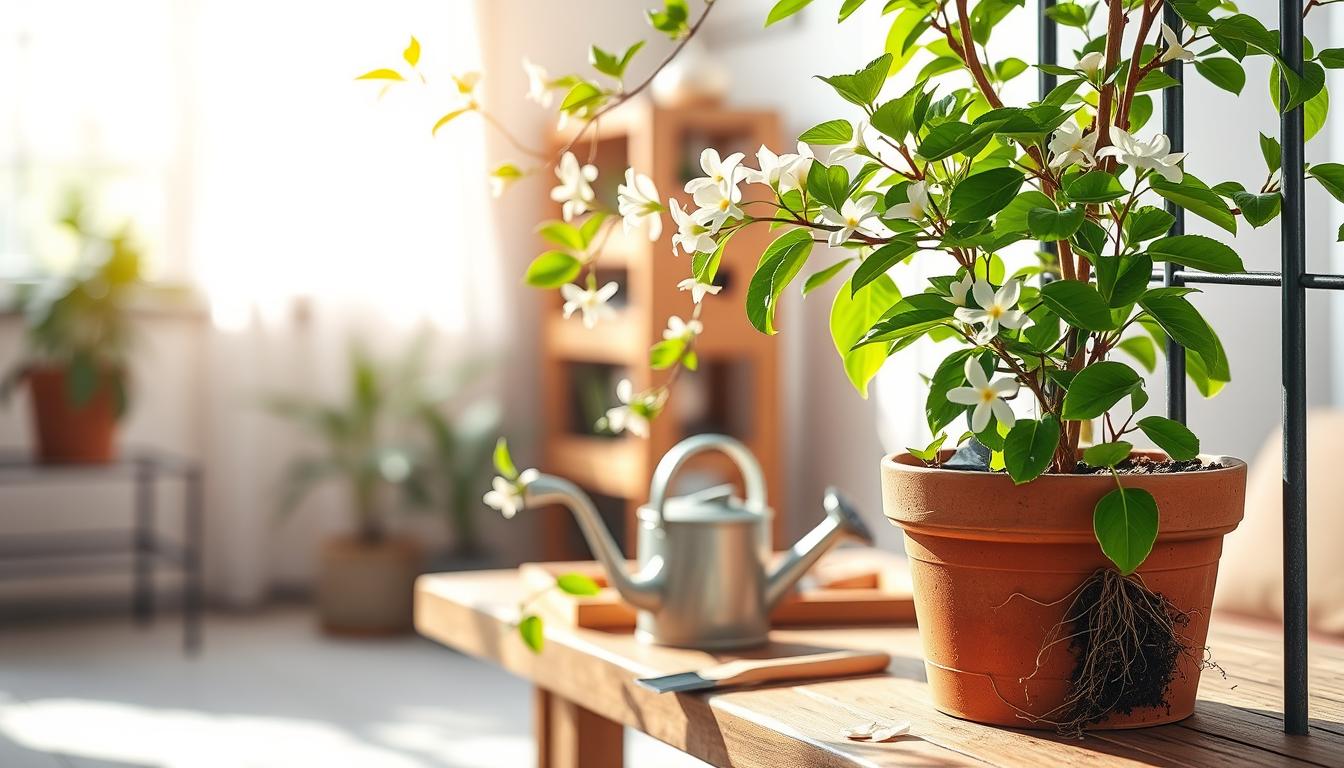
Jasmine plant care comes down to bright light, evenly moist but well-drained compost, and the right season for pruning. Indoor jasmines such as pink jasmine (Jasminum polyanthum) and Arabian jasmine (Jasminum sambac) want the brightest window you have, while climbing common jasmine (Jasminum officinale) needs a sunny, sheltered wall and a sturdy trellis. Water when the top few centimetres of compost feel dry, feed lightly in spring and summer, and prune straight after flowering so next year’s buds are not cut away.
Mastering jasmine plant care can fill your home or garden with the sweet, intoxicating scent of fresh blooms. Nurture a delicate indoor jasmine on a sunny windowsill or train vigorous climbing jasmine up a trellis according to its needs.
This guide provides practical, easy-to-follow steps for beginners. We will explore how to balance light, water, and soil to keep your greenery thriving. Learn to manage leaf spot and pests, so your jasmin plant produces iconic, fragrant flowers each year.
Key Takeaways
- Identify your specific variety to determine if it prefers indoor or outdoor conditions.
- Provide bright, indirect light to encourage healthy growth and consistent flowering.
- Use well-draining soil to prevent root rot and maintain moisture balance.
- Install sturdy trellis support for vining types to promote upward growth.
- Monitor leaves regularly to catch pests or diseases like leaf spot early.
How Do You Care for a Jasmin Plant?
Whether it grows on a trellis or in a windowsill pot, a jasmin plant needs steady care. Most varieties thrive with bright light, steady warmth, and attention to their climbing habits.
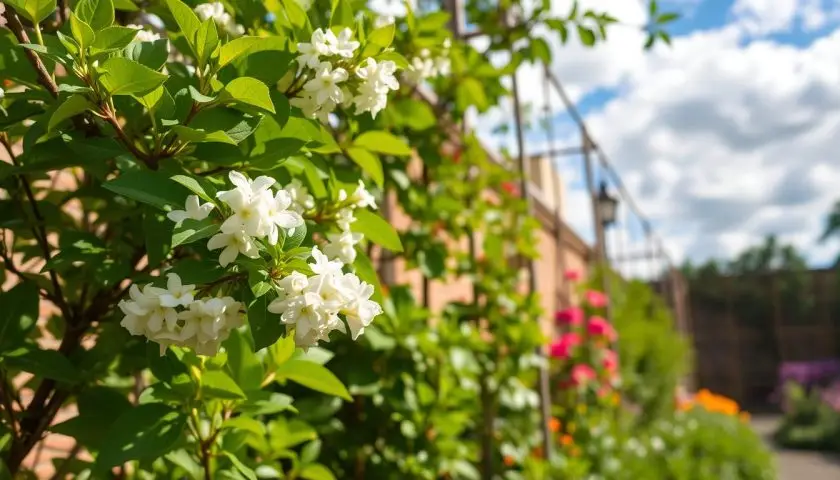
Provide bright light, warmth, and well-drained soil
Place it where it receives plenty of bright, indirect light. Jasmine loves warmth and struggles in cold, drafty areas indoors or outdoors.
The key to healthy roots is well-drained soil. Make sure containers and garden beds let extra water escape, so roots do not sit in soggy soil.
Water when the soil surface begins to dry
A healthy jasmin plant needs steady moisture, not soaking or bone-dry soil. Check the top inch with your finger before watering.
When the surface feels dry, give your plant a drink. Water thoroughly until liquid flows from the pot’s drainage holes.
Support climbing stems and prune after flowering
Many jasmine varieties climb naturally and need guidance to look their best. Install a trellis or wire support early, so vines have something to wrap around.
Pruning helps keep your plant compact and healthy. Wait until the main flowering period ends, then trim long, unruly stems to encourage new growth.
Adjust care for indoor jasmine, outdoor vines, Arabian jasmine, and star jasmine
Each species has special needs to consider. For example, Arabian jasmine is tropical and needs extra protection from cold and frost.
By contrast, star jasmine often grows as a vigorous outdoor vine and handles landscape conditions well. Check your variety’s needs for the right balance of light and space.
Key Takeaways for Healthy Jasmine Plants
Keeping jasmine healthy takes a few simple habits that support strong growth. Each variety has different needs, so adjust care to match your plant. Like caring for a rosemary plant indoors, success starts with watching your plant.
Match the plant’s light and temperature needs to its species
Jasmine species have different environmental needs. Some varieties love full sun, while others prefer shade during the hottest part of the day. Check your plant’s requirements to keep it healthy and productive.
Use drainage, careful watering, and moderate humidity to prevent root problems
Healthy roots support a strong plant. Use pots with drainage holes to prevent standing water and root decay. Moderate humidity keeps foliage healthy without causing moisture problems.
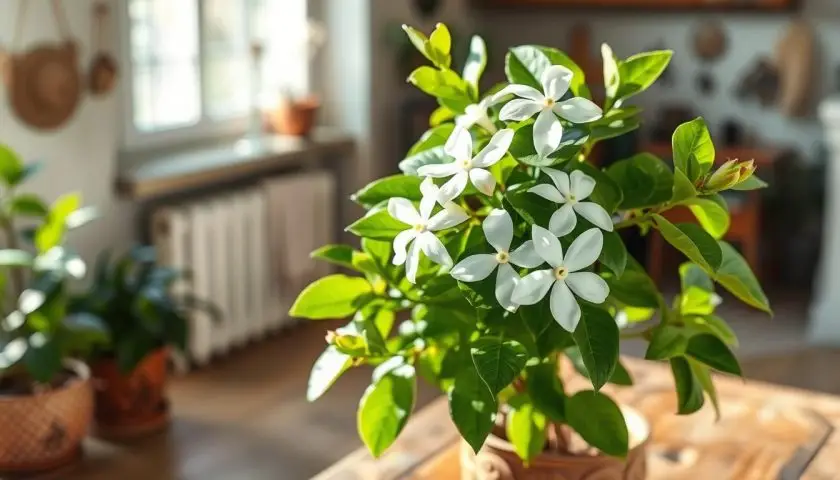
Train vines early with trellis support
For climbing varieties, provide trellis support when growth begins. Guide stems early to prevent tangles and woody growth. This makes the plant easier to shape as it matures.
Use pruning and feeding to encourage compact growth and fragrant flowers
After the main flowering season, pruning vines helps jasmine focus energy on new growth. Regular feeding supplies nutrients for those lovely fragrant flowers.
Inspect leaves and stems regularly for pests and leaf spot disease
Inspect your plant closely each week. Finding leaf spot disease or common pests early makes treatment easier. Check leaf undersides to help your jasmine stay vibrant and healthy.
| Care Task | Goal | Frequency |
|---|---|---|
| Pruning vines | Shape and health | After flowering |
| Trellis support | Structure | Early growth stage |
| Leaf spot disease check | Prevention | Weekly inspection |
| Fragrant flowers boost | Blooming | During active season |
Choose the Right Jasmine for Indoor or Climbing Growth
Choose the right jasmine species for your space, whether you want fragrant indoor growth or an outdoor climber. Each variety has distinct features and care needs for your home or garden. Knowing these differences helps prevent common mistakes and supports healthy growth.
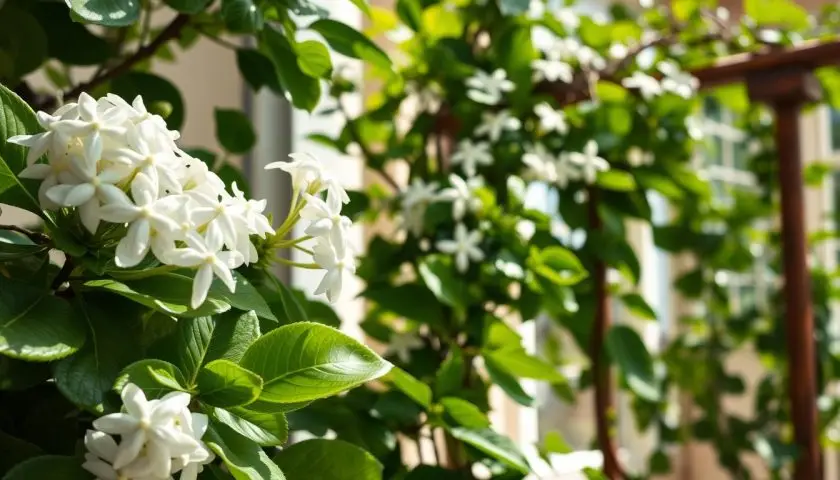
Arabian jasmine: compact growth and highly fragrant white flowers
If space is limited, Arabian jasmine makes an excellent choice. It grows as a compact shrub instead of a vine. Its fragrant flowers are famous for their sweet, intoxicating scent, which can fill a room.
Star jasmine: vigorous climbing growth and outdoor landscape use
For covering a fence or trellis, star jasmine is a top performer. Its vigorous, woody vines can quickly transform an outdoor landscape. This hardy plant handles outdoor conditions with ease.
Common jasmine and other vining types: seasonal growth and support requirements
Common jasmine and other vining varieties offer a classic look with delicate, star-shaped blooms. These plants often have seasonal growth spurts, so they need sturdy supports such as trellises or wires. Without guidance, the vines can become tangled and hard to manage.
Indoor jasmine versus outdoor jasmine: light, temperature, and space differences
Choosing between indoor jasmine and outdoor jasmine depends largely on your environment. Indoor varieties need consistent, bright light and protection from drafts. Outdoor plants need more space and must withstand local weather changes.
Comparison table: species, growth habit, flower fragrance, light needs, and cold tolerance
| Species | Growth Habit | Fragrance | Light Needs | Cold Tolerance |
|---|---|---|---|---|
| Arabian Jasmine | Compact Shrub | Very High | Bright/Direct | Low |
| Star Jasmine | Vigorous Vine | High | Full Sun | Moderate |
| Common Jasmine | Climbing Vine | High | Partial/Full Sun | Moderate |
Check plant labels and growing-zone requirements before planting outdoors
Before planting in your yard, always check the plant labels for specific instructions. Knowing your local growing zone is essential for long-term success. This step helps your jasmine survive winter and bloom beautifully each year.
Give Jasmine the Light, Temperature, and Humidity It Needs
Create the right setting for jasmine to encourage beautiful, fragrant blooms. Whether you care for tropical house plants or classic vines, these needs help your plant flourish.
Place indoor jasmine near a bright, unobstructed window
Most varieties of indoor jasmine need plenty of sun. Place the pot near a south- or west-facing window for plenty of bright light. A clear spot gives the plant energy to create its famous scent.
Use supplemental grow lights when natural light is insufficient
If your home lacks natural sunshine, use grow lights during darker winter months. Place them a few inches above the foliage to copy sunlight without burning the leaves.
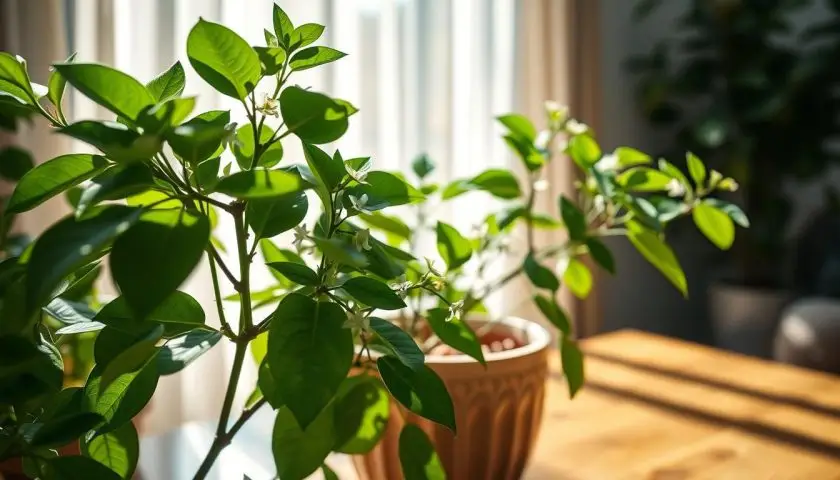
Provide outdoor plants with strong light while protecting them from harsh conditions when necessary
Outdoor jasmine thrives in full sun, but extreme weather may require extra care. In very hot climates, provide afternoon shade to prevent leaf scorch. Strong, steady light supports healthy, vigorous growth.
Maintain warm temperatures during active growth
Jasmine plants prefer steady warmth during the growing season. Keep temperatures between 65°F and 75°F to support healthy growth. Keep the plant away from heating vents and air conditioning units, which cause sudden temperature changes.
Protect tropical Arabian jasmine from cold drafts, frost, and sudden temperature changes
Arabian jasmine is especially sensitive to cold. Shield it from cold drafts near doors or windows during winter. If it stays outdoors, bring it inside well before the first frost to prevent lasting damage.
Improve indoor humidity without keeping foliage constantly wet
Jasmine benefits from higher humidity, but do not mist its leaves directly. Wet foliage can cause fungal problems and leaf spot. Instead, use a tray of pebbles and water to raise moisture in the air.
Signs of too little light, excessive heat, cold stress, and low humidity
Leaves often show when your plant is unhappy. Watch for these signs and adjust care quickly.
| Symptom | Likely Cause | Corrective Action |
|---|---|---|
| Pale, leggy stems | Too little light | Move to a brighter spot |
| Brown, crispy leaf edges | Low humidity | Use a pebble tray |
| Wilting despite wet soil | Root rot from overwatering | Let the soil dry, check the roots and improve drainage |
| Yellowing, scorched leaves | Excessive heat | Provide afternoon shade |
Water, Feed, and Pot a Jasmin Plant Correctly
Providing the right environment for your jasmin plant involves more than occasional watering. Focus on soil quality and steady care to help your vine grow well.
Check soil moisture before watering
Check the soil surface with your finger before reaching for the watering can. If the top inch feels dry, water the plant. This habit helps prevent root problems caused by soil that stays wet too long.
Water thoroughly until excess drains from the container
When watering jasmine, soak the entire root ball. Continue adding water until it flows freely from the pot bottom. This gives deep roots enough moisture to stay healthy.
Reduce watering during slower growth or cooler indoor conditions
Your plant grows more slowly during winter or in cooler indoor temperatures. At these times, soil stays damp longer. Reduce watering to keep roots from sitting in stagnant water.
Choose well-drained soil with organic matter and good aeration
A healthy jasmin plant needs growing medium that holds moisture while allowing oxygen to flow. Use a high-quality, well-drained soil mix with organic matter, such as peat or coco coir. This structure moves excess water away from roots quickly.
Select a container with drainage holes and repot when roots become crowded
Always use a pot that features reliable drainage holes at the bottom. If roots grow from these holes or circle the surface, move the plant into a slightly larger container. Fresh soil during repotting gives your plant nutrients for vigorous growth.
Apply a balanced fertilizer during active growth
During spring and summer, your plant will appreciate extra energy. Use a balanced fertilizer diluted to half-strength for lush foliage and fragrant blooms. Avoid feeding during the dormant winter season while the plant rests.
Comparison table: symptoms of overwatering, underwatering, nutrient deficiency, and poor drainage
| Condition | Primary Symptom | Immediate Check | Corrective Action |
|---|---|---|---|
| Overwatering | Yellowing leaves | Check soil dampness | Improve drainage |
| Underwatering | Crispy, brown edges | Check soil dryness | Water thoroughly |
| Nutrient Deficiency | Pale, stunted growth | Check feeding schedule | Apply balanced fertilizer |
| Poor Drainage | Wilting despite wet soil | Check drainage holes | Repot in well-drained soil |
Prevent salt buildup and fertilizer damage
Mineral salts from tap water and fertilizers can build up in soil over time. Flush the soil with plain water every few months to prevent this buildup. This keeps the root zone healthy and prevents chemical burns on delicate plant tips.
Keep water and fertilizer off flowers and foliage when possible
Apply water and liquid nutrients directly to the soil surface. Dry leaves and flowers help prevent fungal issues and keep your plant looking its best. If foliage gets splashed, gently wipe it with a soft cloth.
Plant and Train Climbing Jasmine on a Trellis
Creating a vertical garden with star jasmine is easier than you might think when you follow a few simple steps. Successful outdoor planting needs a sunny spot with excellent drainage. If soil stays soggy, add organic matter to improve its texture before digging.
Prepare an outdoor planting site with adequate light and drainage
Jasmine thrives when it receives at least six hours of direct sun each day. Clear debris and leave enough space for roots to spread comfortably. Good drainage prevents root rot, so avoid low areas where water pools after heavy rain.
Acclimate indoor-grown jasmine before moving it outdoors
If you move a plant from inside, do not rush the process. Over about a week, place it outdoors in shade for a few hours each day. This helps the leaves adjust to strong sunlight and the natural breeze without shock.
Install trellis support, wire, or another sturdy structure before vines become heavy
It is easier to install your trellis support while the plant is young and manageable. For a smaller container variety, consider a moss pole for plants. Anchor the structure firmly in the ground or wall to support the mature vine.
Attach young stems loosely so they can expand without damage
When you begin vine training, use soft garden ties or twine to secure the stems. Leave some slack so the stems can grow thicker over time. Tight ties can cut into bark and permanently damage your climbing jasmine.
Guide climbing jasmine around supports instead of forcing woody stems to bend
Be patient when working with woody stems. Gently wrap the vines around the support in their natural growing direction. Never force a stiff stem to bend, because it may snap under pressure.
Allow enough air circulation between the vine and wall or fence
Proper air circulation helps keep your plant healthy and prevent fungal problems. Against a wall, leave a small gap between the trellis and surface. This keeps moisture from collecting against siding or fence panels.
Protect roots with mulch while keeping mulch away from the main stem
Add organic mulch around the base to keep roots cool and moist. Keep it a few inches from the main stem to prevent rot. This helps keep soil temperatures steady during hot summer months.
Safety and placement considerations near walkways, windows, foundations, and utility lines
Consider the plant’s long-term growth before you dig. Avoid planting near foundations or utility lines, where roots may cause problems. Trim vines away from windows and walkways so they do not block paths or views.
| Support Type | Best For | Installation Difficulty |
|---|---|---|
| Wooden Trellis | Star jasmine | Moderate |
| Wire Grid | Large wall coverage | High |
| Garden Stakes | Young, small vines | Low |
Prune, Propagate, and Encourage Fragrant Flowers
Learning to prune and propagate helps you enjoy more of your fragrant flowers. These steps keep your plants healthy and help them bloom year after year.
Prune jasmine after its main flowering period
Trim your plant right after it finishes its main blooming cycle. This timing keeps you from cutting buds that will soon open. Read about pruning basics for tips that fit your jasmine variety.
Remove dead, damaged, diseased, and weak growth first
Begin by removing stems that look brown, brittle, or sickly. This dead growth keeps the plant from focusing energy on healthy stems. Removing it also improves airflow and helps the vine stay strong.
Shorten overlong vines to control size and improve branching
To practice pruning vines, trim stems that have grown too long. Cut just above a leaf node to encourage new branches and fuller growth. This step also controls plant size in smaller indoor spaces.
Disinfect pruning tools before and after cutting affected stems
Clean tools help prevent plant diseases from spreading. Wipe your shears with rubbing alcohol before and after cutting. This small habit protects jasmine from harmful infections.
Deadhead spent flowers when it improves appearance or supports continued blooming
Regular deadheading means pinching off faded blossoms. This mainly improves appearance, but it may also encourage new growth. It keeps jasmine fresh and tidy throughout the season.
Take propagation cuttings from healthy, nonflowering growth
If you want more plants, jasmine propagation can be rewarding. Choose stems that are green and flexible, not woody. Healthy, nonflowering growth gives new plants the best chance to succeed.
Step-by-step propagation from cuttings
Take a four-inch cutting just below a leaf node. Remove the lower leaves, leaving only a few at the top. This step supports successful propagation from cuttings.
Prepare the cutting and rooting medium
Fill a small pot with perlite and peat moss for good drainage. Dip the cutting in rooting hormone, if available, then place it in damp medium. Firm the soil around the stem to keep it upright.
Maintain moisture, warmth, and indirect bright light during rooting
Cover the pot with a clear plastic bag to create humidity. Place it in bright, indirect light and keep the soil moist. Roots should form within a few weeks.
Pot rooted cuttings and gradually increase their light exposure
When new growth appears, transplant the cutting into a slightly larger pot with standard potting soil. Increase its light over one week to help it adjust. This gradual change prevents shock and supports strong growth.
Understand why jasmine may grow leaves but produce few flowers
Sometimes a plant looks lush but does not bloom. Low light, excess nitrogen, or young age may cause this problem. Enough sun and a proper rest period support steady jasmine blooming.
| Symptom | Likely Cause | Corrective Action |
|---|---|---|
| No flowers | Insufficient light | Move to a brighter window |
| Excessive foliage | Too much nitrogen | Switch to a bloom-booster fertilizer |
| Stunted growth | Immature plant | Be patient and maintain care |
| Bud drop | Temperature swings | Protect from drafts and heat |
Troubleshoot Jasmine Plant Problems
Even careful plant lovers sometimes face problems with jasmine. When growth slows, the plant may need a small change in its environment.
Why are jasmine leaves turning yellow?
Check for overwatering, poor drainage, root stress, low light, and natural aging
Yellow jasmine leaves can signal a moisture problem, but they are not always serious. If soil stays soggy, poor drainage can stress the roots. Older leaves may turn yellow and fall as they age, which is normal.
Why is jasmine dropping leaves?
Inspect recent changes in temperature, watering, light, humidity, and location
If your plant suddenly loses leaves, review any recent changes. A jasmin plant can react to drafts, sudden temperature shifts, or a new location. Keep it away from heaters and air-conditioning vents.
Why is jasmine not blooming?
Evaluate light levels, pruning timing, fertilizer use, plant maturity, and seasonal dormancy
Experiencing poor blooming often means the plant lacks bright, indirect light. Pruning at the wrong time can remove buds before they open. Young plants need time to mature before producing fragrant flowers.
How do you identify and manage common jasmine pests?
Inspect for aphids, spider mites, scale, mealybugs, and whiteflies
Check leaf undersides often, because jasmine pests may hide there. You may see tiny aphids or fine webbing from spider mites when air is too dry. Scale and mealybugs look like waxy bumps or white, cottony patches on stems.
Isolate affected indoor plants and remove pests with appropriate treatment
If you find an infestation, isolate the plant at once to protect your other plants. Wipe pests away with a damp cloth, or use insecticidal soap safely.
How do you prevent and treat leaf spot disease?
Remove affected leaves, improve air circulation, and avoid wetting foliage
If you notice leaf spot disease, act quickly to limit its spread. Remove damaged leaves and leave space for air to move around the plant. Water the soil directly instead of splashing the leaves.
Use sanitation and species-appropriate treatment when disease continues
Keep tools clean and avoid overcrowding your plants. If the problem continues, ask a local nursery about treatment for your specific variety.
Comparison table: jasmine symptom, likely cause, immediate check, and corrective action
| Symptom | Likely Cause | Immediate Check | Corrective Action |
|---|---|---|---|
| Yellow Leaves | Overwatering | Soil moisture | Improve drainage |
| Leaf Drop | Drafts | Location | Move to stable spot |
| No Blooms | Low light | Window exposure | Increase light |
Common jasmine care mistakes to avoid
- Keeping the soil constantly wet: This leads to root rot and yellowing foliage.
- Using a container without drainage holes: Excess water has nowhere to go, suffocating the roots.
- Pruning at the wrong time: Always prune after the flowering cycle ends to avoid cutting off future buds.
- Placing an indoor plant in dim light: Your plant needs bright, indirect light to stay healthy and vibrant.
- Overfertilizing to force flowers: Too much fertilizer can burn the roots and actually inhibit growth.
- Training vines against a surface with inadequate airflow: This creates a humid trap that encourages fungal issues.
Is Jasmine Safe for Cats and Dogs?
True jasmines are a good choice for pet owners. The ASPCA lists jasmine (Jasminum species) as non-toxic to dogs, cats and horses, and star jasmine (Trachelospermum jasminoides), a different plant despite its name, is listed as non-toxic too. Take care with look-alikes: Carolina jessamine (Gelsemium sempervirens) and night-blooming jessamine (Cestrum nocturnum) are not true jasmines and are poisonous, so check the botanical name on the label before you buy.
At Patch Plants (patchplants.org), botanist Sawera Shahid focuses on why a plant behaves the way it does, because once you understand that a jasmine flowers on older growth, pruning timing suddenly makes sense. If you love vines, our guide to climbing houseplants covers more indoor climbers, blooming indoor plants lists other flowering options, and our cat-friendly plant guide helps if you share your home with pets.
Frequently Asked Questions
Why is my jasmine plant not flowering?
The usual reasons are too little light, pruning at the wrong time and too much nitrogen fertiliser, which pushes leaves instead of flowers. Winter-flowering pink jasmine also needs a cool spell in autumn to set buds, so a plant kept in a warm living room all year often stays leafy. Move it to the brightest spot you have, switch to a flowering feed and only prune after it has bloomed.
How often should I water a jasmine plant?
Water when the top 2 to 3 cm of compost feels dry, then let the excess drain away. In summer that may be every few days for a plant in a small pot; in winter it can be once a week or less. Jasmine likes steady moisture but its roots rot in soggy compost, so never leave the pot standing in water.
Can jasmine grow indoors all year?
Yes. Pink jasmine and Arabian jasmine both grow well as houseplants if they get several hours of bright light a day. They appreciate a spell outdoors in a sheltered spot during warm summer weather, and they need humidity that is not too dry, so keep them away from radiators.
Is jasmine toxic to cats and dogs?
True jasmines (Jasminum species) are listed by the ASPCA as non-toxic to cats, dogs and horses. The risk comes from plants that only share the name, such as Carolina jessamine and night-blooming jessamine, which are poisonous, so always check the botanical name before buying.
When should I prune jasmine?
Prune straight after flowering. For summer-flowering climbing jasmine that means late summer; for winter-flowering types it means spring. Remove dead or tangled stems and shorten long shoots, but avoid heavy pruning later in the season because jasmine flowers on growth made earlier in the year.
Final Thoughts on Jasmine Plant Care
Growing these beautiful plants adds calm and natural beauty to your home or garden. Good jasmine plant care balances bright light, steady warmth, and proper moisture. Well-drained soil and good airflow help plants thrive throughout the seasons.
Care for indoor jasmine on a sunny windowsill, or train climbing jasmine along a garden fence. Adjust feeding and pruning to meet your variety’s specific needs. This active care controls growth and encourages fragrant flowers that make your effort worthwhile.
Inspect your plants each week for early signs of pests or stress. Quick changes to your routine can prevent larger problems from taking hold. You now know how to create a healthy environment where vines flourish and greenery fills your space with life.

About the author
Sawera Shahid is a botanist with an MPhil in Botany and 5+ years of writing about plants. As founder and lead writer of Patch Plants, she writes practical, science-backed guides on indoor plants, outdoor gardens and plant problems, checked against RHS and university extension advice.