Quick Answer: What Is a Moss Pole for Plants?
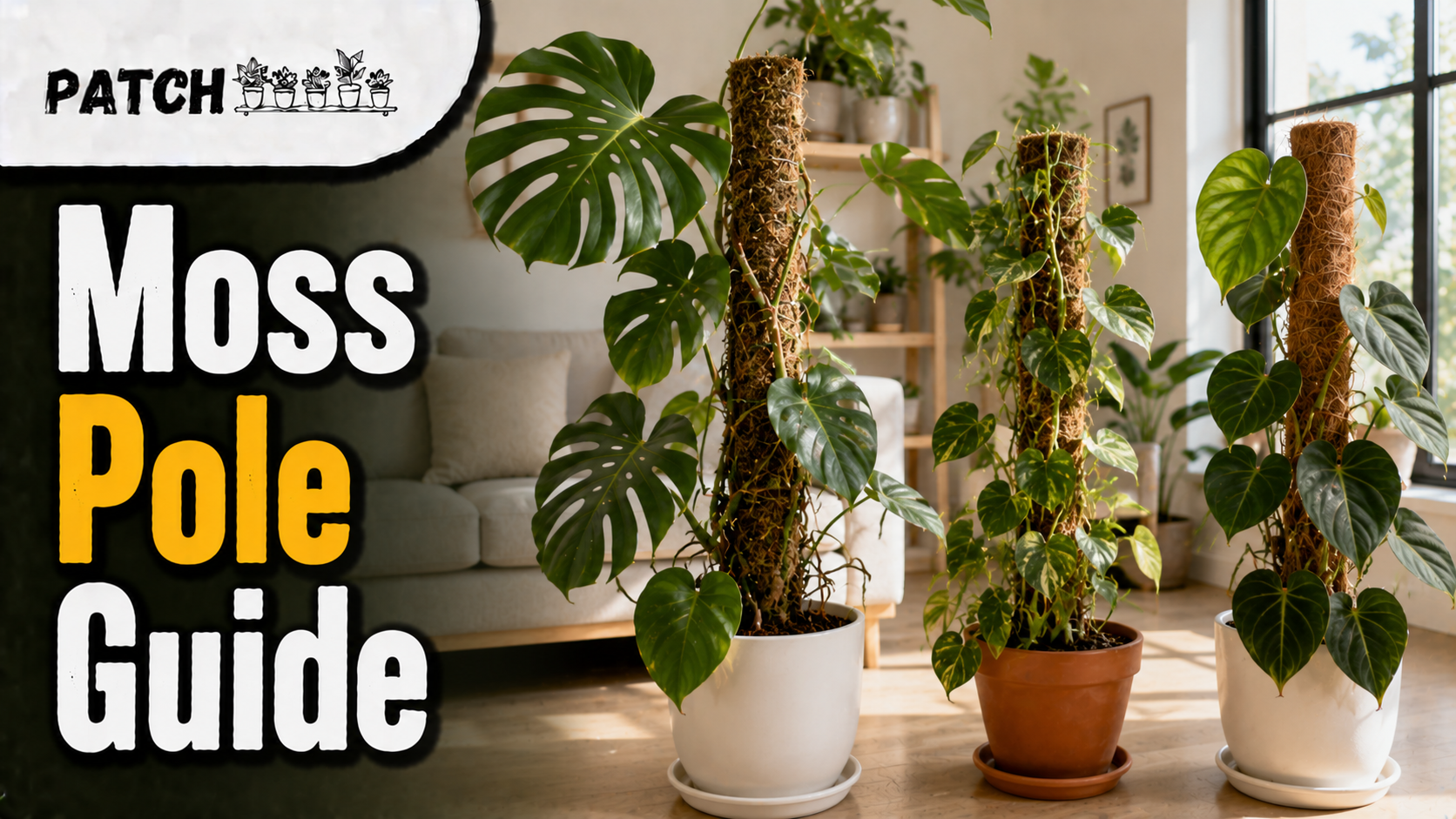
A moss pole for plants is a vertical support that helps climbing houseplants such as monstera, pothos, philodendron, and syngonium grow upward. It supports heavy stems and gives aerial roots a textured surface to grip. Moss poles are especially useful when a climbing plant begins leaning, sprawling, or becoming top-heavy.
Key Takeaways
- A moss pole for plants supports climbing houseplants and guides their growth upward instead of sideways.
- Monstera, pothos, climbing philodendrons, and syngonium are among the most suitable plants for vertical supports.
- A moss pole for monstera supports the main stem and gives aerial roots a textured surface to grow toward.
- The easiest time to install a moss pole is usually during repotting, when the support can be positioned without forcing it through an established root ball.
- Attach the plant’s main stem rather than its leaf stalks, using soft, loose ties that can be adjusted as the stem thickens.
- A coco coir pole, cedar plank, bamboo stake, or trellis can be a practical moss pole alternative.
- A moss pole provides support; it does not replace appropriate light, watering, soil, or general plant care.
What Is a Moss Pole?
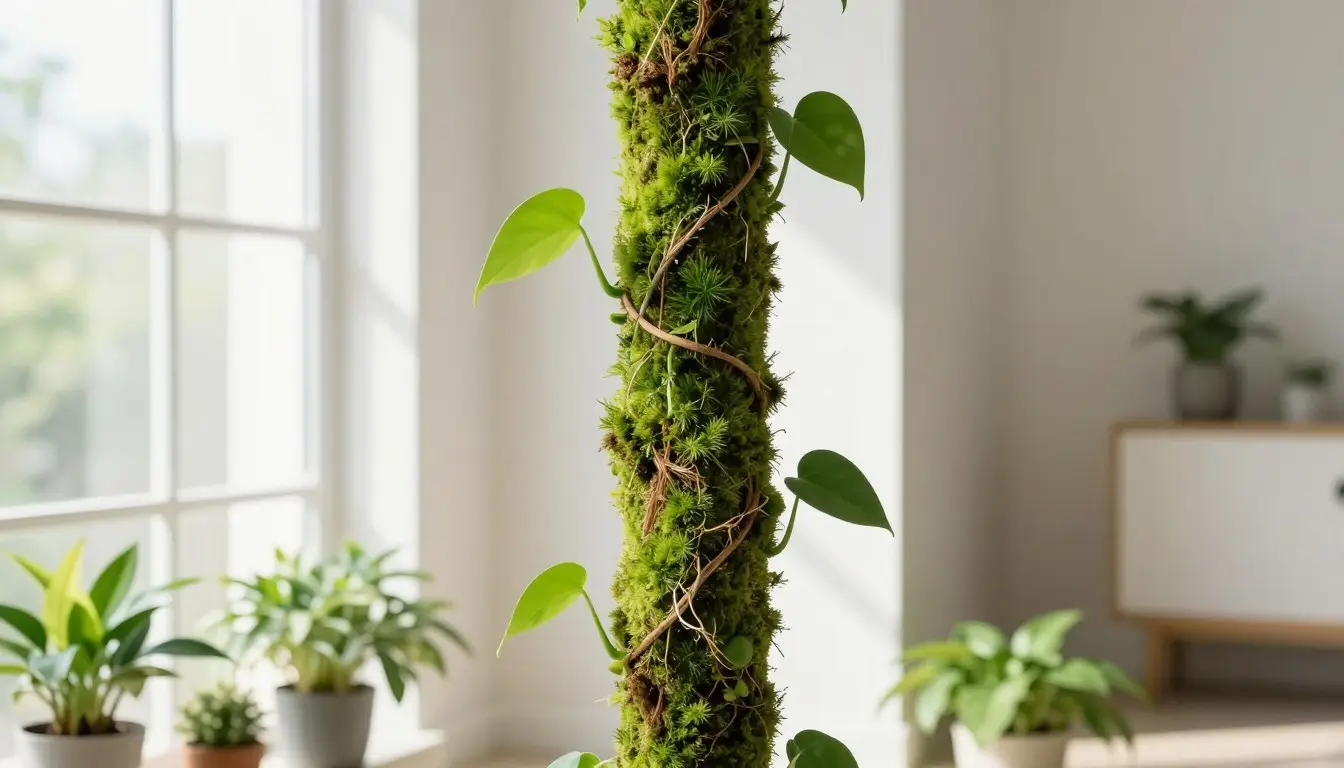
A moss pole for plants is an upright plant support covered with sphagnum moss or a similar textured material. It is mainly used for climbing indoor plants that naturally grow upward against trees or other supports.
At home, plants such as monstera and climbing philodendrons do not have tree trunks to climb. Without support, mature stems may lean, trail, spread sideways, or become top-heavy. A plant moss pole provides a structure that helps guide this growth vertically.
The textured surface is also useful for plants with aerial roots. When conditions are suitable, aerial roots can grow toward or attach to the support.
If you’re building a collection of climbing houseplants, explore the Patch Plants indoor plant guides for more species-specific growing advice.
What Does a Moss Pole Actually Do?
A moss pole primarily provides physical support for climbing plants. It helps keep stems upright, guides new growth vertically, and provides a textured surface for aerial roots. It can also make large climbing plants easier to manage indoors.
Important benefits include:
- Vertical support: Helps prevent long climbing stems from sprawling across furniture or floors.
- Support for heavier growth: Useful as monstera and climbing philodendrons mature.
- Aerial root contact: Provides a textured surface toward which aerial roots can be guided.
- Neater plant shape: Makes large climbing plants easier to position indoors.
- More natural climbing habit: Gives climbing species a structure they can grow against.
If you’re arranging several large houseplants together, see our guide to creating an indoor jungle without overcrowding.
Which Plants Need Moss Poles?
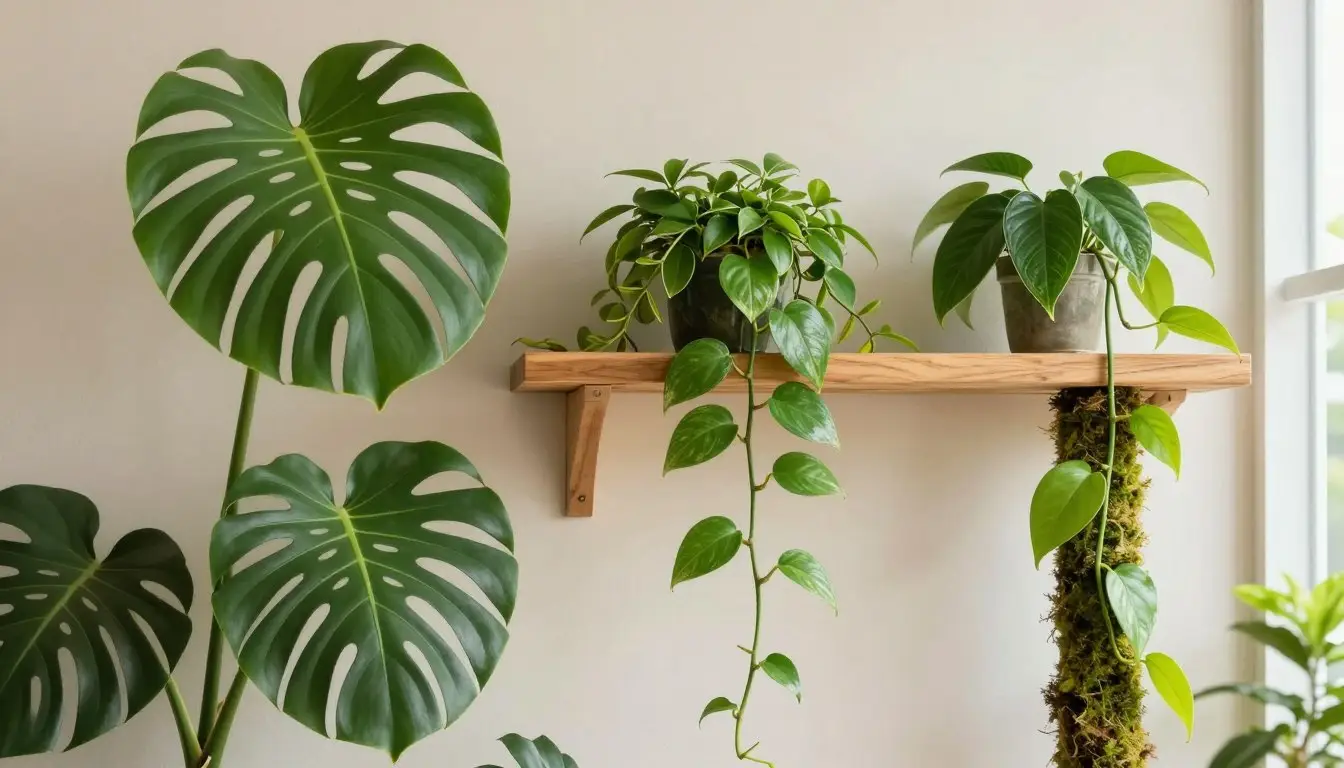
Plants that need moss poles are generally climbing or vining species that benefit from vertical support. Not every houseplant needs one. Growth habit matters more than simply whether a plant is large.
Monstera
A moss pole for monstera is one of the most common applications. As a monstera matures, its main stem can become large and heavy while aerial roots extend away from the plant.
A stable pole helps guide the main stem upward and gives aerial roots a nearby surface to grow toward.
Whenever possible, introduce the support before the plant becomes extremely large. A younger, flexible plant is generally easier to position than an established plant that has already grown sideways.
Pothos
A pothos moss pole lets pothos grow as a climber rather than only as a trailing houseplant. Guide one or more main vines upward and attach them loosely as they grow.
Smaller pothos plants may not require a large moss-filled support. A slim moss pole, coco coir pole, stake, or trellis may provide enough structure.
Philodendron
A philodendron moss pole is useful for climbing and vining philodendrons. It keeps long stems supported and makes it easier to direct new growth vertically.
The type and size of support should match the plant. A small vining philodendron may only require a slim support, while a mature climbing specimen may need something considerably stronger.
Syngonium and Other Climbers
Some syngoniums and other climbing aroids can also benefit from an indoor plant support. Smaller specimens can use stakes or trellises, while larger climbing plants may need a sturdier pole.
Which Plants Do Not Need a Moss Pole?
Plants that do not naturally climb generally do not need moss poles. Upright, self-supporting, rosette-forming, or compact houseplants usually gain little from this type of support.
The simplest rule is to look at the plant’s natural growth habit. If it climbs and produces long stems or aerial roots, vertical support may be useful. If it naturally holds itself upright, a moss pole is usually unnecessary.
Moss Pole vs Coco Coir Pole: What’s the Difference?
A moss pole is generally better when you want a moisture-retentive, root-friendly surface, while a coco coir pole is simpler when you mainly need structural support. Both can guide climbing plants upward, but they differ in material and maintenance.
| Feature | Moss Pole | Coco Coir Pole |
|---|---|---|
| Surface | Sphagnum moss or similar moss material | Coconut fibre |
| Moisture retention | Generally retains more moisture | Usually dries more quickly |
| Aerial roots | Textured, moisture-retentive surface | Textured surface primarily useful for grip and support |
| Maintenance | Higher if you choose to keep the moss moist | Generally lower |
| Good candidates | Monstera and larger climbing aroids | Pothos, philodendron and smaller climbers |
Choose a moss pole when aerial-root contact and a moisture-retentive climbing surface are priorities. Choose a coco coir pole when you mainly want simple, tidy vertical support with less maintenance.
How to Use a Moss Pole in 5 Steps
The easiest way to use a moss pole is to anchor it securely near the plant’s main stem and gradually train the stem toward it with soft ties. Installing one during repotting can make positioning easier.
1. Choose the Right Height
Choose a pole that provides room for future growth rather than matching only the plant’s current height. For fast-growing climbers, an extendable or modular support can be useful.
2. Position the Pole Near the Main Stem
Place the support close to the main climbing stem. It should be deep enough in the pot to remain stable once the plant is attached.
Avoid blindly pushing a thick support through a dense established root ball. If the plant needs repotting anyway, installing the support at the same time can make placement easier.
3. Stabilize the Pole With Potting Mix
When repotting, position the pole and plant before filling around the roots with fresh potting mix. Firm the mix gently enough to stabilize the support without heavily compacting the root zone.
Use our Soil Calculator if you’re moving a large climbing plant into a bigger container and want to estimate how much potting mix you’ll need.
You can also review our guide to choosing potting mix before repotting.
4. Attach the Main Stem With Soft Ties
Use soft plant ties, plant tape, twine, or suitable plant clips. Attach the main stem to the pole rather than fastening individual leaves or leaf stalks.
Keep every tie loose enough to allow the stem to expand.
5. Train New Growth Gradually
Check the plant periodically as it grows. Guide new growth toward the support and reposition ties when necessary.
Never force a stiff mature stem sharply backward simply to make it touch the pole. Gradual training reduces the chance of damaging the plant.
How to Attach Monstera to a Moss Pole
To attach monstera to a moss pole, position the plant’s main stem against the support and secure it loosely with soft ties. Attach the stem rather than the leaves, and guide aerial roots toward the pole without forcing or sharply bending them.
Identify the Main Stem
Find the thicker central climbing stem from which leaves and aerial roots emerge. This is the part that should be supported.
Position the Correct Side Toward the Pole
Place the support where the main stem and aerial roots can naturally grow toward it. This reduces the amount of bending required to train the plant.
Secure the Stem, Not the Leaves
Use soft ties around the main stem and pole. Do not tightly strap leaf stalks to the support.
Guide Aerial Roots Gently
If aerial roots are long enough, point them toward the support without forcing them into it. They can be left to make contact naturally as the plant continues growing.
Keep the Support Stable
A large monstera can place considerable leverage on a narrow support. The pole should therefore be firmly anchored in an appropriately sized container.
For the other half of healthy indoor growth, see our complete guide to indoor light.
When Should You Add a Moss Pole?
Add a moss pole when a climbing plant begins producing longer stems, aerial roots, sideways growth, or enough weight that it needs additional support. You do not have to wait until the plant is falling over.
Adding support earlier can make training easier because younger stems are usually easier to position. If the plant is already mature, introduce the support carefully and adjust its position gradually rather than trying to reshape the plant immediately.
Does a Moss Pole Need to Stay Wet?
A moss pole does not need to be constantly soaking wet to function as structural support. Moisture can make a true moss surface more suitable for aerial-root contact, but constantly saturating the pole is unnecessary and can allow excess water to reach the potting mix.
If you choose to moisten the pole, aim for controlled moisture rather than continuous saturation. Always judge watering of the potting mix according to the plant and soil rather than the condition of the pole.
For more guidance, see our complete plant watering guide.
Can a Moss Pole Make Leaves Grow Bigger?
A moss pole alone does not guarantee larger leaves. It gives climbing plants physical support and can help them follow a climbing growth habit, but leaf development also depends on the species, maturity, light, root conditions, watering, nutrition, and overall growing environment.
This distinction is important: treat the pole as a support system rather than as a substitute for good plant care.
How to Care for a Plant Growing on a Moss Pole
Adding a support does not fundamentally change the plant’s normal care requirements. Continue managing light, water, soil, and general maintenance according to the species.
- Provide suitable light: Match light conditions to the plant rather than to the pole.
- Water the soil according to need: Do not automatically increase watering because a support has been installed.
- Manage pole moisture separately: If using a true moss pole, moisten it only as needed for your chosen setup.
- Inspect plant ties: Loosen or reposition ties before they constrict thickening stems.
- Watch new growth: Guide flexible new stems toward the support rather than forcing old growth.
- Check stability: As the plant becomes heavier, make sure the support and container remain stable.
Explore more practical maintenance advice in our Plant Care guides.
7 Common Moss Pole Mistakes to Avoid
1. Using a Pole That Is Too Short
A support with almost no room above the existing plant can be outgrown quickly. Allow space for continued vertical growth.
2. Tying Stems Too Tightly
Stems become thicker as plants mature. Tight ties can constrict or damage growing tissue, so use soft material and check it periodically.
3. Tying Leaf Stalks Instead of the Main Stem
The goal is to support the climbing stem. Leaves need freedom to orient themselves toward light.
4. Installing the Pole Carelessly Through Established Roots
Forcing a large pole through a dense root ball can damage roots. Repotting is often a more convenient opportunity to position the support.
5. Expecting the Plant to Attach Immediately
Training takes time. Use temporary soft ties while new growth and aerial roots develop around the support.
6. Keeping the Pole Excessively Wet
More water is not automatically better. If excess moisture continually drains from the support into the container, the potting mix may remain wetter than intended.
7. Treating a Moss Pole as a Substitute for Plant Care
A support cannot correct insufficient light, inappropriate watering, unsuitable potting mix, or other underlying care problems.
Best Moss Pole Alternatives
You do not always need moss. The best moss pole alternative depends on whether your priority is simple support, root contact, appearance, or low maintenance.
| Support | Best Use | Maintenance |
|---|---|---|
| Coco coir pole | General climbing support | Low |
| Cedar or wooden plank | Larger climbing plants | Low |
| Bamboo stake | Small or lightweight plants | Very low |
| Trellis | Vines and decorative training | Low |
| Metal support | Structural or decorative support | Very low |
| DIY moss pole | Custom heights and climbing setups | Varies |
If you prefer letting vines cascade rather than climb, see these trailing plants for shelves and bookcases.
Where Can You Buy a Moss Pole?
Moss poles and other climbing supports are commonly available from garden centers, nurseries, houseplant shops, and online gardening retailers.
Instead of choosing by appearance alone, check the pole’s height, stability, diameter, material, and whether it can be extended. A mature monstera generally requires more structural strength than a small pothos or young philodendron.
How to Choose the Right Moss Pole
Choose a moss pole according to the plant’s mature size, current height, stem weight, growth habit, and the amount of maintenance you want.
For a young climber, a slim support may be sufficient. For a large monstera or climbing philodendron, prioritize stability and future height. If you do not want to manage a moisture-retentive moss surface, a coir pole, plank, or trellis may be a better fit.
Practical Moss Pole Tips
- Install support early when practical.
- Anchor the pole securely before attaching heavy stems.
- Use soft, adjustable ties.
- Never attach the plant by tightly binding individual leaves.
- Guide aerial roots rather than forcing them.
- Leave room for future vertical growth.
- Inspect ties and pole stability as the plant matures.
- Keep normal plant care separate from pole maintenance.
If a supported plant is still struggling, the problem may not be the pole. Our guide on how to revive a struggling plant can help you check other causes.
Frequently Asked Questions
What is a moss pole for plants?
A moss pole for plants is a vertical support covered with moss or a similar textured material. It is primarily used to support climbing houseplants and provide a surface for aerial roots to grow toward or grip.
Which plants need moss poles?
Monstera, climbing philodendrons, pothos, syngonium, and other climbing houseplants can benefit from moss poles. Self-supporting plants generally do not need them.
How do you use a moss pole for plants?
Anchor the pole securely near the plant’s main stem, attach the stem loosely with soft ties, and guide new growth toward the support. Check and adjust the ties as the plant grows.
How do you attach monstera to a moss pole?
Position the main stem against the pole and secure it with loose, soft plant ties. Attach the stem rather than the leaves, and gently guide aerial roots toward the support.
Does a moss pole need to stay wet?
No. A moss pole can provide structural support while dry. A true moss pole may be kept moderately moist when encouraging aerial-root contact, but it should not continuously saturate the potting mix.
Is a coco coir pole the same as a moss pole?
No. Moss poles typically use sphagnum moss or similar material, while coir poles use coconut fibre. Both provide climbing support, but their moisture retention and maintenance requirements differ.
Can pothos grow on a moss pole?
Yes. Pothos can be trained upward on a moss pole or another vertical support rather than being grown only as a trailing plant.
Can philodendron grow on a moss pole?
Yes. Climbing and vining philodendrons can be trained onto a moss pole to support their stems and direct their growth upward.
Can a moss pole make plant leaves bigger?
A moss pole does not guarantee larger leaves. It supports a climbing growth habit, while leaf size also depends on plant maturity, genetics, light, roots, water, nutrition, and overall growing conditions.
When should I add a moss pole?
Add one when a climbing plant begins producing long stems, aerial roots, sideways growth, or enough weight to need support. Installing support while the plant is still manageable can make training easier.
Can I make a DIY moss pole?
Yes. A DIY moss pole can be made using an appropriate sturdy core or mesh structure, moss, and plant-safe materials. It should be stable and free of sharp edges that could damage the plant.
What is the best moss pole alternative?
The best alternative depends on the plant. Coco coir poles provide simple climbing support, wooden planks can support larger climbers, and trellises or bamboo stakes work well for smaller plants.
Related Indoor Plant Guides
- Indoor Plants
- Tropical House Plants
- House Plants That Like Direct Sunlight
- Small Low Light Indoor Plants
- Indoor Light Guide
- Plant Watering Guide
- Best Soil Mix Guide
- Misting for Plants
- Yellow Leaves on Plants
- How to Revive a Dying Plant
- Soil Calculator
- Plant Care Guides
Final Thoughts
A moss pole for plants is most useful for climbing houseplants that need vertical support. Monstera, pothos, climbing philodendrons, syngonium, and similar plants can be guided upward by securing their main stems to an appropriately sized support.
The Royal Horticultural Society’s Swiss cheese plant growing guide also describes training Monstera onto a moss pole and notes that it can root into the support when the moss is kept moist.
Choose a stable pole, install it carefully, attach stems with soft ties, and adjust the support as the plant grows. Most importantly, remember that a moss pole provides structure—it does not replace appropriate light, watering, potting mix, and routine plant care.