Tropical house plants make a home feel fuller and calmer, and the easiest ones to start with are pothos, ZZ plant, snake plant, rubber plant and heartleaf philodendron. Match each plant to your light, humidity and care routine, and a normal room can feel like an indoor jungle.
I am Sawera Shahid, a botanist at Patch Plants. This guide covers 21 tropical house plants for a lush home, with care advice from the Royal Horticultural Society (RHS) and pet safety from the ASPCA. Several of these plants are subtropical or tropical-looking, and I note where care differs.
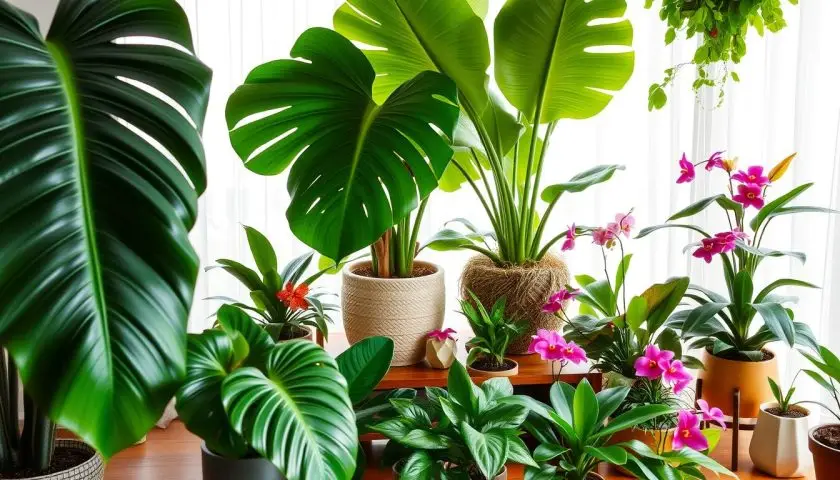
21 Tropical House Plants at a Glance
| Plant | Light (RHS) | Watering (RHS) | Pets (ASPCA) |
|---|---|---|---|
| Bird of paradise | Lots of bright light | Constantly moist, not saturated, in growth | Strelitzia reginae listed (less toxic) |
| Monstera deliciosa | Indirect light | Let compost almost dry out | Toxic |
| Fiddle leaf fig | Bright indirect | Let compost dry slightly | Not listed; sap irritant (RHS) |
| Rubber plant | Bright indirect | Let compost dry slightly | Not listed; sap irritant (RHS) |
| Areca palm | Bright light | Moist in summer, drier in winter | Non-toxic |
| Alocasia | Bright indirect | When top 5cm is dry | Toxic |
| Calathea | Bright, no direct sun | Evenly moist in growth | Non-toxic |
| Prayer plant | Bright filtered or indirect | Moderate; high humidity | Non-toxic |
| Pink Princess philodendron | Bright indirect | When top of compost dries | Toxic |
| Heartleaf philodendron | Bright indirect | When top of compost dries | Toxic |
| Neon pothos | Bright indirect; tolerates shade | When compost is nearly dry | Toxic |
| Hoya | Bright, shade from hot sun | Moist, not waterlogged | Hoya kerrii non-toxic |
| Chinese evergreen | Bright, filtered | Moderate; drier in winter | Toxic |
| Parlour palm | Tolerates quite low light | Moist in summer | Non-toxic |
| ZZ plant | Indirect light to full shade | Tolerant of neglect | Toxic |
| Snake plant | Bright, lightly shaded; copes in lower light | Minimal | Toxic |
| Cast iron plant | Low or filtered | Moist, never waterlogged | Non-toxic |
| Monstera adansonii | Indirect light | Let compost almost dry out | Toxic (Monstera) |
| Peperomia | Bright, indirect | Let soil partially dry | Non-toxic |
| Bromeliad | Bright, shade from strong sun | Keep the central cup filled | Neoregelia non-toxic |
| Dracaena | Bright indirect | When top 5cm is dry | Toxic |
How to Choose Tropical House Plants for Your Space
Start with the room, not the plant. The RHS says light levels are very important, that direct summer sun can scorch leaves unless it is filtered by a sheer curtain or blind, and that plants set back from windows or on north-facing windowsills often get too little light. Its simple test: if there is enough natural light to read a book by, you can grow a houseplant.
| Room Light | Plants to Try | Note |
|---|---|---|
| Bright, indirect | Monstera, bird of paradise, fiddle leaf fig, rubber plant, alocasia, calathea | Filter strong summer sun with a sheer curtain |
| Medium or partial shade | Philodendron, Chinese evergreen, peperomia, dracaena, hoya | Most normal rooms |
| Low light | ZZ plant, snake plant, cast iron plant, parlour palm, pothos | Growth is slower, and the RHS says lower light means plants dry out less quickly |
Check humidity and temperature too. The RHS says bathrooms and kitchens tend to be humid, while living rooms with central heating tend to be dry, and that hot spots near radiators and draughts both cause damage. Finally, think about size. The RHS says Monstera deliciosa is usually bought at 30 to 90cm and can eventually reach the ceiling, strelitzia can reach at least 1.5m, and older dracaenas can reach 2m or more. See our guide to indoor light to judge your windows.
21 Best Tropical House Plants for a Lush Home
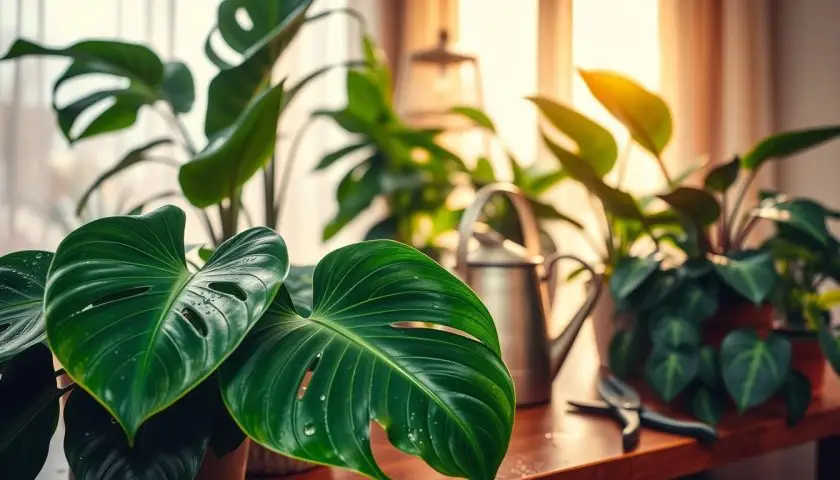
1. Bird of Paradise
The RHS says strelitzias need lots of bright light, constantly moist but not saturated compost in spring and summer, and humid air. Never let it fall below 10 to 12°C. It can reach at least 1.5m, and plants usually need to be about five to ten years old before they flower. See our bird of paradise care guide.
2. Monstera Deliciosa
The RHS recommends indirect light, 18 to 25°C, and letting the compost almost dry out before watering thoroughly. Very low light produces fewer holes. Train stems onto a moist moss pole, which also keeps the top-heavy plant upright. It is poisonous, so wear gloves. See our Monstera care guide and moss pole guide.
3. Fiddle Leaf Fig
The RHS advises bright indirect light for ornamental figs, watering regularly in spring and summer while letting the compost dry slightly, and keeping them just moist in winter. It says sudden leaf drop is usually caused by overwatering, although cold, low light, too much fertiliser or draughts can also cause it. Keep it away from draughts and wear gloves when pruning, because the sticky sap can irritate skin. See our fiddle leaf fig care guide.
4. Rubber Plant
The same RHS figs advice applies: bright indirect light, steady warmth above about 10 to 13°C, medium to high humidity, and a high-nitrogen feed from spring to late summer. It can be pruned in late winter or early spring if it outgrows its space. See our rubber plant care guide.
5. Areca Palm
The RHS says Dypsis lutescens needs bright light and a winter minimum of 13°C, and that palms generally need moist compost in summer and a slightly dry surface in winter. Keep it away from radiators and draughts, and watch for scale, mealybugs and red spider mite. The RHS notes that the common name areca palm is misleading for this species.
6. Alocasia
The RHS says alocasias like bright indirect light, watering once the top 5cm is dry from April to October, medium to high humidity, and temperatures above 16°C in the growing season. In winter keep them cooler and drier, above 10°C. Some leaf drop is normal. The sap can irritate skin. See our elephant ear indoors guide.
7. Calathea
The RHS says calatheas need a bright spot out of direct sun, evenly moist compost in spring and summer, high humidity, and 16 to 21°C without fluctuations. It prefers rainwater, or tap water left to stand for at least 24 hours. It points to low humidity as a cause of crispy leaf tips. Folding leaves at night is normal. See our Calathea care guide.
8. Prayer Plant
The RHS lists Maranta leuconeura for bright filtered or indirect light, moderate watering and high humidity at all times, by misting or using a gravel tray. Feed monthly and watch for red spider mite and mealybugs.
9. Pink Princess Philodendron
The RHS says philodendrons like bright indirect light, shaded from direct summer sun, and that too little light makes them leggy with fewer, smaller leaves. Water when the top of the compost has dried, and keep them at or above 15°C. Climbing types do best on a moist moss pole. Philodendrons are poisonous and the sap can irritate skin. See our Philodendron care guide and plants with pink and green leaves.
10. Heartleaf Philodendron
The RHS describes Philodendron hederaceum as an ivy-leaved species with heart-shaped leaves on long trailing or climbing stems, suited to high shelves or hanging containers. It prefers moderately humid air but tolerates the lower humidity in most homes. The RHS also lists Philodendron scandens among plants that cope with low light and fluctuating temperatures.
11. Neon Pothos
The RHS grows Epipremnum in bright, indirect light, waters only when the compost is nearly dry, and keeps it at 18 to 30°C. Cut long stems back to just above a leaf for a bushier plant. The RHS also says deep shade can make variegation fade. It is toxic, so wear gloves. See our Pothos care guide.
12. Hoya
The RHS says hoyas need bright light with shade from hot summer sun, regular watering from spring to autumn with compost moist but not waterlogged, and moderate watering from October to February. Do not move the plant once flower buds form, and resist deadheading, because old flower stalks produce more blooms. See our Hoya care guide.
13. Chinese Evergreen
The RHS lists Aglaonema for partial shade, with bright filtered light, moderate watering, and some drying out in winter. Direct sun may scorch the leaves. It is harmful if eaten and a skin and eye irritant, so wear gloves.
14. Parlour Palm
The RHS says Chamaedorea elegans can tolerate quite low light away from windows, but needs humid conditions and a winter minimum of 16°C. See our parlor palm dying guide if it struggles.
15. ZZ Plant
The RHS says Zamioculcas zamiifolia suits indirect light to full shade, needs well-drained compost, and is tolerant of neglect, although it can become deciduous if it dries out. Keep it above 10 to 15°C. It is harmful if eaten and irritates skin and eyes. See our ZZ plant care guide.
16. Snake Plant
The RHS says snake plants like a bright, lightly shaded position but cope in lower light, and advises you to err on the side of minimal watering because overwatering is a common cause of root rot. Ideal temperatures are 15 to 24°C, and repotting is only needed once roots and leaves fill the pot. See our snake plant care guide and tall snake plant guide.
17. Cast Iron Plant
The RHS says aspidistras prefer low or filtered light, tolerate very poor light but grow more slowly there, and like compost that is moist but never waterlogged. They prefer a fairly cool room between 5 and 20°C and are happy with fluctuating temperatures.
18. Monstera Adansonii
The RHS says Monstera adansonii stays smaller than M. deliciosa and shares its basic care: indirect light and compost that almost dries out between waterings.
19. Peperomia
The RHS says peperomias like bright but indirect light, letting the soil partially dry between waterings, and a warm room of about 18 to 30°C. Use a pot only a few centimetres larger than the rootball, because an oversized pot can cause root rot.
20. Bromeliad
The RHS says bromeliad bracts can last several months, and that most rosette-forming types flower once, then decline and produce offsets. Give bright light with shade from strong sun, keep the central cup filled with rainwater or distilled water, and empty and refill it every month or two so it does not stagnate.
21. Dracaena
The RHS says dracaenas need bright indirect light, 18 to 30°C, and watering only once the top 5cm feels dry. Fluoride in tap water can brown the tips. Older plants can reach 2m or more but can be pruned. The RHS warns that dracaenas are poisonous to cats and dogs. See our Dracaena care guide.
Bright-Light Tropical House Plants for Lush Growth
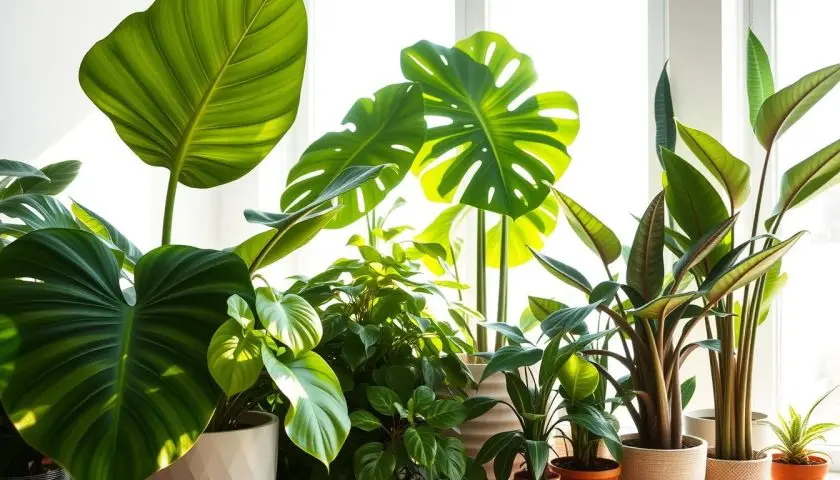
If you have a bright window with a sheer curtain, choose plants that use the light. The RHS says Monstera in very low light produces fewer holes, strelitzias need lots of bright light, and hoyas often fail to flower if light is too low.
Tropical House Plants for Low Light and Shaded Rooms
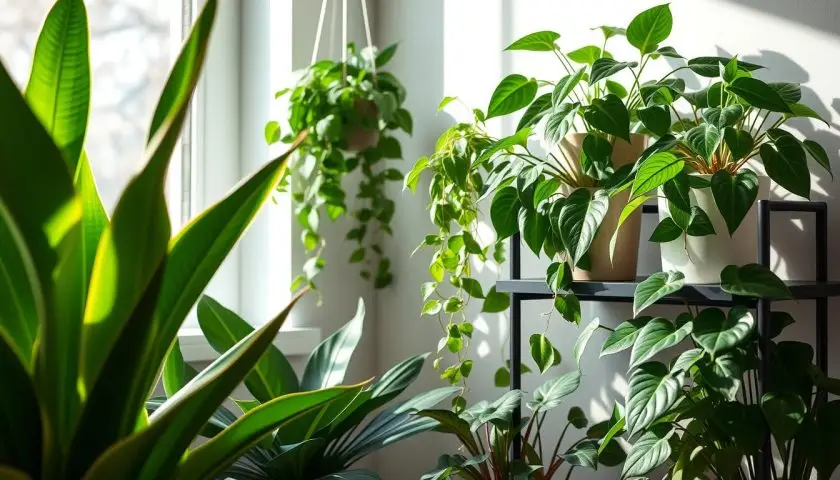
No plant grows in total darkness. The RHS says low light slows growth and drying, so water less often. It names ZZ plant, snake plant, aspidistra and pothos among tough choices for lower light. Our guides to low light house plants and low light hanging plants have more ideas.
Humidity, Water and Feeding for Tropical House Plants
Raise humidity safely. The RHS suggests grouping plants, using a tray of damp gravel with the water just below the surface, or placing humidity-lovers in a bright bathroom. It warns that windowless bathrooms are unsuitable because plants need natural light. For feeding, the RHS suggests a balanced liquid fertiliser from April to September for Monstera, and monthly feeding from April to September for calathea. See our humidity hacks, watering guide and best bathroom plants.
Common Problems With Tropical House Plants
| Problem | Likely Cause (RHS) | What to Do |
|---|---|---|
| Sudden leaf drop (figs) | Usually overwatering; also cold, low light, over-feeding, draughts | Check compost; keep conditions steady |
| Brown leaf tips | Low humidity; fluoride in tap water; over- or underwatering | Use rainwater or filtered water; raise humidity |
| Brown leaf edges | Dry air, especially in centrally heated homes (Monstera) | Group plants, use a gravel tray |
| Root rot | Overwatering or standing water | Water only when the compost has dried; check drainage |
| Fungus gnats | Compost kept wet | Water from the base and let the top dry (calathea) |
| Red spider mite, mealybugs | Dry air; sap-sucking pests | Inspect leaves often; raise humidity |
See also yellow leaves on plants, leaf curl, browning and droop and root rot.
Pet Safety for Tropical House Plants
Many tropical house plants are risky for pets. The ASPCA lists Monstera, philodendron, pothos, alocasia, Chinese evergreen, ZZ plant, snake plant and dracaena as toxic, and lists calathea, prayer plant (Maranta), parlour palm, areca palm, cast iron plant, trailing peperomia and Neoregelia bromeliad as non-toxic. The ASPCA does not list fiddle leaf fig or rubber plant by those species (it lists the weeping fig, Ficus benjamina, as toxic), and the RHS warns that fig sap irritates skin, so treat them with care. It lists Strelitzia reginae but describes it as less toxic than the unrelated Caesalpinia gilliesii. If a pet chews a plant, call your vet or the ASPCA Animal Poison Control Center on (888) 426-4435. A consultation fee may apply. For safer choices, see our cat-friendly plants and dog-friendly plants guides.
How to Style Tropical House Plants
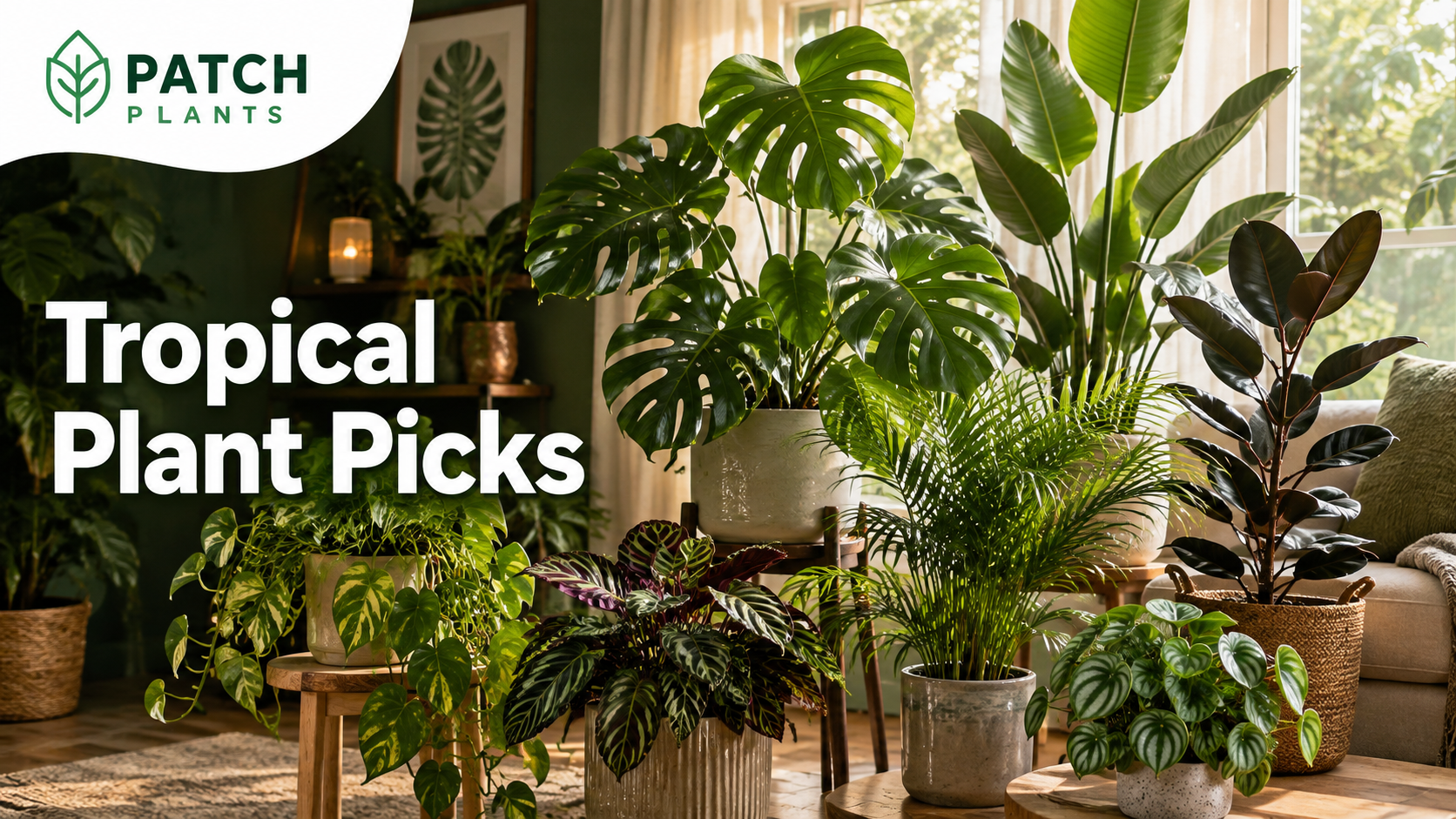
Mix heights, leaf sizes and habits: one tall plant (dracaena, bird of paradise), one bold-leaf plant (monstera, rubber plant), and one trailing plant (pothos, heartleaf philodendron, hoya). For more ideas, see how to create an indoor jungle without overcrowding, trailing plants for shelves and how to style indoor plants by room. New to plants? Start with our best indoor plants for beginners.
Frequently Asked Questions
What are the best tropical house plants for beginners?
Pothos, ZZ plant, snake plant, heartleaf philodendron and rubber plant are the easiest, because they tolerate typical room conditions. The RHS lists them among houseplants that cope with low light and fluctuating temperatures.
Which tropical house plants grow in low light?
ZZ plant, snake plant, cast iron plant, parlour palm and pothos tolerate shade, but all grow more slowly. They still need enough light to read a book by.
How often should I water tropical house plants?
Check the compost first. The RHS says to water monstera when the compost is almost dry, alocasia and dracaena when the top 5cm is dry, and snake plants only sparingly.
Do tropical house plants need misting?
Misting helps briefly, but the RHS also suggests grouping plants, using a tray of damp gravel, or a bright bathroom. Keep the water level below the gravel so compost does not become saturated.
Are tropical house plants safe for pets?
Many are not. The ASPCA lists Monstera, philodendron, pothos, snake plant and ZZ plant as toxic, while calathea, prayer plant, parlour palm and areca palm are non-toxic.
Final Thoughts
Tropical house plants thrive when you choose for your room first and your wishlist second. As a botanist, my advice is to start with one forgiving plant, learn how fast your compost dries, and add a humidity-loving plant only after that. At Patch Plants, I write practical care guides for indoor plants, so see our best indoor plants for tiny apartments and blooming indoor plants for more ideas.
Sources: RHS, Choosing the best houseplants; RHS, Houseplants for shady rooms; RHS, Swiss cheese plants; RHS, Ornamental figs; RHS, Strelitzia; RHS, Indoor palms; RHS, Alocasias; RHS, Calatheas; RHS, Maranta leuconeura; RHS, Philodendrons; RHS, Epipremnum; RHS, Hoya; RHS, Aglaonema modestum; RHS, Zamioculcas zamiifolia; RHS, Sansevierias; RHS, Aspidistras; RHS, Peperomia; RHS, Bromeliads; RHS, Dracaena; RHS, Best bathroom plants; ASPCA, Toxic and Non-Toxic Plants.