Nerve plant care is simple once you know the three essentials: bright light out of direct sun, compost that stays moist but never waterlogged, and warm, humid air above 15°C (60°F), ideally above 17°C (63°F). I am Sawera Shahid, a botanist at Patch Plants, and the nerve plant (Fittonia albivenis) is a favourite of mine for small spaces, bathrooms and terrariums, thanks to the bright net of veins across its leaves.
This guide covers what the nerve plant is, 7 expert care tips, why it collapses so dramatically when dry, how to grow it in a terrarium, propagation, common problems and pet safety. It is based on RHS growing advice, NC State Extension and the ASPCA.
Nerve Plant Care at a Glance
| Need | What Works |
|---|---|
| Botanical name | Fittonia albivenis (family Acanthaceae) |
| Native range | Tropical rainforests of South America, including Peru, Colombia and northern Brazil |
| Size | About 8 to 20cm (3 to 8in) tall and 15 to 45cm (6 to 18in) wide |
| Light | Bright spot out of direct sun, such as a north- or east-facing window |
| Water | Keep compost moist; never waterlogged |
| Humidity | Moist air; terrarium, bathroom or gravel tray |
| Temperature | At least 15°C (60°F), ideally above 17°C (63°F) |
| Compost | Moisture-retentive, peat-free houseplant compost |
| Feeding | Half-strength fertiliser every two to three months |
| Pets | Non-toxic to cats, dogs and horses (ASPCA) |
Light, temperature, humidity, compost and feeding come from the RHS; size and native range come from NC State Extension.
What Is a Nerve Plant?
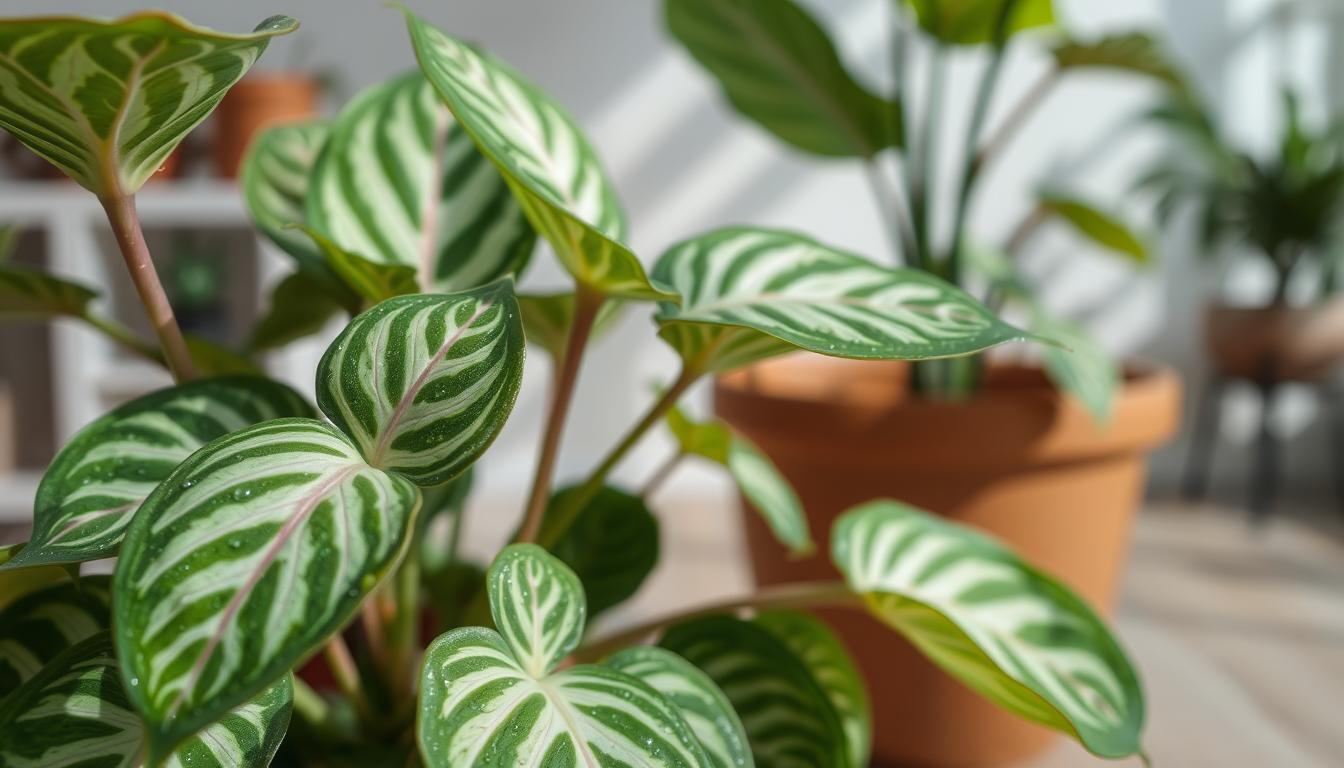
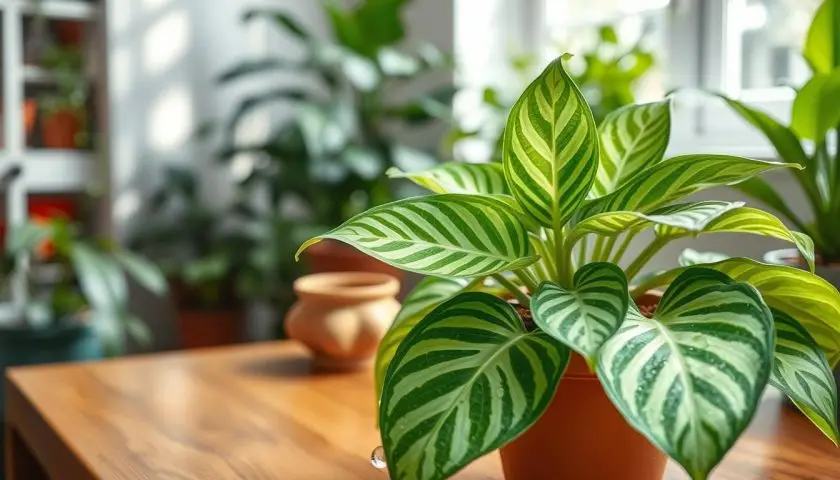
The nerve plant is a low, creeping evergreen perennial in the acanthus family, Acanthaceae. NC State Extension describes deep green, oval leaves veined in white, pink or red, on stems that creep and root as they spread. The RHS notes that the stems form mats of opposite leaves, and that the small white flowers are insignificant and seldom seen in cultivation.
NC State explains that the genus honours two sisters, Elizabeth and Sarah Mary Fitton, who wrote an early botany book in 1817, and that albivenis means “with white veins”. In the wild, the nerve plant grows as a groundcover on the shaded floor of tropical rainforests, which explains its love of warmth, humidity and shade from strong sun.
Types of Nerve Plant
Most nerve plants sold are forms of one species, Fittonia albivenis, grouped by vein colour:
- Argyroneura Group: rich green leaves with a tracery of silvery-white veins. The RHS lists common names including silver nerve and silver net plant.
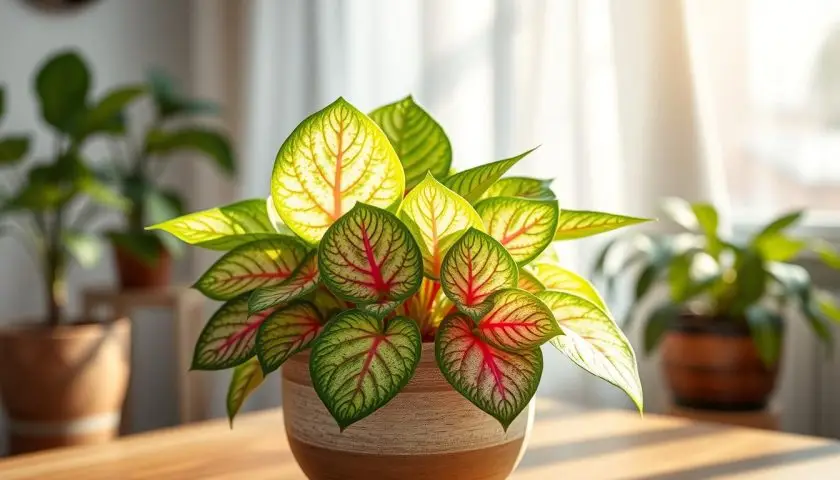
- Verschaffeltii Group: deep olive-green leaves with pink to red veins. The RHS describes it as forming a mat of rooting stems to 15cm tall, with leaves up to 10cm long.
- Compact cultivars: such as ‘Skeleton’, which the RHS describes as compact with dark green leaves and a network of bright pink veins, growing up to 10cm tall, and ‘Forest Flame’, with dense red veining and wavy edges.
The same nerve plant care applies to every type, although small cultivars suit terrariums best.
7 Expert Tips for Nerve Plant Care
1. Give it bright light out of direct sun
The RHS recommends a bright spot out of direct sun, such as near a north- or east-facing window, as direct sun can scorch the leaves. NC State adds that it grows well under fluorescent lights and tolerates medium light or dappled shade. The RHS notes that yellowing leaves usually mean too little light. Our complete guide to indoor light explains how to find the right spot.
2. Keep the compost moist but not soggy
The RHS advises keeping the compost moist by watering frequently. NC State suggests roughly twice a week, but warns that overwatering can cause root rot and yellow leaves. The best approach is to water whenever the surface begins to feel dry, let the excess drain away and never leave the pot sitting in water. Our guide to signs you are overwatering helps you spot the difference.
3. Provide moist air
The RHS explains that fittonias need moist air or their leaves turn brown. It suggests a terrarium, a steamy bathroom or kitchen, or a pot on a tray of damp gravel or clay granules, with the water kept topped up. NC State adds that leaves shrivel and drop in dry air or draughts. A DIY humidity tray is an easy fix for a windowsill plant.
4. Keep it warm and away from radiators
The RHS recommends keeping the plant at 15°C (60°F) or higher, ideally above 17°C (63°F), and avoiding both cold draughts and drying heat from radiators. It also advises avoiding south-facing windowsills, where plants dry out quickly.
5. Use a moisture-retentive compost and a small pot
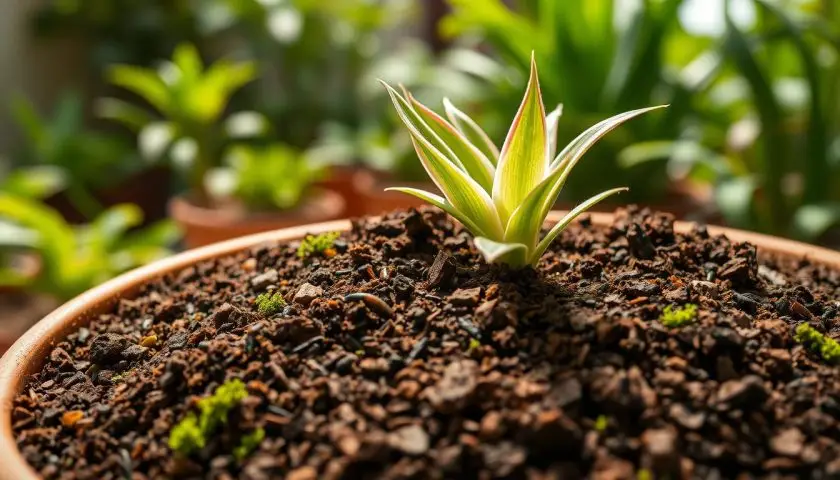
The RHS suggests a moisture-retentive, peat-free houseplant or multi-purpose compost. NC State notes the roots are shallow, so a small pot works well. Always choose a pot with drainage holes. See the best soil mix for every type of plant for more on choosing compost.
6. Feed lightly
The nerve plant needs very little feeding. The RHS recommends half-strength general-purpose or houseplant fertiliser every two or three months, applied when you water. Over-feeding a small plant in a small pot can damage its fine roots.
7. Pinch stems to keep it bushy
NC State notes that pinching the stems helps keep the plant bushy. Pinch out the growing tips every few weeks in spring and summer, and remove any small flower spikes if you prefer to keep the energy in the leaves. The RHS adds that if the centre of an older plant dies off, you can divide the clump and replant the healthy sections.
Why a Nerve Plant Collapses When Dry
The nerve plant is famous for “fainting”. NC State notes that it wilts dramatically when dry but recovers after watering, and the RHS agrees that drooping from lack of water is recoverable if you water thoroughly soon enough.
As a botanist, I find this a clear lesson in how plants stay upright. The soft stems and thin leaves have little woody tissue for support, so they rely on turgor pressure, the pressure of water inside their cells. When the compost dries out, the cells lose water, the pressure drops and the whole plant flops. Once you water, the cells refill and the plant stands up again, often within hours. Repeated collapses do stress the plant, though, and can lead to brown, crispy leaves, so it is better to water before it faints.
How to Grow a Nerve Plant in a Terrarium
The RHS recommends fittonias for terrariums, either in a large sealed terrarium with other small plants or alone in a small jar. A closed glass container traps moisture, giving the humid air the plant loves, and the RHS notes that sealed terrariums need very little maintenance and less frequent watering. To set one up:
- Choose a glass container with room for the plant to grow, and a compact cultivar.
- Add a layer of gravel for drainage, then moist, peat-free compost.
- Plant the nerve plant and firm it in gently.
- Water lightly and place the terrarium in bright light, out of direct sun, which can overheat the glass.
- If the glass stays heavily misted, open the lid for a few hours to let excess moisture escape.
NC State notes leaves can wither if the air is too humid, so a little ventilation now and then helps prevent mould.
How to Propagate a Nerve Plant
NC State notes that the creeping stems root readily. The RHS describes two methods:
- Stem cuttings (spring or summer): take several healthy stems about 5cm (2in) long, cut just below a pair of leaves, and insert them into moist, peat-free compost. Keep them humid in a propagator or sealed bag until well rooted.
- Division: separate large clumps by hand, making sure each section has three or more stems.
For more on techniques, see our guide on how to propagate houseplants.
Best Places for a Nerve Plant at Home
Good nerve plant care starts with the right spot. Because it is small and loves moist air, it suits places many larger plants cannot use. A bright bathroom with a frosted window, a kitchen shelf away from the hob, a desk under a fluorescent or LED lamp, or a glass terrarium on a bookcase all work well. Avoid sunny south-facing sills, spots above radiators and draughty hallways, which dry the leaves quickly.
Repotting a Nerve Plant
The RHS advises repotting every few years once roots fill the pot, using a pot only slightly larger than the rootball to avoid overpotting. Plants can stay in their original container for several years. Our guide on how to repot a plant walks through the steps.
Common Nerve Plant Problems
| Problem | Likely Cause | What to Do |
|---|---|---|
| Whole plant collapses | Compost too dry | Water thoroughly straight away |
| Brown, crispy leaves | Dry air, heat or repeated drying out | Raise humidity; water more regularly |
| Yellow leaves | Too little light or overwatering | Move to a brighter spot; check drainage |
| Scorched patches | Direct sun or heat | Move out of direct sun and away from radiators |
| Leaves shrivel and drop | Dry air or draughts | Raise humidity; move away from draughts |
| Grey, fuzzy mould | Grey mould in very humid, still air | Remove affected parts; ventilate |
| Leggy, sparse stems | Low light or no pinching | Pinch tips; give brighter light |
| Webbing or cottony clusters | Spider mites or mealybugs | Wipe leaves; isolate and treat |
The RHS notes the nerve plant is generally trouble-free if humidity is high and watering is regular. For mites, see our guide to spider mites on plants.
Nerve Plant Care Through the Year
| Season | What to Do |
|---|---|
| Spring | Take cuttings; divide or repot if crowded; start light feeding. |
| Summer | Keep moist and humid; pinch tips; keep out of hot sun. |
| Autumn | Watch for drying air as heating comes on. |
| Winter | Keep above 15°C (60°F); away from radiators and cold glass. |
Is a Nerve Plant Safe for Pets?
Yes. The ASPCA lists the nerve plant (Fittonia verschaffeltii, now F. albivenis) as non-toxic to dogs, cats and horses, and NC State also tags it as non-toxic. That makes it a great choice for pet-friendly homes. Eating any plant can occasionally upset a pet’s stomach, so contact your vet or the ASPCA Animal Poison Control Center at (888) 426-4435 (a consultation fee may apply) if you are concerned. See our guide to making your plants cat-friendly for more ideas.
Frequently Asked Questions
Why does my nerve plant keep fainting?
It collapses when the compost dries out, because its soft stems rely on water pressure to stay upright. Water thoroughly and it usually recovers within hours.
How often should I water a nerve plant?
Keep the compost moist, watering whenever the surface starts to dry. NC State suggests about twice a week, but plants in terrariums need much less.
Can a nerve plant grow in low light?
It tolerates medium light and grows well under fluorescent lights, but too little light causes yellow leaves and leggy stems. A bright spot out of direct sun is best.
Why are my nerve plant leaves turning brown?
The RHS explains that fittonias need moist air or their leaves turn brown. Raise the humidity and avoid letting the compost dry out repeatedly.
Is a nerve plant toxic to cats?
No. The ASPCA lists the nerve plant as non-toxic to cats, dogs and horses, making it a safe choice for homes with pets.
Final Thoughts
As a botanist, I love the nerve plant because it shows you exactly what it needs. It flops when thirsty, browns when the air is dry and yellows when the light is too low. Give it bright light out of direct sun, steady moisture and warm, humid air, and good nerve plant care becomes second nature.
At Patch Plants, I write each guide to connect daily care with the plant science behind it. If you enjoy patterned leaves, explore our colorful foliage indoor plants and our small low-light indoor plants.
Sources: RHS, How to grow fittonia; RHS, Fittonia albivenis Verschaffeltii Group; NC State Extension, Fittonia albivenis; ASPCA, Nerve Plant.

About the author
Sawera Shahid is a botanist with an MPhil in Botany and 5+ years of writing about plants. As founder and lead writer of Patch Plants, she writes practical, science-backed guides on indoor plants, outdoor gardens and plant problems, checked against RHS and university extension advice.