🌿 Key Takeaways
- Colorful indoor plants transform spaces with vibrant foliage in pink, red, purple, yellow, and variegated patterns — providing year-round color without relying on temporary flowers
- Colorful indoor house plants require bright indirect light to maintain vivid leaf colors — insufficient light causes variegation to fade and colors to dull
- Indoor plants with colorful leaves include Calathea, Croton, Tradescantia, Coleus, Polka Dot Plant, Stromanthe, Fittonia, Aglaonema, and Caladium — each offering unique color patterns
- Colored indoor plants need consistent care including proper watering, humidity management, and occasional fertilizing to maintain healthy vibrant foliage
- Colorful indoor plants low light options exist but are limited — most colorful foliage requires moderate to bright indirect light for best color retention
- Indoor plant with colorful leaves care differs from green varieties — colorful foliage shows stress faster through color fading, browning, or leaf drop
- Indoor plants with colorful foliage combine beautifully with solid green plants creating balanced displays — too much color overwhelms while strategic placement creates focal points
- Colorful indoor planter selection matters — neutral planters (white, terracotta, black) showcase colorful foliage best without competing for visual attention
- Indoor colorful house plants toxicity varies by species — many colorful varieties toxic to cats and dogs requiring careful placement in pet households
- Browse our full indoor plant care guides for detailed care instructions for every colorful foliage variety
Why Choose Colorful Foliage Indoor Plants Over Flowers
Colorful indoor plants with vibrant foliage provide permanent color that flowering plants cannot match. While flowers bloom spectacularly for days or weeks before fading, colored indoor plants maintain their pink, red, purple, or yellow leaves year-round creating consistent visual impact.
The practical advantages extend beyond aesthetics. Colorful indoor house plants focus energy on foliage production rather than flowering — meaning they often grow more vigorously and require less specific care than temperamental flowering varieties. You don’t need to master bloom cycles, deadheading techniques, or specialized fertilizing schedules to enjoy spectacular color.
Indoor plants with colorful leaves also adapt better to typical home conditions. Most flowering houseplants demand specific light levels, temperature ranges, or humidity to bloom reliably. Foliage plants simply need adequate light and consistent care to maintain their vibrant appearance — no coaxing required.
The color permanence transforms interior design possibilities. Colorful indoor plant arrangements create living artwork that remains constant through seasons. Pink-veined Fittonia, burgundy Tradescantia, and yellow-splashed Croton provide the same visual punch in January as in July — something no flowering plant achieves without significant effort.
For understanding how flowering plants differ in care requirements, our peace lily care guide covers one of the few reliable indoor bloomers — illustrating why foliage plants often prove simpler for consistent color.
Best Colorful Indoor Plants — Complete Species Guide
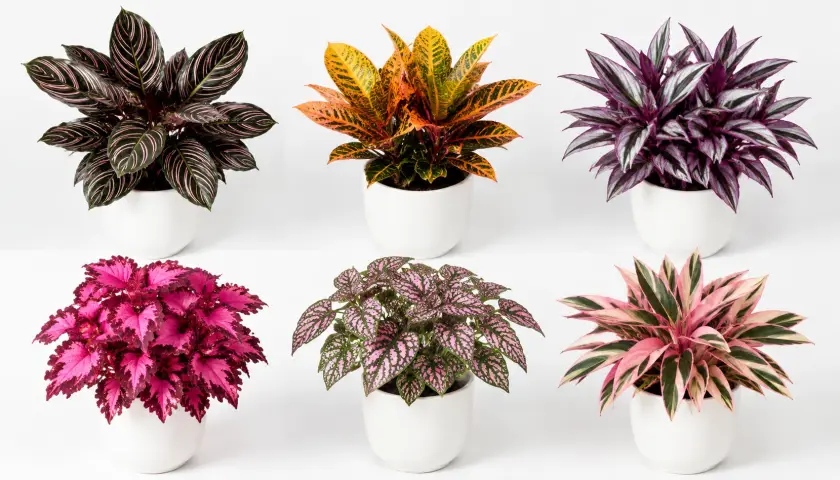
1. Calathea — Living Painted Foliage
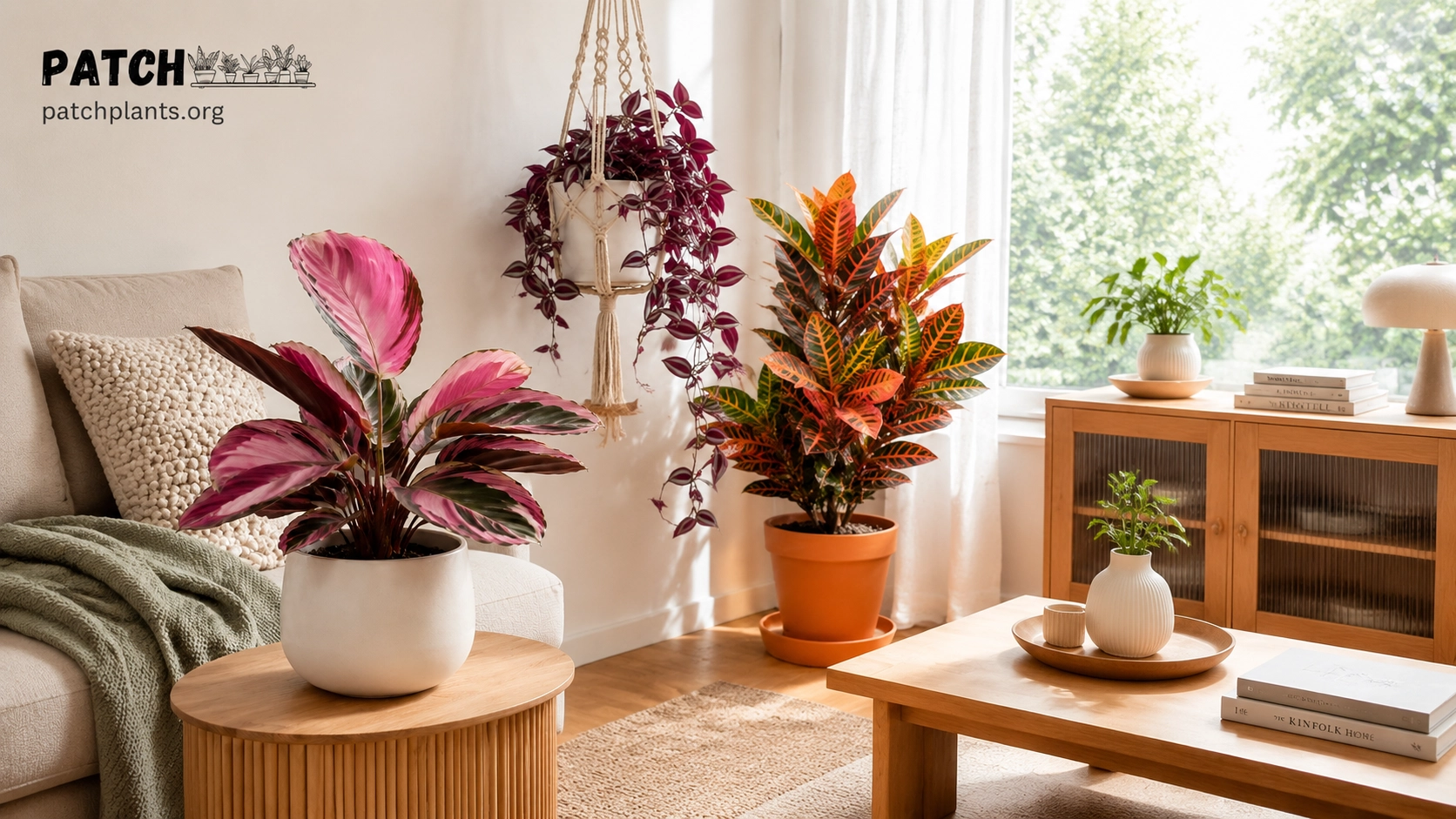
Calathea represents the pinnacle of indoor plants with colorful foliage — leaves displaying patterns so intricate they appear hand-painted. Varieties range from Calathea Ornata with pink pinstripes on dark green to Calathea Medallion with purple undersides and lime medallion patterns.
Why Calathea is top colorful indoor plant:
- Dramatic leaf patterns in pink, burgundy, silver, and green
- Leaves fold upward at night revealing colorful undersides
- Multiple varieties offering different color combinations
- Prayer plant movement adds dynamic interest
Calathea care requirements:
- Light: Bright indirect light — too much sun fades patterns
- Water: Consistent moisture without waterlogging — soil should never dry completely
- Humidity: 50–60% essential — dry air causes brown crispy edges
- Temperature: 18–27°C year-round
Calathea challenges:
- Sensitive to hard water — fluoride and chlorine cause brown leaf edges
- Requires high humidity — bathroom placement ideal
- More demanding than most houseplants
- Shows stress quickly through curling leaves
For high-humidity plant options, our guide on best plants for your bathroom covers 33 species that thrive in steamy conditions including multiple Calathea varieties.
2. Croton (Codiaeum variegatum) — Bold Tropical Color
Croton delivers the most intense color of any colorful indoor house plants — thick waxy leaves splashed with orange, red, yellow, burgundy, and green in patterns that vary dramatically between individual plants.
Why Croton creates maximum color impact:
- Boldest color combinations available in houseplants
- Colors intensify with proper care
- Large specimens become room focal points
- No two plants identical
Croton care essentials:
- Light: BRIGHT indirect light essential — low light causes color fading and leaf drop
- Water: When top 3cm dry — consistent moisture without waterlogging
- Humidity: Moderate 40–50% adequate
- Temperature: 18–27°C — cold drafts cause rapid leaf drop
Croton warning: This plant drops leaves aggressively when unhappy. Insufficient light, underwatering, overwatering, cold temperatures, or moving the plant all trigger leaf drop. Once conditions correct, new colorful growth resumes.
Croton toxicity: Toxic to cats and dogs — milky sap causes digestive upset. For pet-safe alternatives, our guides on how to make your plants cat-friendly and how to make your plants dog-friendly cover non-toxic colorful options.
3. Tradescantia Zebrina — Purple and Silver Trailing Beauty
Tradescantia brings colorful indoor plants appeal to hanging baskets and shelves — striped purple and silver leaves on trailing stems creating cascading displays.
Tradescantia advantages:
- Fast growing — fills baskets quickly
- Easy propagation — every cutting roots
- Vibrant purple coloring
- Low maintenance requirements
Care requirements:
- Light: Bright indirect light — purple color intensifies in good light
- Water: When top 3cm dry — weekly typically
- Humidity: Average home humidity adequate
- Temperature: 15–27°C
Tradescantia varieties for color:
- Tradescantia Zebrina: purple and silver stripes
- Tradescantia Nanouk: pink, white, and green variegation
- Tradescantia Pallida: solid deep purple
For additional trailing plant options, our guide on low-light hanging plants covers 15+ varieties for vertical displays.
4. Coleus — The Painter’s Palette Plant
Coleus offers the widest variety of color combinations in indoor plants with colorful leaves — neon pink, burgundy, lime green, orange, and yellow in endless pattern variations.
Why Coleus excels as colorful indoor plant:
- Hundreds of varieties with different color combinations
- Fast growing — reaches full size in months
- Easy propagation from cuttings
- Responds well to pinching for bushier growth
Coleus care:
- Light: Bright indirect light essential for color retention
- Water: Consistent moisture — wilts dramatically when dry but recovers quickly
- Humidity: Moderate 40–50% adequate
- Temperature: 18–27°C
Coleus styling: Combine multiple color varieties in single planter for mixed palette effect. Pinch growing tips weekly to encourage bushier growth and prevent legginess.
5. Polka Dot Plant (Hypoestes phyllostachya) — Speckled Foliage Fun
Polka Dot Plant provides playful colored indoor plants appeal — green leaves splattered with pink, white, or red spots creating confetti-like effect.
Characteristics:
- Compact size — 20–30cm tall
- Bright cheerful colors
- Fast growing
- Child-friendly appearance
Care requirements:
- Light: Bright indirect light — low light causes color fading
- Water: Consistent moisture — wilts when dry but recovers quickly
- Humidity: Moderate to high preferred
- Temperature: 18–27°C
Polka Dot Plant longevity: Often grown as annual — tends to become leggy after 1–2 years. Pinch back regularly to extend lifespan and maintain compact form.
6. Stromanthe Triostar — Pink Cream and Green Drama
Stromanthe Triostar ranks among the most stunning colorful indoor house plants — cream stripes, deep green, and shocking pink undersides creating three-color effect on each leaf.
Why Stromanthe impresses:
- Pink undersides visible when backlit
- Cream variegation on green background
- Related to Calathea with similar care
- Instagram-worthy appearance
Care requirements:
- Light: Bright indirect light — direct sun scorches leaves
- Water: Consistent moisture without waterlogging
- Humidity: 50–60% essential — dry air causes brown edges
- Temperature: 18–27°C — temperature drops cause leaf damage
Stromanthe challenge: Requires similar high humidity as Calathea. Bathroom placement, humidifier use, or pebble trays essential for success.
For humidity management techniques, our guide on humidity hacks keep your plants happy without a humidifier covers affordable solutions for tropical plant care.
7. Nerve Plant (Fittonia) — Neon Veined Miniature
Fittonia brings indoor plant with colorful leaves interest to terrariums and small spaces — tiny leaves with neon pink, red, or white veins creating intricate patterns.
Fittonia advantages:
- Compact size perfect for small spaces
- Bright neon vein colors
- Combines beautifully with other plants
- Dramatic fainting when thirsty (built-in watering reminder)
Care essentials:
- Light: Moderate to bright indirect light
- Water: Consistent moisture essential — wilts dramatically when dry, recovers within hours after watering
- Humidity: High 50–70% preferred — terrarium conditions ideal
- Temperature: 18–27°C
Fittonia styling: Perfect for terrariums, dish gardens, or grouped with larger plants where its intricate detail provides contrast to bold foliage.
8. Aglaonema (Chinese Evergreen) — Reliable Colorful Foliage
Aglaonema provides colorful indoor plants reliability — varieties with pink, red, or silver variegation tolerating lower light better than most colorful foliage plants.
Why Aglaonema succeeds as colorful indoor plant:
- More tolerant of lower light than most colorful varieties
- Slow growing requiring minimal maintenance
- Pink and red varieties available
- Durable and forgiving
Aglaonema care:
- Light: Moderate indirect light — tolerates lower light than most colorful plants
- Water: When top 5cm dry — every 7–10 days typically
- Humidity: Average home humidity adequate
- Temperature: 18–27°C
Aglaonema varieties for color:
- Aglaonema ‘Siam Aurora’: pink and green
- Aglaonema ‘Red Valentine’: red and green
- Aglaonema ‘Silver Bay’: silver and green
For additional low-maintenance colorful options, our guide on 35 low-maintenance plants that will thrive covers easy-care species including several Aglaonema varieties.
9. Caladium — Heart-Shaped Tropical Color
Caladium creates seasonal indoor plants with colorful foliage displays — heart-shaped leaves in pink, white, red, and green combinations during spring through autumn.
Caladium characteristics:
- Spectacular pink and white leaf patterns
- Heart-shaped leaves to 30cm long
- Dormant in winter — dies back completely
- Returns from bulbs in spring
Care requirements:
- Light: Bright indirect light for best color
- Water: Consistent moisture during growing season
- Humidity: High 50–70% essential
- Temperature: 18–27°C during growth, 15°C+ during dormancy
Caladium cycle: Foliage dies back completely in autumn. Reduce watering, allow soil to dry, store pot in cool location. Resume watering in spring when new growth emerges from bulbs.
10. Rex Begonia — Swirled Metallic Foliage
Rex Begonia offers colored indoor plants with metallic and iridescent effects — silver, burgundy, pink, and green in swirled patterns with textured surfaces.
Rex Begonia appeal:
- Metallic sheen on leaves
- Spiral and swirl patterns
- Compact growth habit
- Hundreds of varieties
Care requirements:
- Light: Bright indirect light — direct sun scorches leaves
- Water: Moderate — allow top 3cm to dry between waterings
- Humidity: Moderate to high preferred
- Temperature: 18–27°C
Rex Begonia challenge: Sensitive to overwatering. Ensure excellent drainage and allow partial drying between waterings to prevent stem rot.
Colorful Indoor Plants Low Light — Limited Options
Colorful indoor plants low light tolerance is significantly more limited than green plant low-light tolerance. Vibrant leaf colors result from pigments that require light energy to produce and maintain — insufficient light causes colors to fade as plants prioritize chlorophyll (green) production for survival.
Best colorful indoor plants for lower light:
1. Aglaonema varieties — Most tolerant colorful option for lower light. Pink and red varieties maintain some color in moderate light though not as vibrant as bright light specimens.
2. Pothos ‘Neon’ — While primarily green, the bright chartreuse color persists in lower light better than variegated Pothos varieties. Our pothos care guide covers care for all Pothos varieties including color retention.
3. Dracaena varieties — Some varieties like Dracaena marginata ‘Tricolor’ with pink edges tolerate moderate light while maintaining some coloring.
4. ZZ Plant ‘Raven’ — Deep burgundy-black foliage tolerates lower light as dark coloring doesn’t fade like bright colors. Our ZZ plant care guide covers standard and colored varieties.
Reality check: Most truly colorful foliage (pink, red, yellow, white variegation) requires bright indirect light minimum for color retention. Lower light spaces should focus on dark green or near-black foliage rather than expecting vibrant pinks and reds to persist.
For comprehensive low-light plant options, our guide on low-light hanging plants covers 15 species that thrive in shade — though most are green rather than colorful.
Care Requirements for Colorful Indoor House Plants
Light Requirements for Color Retention
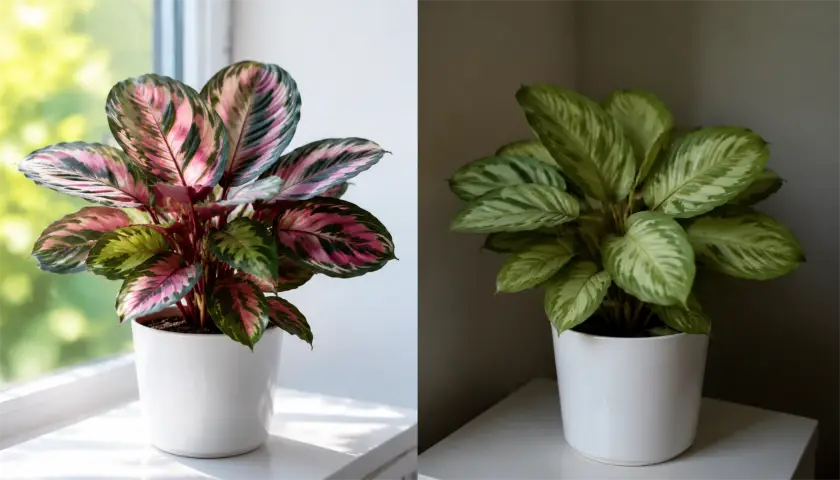
Colorful indoor plants require brighter light than solid green varieties to maintain vibrant foliage colors. The pigments creating pink, red, yellow, and white variegation demand more light energy than chlorophyll alone.
Light guidelines for colorful foliage:
Bright indirect light (ideal):
- 3–5 metres from south-facing window
- Directly in front of sheer-curtained window
- East-facing windows receiving morning sun
- LED grow lights 30–60cm above plants
Moderate indirect light (acceptable):
- 5–8 metres from bright windows
- North-facing windows
- Bright rooms without direct window access
- Colors maintained but less vivid
Low light (inadequate):
- Dark corners away from windows
- Rooms with single small window
- Offices with only fluorescent ceiling lights
- Colors fade, variegation reverts to green
Signs of insufficient light on colorful plants:
- Pink, red, or yellow fading to pale green
- Variegated leaves producing solid green new growth
- Long gaps between leaves (etiolation)
- Slow or no growth during spring and summer
For complete indoor light guidance, our complete guide to indoor light covers measuring light levels, optimizing positioning, and using supplemental grow lights.
Watering Colorful Indoor Plants
Indoor plants with colorful leaves show water stress faster than green varieties — color changes, leaf curling, and drooping appear sooner providing earlier warning signs.
Watering principles:
- Check soil moisture before watering — insert finger 3–5cm deep
- Water thoroughly when top portion dry — until draining from holes
- Empty saucers after 15 minutes — never allow standing water
- Adjust frequency seasonally — more in summer, less in winter
Species-specific watering:
- High moisture: Calathea, Stromanthe, Fittonia — keep consistently moist
- Moderate moisture: Coleus, Polka Dot, Tradescantia — allow top 3cm to dry
- Lower moisture: Croton, Aglaonema, Rex Begonia — allow top 5cm to dry
Signs of incorrect watering:
Overwatering:
- Yellowing leaves throughout plant
- Soft mushy stems
- Mold on soil surface
- Color fading before yellowing
Underwatering:
- Leaf edges browning and crisping
- Dramatic wilting (Coleus, Fittonia, Polka Dot)
- Color dulling before browning
- Lower leaves dropping
For complete watering guidance, our complete watering guide covers soil moisture management for all houseplant types.
Humidity for Tropical Colorful Foliage
Many colorful indoor house plants originate from tropical understory environments with 60–80% humidity — significantly higher than typical home humidity of 30–40%.
Humidity requirements by species:
High humidity essential (50–70%):
- Calathea
- Stromanthe
- Fittonia
- Caladium
Moderate humidity preferred (40–60%):
- Coleus
- Polka Dot Plant
- Rex Begonia
- Tradescantia
Average humidity adequate (30–50%):
- Aglaonema
- Croton (though prefers higher)
Increasing humidity for colorful plants:
Humidifier (most effective): Position cool-mist humidifier 1–2 metres from plants. Maintain 50–60% humidity measured with hygrometer.
Bathroom placement: Steamy bathroom conditions ideal for high-humidity colorful plants. Our guide on best plants for your bathroom covers positioning strategies.
Grouping plants: Multiple plants together create localized high-humidity microclimate through collective transpiration.
Pebble trays: Fill wide shallow tray with pebbles, add water to just below top of pebbles, place plant pot on pebbles (not in water).
What NOT to do: Misting leaves provides only temporary humidity increase (minutes) while promoting fungal disease on damp foliage. Misting is ineffective for humidity management.
For comprehensive humidity solutions, our guide on humidity hacks keep your plants happy without a humidifier covers affordable techniques for tropical plant care.
Fertilizing Colorful Foliage Plants
Indoor plants with colorful foliage need regular fertilizing to maintain vibrant pigmentation — insufficient nutrients cause color fading even with adequate light.
Fertilizing schedule:
- Spring–Summer: Every 3–4 weeks with balanced liquid fertilizer at half strength
- Autumn: Reduce to every 6–8 weeks
- Winter: Stop completely — plants rest
Best fertilizer for colorful indoor plants:
- Balanced liquid fertilizer (NPK 10-10-10 or similar)
- Dilute to half recommended strength
- Apply to pre-watered soil only
Signs of nutrient deficiency affecting color:
- Colors fading despite adequate light
- New growth paler than mature leaves
- Slow growth during spring and summer
- Yellowing between leaf veins
For complete fertilizing guidance, our guide on fertilizing indoor vs outdoor plants covers seasonal feeding schedules and nutrient requirements.
Styling Colorful Indoor Plants for Maximum Impact
Creating Balanced Displays with Green and Color
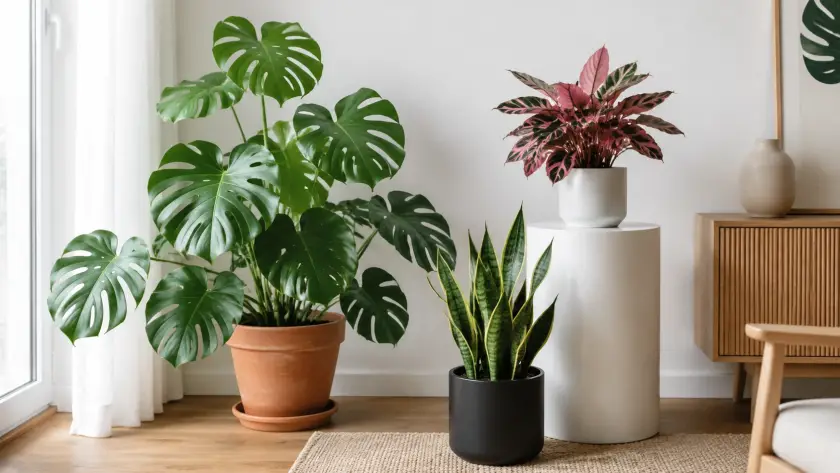
Colorful indoor plants create maximum visual impact when balanced with solid green foliage rather than grouped exclusively together. Too much color overwhelms spaces creating busy chaotic appearance.
Balancing principles:
Background plants (solid green):
- Monstera — large dramatic leaves
- Fiddle Leaf Fig — architectural statement
- Snake Plant — upright structure
- ZZ Plant — glossy dark green
Accent plants (colorful foliage):
- Pink Calathea near green Monstera
- Purple Tradescantia trailing with green Snake Plant
- Red Croton positioned against white wall with green Peace Lily nearby
Ratio guideline: 2–3 green plants per 1 colorful plant creates balanced displays. This allows colorful foliage to provide focal points without overwhelming the space.
For plant styling guidance, our guide on how to style indoor plants by room covers positioning principles for every room type.
Colorful Indoor Planter Selection
Colorful indoor planter choices significantly affect how colorful foliage displays. Neutral planters showcase vibrant leaves while colorful planters compete for visual attention.
Best planter colors for colorful foliage:
- White: Shows all colors beautifully, creates clean contemporary look
- Terracotta: Warm neutral complements pink, orange, red foliage
- Black: Modern backdrop for vibrant colors, makes colors pop
- Natural wood: Warm organic feel suits tropical colorful plants
Avoid: Bright colored planters (red, blue, yellow) that compete with colorful foliage. Let the plant provide the color while the planter remains neutral backdrop.
Room-Specific Colorful Plant Placement
Colorful indoor house plants suit different rooms based on light availability and humidity levels.
Living rooms: Bright indirect light suits Croton, Coleus, Tradescantia positioned near windows. Combine with green statement plants for balance.
Bathrooms: High humidity perfect for Calathea, Stromanthe, Fittonia near steamy showers. Our guide on best plants for your bathroom covers bathroom-specific positioning.
Offices: Moderate light suits Aglaonema, Rex Begonia providing color in workspaces. Our guide on office-friendly plants that survive fluorescent lighting covers workplace-appropriate colorful options.
Bedrooms: Calming pink and white varieties (Polka Dot, pale Caladium) suit bedroom aesthetics. Our guide on how to decorate your bedroom with plants covers bedroom plant selection.
Pet Safety with Colorful Indoor Plants
Toxicity Concerns for Colorful Varieties
Many colorful indoor plants contain compounds toxic to cats and dogs — the same pigments creating vibrant colors sometimes indicate defensive chemicals.
Toxic colorful indoor plants:
- Croton: Milky sap causes digestive upset, skin irritation
- Caladium: Calcium oxalate crystals cause mouth swelling, drooling
- Dieffenbachia: Severe oral irritation, temporary speech loss
- Aglaonema: Calcium oxalate causing mouth pain, vomiting
Non-toxic colorful options:
- Calathea: Pet-safe with dramatic patterns
- Stromanthe: Related to Calathea, also non-toxic
- Tradescantia: Generally safe though may cause mild irritation
- Polka Dot Plant: Non-toxic cheerful option
For comprehensive pet-safe plant guidance, our guides on how to make your plants cat-friendly and how to make your plants dog-friendly cover non-toxic alternatives and safety strategies.
Troubleshooting Colorful Foliage Problems
Color Fading on Colorful Indoor Plants
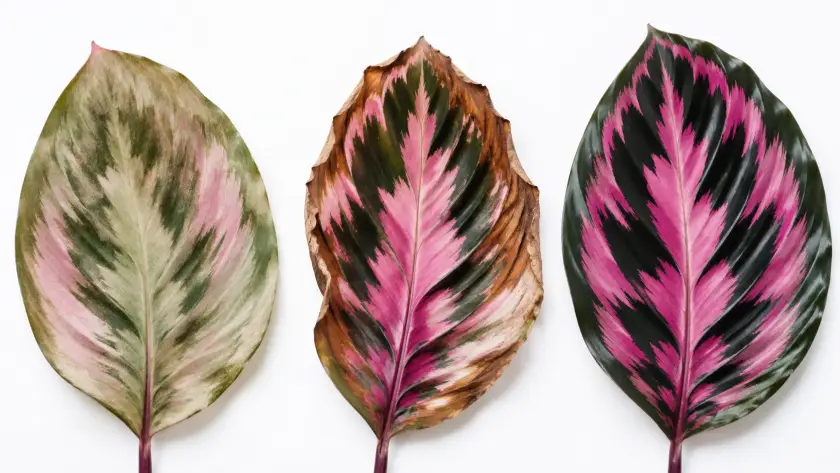
Color fading represents the most common colorful indoor plants problem — pink turns pale, red becomes green, variegation disappears.
Causes of color fading:
Insufficient light (most common):
- Colors require bright indirect light minimum
- Lower light causes plants to prioritize chlorophyll (green) production
- Variegated sections revert to solid green
Solution: Move to brighter location — 3–5 metres from south/west window or directly in front of sheer-curtained window.
Nutrient deficiency:
- Pigment production requires specific nutrients
- Insufficient fertilizing causes pale washed-out appearance
Solution: Resume regular feeding schedule with balanced fertilizer at half strength every 3–4 weeks during growing season.
Natural aging:
- Older leaves naturally lose color intensity before dropping
- Affects lowest/oldest leaves first
Solution: Normal process — remove faded old leaves to maintain appearance.
Brown Edges on Colorful Foliage
Brown crispy edges indicate humidity or water quality problems.
Low humidity:
- Leaf edges brown and crispy
- Affects high-humidity plants most (Calathea, Stromanthe, Fittonia)
Solution: Increase humidity via humidifier, bathroom placement, or grouping plants.
Hard water (fluoride/chlorine):
- Brown tips and edges even with correct watering
- Common on Calathea, Stromanthe, Dracaena
Solution: Use filtered water, rainwater, or let tap water stand 24 hours before use.
Underwatering:
- Brown crispy edges spreading inward
- Soil very dry
Solution: Water more frequently, ensure thorough watering when needed.
For complete leaf problem diagnosis, our guides on why your plant leaves are turning yellow and leaf curl, browning, and droop cover troubleshooting processes.
Frequently Asked Questions
What are colorful indoor plants?
Colorful indoor plants are houseplants with vibrant foliage colors beyond standard green — including pink, red, purple, yellow, white, silver, and multi-colored variegation. These colors come from natural leaf pigments rather than flowers, providing permanent year-round color.
Do colorful indoor plants need more light than green plants?
Yes, colorful indoor house plants require brighter light than solid green varieties to maintain vibrant colors. The pigments creating pink, red, yellow, and variegated patterns demand more light energy than chlorophyll alone. Insufficient light causes colors to fade and variegation to revert to solid green.
What are the best colorful indoor plants for beginners?
Best colorful indoor plant options for beginners: Tradescantia (purple and silver, fast growing, easy care), Aglaonema (pink varieties, lower light tolerant), Coleus (vibrant colors, forgiving), and Polka Dot Plant (cheerful speckled leaves, simple care). Avoid Calathea and Stromanthe until comfortable with humidity management.
Are colorful indoor plants safe for pets?
Pet safety varies by species. Non-toxic colored indoor plants: Calathea, Stromanthe, Tradescantia, Polka Dot Plant. Toxic varieties: Croton, Caladium, Dieffenbachia, Aglaonema. Always verify specific plant toxicity before bringing home if you have curious cats or dogs.
How do I keep colorful foliage plants vibrant?
Maintain indoor plants with colorful leaves vibrancy by providing bright indirect light for 6+ hours daily, consistent watering when top soil dries, 40–60% humidity for tropical varieties, and balanced liquid fertilizer at half strength every 3–4 weeks during spring and summer only.
Can colorful indoor plants grow in low light?
Colorful indoor plants low light tolerance is very limited. Aglaonema varieties and dark burgundy/black foliage tolerate moderate light while maintaining some color. True bright colors (pink, red, yellow, white variegation) require bright indirect light minimum — low light causes fading and reversion to green.
Why is my colorful plant turning green?
Colorful indoor plants turn green from insufficient light (most common cause), nutrient deficiency, or natural reversion in variegated varieties. Increase light exposure significantly, ensure regular fertilizing during growing season, and prune any solid green growth on variegated plants to encourage colored foliage.
Related Guides on Patch Plants
- 💡 Complete Guide to Indoor Light
- 💧 Complete Watering Guide
- 💨 Humidity Hacks for Your Plants
- 💧 Fertilizing Indoor vs Outdoor Plants
- 🍃 Why Your Plant Leaves Are Turning Yellow
- 🌿 Leaf Curl, Browning and Droop
- 🌿 How to Revive a Dying Plant
- 🐾 How to Make Your Plants Cat-Friendly
- 🐾 How to Make Your Plants Dog-Friendly
- 🛁 33 Best Plants for Your Bathroom
- 🏢 Office Plants That Survive Fluorescent Lighting
- 🏠 How to Style Indoor Plants by Room
- 🏠 How to Decorate Your Bedroom with Plants
- 🌿 Pothos Care Guide
- 🌸 Peace Lily Care Guide
- 🐍 Snake Plant Care Guide
- 🌱 ZZ Plant Care Guide
- 🌿 Monstera Care Guide
- 🌿 Fiddle Leaf Fig Care Guide
- 💰 Money Tree Care Guide
- 🎄 Christmas Cactus Care Guide
- 🌿 20 Oversized Indoor Plants
- 🌿 35 Low-Maintenance Plants
- 🌿 Low-Light Hanging Plants
- 🌱 Browse All Indoor Plant Guides
Final Thoughts
Colorful indoor plants transform living spaces from pleasant green environments into vibrant dynamic displays where foliage itself becomes the focal point. The permanence of colorful leaves provides reliable visual impact that flowering plants simply cannot match — no waiting for blooms, no seasonal gaps, just consistent year-round color.
The care requirements for colorful indoor house plants differ from standard green varieties primarily in light needs and stress visibility. Bright indirect light becomes essential rather than optional, and problems manifest faster through color changes providing early warning signs. But these aren’t necessarily disadvantages — the feedback loop helps growers learn faster, and the light requirement simply means positioning near windows rather than dark corners.
Indoor plants with colorful leaves range from beginner-friendly Tradescantia and Aglaonema to more demanding Calathea and Stromanthe, offering options for every skill level. Starting with forgiving varieties builds confidence before attempting humidity-sensitive tropical specimens. And mixing colored indoor plants with solid green foliage creates balanced displays where each plant type enhances the other.
The variety available in colorful indoor plant selections means every aesthetic preference finds expression — bold dramatic Croton for maximalist styles, delicate speckled Polka Dot for playful accents, or elegant pink-striped Calathea for sophisticated displays. The colors available extend far beyond basic green, offering pink, purple, red, yellow, silver, burgundy, and every combination imaginable.
Indoor plants with colorful foliage ultimately provide what green plants alone cannot — the visual excitement and energy that transforms houseplant collections from background decoration into living artwork worthy of focal-point positioning. The care investment required pays dividends in spaces that feel more vibrant, more alive, and infinitely more interesting than monochrome green could ever achieve.
According to the Royal Horticultural Society, the vibrant colors in foliage plants result from anthocyanins, carotenoids, and other pigments that require adequate light energy to produce and maintain — explaining why colorful varieties consistently demand brighter positioning than solid green plants for optimal color retention and overall health. 🌿