
Key Takeaways
- Outdoor plants that survive British winters need more than frost tolerance. They must cope with rain, wind, soggy soil, short days, and sudden temperature changes.
- The best plants that survive British winters include hellebores, boxwood, heuchera, winter jasmine, ornamental grasses, mahonia, dogwood, snowdrops, skimmia, and cyclamen coum.
- British winter plants work best when you combine evergreen structure, winter flowers, colourful stems, and cold hardy perennials.
- Hardy outdoor plants still need drainage. Many winter hardy plants fail in British gardens because their roots sit in wet soil for weeks.
- The best outdoor plants for winter include evergreen plants for winter, frost tolerant plants, winter flowering plants UK gardeners can rely on, and plants for wet winters.
Introduction
Outdoor plants that survive British winters have to be tougher than they look. A plant may handle cold on paper, but British weather brings a harder test: damp soil, grey skies, heavy rain, wind, frost, and sudden mild spells followed by another cold snap.
That is why the best plants that survive British winters are not always the flashiest plants in the garden centre. The real winners are steady, resilient, and well matched to your space. They keep their shape, protect their roots, and return reliably when spring comes back.
This guide rewrites the usual winter planting advice into something practical. You will find British winter plants for borders, pots, patios, shaded corners, exposed gardens, and small spaces. You will also learn how to choose hardy outdoor plants, how to manage winter drainage, and how to protect plants in winter without wrapping the whole garden like a parcel.
For a wider outdoor planting plan, pair this guide with 15 hardy outdoor plants that thrive all year round, hardy plants that survive on minimal watering, and best low-maintenance outdoor plants.
Why British Winters Are Hard on Outdoor Plants
British winters are rarely simple. Some weeks are cold and dry. Others are mild, windy, and soaked with rain. This matters because many winter hardy plants can survive frost but struggle when their roots stay wet for too long.
The biggest winter problems are waterlogged soil, frost pockets, icy winds, container roots freezing, and weak plants entering winter already stressed. This is why UK winter garden plants need to be chosen for the whole season, not just for a single cold night.
Good outdoor plants for cold weather usually share three qualities. They have strong roots, a natural dormancy cycle, and foliage or stems that can cope with exposure. The best winter garden plants also give something back visually, such as flowers, berries, bark, evergreen structure, or winter colour.
How to Choose Outdoor Plants That Survive British Winters
When choosing outdoor plants that survive British winters, start with your exact conditions. A sheltered city patio is not the same as a windy coastal garden. A raised bed drains differently from a clay border. A pot near the back door freezes faster than a mature shrub planted in the ground.
Look for frost tolerant plants, plants that survive frost, and cold hardy perennials that are already known to perform in damp winter climates. Then check the soil. If your garden becomes heavy and sticky in winter, prioritise plants for wet winters and improve drainage before planting.
The most reliable design uses a mix of evergreen plants for winter, winter flowering plants UK gardeners trust, frost hardy shrubs, and a few decorative stems or grasses. That gives your garden structure even when flowers are limited.
Best Outdoor Plants That Survive British Winters
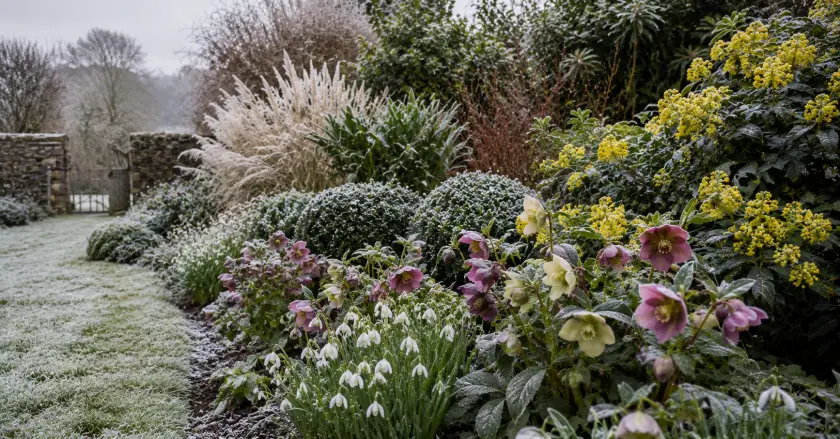
The best outdoor plants for winter are not all the same type. Some give flowers, some provide structure, and some protect the garden from looking bare. Use a mix of these British winter plants for a garden that still feels alive in January.
Hellebores
Hellebores are among the most dependable winter flowering plants UK gardeners can grow. Their flowers appear in winter or very early spring, often when the rest of the border is still quiet.
They are excellent cold hardy perennials for partial shade, woodland edges, and sheltered borders. Once established, hellebores are plants that survive British winters with very little fuss. Improve drainage, mulch lightly, and remove tired leaves so the flowers show clearly.
Boxwood
Boxwood is one of the classic evergreen plants for winter. It gives shape, formality, and calm green structure when softer plants have died back.
As one of the most useful frost hardy shrubs, boxwood works in borders, low hedging, containers, and clipped shapes. It is also one of the hardy outdoor plants that makes a winter garden look cared for even when you have done very little.
Heuchera
Heuchera is grown for foliage rather than flowers, which makes it perfect for dull months. The leaves can be lime, bronze, burgundy, caramel, purple, or silver, depending on the variety.
These winter hardy plants are useful in pots, shady beds, and small gardens. Heuchera is also one of the best winter plants for pots because it brings colour without needing constant deadheading.
Winter Jasmine
Winter jasmine brings bright yellow flowers to bare stems during the coldest part of the year. It is one of the most cheerful winter garden plants for walls, fences, and awkward corners.
It is not a neat evergreen, but it earns its space with colour. If you want outdoor plants for cold weather that break up grey winter views, winter jasmine is a strong choice.
Ornamental Grasses
Ornamental grasses add movement, height, and texture. Many stay upright through wind, frost, and rain, especially if you leave the seed heads standing until late winter or early spring.
They work beautifully with plants that survive frost because they soften the garden without needing flowers. In exposed gardens, choose sturdy grasses and avoid overly delicate varieties that flatten in heavy rain.
Mahonia
Mahonia is bold, spiky, evergreen, and extremely useful in winter. It produces yellow flowers during the colder months and gives structure all year.
As one of the more dramatic frost hardy shrubs, mahonia suits larger borders, shady corners, and wildlife-friendly gardens. It also works well with other evergreen plants for winter, especially where you want height.
Dogwood
Dogwood earns its place through winter stems. Once the leaves fall, varieties with red, orange, or yellow stems create strong colour in an otherwise quiet garden.
Dogwood is one of the best plants for wet winters, especially in heavier soil, provided it is not permanently waterlogged. It is a smart choice for UK winter garden plants because it looks better after the rest of the garden fades.
Snowdrops
Snowdrops are small, but they are powerful winter signals. They push through cold soil and bring the first real sign that the garden is waking up.
They are classic plants that survive frost and return year after year when planted in the right place. Use them under shrubs, along paths, or in natural drifts where their white flowers can be seen from indoors.
Skimmia
Skimmia is one of the most useful evergreen plants for winter because it offers glossy leaves, buds, and sometimes berries. It prefers partial shade and slightly acidic soil.
It is also one of the better winter patio plants for sheltered pots near a doorway. If you want winter plants for pots that stay tidy and colourful, skimmia is worth considering.
Cyclamen Coum
Cyclamen coum brings delicate flowers in late winter and early spring. It looks fragile, but it is tougher than many people expect.
This is one of the prettiest winter flowering plants UK gardeners can use under trees, along path edges, or in shaded containers. It pairs well with snowdrops, hellebores, and evergreen ferns.
Winter Plants for Pots, Patios, and Small Gardens
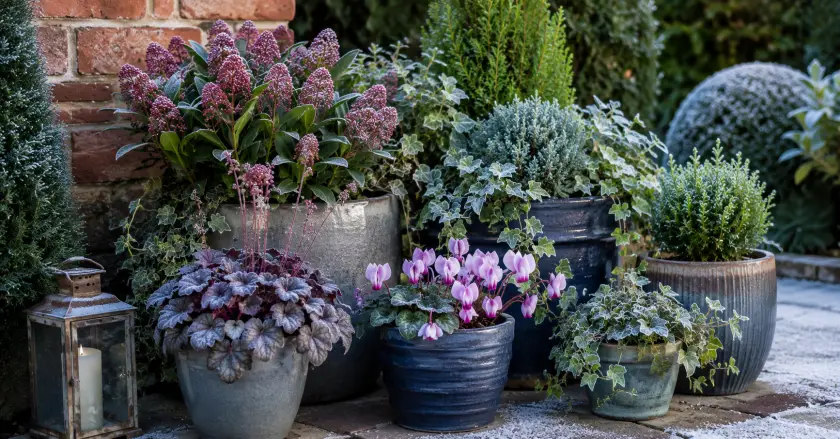
Winter plants for pots need extra care because container roots are more exposed than roots in the ground. A plant that is hardy in a border may struggle in a thin plastic pot during repeated freezing and thawing.
The best winter patio plants include heuchera, skimmia, dwarf conifers, ivy, hardy cyclamen, hellebores, winter heather, and compact ornamental grasses. These hardy outdoor plants provide colour and structure without needing a large garden.
For successful winter plants for pots, use containers with drainage holes, raise pots on feet, avoid saucers that hold water, and group pots near a wall for shelter. If your patio is very exposed, choose outdoor plants for cold weather that tolerate wind as well as frost.
Small gardens benefit from repetition. Three pots of the same British winter plants can look more polished than ten random pots. For more small-space ideas, read best plants for small outdoor spaces and container gardening on patios.
Plants for Wet Winters and Poor Drainage
Many people focus on frost, but wet soil kills just as many plants. If your garden stays soggy, choose plants for wet winters and improve the planting area before adding anything expensive.
Good plants for wet winters include dogwood, some ferns, hellebores, heuchera, skimmia, and robust ornamental grasses. These are not swamp plants, but they cope better with damp conditions than Mediterranean plants that prefer dry roots.
If you have heavy clay soil, add organic matter, plant slightly proud of the soil line, and avoid compacting the ground during wet weather. For container drainage, use a free-draining mix and read best soil mix for every type of plant.
How to Protect Plants in Winter
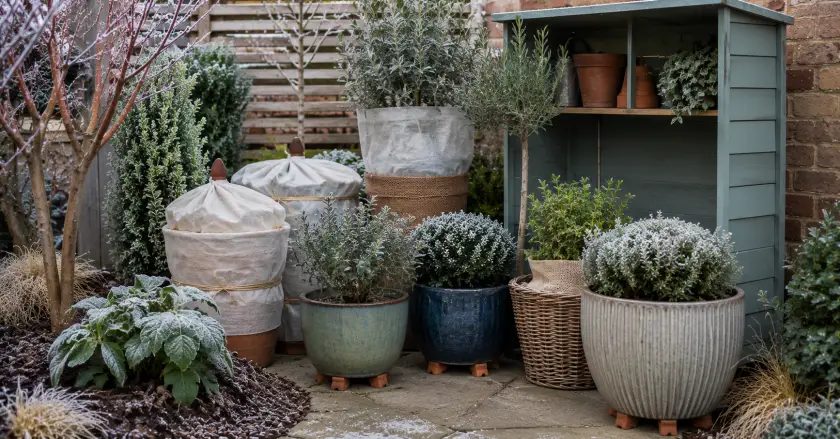
How to protect plants in winter depends on the plant. Established frost tolerant plants often need less help than tender plants in exposed pots. The aim is not to wrap everything. It is to protect roots, reduce wind damage, and stop waterlogging.
Start by mulching around roots with compost, leaf mould, or bark. Move vulnerable containers into sheltered positions. Lift pots off cold paving. Wrap pots rather than leaves when the root ball is the vulnerable part. Use horticultural fleece only when frost is expected, then remove it when the cold snap passes.
The best answer to how to protect plants in winter is preparation. Healthy plants enter winter stronger. Avoid late feeding that encourages soft growth, stop heavy pruning before frost, and make sure winter hardy plants are watered properly before long dry cold spells.
Common Mistakes to Avoid
- Choosing cold-hardy plants but ignoring rain: Many plants that survive British winters fail because of wet roots, not cold air.
- Using tiny pots outdoors: Small containers freeze quickly and dry out quickly in wind.
- Pruning too late: Fresh cuts and soft regrowth are more vulnerable to frost.
- Removing winter structure too early: Seed heads, grasses, and stems protect the garden visually and support wildlife.
- Buying only flowers: The best winter garden plants include foliage, bark, berries, and evergreen shape.
Expert Tips from Sawera Shahid
Build winter resilience in layers. Start with frost hardy shrubs for structure, add cold hardy perennials for repeat performance, then use pots for seasonal colour near doors and windows.
Do not plant everything in autumn and hope for the best. Give new UK winter garden plants time to root before hard weather. If you are planting late, choose smaller, hardy plants and protect them with mulch.
Finally, think about what you see from inside the house. The best best outdoor plants for winter are the ones you can enjoy through a window, not just when you are standing in the garden.
Future Trends
Winter gardening is becoming more practical and more important. Gardeners want outdoor plants that survive British winters, but they also want plants that can handle heatwaves, drought, storms, and unpredictable seasons.
That means the strongest gardens will use resilient planting, better drainage, wildlife-friendly structure, and long-season design. Expect more interest in evergreen plants for winter, plants for wet winters, drought-tolerant shrubs, and low-maintenance winter patio plants that look good without constant care.
Frequently Asked Questions
What outdoor plants survive British winters?
Outdoor plants that survive British winters include hellebores, boxwood, heuchera, winter jasmine, ornamental grasses, mahonia, dogwood, snowdrops, skimmia, cyclamen coum, yew, ivy, sedum, lavender, and hardy ferns. These plants that survive British winters work best when matched to the right soil and exposure.
What are the best outdoor plants for winter?
The best outdoor plants for winter combine structure, colour, and resilience. Choose evergreen plants for winter like boxwood, yew, skimmia, and ivy, then add winter flowering plants UK gardeners trust, such as hellebores, snowdrops, cyclamen coum, and winter jasmine.
Which winter plants for pots are most reliable?
The most reliable winter plants for pots include heuchera, skimmia, hellebores, hardy cyclamen, dwarf conifers, ivy, winter heather, and compact ornamental grasses. These winter patio plants need drainage holes, raised pots, and shelter from harsh wind.
What are good plants for wet winters?
Good plants for wet winters include dogwood, hellebores, ferns, heuchera, skimmia, and some ornamental grasses. Even strong British winter plants need oxygen around their roots, so improve drainage where soil stays wet for long periods.
How do I protect plants in winter?
How to protect plants in winter starts with choosing frost tolerant plants, improving drainage, mulching roots, moving pots into shelter, wrapping containers, and using fleece during sudden cold snaps. Strong winter hardy plants need less emergency protection when they enter winter healthy.
Are hardy outdoor plants completely frost-proof?
No. Hardy outdoor plants are more resilient, but young plants, container plants, and stressed plants can still suffer. Even plants that survive frost benefit from shelter, healthy roots, and good drainage.
Related Guides
- PATCH Plants homepage
- PATCH Plants blog
- Outdoor Plants hub
- Indoor Plants hub
- Plant Care hub
- Plants that bloom at night
- How to clean plant leaves
- Hardy plants that survive on minimal watering
- How to make your plants dog-friendly
- Pollinator-friendly plants for urban outdoor spaces
- Best plants for small outdoor spaces
- Best office plants
- 15 hardy outdoor plants
- Self-watering pots guide
- Blooming indoor plants
- Root rot guide
- Bedroom plants for style and calm
- How to style indoor plants by room
- Office-friendly plants for fluorescent lighting
- Oversized indoor plants
- Leaf curl, browning, and droop
- Anthurium care guide
- Repotting mistakes to avoid
- African violet care guide
- Humidity hacks for plants
- Hoya plant care guide
- Signs you are overwatering
- Orchid care guide
- How to revive a dying plant
- Cactus care guide
- Best plants for your bathroom
- Succulent care guide
- How to propagate houseplants
- Bird of paradise plant care
- Money tree care guide
- Boston fern care guide
- Plants that keep bugs away
- Dracaena plant care guide
- Why plant leaves turn yellow
- Jade plant care guide
- Mosquito repellent plants
- Rare houseplants worth hunting
- How to create an indoor jungle
- String of pearls care
- Indoor plants that smell amazing
- Calathea plant care guide
- Air-purifying indoor plants
- Philodendron care guide
- Colorful foliage indoor plants
- Rubber plant care guide
- Low-light hanging plants
- Fiddle leaf fig care guide
- Fertilizing indoor vs outdoor plants
- Spider plant care guide
- Shade-loving outdoor plants
- Monstera plant care guide
- Complete guide to watering plants
- ZZ plant care guide
- Indoor gardening systems
- Best indoor plants for beginners
- Wildlife-friendly garden guide
- Pothos plant care guide
- Should you talk to your plants?
- How to repot a plant
- Container gardening on patios
- Best soil mix for every plant
- Colorful garden for all seasons
- Cat-friendly plants guide
- Aloe vera care guide
- Complete guide to indoor light
- Peace lily care guide
- Snake plant care guide
- USDA plant database guide
- Fancy kitchen plants
- Easiest outdoor edible plants
Final Thoughts
Outdoor plants that survive British winters make gardening calmer. You do not need to rebuild your borders every spring, replace every patio pot, or panic whenever frost appears in the forecast. Choose the right plants that survive British winters, improve drainage, and your garden becomes stronger year after year.
The Royal Horticultural Society advises that cold, wet, windy winter weather can damage plants, and that shelter, staking, mulching, wrapping pots, and matching plants to the right places can help reduce winter damage. Read the full advice here: Royal Horticultural Society winter damage advice.
Start with a few reliable British winter plants. Add hardy outdoor plants for structure, winter flowering plants UK gardeners can trust for colour, and evergreen plants for winter to hold the design together. With the right choices, winter does not have to mean a dead garden. It can become one of the most beautiful, quiet, and dependable seasons outside your window.
Article Summary
The best outdoor plants that survive British winters are resilient against frost, rain, wind, and wet soil. Reliable plants that survive British winters include hellebores, boxwood, heuchera, winter jasmine, ornamental grasses, mahonia, dogwood, snowdrops, skimmia, and cyclamen coum. Strong British winter plants combine evergreen structure, winter flowers, colourful stems, and cold hardy perennials. For containers, choose winter plants for pots and winter patio plants with good drainage. For wet gardens, use plants for wet winters and improve soil before planting. The strongest winter garden uses hardy outdoor plants, frost tolerant plants, and simple protection steps to keep outdoor spaces alive through the coldest months.


[…] If you are a beginner, start with dependable choices. Helpful lists include best low-maintenance outdoor plants, 15 hardy outdoor plants, and outdoor plants that survive British winters. […]
[…] January jobs include checking winter containers, brushing snow from fragile plants, protecting outdoor pots, planning your seed starting calendar 2026, and improving compost systems. For cold-season outdoor help, read outdoor plants that survive British winters. […]
[…] Thyme pairs well with low-maintenance outdoor plants, hardy outdoor plants, and outdoor plants that survive British winters. […]
Your article helped me a lot, is there any more related content? Thanks!
[…] Outdoor plants that survive British winters […]
[…] Outdoor plants for British winters […]