
Key Takeaways
- You do not need a large garden to grow beautiful plants — a windowsill, balcony corner, doorstep, or patio can support a thriving plant collection
- The best plants for small outdoor spaces combine compact growth habit, container tolerance, and visual impact — lavender, herbs, heuchera, and compact shrubs lead the list
- Climbing plants like clematis and ivy are the most space-efficient outdoor plants — they use vertical space on walls, fences, and railings rather than competing for limited floor area
- Small trees including bay, olive, and lemon thrive in large containers and create dramatic focal points in tiny patios and doorstep gardens
- Window boxes on a 45cm windowsill can support herbs, trailing ivy, seasonal flowers, and compact evergreens — rotating plantings by season keeps them interesting year round
- Choosing a cohesive theme — Mediterranean, cottage, modern sculptural — makes small outdoor spaces feel intentional and polished rather than cluttered
- Drainage is the most critical factor in container plant care — always use pots with drainage holes and appropriate compost for each plant type
- Drought-tolerant plants including lavender, rosemary, sedum, and succulents are ideal for small sunny outdoor spaces where containers dry out quickly
- Shade-tolerant plants including ferns, ivy, skimmia, and heuchera transform dark balconies and north-facing spaces into lush green retreats
- A single statement tree or large container plant can transform the entire feel of a small outdoor space — one bold choice is often more effective than many small ones
Introduction
Not everyone has a garden. But almost everyone has some outdoor space — a windowsill, a balcony corner, a doorstep, a small patio, or even just a section of wall that could support a climbing plant. The challenge is not space. The challenge is knowing which plants will actually thrive in small outdoor spaces and how to arrange them for maximum impact with minimum fuss.
This guide covers the best plants for small outdoor spaces across every situation — from full-sun balconies to shaded north-facing patios, from window boxes to doorstep containers. Each section includes specific plant recommendations, practical tips for container growing, and advice on creating a cohesive, attractive outdoor space regardless of how little room you have to work with.
For companion reading on low-maintenance outdoor plant care, our best low-maintenance outdoor plants guide covers varieties that perform well in small spaces with minimal intervention. For year-round container planting ideas, our year-round balcony plants guide is essential reading alongside this article.
Why Small Outdoor Spaces Deserve Thoughtful Planting
In a large garden, individual plant choices matter less — there is room to experiment, fail, and try again. In a small outdoor space, every plant choice has a disproportionate impact. A poorly chosen plant that outgrows its container, dies quickly, or looks untidy affects the entire space. A beautifully chosen plant that performs reliably transforms it.
Small outdoor spaces also tend to be more visible and more used than large gardens — a balcony, a doorstep, or a small patio is often seen daily from inside the home and used more intensively than a large spread-out garden. The investment in choosing plants well pays returns every time you look out of the window or step outside.
The key principles for successful small outdoor planting are compact growth habit, container tolerance, seasonal interest, and cohesive design. Plants that tick all four consistently perform in small spaces. Plants that miss one or more — growing too large, struggling in pots, looking good for only one month, or clashing visually — disappoint quickly when space is at a premium.
Understanding Your Small Outdoor Space Before Choosing Plants
Before selecting plants, assess three things about your specific outdoor space:
Light Conditions
This is the most important factor. South and west-facing spaces receive the most sun and can support the widest plant range including lavender, rosemary, succulents, and citrus trees. North and east-facing spaces receive less direct sun and need shade-tolerant plants — ferns, ivy, skimmia, hydrangea, and heuchera all perform well in lower light outdoor positions. Our complete guide to indoor light covers light assessment principles that apply equally to outdoor container positions.
Wind Exposure
Balconies and elevated terraces can be significantly more exposed to wind than ground-level gardens. Wind desiccates foliage, breaks fragile stems, and dries out containers faster than sheltered positions. Choose wind-tolerant plants for exposed positions — ornamental grasses, lavender, rosemary, and compact evergreen shrubs all handle wind well. For coastal and highly exposed positions, our best outdoor plants for coastal and windy environments guide covers the most resilient options.
Available Floor vs Vertical Space
Most small outdoor spaces have more vertical space available than they use. Walls, fences, railings, and trellis panels all provide planting opportunities for climbing plants that take up zero floor space. Assessing the ratio of floor to vertical space helps prioritise which plant types to focus on.
The Best Plants for Small Outdoor Spaces by Category
Window Box Plants: Maximum Impact from Minimum Space
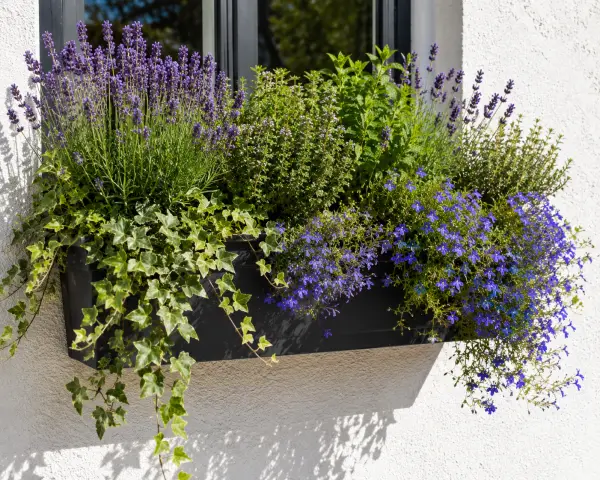
A window box is one of the most versatile and effective planting options for small outdoor spaces. Even a 45cm window box can support a complete herb garden, a seasonal flower display, or a structured evergreen arrangement that looks good year-round.
The key to a successful window box is layering — upright plants at the back, compact mounding plants in the middle, and trailing varieties at the front edge. This creates a full, deliberately composed appearance from even the smallest container.
Best window box plants for summer: Trailing lobelia, petunias, compact lavender, herbs (thyme, basil, parsley), nasturtiums, and calibrachoa all perform well in summer window boxes in sunny positions.
Best window box plants for winter: Skimmia japonica (produces red berries and holds through winter), trailing ivy, heather, compact box, and ornamental kale provide colour and structure through the colder months when most summer plants have finished.
Best window box plants for shade: Trailing ivy, ferns, impatiens, begonias, and skimmia all perform in shaded window box positions where sun-loving plants would struggle.
For herb garden window box setups specifically, our complete guide to watering tips covers the specific watering needs of herbs in containers — they dry out faster than most window box plants and need more frequent attention.
Climbing Plants for Small Outdoor Spaces

Climbing plants are the most space-efficient outdoor plants available for small spaces. They use vertical surfaces — walls, fences, railings, trellis panels, and obelisks — rather than competing for limited floor space, effectively multiplying the planting area available in any small outdoor situation.
Clematis is one of the best climbing plants for small outdoor spaces — it climbs quickly, produces spectacular flowers in purple, pink, white, and red, and is available in varieties that bloom from spring through autumn. Most clematis varieties are compact enough to work in a large container with a trellis or obelisk support, making them viable even on small balconies without wall access.
Ivy (Hedera helix) is the most self-reliant climbing plant for small spaces — it attaches itself to surfaces without support and creates dense green coverage quickly. It is also shade-tolerant, making it ideal for north-facing walls and shaded balcony railings where most climbers would not thrive.
Jasmine (Jasminum officinale) is the most fragrant climbing plant for small outdoor spaces — its white flowers in summer produce an extraordinary scent that transforms a small balcony or courtyard. It needs a sunny, sheltered position and some support but rewards these requirements with exceptional seasonal performance. Our indoor plants that smell amazing guide covers jasmine’s fragrance properties in detail.
Climbing hydrangea (Hydrangea petiolaris) is one of the best climbers for shaded small outdoor spaces — it self-clings to walls, tolerates north-facing positions, and produces large white flower clusters in summer that are genuinely dramatic.
For all climbing plants, ensure whatever surface or support you are using can bear the eventual weight of a mature plant — established climbers are significantly heavier than young plants and require secure fixing points.
Small Trees for Pots and Small Outdoor Spaces
A single well-chosen tree in a bold container can anchor the entire design of a small outdoor space — creating height, structure, and a focal point that makes even the smallest patio feel like a designed garden.
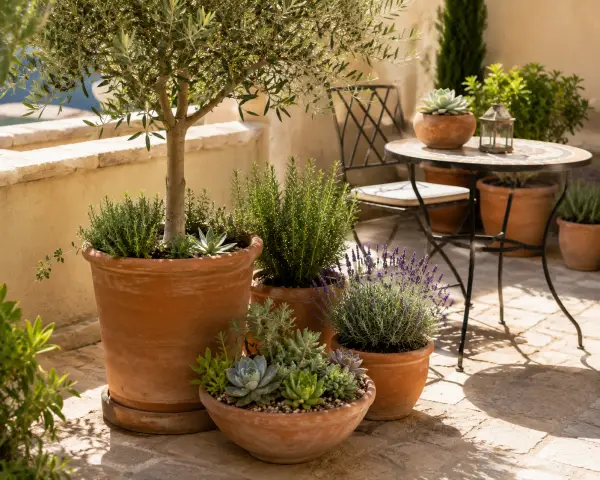
Bay tree (Laurus nobilis) is one of the best small trees for pots — evergreen, shapeable into classic lollipop or cone forms, drought-tolerant once established, and producing edible leaves throughout the year. It suits Mediterranean, formal, and contemporary small space aesthetics equally well.
Olive tree (Olea europaea) brings Mediterranean character and extraordinary resilience to small outdoor spaces. Olive trees in containers are slower-growing than garden-planted specimens, which actually suits small spaces — they remain manageable for longer. They need full sun and excellent drainage. One of the most stylish compact plants for small patios and doorstep gardens.
Lemon tree (Citrus limon) in a container is one of the most rewarding small outdoor trees — it produces fragrant white flowers and actual fruit in warm sunny positions, and its glossy evergreen foliage looks attractive throughout the year. Bring indoors or into a frost-free position in winter in colder climates.
Japanese maple (Acer palmatum) is the most spectacular small container tree for autumn colour — its deeply lobed leaves turn fiery red, orange, and gold before falling. Choose compact varieties specifically bred for container growing. Our 15 hardy outdoor plants guide covers Japanese maple care in detail.
All container trees need large, heavy pots with excellent drainage, regular feeding during the growing season, and more frequent watering than garden-planted trees — containers dry out significantly faster than open ground.
Flowering Plants for Small Outdoor Spaces
Flowering plants deliver the most visible seasonal impact in small outdoor spaces — a container of hydrangeas or a window box of lavender transforms a plain balcony into something genuinely beautiful.
Hydrangea is one of the best flowering plants for small outdoor spaces in partial shade — its enormous flower heads in blue, pink, white, and purple create impact disproportionate to the plant’s size. Many compact varieties have been developed specifically for container growing. They need consistent moisture and protection from strong wind.
Lavender is the perfect small outdoor plant for sunny spaces — drought-tolerant, fragrant, attractive to pollinators, and reliably producing purple flower spikes through summer. It suits containers, window boxes, and small border positions equally well. One of the best compact plants for small gardens with a Mediterranean theme. For more on growing lavender in small spaces, our hardy outdoor plants guide covers its specific requirements.
Camellia is one of the finest flowering shrubs for small outdoor spaces in sheltered positions — producing large, rose-like blooms in late winter and early spring when the outdoor colour palette is at its most limited. It needs acidic soil (ericaceous compost in containers) and shelter from cold drying winds and morning sun.
Coneflower (Echinacea) is one of the best drought-tolerant flowering perennials for small sunny outdoor spaces — producing large daisy-like flowers in pink, purple, and white from midsummer through autumn and providing valuable pollinator support throughout. For more pollinator-friendly outdoor plant options, our pollinator-friendly plants guide covers the full range.
Herbs for Small Outdoor Spaces
Herbs are among the most practical and productive plants for small outdoor spaces — they are compact, container-friendly, visually attractive, and provide a constant supply of fresh culinary ingredients throughout the growing season.
Rosemary is the most resilient outdoor herb for small spaces — evergreen, drought-tolerant, bee-friendly, and producing attractive blue flowers in spring. It suits window boxes, containers, and small border positions in full sun. Our hardy outdoor plants guide covers rosemary as a year-round performer.
Mint is the most productive outdoor herb for containers — it grows vigorously and produces a constant supply of fresh leaves for cooking and drinks. Always grow mint in its own container rather than mixed with other herbs as it spreads aggressively and will take over a shared planting.
Small patios and balconies can also benefit from plants that keep mosquitoes away, especially herbs like basil, mint, rosemary, lavender, and lemon balm. Place them in pots near seating areas, doors, windows, and outdoor dining corners so their scent is close to where people spend time.
Thyme is a compact, drought-tolerant herb that suits window boxes, container edges, and small sunny gaps in outdoor paving. It stays tidy, produces attractive small flowers in summer, and is useful in cooking year-round.
Basil is the best summer herb for sunny small outdoor spaces — extraordinarily productive in warm conditions and one of the most used culinary herbs. It needs warmth and sunlight and is best grown in summer only, replaced with hardier herbs for autumn and winter.
For watering guidance specific to herbs in containers — which dry out faster than most outdoor plants — our complete guide to watering tips covers container herb watering in detail.
Shade-Tolerant Plants for Small Outdoor Spaces
North-facing balconies, enclosed courtyards, and shaded small patios present a specific challenge — most of the most widely available outdoor plants prefer sun. These shade-tolerant varieties transform difficult dark small outdoor spaces into attractive green retreats.
Ferns are the definitive shade-tolerant plants for small outdoor spaces — their lush, architectural fronds bring tropical presence to the darkest corners. Hardy ferns like Dryopteris and Polystichum tolerate outdoor winters well and come back reliably year after year. Keep consistently moist and shelter from drying wind.
Skimmia japonica is one of the best compact evergreen shrubs for shaded small outdoor spaces — it produces red berries through autumn and winter, fragrant white flowers in spring, and holds attractive glossy foliage year-round. Compact varieties suit window boxes and small containers in shaded positions exceptionally well.
Heuchera brings extraordinary foliage colour to shaded small outdoor spaces — deep plum, lime green, burnt orange, and silver varieties all perform well in partial shade and stay compact in containers. Our hardy outdoor plants guide covers heuchera care in detail.
Hostas are the most dramatic shade-tolerant plants for small outdoor spaces — their large, bold leaves in blue-green, yellow-green, and variegated combinations create striking visual impact in positions where most other plants would fade. Protect from slugs and snails. Our how to keep pests away from outdoor plants guide covers slug management for hostas and other vulnerable plants.
Drought-Tolerant Plants for Small Sunny Outdoor Spaces
Small containers in full sun dry out dramatically faster than garden beds — sometimes within a single day in hot summer weather. Drought-tolerant plants significantly reduce the watering burden in these positions while still delivering excellent visual performance.
Succulents and sedums are the most drought-tolerant small outdoor plants — their thick, water-storing leaves allow them to survive without watering for extended periods. They suit sunny windowsills, patio tables, and small south-facing balconies particularly well. Our succulent care guide covers outdoor growing considerations.
Lavender, rosemary, and thyme all thrive in dry sunny small outdoor positions — the same conditions that cause most other plants to struggle. These Mediterranean herbs are among the most reliable drought-tolerant plants for small outdoor spaces in full sun. For more drought-tolerant outdoor plant options, our top drought-resistant plants guide covers a comprehensive range.
Ornamental grasses are among the most drought-tolerant textural plants for small outdoor spaces — they sway attractively in the wind, create movement and seasonal interest, and once established require very little supplementary watering. Blue fescue (Festuca glauca) is particularly compact and well-suited to small containers.
Creating a Cohesive Theme for Your Small Outdoor Space
In a large garden, visual coherence is optional — there is room for experimentation and variety. In a small outdoor space, a cohesive theme is what separates a polished, intentional setup from a collection of mismatched pots that looks cluttered.
Mediterranean Theme
Olive tree, lemon tree, lavender, rosemary, thyme, and terracotta pots. This is one of the most naturally suited themes for small sunny outdoor spaces — all the plants are compact, drought-tolerant, and visually coherent. Add a few succulents or sedums for ground-level texture and the theme is complete.
Cottage Garden Theme
Climbing roses, clematis, hydrangea, lavender, herbs, and seasonal flowering perennials like coneflower and heuchera. This theme suits small patios and doorstep gardens — it is colourful, fragrant, and deliberately informal. Our pollinator-friendly plants guide covers cottage-style plants that also support garden wildlife.
Modern Sculptural Theme
Ornamental grasses, succulents, compact evergreen shrubs in matte black or slate containers. This theme suits contemporary apartments and modern homes — it is clean, architectural, and low-maintenance. Colour comes from foliage texture rather than flowers.
Shade Garden Theme
Ferns, hostas, heuchera, ivy, and skimmia in neutral or terracotta containers. A cohesive shade garden theme transforms the most challenging small outdoor spaces — north-facing balconies and enclosed courtyard gardens — into genuinely lush, green retreats.
Container Care Essentials for Small Outdoor Plants
Plants in containers in small outdoor spaces have more demanding care requirements than garden-planted specimens — roots are restricted, nutrients deplete faster, and moisture management is more critical.
Drainage
All outdoor containers must have drainage holes. Standing water in a container without drainage causes root rot within days in warm weather. Our root rot guide covers identification and treatment, and our self-watering pots guide covers alternative watering solutions for container outdoor plants.
Watering
Small outdoor containers — particularly in sun or wind — can dry out within hours in hot summer weather. Check daily during heatwaves. Water early in the morning to reduce evaporation loss. Consider self-watering containers for the most moisture-sensitive plants. Our signs you are overwatering guide helps diagnose both under and overwatering in container outdoor plants.
Feeding
Container plants deplete their growing medium’s nutrients much faster than garden-planted specimens — nutrients wash out with every watering. Feed container outdoor plants with a balanced liquid fertiliser every two weeks during the growing season (April through September). Our fertilising indoor vs outdoor plants guide covers feeding approaches for container outdoor plants specifically.
Repotting
Most container outdoor plants need repotting every one to two years as they outgrow their pots and the growing medium degrades. Our how to repot a plant guide covers the full process, and our repotting mistakes to avoid guide prevents common errors.
Pest Management
Small outdoor spaces can be vulnerable to specific pests — slugs and snails on hostas and ferns, aphids on flowering plants, and cats disturbing containers. Our how to keep pests away from outdoor plants guide covers the most effective management strategies. For pet-proofing specifically, our cat-friendly plants guide and dog-friendly plants guide identify safe plant choices for households with animals.
Quick Reference: What to Plant Where
| Space Type | Best Plants | Key Consideration |
|---|---|---|
| Sunny windowsill | Herbs, lavender, succulents, thyme | Water frequently — dries fast |
| Shaded windowsill | Ivy, skimmia, ferns, impatiens | Choose shade-tolerant varieties only |
| Balcony — sunny | Lavender, rosemary, ornamental grasses, compact citrus | Wind tolerance essential |
| Balcony — shaded | Ferns, hostas, heuchera, climbing hydrangea | Keep moisture consistent |
| Small sunny patio | Bay tree, olive tree, lavender, heuchera, clematis | Large containers for trees |
| Shaded courtyard | Hostas, ferns, ivy, skimmia, camellia | Enrich soil with organic matter |
| Wall or fence | Clematis, ivy, jasmine, climbing hydrangea | Provide adequate support |
| Doorstep | Olive tree, bay tree, small hydrangea, camellia in pots | Choose statement varieties |
Article Summary
| Topic | Key Points |
|---|---|
| Best plants for small outdoor spaces | Lavender, herbs, heuchera, compact evergreens, climbers, small trees in containers |
| Best climbing plants | Clematis, ivy, jasmine, climbing hydrangea — use vertical space efficiently |
| Best small trees for pots | Bay tree, olive, lemon tree, Japanese maple — use large heavy containers |
| Best window box plants | Trailing ivy, herbs, seasonal flowers, skimmia for winter |
| Best shade-tolerant plants | Ferns, hostas, heuchera, skimmia, ivy, climbing hydrangea |
| Best drought-tolerant plants | Lavender, rosemary, succulents, sedum, ornamental grasses |
| Container care essentials | Drainage holes always, regular feeding, frequent watering in sun, annual repotting |
| Theme ideas | Mediterranean, cottage, modern sculptural, shade garden |
Related Guides
- Best Low-Maintenance Outdoor Plants for Busy Gardeners
- Year-Round Balcony Plants
- 15 Hardy Outdoor Plants That Thrive All Year Round
- Pollinator-Friendly Plants for Urban Outdoor Spaces
- Best Outdoor Plants for Coastal and Windy Environments
- Top Drought-Resistant Plants
- How to Keep Pests Away from Outdoor Plants
- The Truth About Self-Watering Pots
- Succulent Care Guide
- How to Repot a Plant
- Complete Guide to Watering Tips
- Cat-Friendly Plants Guide
Final Thoughts
Small outdoor spaces reward careful plant selection more than large gardens do. Every choice matters more. Every well-chosen plant has more impact. A single olive tree in a terracotta pot on a small patio, a clematis scaling a balcony railing, a window box of herbs above a kitchen window — these small decisions collectively create outdoor spaces that feel genuinely alive and inviting regardless of their size.
Start with what your space actually offers — the light it receives, the wind it experiences, the floor versus vertical space available — and match your plant choices to those conditions. One well-placed climbing plant using vertical space efficiently will contribute more than five poorly chosen small pots competing for the same patch of floor.
According to the Royal Horticultural Society, container gardening in small outdoor spaces has seen consistent growth in the UK as more people live in flats, apartments, and houses without gardens — with balcony and patio planting now representing one of the fastest-growing areas of UK horticulture. The plant choices have never been better, the containers more attractive, or the guidance more accessible.
Your small outdoor space is not a limitation. It is a focused opportunity to create something genuinely beautiful — one well-chosen plant at a time.
Frequently Asked Questions
What are the best plants for small outdoor spaces?
The best plants for small outdoor spaces include lavender, herbs, compact evergreen shrubs, climbing plants like clematis and ivy, small trees like bay and olive in containers, and trailing flowering plants like lobelia and petunias. The best choice depends on your light conditions, space type, and maintenance commitment. Our year-round balcony plants guide covers container-specific options in more detail.
What plants grow well in small pots outdoors?
Plants that grow well in small pots outdoors include herbs (basil, mint, parsley, rosemary, thyme), compact succulents, lavender, heuchera, ferns, dwarf ornamental grasses, seasonal flowering plants, and small evergreen shrubs like skimmia. Always choose pots with drainage holes and use appropriate compost for each plant type.
Which climbing plants are best for small outdoor spaces?
The best climbing plants for small outdoor spaces include clematis, jasmine, climbing hydrangea, and ivy. These climbers use vertical space on walls, fences, railings, and trellises rather than competing for limited floor space — making them the most space-efficient outdoor plants available for small patios, balconies, and courtyard gardens.
Can I grow trees in a small outdoor space?
Yes — bay tree, olive tree, lemon tree, and Japanese maple all thrive in large containers in small outdoor spaces. Choose large, heavy containers with excellent drainage, feed regularly during the growing season, and water more frequently than garden-planted trees as containers dry out faster.
What plants work best in window boxes for outdoor use?
The best outdoor window box plants include trailing ivy, herbs, seasonal flowers (pansies, lobelia, petunias), skimmia for winter interest, and compact evergreens. Layer with trailing varieties at the front edge and upright varieties at the back for the fullest, most attractive appearance from any window box size.


[…] more container support, read container gardening on patios, best plants for small outdoor spaces, and self-watering pots […]
[…] interest. For more outdoor plant planning, read best plants for container gardening on patios, best plants for small outdoor spaces, and best low-maintenance outdoor […]
[…] Best plants for small outdoor spaces […]
[…] For general container care, read best plants for container gardening on patios, year-round balcony plants, and best plants for small outdoor spaces. […]
Your point of view caught my eye and was very interesting. Thanks. I have a question for you. 注册获取100 USDT
[…] Basil is a good companion for food-focused patio gardens. Pair it with grow your own edible plants, container gardening on patios, and best plants for small outdoor spaces. […]