
Key Takeaways
- The most effective plants that keep bugs away — citronella, lavender, basil, mint, and rosemary — work by releasing volatile organic compounds through their leaves, flowers, and stems that interfere with insects’ ability to locate hosts, disrupting the scent signals that attract mosquitoes, flies, gnats, and other pests.
- Plants that keep bugs away indoors include lavender, basil, and mint — all of which grow readily on bright windowsills and near doorways, creating a natural scent barrier that deters flies and mosquitoes before they enter the home.
- Plants that keep bugs away outdoors work most effectively when positioned strategically near seating areas, patio edges, walkways, and doorways rather than placed randomly across the garden — proximity to people is what makes the repellent effect genuinely useful.
- Fly repellent plants including basil and rosemary release their oils continuously in warm conditions, making them particularly effective near outdoor dining areas, BBQ stations, and kitchen windows where flies tend to concentrate around food.
- Plants that keep bugs away from vegetable gardens — marigolds, basil, and catnip in particular — serve double duty as companion plants that deter specific pests threatening crops while adding visual interest and biodiversity to growing spaces.
- Patio plants that keep bugs away work best in combination rather than individually — a single lavender plant helps in its immediate vicinity, but a strategic mix of lavender, lemongrass, citronella, and mint creates overlapping scent zones that provide genuinely meaningful protection across an entire outdoor seating area.
- Hanging plants that keep bugs away — including trailing lavender, rosemary in hanging baskets, and eucalyptus — position repellent scents at exactly the level where people sit and gather, making them some of the most practically placed pest deterrents in any outdoor or indoor space.
- Perennial plants that keep bugs away — lavender, rosemary, catnip, lemon balm, and mint — return year after year without replanting, making them the most cost-effective long-term investment in natural garden pest management available.
- Low maintenance plants that keep bugs away include rosemary, lavender, and marigolds — all drought-tolerant, widely available, and requiring minimal care once established in the right position.
- Natural plants that keep bugs and mosquitoes away reduce reliance on chemical repellents without eliminating the need for them entirely — positioned thoughtfully, they create a meaningfully less pest-hospitable environment that improves the pleasure of every outdoor space they inhabit.
Introduction
Summer evenings in the garden should be among life’s simplest pleasures — warm air, soft light, the satisfaction of a well-tended outdoor space. What they shouldn’t include is the constant background irritation of mosquitoes zeroing in on ankles, flies landing uninvited on food, and gnats hovering persistently at eye level the moment you try to relax.
The reflexive answer has always been chemical repellents — sprays, coils, candles with synthetic fragrance — and they work, after a fashion. But most people who use them also know that something about the experience feels slightly wrong: the artificial smell, the residue on skin, the vague sense that saturating your garden with synthetic compounds isn’t quite in the spirit of having a garden in the first place.
Plants that keep bugs away offer a genuinely different approach — not perfect, not a complete replacement for every situation, but meaningful, sustainable, and beautiful in a way that no aerosol can match. Certain plants produce volatile organic compounds in their leaves, stems, and flowers that actively interfere with insects’ ability to detect hosts and locate breeding environments. Lavender’s linalool. Citronella’s citronellal. Catnip’s nepetalactone. These aren’t marketing claims — they’re documented chemical compounds that mosquitoes, flies, and gnats are neurologically wired to avoid.
This guide covers the 10 best plants that keep bugs away for both indoor and outdoor use — with specific guidance on fly repellent plants, patio plants that keep bugs away, plants that keep bugs away from vegetable gardens, and the best indoor plants that keep bugs away for kitchens, windowsills, and doorways. For a more focused mosquito guide, see our plants that repel mosquitoes article, which covers lavender, lemongrass, citronella, basil, mint, rosemary, catnip, lemon balm, and shade-tolerant mosquito repellent plants in more detail. Our mosquito repellent plants guide covers every mosquito deterrent in detail alongside environmental management tips.
Why Plants Work Better Than You Might Expect
The mechanism behind natural plants that keep bugs away is more sophisticated than simply smelling nice. Insects navigate their environment almost entirely through chemical signals — the carbon dioxide we exhale, the lactic acid from our skin, the warmth of our bodies all create a detectable scent trail that directs mosquitoes and flies toward human hosts with remarkable precision. Plants that produce repellent volatile compounds don’t just smell pleasant to us — they actively disrupt this signal system, either masking the attractant cues entirely or flooding the insect’s olfactory receptors with compounds it’s programmed to avoid.
The practical implication is that placement and heat matter as much as plant selection. Repellent compounds volatilise most intensively when plants are warm — in direct afternoon sun, when leaves are touched or brushed, or when stems are gently crushed. A lavender plant sitting in the shade at the far end of the garden provides minimal protection for a patio seating area. The same plant in a sunny pot beside a garden chair, where the warmth of the afternoon and the occasional brush of a passing arm continuously releases its oils, provides genuine, measurable benefit.
Understanding this is what separates a garden that uses plants that keep bugs away effectively from one that merely has them present without purpose. Our best low-maintenance outdoor plants guide covers the broader companion planting principles that make pest-deterrent gardens work as integrated systems.
The 10 Best Plants That Keep Bugs Away
1. Lavender — Best All-Round Bug Deterrent Plant
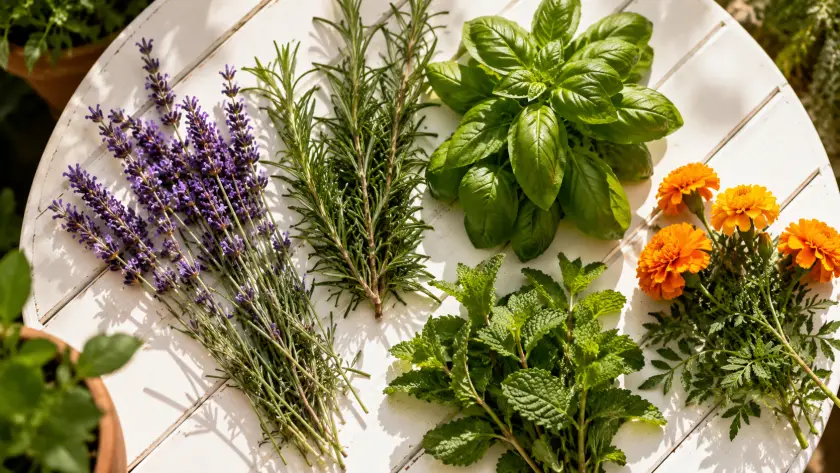
Lavender earns the top position on any plants that keep bugs away list for the same reason it earns its place on fragrant plant lists, sleep-aid recommendations, and garden design guides simultaneously — it does everything it does beautifully, and it does it for years without demanding much in return. Do lavender plants repel insects? Yes — its linalool content deters mosquitoes, flies, moths, and fleas, with research confirming genuine repellent activity that extends meaningfully beyond simple fragrance.
Will lavender keep bugs away effectively in an outdoor setting? Yes, particularly when positioned in full sun near seating areas — the afternoon warmth activates linalool release most intensively, creating a natural repellent zone precisely where people gather. What bugs does lavender keep away most reliably? Mosquitoes, flies, moths, and fleas respond most strongly — making lavender one of the most broad-spectrum natural plants that keep bugs away available in any garden centre.
As a perennial plant that keeps bugs away, established lavender returns year after year in the same position without replanting, growing more fragrant and more effective each season. It also qualifies as a low maintenance plant that keeps bugs away — drought-tolerant, virtually pest-free itself, and requiring only annual pruning to maintain its shape.
- Light: Full sun — minimum 6 hours daily for maximum oil production
- Best position: Patio containers, border edges, near seating areas, window boxes
- Pet safety: Generally safe for dogs — avoid letting cats ingest large quantities
- Perennial: Yes — long-lived in well-drained, sunny positions
For more on lavender’s indoor fragrance benefits, our best smelling indoor plants guide covers placement ideas that work indoors and outdoors simultaneously.
2. Basil — Best Fly Repellent Plant for Kitchens and Dining Areas
Basil plant for bug repellent use is one of the most practical combinations in any garden or kitchen — it’s a fly repellent plant that also provides fresh herbs for cooking, simultaneously dealing with two domestic concerns from a single pot on the kitchen windowsill. Fly repellent herbs generally work by releasing aromatic compounds that overwhelm flies’ scent receptors, and basil’s estragole and citral content make it one of the most potent natural fly deterrents available.
As an indoor plant that keeps bugs away, basil performs particularly well because it releases its oils continuously in warm conditions without needing to be touched — placing a healthy basil plant near an open kitchen window creates a persistent aromatic barrier that genuinely reduces fly entry. Near BBQ stations and outdoor dining areas, it works as one of the best patio plants that keep bugs away from food surfaces.
- Light: Bright sun — 6+ hours daily for maximum oil production
- Best position: Kitchen windowsill, outdoor dining table, near food prep areas
- Pet safety: Generally safe
See our complete watering guide for basil’s specific moisture requirements — it prefers consistent moisture unlike most other plants on this list.
3. Mint — What Do Mint Plants Repel?
What do mint plants repel? Mosquitoes, ants, flies, spiders, and ticks — making mint one of the most comprehensive plants that keep bugs and mosquitoes away simultaneously available. Menthol masks the carbon dioxide and lactic acid signals that attract mosquitoes to human hosts, creating a genuinely effective deterrent when placed in high-traffic areas where casual contact releases the oils naturally.
As house plants that keep bugs away, mint pots on kitchen windowsills and near entry doors provide real protection against flies and ants entering the home — the menthol concentration released passively by a healthy mint plant in good light creates a persistent scent deterrent at exactly the right points of entry. As hanging plants that keep bugs away, trailing mint varieties in hanging baskets near outdoor seating position the repellent effect at exactly the level where people sit.
The practical challenge with mint is its aggressive spreading habit — unchecked in garden borders it colonises extensively. Container growing solves this completely and actually improves its pest deterrent function by concentrating the plant near seating rather than spreading it across the garden.
- Light: Bright indirect to partial sun — one of the more shade-tolerant options
- Best position: Patio containers, outdoor tables, kitchen windowsills, hanging baskets
- Pet safety: ⚠️ Some varieties mildly irritate cats — see our cat-friendly plants guide
4. Citronella Grass — Strongest Natural Bug Repellent Plant
Citronella grass (Cymbopogon nardus) is the botanical source of the citronella oil used in virtually every commercial mosquito repellent product — candles, sprays, and diffusers all rely on the same compounds that the growing plant releases naturally. As a natural bug repellent plant, it is scientifically the most potent single species available for outdoor growing, with citronellal concentrations high enough to create a genuinely effective deterrent zone when grown in large clumps around patio perimeters.
Distinguish it from the ‘citronella plant’ commonly sold in garden centres — that is actually a lemon-scented geranium (Pelargonium citrosum), fragrant and useful but not the true source of commercial citronella compounds. True citronella grass is the more powerful option, growing to 90–120cm with architectural strappy leaves that also serve as an attractive structural element in garden design.
- Light: Full sun — essential for oil production
- Best position: Large containers around patio perimeters, garden border edges
- Pet safety: ⚠️ Mildly toxic to cats and dogs — see dog-friendly plants guide
5. Rosemary — Does Rosemary Repel Bugs?
Does rosemary repel bugs? Yes — and does rosemary deter insects effectively enough for garden use? Research and centuries of traditional Mediterranean practice both confirm it. Rosemary’s woody, resinous fragrance contains camphor and other volatile compounds that mosquitoes and flies find aversive. Rosemary repels bugs most effectively when in warm, sunny positions where its oils volatilise intensively through the afternoon hours.
As a fly repellent herb, rosemary near outdoor kitchens and dining areas provides continuous passive deterrence without needing to be touched or crushed. Burning dried rosemary sprigs on a BBQ or fire pit releases concentrated aromatic compounds that provide intensified short-term protection during outdoor gatherings.
As a perennial plant that keeps bugs away and a low maintenance plant that keeps bugs away simultaneously, rosemary is one of the most valuable long-term garden investments in natural pest control — growing larger, woodier, and more fragrant each year with minimal intervention.
- Light: Full sun — south-facing position essential
- Best position: Raised planters, border edges, gravel paths, near outdoor kitchens
- Pet safety: Generally safe in normal garden quantities
- Perennial: Yes — extremely long-lived in right conditions
6. Marigolds — Best Plants That Keep Bugs Away from Vegetable Garden
As plants that keep bugs away from vegetable gardens, marigolds (Tagetes species) have no equal in the companion planting world. Their pyrethrum content — the same compound used in many commercial insecticides — deters mosquitoes, whiteflies, aphids, and certain soil nematodes simultaneously, while their cheerful orange and yellow flowers add colour to vegetable beds that would otherwise be purely functional. Flowering plants that keep bugs away rarely deliver this combination of practical effectiveness and visual appeal as reliably as marigolds.
As outdoor plants that keep bugs away from patios and borders, marigolds planted along seating area edges create a colourful pest deterrent border that works aesthetically and functionally. As garden plants that keep bugs away from specific pest-vulnerable crops, plant directly alongside tomatoes, peppers, and brassicas for maximum companion planting benefit.
- Light: Full sun
- Best position: Vegetable bed edges, patio containers, border fronts
- Pet safety: Generally safe in normal quantities
- Annual: Fast-growing, affordable, self-seeding reliably
7. Catnip — Most Scientifically Proven Bug Deterrent
Catnip (Nepeta cataria) contains nepetalactone — a compound that research has demonstrated to be up to ten times more effective than DEET in laboratory tests against certain mosquito species. As a natural plant that keeps bugs away backed by genuine scientific evidence, catnip deserves considerably more attention than it typically receives in pest control conversations.
As plants that keep bugs and insects away from shadier garden areas, catnip is particularly valuable — it tolerates partial shade better than lavender or rosemary, making it effective in the shadier corners where mosquitoes tend to rest during the day. Its lavender-like purple flower spikes also attract pollinators, making it genuinely multi-functional.
- Light: Full sun to partial shade — more flexible than most options
- Best position: Garden bed corners, shaded seating areas, herb gardens
- Pet safety: Safe but irresistible to cats — expect feline visitors
- Perennial: Yes — spreading vigorously each year
See our humidity hacks guide for growing catnip in container environments where spreading can be controlled.
8. Lemon Balm — Shade-Tolerant Bug Deterrent
Lemon balm (Melissa officinalis) brings citronellal — the same compound found in citronella grass and lemongrass — to a shade-tolerant, edible, completely non-toxic package. As plants that keep bugs away in shadier positions where most repellent plants won’t perform, lemon balm fills a genuinely important gap in any complete pest deterrent garden plan.
As herb plants that keep bugs away, lemon balm is particularly practical — it’s edible, used in teas and cooking, calming in its own right, and provides continuous repellent activity through the oils released when its leaves are touched. Position in shadier seating corners where other repellent plants wouldn’t survive.
- Light: Full sun to partial shade
- Pet safety: ✅ Non-toxic to cats and dogs — one of the safest options
- Perennial: Yes — reliable and spreading
9. Chrysanthemums — Natural Pyrethrum Source
Chrysanthemums produce pyrethrum — a natural insecticide that forms the basis of many commercial pest control products. As flowering plants that keep bugs away, they combine genuine pest deterrent effectiveness with the visual impact of a classic garden flower. They deter mosquitoes, ants, ticks, spider mites, and bed bugs — making them some of the most broad-spectrum plants that keep bugs and insects away available.
As plants that keep bugs away from vegetable gardens, chrysanthemums planted at bed borders provide protection against aphids and spider mites that threaten crops. Position in full sun containers around patio perimeters for outdoor pest control, or in well-lit indoor pots near windows for house plants that keep bugs away function.
- Light: Full sun to bright indirect
- Pet safety: ⚠️ Toxic to cats and dogs — position carefully
10. Eucalyptus — Best Hanging Plant for Bug Control
Eucalyptus is one of the most effective hanging plants that keep bugs away — particularly tied above shower heads or hung in outdoor covered spaces where air movement releases its essential oils continuously. The crisp, medicinal eucalyptus fragrance deters mosquitoes, flies, and ticks, and hanging eucalyptus bunches in outdoor covered seating areas creates a genuinely functional pest deterrent without any visible pest control equipment.
As indoor plants that keep bugs away from bathrooms — where the steam from showers naturally activates eucalyptus oils — a hanging bunch above the shower head provides a genuinely spa-like experience while deterring any insects attracted to the warm, humid bathroom environment.
- Light: Full sun outdoors, bright indirect indoors
- Pet safety: ⚠️ Toxic to cats and dogs
- Best position: Outdoor covered areas, bathroom, bright hallways
Our low-light hanging plants guide covers hanging display ideas for eucalyptus and other trailing varieties in every room type.
Strategic Placement — Where to Position Bug-Deterrent Plants
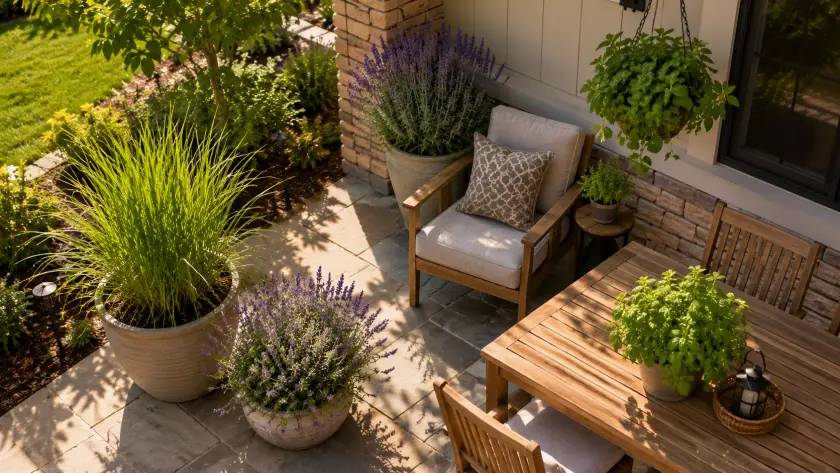
Plants that keep bugs away work most effectively when positioned with intention rather than placed randomly across a garden or home. The goal is creating overlapping scent zones that insects encounter before reaching human occupants — not scattering plants where they look nice regardless of practical effect.
Outdoor patio and seating areas: Citronella grass and lemongrass around the perimeter, lavender and rosemary in containers beside seating, basil and mint on outdoor dining tables. This creates a layered approach where insects encounter repellent scents from multiple directions simultaneously — the most effective configuration for patio plants that keep bugs away.
Vegetable gardens: Marigolds along every bed edge, basil between tomatoes and peppers, catnip in the corners. This combination addresses multiple pest types simultaneously while contributing visual interest and biodiversity. See our wildlife-friendly garden guide for how to balance pest control with pollinator support.
Doorways and entry points: Mint, basil, and lavender positioned near doorways intercept flying insects before they enter the home — the most practical location for plants that keep bugs away indoors from doorway entry.
Indoor windowsills: Basil and mint on kitchen windowsills provide continuous passive deterrence against flies entering through open windows — the most effective indoor plants that keep bugs away placement for kitchen environments.
For complete room-by-room indoor plant styling that incorporates pest-deterrent options alongside decorative companions, our room-by-room styling guide covers every room type. Pair bug-deterrent herbs with striking non-fragrant companions like snake plant, pothos, or ZZ plant for balanced indoor displays that combine function and visual interest.
Caring for Bug-Deterrent Plants
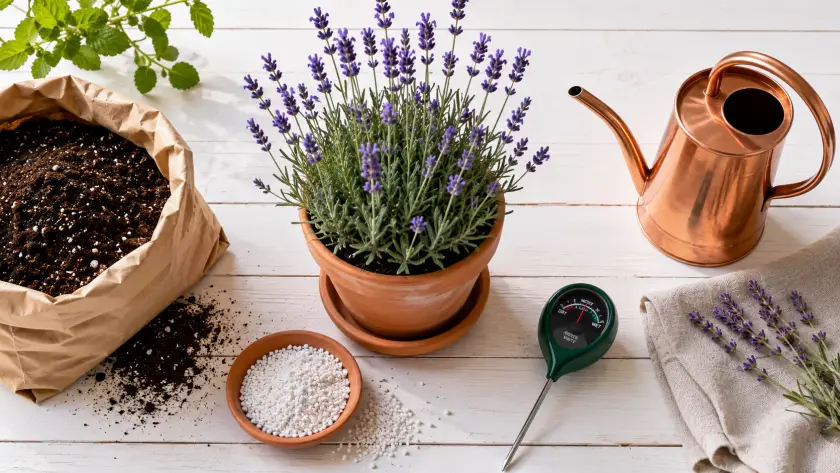
Most plants that keep bugs away share broadly similar care requirements — full sun or bright indirect light, well-draining soil, and moderate watering. A few specifics worth noting:
Watering: Mediterranean herbs — lavender, rosemary, thyme — prefer dry conditions and should dry out completely between waterings. Basil and mint prefer consistent moisture. Our complete watering guide covers exact moisture requirements for every herb type. If your herbs are showing signs of stress, our yellow leaves guide and overwatering signs guide cover the most common care problems.
Soil: All herbs on this list perform best in well-draining soil — our best soil mix guide covers the ideal blend for container herb growing.
Fertilizing: Herbs need light feeding during the growing season — monthly applications of half-strength balanced fertilizer support healthy, oil-rich growth. Over-fertilizing produces lush but less aromatic growth. Our fertilizing guide covers seasonal feeding schedules for every herb type.
Repotting: Container herbs need repotting when roots emerge from drainage holes — typically annually for fast-growing mint and basil. Our how to repot guide covers every step, and our repotting mistakes guide prevents the most common herb repotting errors.
Pet Safety and Bug-Deterrent Plants
Several popular plants that keep bugs away carry genuine toxicity concerns for cats and dogs — including eucalyptus, citronella geranium, and chrysanthemums. Always verify safety before positioning plants in homes with pets.
✅ Dog safe plants that keep bugs away:
- Lavender — generally safe
- Lemon balm — completely non-toxic
- Rosemary — safe in normal quantities
- Basil — safe
⚠️ Keep away from pets:
- Eucalyptus — toxic to cats and dogs
- Chrysanthemums — toxic to cats and dogs
- Citronella geranium — mildly toxic
For complete pet-safe garden planning, our cat-friendly plants guide and dog-friendly plants guide cover every safe option. For broader indoor plant safety guidance, our air-purifying indoor plants guide covers additional non-toxic options that complement bug-deterrent herbs beautifully.
Frequently Asked Questions
What are the best plants that keep bugs away? The most effective plants that keep bugs away are lavender, citronella grass, basil, mint, and rosemary — all producing volatile organic compounds that mosquitoes, flies, and gnats actively avoid. For maximum effectiveness, combine multiple species rather than relying on any single plant — overlapping scent zones from citronella around the patio perimeter, lavender beside seating, and basil on dining tables creates genuinely meaningful protection across an outdoor space.
What are the best indoor plants that keep bugs away? The best indoor plants that keep bugs away are basil and mint — both growing readily on bright windowsills and releasing repellent oils continuously without needing to be touched. Position on kitchen windowsills and near doorways to create natural scent barriers at the points where insects enter. Lavender near bedroom windows also provides indoor protection against moths and flies in sleeping spaces.
Do plants that keep bugs away from vegetable gardens actually work? Yes — plants that keep bugs away from vegetable gardens genuinely reduce pest pressure when used as companion plants. Marigolds are the most effective broad-spectrum option, deterring whiteflies, aphids, and mosquitoes while protecting neighbouring vegetable crops. Basil planted between tomatoes specifically deters tomato hornworm and improves the health of surrounding crops. Combined with good garden hygiene and physical pest barriers, companion planting plants provide meaningful integrated pest management.
What are the best patio plants that keep bugs away? The most effective patio plants that keep bugs away are citronella grass in large containers at patio edges, lavender in sunny containers beside seating, and basil and mint on outdoor tables. Position all plants in full sun where afternoon warmth maximises essential oil release — a shaded plant releases significantly fewer repellent compounds than the same plant in direct sun. See our mosquito repellent plants guide for the complete outdoor placement strategy.
Are there perennial plants that keep bugs away? Yes — lavender, rosemary, catnip, lemon balm, and mint are all perennial plants that keep bugs away, returning reliably each year without replanting. These represent the best long-term investment in natural garden pest control, growing larger and more effective each season. Supplement perennials with annual marigolds and basil each spring for complete seasonal coverage.
What are low maintenance plants that keep bugs away? The most reliable low maintenance plants that keep bugs away are lavender, rosemary, and marigolds — all drought-tolerant, widely available, and requiring minimal care once established in a sunny position. All three are among the 35 low-maintenance plants that thrive with minimal intervention. For beginners, see our best indoor plants for beginners guide for starting with the most forgiving options before expanding the collection.
What plants that keep bugs away are safe for dogs? Dog safe plants that keep bugs away include lavender, lemon balm, rosemary, and basil — all non-toxic and effective simultaneously. Avoid eucalyptus, chrysanthemums, and citronella geranium in gardens with dogs. See our dog-friendly plants guide for a complete safe companion planting list.
Do flowering plants keep bugs away? Yes — several flowering plants that keep bugs away are among the most effective options available. Marigolds, lavender, chrysanthemums, and catnip all produce repellent compounds in their flowers as well as their foliage, making them effective during their bloom periods. Marigolds and chrysanthemums are particularly valuable as flowers and plants that keep bugs away from vegetable garden borders.
Related Guides
- Mosquito Repellent Plants Guide
- Best Low Maintenance Outdoor Plants
- Wildlife Friendly Garden Guide
- 35 Low Maintenance Plants That Thrive
- Best Indoor Plants for Beginners
- Air Purifying Indoor Plants
- Best Smelling Indoor Plants
- Low Light Hanging Plants Guide
- Cat Friendly Plants Guide
- Dog Friendly Plants Guide
- 33 Best Bathroom Plants
- Complete Indoor Light Guide
- Complete Watering Guide
- Signs You’re Overwatering
- Humidity Hacks Guide
- Best Soil Mix Guide
- Fertilizing Indoor vs Outdoor
- How to Repot a Plant
- Repotting Mistakes to Avoid
- How to Propagate Houseplants
- Why Leaves Turn Yellow
- Leaf Curl Browning Droop Guide
- How to Revive a Dying Plant
- Snake Plant Care Guide
- Peace Lily Care Guide
- Pothos Care Guide
- ZZ Plant Care Guide
- Aloe Vera Care Guide
- Money Tree Care Guide
- Christmas Cactus Care Guide
- Spider Plant Care Guide
- Colorful Foliage Indoor Plants
- 20 Oversized Indoor Plants
- How to Style Indoor Plants by Room
- How to Decorate Bedroom with Plants
- Container Gardening on Patios
- Rare Houseplants Guide
- Browse All Outdoor Plants →
- Browse All Indoor Plants →
- Browse All Plant Care Guides →
Final Thoughts
The most honest thing to say about plants that keep bugs away is that they work — meaningfully, measurably, and beautifully — without being a complete solution to every pest situation. A garden thoughtfully planted with lavender, citronella, basil, and rosemary will be a noticeably less mosquito-hospitable environment than one without them. A kitchen windowsill with basil and mint will see fewer flies than one without. These are real effects, not aspirational ones.
What plants offer that chemical repellents cannot is permanence, aesthetics, and compounding value — each year, a perennial lavender plant or rosemary bush grows larger, more fragrant, and more effective. The investment made in planting them improves every summer that follows without any additional cost or effort. And alongside their pest deterrent function, they provide fragrance, culinary herbs, pollinator habitat, and the quiet satisfaction of watching living things grow and thrive in spaces you’ve created for them.
Start with one or two well-positioned plants — lavender beside the most-used outdoor seating, basil on the kitchen windowsill — and build gradually from there. The cumulative effect of a thoughtfully planted collection of natural plants that keep bugs away genuinely transforms the experience of both outdoor and indoor spaces in ways that no spray or candle quite matches.
According to the Royal Horticultural Society (RHS), aromatic herbs and fragrant flowering plants form a cornerstone of effective wildlife-friendly garden design — providing natural pest deterrence while simultaneously supporting beneficial insects, pollinators, and the broader garden ecosystem that keeps pest populations in natural balance. 🌿


[…] Plants that keep bugs away […]
[…] Plants that keep bugs away […]
[…] Plants that keep bugs away […]
[…] Plants that keep bugs away […]
[…] For pest support, read how to keep pests away from outdoor plants and plants that keep bugs away. […]
I don’t think the title of your article matches the content lol. Just kidding, mainly because I had some doubts after reading the article. https://accounts.binance.com/es-AR/register?ref=UT2YTZSU
I don’t think the title of your article matches the content lol. Just kidding, mainly because I had some doubts after reading the article. https://www.binance.bh/register?ref=IHJUI7TF
Your article helped me a lot, is there any more related content? Thanks! https://www.binance.com/register?ref=W49FLGDN