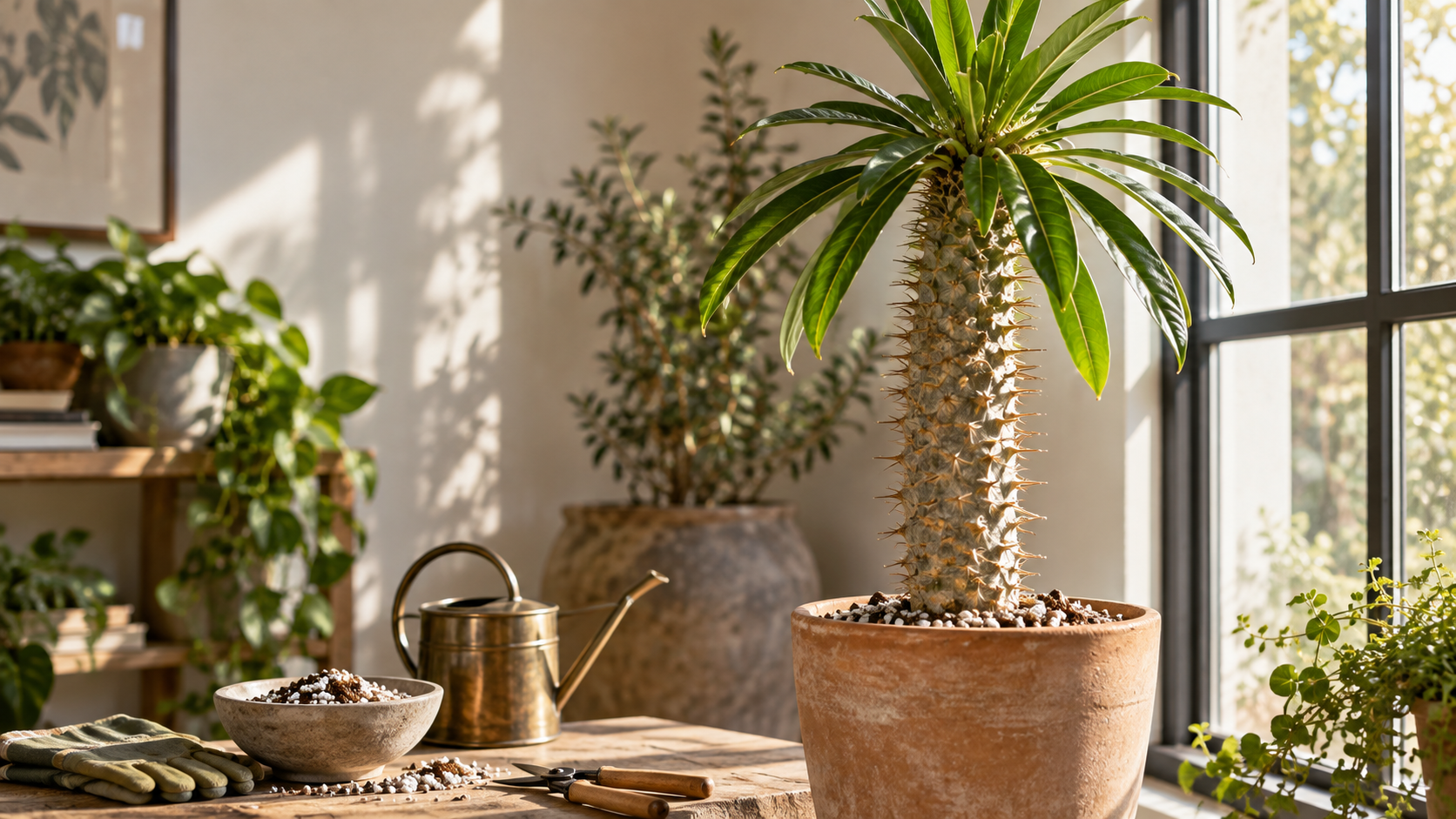
The Madagascar palm plant has the dramatic silhouette of a miniature palm tree, the toughness of a succulent, and a thorn-covered trunk that makes it almost impossible to overlook. Despite its common name, however, this unusual houseplant is not actually a palm.
Known botanically as Pachypodium lamerei, the Madagascar palm is a succulent species with a thick water-storing trunk, sharp spines, and clusters of narrow green leaves near the top. Those features tell you quite a lot about how the plant wants to be treated. Bright light, excellent drainage, careful watering, and warm temperatures matter far more than the humid conditions associated with many true palms.
Learning how to care for a Madagascar palm plant is relatively straightforward once you understand this difference. In fact, many problems begin when gardeners water it as if it were a tropical foliage plant instead of treating it like a drought-adapted succulent.
This Madagascar palm care guide covers 11 practical growing tips, including placement, soil, sunlight, watering, fertilizing, pruning, pest prevention, repotting, propagation, and seasonal care. Whether yours lives beside a sunny window or spends warm summers outdoors, these basics can help you build a much more reliable routine.
You can also explore more practical guides in the Indoor Plants and Plant Care sections from Patch Plants.
QUICK ANSWER
How Do You Care for a Madagascar Palm Plant?
Grow a Madagascar palm plant in very bright light, preferably with direct sun once it has been properly acclimated. Plant it in a fast-draining cactus or succulent mix and use a container with drainage holes.
Allow the potting mix to dry substantially before watering again, especially during cooler or dormant periods. Keep the plant warm, reduce watering in winter, and fertilize modestly during active spring and summer growth.
Most important: treat Pachypodium lamerei as a succulent rather than a true palm. Overwatering and poorly draining soil are among the biggest risks.
PATCH PLANTS SUMMARY
Key Takeaways
- The Madagascar palm is Pachypodium lamerei, a succulent rather than a true palm.
- Give it abundant bright light and gradually acclimate it to strong direct sunlight.
- Use fast-draining cactus or succulent soil in a container with drainage holes.
- Let the soil dry significantly between waterings instead of keeping it constantly moist.
- Reduce watering considerably when growth slows during fall and winter.
- Feed moderately during active growth rather than fertilizing year-round.
- Repot only when necessary and avoid dramatically oversized containers.
- Sharp spines and irritating sap mean careful placement and handling are important.
- Watch for scale, mealybugs, spider mites, root problems, and unusual trunk softness.
- Seasonal leaf loss can occur and does not automatically mean the plant is dying.
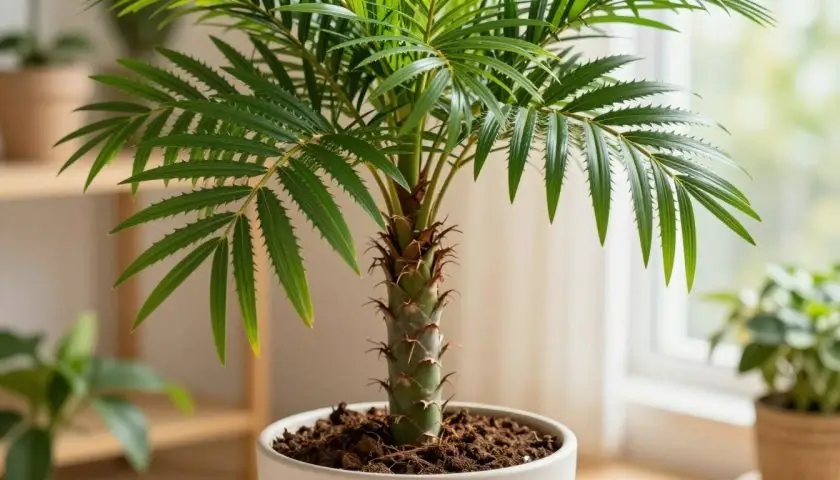
What Is a Madagascar Palm Plant?
The Madagascar palm plant is commonly grown for its unusual architectural appearance. Its botanical name is Pachypodium lamerei, and despite the word “palm” in its common name, it is not a member of the palm family.
The plant develops a thick trunk capable of storing water. Sharp spines run along the trunk, while long, narrow leaves develop toward the growing points. Mature plants can become impressive specimens, although container-grown plants generally remain much more manageable than plants growing outdoors in ideal conditions.
Is a Madagascar Palm a Succulent?
Yes. Understanding that the Madagascar palm is a succulent plant is probably the single most useful piece of information for successful care.
Its water-storing trunk allows it to tolerate periods of dryness. Constantly wet soil therefore creates a very different environment from the one its growth habit is adapted to.
This is why Madagascar palm watering and soil drainage deserve particular attention.
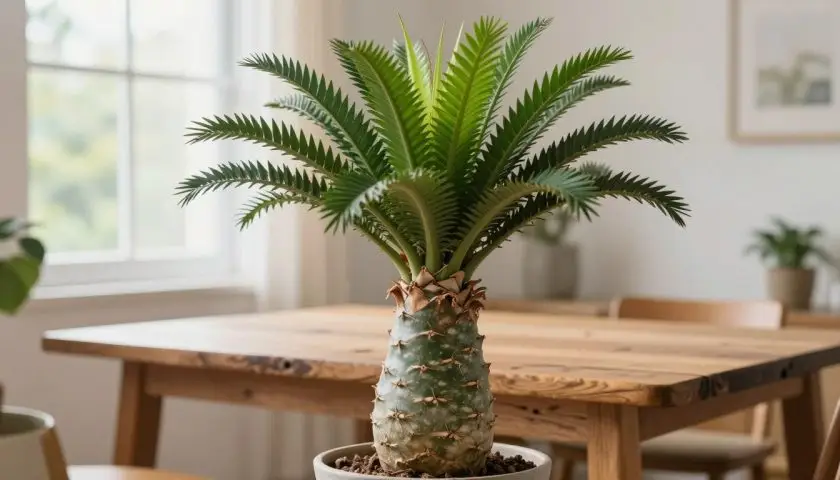
Tip 1: Choose a Safe Location for Your Madagascar Palm Plant
Before worrying about fertilizer or pruning, decide where the plant will live. Proper placement affects light exposure, temperature, stability, and household safety.
Choose a Bright and Stable Position
When growing Madagascar palm indoors, choose one of the brightest locations available. A sunny window can be particularly useful because this is not a low-light houseplant.
The container should sit on a stable surface. As the trunk grows taller, a plant in a lightweight or narrow pot can become top-heavy.
Keep the Spines Away From Busy Areas
A Madagascar palm has serious spines, so the corner of a busy hallway is not an ideal location. Keep it away from areas where people may accidentally brush against the trunk.
Extra care is sensible in homes with young children or pets. Its sharp spines can cause physical injury, and plant sap should also be handled carefully.
| Factor | Good Choice | Avoid |
|---|---|---|
| Light | Very bright window | Dark interior corner |
| Placement | Stable low-traffic area | Busy walkway |
| Container | Stable pot with drainage | Unstable decorative pot |
| Temperature | Warm and protected | Cold drafts |
Tip 2: Use the Best Soil for a Madagascar Palm
The best soil for Madagascar palm plants should drain quickly and contain enough coarse material to prevent the root zone from staying wet for long periods.
Ordinary moisture-retentive indoor potting soil used by itself may remain damp longer than this succulent prefers.
Start With Cactus or Succulent Mix
A commercial cactus or succulent potting mix provides a convenient starting point. Depending on its texture, additional perlite, pumice, or suitable horticultural grit can improve aeration and drainage.
The final mix should feel loose rather than dense and compacted.
If you want to understand how different potting materials behave, read the Patch Plants guide to the best soil mix for different plants.
Madagascar Palm Soil Requirements at a Glance
| Soil Feature | Goal | Why It Matters |
|---|---|---|
| Drainage | Fast | Reduces prolonged root-zone moisture |
| Texture | Loose and porous | Supports root aeration |
| Container | Drainage holes | Allows excess water to escape |
| Moisture | Allowed to dry substantially | Matches succulent-style care |
How Much Soil Does Your Madagascar Palm Pot Need?
Repotting into a larger container? Instead of guessing how many bags of potting mix you need, use the free Patch Plants Soil Calculator.
Enter your planter dimensions to estimate soil volume before mixing your cactus or succulent growing medium.
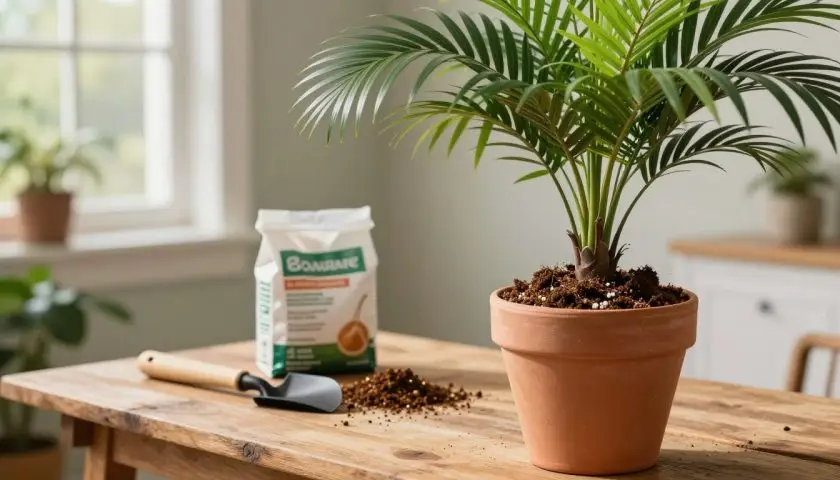
Tip 3: Choose a Pot With Excellent Drainage
Good Madagascar palm soil cannot compensate for a container that traps water. Always check the drainage situation before planting.
Drainage Holes Are Essential
After watering, excess moisture should be able to escape through the bottom of the container. Empty decorative saucers or cachepots if water accumulates in them.
Leaving the pot standing in water defeats the purpose of using a fast-draining mix.
Avoid Oversized Containers
Moving a relatively small root system into a huge volume of soil can make moisture management more difficult because all that extra growing medium takes longer to dry.
When repotting Madagascar palm plants, move up gradually rather than choosing an unnecessarily large container.
Think About Stability Too
A tall Pachypodium lamerei can become top-heavy. Choose a container that balances adequate drainage with enough physical stability to support the plant.
Tip 4: Meet Madagascar Palm Sunlight Requirements
Light is one area where the Madagascar palm differs dramatically from many ordinary indoor plants. It appreciates abundant light and can perform poorly when kept in a dark room.
Give Indoor Plants Your Brightest Window
When assessing Madagascar palm sunlight requirements, look for the brightest suitable indoor location available. A sunny south- or west-facing exposure may be useful, depending on your home and climate.
A plant receiving inadequate light may develop weaker, stretched growth as it reaches toward the brightest available source.
Acclimate Plants Before Increasing Direct Sun
Do not suddenly move a plant accustomed to indoor conditions into hours of intense outdoor sunlight. Even a sun-loving plant can suffer leaf damage when the change is abrupt.
Increase outdoor sun exposure gradually, allowing the plant time to adapt.
Watch the Plant’s Response
Weak elongated growth can suggest inadequate light, while scorched areas following an abrupt move outdoors may indicate that the transition happened too quickly.
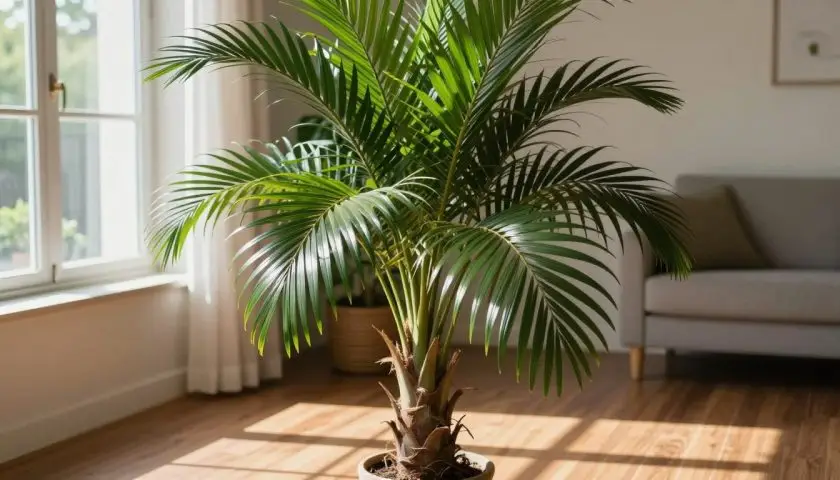
Tip 5: Water a Madagascar Palm Only After the Soil Dries
Learning how often to water Madagascar palm plants becomes easier when you stop looking for a fixed number of days.
A watering calendar cannot account for container size, soil composition, sunlight, indoor temperature, season, plant size, or humidity. The soil itself is a better guide.
Check Below the Surface
Do not judge moisture only by looking at the top of the pot. The surface can appear dry while deeper soil remains damp.
Check several inches into the growing medium where practical. If it still feels noticeably damp, wait before watering again.
Water Thoroughly When Watering Is Needed
Once the potting mix has dried sufficiently, water the root zone thoroughly and allow excess moisture to drain from the container.
Discard water collected beneath the pot rather than allowing roots to sit in it.
Avoid Frequent Small Drinks
Repeatedly adding tiny amounts of water can create uneven moisture through the container. A better approach is usually to wait until watering is actually needed, then water properly and allow excess water to escape.
For Madagascar palm watering, think “check first, water second.” A fixed weekly schedule is less useful than observing how quickly your specific potting mix dries.
Madagascar Palm Watering by Season
| Season | Growth | Watering Approach |
|---|---|---|
| Spring | Increasing | Monitor more frequently as growth resumes |
| Summer | Active | Water after soil dries sufficiently |
| Fall | Slowing | Begin reducing frequency |
| Winter | Slow/dormant | Water much more cautiously |
Tip 6: Fertilize Madagascar Palm During Active Growth
Fertilizing Madagascar palm plants can support active growth, but this is not a plant that needs constant heavy feeding.
Feed When the Plant Is Growing
Spring and summer are the logical periods to consider feeding because warmer temperatures and brighter light generally correspond with active growth.
A balanced fertilizer suitable for succulents or container plants can be used according to its label directions.
Avoid Overfertilizing
Extra fertilizer does not compensate for inadequate light, poor drainage, or incorrect watering. Excessive fertilizer can create its own problems.
If growth looks weak, check light exposure and root conditions before assuming the plant simply needs more food.
Reduce or Stop Feeding During Dormancy
When growth slows substantially in fall and winter, routine fertilizing is generally unnecessary. Resume feeding when active growth returns.
Tip 7: Prune a Madagascar Palm Safely
A Madagascar palm generally does not need aggressive pruning. Most Madagascar palm pruning should focus on dead, damaged, or problematic growth rather than repeatedly cutting healthy tissue for appearance.
Use Clean, Sharp Tools
Clean pruning tools create more controlled cuts and reduce the risk of transferring plant pathogens from one specimen to another.
Our Pruning Basics guide covers the fundamentals of choosing where and how to make clean plant cuts.
Be Extremely Careful Around the Spines
This is not a plant to grab casually while pruning. Thick gardening gloves can help protect your hands from the sharp spines, although you should still work slowly and deliberately.
Avoid Contact With Sap
Take precautions to prevent sap from contacting your skin or eyes. Eye protection can be sensible when making cuts where sap may splash.
If sap gets onto your skin, wash the area thoroughly. If it gets into the eyes or causes significant irritation, seek appropriate medical guidance.
SAFETY NOTE
Handle Pachypodium lamerei Carefully
Madagascar palm has sharp spines and irritating sap. Keep it away from children, pets, and high-traffic areas, and use appropriate hand and eye protection when pruning or repotting.
Tip 8: Watch for Madagascar Palm Pests and Diseases
A healthy Madagascar palm is relatively tough, but indoor conditions can still allow pest populations to establish themselves.
Common Madagascar Palm Pests
Potential problems include:
- Mealybugs
- Scale insects
- Spider mites
- Aphids on tender growth
Inspect the plant regularly, especially around new leaves, stem crevices, and other protected areas.
Isolate an Infested Plant
If you discover pests on an indoor specimen, move it away from other houseplants while you identify and manage the infestation.
This simple step can prevent a small problem on one plant from becoming a larger problem throughout your indoor plant collection.
Root Problems Are Often More Serious
For a succulent like Pachypodium lamerei, continuously wet soil can be more concerning than occasional dryness.
A trunk that becomes unexpectedly soft, particularly when combined with persistently wet soil or unhealthy roots, deserves immediate investigation.
Madagascar Palm Problems and What They May Mean
| Problem | Possible Cause | What to Check |
|---|---|---|
| Yellow leaves | Moisture stress or seasonal change | Soil moisture, season and roots |
| Soft trunk | Possible serious moisture/root problem | Drainage and root condition |
| Leggy growth | Insufficient light | Window exposure and light intensity |
| Fine webbing | Possible spider mites | Leaf undersides and new growth |
| White cottony material | Possible mealybugs | Leaf joints and protected areas |
| Winter leaf loss | Possible seasonal dormancy | Temperature, light and trunk condition |
If your plant is declining and the cause is unclear, work through the diagnostic steps in our guide to reviving a dying plant.
Tip 9: Repot a Madagascar Palm Only When Needed
Repotting Madagascar palm plants requires a little more care than repotting an ordinary houseplant because of the thorn-covered trunk.
Look for Signs the Plant Needs More Room
Roots emerging through drainage holes, a root system filling the available container, declining pot stability, or a plant becoming severely top-heavy can all indicate that it is time to assess whether repotting is needed.
Move Up Gradually
Choose a container only moderately larger than the current one. An enormous pot introduces a large volume of unused soil that can remain wet longer than necessary.
Keep the Trunk at the Correct Depth
When transferring the plant, avoid unnecessarily burying the trunk deeper than it was previously growing.
Protect Yourself While Repotting
Wear suitable protective gloves and work carefully around the spines. A large specimen may be awkward to handle, so prepare the new container and potting mix before removing the plant from its old pot.
Before starting, use the soil volume calculator to estimate how much growing medium your new container requires.
Tip 10: Propagate Madagascar Palm With Patience
Madagascar palm propagation is possible, although it is not necessarily as quick or straightforward as propagating common trailing houseplants.
Growing Madagascar Palm From Seed
Seed propagation allows a new Pachypodium lamerei to develop naturally from an early stage. Fresh seed, warmth, appropriate moisture, and a well-draining propagation medium are important considerations.
Patience matters. Do not expect a young seedling to develop the dramatic appearance of a mature Madagascar palm immediately.
Can Madagascar Palm Be Propagated From Cuttings?
Cuttings may sometimes be discussed as a propagation option, particularly where branching material is available, but they require more careful handling and are not necessarily as straightforward as propagating many ordinary houseplants.
Any cut material also exposes sap, making gloves and careful handling important.
Do Not Keep Propagation Medium Waterlogged
The same general concern about excessive moisture applies to young plants. A well-draining medium helps prevent prolonged saturation around developing roots.
Tip 11: Adjust Madagascar Palm Care With the Seasons
The final secret to successful Madagascar palm indoor care is accepting that the plant does not behave exactly the same way every month.
Light levels, temperature, growth rate, and water use change through the year. Your care routine should change too.
Spring Madagascar Palm Care
As light and warmth increase, watch for signs of renewed growth. Increase monitoring of soil moisture as the plant begins using water more actively.
Spring is also a practical time to assess whether repotting is necessary.
Summer Madagascar Palm Care
Summer generally brings the strongest growth. Provide abundant light, monitor soil more frequently, and feed appropriately if the plant is actively growing.
Plants moved outdoors should be acclimated gradually to stronger sunlight.
Fall Madagascar Palm Care
As days shorten and growth begins slowing, reduce fertilizer and allow your watering routine to adjust naturally to slower soil drying.
If the plant has spent summer outdoors, move it into protection before cold weather becomes a problem.
Winter Madagascar Palm Care
During winter, Madagascar palm leaf drop may occur as the plant responds to reduced light and cooler conditions.
Do not respond automatically by adding more water. Instead, check the trunk, soil moisture, temperature, and overall condition of the plant.
Water use is usually much lower when active growth slows, so winter is a particularly important time to avoid keeping the potting mix continuously wet.
Madagascar Palm Seasonal Care Chart
| Season | Water | Fertilizer | Main Focus |
|---|---|---|---|
| Spring | Increase as active growth resumes | Resume when appropriate | Growth and repotting assessment |
| Summer | Monitor regularly | Active-season feeding | Light and healthy growth |
| Fall | Gradually reduce | Reduce/stop | Prepare for slower growth |
| Winter | Minimal and cautious | Usually none | Warmth and rot prevention |
Madagascar Palm Plant Care: Quick Answers
Is a Madagascar palm really a palm tree?
No. Pachypodium lamerei is a succulent rather than a true palm. Its thick trunk stores water, which is why Madagascar palm care has more in common with succulent care than traditional palm care.
How much sunlight does a Madagascar palm need?
A Madagascar palm prefers very bright conditions and can tolerate substantial direct sunlight once properly acclimated. Indoors, place it near one of your brightest suitable windows.
How often should I water a Madagascar palm?
There is no universal watering interval. Allow the potting mix to dry substantially before watering again, then water thoroughly and let excess moisture drain. Reduce watering when growth slows in winter.
What soil is best for Madagascar palm?
Use a loose, fast-draining cactus or succulent mix. Perlite, pumice, or suitable horticultural grit can be added when extra drainage and aeration are needed.
Why is my Madagascar palm losing leaves?
Leaf loss can result from environmental stress, moisture problems, temperature changes, or seasonal dormancy. Winter leaf drop can be natural, so inspect the trunk and growing conditions before assuming the plant is dying.
Can a Madagascar palm grow indoors?
Yes. Growing Madagascar palm indoors is possible when you can provide enough light, warmth, good drainage, and enough room to keep its thorny trunk away from people and pets.
KEEP LEARNING
More Plant Care Help From Patch Plants
A Madagascar palm becomes much easier to manage once you understand how soil, light, watering, containers, and seasonal growth work together. Continue exploring these resources from Patch Plants:
Final Thoughts on Madagascar Palm Plant Care
The Madagascar palm plant looks exotic, but its basic care requirements make much more sense once you remember that Pachypodium lamerei is a succulent rather than a true palm.
Start with abundant light, a stable container, drainage holes, and fast-draining soil. Then allow the potting mix to dry substantially before watering again. Those few decisions can prevent many of the problems associated with unsuccessful Madagascar palm care.
Seasonal adjustment matters too. A plant growing actively in bright summer conditions will not use water in the same way during a cool, dim winter. Watch the plant and its soil instead of following the same routine every week of the year.
Finally, remember the practical safety side. The trunk is covered with sharp spines, and the sap requires careful handling. Place the plant thoughtfully and use protective equipment when repotting or pruning.
If your Madagascar palm needs a new container, use the free Patch Plants Soil Calculator before you start. It can help you calculate how much potting mix your new planter needs.
With strong light, sensible watering, excellent drainage, and a little patience, this unusual succulent can become one of the most distinctive plants in your indoor collection.
Frequently Asked Questions About Madagascar Palm Plants
Is Pachypodium lamerei actually a palm?
No. Despite its common name, Pachypodium lamerei is a succulent rather than a true palm. Its thick trunk stores water, which is an important clue to its drought-adapted care requirements.
What is the best soil for a Madagascar palm plant?
A fast-draining cactus or succulent mix is a good starting point. The soil should remain loose and porous rather than dense and water-retentive. Perlite, pumice, or suitable horticultural grit can improve drainage when necessary.
How often should I water a Madagascar palm?
Do not use a fixed weekly schedule. Check the growing medium and allow it to dry substantially before watering again. When watering is needed, water thoroughly and allow excess moisture to drain from the container.
What are Madagascar palm sunlight requirements?
Madagascar palm prefers very bright conditions and can grow with substantial direct sunlight once properly acclimated. Indoors, place it near a bright window and avoid keeping it permanently in a dark corner.
Can a Madagascar palm grow indoors?
Yes. Madagascar palm can grow indoors when provided with abundant light, warm conditions, fast-draining soil, appropriate watering, and a safe location away from busy walkways.
Why is my Madagascar palm losing leaves in winter?
Seasonal leaf loss can occur when light levels and temperatures fall and the plant enters a slower period of growth. Reduce watering accordingly, but also inspect the trunk and roots if leaf loss is accompanied by softness, persistent wetness, or other signs of decline.
When should I repot a Madagascar palm?
Consider repotting when the root system has filled the available container, roots emerge from drainage holes, or the plant has become unstable. Move into a moderately larger pot with drainage holes rather than an excessively large container.
How do you propagate a Madagascar palm?
Madagascar palm can be propagated from seed. Fresh seed, warmth, patience, and an appropriately draining propagation medium are important. Cuttings may also be discussed for suitable branching material, although careful handling of the plant’s sap is required.
What pests affect Madagascar palm plants?
Potential indoor pests include mealybugs, scale insects, spider mites, and aphids. Inspect the plant regularly and isolate an affected specimen from other houseplants while you identify and manage the pest.
Why is my Madagascar palm trunk soft?
An unexpectedly soft or mushy trunk can indicate a serious problem, particularly when the soil has remained wet. Check the potting medium, drainage, roots, and base of the plant rather than adding more water automatically.
Is Madagascar palm safe around children and pets?
The plant has very sharp spines and sap that requires careful handling. Keep it somewhere children and pets cannot easily reach or brush against it, and use appropriate protection when pruning or repotting.