In this ZZ plant care guide, you will learn 11 practical tips covering ZZ plant watering, light requirements, soil, fertilizer, repotting, pruning, propagation, pests, and common problems. You can also explore more practical advice in our Indoor Plants guides and Plant Care guides.
ZZ Plant Care at a Glance
Light: Bright, indirect light is ideal, although ZZ plants tolerate lower-light rooms.
Water: Allow the potting mix to dry substantially before watering again.
Soil: Use a loose, well-draining indoor potting mix.
Temperature: Normal warm household temperatures generally work well.
Humidity: Average indoor humidity is usually sufficient.
Fertilizer: Feed lightly during active spring and summer growth.
Difficulty: Beginner-friendly.
PATCH PLANTS SUMMARY
Key Takeaways
- ZZ plants store water in underground rhizomes, so allowing the soil to dry between waterings is important.
- Bright indirect light generally produces stronger growth, although the plant can tolerate lower-light locations.
- A pot with drainage holes and an airy soil mixture helps reduce the risk of root rot.
- Repot only when the plant becomes crowded or its potting mix has deteriorated.
- Remove entire damaged stems near the base instead of trimming individual leaflets.
- Rhizome division is generally the quickest method of ZZ plant propagation.
Zamioculcas Zamiifolia Plant Care Essentials for Beginners
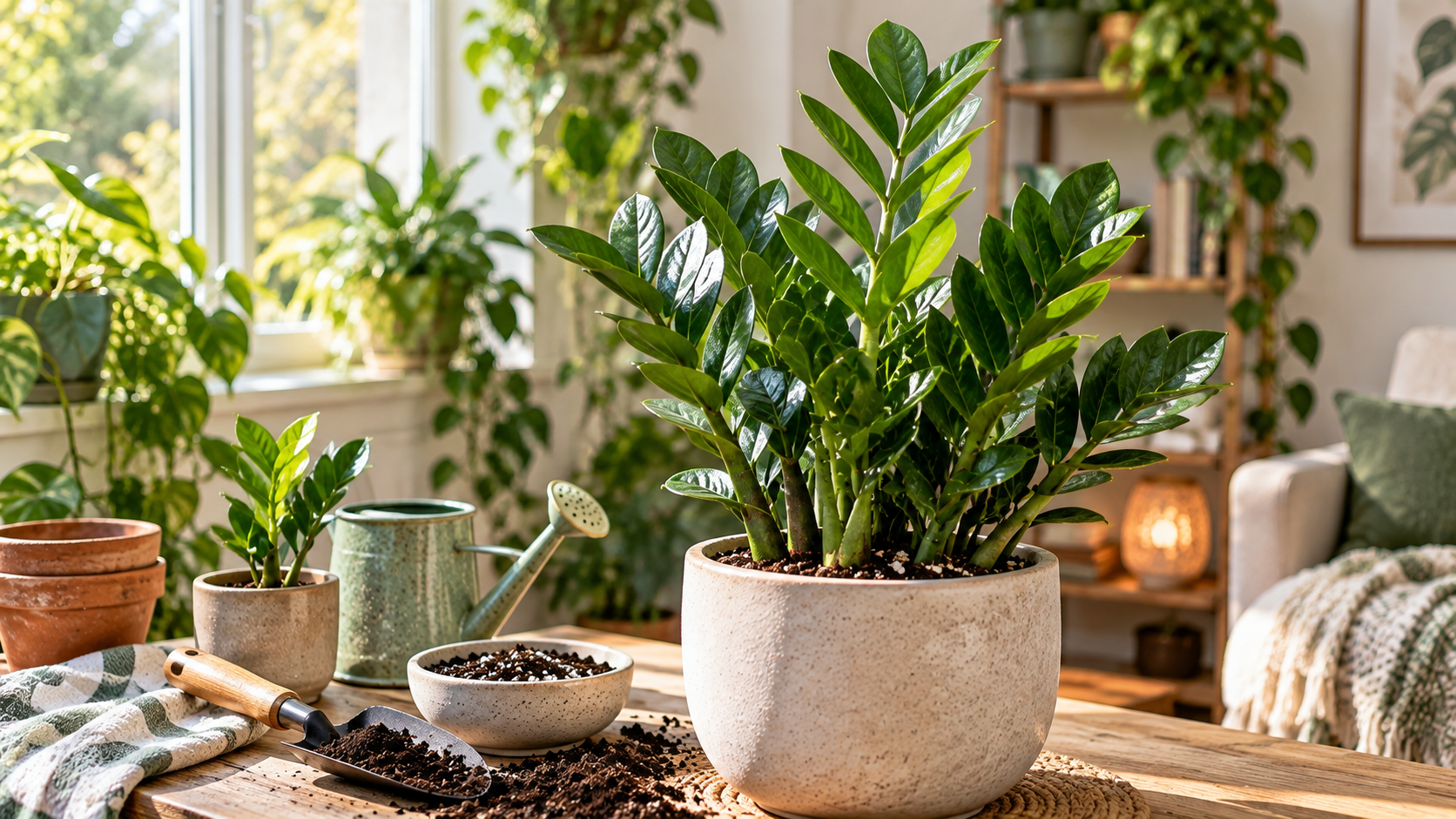
Zamioculcas zamiifolia, commonly called the ZZ plant, has thick underground rhizomes that store water. Those reserves help explain why established plants tolerate missed waterings better than many other indoor plants.
The plant’s upright stems carry rows of smooth, waxy leaflets. Healthy foliage normally appears firm and glossy. Understanding this structure makes caring for a ZZ plant much easier because many common problems begin below the soil rather than on the leaves.
If you are building an indoor plant collection, browse the Patch Plants Indoor Plants section. You can also compare its needs with our guides to Mini Monstera care, Schefflera plant care, and Maidenhair Fern care.
Choose a Healthy ZZ Plant
When choosing a ZZ plant, look for firm upright stems and healthy green leaflets. Avoid specimens with widespread yellowing, mushy stems, obvious insects, or heavily waterlogged potting soil.
Check around the leaf joints and underneath the foliage for pest activity. The soil should not smell sour or rotten. Starting with a healthy specimen makes long-term Zamioculcas zamiifolia care considerably easier.
Understand the Rhizomes and Roots
Below the soil are thick rhizomes that store moisture and nutrients. This is one reason a ZZ plant should not remain constantly wet.
The rhizomes also matter when you learn how to repot a ZZ plant or propagate one through division. Healthy rhizomes should generally feel firm rather than soft and mushy.
Tip 1: Give Your ZZ Plant the Right Light
Understanding ZZ plant light requirements is one of the easiest ways to improve growth. Although these plants are famous for tolerating low light, tolerating a condition is not necessarily the same as thriving in it.
Use Bright, Indirect Light for Healthy Growth
A position receiving plenty of bright, indirect light is usually ideal. Filtered light supports healthy foliage while avoiding the stress caused by intense direct afternoon sun.
A room near an east-facing window can work nicely. A brighter south- or west-facing window may also work when the plant is positioned farther from the glass or protected by a sheer curtain.
Can a ZZ Plant Grow in Low Light?
Yes. A ZZ plant can tolerate lower-light rooms better than many popular houseplants. Growth, however, may become slower.
Because plants generally use water more slowly under dimmer conditions, check the potting mix carefully before watering. This connection between light and moisture is an important part of successful ZZ plant indoor care.
Avoid Harsh Direct Afternoon Sun
Intense direct sunlight can scorch foliage. Bleached patches, crispy areas, or sudden discoloration after moving the plant closer to a bright window may indicate excessive direct sun exposure.
| Light Level | Expected Growth | What to Watch |
|---|---|---|
| Bright indirect light | Best overall growth | Maintain normal care |
| Low light | Slower growth | Avoid excessive watering |
| Strong direct sun | Possible stress | Watch for scorching |
Tip 2: Build a Sensible ZZ Plant Watering Routine
Overwatering is one of the most important problems to avoid when learning how to care for Zamioculcas zamiifolia. Its rhizomes already store moisture, so constantly wet soil is unnecessary.
Check the Soil Before Watering
Rather than watering automatically every Saturday or following another rigid schedule, inspect the potting mix first.
Push a finger or wooden stick into the soil. If substantial moisture remains, wait. Water when the potting mix has dried sufficiently for your particular growing conditions.
Water Thoroughly
When watering is needed, thoroughly moisten the root ball until excess water begins escaping through the drainage holes. Then allow the pot to drain.
Do not leave the nursery pot standing in a saucer or decorative container filled with water.
Adjust Watering With the Seasons
A ZZ plant growing in warm, bright conditions may use moisture faster than the same plant in a cool, low-light room. Winter growth may also slow, increasing the amount of time the soil needs to dry.
That is why a fixed ZZ plant watering schedule is less reliable than checking the plant and its soil.
Tip 3: Use the Best Soil for ZZ Plant Roots
The best soil for a ZZ plant balances some moisture retention with excellent drainage and airflow. Dense soil that remains saturated for long periods can create unhealthy conditions around the rhizomes.
Create an Airy ZZ Plant Soil Mix
A quality indoor potting mix can form the base. Depending on its texture, you can improve aeration with materials such as perlite, pumice, or coarse bark.
- Potting mix: provides the main growing medium.
- Perlite: creates additional air spaces and improves drainage.
- Pumice: adds porous mineral structure.
- Coarse bark: helps prevent the mixture from becoming excessively compacted.
For a deeper explanation of different growing media, read The Best Soil Mix for Every Type of Plant.
Calculate How Much Potting Mix You Need
Repotting into a larger container? Instead of guessing how much potting mix to purchase, use the free Patch Plants Soil Calculator. Enter your planter measurements to estimate soil volume before buying your mix.
The potting mix calculator is especially useful when you are preparing several containers or moving plants into substantially larger planters.
Tip 4: Choose a Pot With Proper Drainage
Good ZZ plant care depends on the container as much as the soil. At least one unobstructed drainage hole allows excess water to escape after watering.
Avoid Oversized Pots
Moving a small ZZ plant directly into a very large container leaves a large amount of unused potting mix around the root system. That extra soil may remain wet longer than necessary.
When repotting, a modest increase in container size is usually more sensible.
Be Careful With Decorative Cachepots
A decorative outer planter can hide standing water. If your ZZ plant remains inside its original nursery pot, remove it for watering or check the decorative container afterward and empty any collected water.
For more general container-growing advice, explore the Plant Care section.
Tip 5: Maintain Comfortable Temperature and Humidity
ZZ plants adapt well to ordinary indoor environments. A comfortable, reasonably stable household temperature generally suits them.
Avoid Sudden Temperature Changes
Keep the plant away from cold drafts, frequently opened exterior doors during cold weather, and direct blasts from heating or air-conditioning vents.
Sudden environmental changes can stress foliage even when watering and soil conditions are otherwise correct.
Average Household Humidity Is Usually Enough
Unlike moisture-loving plants such as the Maidenhair Fern, ZZ plants normally do not require unusually high humidity.
This makes them considerably easier to position throughout a typical home.
Tip 6: Fertilize ZZ Plants Lightly
A healthy ZZ plant does not require aggressive feeding. During active spring and summer growth, a balanced houseplant fertilizer can provide supplemental nutrients.
Feed During Active Growth
Follow the fertilizer manufacturer’s instructions and avoid applying more than recommended. A diluted feeding approach is often sufficient for these relatively slow-growing plants.
Water-soluble or liquid houseplant fertilizers are convenient because their concentration can be adjusted easily.
Reduce Feeding When Growth Slows
When growth slows significantly during cooler or darker periods, fertilizer demand also declines. Excessive feeding can contribute to mineral buildup in the potting mix.
Watch for Fertilizer Salt Buildup
A white crust on the soil surface or around the container may indicate accumulated minerals. If buildup becomes significant, flushing the potting mix thoroughly with water can help remove excess soluble salts, provided the container drains freely.
Tip 7: Know When and How to Repot a ZZ Plant
ZZ plants grow relatively slowly, so repotting should be based on the plant’s condition rather than performed unnecessarily every year.
Signs Your ZZ Plant Needs Repotting
- Rhizomes are pressing strongly against the container.
- Roots are heavily circling the pot.
- The plant has become unstable or extremely top-heavy.
- The old potting mix has become dense and drains poorly.
- The container has become physically damaged by expanding rhizomes.
Prepare the New Container
Choose a pot only somewhat larger than the current root system. Make sure it contains adequate drainage holes and prepare a fresh, airy ZZ plant soil mix.
If you need to estimate the amount of soil required, enter the container dimensions into our Soil Calculator before preparing your mix.
Inspect the Rhizomes
Carefully slide the plant from its old container. Healthy rhizomes should feel firm. Soft, dark, or foul-smelling tissue can indicate decay.
If damaged tissue must be removed, use clean cutting tools and avoid damaging healthy rhizomes unnecessarily.
Replant at a Similar Depth
Position the root system comfortably inside the new pot and fill around it with fresh potting mix. Avoid burying the stems deeply.
Tip 8: Prune Your ZZ Plant Correctly
Pruning a ZZ plant is simple because the plant does not normally need frequent shaping.
Remove Yellow or Damaged Stems
If an entire stem has deteriorated, remove it close to the base using clean, sharp pruning shears.
Avoid cutting healthy individual leaflets merely to change the plant’s shape. Removing a complete unwanted stem generally produces a cleaner appearance.
Clean Your Tools
Clean pruning tools before and after removing diseased or damaged material. Good tool hygiene reduces the chance of moving potential pathogens from one plant to another.
You can find more maintenance advice in our Pruning Basics guide.
Tip 9: Propagate a ZZ Plant
ZZ plant propagation can be surprisingly interesting because several parts of the plant can produce new growth. The methods vary considerably in speed.
Method 1: Rhizome Division
Division is usually the fastest option for an established plant with multiple rhizomes.
During repotting, carefully separate a healthy section containing a rhizome, roots, and stems. Pot the division into an appropriately sized container containing fresh, well-draining mix.
Method 2: Stem Cuttings
A healthy stem cutting can be rooted in water or a suitable growing medium. This method requires more patience than division because the cutting must develop a new root and rhizome system.
Method 3: Leaf Cuttings
Individual leaflets can also be propagated. This method is slow, sometimes very slow, but it can be an enjoyable experiment for patient indoor gardeners.
| Propagation Method | Relative Speed | Best Use |
|---|---|---|
| Rhizome division | Fastest | Large mature plants |
| Stem cutting | Slow | Creating new plants from stems |
| Leaf cutting | Very slow | Patient propagation projects |
Tip 10: Check for Common ZZ Plant Pests
Healthy ZZ plants are relatively trouble-free, but pests can still appear, particularly when plants are grouped closely with other houseplants.
Check for Scale, Mealybugs, and Spider Mites
Inspect the undersides of leaves, stem joints, and new growth regularly.
Scale insects can appear as small attached bumps. Mealybugs often look like tiny cottony clusters, while spider mites may produce fine webbing and stippled foliage.
Isolate an Infested Plant
If you discover pests, separate the affected ZZ plant from nearby houseplants while you identify and manage the problem.
Regularly inspecting plants in your indoor garden makes infestations easier to notice before they spread.
Tip 11: Diagnose Common ZZ Plant Problems Early
The final part of good Zamioculcas zamiifolia plant care is learning to read the foliage. Changes in leaf color or stem texture can provide useful clues about what is happening below the surface.
ZZ Plant Leaves Turning Yellow
Yellow leaves can have several causes, but excessive moisture is an important possibility to investigate.
Check the soil before immediately adding more water. If the potting mix is persistently wet, review drainage, watering frequency, pot size, and root health.
Soft or Mushy Stems
Soft stems combined with persistently wet soil can indicate serious moisture-related root or rhizome problems. Remove the plant from its container if necessary and inspect below the soil.
Leggy or Leaning Growth
A plant leaning strongly toward a window may be reaching for additional light. Move it gradually to a brighter position with indirect sunlight rather than immediately pruning healthy growth.
Brown or Crispy Areas
Brown foliage can result from several environmental problems, including inconsistent moisture, excessive direct sun, physical damage, or other stress. Consider the plant’s entire environment rather than diagnosing a problem from one symptom alone.
| Symptom | Possible Cause | What to Check |
|---|---|---|
| Yellow leaves | Excess moisture or natural aging | Soil and drainage |
| Leggy growth | Insufficient light | Plant position |
| Scorched patches | Strong direct sunlight | Window exposure |
| Soft stems/rhizomes | Possible rot | Roots, soil and watering |
ZZ Plant Care Questions Answered Quickly
What is the easiest way to care for a ZZ plant?
Give your ZZ plant bright indirect light, use well-draining soil, and allow the potting mix to dry substantially before watering again. Avoid keeping the rhizomes constantly wet.
Where should I put a ZZ plant indoors?
A room with bright, indirect natural light is ideal. ZZ plants can tolerate lower-light rooms, but growth will generally be slower.
What is the biggest ZZ plant care mistake?
Keeping the potting mix constantly wet is one of the biggest problems. ZZ plants store moisture in their rhizomes and generally perform better when the soil is allowed to dry between waterings.
Is a ZZ plant good for beginners?
Yes. Its drought tolerance, modest humidity requirements, and ability to adapt to different indoor light levels make it a practical beginner houseplant.
Continue Growing With Patch Plants
Healthy plants become much easier to manage when you understand the basics rather than following a rigid care calendar. Explore more resources from Patch Plants:
Final Thoughts on Zamioculcas Zamiifolia Plant Care
Successful Zamioculcas zamiifolia plant care does not require constant intervention. In fact, one of the most useful things you can learn about this plant is when not to water, repot, prune, or fertilize it.
Start with bright indirect light, an appropriately sized container, and a loose ZZ plant soil mix. Check the soil rather than watering on a rigid calendar, and pay attention to how quickly moisture disappears under your home’s particular conditions.
As the plant matures, occasional repotting, light feeding, pruning, and pest inspection should be enough to keep it attractive. If you eventually want another plant, rhizome division, stem cuttings, and even individual leaflets provide propagation options.
And when repotting time arrives, remember that you do not have to guess how much soil to buy. Use the free Patch Plants Soil Calculator to estimate the amount of potting mix required for your container.
Frequently Asked Questions About ZZ Plant Care
How often should I water a ZZ plant?
Water according to soil moisture rather than a fixed schedule. Allow the potting mix to dry substantially before watering again. Light, temperature, pot size, soil composition, and season all affect how quickly the soil dries.
What are the best light conditions for a ZZ plant?
Bright, indirect light is ideal for healthy growth. ZZ plants tolerate lower-light rooms, but growth may become slower. Protect the foliage from harsh direct afternoon sunlight that may cause scorching.
What is the best soil for Zamioculcas zamiifolia?
Use a loose, well-draining indoor potting mix. Perlite, pumice, or coarse bark can be added when additional aeration and drainage are needed. Avoid dense soil that remains saturated for long periods.
Why are my ZZ plant leaves turning yellow?
Yellow leaves can occur for several reasons, including natural aging, but excessive soil moisture is an important cause to investigate. Check the soil, drainage holes, roots, rhizomes, and watering habits before adding more water.
Can a ZZ plant survive in low light?
ZZ plants tolerate low-light indoor conditions surprisingly well, although growth usually becomes slower than it would in bright indirect light. Plants in lower light may also use water more slowly.
How do I repot a ZZ plant?
Move the plant into a container only somewhat larger than its existing root system. Inspect the rhizomes, remove seriously damaged material if necessary, use fresh well-draining potting mix, and position the plant at approximately its previous planting depth.
How can I propagate a ZZ plant?
ZZ plants can be propagated through rhizome division, stem cuttings, or individual leaf cuttings. Division is generally the quickest approach because the separated section already contains established plant structures.
Should I mist my ZZ plant?
Regular misting is generally unnecessary. ZZ plants normally adapt well to ordinary household humidity. Focus instead on suitable light, drainage, soil structure, and appropriate watering.
How should I prune a ZZ plant?
Use clean, sharp pruning tools to remove damaged, yellow, or unwanted stems close to the plant’s base. Removing whole stems usually produces a more natural appearance than trimming individual leaflets.
Does a ZZ plant need fertilizer?
ZZ plants are relatively light feeders. A balanced houseplant fertilizer can be used during active spring and summer growth according to the product directions. Avoid excessive feeding and reduce fertilizer when growth slows.