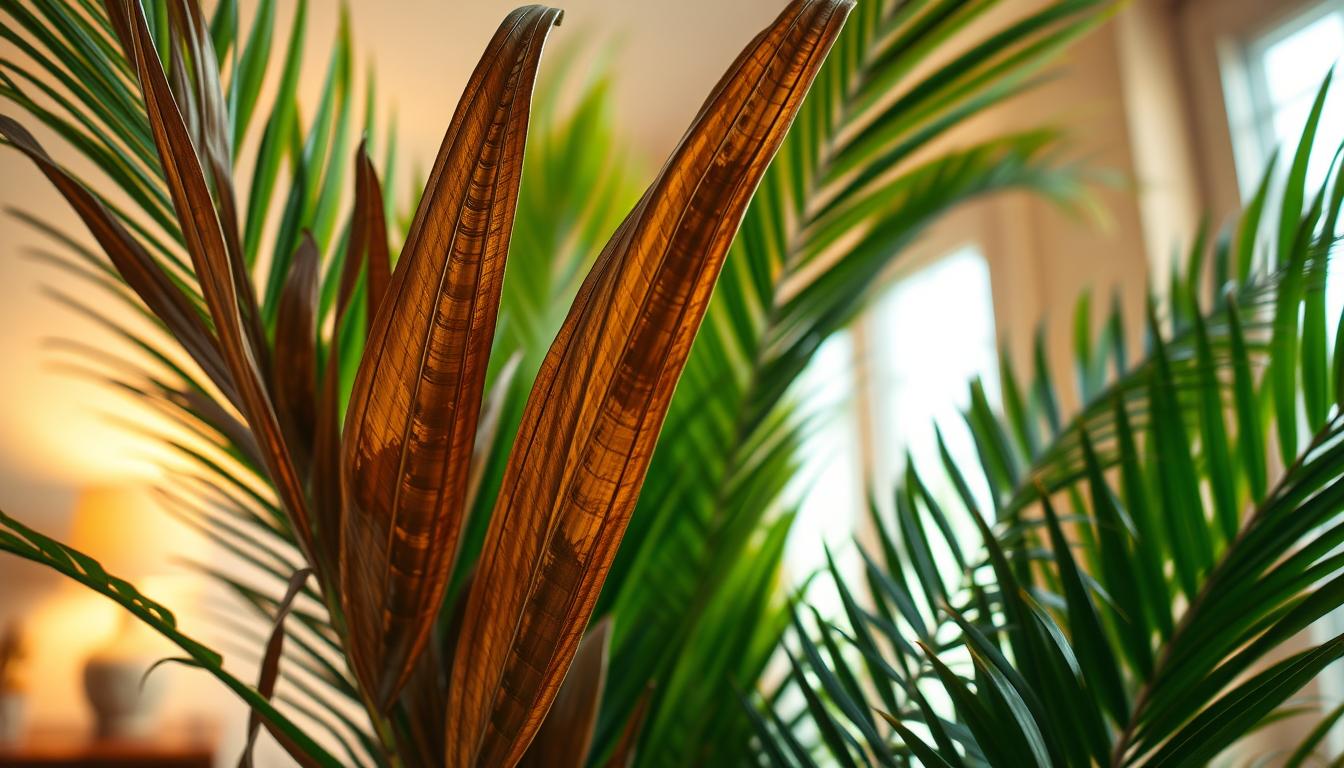
Parlour palm brown leaves usually point to environmental or care stress rather than one single problem. Uneven watering, persistently wet soil, dry indoor air, excessive direct sunlight, temperature changes, water-quality issues, pests, root problems, fertilizer buildup, and normal aging can all contribute to browning. The pattern of damage—and the condition of the soil, roots, and remaining foliage—can help you identify the most likely cause.
Already-brown leaf tissue will not turn green again. Instead of repeatedly trimming the symptoms, correct the underlying problem and watch for healthy new growth. A stable environment and careful observation are usually more useful than making several major care changes at once.
Key Takeaways
- Brown tips, edges, patches, and entire brown fronds can have different causes.
- Check soil moisture and drainage before automatically adding more water.
- Parlour palms prefer bright, indirect light and can tolerate lower-light conditions.
- Dry indoor air may contribute to crispy leaf edges, but it is not the only possible cause.
- Direct sun and sudden temperature changes can damage foliage.
- Spider mites and mealybugs are important pests to check for.
- Persistently wet soil can damage roots and contribute to yellowing and browning.
- Brown tissue cannot recover, so judge improvement by healthy new fronds.
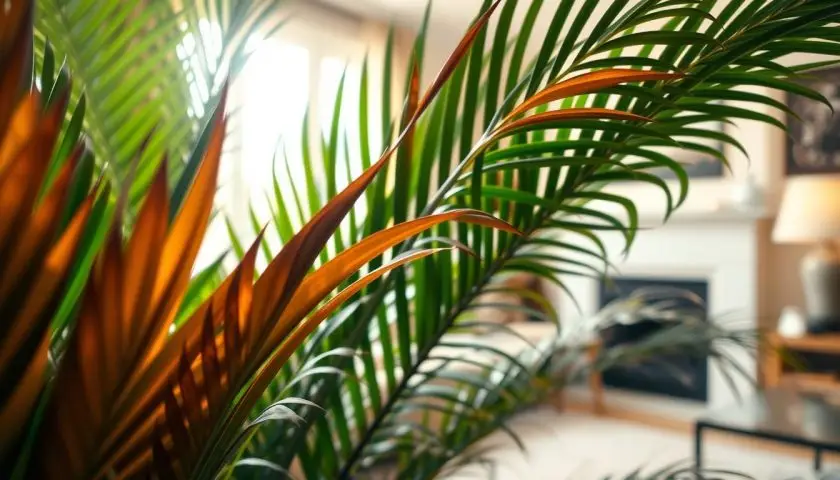
Why Are My Parlour Palm Leaves Turning Brown?
Parlour palm brown leaves are best treated as a symptom rather than a diagnosis. Your plant may be reacting to moisture problems, unsuitable light, dry air, root stress, pests, temperature changes, or several factors acting together.
The parlour palm (Chamaedorea elegans) is naturally an understory palm. It adapts well to indoor conditions and tolerates relatively low light, but it still benefits from suitable moisture, drainage, and a stable environment.
North Carolina State Extension recommends bright indirect light, well-drained soil, slight drying between waterings, and protection from cold drafts for this species. It also lists spider mites and mealybugs among potential pest problems. Read the NC State Extension parlour palm guide for additional botanical and growing information.
If your entire plant is declining rather than developing only a few brown tips, see our guide on how to help a dying parlour palm.
Identify the Brown-Leaf Pattern Before Treating the Plant
Before changing your care routine, look closely at where the browning begins and what the rest of the plant looks like. The appearance alone cannot prove the cause, but it can help narrow down what to investigate.
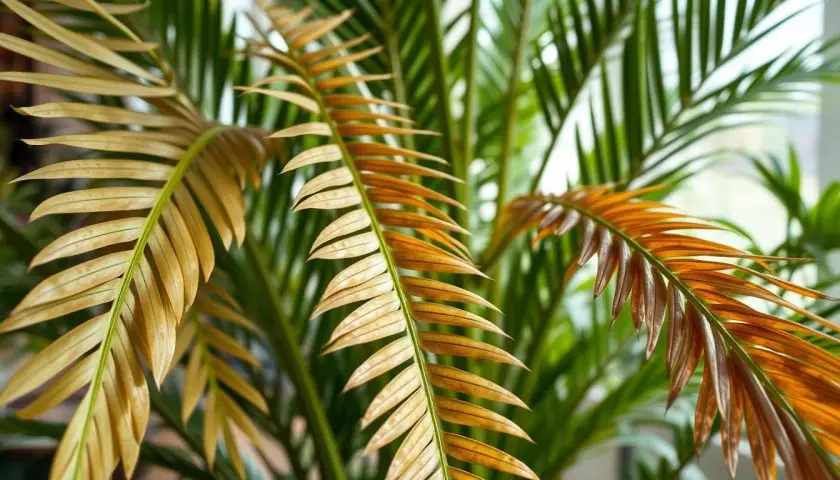
Brown Tips
Brown tips can occur when moisture conditions fluctuate, indoor air is dry, soluble salts accumulate in the growing medium, or roots are stressed. Check the soil and overall environment rather than assuming humidity is automatically responsible.
Brown or Crispy Edges
Crispy margins may develop when the plant loses moisture faster than the roots can replace it. Dry soil, hot airflow, excessive sun, root problems, and low humidity are all worth investigating.
Brown or Bleached Patches
Damage concentrated on the side facing a bright window may suggest excessive direct sunlight, particularly after a plant has been moved suddenly from a darker position.
Brown and Yellow Leaves Together
When yellowing accompanies browning, inspect soil moisture and root health. Persistently wet soil is one possibility, but pests, natural leaf aging, and other environmental problems can also cause discoloration.
Our yellow leaves guide explains why yellowing should be diagnosed from several clues rather than one symptom.
Entire Older Fronds Turning Brown
An occasional older, lower frond can naturally decline as a palm grows. Widespread browning across old and new foliage, however, deserves closer investigation.
| What You See | What to Investigate | First Check |
|---|---|---|
| Crispy brown tips | Dryness, humidity, salts, root stress | Soil moisture and environment |
| Yellow and brown foliage | Wet soil, roots, pests, aging | Drainage and root-zone moisture |
| Bleached brown patches | Strong direct sunlight | Actual window exposure |
| Webbing or stippling | Spider mites | Leaf undersides |
| One old lower frond browning | Natural aging | Condition of newer growth |
Parlour Palm Brown Leaves: 9 Common Causes and Easy Fixes
The following nine causes cover the most useful areas to investigate when parlour palm brown leaves appear. Work through them systematically instead of changing everything at once.
1. Inconsistent Watering or Excessive Dryness
Allowing the root ball to become excessively dry can contribute to crispy tips, browning, drooping, and declining fronds. However, one dry surface reading does not necessarily mean the entire root ball is dry.
How to Check
Feel the potting medium below the immediate surface and consider the weight of the container. If the mix has pulled significantly away from the sides of the pot, the root ball may have become very dry.
Easy Fix
When watering is needed, moisten the root zone thoroughly and allow excess water to drain. Do not compensate for previous dryness by keeping the soil permanently saturated afterward.
Our complete watering guide explains how to judge plant moisture without relying on a rigid calendar.
2. Overwatering or Persistently Wet Soil
Too much water can be just as problematic as too little. If the growing medium remains saturated for extended periods, oxygen around the roots becomes limited and root health can decline.
That can eventually produce yellowing, browning, wilting, or general deterioration above the soil line.
How to Check
Inspect the potting medium and drainage. If the soil remains wet for a long time, smells unpleasant, or the plant sits in collected water, investigate the root zone.
Easy Fix
Allow the growing medium to dry slightly between waterings and make sure excess water can leave the container. Empty standing water from saucers and decorative cachepots.
3. Dry Indoor Air
Low indoor humidity can contribute to parlour palm brown leaves, especially crispy tips and edges. Dry air can become more noticeable around heating systems and other sources of warm airflow.
However, humidity should be considered alongside watering, roots, temperature, and fertilizer salts rather than treated as the automatic explanation for every brown tip.
Easy Fix
If the room is persistently dry, a clean humidifier can provide more consistent environmental humidity. Grouping compatible houseplants may also modestly alter the immediate microclimate.
Avoid assuming frequent leaf misting is necessary. It produces only temporary surface moisture and does not correct problems in the root zone.
4. Too Much Direct Sunlight or Heat
Parlour palms tolerate lower-light indoor conditions and generally perform well in bright, indirect light. Strong direct exposure can stress foliage that has developed under shaded conditions.
Sun damage may appear as pale, bleached, tan, or brown patches on the portions of the plant receiving the strongest exposure.
Easy Fix
Move the plant toward bright, indirect light or filter intense sunlight with a sheer curtain. If changing to a brighter location, make the transition gradually.
For help evaluating indoor light, read our indoor light guide.
5. Cold Drafts, Hot Air, or Sudden Temperature Changes
Placement matters when diagnosing parlour palm brown leaves. A palm positioned directly in the path of an air conditioner, heating vent, exterior door, or another source of rapidly changing air can experience repeated stress.
Easy Fix
Choose a location with more stable conditions. Keep foliage away from direct HVAC airflow and avoid letting leaves remain pressed against very cold or hot window glass.
Do not worry about achieving one exact room temperature. Stability and avoidance of extremes are more useful goals.
6. Mineral or Fertilizer Salt Buildup
Dissolved minerals and fertilizer salts can accumulate in container media over time. In some situations, this may contribute to damaged leaf tips or stressed roots.
How to Check
Look for crusty deposits on the soil surface or around the container and consider whether the plant has been fertilized heavily.
Easy Fix
Reduce unnecessary fertilizer and follow product-label directions rather than increasing concentration. If your local water is particularly mineral-rich and other likely causes have been addressed, trying an alternative suitable water source can help determine whether water quality is contributing.
Do not assume tap water is automatically harmful; water chemistry differs considerably by location.
7. Spider Mites, Mealybugs, Scale, or Other Pests
Pests can cause stippling, discoloration, weakening, and eventual browning. Parlour palms can be affected by spider mites and mealybugs, so regular inspection is worthwhile.
What to Look For
Check leaf undersides, stems, and protected joints. Look for fine webbing, pale stippling, cottony material, sticky residue, or visible insects.
Easy Fix
Separate a noticeably infested plant from nearby houseplants while identifying the pest. Gently rinsing or wiping foliage can remove some insects and make inspection easier.
If treatment is necessary, choose a product labeled for the identified pest and plant, and follow its directions carefully. Test unfamiliar treatments on a small area first when the label permits.
8. Root Rot, Poor Drainage, or Root Stress
Root problems can cause some of the most serious cases of parlour palm brown leaves. Poor drainage, chronically wet growing media, damaged roots, or inappropriate container conditions can interfere with water and nutrient uptake.
Warning Signs
Persistent decline despite wet soil, an unpleasant smell from the growing medium, soft or deteriorating roots, and widespread yellow-brown foliage justify closer root inspection.
Easy Fix
Make sure the container has functional drainage. If clearly rotten roots are present, remove severely deteriorated material with clean tools and correct the conditions that allowed the root zone to remain unsuitable.
See our root rot guide for a more detailed diagnostic process.
9. Excess Fertilizer or Natural Leaf Aging
Not every brown frond indicates a serious parlour palm problem. Older lower fronds eventually decline as part of normal plant growth.
The pattern matters. One aging lower frond on an otherwise healthy palm is different from browning that rapidly appears across many leaves.
Fertilizer Stress
Excess fertilizer can increase soluble salts in the growing medium and contribute to root and leaf-tip stress.
Easy Fix
Follow fertilizer-label directions and avoid feeding a plant simply because its leaves are brown. Fertilizer cannot correct damaged roots, unsuitable watering, pests, or excessive sunlight.
What to Do When You First Notice Parlour Palm Brown Leaves
When browning appears, resist the temptation to immediately water, fertilize, repot, prune, and move the plant all at once. Too many simultaneous changes make it harder to identify the real cause.
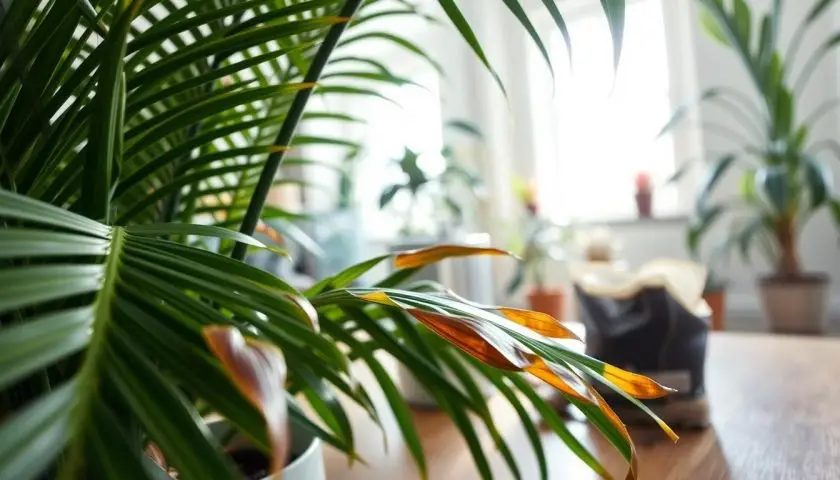
Step 1: Inspect the Plant
Look at brown areas, healthy foliage, new growth, stems, leaf undersides, and the soil surface. Note whether damage affects one old frond or much of the plant.
Step 2: Check Soil Moisture and Drainage
Determine whether the root zone is excessively dry, appropriately moist, or remaining wet for too long. Confirm that drainage holes are open and the plant is not sitting in collected water.
Step 3: Review the Location
Check whether direct sunlight reaches the leaves and whether the plant sits near an HVAC vent, radiator, exterior door, or other source of environmental stress.
Step 4: Inspect for Pests
Use good lighting to inspect leaf undersides and stems. Fine webbing or cottony clusters can be easier to see when you deliberately look for them.
Step 5: Change the Most Likely Problem First
Correct the clearest problem and observe the plant. Unless there is an urgent issue such as severe root rot or a significant pest infestation, avoid making multiple major changes simultaneously.
Should You Cut Brown Leaves Off a Parlour Palm?
You can remove a frond that has become completely brown and dry, but partly green foliage still contains functioning tissue.
Do not expect pruning to solve the cause of parlour palm brown leaves. Trimming changes appearance; correcting watering, light, roots, pests, or other environmental stress prevents further damage.
How to Prune Safely
Use clean, sharp scissors or pruners. Remove fully dead fronds without damaging nearby healthy stems or emerging growth.
If only a small tip is brown, trimming it is optional. Avoid repeatedly cutting deeply into healthy green tissue merely to create a perfect cosmetic shape.
For general technique, see our plant pruning basics.
How to Correct Parlour Palm Watering Problems
There is no reliable universal schedule for watering a parlour palm. Pot size, growing medium, roots, temperature, airflow, and available light all influence drying speed.
Check Before You Water
Allow the upper part of the growing medium to begin drying rather than keeping the pot continuously saturated.
Water Thoroughly When Needed
When the plant genuinely needs water, moisten the root ball and allow excess water to drain from the container.
Empty Collected Water
Do not leave the nursery pot standing in a saucer or decorative container filled with drainage water.
| Soil Condition | What It May Mean | What to Do |
|---|---|---|
| Very dry throughout | Plant may need water | Water thoroughly and monitor |
| Upper layer beginning to dry | Normal drying process | Assess deeper moisture before watering |
| Wet for an unusually long time | Possible drainage, pot, soil, or root issue | Investigate before adding more water |
| Standing water | Root zone may remain saturated | Drain and correct the cause |
How to Improve Light and Placement
Parlour palms are useful indoor plants partly because they tolerate relatively low light. However, tolerance is not the same as optimal growth.
Aim for Bright, Indirect Light
A bright location without prolonged harsh direct exposure is a practical starting point.
Watch the Actual Plant, Not Just the Window Direction
Trees, curtains, buildings, season, window size, and the plant’s distance from the glass can dramatically change the light reaching the foliage.
Move the Plant Gradually
If a palm has been growing in a dim location, do not suddenly place it in intense sunlight. Increase light gradually and watch the foliage for signs of stress.
How to Manage Dry Indoor Air
If dry air appears to be contributing to parlour palm brown leaves, focus on improving the environment rather than repeatedly wetting the leaves.
Use a Humidifier When Needed
A clean humidifier can provide more stable humidity in persistently dry rooms. Keep the device maintained according to its instructions.
Keep Air Moving Gently
Humidity should not mean stagnant, constantly wet foliage. Leave enough space around plants for reasonable air circulation.
Do Not Depend on Misting Alone
Misting produces temporary moisture on leaf surfaces and does not solve root-zone problems. If browning continues, investigate watering, roots, light, and other causes too.
How to Inspect Parlour Palms for Pests
Pest damage can resemble other forms of stress, so inspect before treating.
| Possible Pest | What to Look For | Where to Inspect |
|---|---|---|
| Spider mites | Fine webbing and pale stippling | Leaf undersides and between leaflets |
| Mealybugs | White cottony material | Leaf joints and protected areas |
| Scale | Small attached bumps | Stems and foliage |
| Thrips | Scarring, discoloration, tiny insects | Leaves and new growth |
Do not apply pesticides simply because a leaf is brown. Identify a pest first and use only products labeled for the plant and target pest.
When Should You Check the Roots?
Do not repeatedly remove a healthy palm from its container just to inspect it. Root inspection becomes more useful when the plant is declining despite appropriate above-ground care, the soil remains saturated, drainage is poor, or there are signs suggesting root deterioration.
Healthy vs. Damaged Roots
Healthy roots should generally feel firm. Roots that are clearly soft, deteriorating, or associated with an unpleasant decaying smell deserve attention.
Use a Suitable Container
A container should have drainage and should not be dramatically oversized for the root system. A very large volume of unused growing medium may remain wet differently from a more appropriately sized pot.
Choose a Well-Draining Growing Medium
The goal is a root environment that retains useful moisture while still allowing drainage and aeration.
For broader guidance on growing media, see our plant soil mix guide.
How to Tell Whether Your Parlour Palm Is Recovering
Because damaged tissue will not become green again, old brown leaves are a poor way to judge recovery.
Instead, monitor the condition of healthy foliage and new growth.
| Indicator | Continuing Stress | Possible Recovery |
|---|---|---|
| New growth | Weak, damaged, or absent over time | Healthy new fronds developing |
| Existing green foliage | Browning continues to spread | Remaining foliage stays stable |
| Roots | Continuing deterioration | Firm healthy roots |
| Soil moisture | Repeatedly saturated or severely dry | More stable moisture pattern |
| Pests | Population or damage increasing | No new pest activity after management |
Common Mistakes When Fixing Parlour Palm Brown Leaves
Assuming Every Brown Tip Means Low Humidity
Dry air is only one possibility. Watering, root condition, salts, heat, and other factors can create similar damage.
Watering Immediately Whenever a Leaf Turns Brown
Brown foliage does not prove that the plant is thirsty. Check the growing medium first.
Fertilizing a Stressed Palm
Fertilizer cannot repair root rot, pest damage, sun scorch, or severe moisture stress.
Repotting Without a Clear Reason
Repot when root or soil conditions justify it rather than using repotting as the automatic solution to every leaf problem.
Cutting Off Every Imperfect Leaf
Partly green foliage still contributes to the plant. Focus on correcting the underlying cause instead of repeatedly removing useful tissue.
Making Several Major Changes at Once
If you simultaneously change light, water, fertilizer, soil, pot, and humidity, it becomes difficult to determine which condition was actually causing the problem.
Parlour Palm Brown Leaves Troubleshooting Table
| Symptom | Possible Causes | First Action |
|---|---|---|
| Crispy brown tips | Dryness, dry air, salts, roots | Check moisture and environment |
| Yellow and brown leaves | Wet soil, roots, pests, aging | Check drainage and soil moisture |
| Bleached brown patches | Strong direct sunlight | Review actual light exposure |
| Brown leaves plus webbing | Spider mites | Inspect and isolate if necessary |
| Decline in wet soil | Root stress or rot | Inspect drainage and roots |
| Single old lower frond browning | Natural aging | Monitor newer foliage |
| Browning after heavy feeding | Possible fertilizer salt stress | Stop unnecessary feeding and reassess |
Frequently Asked Questions
Why are my parlour palm leaves turning brown at the tips?
Parlour palm brown leaves at the tips can be associated with inconsistent moisture, dry indoor air, fertilizer or mineral salts, heat, or root stress. Check soil moisture, drainage, placement, and the overall condition of the plant before deciding on a treatment.
Can brown parlour palm leaves turn green again?
No. Once leaf tissue is brown and dead, it will not become green again. Correct the underlying problem and judge recovery by stable healthy foliage and new growth.
Should I cut brown tips off my parlour palm?
You can trim completely dead tissue for appearance, but it is not required for recovery. Avoid cutting deeply into healthy green tissue and remember that pruning does not correct the cause of browning.
How do I know if my parlour palm is overwatered?
Do not diagnose overwatering from leaf color alone. Check whether the potting medium remains wet for a prolonged period, whether drainage works properly, and whether roots show signs of deterioration.
How do I know if my parlour palm is underwatered?
A very dry root ball, lightweight pot, dry potting medium, wilting, and crispy foliage can suggest insufficient moisture. Check the root-zone moisture before watering rather than relying only on the leaves.
Does a parlour palm need high humidity?
Parlour palms can adapt to ordinary indoor conditions, but persistently dry air may contribute to brown tips. If dry air appears to be a problem, a clean humidifier provides more consistent humidity than occasional misting.
Can direct sunlight cause brown leaves on a parlour palm?
Yes. Strong direct exposure can cause bleached or brown damaged areas, particularly when a plant has been accustomed to lower light. Bright, indirect light is generally a safer indoor position.
What pests cause brown leaves on parlour palms?
Spider mites and mealybugs are important pests to check for, while scale and thrips may also cause foliage damage. Look for webbing, stippling, cottony material, attached bumps, sticky residue, or visible insects.
Should I fertilize a parlour palm with brown leaves?
Do not use fertilizer as a general treatment for brown leaves. First determine whether the plant has moisture, root, light, temperature, or pest problems. Feed healthy plants according to the fertilizer label and their active growth.
How often should I water a parlour palm?
There is no single watering interval that works in every home. Check the growing medium and allow it to dry slightly before watering again. Pot size, soil, roots, temperature, airflow, and light all affect drying speed.
Final Thoughts
Parlour palm brown leaves are a warning sign, not a diagnosis. The most effective approach is to examine the pattern of damage and then check moisture, drainage, roots, light, temperature, pests, and recent fertilizer use.
Start with the most obvious problem and avoid changing every part of your care routine at once. If the soil is saturated, address drainage and roots. If damage is concentrated on the window-facing foliage, investigate direct sun. If you find webbing or insects, identify and manage the pest.
Most importantly, do not expect existing brown tissue to recover. Stable green foliage and healthy new fronds are much better indicators that your changes are working.
For more help diagnosing houseplant problems, browse our Plant Care guides.