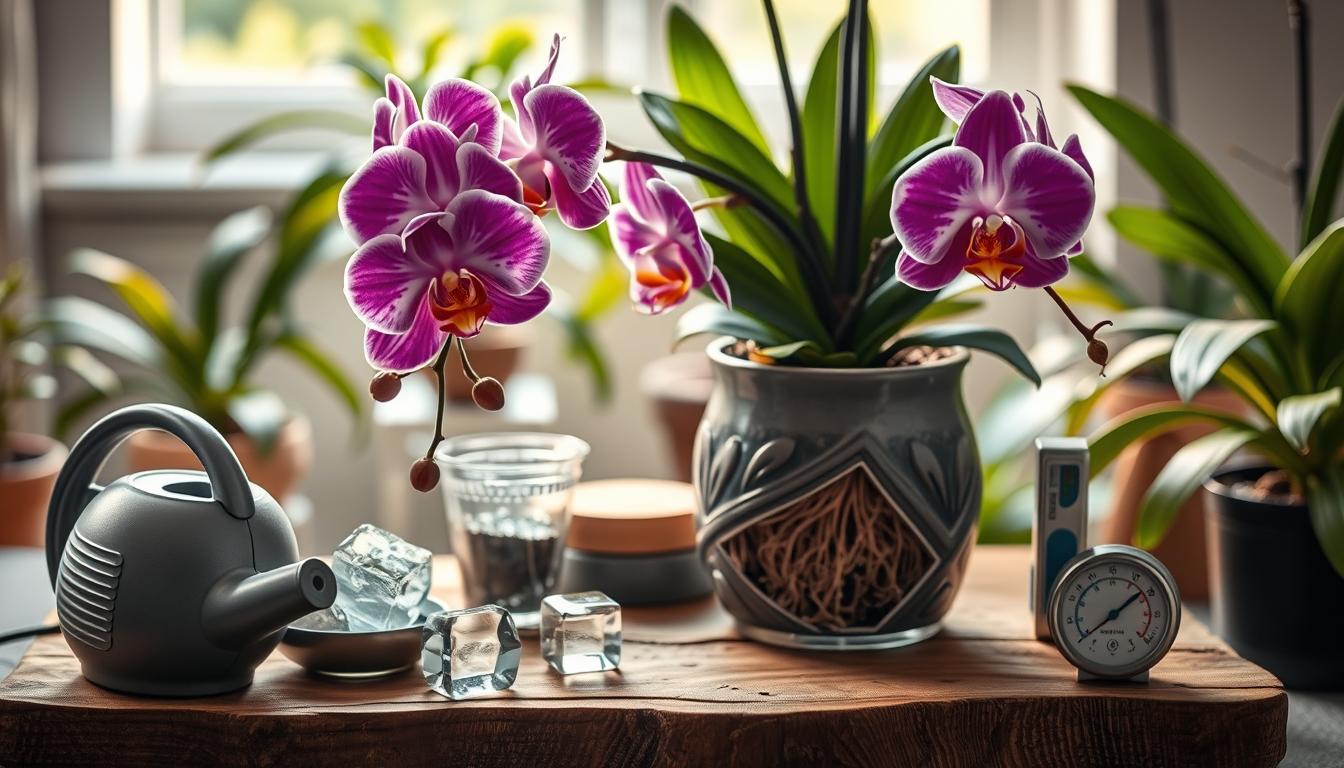
How often to water orchids depends on what it is potted in, but for a moth orchid (Phalaenopsis) in bark, about once a week is a sound starting point, with a little less in winter. I am Sawera Shahid, a botanist at Patch Plants. The better habit is to check the roots and the weight of the pot rather than watering by the calendar, because light, warmth and potting mix all change how fast an orchid dries out.
This guide covers how often to water orchids, how to do it, how to read the roots, and what research found about watering with ice cubes. It focuses on moth orchids, the type most people buy.
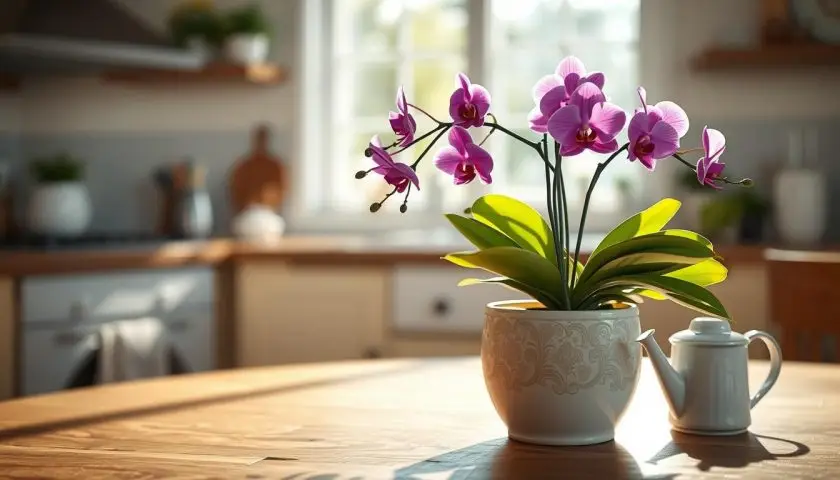
How Often to Water Orchids at a Glance
| Situation | Guide |
|---|---|
| Moth orchid in bark | About once a week in the growing season (RHS, Clemson) |
| Moth orchid in sphagnum moss | When the top feels dry to the touch (Clemson) |
| Winter | Water slightly less (RHS) |
| Summer, warm or bright rooms | Check more often; the mix dries faster (Clemson) |
| Pot feels heavy | Wait; it does not need water yet (Clemson) |
How Often to Water Orchids Compared With Other Houseplants
In the wild, moth orchids grow on tree trunks and branches rather than in soil, and their thick roots are used to drying between rains. That is why they are sold in loose, airy bark mixes instead of ordinary compost. The RHS warns that loam-based or multipurpose compost will kill moth orchids. Bark holds less water than moss, so a bark-potted orchid can usually be watered more often than one packed in moss.
The RHS sums up the balance well: if kept too wet, the roots are likely to rot, but if kept too dry, they may shrivel and die. The goal is a wet–dry cycle, not constant moisture.
How to Water an Orchid Step by Step
- Check first. Lift the pot. If it feels heavy, Clemson Extension says it does not need water yet.
- Take the orchid to the sink and use lukewarm or tepid water. The RHS prefers rainwater where possible.
- Let water run through the bark for about a minute, as Clemson suggests, or stand the pot in water briefly and then let it drain.
- Let it drain completely. Never leave the plant sitting in water, and empty any decorative outer pot.
- Keep water out of the crown, the point where the leaves meet. The RHS advises not splashing the leaves or getting water into the crown.
Misting alone is not a substitute for watering. University of Maryland Extension notes that misting usually does not provide enough moisture under home growing conditions.
Read the Roots, Not the Calendar
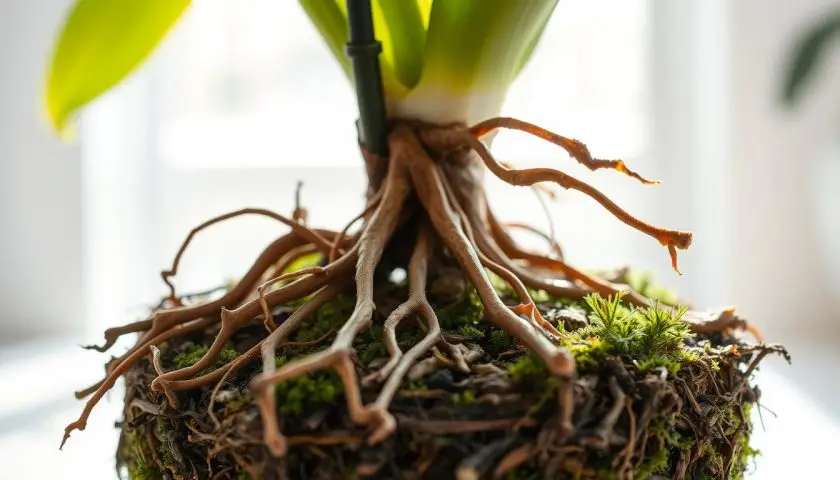
The simplest answer to how often to water orchids is “when the roots ask for it”. A clear pot makes watering much easier, which is why the RHS recommends transparent containers. You can see the roots and how wet the bark is. According to Ohio State University researchers, healthy roots look green when wet and silvery when drier, while dying roots turn brown or tan. The RHS describes healthy roots as plump, firm and silvery-white, and unhealthy ones as brown, shrivelled, mushy or hollow.
| What You See | What It Usually Means |
|---|---|
| Green, plump roots | Recently watered; wait |
| Silvery, firm roots and a light pot | Time to water |
| Brown, mushy or hollow roots | Too wet for too long; check for rot |
| Wrinkled, limp leaves with dry, shrivelled roots | Underwatering |
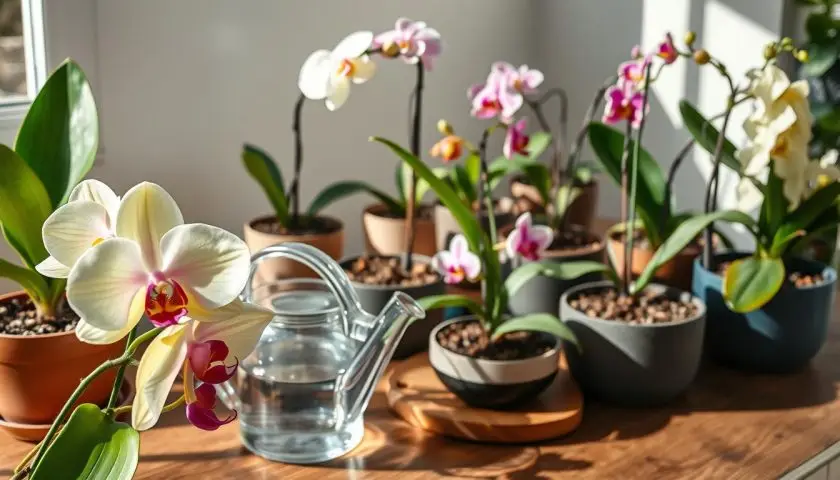
Do Ice Cubes Work for Watering Orchids?
This is the most argued-about part of orchid care, so here is what the research actually found. Scientists at The Ohio State University and the University of Georgia tested 48 moth orchids for four to six months. Half were watered with three ice cubes a week and half with the same amount of room-temperature water. The work was published in HortScience in 2017.
- Flower longevity and display life were the same in both groups.
- Leaf and root health were not reduced by the ice.
- The bark cooled to about 51–56°F (11–13°C) and returned to about 70°F (21°C) within roughly five hours.
- Roots touching the ice cooled to about 40°F (4°C), while isolated root tissue showed no cold damage until about 20°F (about −7°C).
So the ice cube method is not a myth in the sense of harming the plant. The researchers concluded it is a practical option for moth orchids in bark, as long as you start with three cubes a week, adjust to the plant, and keep the ice off the leaves. The limits matter, though: the study covered only Phalaenopsis in bark. It did not test moss-potted plants or other orchid types. In my own view, ice is a measuring trick rather than a better method. A thorough soak and drain flushes the bark and lets you check the roots at the same time, so I still prefer it.
How Often to Water Orchids in Summer and Winter
How often to water orchids changes with the seasons. The RHS advises watering weekly through the growing season and slightly less in winter. Clemson Extension notes that plants need more frequent watering in summer and less in winter, because light and heat change how fast the mix dries. Keep orchids away from radiators and draughts, since the RHS says they dislike fluctuating temperatures.
When feeding, the RHS recommends a specific orchid fertiliser, applied lightly but regularly in the growing season, and watering without feed every fourth time to flush out salts.
When Watering Problems Mean It Is Time to Repot
Old bark breaks down. The RHS explains that bark-based orchid compost becomes denser over time and holds water longer, which can cause root rot, so it recommends replacing the compost every couple of years. Clemson Extension suggests repotting every one to three years, shortly after flowering ends, and not while the plant is in bloom. For more on aerial roots, see our guide to orchid aerial roots, and for wider care, the orchid care guide.
If you are already seeing soft, dark roots, read our guides to healthy roots vs root rot and how to treat root rot.
Are Moth Orchids Safe for Pets?
Yes. The ASPCA lists Phalaenopsis orchids as non-toxic to dogs, cats and horses, which makes them a good flowering choice for pet owners. Other orchid types should be checked individually.
Frequently Asked Questions
How often to water orchids in bark?
For a moth orchid in bark, about once a week in the growing season is a good starting point, with slightly less in winter. Check the weight of the pot and the colour of the roots before each watering.
Should I water an orchid from the top or soak it?
Either works if it drains fully. You can run lukewarm water through the bark for about a minute or stand the pot in water briefly, then let all the excess drain away. Keep water out of the crown.
Is it OK to water orchids with ice cubes?
Research on moth orchids in bark found that three ice cubes a week caused no harm compared with the same amount of water. It was not tested on moss-potted plants or other orchids, so adjust to your plant.
How do I know if my orchid needs water?
Silvery roots, a light pot and dry bark mean it is time to water. Green, plump roots and a heavy pot mean you should wait.
Can you overwater an orchid?
Yes. Constantly wet bark, standing water or old, compacted bark can cause the roots to rot. Brown, mushy or hollow roots are the warning sign.
Final Thoughts
As a botanist, I would say how often to water orchids is less about the calendar and more about how dry the roots are. Moth orchids are built for a cycle of soaking and drying, so a weekly check, a thorough drink when the roots turn silvery, and good drainage will keep most plants healthy for years.
Patch Plants guides like this one are written to give you the reason behind each step, so you can adapt when your home is warmer, cooler or brighter than average. For more flowering ideas, see our guides to house plants with white flowers and blooming indoor plants.
Sources: RHS, How to grow Phalaenopsis; Clemson Extension, General Care for Phalaenopsis Orchids; Ohio State University, Watering Phalaenopsis orchids with ice cubes; University of Maryland Extension, Moth orchids; ASPCA, Phalaenopsis Orchid.

About the author
Sawera Shahid is a botanist with an MPhil in Botany and 5+ years of writing about plants. As founder and lead writer of Patch Plants, she writes practical, science-backed guides on indoor plants, outdoor gardens and plant problems, checked against RHS and university extension advice.