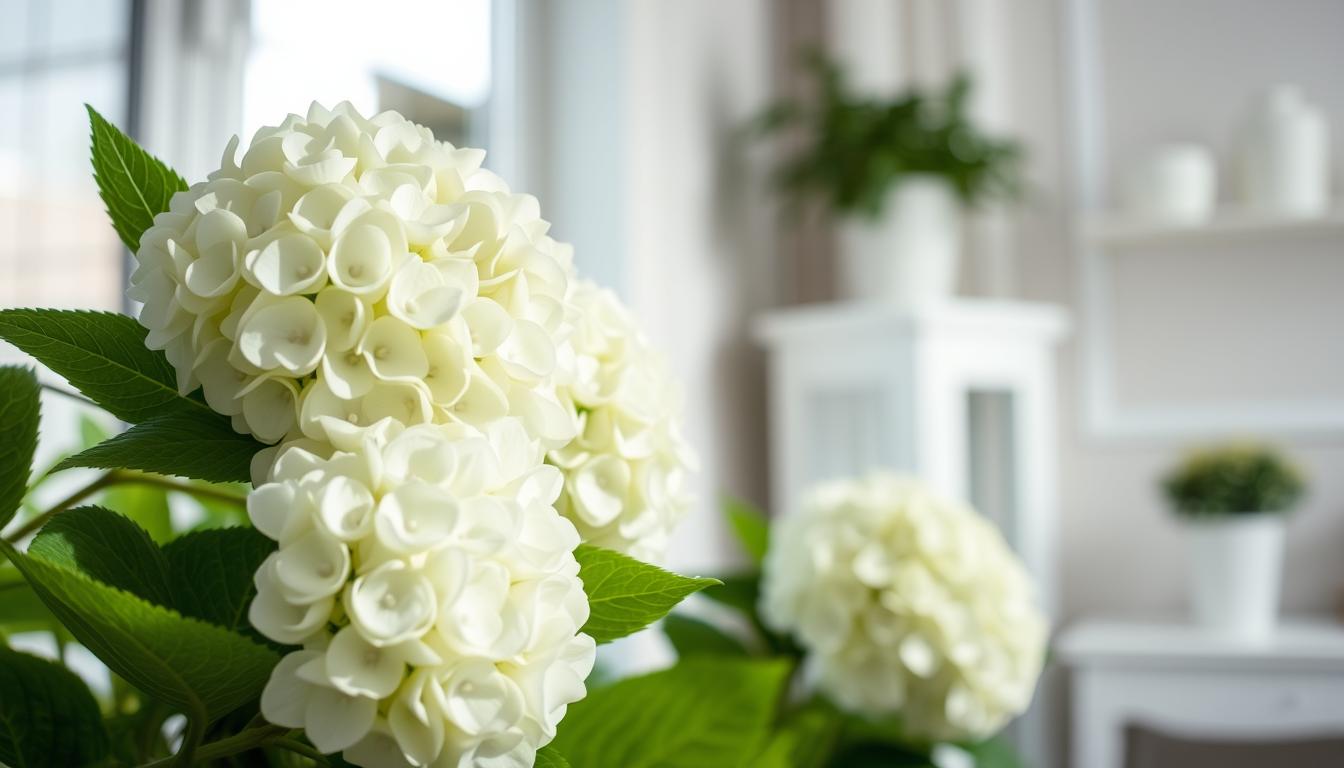
A white hydrangea is easiest to grow when you choose the right type for your garden and prune it at the right time, because each species flowers on different wood. I am Sawera Shahid, a botanist at Patch Plants, and the question I hear most about white hydrangeas is why one plant flowers every year while another, cut back the same way, does not. The answer is almost always the species.
The good news is that white hydrangea flowers stay white whatever your soil. The RHS notes that white, red and green-flowered cultivars remain that colour regardless of soil pH, so you do not need to adjust acidity the way you might for blue flowers. This guide covers the 7 best white hydrangea varieties to look for, how to plant and care for them, when to prune each type, and how to keep the flowers looking their best.
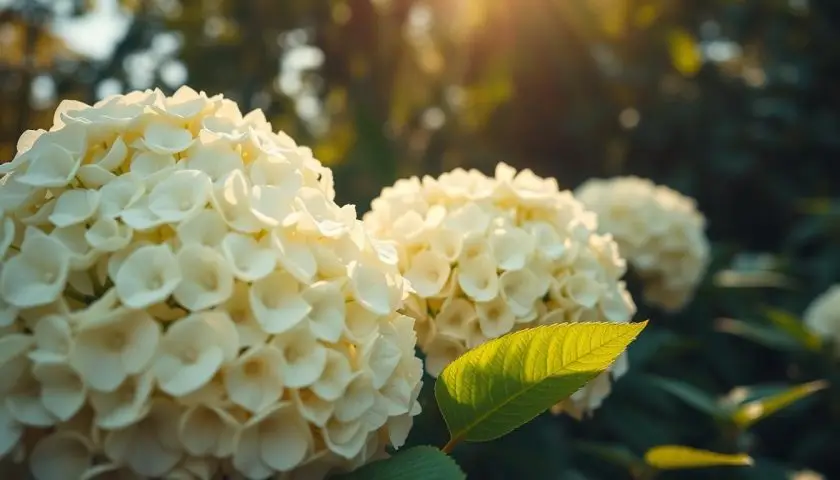
White Hydrangea Types at a Glance
| Type | White Varieties | Flowers On | When to Prune |
|---|---|---|---|
| Smooth hydrangea (Hydrangea arborescens) | ‘Annabelle’, ‘Incrediball’, ‘White Dome’ | New wood | Early spring (RHS) |
| Panicle hydrangea (H. paniculata) | ‘Limelight’, ‘Grandiflora’ | New wood | Early spring (RHS) |
| Oakleaf hydrangea (H. quercifolia) | ‘Alice’ and other white cultivars | Old wood | Spring, removing only dead and over-long stems (RHS) |
| Bigleaf hydrangea (H. macrophylla) | White mophead and lacecap cultivars | Mostly old wood | Mid-spring, lightly (RHS) |
Why the Type of White Hydrangea Matters
Purdue Extension explains that some hydrangeas bloom only on old wood (last year’s growth), some only on new wood (this season’s growth), and a few mainly on old wood but also on new. University of Illinois Extension adds the practical rule: prune new-wood types in late winter to early spring before growth starts, and old-wood types after their summer flowers. Cut an old-wood white hydrangea hard in spring and you remove the stems that would have flowered.
For cold gardens, the new-wood white hydrangeas are the safest choice, because even if winter damages the stems, the plant flowers on the new growth that follows.
7 Best White Hydrangea Varieties
1. ‘Annabelle’ (smooth hydrangea)
‘Annabelle’ is the classic white hydrangea for borders. Purdue Extension describes its huge, very showy blooms, and Iowa State Extension lists it as a smooth hydrangea that flowers on new wood. The trade-off is that the heavy heads can flop, and Purdue notes that it can become weak-wooded and untidy with age, so it suits a spot where neighbouring plants give it some support.
2. ‘Incrediball’ (smooth hydrangea)
Purdue Extension notes that ‘Incrediball’ has even larger blooms than ‘Annabelle’. It is a good choice if you love the ‘Annabelle’ look but want sturdier, rounder heads. Like other smooth hydrangeas, it flowers on new wood and is pruned in early spring.
3. ‘White Dome’ (smooth hydrangea)
If you prefer a lighter, airier flower, Purdue Extension describes ‘White Dome’ as a lacecap form with dome-shaped white clusters. Lacecaps have a centre of small fertile flowers ringed by larger white florets, which also tends to attract pollinating insects.
4. ‘Limelight’ (panicle hydrangea)
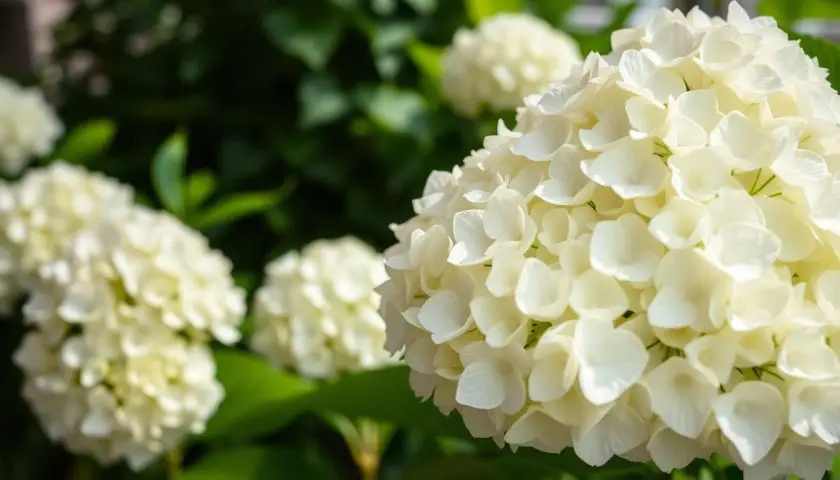
‘Limelight’ is one of the most reliable white hydrangea choices for sunnier gardens and has the RHS Award of Garden Merit. The RHS describes its flowers opening pale green in mid-July, maturing through cream to pure white and then back to pale green in October. It notes that the harder you prune in spring, the larger the flower heads will be.
5. ‘Grandiflora’ or PeeGee (panicle hydrangea)
The RHS calls Hydrangea paniculata ‘Grandiflora’ the hardy white-flowered hydrangea. Iowa State Extension notes that panicle hydrangea flowers start creamy white and gradually turn pink or dark rose, and the RHS lists panicle hydrangeas for full sun or partial shade. This is a big shrub, so give it room.
6. ‘Alice’ (oakleaf hydrangea)
Oakleaf hydrangeas offer more than flowers. Purdue Extension describes ‘Alice’ as having large white flowers that mature to rose pink, with outstanding purple colour in autumn. Iowa State Extension notes that oakleaf hydrangea blooms on the previous year’s growth and can reach about 6 to 8 feet tall and wide. Penn State Extension adds that it is less likely than bigleaf types to be damaged by winter cold, but still flowers less if pruned at the wrong time.
7. White bigleaf hydrangea (mophead or lacecap)
Bigleaf hydrangeas give the classic round mophead or flat lacecap shape. Choosing a white bigleaf hydrangea means the colour will not shift with soil acidity, according to the RHS. Most flower on old wood, though Purdue Extension notes that some newer remontant cultivars can also bloom on new wood, which makes them more forgiving in cold areas.
Where to Plant a White Hydrangea
The RHS suggests planting shrubby hydrangeas in light shade, and says they tolerate sun as long as the soil does not dry out. It also recommends avoiding frost pockets and exposed sites, because late frosts can damage new growth. Panicle types are the most sun-tolerant of the white hydrangeas, while smooth and bigleaf types appreciate shade during the hottest part of the day.
Plant in moist but well-drained soil, ideally in spring or autumn. The RHS notes that hydrangeas thrive in evenly moist soil and are well suited to clay. If you are planning a shady bed, our guide to shade-loving plants for outdoors has good companions.
How to Care for a White Hydrangea
Watering and mulching
Even established plants need watering in hot, dry spells, according to the RHS. A layer of organic mulch helps the soil hold moisture through summer. Water at the base rather than over the flowers, which can bend under the weight.
Feeding
The RHS says established hydrangeas generally do not need regular feeding, and that too much fertiliser encourages excessive soft, leafy growth. Good soil and mulch are usually enough for a white hydrangea in the ground.
Growing a white hydrangea in a pot
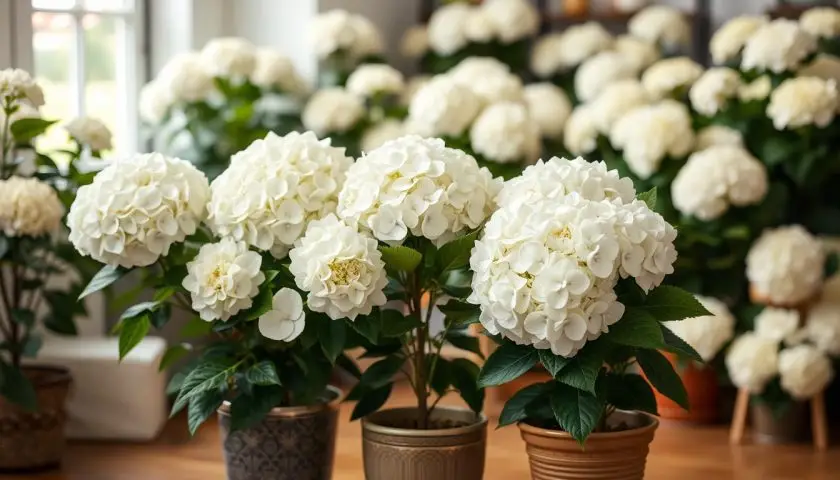
Compact cultivars suit containers. For pots, the RHS suggests peat-free John Innes No. 3 mixed two parts to one with peat-free multipurpose compost. Check moisture often, move pots to a shadier spot in summer, and raise them on pot feet so they drain. For more ideas, see container garden plants for shade and shade garden pots.
How to Prune a White Hydrangea by Type
Pruning is where most white hydrangea problems start. Use the type first, then the timing.
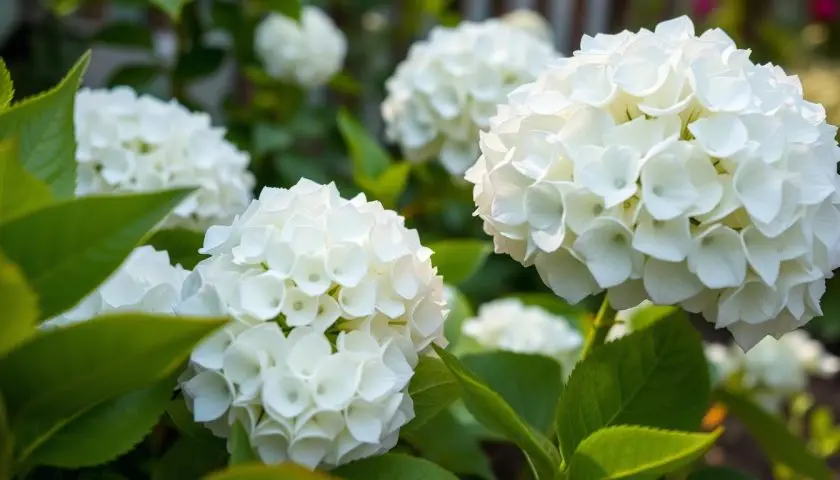
- Smooth and panicle hydrangeas: the RHS advises pruning in early spring, before active growth. Cutting back last year’s growth encourages more and larger flowers. Cut to the lowest healthy pair of buds for a low framework of about 25cm, or to about 60cm for a taller shrub.
- Bigleaf hydrangeas: prune lightly in mid-spring, cutting faded heads back to the first or second healthy pair of buds, and remove one or two old stems at the base each year (RHS).
- Oakleaf hydrangeas: remove only dead and over-long stems in spring (RHS). Heavy pruning removes the wood that would flower.
The RHS also suggests leaving faded bigleaf flower heads on over winter, because they add interest and help protect new buds from frost. For general technique, read our pruning basics guide, and for the wider picture see the hydrangea care guide.
Why Do White Hydrangea Flowers Turn Pink or Green?
This is normal ageing, not a problem with the plant. The RHS notes that as hydrangea flowers age, white ones typically become a vibrant pink by late summer. Panicle types such as ‘Limelight’ can also fade back to pale green in autumn. Because white flowers do not depend on soil pH, adding acid or lime will not change this. If you want the purest white for longest, pick blooms for indoor display while they are at their freshest, or enjoy the colour change as part of the season.
Using White Hydrangea Flowers Indoors
The RHS describes hydrangea flowers as long-lasting and useful for drying and flower arranging, which makes a white hydrangea one of the most generous shrubs for cutting. A few simple habits help the heads last.
- Cut in the cool of the morning, when stems are full of water.
- Choose heads that are fully open; young, soft heads tend to wilt quickly.
- Cut the stem at an angle and stand it in water straight away.
- Strip any leaves that would sit below the waterline, and change the water every couple of days.
For drying, leave the flowers on the plant until late summer, when the florets start to feel papery, then cut and stand them in a vase with a little water that you allow to evaporate. Heads that have aged to pink or green often dry with softer, vintage tones, which many people prefer to pure white.
Common White Hydrangea Problems
| Problem | Likely Cause | What to Do |
|---|---|---|
| No flowers on a bigleaf or oakleaf type | Pruned at the wrong time, or buds killed by frost | Prune only lightly in spring; site away from frost pockets |
| Flopping heads on ‘Annabelle’ | Large, heavy blooms on soft stems | Plant among supportive neighbours or consider sturdier cultivars |
| Wilting in summer | Dry soil or hot afternoon sun | Water deeply, mulch and give afternoon shade |
| White, waxy blobs on stems in early summer | Hydrangea scale (RHS) | Remove by hand on small plants and check regularly |
| Blackened spring shoots | Late frost damage | Cut back to the first undamaged pair of buds (RHS) |
The RHS also lists aphids, capsid bugs and vine weevil as possible pests on panicle hydrangeas.
How to Propagate a White Hydrangea
The RHS says hydrangeas are easily propagated from cuttings. Take softwood cuttings in spring to early summer, semi-ripe cuttings in mid-summer, or hardwood cuttings in winter. It notes that new plants take two to three years to flower, so this is a long-term project rather than a quick fix.
Is a White Hydrangea Safe for Pets?
No. The ASPCA lists hydrangea as toxic to dogs, cats and horses because it contains a cyanogenic glycoside. Signs include vomiting, depression and diarrhoea, and the ASPCA notes that true cyanide poisoning is rare. Keep pets from chewing leaves and flowers, and call your vet or the ASPCA Animal Poison Control Center at (888) 426-4435 (a consultation fee may apply) if you are worried. Our guide to making your plants cat-friendly has more tips.
Frequently Asked Questions
What is the best white hydrangea for beginners?
A smooth or panicle white hydrangea, such as ‘Annabelle’ or ‘Limelight’, is the most forgiving choice. Both flower on new wood, so they still bloom even if winter damages the stems or you prune a little late.
Do white hydrangeas change colour with soil pH?
No. The RHS notes that white-flowered cultivars stay white regardless of soil pH. They may turn pink or green as the flowers age, but that is natural ageing, not a soil effect.
When should I prune a white hydrangea?
Prune smooth and panicle types in early spring. Prune bigleaf types lightly in mid-spring, and only remove dead or over-long stems on oakleaf hydrangeas, because they flower on old wood.
Can a white hydrangea grow in full sun?
Panicle types cope best with sun. The RHS says shrubby hydrangeas prefer light shade but tolerate sun if the soil stays moist, so water and mulch well in a sunny spot.
Why is my white hydrangea not flowering?
The most common reasons are pruning an old-wood type in spring, frost killing the flower buds, or too much shade. Check which type you have before you prune again.
Final Thoughts
As a botanist, I think the white hydrangea rewards a little homework more than any other garden shrub. Once you know whether your plant flowers on old or new wood, pruning stops being guesswork, and the plant can give you reliable white blooms from summer into autumn.
At Patch Plants, I aim to explain the plant science behind advice like this, so you can choose the right white hydrangea for your conditions rather than fighting the plant. If you love white blooms indoors too, see our guide to house plants with white flowers, or read more about low-maintenance outdoor plants.
Sources: RHS, How to grow shrubby hydrangeas; RHS, Award-winning hydrangeas; Purdue Extension, Hydrangea Popular but Confusing; Iowa State Extension, Pruning Hydrangeas; Penn State Extension, When to Prune Which Hydrangea; ASPCA, Hydrangea.

About the author
Sawera Shahid is a botanist with an MPhil in Botany and 5+ years of writing about plants. As founder and lead writer of Patch Plants, she writes practical, science-backed guides on indoor plants, outdoor gardens and plant problems, checked against RHS and university extension advice.