
Key Takeaways
- How to revive a dying plant always starts with diagnosis — overwatering, underwatering, wrong light, pests, and root rot are the five most common causes, and treating the wrong one makes recovery slower not faster.
- Most plants that look completely dead are not — if you scratch a stem and see green inside, or squeeze a root and find firm tissue, reviving dying plants is still very much possible with the right intervention.
- Root inspection is the single most important step in how to revive a dying plant — the foliage tells you something is wrong, but only the roots reveal what and how serious it actually is.
- Trimming dead and damaged foliage redirects the plant’s remaining energy toward new healthy growth rather than attempting to sustain tissue that will not recover — a non-negotiable step in any dying plant rescue.
- How to save a dying plant from overwatering requires unpotting, root trimming, drying, and repotting in fresh well-draining soil — watering less going forward only slows the decline rather than reversing the root rot already present.
- Fertilizer must be withheld during recovery — feeding a stressed plant overwhelms already-damaged root systems and causes chemical burn that accelerates decline rather than supporting reviving dying plants.
- Light adjustment is the most overlooked how to revive a dying plant intervention — simply moving a plant from a poor position to a better-lit spot triggers recovery in plants that appeared beyond saving within days.
- How to revive dying plants requires patience — some plants show recovery signs within days, others take 3–6 weeks, and abandoning the process too early is responsible for more plant losses than the original problem.
- Can overwatered plants recover on their own? Not reliably — overwatered roots in waterlogged soil continue deteriorating without intervention. Active rescue — unpotting, root trimming, fresh soil — is always more effective than simply withholding water and hoping.
- The plants that bounce back best from near-death experiences are snake plant, pothos, ZZ plant, peace lily, and money tree — all five have genuine resilience mechanisms that make how to revive a dying plant attempts most likely to succeed with these varieties.
Introduction
Watching a plant decline is genuinely disheartening — one week it’s pushing out new leaves, the next it’s drooping, yellowing, or developing that unmistakable crunch when you touch what used to be healthy foliage. But here’s the truth that experienced plant owners know: most plants don’t die overnight, and how to revive a dying plant is a process that works far more often than most people expect.
The critical mistake most plant owners make is either panicking and doing too much at once — repotting, fertilizing, moving, and changing watering all in the same week — or giving up too early before the plant has had time to respond to the right intervention. Reviving dying plants is a methodical process that requires accurate diagnosis, targeted action, and patient observation rather than desperate measures applied all at once.
This complete step-by-step guide covers exactly how to revive a dying plant whatever the cause — from overwatering and root rot through underwatering, poor light, pest damage, and nutrient deficiency. Every step is practical, sequenced correctly, and works across the full range of houseplants from pothos and peace lily through monstera, snake plant, and everything in between. For prevention guidance once your plant recovers, our complete watering guide, signs of overwatering guide, and complete indoor light guide cover the ongoing care that prevents the next decline.
Step 1: Don’t Panic — And Don’t Do Everything at Once
The first rule of how to revive a dying plant is restraint. When a plant looks bad, the instinct is to do everything simultaneously — water it, feed it, move it, repot it, mist it. This approach almost always makes things worse by adding multiple new stresses to a plant already under severe stress from the original problem.
Stay calm and commit to working through each step in sequence. Many plants go through cycles of shock, stress, or dormancy that look catastrophic but resolve naturally with one or two targeted corrections. A peace lily collapses dramatically when underwatered but recovers within hours of correct watering. A christmas cactus drops segments and looks dead during its rest period but regrows reliably when conditions improve. A money tree that’s been overwatered looks completely finished but recovers fully after root treatment and fresh soil.
How to revive a dying plant starts with observation, not action. Take a day to simply look at the plant before touching it.
Step 2: Diagnose the Problem Accurately
Accurate diagnosis is the foundation of how to revive a dying plant — treating the wrong cause delays real recovery and can cause additional damage. Look at the specific symptoms your plant is showing and match them to the most likely cause before taking any action.
Overwatering — the most common cause of dying houseplants. Symptoms include yellow leaves (especially lower leaves), soft mushy stems at soil level, soil that remains wet for more than 2 weeks after watering, and a sour or fermented smell from the pot. Can overwatered plants recover on their own? Not reliably — see Step 5 for active overwatering rescue. Our signs of overwatering guide covers every overwatering symptom in detail.
Underwatering — dry, crispy leaf edges and tips, leaves that curl inward, soil that pulls away from the pot edges, and leaves that feel thin and papery rather than firm and plump. How to revive a dying plant from underwatering is often the quickest rescue — thorough watering restores most underwatered plants within 24–48 hours.
Insufficient light — pale, small new leaves, stems stretching and leaning toward the light source (etiolation), overall slow growth, and loss of variegation in patterned varieties. Our complete indoor light guide covers light diagnosis for every plant type.
Root rot — a consequence of sustained overwatering that requires active treatment. Symptoms overlap with overwatering but include brown mushy roots when the plant is unpotted, and a plant that doesn’t recover even after watering is reduced. Our what is root rot guide covers root rot identification and treatment in full detail.
Pest infestation — webbing (spider mites), white cottony clusters in leaf joints (mealybugs), sticky honeydew residue (scale or aphids), or tiny black flies around soil (fungus gnats). See our leaf curl browning and droop guide for pest identification guidance.
Nutrient deficiency — slowed growth, progressively paler leaves, and yellowing that starts at leaf edges and works inward. Most common in plants that haven’t been repotted or fed in over a year. Our fertilizing indoor vs outdoor plants guide covers deficiency identification and correction.
Wrong soil or poor drainage — water pooling on the surface, soil that stays compacted and wet, or a plant that declines despite correct watering frequency. Our best soil mix guide covers correct soil for every plant type.
Step 3: Inspect the Roots — The Hidden Truth
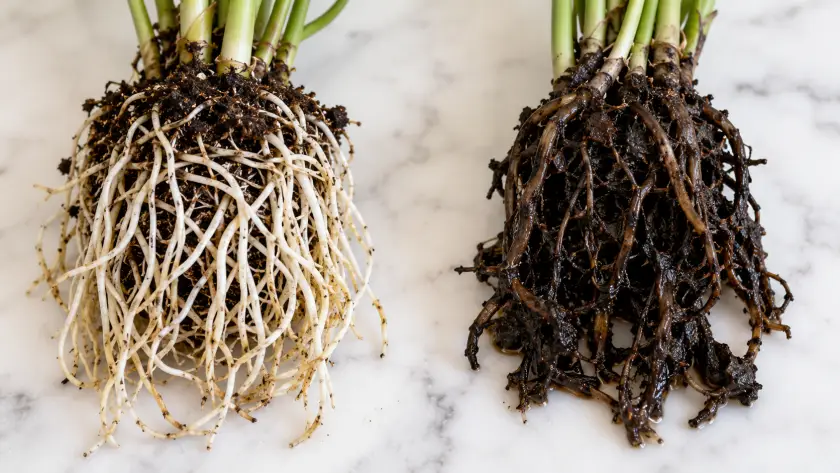
Root inspection is the most important single step in how to revive a dying plant because roots reveal the true severity of the problem that foliage only hints at. Gently slide the plant from its pot and examine the root ball carefully.
Healthy roots are white or light tan, firm when squeezed, and smell neutral or faintly earthy. A plant with healthy roots can almost always be saved regardless of how bad the foliage looks — the recovery system is intact.
Unhealthy roots are dark brown or black, mushy when squeezed, and smell sour or rotten. These roots are no longer functioning and must be removed for reviving dying plants to succeed.
What to do: Using clean sterile scissors, cut away all mushy, dark, or foul-smelling roots. Cut back to firm, healthy tissue even if this means removing the majority of the root ball. Allow the trimmed roots to air dry for 30–60 minutes before repotting — this allows cut surfaces to callous slightly, reducing the risk of further infection. Our how to repot a plant guide and repotting mistakes guide cover the complete repotting process in detail. For full root rot treatment, see our what is root rot guide.
Step 4: Trim Dead and Damaged Foliage
Once roots are treated, turn attention to the foliage. Removing dead and damaged leaves redirects the plant’s remaining energy toward new healthy growth rather than attempting to sustain tissue that will not recover — a critical step in how to save a dying plant that most beginners skip.
Remove: Yellow leaves that are more than 50% discoloured, brown crispy leaves with no remaining green tissue, mushy stems that feel soft at the base, and any leaves showing signs of pest damage or disease.
Keep: Leaves that are still partially green even if damaged at the edges, stems that are still firm even if the leaves look poor, and any new growth however small — this is the recovery indicator you’re watching for.
Important: Don’t over-prune. Removing more than one-third of the plant’s total foliage in one session adds significant additional stress. If the damage is extensive, prioritise removing the most severely affected material first and do a second round two weeks later if needed.
For snake plant rescue, remove individual damaged leaves at soil level. For fiddle leaf fig rescue, remove only fully brown leaves — partially green leaves still contribute to photosynthesis. For calathea and monstera rescue, cut damaged leaves at the stem cleanly.
Step 5: Repot in Fresh Soil (When Needed)
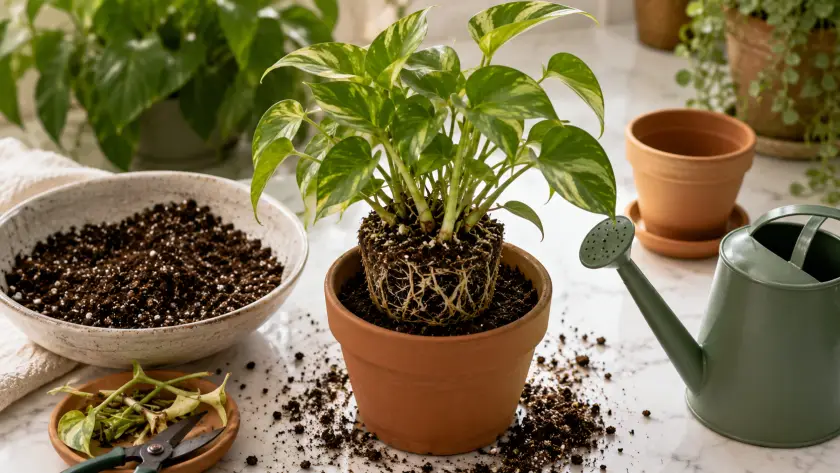
Repotting is essential when soil smells off, drains poorly, has become compacted and hydrophobic, or when root rot has been found and treated. How to revive a dying plant from overwatering or root rot without repotting in fresh soil almost never succeeds — the existing soil continues harbouring the bacteria and fungi responsible for root rot regardless of how carefully watering is managed going forward.
Choosing the right fresh soil for dying plant rescue:
- Succulents and cacti — gritty cactus mix with 40–50% perlite for maximum drainage
- Tropical foliage plants (pothos, philodendron, monstera) — quality potting compost with 20–30% perlite added
- Ferns (boston fern) — moisture-retentive mix with peat or coco coir base
- Snake plant and ZZ plant — well-draining cactus or succulent mix
Choose a pot only slightly larger than the root ball after trimming — one that is too large holds excess soil moisture that roots can’t access, creating waterlogged conditions that repeat the original problem. Always ensure drainage holes are present and unobstructed. Our best soil mix guide covers exact soil compositions for every plant type.
Step 6: Water Correctly — Not Just More or Less
After repotting, watering must respond to what the plant and soil actually need rather than a fixed schedule. How to revive a dying plant from underwatering and how to save a dying plant from overwatering require opposite approaches — and applying the wrong one at this stage undoes all the work done in previous steps.
After underwatering rescue: Water thoroughly until water drains freely from the bottom, allow excess to drain completely, then resume the correct watering schedule for that specific plant. Most underwatered plants show visible recovery — stems firming, leaves lifting — within 24 hours of thorough watering.
After overwatering or root rot rescue: Wait 5–7 days after repotting before the first watering. The trimmed roots need time to begin recovering before being exposed to moisture again. When you do water, water lightly and allow the soil to dry more thoroughly than normal before the next watering. For snake plant and ZZ plant overwatering recovery, wait a full 2 weeks before first post-repot watering.
How to tell if your plant needs water during recovery: Insert a finger or wooden skewer 3–5cm into the soil. Water only when completely dry at this depth. Never water on a fixed schedule during recovery — always check first. Our complete watering guide and signs of overwatering guide cover watering diagnosis in full detail.
Step 7: Fix the Light — The Most Overlooked Rescue Step
One of the most powerful and most overlooked interventions in how to revive a dying plant is simply moving it to a better position. Poor light is both a direct cause of plant decline and a factor that slows recovery from other problems — a plant in insufficient light cannot photosynthesise efficiently enough to generate the energy needed for recovery regardless of how well everything else is managed.
How to adjust light during dying plant rescue:
- Too little light: Move to the brightest available position — ideally a south or east-facing windowsill. If no good natural light is available, a basic grow light positioned 30–60cm above the plant for 12–14 hours daily provides adequate light for recovery. See our complete indoor light guide.
- Too much direct sun: Move back from the window or filter light with a sheer curtain. Sun-scorched leaves don’t recover but new growth in correct light will be healthy.
- Inconsistent light: Rotate the plant quarterly so all sides receive equal light exposure.
Plants that respond most dramatically to light correction include pothos, philodendron, spider plant, and calathea — all of which can look severely stressed in poor light but recover quickly when repositioned.
Step 8: Withhold Fertilizer Completely
Fertilizer must be withheld entirely during how to revive a dying plant recovery — this is non-negotiable and one of the most common mistakes that turns recoverable situations into plant losses. Feeding a stressed plant with damaged roots causes fertilizer salts to burn already-compromised root tissue, accelerating decline rather than supporting recovery.
When to resume feeding: Only after you see clear evidence of new healthy growth — a new leaf unfurling, a new stem emerging, visible new root tips at the drainage holes. This typically means waiting 4–8 weeks after the rescue intervention before introducing any fertilizer.
How to resume feeding after dying plant rescue: Start with quarter-strength liquid fertilizer rather than full recommended dose. Build up gradually over 2–3 months to normal feeding levels. Our fertilizing indoor vs outdoor plants guide covers exactly when and how to resume feeding after recovery.
Step 9: Create Stable Recovery Conditions
During reviving dying plants, environmental stability matters more than perfection. Avoid moving the plant repeatedly to check its progress, avoid dramatic changes in temperature or humidity, and resist the urge to introduce additional interventions while waiting for the plant to respond to the steps already taken.
Ideal recovery conditions for most houseplants:
- Temperature: 18–22°C — avoid cold drafts and heating vents
- Humidity: 40–60% — bathroom proximity or a simple pebble tray helps for humidity-loving varieties. See our humidity hacks guide and DIY humidity tray guide
- Air circulation: Gentle airflow without cold drafts — stagnant air slows recovery and increases fungal risk
- Position: Consistent — don’t move the plant daily to inspect it
Step 10: Watch for Recovery Signs — And Know When to Accept Loss
How to revive a dying plant ultimately requires patience — the hardest part of the entire process. Recovery signs appear gradually and in a specific sequence: roots stabilise before foliage improves, foliage colour improves before new growth appears, and new growth appears before the plant fully restores its original form.
Signs that dying plant rescue is working:
- Stems that were limp becoming firmer over 5–10 days
- Leaf colour improving — yellowing slowing or stopping
- New growth emerging — a new leaf, a new shoot, new root tips visible at drainage holes
- Soil drying at a normal rate — indicating roots are functioning and taking up water
Timeline for reviving dying plants: Most plants show initial recovery signs within 1–3 weeks of correct intervention. Full recovery to pre-decline condition typically takes 2–4 months depending on the severity of the original problem and the plant’s natural growth rate.
When to accept the loss: If after 6 weeks of correct care there is no new growth, no firming of stems, and no improvement in overall condition, the plant may be beyond recovery. At this point, attempt propagation from any remaining healthy stem or leaf material before discarding — many dying plants can still provide cuttings that establish as healthy new plants. Our propagation guide covers propagation from stressed parent plants in detail.
Plants That Bounce Back Best
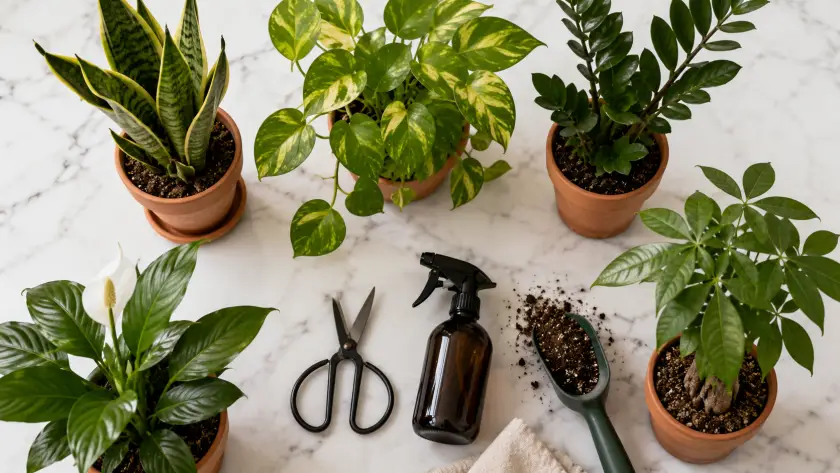
How to revive a dying plant is most likely to succeed with varieties that have genuine built-in resilience mechanisms. If you’re a beginner attempting your first plant rescue, start with these:
Snake Plant — stores water in thick leaves, tolerates root pruning extremely well, and recovers from both overwatering and underwatering reliably when repotted in fresh well-draining soil.
Pothos — among the most resilient of all houseplants for reviving dying plants. Can be propagated from a single healthy node even when the parent plant is severely declined. Recovers from underwatering within hours and from overwatering within weeks of root treatment.
ZZ Plant — rhizome water storage means the plant survives extended neglect that would kill most houseplants. How to revive a dying plant when it’s a ZZ plant is almost always successful if any firm rhizome tissue remains.
Peace Lily — dramatic collapse from underwatering that looks fatal but recovers within hours of watering. One of the most visually alarming but reliably recoverable houseplants available.
Money Tree — tolerates root pruning and soil changes well, recovers from overwatering with correct repotting, and responds quickly to improved light conditions.
Spider Plant — stores water and nutrients in fleshy roots that survive extended underwatering. Reviving dying plants in the spider plant family almost always succeeds if the root crown is intact.
Rubber Plant — tolerates significant stress and responds well to pruning, making how to save a dying plant in the ficus family achievable even from severe decline.
Common Mistakes When Reviving Dying Plants
How to revive a dying plant attempts most commonly fail because of these errors — avoiding them significantly increases recovery success rate:
Overwatering a plant already in decline — the single most damaging mistake. When a plant looks stressed, watering more is the instinctive but wrong response in the majority of cases. Always diagnose before watering. See our signs of overwatering guide.
Skipping root inspection — treating only the visible symptoms without checking root health means the underlying problem continues unaddressed regardless of surface-level interventions.
Fertilizing during recovery — overwhelms damaged roots and accelerates decline. See our fertilizing guide for correct timing.
Moving the plant repeatedly — each position change adds stress during a period when stability is critical. Choose the best available position and commit to it for at least 4 weeks.
Giving up too soon — how to revive a dying plant often requires 3–6 weeks of patient waiting after correct intervention. Plants that look unchanged for 2 weeks are not necessarily failing to recover — root recovery precedes visible foliage improvement by weeks. See our reviving dying plant guide on our site for ongoing reference.
Using the wrong soil after repotting — replacing compacted or waterlogged soil with the same type of compost recreates the original problem immediately. Always use the correct soil type for the specific plant. Our best soil mix guide covers every plant type.
Frequently Asked Questions
How do I know if a plant is really dead or just stressed? Scratch a stem gently with a fingernail — green tissue inside means the plant is alive regardless of how the foliage looks. Squeeze a root firmly — firm tissue means living roots are present and how to revive a dying plant is still possible. A truly dead plant has dry brittle tissue throughout with no green visible anywhere in stems or roots.
How long does it take to revive a dying plant? Initial recovery signs typically appear within 1–3 weeks of correct intervention for reviving dying plants from underwatering, light issues, or mild overwatering. Recovery from severe root rot takes 4–8 weeks before new growth is visible, and full restoration to pre-decline condition takes 2–4 months. See our leaf curl browning and droop guide for symptom-specific recovery timelines.
Can overwatered plants recover on their own? Can overwatered plants recover on their own? Rarely — soil that is already waterlogged continues creating the anaerobic conditions that cause root rot regardless of whether additional water is added. Active intervention — unpotting, root inspection, root trimming, fresh soil — is almost always required for successful reviving dying plants from overwatering. Our what is root rot guide covers overwatering recovery in full detail.
Should I move my plant while it’s recovering? Move once to the best available light position, then leave it there for at least 4 weeks. Repeated repositioning adds stress during the period when stability matters most for how to revive a dying plant recovery. Only move again if the chosen position proves clearly wrong — obvious sun scorch or complete absence of natural light.
Can I use fertilizer to speed up recovery? No — withhold fertilizer entirely until new healthy growth is visible. Feeding a stressed plant with damaged roots causes fertilizer burn that accelerates decline. How to save a dying plant with fertilizer is a myth — the plant needs stability and root recovery, not additional chemical input, during the rescue phase.
What does it mean if my plant’s soil smells bad? A sour, fermented, or rotten smell from potting soil indicates bacterial or fungal activity associated with root rot from sustained overwatering. Unpot immediately, inspect roots, remove all rotten tissue, and repot in fresh well-draining soil. This is the most urgent situation in how to revive a dying plant care — delays allow root rot to spread to previously healthy tissue. See our what is root rot guide.
Related Guides
- What Is Root Rot Guide
- Signs You’re Overwatering
- Leaf Curl Browning Droop Guide
- Why Leaves Turn Yellow
- Complete Watering Guide
- Complete Indoor Light Guide
- Humidity Hacks Guide
- DIY Humidity Tray Guide
- How to Repot a Plant
- Repotting Mistakes to Avoid
- Best Soil Mix Guide
- Fertilizing Indoor vs Outdoor
- How to Propagate Houseplants
- Snake Plant Care Guide
- Pothos Care Guide
- ZZ Plant Care Guide
- Peace Lily Care Guide
- Money Tree Care Guide
- Spider Plant Care Guide
- Rubber Plant Care Guide
- Monstera Care Guide
- Philodendron Care Guide
- Calathea Care Guide
- Fiddle Leaf Fig Care Guide
- Boston Fern Care Guide
- Aloe Vera Care Guide
- Jade Plant Care Guide
- Succulent Care Guide
- Christmas Cactus Care Guide
- Bird of Paradise Care Guide
- Dracaena Care Guide
- String of Pearls Care Guide
- 35 Low Maintenance Plants
- Best Indoor Plants for Beginners
- Office Friendly Plants Guide
- 33 Best Bathroom Plants
- 20 Oversized Indoor Plants
- Air Purifying Indoor Plants
- Low Light Hanging Plants
- Best Low Maintenance Outdoor Plants
- Cat Friendly Plants Guide
- Dog Friendly Plants Guide
- Style Indoor Plants by Room
- Keep Pests Away Outdoor Plants
- Browse All Plant Care →
- Browse All Indoor Plants →
Final Thoughts
Every struggling plant tells a story — of neglect, over-care, wrong placement, or simply bad luck. But whatever the reason, the decision to attempt how to revive a dying plant rather than immediately replacing it is an act of genuine plant parenthood that almost always teaches something valuable about the specific plant’s needs and about plant care in general.
The process described in this guide — diagnosis, root inspection, trimming, correct soil, correct watering, correct light, patience — works more often than most plant owners expect. Plants have remarkable recovery capacity when the underlying problem is correctly identified and addressed, and the satisfaction of watching a plant that looked completely dead push out a healthy new leaf weeks after rescue is one of the most rewarding experiences in houseplant growing.
According to the Royal Horticultural Society (RHS), most houseplant deaths are preventable with correct diagnosis and timely intervention — the most common causes of houseplant loss (overwatering, insufficient light, and incorrect soil) are all entirely reversible when caught before complete root system failure. How to revive a dying plant is ultimately a skill that improves with each rescue attempt, making every struggling plant an opportunity to become a better, more attentive plant owner. 🌱


[…] How to revive a dying plant […]
Your point of view caught my eye and was very interesting. Thanks. I have a question for you. https://www.binance.bh/futures/ref?code=IXBIAFVY
[…] more troubleshooting, read root rot guide, how to revive a dying plant, leaf curl, browning, and droop, and why plant leaves turn […]
[…] If the plant has yellow leaves, root rot, pests, or weak growth, fix those problems first. For plant recovery, read how to revive a dying plant. […]
[…] this guide with how to revive a dying plant, yellow leaves on plants, and complete watering […]
[…] For problem-solving, read yellow leaves on plants, leaf curl, browning and droop, root rot guide, and how to revive a dying plant. […]
[…] your plant begins struggling, use our step-by-step guide to reviving a dying plant, along with the Plant Care library and watering […]