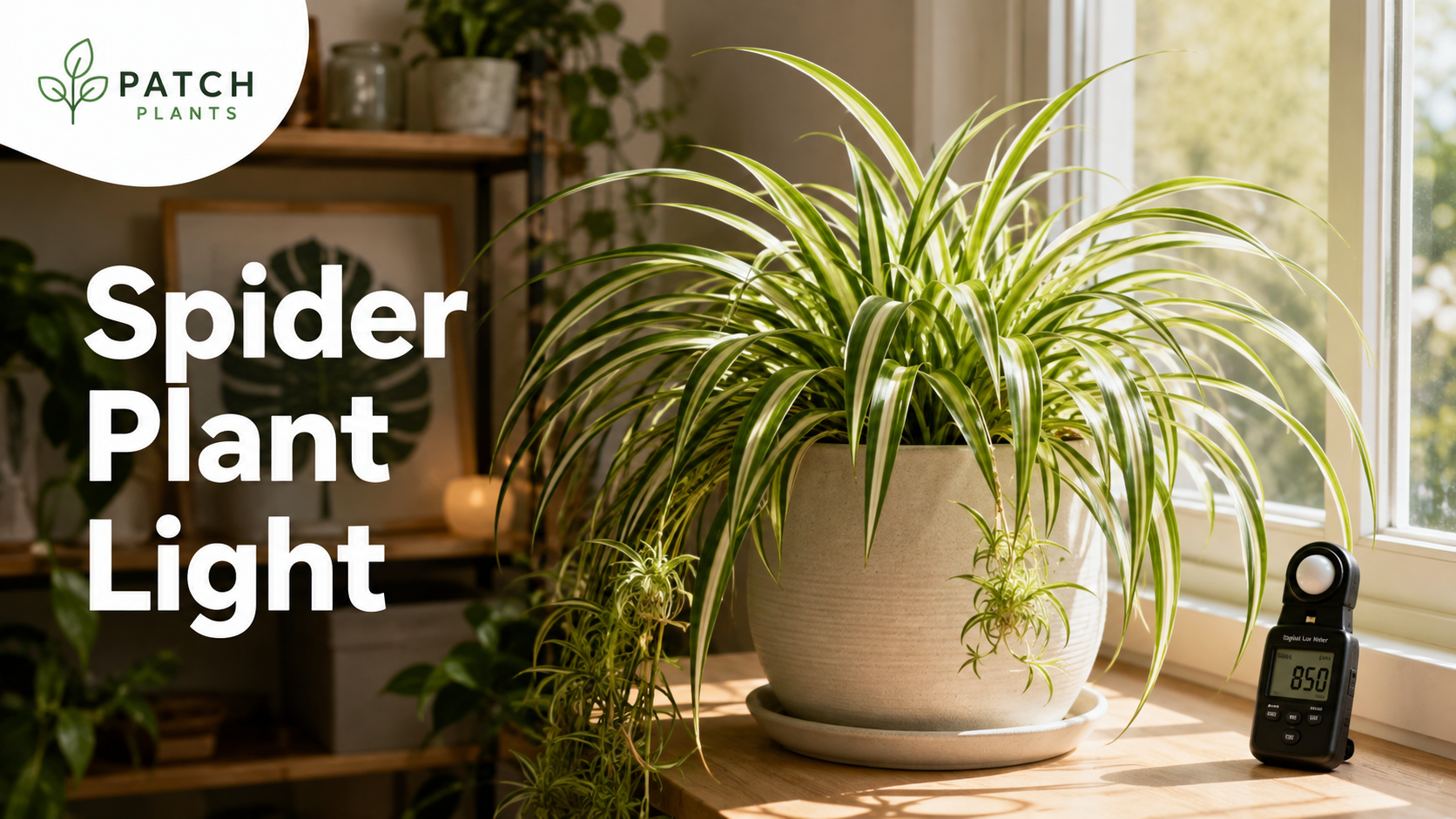
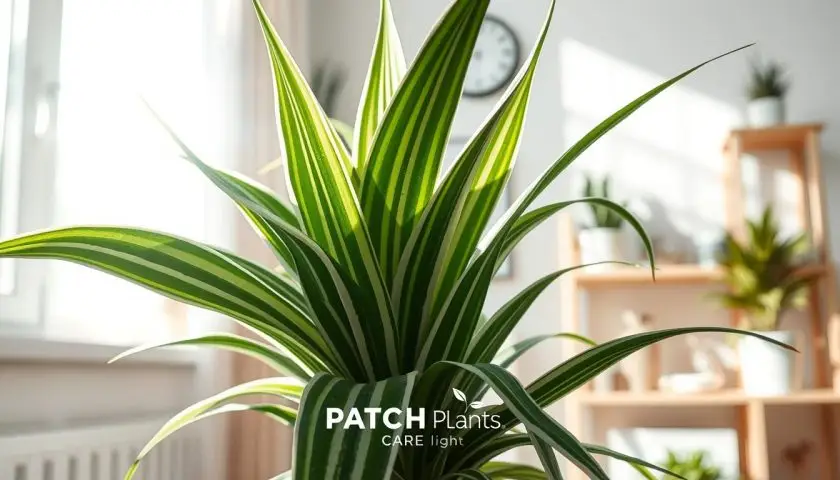
Spider plant light requirements are simple once you understand one thing: spider plants prefer bright indirect light, but they can tolerate lower light better than many houseplants. That does not mean they love dark corners. It means they can survive there for a while, but they usually grow better, brighter, and fuller in filtered light.
If your spider plant has pale leaves, weak growth, fading variegation, or fewer baby plantlets, light may be part of the problem. This spider plant lighting guide explains whether bright or low light is better, where to place your plant, how to spot light stress, and when to use a grow light.
The Real Answer
The best light for a spider plant is bright indirect light. A spider plant can grow in medium light and tolerate low light, but it usually looks healthier near a bright window with filtered sun. Avoid harsh direct afternoon sunlight because it can scorch the leaves. If your room is dark, use a grow light instead of expecting the plant to thrive in deep shade.
Key Takeaways
- Spider plant light requirements are flexible, but bright indirect light is best.
- Low light is tolerated, not ideal for fast growth or strong variegation.
- Direct hot sun can bleach, scorch, or crisp the leaves.
- East-facing windows are often excellent for spider plants.
- North-facing windows can work if the room is bright enough.
- South and west-facing windows usually need distance or sheer curtains.
- For related care, use the full Spider Plant care guide, complete indoor light guide, and low light house plants.
Spider Plant Light Requirements at a Glance
| Light Level | Is It Good? | What Happens |
|---|---|---|
| Bright indirect light | Best | Strong growth, better colour, more plantlets |
| Medium indirect light | Good | Healthy growth, slightly slower than bright rooms |
| Low light | Tolerated | Slower growth, weaker variegation, fewer babies |
| Gentle morning sun | Usually fine | Can support healthy growth if not too hot |
| Harsh afternoon sun | Avoid | Scorch, brown patches, bleached leaves |
| Windowless room | Not ideal | Use a grow light if you want long-term growth |
Understanding Spider Plant Light Needs
Spider plants, or Chlorophytum comosum, are popular because they adapt well indoors. They are tougher than many tropical houseplants, but they still need usable light to grow. A plant in good light produces stronger leaves, better white or cream striping, and more runners with spider plant babies.
The biggest mistake is hearing “low-light tolerant” and placing the plant in a dark corner. Tolerating low light is not the same as thriving in low light. If you want a full, fresh-looking plant, give it bright filtered light whenever possible.
Why light matters
Light powers photosynthesis. When a spider plant gets enough light, it can produce fresh leaves, strong roots, flowers, and plantlets. When light is weak, growth slows and the plant may keep only the leaves it can support.
Why variegated spider plants need better light
Variegated spider plants have white, cream, or pale stripes. Those pale sections contain less chlorophyll than green sections, so the plant benefits from brighter indirect light. In low light, variegation can look dull or less noticeable.
Why direct sun can be a problem
Spider plant leaves are thin and arching. Strong direct summer sun can dry, bleach, or burn them. Gentle morning sun is usually safer than hot afternoon sun.
Bright or Low Light: Which Is Better?
Bright indirect light is better for most spider plants. Low light is useful when you need a tough plant for a less-than-perfect room, but you should expect slower growth.
| Question | Bright Indirect Light | Low Light |
|---|---|---|
| Growth speed | Faster | Slower |
| Leaf colour | Clearer and fresher | May look duller |
| Variegation | Usually stronger | May fade or weaken |
| Plantlets | More likely on mature plants | Fewer or delayed |
| Watering | Soil dries faster | Soil dries slower |
| Risk | Sunburn if too direct | Overwatering if soil stays wet |
How Much Light Do Spider Plants Need?
How much light do spider plants need depends on your goal. For basic survival, they can manage medium to low light. For healthy growth, better colour, and more plantlets, give them bright indirect light for most of the day.
A bright room where you can comfortably read without turning on a lamp during the day is usually better than a dim corner. A spider plant does not need to sit in a sunbeam all day. It needs steady, gentle, usable light.
Good light signs
- Leaves look firm and fresh.
- White or cream stripes stay clear.
- New leaves appear during active growth.
- The plant produces runners or babies when mature.
- Soil dries at a steady, manageable pace.
Poor light signs
- Leaves look pale or dull.
- Growth is very slow in spring or summer.
- Variegation looks weaker.
- Leaves stretch or lean toward the window.
- Soil stays wet too long after watering.
Best Window Direction for Spider Plants
Window direction matters because not all light is equal. Morning sun is gentler. Afternoon sun is stronger. Winter light is weaker. Summer light can be harsh through glass.
| Window Direction | Spider Plant Rating | Placement Tip |
|---|---|---|
| East-facing window | Excellent | Gentle morning light is usually ideal |
| North-facing window | Good to moderate | Works if the room is bright, growth may be slower |
| South-facing window | Good with filtering | Use distance or sheer curtains |
| West-facing window | Good with caution | Protect from hot afternoon sun |
| No window | Poor without support | Use a full-spectrum grow light |
East window
An east-facing window is one of the best spots for spider plants. The plant gets soft morning sun and bright indirect light later in the day.
North window
A north-facing window can work if the room is open and bright. Growth may be slower, but the plant can stay healthy if watering is adjusted.
South window
A south-facing window can be too intense if the plant sits right against the glass. Move it back a few feet or use sheer curtains.
West window
West-facing windows can bring hot afternoon sun. Filter the light or place the spider plant slightly away from the window.
For room-by-room placement, read how to style indoor plants by room, decorate your bedroom with plants, and improve a home office with plants.
How to Judge Light in Your Room
You do not need expensive tools to understand indoor light, but a simple check helps. Look at shadows, distance from windows, and how long natural light reaches the room.
Shadow test
- Sharp shadow: light may be strong and direct.
- Soft shadow: often bright indirect light.
- Very faint shadow: medium to low light.
- No shadow: likely too dark for strong growth.
Reading test
If you can comfortably read a book during the day without turning on a lamp, the room may be usable for a spider plant. If you need lights on during the day, consider a grow light.
Distance test
Light drops quickly as you move away from a window. A plant 1 to 3 feet from a bright filtered window may get much more useful light than one across the room.
Lux meter or phone app
A lux meter or phone light app can help you compare spots. The numbers do not need to be perfect. Use them to find brighter and darker areas in your home.
Signs Your Spider Plant Needs More Light
A spider plant usually tells you when it is not getting enough light. The signs can look like watering problems, so always check both light and soil.
Common low-light signs
- Leaves look pale, dull, or floppy.
- White stripes are less bright.
- New leaves are narrow or weak.
- The plant leans toward the nearest window.
- Soil stays wet for many days.
- Plantlets stop forming on a mature plant.
- Growth slows even during spring and summer.
How to fix low light
- Move the plant closer to a bright window.
- Avoid placing it directly in harsh sun right away.
- Rotate the pot every week or two.
- Reduce watering until the soil dries at a healthy pace.
- Add a grow light if the room stays dim.
For more help, read low light house plants, office-friendly plants for fluorescent light, and complete guide to indoor light.
Signs Your Spider Plant Is Getting Too Much Sun
Too much sun can damage spider plant leaves quickly, especially in summer. The plant may still be in a bright room, but the light is too direct or too hot.
Common sun stress signs
- Bleached or faded leaf patches.
- Brown crispy areas on sun-facing leaves.
- Leaf tips dry faster than usual.
- Leaves curl or look thin after hot sun.
- Damage appears mainly on the window-facing side.
How to fix too much sun
- Move the plant back from the glass.
- Use sheer curtains to diffuse light.
- Trim badly scorched leaves if needed.
- Keep watering steady, but do not overwater because of sun damage.
- Watch new growth for recovery.
Can Spider Plants Grow in Low Light?
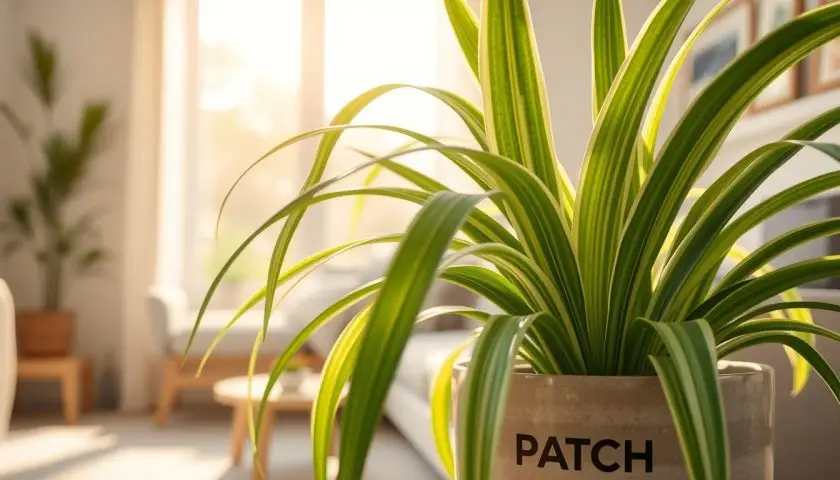
Yes, spider plants can grow in low light, but the word “grow” needs context. They may stay alive and look acceptable, but they often grow slowly and produce fewer runners. Variegated types may also look less bright.
A low-light spider plant needs less water because the soil dries more slowly. Many low-light spider plant problems are actually a mix of low light and overwatering.
Low light can work if:
- The room still has some natural daylight.
- The plant is near a window, not in a dark corner.
- You water less often.
- The soil drains well.
- You accept slower growth.
Low light is not ideal if:
- You want lots of spider plant babies.
- You want strong variegation.
- The room has no window.
- The potting mix stays wet for too long.
- The plant is already weak or recovering.
Can Spider Plants Handle Direct Sunlight?
Spider plants can handle a little gentle direct morning sun, but they should not sit in hot direct sun for hours. Strong sunlight through glass can be harsh enough to scorch the leaves.
| Sun Type | Safe or Risky? | Best Action |
|---|---|---|
| Gentle morning sun | Usually safe | Watch for drying and leaf marks |
| Filtered sunlight | Best | Use sheer curtains if needed |
| Direct midday sun | Risky | Move plant back from window |
| Hot afternoon sun | High risk | Avoid or filter strongly |
| Outdoor full sun | Not recommended | Use bright shade instead |
How Light Affects Watering
Light and watering are connected. A spider plant in brighter light uses water faster. A spider plant in low light uses water slowly. If you water both on the same schedule, one may dry too much while the other may stay soggy.
| Light Level | Watering Effect | Care Tip |
|---|---|---|
| Bright indirect light | Soil dries faster | Check more often, especially in summer |
| Medium light | Moderate drying | Water when top layer begins to dry |
| Low light | Soil dries slowly | Water less often |
| Winter light | Growth slows | Reduce watering and avoid soggy soil |
For watering support, read complete watering guide, worst times to water plants, and signs you are overwatering.
Spider Plant Light in Winter
Winter light is weaker and shorter, so your spider plant may slow down. This is normal. The main risk is watering as if it is still summer while the plant is sitting in cooler, darker conditions.
Winter light tips
- Move the plant closer to a bright window.
- Keep it away from cold glass.
- Rotate the pot for even growth.
- Water less often because soil dries slower.
- Use a grow light if your room gets very dim.
Spider Plant Light in Summer
Summer light can be strong, especially through south or west-facing windows. A spider plant that was fine near the window in spring may get scorched in July or August.
Summer light tips
- Filter hot sun with sheer curtains.
- Move the plant back from south or west glass.
- Check soil more often in warm bright rooms.
- Avoid sudden outdoor full-sun exposure.
- Use bright shade if placing outside temporarily.
Should You Use Grow Lights for Spider Plants?
Grow lights are useful for dark rooms, offices, winter care, and plant shelves far from windows. Spider plants do not need fancy lighting, but they do appreciate consistent usable light.
When a grow light helps
- The room has no useful window light.
- The plant is more than several feet from a window.
- Winter growth becomes weak and pale.
- You want stronger variegation indoors.
- You are growing the plant on a shelf or desk.
Simple grow light setup
- Use a full-spectrum LED grow light.
- Place it close enough to help but not so close that leaves heat up.
- Start with 10 to 12 hours per day.
- Use a timer for consistency.
- Watch for pale leaves, stretching, or scorch and adjust distance.
Why Spider Plant Variegation Fades
Variegation can look weaker when light is too low, the plant is stressed, or older leaves are fading naturally. The white or cream stripes are part of the plant’s pattern, but they look clearer when the plant is healthy and well lit.
What helps variegation
- Bright indirect light.
- Regular rotation.
- Clean leaves.
- Correct watering.
- Fresh but not excessive feeding during active growth.
What weakens variegation
- Deep shade.
- Overwatering in low light.
- Old tired leaves.
- Dusty foliage.
- Root stress or compacted soil.
For leaf care, read how to clean plant leaves and yellow leaves on plants.
Why Spider Plant Leaves Turn Brown in Bright Light
Brown tips do not always mean too much sun. Spider plants can get brown tips from dry soil, low humidity, tap water minerals, fertilizer buildup, root stress, or irregular watering. But brown patches on sun-facing leaves may point to scorch.
| Brown Leaf Symptom | Likely Cause | What to Check |
|---|---|---|
| Brown dry tips only | Water quality, dry air, or watering stress | Watering routine and humidity |
| Brown patches on one side | Sunburn | Direct sun exposure |
| Yellow with brown tips | Overwatering or salt buildup | Soil moisture and fertilizer |
| Crispy edges in hot window | Heat and sun stress | Window direction and glass heat |
For symptom help, use leaf curl, browning and droop, why plant leaves turn yellow, and how to revive a dying plant.
Best Places to Put a Spider Plant Indoors
A spider plant works well in rooms that are bright but not harsh. It can sit on shelves, desks, hanging baskets, plant stands, or bathroom windowsills if the light is good.
| Room | Good Placement | Watch Out For |
|---|---|---|
| Living room | Near a bright filtered window | Hot direct afternoon sun |
| Bedroom | Near an east or bright north window | Cold winter glass |
| Home office | Desk or shelf with window light or grow light | Very dim corners |
| Bathroom | Bright window with filtered light | No-light bathrooms |
| Kitchen | Bright counter away from hot appliances | Grease, heat, and direct sun |
For more room ideas, read best bathroom plants, plants for bathroom no light, and best office plants.
How to Rotate a Spider Plant for Even Growth
Spider plants often lean toward the strongest light source. This is normal, but it can make the plant look one-sided over time. Rotation keeps the rosette fuller and more balanced.
Simple rotation routine
- Turn the pot every 1 to 2 weeks.
- Rotate a quarter turn each time.
- Check whether one side is getting too much sun.
- Rotate hanging baskets too, especially near windows.
- Do not keep moving the plant to totally different rooms.
Common Light Mistakes With Spider Plants
| Mistake | What Happens | Better Choice |
|---|---|---|
| Thinking low light means no light | Weak growth and fading colour | Use bright indirect light where possible |
| Putting plant in harsh sun | Scorched or bleached leaves | Filter sunlight with curtains |
| Watering the same in low light | Soil stays wet too long | Water less often in dim spots |
| Never rotating the pot | One-sided growth | Rotate every week or two |
| Ignoring seasonal light changes | Winter stress or summer scorch | Adjust placement through the year |
| Using a weak decorative lamp | Not enough usable light | Use a full-spectrum grow light |
Spider Plant Light Troubleshooting
| Problem | Likely Light Issue | What to Do |
|---|---|---|
| No baby plantlets | Low light, young plant, or overfeeding | Move to brighter indirect light and be patient |
| Leaves losing variegation | Too little light or old leaves | Move closer to filtered light |
| Brown scorched patches | Too much direct sun | Move back or use sheer curtain |
| Soil stays wet | Low light slows water use | Increase light and water less often |
| Plant leaning | One-sided light | Rotate pot and adjust position |
| Pale weak growth | Insufficient light | Use brighter window or grow light |
Spider Plant Light Checklist
| Check | Good Sign | Warning Sign |
|---|---|---|
| Leaf colour | Fresh green with clear stripes | Pale, dull, or faded leaves |
| Growth | New leaves in active season | No growth for long periods |
| Plantlets | Runners on mature healthy plant | No plantlets despite maturity |
| Sun exposure | Filtered or gentle light | Hot direct afternoon sun |
| Watering link | Soil dries steadily | Soil stays wet for too long |
| Shape | Balanced rosette | Leaning hard toward window |
Helpful PATCH Guides for Spider Plant Light and Care
Use these related PATCH guides to improve light, watering, repotting, propagation, styling, and indoor plant troubleshooting.
Spider Plant Guides
Indoor Light Guides
- Complete guide to indoor light
- Low light house plants
- Office-friendly plants for artificial light
- Low-light hanging plants
Watering and Soil Guides
- Complete watering guide
- Worst times to water plants
- Signs you are overwatering
- Best soil mix guide
- How to repot a plant
- Repotting mistakes to avoid
Problem-Solving Guides
- Yellow leaves on plants
- Why plant leaves turn yellow
- Leaf curl, browning and droop
- Root rot guide
- How to revive a dying plant
- How to clean plant leaves
Indoor Plant Guides
- Indoor Plants hub
- Best indoor plants for beginners
- Best indoor plants for first-time plant parents
- Low-maintenance plants that thrive
- Best indoor plants for tiny apartments
- Oversized indoor plants
- Colorful foliage indoor plants
- Blooming indoor plants
Specific Indoor Plant Guides
- Pothos care guide
- Snake Plant care guide
- ZZ Plant care guide
- Peace Lily care guide
- Monstera care guide
- Philodendron care guide
- Dracaena care guide
- Boston Fern care guide
- Orchid care guide
- Goldfish Plant care
Styling and Room Guides
- Style indoor plants by room
- Decorate your bedroom with plants
- Create an indoor jungle without overcrowding
- Trailing plants for shelves
- Best office plants
- Improve your home office with plants
Frequently Asked Questions
What are the best spider plant light requirements?
Spider plants grow best in bright indirect or dappled light. They can tolerate low light, but bright filtered light usually gives better growth, clearer variegation, and more plantlets.
How much light does a spider plant need daily?
A spider plant does well with several hours of bright indirect daylight each day. It does not need direct sun all day. A bright room with filtered light is usually enough.
Can a spider plant live in low light?
Yes, a spider plant can live in low light, but it may grow slowly, produce fewer babies, and lose some brightness in its variegation. Water less often in low light.
Can spider plants handle direct sunlight?
Spider plants can usually handle gentle morning sun, but harsh direct afternoon sun can scorch or bleach the leaves. Filter strong sun with sheer curtains.
What are the signs my spider plant needs more light?
Signs include pale leaves, weak growth, fading variegation, leaning toward the window, fewer plantlets, and soil that stays wet too long.
Why is my spider plant losing its white stripes?
Weak light is a common reason variegation looks dull. Move the plant to brighter indirect light and rotate the pot regularly.
Can spider plants grow under artificial light?
Yes. Spider plants can grow under full-spectrum LED grow lights. This helps in dark rooms, offices, winter, and shelves far from windows.
Should I put my spider plant in a bathroom?
A bathroom works only if it has real natural light or a grow light. A humid but windowless bathroom is not ideal for strong spider plant growth.
Does light affect how often I water a spider plant?
Yes. A spider plant in bright light dries faster and may need more frequent watering checks. In low light, soil dries slowly, so water less often.
Should I rotate my spider plant?
Yes. Rotate the pot every week or two so all sides receive light and the plant grows evenly instead of leaning toward the window.
Final Thoughts
Spider plant light requirements are flexible, but bright indirect light is the safest goal. Low light is okay for survival, but it is not the best choice if you want strong variegation, steady growth, and healthy plantlets. Harsh direct sun is the opposite problem because it can scorch the leaves.
RHS explains that spider plants prefer a bright position indoors with indirect or dappled light, will tolerate low light, and should be kept out of direct summer sunlight because it can scorch the leaves: RHS spider plants guide.
For the best result, place your spider plant near a bright filtered window, rotate it regularly, and adjust watering based on light. If the room is too dark, a simple full-spectrum grow light can make a big difference.
Final Recap
Spider plants prefer bright indirect light, but they can tolerate medium and low light. Bright filtered light gives stronger growth, better variegation, and more spider plant babies. Low light slows growth and can make the plant look dull, while direct hot sun can bleach or scorch the leaves. East-facing windows are often ideal, north-facing windows can work, and south or west-facing windows may need sheer curtains. Watch for pale leaves, weak growth, fading stripes, leaning, brown sun patches, and soil that dries too slowly. Adjust placement, rotate the pot, water according to light level, and use a grow light if the room is too dim.