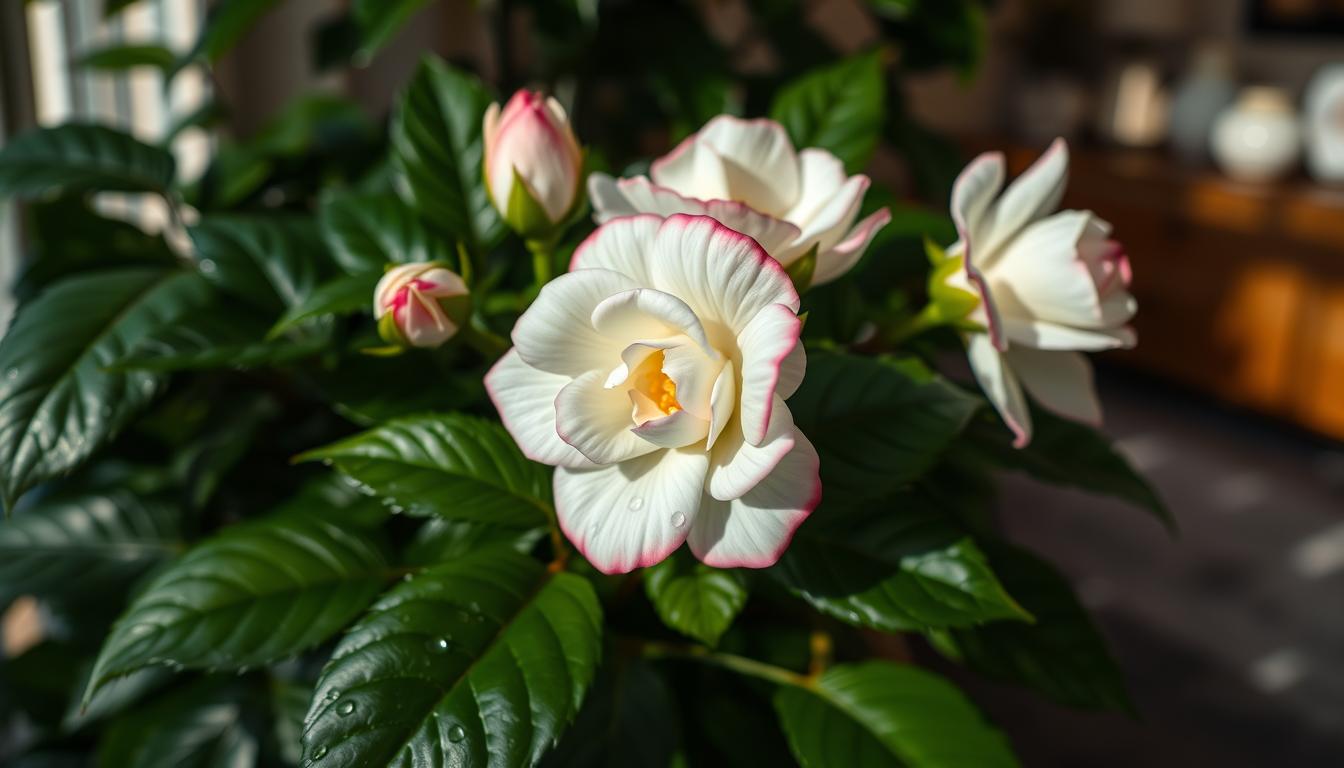
A Christmas rose plant can bring beautiful white blooms to your garden when most other perennials have stopped flowering. Known botanically as Helleborus niger, this hardy hellebore is valued for its elegant winter flowers, dark green foliage, and ability to brighten sheltered garden borders during the cold season.
Despite its name, Christmas rose is not a true rose. It belongs to the buttercup family, Ranunculaceae, and has different growing requirements from ordinary garden roses. It prefers a cool, sheltered position, fertile soil with good drainage, and suitable moisture throughout the year.
The plant is often associated with Christmas because some varieties flower during December in mild climates. However, bloom timing varies with the local climate, weather, cultivar, and plant maturity. In colder regions, flowers may appear in late winter or early spring instead.
This guide explains 11 practical Christmas rose growing and care tips, including the right planting location, soil preparation, watering, winter protection, pruning, fertilizer, container care, and common diseases. You will also learn how to encourage healthy winter blooms and why a Christmas rose may fail to flower.
How Do You Care for a Christmas Rose Plant?
To care for a Christmas rose plant, grow Helleborus niger in light or dappled shade with some gentle sunlight, fertile soil, and excellent winter drainage. Keep the soil appropriately moist without waterlogging, avoid planting the crown too deeply, mulch lightly in autumn, and remove damaged foliage when necessary.
Established Christmas roses usually need relatively little routine maintenance when planted in a suitable location. However, their roots can suffer in persistently wet winter soil, while prolonged drought and strong summer sun may also cause stress.
For reliable growth, choose a position protected from harsh afternoon heat and strong, cold winds. A sheltered border, raised bed, or suitable outdoor container can work well.
The Royal Horticultural Society’s hellebore growing guide provides additional advice on planting, winter drainage, seasonal maintenance, and propagation.
Key Takeaways
- The Christmas rose plant is Helleborus niger, an evergreen perennial rather than a true rose.
- Flowers may appear from winter into early spring, depending on climate and cultivar.
- Light shade, morning sunlight, and protection from intense summer heat suit many planting locations.
- Excellent winter drainage is particularly important because cold, saturated soil can damage roots.
- Christmas roses generally prefer fertile, humus-rich soil, often with a neutral to slightly alkaline reaction.
- Plant at approximately the same depth as the original container, keeping the crown from becoming deeply buried.
- Check soil moisture rather than watering on a rigid daily or weekly schedule.
- Mulch can help moderate soil temperature and moisture, but keep it away from the crown.
- Heavy fertilization is unnecessary when the soil already supplies sufficient nutrients.
- Remove damaged or diseased foliage selectively rather than cutting away every healthy evergreen leaf.
- All parts of hellebores can be harmful if eaten, and the sap may irritate skin.
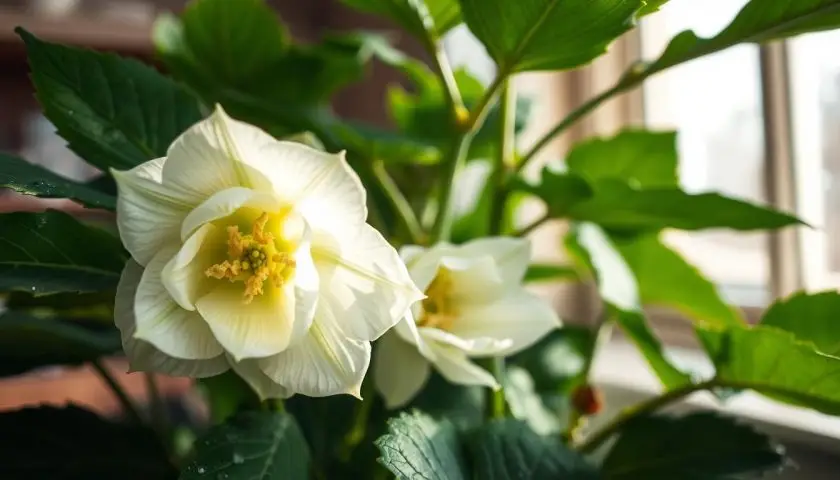
Christmas Rose Plant at a Glance
| Feature | Christmas Rose Details |
|---|---|
| Botanical name | Helleborus niger |
| Common name | Christmas rose, black hellebore |
| Plant family | Ranunculaceae |
| Plant type | Evergreen herbaceous perennial |
| Flower colour | White, sometimes ageing to pinkish or greenish shades |
| Flowering season | Winter to early spring, varying by climate |
| Preferred light | Light or dappled shade, with some gentle sun |
| Soil | Fertile, humus-rich, well-drained |
| Soil reaction | Often neutral to slightly alkaline |
| Water | Suitable moisture without persistent saturation |
| Maintenance | Low to moderate after establishment |
| Best planting areas | Sheltered borders, woodland-style beds, raised beds, outdoor containers |
| Pet and child safety | Harmful if ingested; sap can irritate skin |
Hardiness note: Always check the selected cultivar’s suitability for your USDA hardiness zone. Winter survival depends on temperature, drainage, exposure, root establishment, and whether the plant grows in the ground or a container.
11 Essential Christmas Rose Growing and Care Tips
1. Choose the Right Christmas Rose Variety
The true Christmas rose is Helleborus niger.
It is sometimes confused with other hellebores, particularly Lenten rose, usually represented by Helleborus × hybridus and related plants.
Although these plants belong to the same genus, their flowers, growth habits, and seasonal behaviour can differ.
Before buying, check the nursery label for the botanical name and cultivar.
A healthy Christmas rose should have firm growth, an intact crown, and foliage without extensive damage.
Check the growing medium and visible roots where practical. Avoid plants with severe wilting, obvious crown rot, or widespread suspicious black markings.
Beginner tip: Buy a well-established nursery plant rather than expecting a newly germinated seedling to provide an immediate winter flower display.
2. Plant in Light Shade With Gentle Sunlight
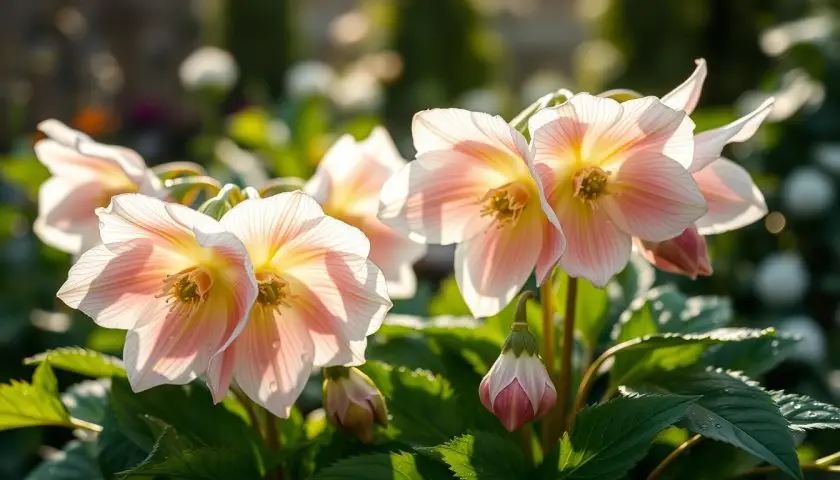
Christmas rose plants generally appreciate a sheltered position with light or dappled shade.
A site receiving gentle morning sunlight and some protection from intense afternoon heat can be suitable.
Planting beneath deciduous trees or near appropriately spaced shrubs may provide seasonal shade.
However, avoid positions where aggressive tree roots remove most of the available moisture.
Too little light may reduce flowering, while excessive summer sun can stress foliage and dry the soil.
Choose a position that balances useful light with protection from harsh conditions.
Growing tip: A sheltered garden border can be better than a very dark corner. Christmas roses need enough light for healthy growth and flower development.
3. Prepare Fertile Soil With Excellent Drainage
Good drainage is one of the most important requirements for growing Helleborus niger successfully.
The plant generally appreciates soil containing organic matter, but its roots should not remain in cold, saturated conditions.
Persistent winter waterlogging can cause root damage and lead to poor growth.
Where garden soil drains poorly, consider a suitable raised bed or container rather than attempting to grow the plant in a permanently wet position.
Organic matter can improve certain soil conditions, but amendments should be selected according to the existing soil structure.
Christmas roses often grow well in neutral to slightly alkaline conditions. However, do not add lime automatically without testing the soil.
| Soil Condition | Potential Problem | Recommended Approach |
|---|---|---|
| Heavy, waterlogged soil | Limited oxygen around roots | Consider raised planting or a suitable container |
| Very sandy soil | Rapid moisture loss | Improve moisture retention where appropriate |
| Compacted soil | Restricted root development and drainage | Improve site structure before planting |
| Fertile, free-draining loam | Generally suitable conditions | Maintain appropriate moisture and mulch |
| Unknown soil pH | Unnecessary amendments may cause imbalance | Test before adjusting pH |
For broader soil guidance, see our guide to suitable plant growing media.
4. Plant at the Correct Depth and Spacing
Christmas roses dislike being planted too deeply.
Place the plant at approximately the same depth it occupied in its original nursery container.
A deeply buried crown may become vulnerable to excess moisture and poor growth.
Follow these practical planting steps:
- Choose a sheltered planting position with suitable drainage.
- Dig a planting hole wide enough to accommodate the existing root ball without crowding.
- Remove the nursery pot carefully and inspect the visible roots.
- Position the plant at its original growing depth.
- Backfill with suitable soil and firm gently without excessive compaction.
- Water appropriately to settle the soil around the roots.
- Apply mulch nearby, keeping the crown uncovered.
The Royal Horticultural Society recommends spacing many hellebores approximately 35 to 45 cm apart, or about 14 to 18 inches, depending on mature growth.
Check the selected cultivar’s dimensions when planning a group planting.
Planting tip: If the existing crown is level with the potting mix, maintain that level after planting rather than burying the base beneath a thick layer of soil.
5. Water According to Soil Moisture and Weather
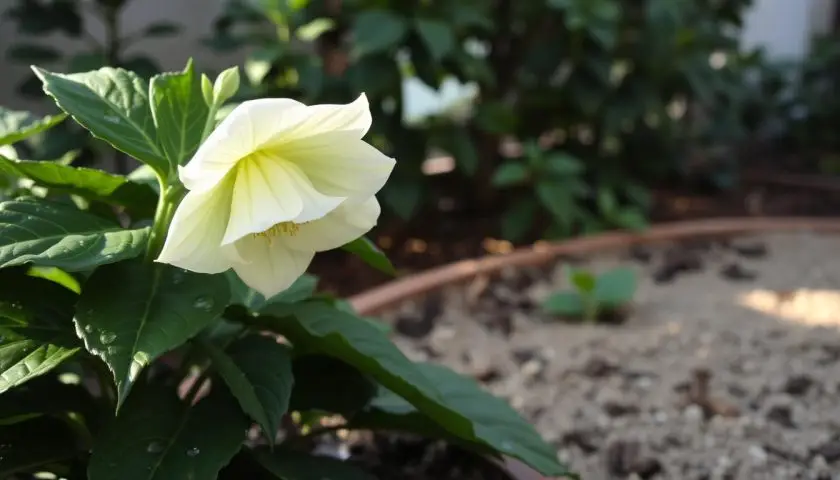
A Christmas rose plant benefits from appropriate moisture, particularly while becoming established.
However, the soil should not remain saturated for extended periods.
Check moisture before watering instead of following a fixed daily or weekly schedule.
Rainfall, temperature, drainage, mulch, and root establishment influence how quickly the soil dries.
Recently planted hellebores may require closer moisture monitoring than established specimens.
During hot or unusually dry periods, provide water when the root zone needs it.
During wet winter weather, additional watering may be unnecessary.
Avoid watering frozen soil unnecessarily.
Container tip: A pot may dry more quickly than a garden bed, but it can also remain too wet if drainage is poor. Check the actual growing medium before adding water.
For practical watering advice, read our complete plant watering guide.
6. Apply Mulch Without Covering the Crown
Mulch can help maintain more even soil moisture, moderate temperature changes, and reduce weed competition.
Organic materials such as composted leaves, suitable bark, and well-rotted garden compost may be useful.
Apply an appropriate layer around the plant, but avoid piling it directly over the crown.
Too much moisture-trapping material around the growing point can encourage unhealthy conditions.
Autumn is often a useful time to refresh mulch before the colder season.
Growing tip: The goal is to protect and improve the root environment, not to bury the centre of the plant.
7. Fertilize Lightly When Nutrients Are Needed
Christmas roses usually do not need heavy fertilizer applications when growing in reasonably fertile garden soil.
A light application of suitable compost or a balanced fertilizer may be helpful where additional nutrients are needed.
However, fertilizer requirements depend on the soil, plant condition, and existing nutrient supply.
A soil test can be useful when growth is consistently poor and nutrient deficiency is suspected.
Do not assume that increasing fertilizer will automatically produce more flowers.
Excessive fertilization may contribute to root stress or nutrient imbalance.
Feeding tip: Review drainage, light, and general plant health before treating limited flowering as a fertilizer problem.
8. Protect Winter Buds From Extreme Weather
Christmas roses are valued because they can flower during cold weather.
However, the plant’s hardiness does not mean that every developing flower will remain undamaged during unusually severe conditions.
Sudden temperature changes, exposed winds, and ice may affect flower appearance.
In suitable circumstances, a temporary breathable cover can protect exposed buds during exceptional weather.
Remove temporary protection when conditions permit so that the plant receives appropriate airflow and light.
Do not keep the plant sealed beneath a non-breathable cover for prolonged periods.
Snow can sometimes insulate plants from extreme fluctuations, but heavy ice or snow loads may damage stems.
Winter tip: Focus on suitable drainage and a sheltered planting site before relying on repeated protective coverings.
9. Prune Damaged Foliage Carefully
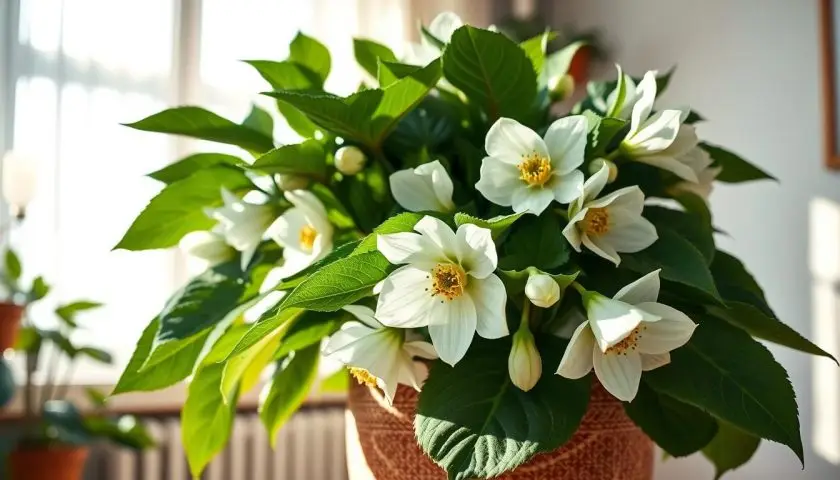
Christmas roses are evergreen perennials, so they may retain healthy foliage throughout winter.
Routine heavy pruning is usually unnecessary.
However, removing dead, badly damaged, or diseased leaves can improve the appearance of the plant and reduce infected material around its crown.
Use clean, sharp tools and wear gloves because hellebore sap may irritate skin.
Unlike some deciduous perennials, Christmas roses should not automatically be cut completely to the ground every winter.
The precise pruning approach depends on the plant’s condition and the type of hellebore.
Pruning tip: Preserve healthy evergreen foliage when possible, and remove affected leaves carefully without damaging developing flower buds.
For more information about pruning methods, see our pruning basics guide.
10. Grow Christmas Roses in Suitable Outdoor Containers
Christmas roses can look particularly attractive in outdoor pots near entrances, on sheltered patios, or in cool seasonal displays.
Container growing is also useful where garden soil remains too wet during winter.
Choose a sufficiently deep and stable pot with adequate drainage holes.
Use a suitable free-draining potting medium that retains enough moisture for the plant without becoming saturated.
Above-ground containers are more exposed to changing root temperatures than plants growing in garden soil.
During unusually severe winter conditions, sheltering or insulating the container may help protect the root system.
However, insulation should not block drainage holes or cause water to accumulate around the roots.
Container tip: A Christmas rose sold as a holiday plant can be displayed briefly indoors in a cool, bright location, but it generally performs better as an outdoor perennial than as a permanent plant in a heated room.
When the plant has finished its temporary indoor display, acclimatize it gradually to appropriate outdoor conditions rather than exposing it abruptly to extreme temperatures.
11. Inspect for Pests, Diseases, and Root Problems
Even well-established hellebores can develop pest or disease problems.
Common concerns include aphids, slugs, snails, fungal leaf spot, and the more serious condition known as hellebore black death.
Regularly inspect foliage, stems, developing buds, and the crown.
Remove clearly diseased foliage where appropriate and dispose of it according to local plant-health guidance.
Do not diagnose every black mark as the same problem.
Hellebore leaf spot is a fungal disease that can produce brown or dark patches on leaves and stems.
Hellebore black death is associated with a virus and may cause black streaks, unusual leaf patterns, and distorted or stunted growth.
The conditions require different responses. The RHS hellebore leaf spot guide and RHS black death guide explain how to distinguish them.
Health tip: If you suspect hellebore black death, do not rely on ordinary fungicide treatment. Follow appropriate plant-health guidance for infected specimens.
Christmas Rose vs Lenten Rose: What Is the Difference?
Christmas rose and Lenten rose are frequently confused because both belong to the hellebore genus.
However, their botanical identities and flowering seasons are not identical.
| Feature | Christmas Rose | Lenten Rose |
|---|---|---|
| Botanical name | Helleborus niger | Commonly Helleborus × hybridus and related hybrids |
| Common flowering period | Winter to early spring | Late winter into spring |
| Typical flower colour | White, sometimes ageing pink or green | White, pink, purple, green, and mixed shades |
| Growth habit | Compact evergreen perennial | Clump-forming, often evergreen or semi-evergreen |
| Winter drainage | Especially important | Also important, with cultivar differences |
| Best choice | Classic white winter interest | Broader flower-colour selection |
When buying either plant, check the botanical name and specific cultivar rather than relying only on the common name.
When Does a Christmas Rose Plant Bloom?
Christmas rose flowering times vary according to local weather, plant maturity, and cultivar.
In mild climates, some plants may flower during the Christmas season.
In colder regions, flowers may appear later, often in late winter or early spring.
Therefore, the name Christmas rose does not guarantee blooms on December 25.
Flower buds may develop during the colder part of the year, and their opening can be delayed by severe weather.
The North Carolina State Extension Christmas rose profile describes flowering around Christmas in warmer regions and early spring in cooler areas.
Why Is My Christmas Rose Not Flowering?
If a Christmas rose produces leaves but very few flowers, investigate its growing conditions before using additional fertilizer.
| Possible Cause | What to Look For | Recommended Action |
|---|---|---|
| Insufficient useful light | Healthy leaves but limited flowering | Consider a brighter sheltered position |
| Excessive winter moisture | Poor root health and slow growth | Improve drainage or choose a raised position |
| Recently planted specimen | Limited root establishment | Allow time for the plant to establish |
| Incorrect planting depth | Crown deeply buried | Review the original growing depth |
| Unsuitable seasonal temperatures | Delayed flower opening | Check normal flowering time for local climate |
| Damaged buds | Browning or collapse after severe weather | Protect exposed plants when appropriate |
| Plant disease | Spotted, distorted, or unhealthy growth | Identify the disease before treatment |
| Unnecessary root disturbance | Poor growth following division or moving | Allow suitable recovery and avoid repeated disturbance |
Flowering may improve as a suitable plant matures and becomes established in its location.
However, persistent poor growth deserves investigation, especially when the soil remains wet or the foliage shows unusual disease symptoms.
Christmas Rose Care Calendar: Season by Season
Helleborus niger needs different attention as seasons change.
| Season | Main Garden Tasks | Container Considerations |
|---|---|---|
| Autumn | Plant where suitable, check drainage, mulch lightly | Prepare for cold weather and inspect drainage holes |
| Winter | Monitor flower buds, winter moisture, and extreme weather | Protect exposed roots and prevent waterlogging |
| Spring | Remove damaged foliage, assess growth, review soil fertility | Check root space and growing-medium condition |
| Summer | Maintain appropriate shade and moisture during dry weather | Check moisture more closely during heat and wind |
Autumn Care
Autumn is commonly suitable for planting hellebores in many regions.
Choose an appropriate location, confirm drainage, and provide a modest organic mulch without burying the crown.
Winter Care
Monitor developing flowers and protect plants from unusual weather extremes when necessary.
Pay particular attention to drainage, especially in containers and heavy soils.
Spring Care
Remove damaged or diseased foliage, check plant condition, and monitor for pests.
Apply additional nutrients only when growing conditions indicate a need.
Summer Care
Protect plants from excessive heat and prolonged drought.
Do not assume that a winter-flowering perennial requires no moisture during warmer months.
Can Christmas Rose Plants Grow Indoors?
Christmas roses are primarily outdoor perennials.
However, flowering specimens are sometimes sold as seasonal holiday plants.
They can be displayed temporarily in a cool, bright indoor position.
A permanently warm, dry living room is generally less suitable than the cool conditions this plant prefers.
Keep the growing medium appropriately moist without waterlogging and avoid placing the pot next to radiators or other heat sources.
After the festive display, transition the plant gradually to a suitable sheltered outdoor location when temperatures permit.
Important: Do not confuse Christmas rose with Christmas cactus. They are botanically unrelated plants with different growing requirements.
For the cactus, see our Christmas cactus maintenance guide.
How to Propagate a Christmas Rose Plant
Christmas roses can be propagated by seed or by carefully dividing suitable established plants.
Growing From Seed
Fresh hellebore seed may be used for propagation, but germination can be slow and may require specific temperature changes.
Seed-grown plants also take time to mature before flowering.
Plants grown from the seed of selected cultivars may not reproduce all the characteristics of the parent.
Propagation by Division
Division may be used to produce additional plants from suitable mature clumps.
However, hellebores do not need routine annual division, and excessive root disturbance may delay recovery.
Divide only when appropriate, retain healthy roots and growing points, and replant promptly.
Check whether a named commercial cultivar has propagation restrictions before multiplying plants for sale.
Common Christmas Rose Problems and Solutions
| Problem | Possible Explanation | Best First Step |
|---|---|---|
| Yellow leaves | Ageing, root stress, moisture problems, or other causes | Check drainage, soil moisture, and new growth |
| Brown leaf patches | Possible fungal leaf spot or environmental damage | Inspect spot patterns and affected foliage |
| Black streaks with distorted growth | Possible hellebore black death | Follow specialist plant-health guidance promptly |
| Chewed leaves | Slugs, snails, or other pests | Inspect during suitable conditions and identify pests |
| Aphids on buds | Hellebore aphids or other aphid species | Inspect new shoots and use suitable control methods |
| Few flowers | Light, immaturity, root health, or flowering season | Review the location and plant condition |
| Wilting in wet soil | Possible oxygen shortage or root damage | Inspect drainage and root conditions |
| Flowers damaged after frost | Extreme cold or sudden temperature change | Assess damage and protect vulnerable buds when necessary |
Are Christmas Rose Plants Poisonous?
Yes. Christmas rose plants can be harmful if eaten, and their sap may irritate skin.
All parts of hellebores should be treated as potentially toxic to people and household animals.
Wear suitable gloves when pruning, planting, or dividing the plant.
Avoid touching your face while handling cut stems or sap, and wash hands after gardening.
Keep trimmed leaves and flowers away from children, cats, dogs, and other animals that may chew plant material.
If a person or pet ingests part of the plant, contact an appropriate medical professional or veterinarian for advice.
The RHS Helleborus niger plant profile provides species-specific information, including its potentially harmful characteristics.
Common Christmas Rose Growing Mistakes to Avoid
- Confusing Christmas rose with true roses: Helleborus niger has different growing requirements.
- Expecting flowers exactly on Christmas Day: Bloom timing varies by climate and cultivar.
- Planting in persistently wet winter soil: Root health depends on suitable drainage.
- Burying the crown too deeply: Maintain approximately the original planting depth.
- Choosing a very dark position: Excessive shade may limit flowering.
- Exposing plants to intense summer heat: Protect from unsuitable harsh sunlight.
- Watering on a strict schedule: Check actual soil moisture and weather conditions.
- Applying excessive fertilizer: More nutrients do not guarantee additional flowers.
- Piling mulch over the crown: Keep the growing point uncovered.
- Removing every healthy evergreen leaf: Prune selectively according to plant condition.
- Ignoring suspicious black markings: Fungal leaf spot and viral black death are different conditions.
- Keeping containers permanently in heated rooms: Christmas roses are primarily outdoor plants.
- Dividing established plants unnecessarily: Excessive root disturbance can hinder recovery.
- Ignoring plant toxicity: Wear gloves and prevent ingestion.
Frequently Asked Questions About Christmas Rose Plants
What is a Christmas rose plant?
A Christmas rose plant is Helleborus niger, a hardy evergreen perennial in the buttercup family. It is not a true rose. The plant is valued for its white flowers, attractive foliage, and winter-to-early-spring flowering season. In suitable climates, some varieties may bloom around Christmas.
Where is the best place to plant a Christmas rose?
Choose a cool, sheltered location with light or dappled shade and some gentle sunlight. The soil should be fertile, humus-rich, and well-drained. Avoid persistently wet winter conditions and intense summer heat. A suitable raised bed or outdoor container can help where garden drainage is poor.
How do I encourage my Christmas rose to bloom?
Provide adequate light, healthy roots, suitable soil moisture, and excellent drainage. Keep the crown at the correct depth and avoid unnecessary root disturbance. Flowering time depends on the species, cultivar, climate, and maturity, so blooms may occur later than Christmas in colder regions.
Can a Christmas rose plant grow in a container?
Yes. Christmas roses can grow in outdoor containers with sufficient root space, suitable potting medium, and functioning drainage holes. They may need protection from severe root freezing and prolonged winter wetness. Check moisture regularly and avoid keeping the plant permanently in a warm indoor room.
Is the Christmas rose poisonous to cats and dogs?
Yes. Hellebores can be harmful if eaten, and their sap can irritate skin. Keep plants and trimmed material away from cats, dogs, and children who may chew them. Wear gloves when handling the plant. Contact a veterinarian promptly if a pet ingests any part of it.
Conclusion
A healthy Christmas rose plant can add beautiful white flowers and evergreen foliage to a garden during the coldest part of the year.
Success begins with choosing the correct Helleborus niger variety, planting it in suitable light, and maintaining excellent winter drainage.
Water according to conditions, keep the crown uncovered, mulch carefully, and avoid excessive fertilizer or unnecessary division. Monitor the foliage for pests and disease, and remember that flowering may take place from winter into early spring rather than on Christmas Day itself.
For more seasonal gardening inspiration, explore our outdoor plants that survive British winters, hardy outdoor plants guide, cyclamen care guide, and festive plant decorating ideas.
With appropriate soil, shelter, moisture, and seasonal care, this classic winter perennial can become an attractive feature of your garden for years to come.