Variegated cheese plant care starts with bright, indirect light, an airy and well-draining potting mix, careful watering, and stable indoor conditions. Because the white or cream sections of variegated leaves contain less chlorophyll than green tissue, these plants can grow more slowly and need enough light to support healthy growth. Good drainage, moderate humidity, climbing support, and regular pest checks can help your plant maintain strong foliage and attractive variegation.
Key Takeaways
- Provide plenty of bright, indirect light while protecting pale leaf sections from harsh direct sun.
- Check the potting mix before watering instead of following a fixed schedule.
- Use a container with drainage holes and never leave the root ball sitting in standing water.
- Maintain moderate humidity without keeping the foliage constantly wet.
- Use a loose, airy potting mix that allows both drainage and root aeration.
- Feed during active growth without applying excessive fertilizer.
- Protect the plant from sudden temperature changes and direct HVAC airflow.
- Provide a moss pole, coir pole, or sturdy trellis for climbing growth.
- Prune damaged foliage selectively while preserving healthy green tissue.
- Repot when the roots or condition of the potting mix indicate a genuine need.
- Inspect leaves, stems, petioles, and new growth regularly for pests.
Understanding Your Variegated Cheese Plant
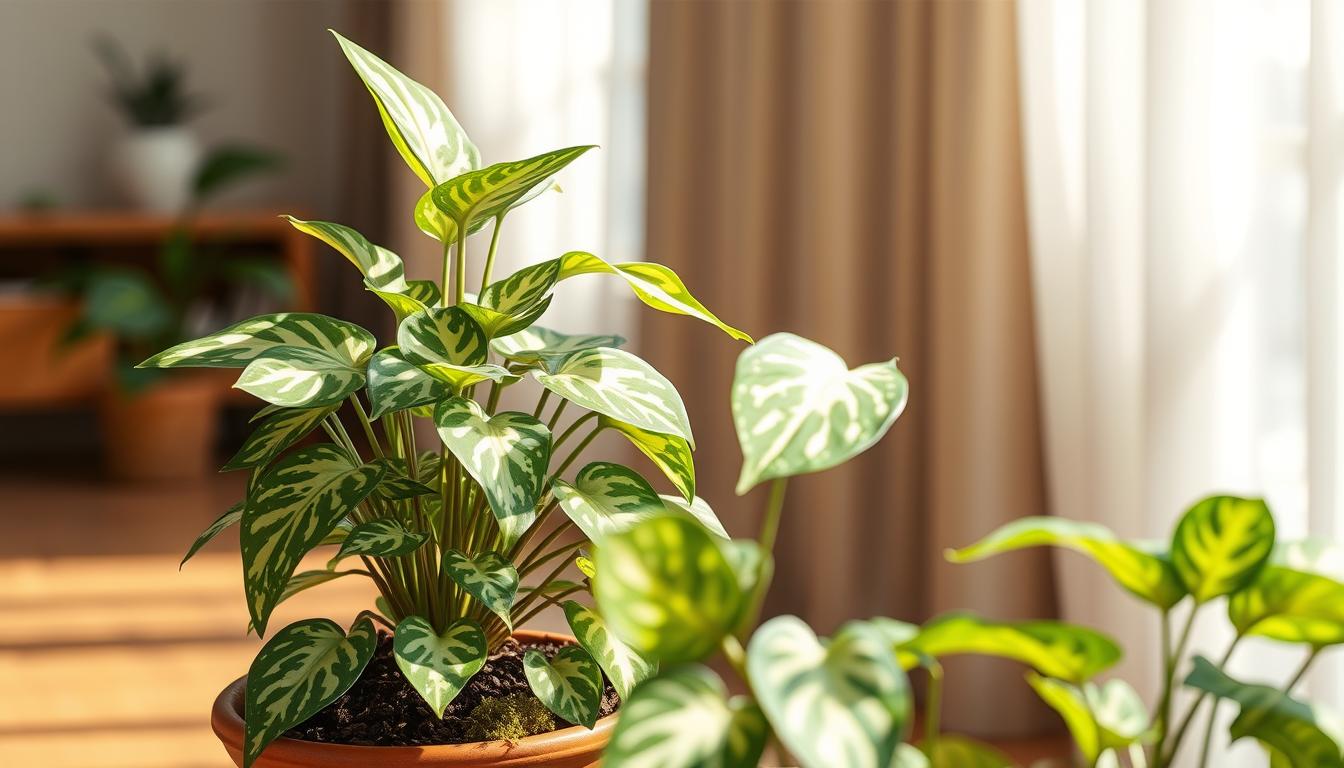
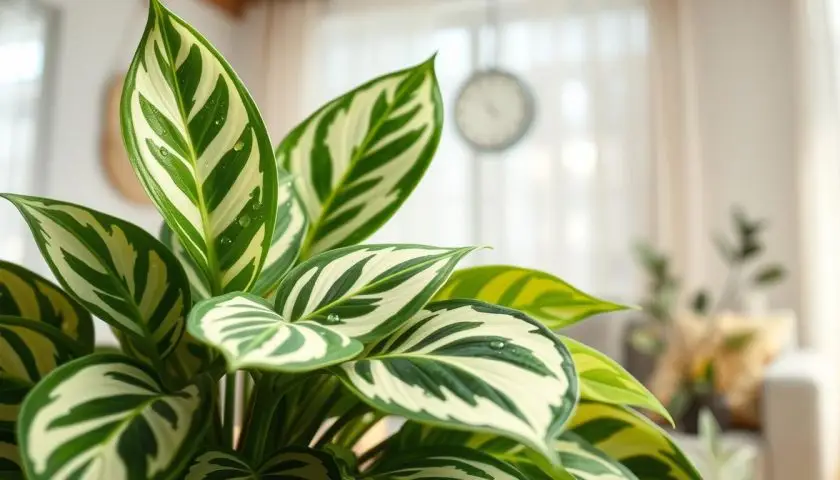
A variegated cheese plant is grown for its dramatic green foliage patterned with white or cream sections. The source draft focuses primarily on variegated forms of Monstera deliciosa, including plants commonly sold as ‘Albo Borsigiana’.
The pale sections of a variegated leaf contain less chlorophyll than its green areas. As a result, a heavily variegated plant has less green tissue available for photosynthesis and may grow more slowly than a fully green Monstera.
This difference is important because successful variegated Monstera care depends on balancing enough light for growth with protection from excessive direct sunlight.
Healthy Variegation vs. Plant Stress
Natural variegation usually appears as distinct cream or white patterning alongside healthy green tissue. Yellowing, browning, wilting, or damaged areas should not automatically be interpreted as additional variegation.
| Feature | Healthier Appearance | Possible Stress Sign |
|---|---|---|
| Variegation | Distinct green and cream or white pattern | General yellowing or damaged patches |
| Leaf Texture | Firm, intact foliage | Crispy edges or severe wilting |
| Growth | New leaves developing over time | Persistent decline or stalled growth |
| Roots | Firm roots | Soft, dark, or deteriorating roots |
1. Provide Bright, Indirect Light to Protect Variegation
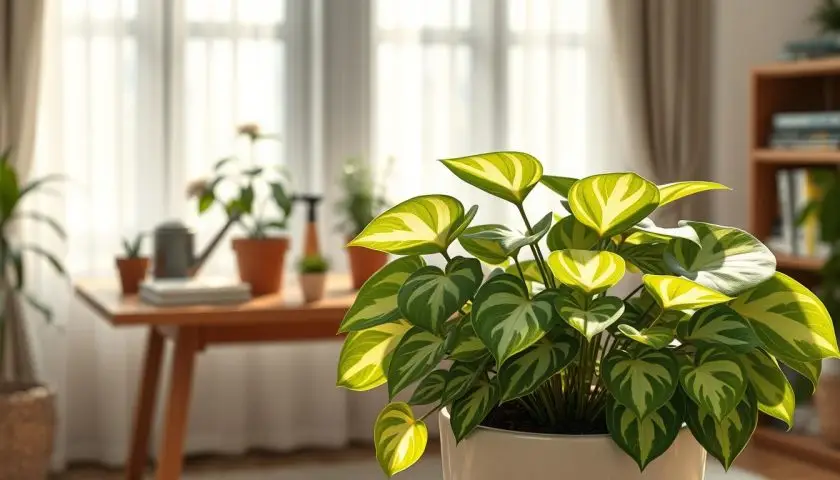
Light is one of the most important parts of variegated cheese plant care. Because pale leaf sections contain less chlorophyll, the plant benefits from plenty of usable light to support its green tissue.
Choose a Bright Indoor Location
Place the plant where it receives bright, filtered or indirect light. A position near a suitable window can work well as long as the foliage is protected from harsh direct exposure.
For a deeper explanation of window direction and indoor light intensity, see our complete guide to indoor light.
Protect Pale Foliage From Harsh Sun
White and cream sections can be more vulnerable to visible damage. If intense afternoon sunlight reaches the leaves directly, filter it with a sheer curtain or move the plant farther from the window.
Use Supplemental Light When Natural Light Is Limited
If the room cannot provide enough natural light, an appropriate grow light can supplement the available light. Introduce stronger lighting gradually instead of making a sudden major change.
Rotate Only as Needed
If most light reaches the plant from one direction, occasional rotation can encourage more balanced exposure. However, a climbing Monstera attached to a support naturally develops a front and back, so constant rotation is not necessary.
2. Water When the Potting Mix Begins to Dry
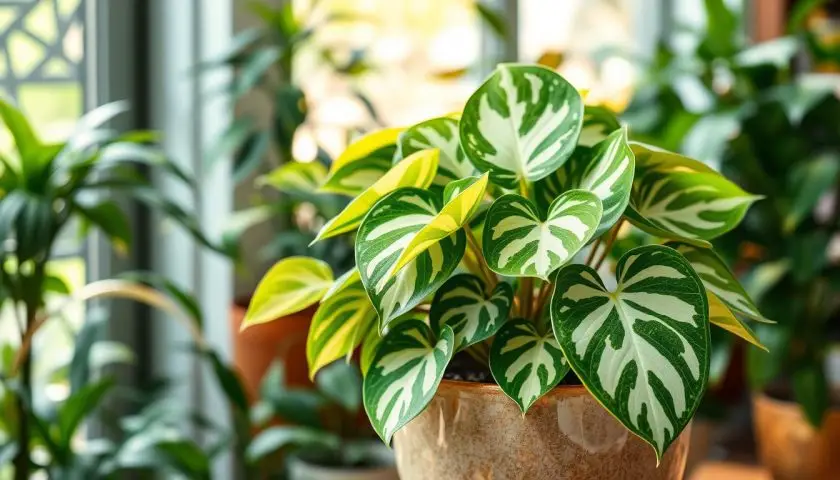
Avoid watering your variegated cheese plant according to a fixed calendar. Light, temperature, humidity, pot size, root development, and the potting mix all affect how quickly moisture is used.
Check Before You Water
Feel the upper portion of the potting mix before adding more water. The source draft recommends allowing the upper layer to begin drying rather than keeping the entire container continuously wet.
Water the Root Ball Thoroughly
When watering is needed, moisten the root zone thoroughly and allow excess water to flow from the drainage holes.
For more help judging moisture instead of relying on a calendar, read our complete plant watering guide.
Adjust Watering as Conditions Change
A plant in brighter, warmer conditions may use moisture differently from the same plant during cooler, darker periods. Check the potting mix each time instead of assuming the interval between waterings will remain identical year-round.
3. Prevent Root Problems With Reliable Drainage
Good drainage works together with proper watering. Even careful watering can become problematic if excess moisture cannot leave the container.
Use a Pot With Drainage Holes
Choose a container that allows excess water to escape from the bottom. If you use a decorative cachepot, remove accumulated water after watering rather than allowing the nursery pot to remain submerged.
Do Not Leave the Plant Sitting in Water
Standing water can keep the root zone saturated for too long. Empty saucers and decorative containers after excess water has drained.
Watch for Root Trouble
Yellow foliage, wilting, soft stems, persistently wet potting mix, or an overall decline can justify checking moisture and root health. These symptoms can have multiple causes, so inspect the plant rather than diagnosing it from one sign alone.
If you suspect damaged roots, our guide to identifying and treating root rot explains the problem in more detail.
4. Maintain Moderate Humidity Without Keeping Leaves Wet
Variegated Monstera is a tropical foliage plant, and the source recommends moderate humidity as part of its indoor environment.
Use a Humidifier When Indoor Air Is Very Dry
If indoor air becomes consistently dry, a humidifier can provide more stable humidity around the plant.
Grouping Plants Can Help With the Immediate Environment
Houseplants with compatible requirements can be grouped together, provided there is still enough space for airflow and routine inspection.
Do Not Rely on Misting
The source correctly distinguishes temporary misting from consistent environmental humidity. Spraying leaves briefly does not replace proper humidity management and should not be treated as an essential part of watering.
Our houseplant humidity guide provides additional practical ideas for managing dry indoor conditions.
Maintain Airflow Around the Foliage
Do not crowd large leaves tightly against walls, furniture, or neighboring plants. Adequate space makes inspection easier and helps prevent a stagnant environment around the foliage.
5. Use a Loose, Well-Draining Potting Mix
The root system needs access to both moisture and air. A compacted growing medium can remain wet for too long and reduce aeration around the roots.
Create an Airy Root Environment
The uploaded draft recommends a chunky mix using indoor potting mix along with ingredients such as orchid bark and perlite or pumice.
The exact proportions do not need to be identical for every plant. The practical goal is a medium that holds useful moisture while allowing excess water to drain and air to reach the root system.
| Potting Component | Role in the Mix |
|---|---|
| Indoor potting mix | Provides the main growing medium and moisture retention |
| Orchid bark | Adds larger particles and improves structure |
| Perlite or pumice | Improves drainage and aeration |
For more information about balancing drainage and moisture retention, see our guide to choosing the right soil mix.
Avoid Heavy Garden Soil in Indoor Containers
The source advises against dense garden soil because it can compact in a container and create unsuitable drainage and aeration around the roots.
6. Fertilize During Active Growth Without Overfeeding
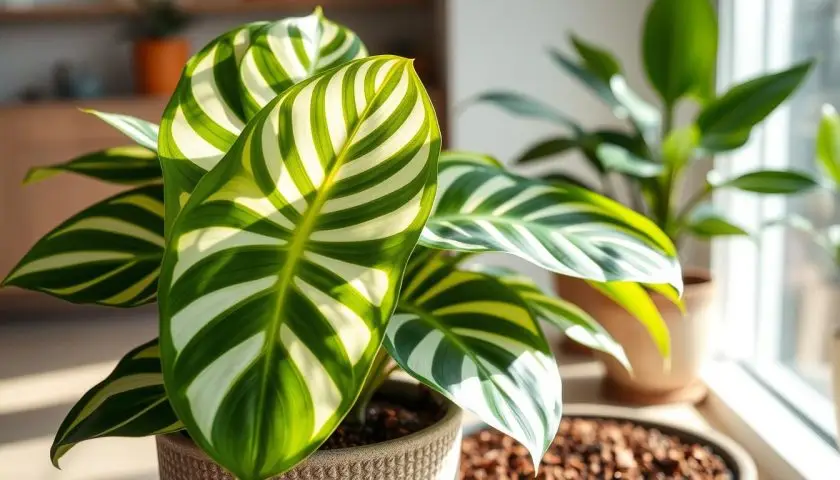
Fertilizer can support healthy new foliage, but applying more fertilizer than a plant needs will not necessarily make it grow faster.
Use an Appropriate Houseplant Fertilizer
The source recommends a balanced houseplant fertilizer during active growth. Follow the product label rather than applying an arbitrary amount or concentration.
Match Feeding to Plant Growth
If the plant is actively producing new leaves under suitable light, its needs may differ from periods when growth has slowed substantially.
Avoid assuming that every autumn or winter plant is completely dormant. Indoor growth depends on the actual light, temperature, and growing environment.
Watch for Excess Fertilizer
Applying fertilizer too heavily can contribute to salt accumulation and root stress. If a plant is already struggling because of root damage, unsuitable moisture, or another serious problem, address the underlying issue before increasing fertilizer.
7. Keep Temperatures Stable and Reduce Environmental Stress
Stable indoor conditions are another important part of variegated cheese plant care. Sudden temperature changes can add unnecessary stress.
Avoid Cold Drafts
Keep the plant away from frequently opened cold doors, drafty windows, and direct air-conditioning airflow.
Keep It Away From Direct Heating Air
Heating vents and other strong sources of hot, dry air can change both leaf and soil conditions quickly.
Remember That Temperature Affects Water Use
Light, temperature, and watering interact. A plant growing in warmer, brighter conditions may use water faster, while potting mix may remain wet longer when conditions become cooler and darker.
This is another reason to check the growing medium before watering rather than following a rigid schedule.
8. Give Your Variegated Cheese Plant a Climbing Support
Monstera is a climbing plant. Providing vertical support can help organize its growth and give aerial roots something to grow toward.
Use a Moss Pole, Coir Pole, or Sturdy Trellis
A support structure can encourage more upright growth instead of allowing long stems to spread across furniture or the floor.
Our guide to using moss poles for plants explains how climbing supports work.
Guide Aerial Roots Toward the Support
Aerial roots can be directed toward an appropriate support rather than being cut simply because they look untidy.
Secure Stems Loosely
If ties are needed, use soft plant ties and leave enough room so they do not cut into expanding stems.
Do Not Bury Growth Points Unnecessarily
The source warns against burying stems, aerial roots, or growth points unnecessarily. Keep the plant positioned appropriately in its growing medium rather than covering excessive stem tissue.
9. Prune Damaged Growth With Clean Tools
Variegated plants benefit from selective pruning rather than aggressive cutting. Healthy green tissue is particularly valuable because it contains chlorophyll needed for photosynthesis.
Remove Dead or Severely Damaged Foliage
Use clean, sharp tools to remove leaves that are fully dead or seriously damaged when necessary.
For general cutting technique, see our pruning basics guide.
Preserve Healthy Green Tissue
Avoid removing healthy leaves simply to improve the shape of the plant. A heavily variegated plant already has less photosynthetic green tissue than a fully green specimen.
Expect Some Browning of Pale Tissue
White sections can be more delicate than green tissue. Browning does not automatically mean the entire leaf must be removed.
Before cutting, consider light exposure, moisture, humidity, fertilizer use, and root health.
10. Repot Only When the Plant Shows a Need
Frequent repotting is not necessary for healthy variegated Monstera care. Repot when the root system or growing medium provides a practical reason.
Look for Repotting Signs
Possible reasons include roots densely circling the container, roots emerging extensively from drainage holes, deteriorated or compacted potting mix, or a container that no longer accommodates the root system appropriately.
Choose a Modestly Larger Container
The source recommends moving up gradually rather than transferring a small root system into an excessively large pot.
An oversized volume of potting mix can stay moist differently from a well-rooted, appropriately sized container.
Handle Roots Carefully
Repot with a clear purpose and avoid unnecessary root damage. After repotting, monitor moisture carefully while the plant adjusts to the new container and growing medium.
11. Inspect Regularly for Pests and Treat Problems Early
Regular inspection makes it easier to notice a problem before it spreads throughout a large plant or nearby houseplant collection.
Inspect More Than the Upper Leaf Surface
Check leaf undersides, petioles, stems, new growth, and areas where plant structures meet. The source specifically mentions pests such as scale, thrips, and spider mites as problems to watch for.
Separate an Affected Plant When Necessary
If you discover a suspected pest problem, separating the plant from nearby houseplants can help while you identify the pest and determine an appropriate treatment.
Identify the Pest Before Choosing Treatment
Do not assume every damaged leaf has the same cause. Look for insects, webbing, sticky material, feeding damage, or other evidence before deciding how to respond.
Follow Treatment Labels Carefully
If you use insecticidal soap or another labeled plant treatment, follow its directions rather than increasing the concentration in an attempt to achieve faster results.
How to Clean Variegated Monstera Leaves
Large Monstera leaves can collect household dust over time. The source recommends cleaning foliage with clean water rather than coating it with oily leaf-shine products.
Wipe Leaves Gently
Use a clean, soft, damp cloth to wipe dust from the foliage. Support the leaf with your other hand so you do not accidentally bend or tear it.
Avoid Unnecessary Leaf Products
A healthy Monstera leaf does not need an artificial glossy coating. Simple cleaning also gives you an opportunity to inspect the foliage for pests and damage.
Common Variegated Cheese Plant Problems
Symptoms are clues rather than guaranteed diagnoses. Yellowing, browning, curling, or slow growth can have more than one possible cause, so review the entire growing environment before making major changes.
| Symptom | Conditions to Investigate |
|---|---|
| Yellow leaves | Moisture, drainage, roots, light, natural leaf aging |
| Brown or crispy edges | Moisture, dry air, fertilizer buildup, direct sun, root condition |
| Slow growth | Light, root space, nutrition, temperature, normal variegated growth rate |
| Leaf curling or drooping | Moisture, temperature, roots, pests |
| Fewer variegated sections | Genetics, stem pattern, light, green reversion |
Yellow Leaves
Do not automatically interpret a yellow leaf as overwatering. Check soil moisture, drainage, roots, light conditions, and whether the affected leaf is simply an older leaf reaching the end of its life.
Our guide to yellow leaves on plants can help you investigate the possible causes.
Brown or Crispy White Sections
The pale portions of variegated leaves can be more vulnerable to environmental stress. Review harsh direct light, moisture consistency, humidity, fertilizer use, and root health before deciding what needs to change.
Small Leaves or Slow Growth
Variegated plants may naturally grow more slowly because less of each leaf contains chlorophyll. If growth appears unusually weak, check available light, root condition, nutrition, temperature, and climbing support.
Drooping or Curling Leaves
Inspect moisture conditions, roots, temperature changes, and pests. Do not assume curling always means the plant needs more water.
Loss of Variegation or Green Reversion
Variegation is influenced by the plant’s genetics and the variegated tissue present in its growing stem. Light is still important for overall plant health, but moving a plant into brighter light does not guarantee that a fully green growth point will become variegated again.
If new growth repeatedly emerges completely green, observe where the variegation remains on the stem before considering pruning. Avoid repeatedly cutting a weak plant simply to chase a particular leaf pattern.
Common Variegated Cheese Plant Care Mistakes
Watering on a Fixed Calendar
Do not water simply because a particular number of days has passed. Check the potting mix and plant conditions first.
Keeping the Plant in Deep Shade
Variegated foliage has less chlorophyll than fully green foliage, so very dim conditions can limit healthy growth. Provide bright, indirect light while avoiding damaging direct exposure.
Using a Pot Without Reliable Drainage
A decorative container should not trap water around the roots. Use a draining inner pot if necessary.
Overfertilizing
Extra fertilizer cannot compensate for inadequate light, damaged roots, or unsuitable watering.
Repotting Too Frequently
Repot because the roots or growing medium require attention, not simply because the plant has temporarily slowed its growth.
Making Several Major Changes at Once
If a plant develops a problem, avoid changing its light, watering, pot, fertilizer, and location simultaneously. Adjust the most likely limiting factor and monitor subsequent growth so you can understand how the plant responds.
Year-Round Variegated Cheese Plant Care
A practical care routine should respond to the plant rather than to a rigid calendar.
Check the Plant Regularly
During routine care, inspect:
- Potting mix moisture
- Leaf condition
- Leaf undersides and new growth for pests
- Drainage holes
- Roots when visible
- Support ties and climbing stems
- New leaf size and variegation
Adjust Care When Indoor Conditions Change
Seasonal changes in daylight and indoor temperature can alter how quickly the potting mix dries and how actively the plant grows.
During slower growth, the plant may use water less quickly. When light and warmth increase, its moisture use can change again.
Choose Display Locations Based on Plant Health
A variegated cheese plant can become a dramatic piece of living décor, but appearance should not override its growing requirements.
Choose a location that provides suitable light, enough room for mature foliage, airflow, climbing support, and easy access for watering and inspection.
Frequently Asked Questions
How do you care for a variegated cheese plant?
Provide bright, indirect light, an airy and well-draining potting mix, reliable drainage, and appropriate moisture without keeping the roots constantly wet. Maintain stable indoor conditions, provide climbing support, feed appropriately during active growth, and inspect the plant regularly for pests and root problems.
Why does a variegated cheese plant need bright light?
White or cream leaf sections contain less chlorophyll than green tissue. A variegated plant therefore has less photosynthetic green area available than a fully green plant. Bright, indirect light supports healthy growth without exposing delicate pale sections to excessive direct sunlight.
How often should I water a variegated cheese plant?
Do not follow a fixed watering calendar. Check the upper potting mix and water when it has begun to dry appropriately, then water thoroughly and allow excess moisture to drain. Light, temperature, humidity, pot size, roots, and season all influence how quickly the plant needs water again.
What soil is best for a variegated cheese plant?
The uploaded care guide recommends a loose, chunky potting medium using indoor potting mix with materials such as orchid bark and perlite or pumice. The goal is to retain useful moisture while maintaining drainage and air around the roots.
Does a variegated cheese plant need a moss pole?
A moss pole is not the only possible support, but Monstera has a climbing growth habit. A moss pole, coir pole, or sturdy trellis can support vertical growth and give aerial roots something to grow toward.
Why are the white parts of my Monstera turning brown?
Pale variegated tissue can be more sensitive than green tissue. Review direct sunlight, moisture, humidity, fertilizer use, root condition, and general environmental stress rather than assuming there is one universal cause.
Why is my variegated Monstera growing slowly?
Variegated plants can grow more slowly because their white or cream leaf sections contain less chlorophyll. If growth becomes unusually weak, also check light, root space, nutrition, temperature, watering, and overall plant health.
When should I repot a variegated cheese plant?
Repot when there is a practical need, such as an overcrowded root system, extensively circling roots, deteriorated potting mix, drainage problems, or a container that no longer suits the root system. Move to a modestly larger container rather than an unnecessarily oversized pot.
Can low light cause a variegated Monstera to lose variegation?
Low light can weaken a variegated plant and make healthy growth more difficult, but variegation is also determined by the plant’s genetics and stem tissue. Increasing light supports the plant but does not guarantee that a completely green growth point will become variegated again.
Should I use leaf shine on variegated Monstera leaves?
The source recommends avoiding oily leaf-shine products. Instead, gently wipe dusty leaves with a clean, damp, soft cloth. This keeps the foliage clean while giving you an opportunity to inspect for pests and damage.
Final Thoughts
Successful variegated cheese plant care depends more on consistent observation than complicated routines. Start with bright, indirect light, an airy potting mix, reliable drainage, and watering based on actual soil conditions.
Give the plant stable indoor conditions and suitable humidity, feed according to active growth, and provide a climbing support as stems develop. Preserve healthy green foliage because it provides much of the photosynthetic tissue a highly variegated plant needs.
Regular inspection is equally important. Check leaves, roots, new growth, drainage, and climbing supports so you can notice problems early instead of making several major care changes after the plant begins to decline.
With the right environment and patient care, a variegated cheese plant can develop into an impressive climbing houseplant with large, distinctive green-and-cream foliage.