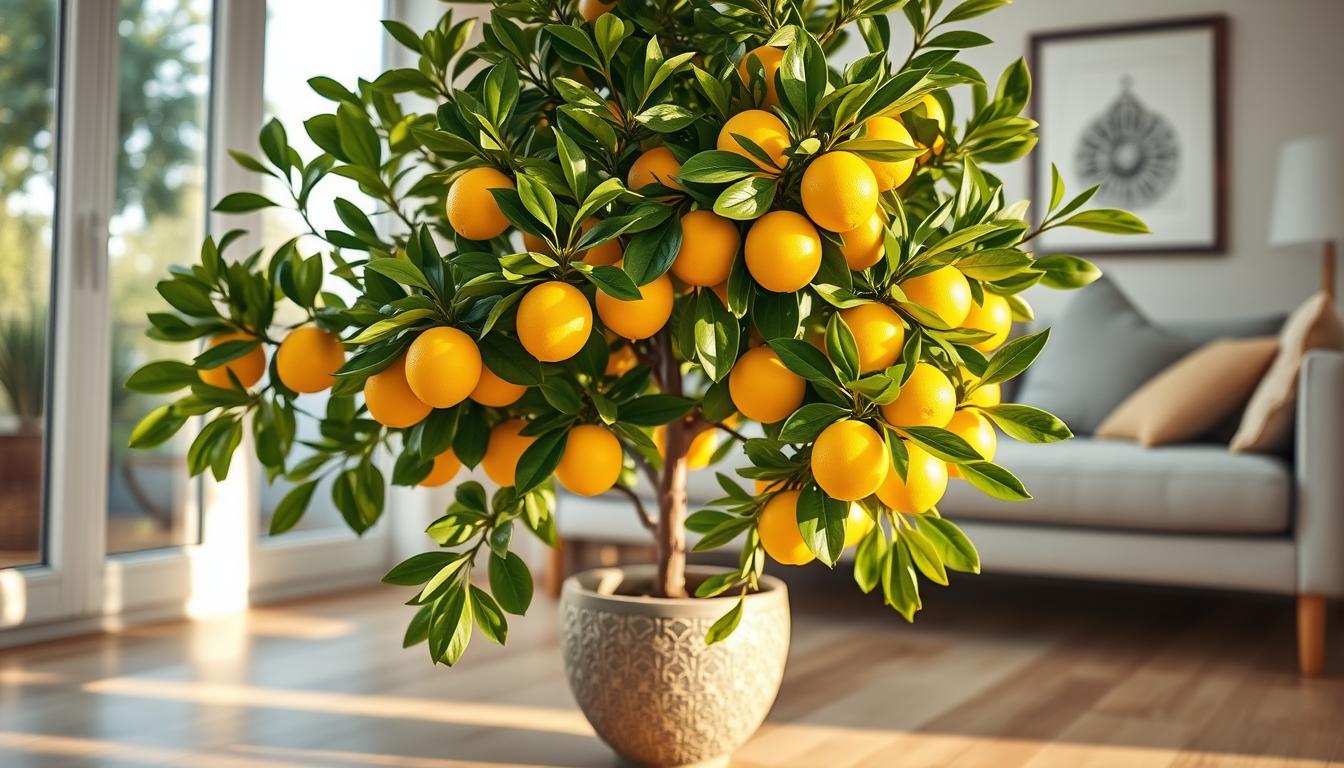
A lemon tree grows well in a pot if you give it as much sun as possible, a free-draining citrus compost, careful watering that errs on the dry side in winter, and frost-free shelter from autumn to late spring. I am Sawera Shahid, a botanist at Patch Plants. The RHS calls lemons the easiest citrus for beginners, and with the right setup a potted lemon tree can flower and fruit at the same time, filling a room with scent in the middle of winter.
This guide explains how to grow a lemon tree in 9 easy steps, from choosing a plant to harvesting fruit, followed by the problems you are most likely to meet and whether lemon trees are safe around pets. Each step is based on RHS and university extension advice, with the plant science explained so you can adapt it to your home.
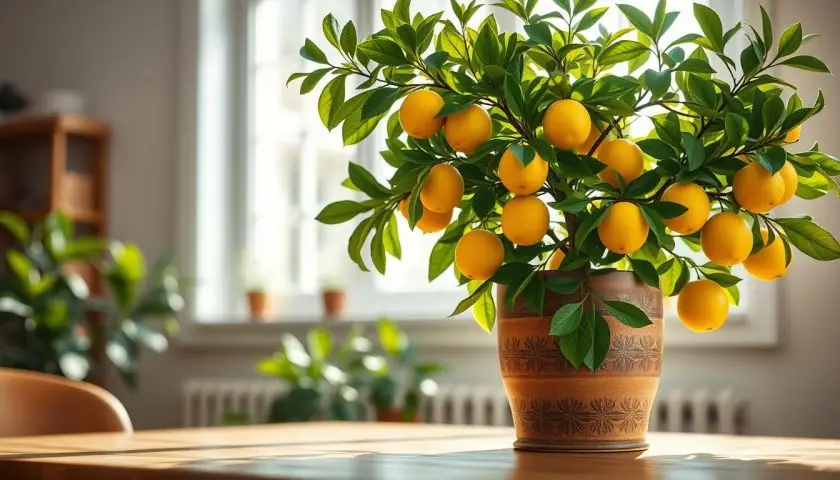
Lemon Tree Care at a Glance
| Need | What Works |
|---|---|
| Light | Full sun; at least 6 hours of bright light indoors |
| Compost | Peat-free citrus compost, or John Innes No 2 or 3 with about 20% grit |
| Water | Keep just moist in summer; let the surface partly dry in winter |
| Winter minimum | 5°C (42°F) for lemons (RHS) |
| Feeding | Summer citrus feed late March to October; winter feed November to mid-March |
| Fruit | About 9 to 12 months from flower to ripe fruit |
| Pollination | Self-fertile; hand-pollinate indoors |
| Pets | Toxic to dogs, cats and horses (ASPCA) |
The compost, temperature, feeding and fruiting details come from the RHS citrus growing guide; the light figure comes from University of Maryland and Penn State Extension.
How to Grow a Lemon Tree in 9 Easy Steps
1. Choose the right lemon tree
The RHS advises buying a grafted plant that is already flowering or fruiting, because ungrafted plants, such as those grown from pips, can take up to ten years to fruit. It recommends ‘Garey’s Eureka’ as a heavy-cropping lemon with the RHS Award of Garden Merit, and suggests looking for that award when choosing any citrus. Meyer lemon (Citrus × meyeri) is also widely sold for pots; Penn State Extension notes that it blooms year-round with a strong, jasmine-like scent and is cold-hardy to about -5.5°C (22°F), though it still needs to spend winter indoors. The RHS notes that most citrus stay under 1.5m (5ft) tall, which is why they suit containers.
2. Use the right pot and compost
The RHS recommends a peat-free citrus compost, or a soil-based compost such as John Innes No 2 or No 3 mixed with about 20% sharp sand or grit for drainage. Choose a pot only slightly larger than the root ball, because a much bigger pot holds wet compost that the roots cannot use. Make sure it has drainage holes, and raise it on pot feet so water can escape. Most newly bought citrus can stay in their original pot for several years. A heavy pot also keeps a top-heavy lemon tree in fruit from blowing over outdoors.
3. Give it as much sun as possible
Lemons are sun lovers. The RHS recommends a sunny, sheltered spot outdoors in summer. Indoors, University of Maryland Extension advises a room with a minimum of 6 hours of bright light, and Penn State Extension suggests a sunny, south-facing window. Lack of light is one of the main reasons an indoor lemon tree drops leaves or fails to flower. If your brightest window is not bright enough in winter, a grow light for indoor plants can help. Our guide to house plants that like direct sunlight explains how to find the sunniest spot.
4. Water carefully, especially in winter
In summer, the RHS advises watering regularly, ideally with rainwater, to keep the compost just moist, and checking pots daily in hot weather because they dry quickly. In winter, let the surface of the compost partly dry, then water thoroughly with tepid rainwater and let the excess drain away. The RHS is clear that overwatering in winter is one of the commonest problems, so err on the dry side and never leave the pot standing in water. Our guide to signs you are overwatering will help you spot the early signs.
5. Raise the humidity
The RHS notes that most citrus do not do well long term in centrally heated homes, because the air is too dry and can be too warm in winter. It suggests standing the pot on a tray of gravel or clay pellets, with the water level kept just below the surface so the compost does not become waterlogged. Higher humidity also helps flowers set fruit. A DIY humidity tray is an easy way to do this.
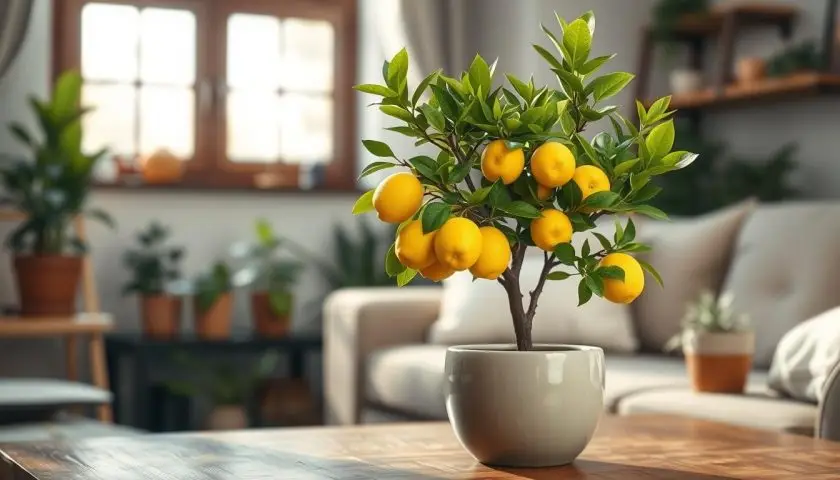
6. Feed all year with the right citrus feed
Unlike most houseplants, a lemon tree is fed year-round. The RHS recommends a summer citrus feed, high in nitrogen, from late March to October, and a more balanced winter citrus feed from November to mid-March. It notes that a lack of nutrients can cause yellow or dropping leaves and stop flowers and fruit forming. Follow the dose on the packaging.
7. Move it indoors before the cold
Lemon trees are not hardy. The RHS advises bringing citrus indoors as soon as night temperatures start to drop in autumn, and overwintering them in a greenhouse, conservatory or glazed porch. It gives a winter minimum of 5°C (42°F) for lemons. In spring, monitor night temperatures before moving the tree out again; the RHS notes you may need to wait until mid-June, and that plants should be hardened off gradually. Oregon State Extension, for example, advises gardeners in western Oregon to bring Meyer lemons indoors by late October. Keep the tree away from cold draughts and radiators, which both cause leaf drop.
8. Help with pollination and thin the fruit
Citrus are self-fertile, so one lemon tree is enough, according to the RHS. Indoors there are no insects to help, so University of Maryland and Penn State Extension both recommend hand-pollinating by brushing a small, soft paintbrush from flower to flower. The RHS adds that raising humidity improves pollination. Once fruit sets, thin it: the RHS suggests that a citrus about 1m (3ft) tall should carry no more than about 20 fruits at a time. Expect some small fruits to drop naturally; Penn State Extension notes this is common.
9. Prune lightly and harvest with care
The RHS suggests pruning in February, thinning overcrowded branches, removing wayward shoots, and cutting back sparse or leggy stems by up to two-thirds to encourage a bushier shape. In summer, shorten strong new shoots back into the crown and remove any shoots from the main stem below it. Flowers form on the tips of new sideshoots, so avoid heavy pruning, and wear thick gloves because citrus have sharp thorns. The RHS notes that fruit takes about nine to twelve months to ripen, and Penn State gives six to nine months for Meyer lemons. Harvest when the fruit is full size with a rich colour, cutting it with a short piece of stalk rather than pulling.
How Long Until a Lemon Tree Fruits?
A grafted lemon tree bought in flower or fruit can crop in its first year with you. Because fruit takes so long to ripen, you will often see flowers, small green fruit and ripe lemons on the same plant. The RHS notes that some citrus flower year-round while others flower mainly in late winter. A lemon tree grown from a pip is a different story: the RHS warns that it can take up to ten years to fruit and gives inferior fruit, and it advises against growing from supermarket pips because of plant health risks.
Repotting and Top-Dressing a Lemon Tree
The RHS advises repotting in spring, once roots show through the drainage holes, into a pot only slightly larger than the old one. In the years between repotting, top-dress by removing the top layer of compost and replacing it with fresh citrus compost. This refreshes nutrients without disturbing the roots. For step-by-step help, see how to repot a plant.
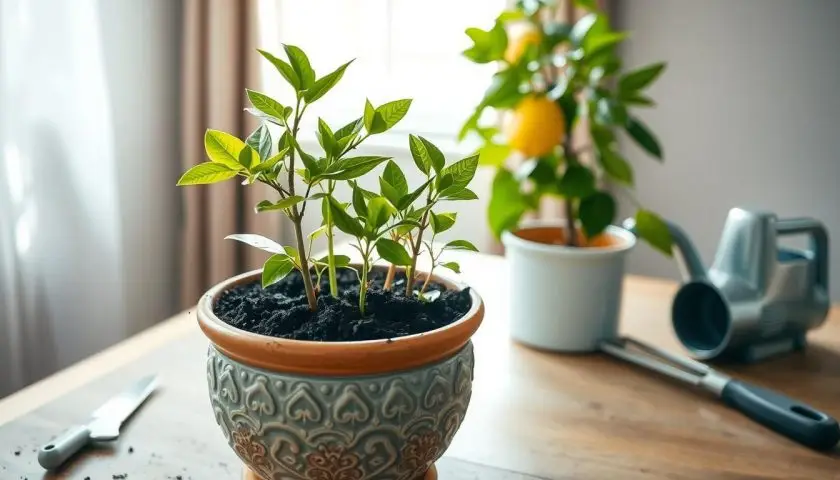
Common Lemon Tree Problems
| Problem | Likely Cause (RHS) | What to Do |
|---|---|---|
| Yellow or dropping leaves | Overwatering, cold or fluctuating temperatures, draughts | Water less in winter; keep temperatures steady |
| Leaf drop after moving indoors | Sudden change in light, dry air | Move in gradually; raise humidity |
| Pale, yellowing new leaves | Lack of nutrients | Use the correct seasonal citrus feed |
| No flowers or fruit | Poor light, low humidity or nutrient shortage | Brightest spot possible, humidity tray, regular feed |
| Sticky leaves, brown bumps on stems | Scale insects | Remove by hand and check regularly |
| Mottled leaves and early leaf loss | Glasshouse red spider mite | Raise humidity and treat early |
| Leaves bound with silk | Tortrix moth caterpillars | Pick off affected leaves |
The RHS also lists aphids and mealybugs, and advises checking indoor citrus regularly for sap-feeding pests. University of Maryland Extension warns that scale outbreaks are difficult to control and may need several treatments, so catching them early matters. See our guides to yellow leaves on plants and spider mites on plants for more help.
Lemon Tree Care Through the Year
| Season | What to Do |
|---|---|
| Late winter | Prune in February; switch to summer feed from late March. |
| Spring | Repot or top-dress; move outside once nights are reliably mild, hardening off first. |
| Summer | Full sun outdoors, water regularly with rainwater, shorten strong shoots and thin fruit. |
| Autumn | Bring indoors as nights cool; switch to winter feed from November. |
| Winter | Bright, cool spot above 5°C (42°F), water sparingly, raise humidity and hand-pollinate flowers. |
Is a Lemon Tree Safe for Pets?
No. The ASPCA lists lemon as toxic to dogs, cats and horses because it contains essential oils and psoralens. Listed signs include vomiting, diarrhoea, depression and possible skin irritation. The ASPCA notes that the fruit flesh is edible, but the skins and other plant material can cause problems. Keep pets away from leaves, peel and fallen fruit, and contact your vet or the ASPCA Animal Poison Control Center at (888) 426-4435 (a consultation fee may apply) if you are worried. Our guide to making your plants cat-friendly has more tips.
Frequently Asked Questions
Can you grow a lemon tree indoors all year?
You can, but it is not ideal long term. The RHS notes that citrus prefer a cool winter and more humid air than most heated homes provide. A summer outdoors and a bright, cool winter spot gives the best results.
How often should I water a lemon tree in a pot?
In summer, keep the compost just moist and check it daily in hot weather. In winter, let the surface partly dry before watering thoroughly, and never leave the pot standing in water.
Why is my lemon tree dropping leaves?
The most common causes are overwatering, cold or fluctuating temperatures, draughts, dry air and poor light, especially after moving indoors. Check watering first, then light and humidity.
How cold can a lemon tree get?
The RHS gives a winter minimum of 5°C (42°F) for lemons. Bring your tree indoors as soon as night temperatures start to drop in autumn.
Do I need two lemon trees to get fruit?
No. Citrus are self-fertile, so one tree can fruit. Indoors, hand-pollinate flowers with a soft paintbrush to help fruit set.
Final Thoughts
As a botanist, I find a lemon tree one of the most rewarding plants to grow in a pot, because it tells you clearly when something is wrong. Leaf drop, pale leaves and missing flowers almost always trace back to light, water, temperature or feed, and fixing one usually brings the tree back.
Patch Plants guides are written to give you the reasoning behind each step, so you can grow a lemon tree with confidence rather than by trial and error. If you enjoy growing fruit and aromatic plants in containers, our guides to fig tree care and bay tree care are good next reads.
Sources: RHS, How to grow citrus fruit; Penn State Extension, Grow Your Own Lemons; University of Maryland Extension, Growing Dwarf Citrus; Oregon State Extension, Meyer Lemons; ASPCA, Lemon.

About the author
Sawera Shahid is a botanist with an MPhil in Botany and 5+ years of writing about plants. As founder and lead writer of Patch Plants, she writes practical, science-backed guides on indoor plants, outdoor gardens and plant problems, checked against RHS and university extension advice.