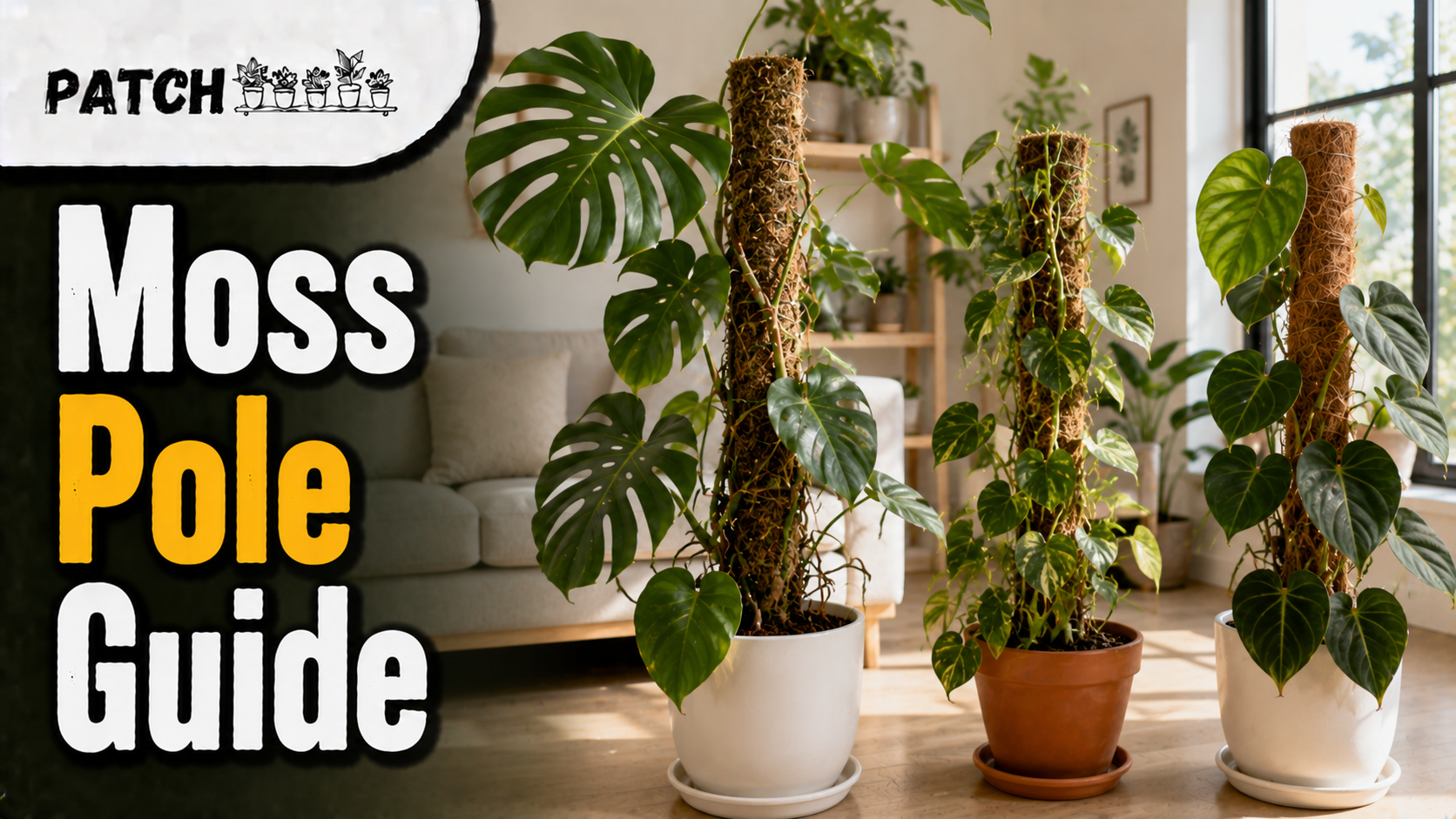
A moss pole for plants is a practical way to support climbing houseplants and guide their stems upward. Monstera, pothos, climbing philodendrons, and Syngonium naturally grow toward supports in suitable conditions. Indoors, a properly installed pole helps keep their growth organized and can give aerial roots a surface to attach to.
But buying a pole is only the beginning. A support that wobbles, sits on the wrong side of a stem, or is attached to leaf stalks instead of the main vine may do little to help. It also matters whether you choose moisture-retentive sphagnum moss, coconut coir, a wooden plank, or a simple trellis.
This guide explains 11 easy tips for using moss poles, including which houseplants benefit, how to attach a Monstera without damaging its leaves, when to moisten the moss, and how to troubleshoot common problems. You will also learn when a less demanding support may be a better choice.
Quick Answer: What Is a Moss Pole for Plants?
A moss pole for plants is an upright climbing support covered or filled with moss, usually sphagnum, that helps suitable vines grow vertically. The support holds climbing stems in place and, when the moss is kept appropriately moist, may allow aerial roots to grow into the moss. Monstera, pothos, climbing philodendrons, and some Syngonium varieties are popular candidates.
Anchor the pole securely, place it near the plant’s climbing stem, and attach that stem using loose, soft ties. Do not bind individual leaf stalks tightly to the support. Continue providing appropriate light, water, potting mix, and nutrients: a moss pole cannot replace these essentials.
The Royal Horticultural Society’s Monstera growing guide confirms that Monstera is a climber and can root into a moist moss pole. The RHS also notes that climbing under suitable conditions can encourage larger, more mature leaves.
Key Takeaways
- Moss poles support climbing plants; they are not necessary for every houseplant.
- Monstera, climbing philodendrons, pothos, and some Syngonium species can benefit from vertical support.
- A true sphagnum moss pole offers a moisture-retentive surface, while coco coir poles mainly provide a textured structure for climbing.
- Installing a support during repotting is often safer than pushing a thick pole through established roots.
- Secure the main climbing stem, not the leaf stalks, using adjustable plant ties.
- Position the pole where the plant’s aerial-root-bearing side can naturally meet it.
- Moist moss can encourage aerial-root contact, but overwatering the potting mix can damage roots.
- Climbing may support more mature leaf development, but larger leaves are never guaranteed by the pole alone.
- Choose a support strong enough for the plant’s future height and weight.
- Inspect ties, support stability, light, moisture, and signs of root trouble regularly.
- A plank, trellis, or coir pole can be more practical than a moss pole when simple support is the main goal.
What Does a Moss Pole Actually Do?
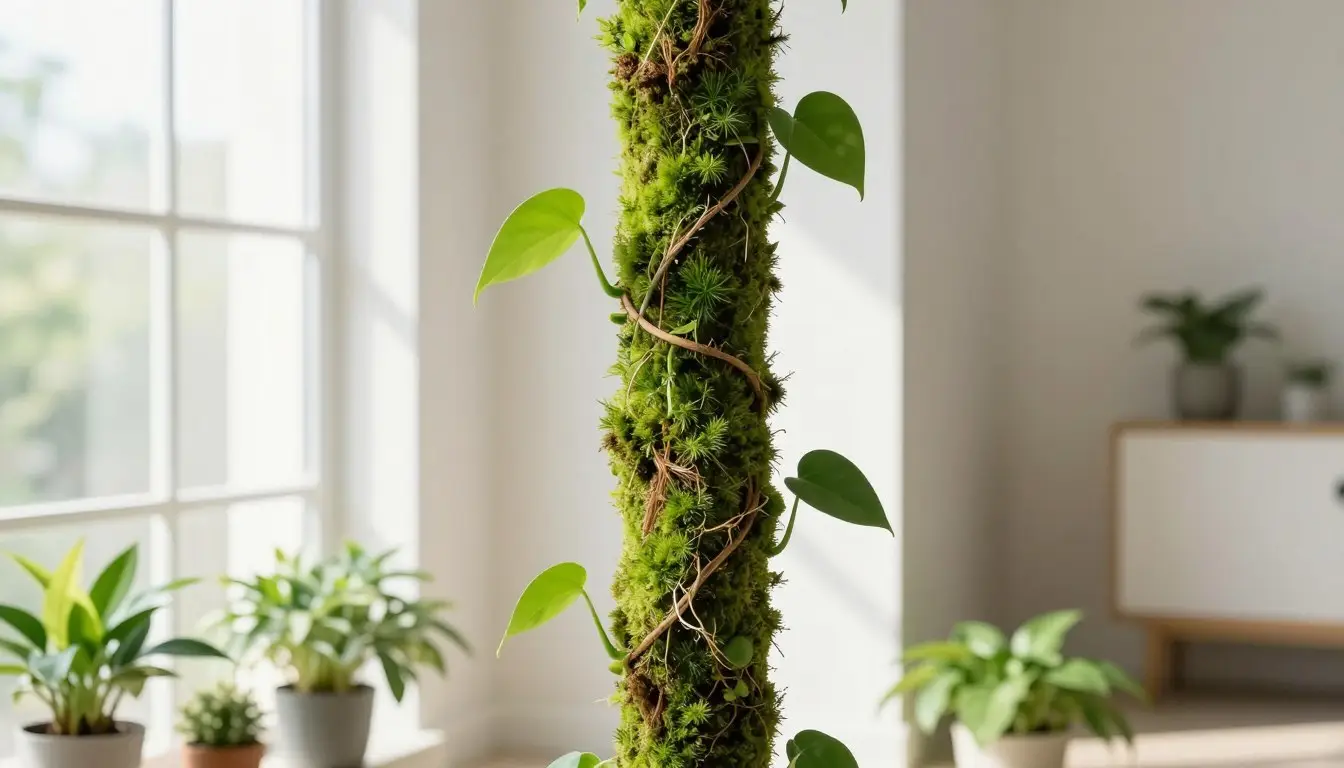
The primary job of a moss pole is to support stems that naturally climb. In forests, some tropical vines grow against trees and use aerial roots to attach to trunks. Indoors, a moss-covered pole provides an alternative vertical structure.
A pole can keep long vines off the floor, guide the plant’s overall shape, and reduce the need to repeatedly reposition top-heavy stems. When an appropriate sphagnum pole remains moist, aerial roots may also grow into the material. This can strengthen the attachment and support the climbing habit.
However, the pole does not automatically supply adequate light, water, or fertilizer to the roots in the pot. Treat it as one component of a complete care routine. For related ideas, see our guide to creating an indoor jungle without overcrowding.
Which Houseplants Benefit From Moss Poles?
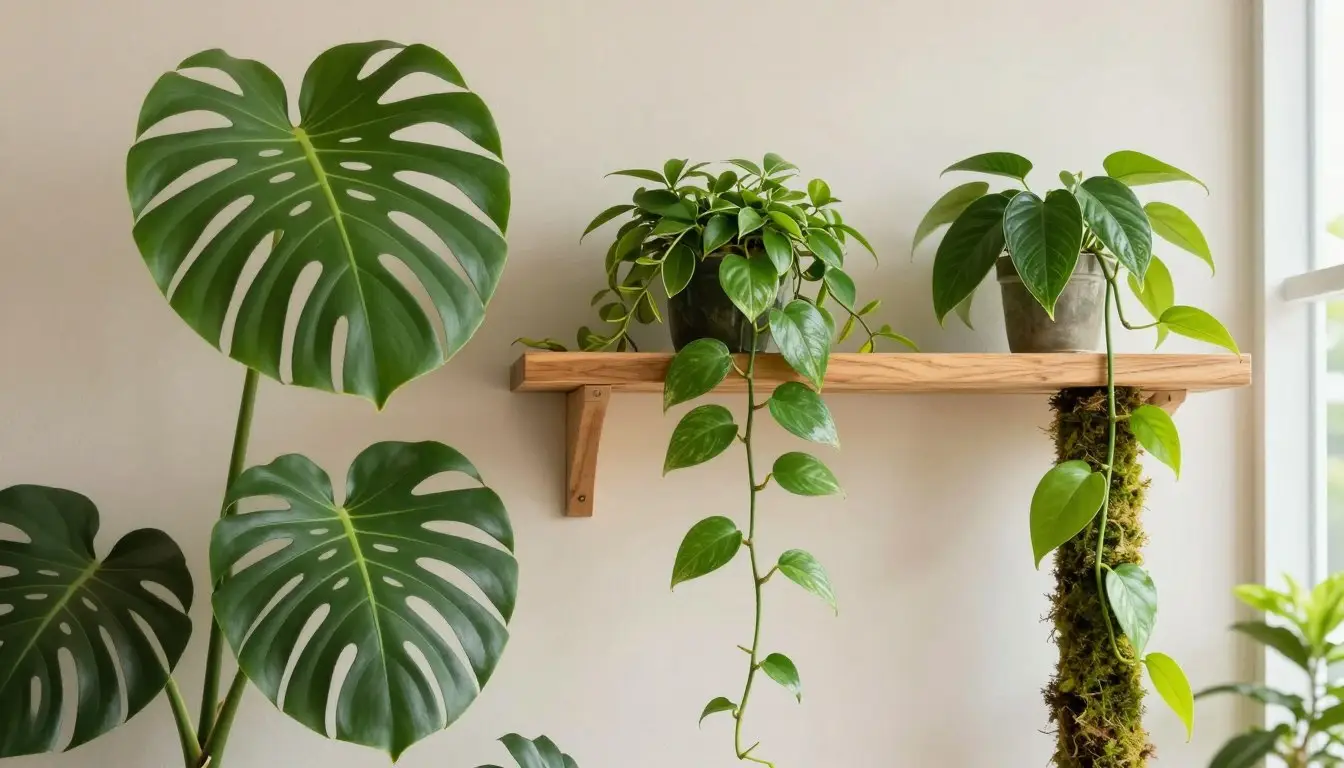
The best candidates are plants with a climbing or scrambling growth habit, especially those that produce aerial roots. A large leaf or tall stem alone does not mean a moss pole is needed.
| Plant | Botanical Name | How a Support Helps | Useful Alternative |
|---|---|---|---|
| Monstera | Monstera deliciosa | Supports a heavy climbing stem and aerial roots | Sturdy wooden plank |
| Swiss cheese vine | Monstera adansonii | Directs vining growth upward | Small trellis |
| Pothos | Epipremnum aureum | Trains naturally climbing vines vertically | Coco coir pole |
| Heartleaf philodendron | Philodendron hederaceum | Provides a climbing surface for long stems | Trellis or plank |
| Other climbing philodendrons | Species-dependent | Supports vertical development and some aerial roots | Strong stake or plank |
| Arrowhead vine | Syngonium podophyllum | Supports mature climbing stems | Small trellis |
Monstera
A moss pole for Monstera is especially helpful as the main stem becomes larger and aerial roots begin extending outward. A substantial plant needs a sturdy pole, appropriately sized container, and room for future growth. Read our Monstera care guide for species-specific light and watering advice.
Pothos
A pothos moss pole encourages upward rather than trailing growth. Start training young stems while they are flexible. Pothos can also look attractive as a hanging plant, so climbing is a design choice rather than a requirement for survival. See our pothos care guide.
Climbing Philodendrons
Many vining philodendrons appreciate a textured support. Choose the pole’s height and weight capacity for the specific species rather than assuming all philodendrons grow in the same way. Self-heading types do not necessarily need the same support. Explore our philodendron care guide.
Syngonium
Young arrowhead vines may look compact, but many develop climbing or trailing stems as they mature. A slim moss pole or trellis can help direct this growth if you prefer an upright display.
Which Plants Do Not Need a Moss Pole?
Most self-supporting, rosette-forming, or low-growing houseplants do not benefit from a vertical moss support. Snake plants, ZZ plants, spider plants, and many common succulents have different natural growth habits. Some may need occasional structural support for other reasons, but a moss pole is not a routine requirement.
Always identify the plant before buying accessories. If you prefer vines cascading from shelves rather than climbing upward, our trailing plants for shelves and bookcases guide covers that alternative style.
Moss Pole vs Coco Coir Pole: Which Is Better?
These supports are often sold under similar names, but their materials and maintenance differ. A sphagnum moss pole may be filled with moss in a mesh structure or wrapped around a core. A coir pole is commonly wrapped in coconut fiber.
| Feature | Sphagnum Moss Pole | Coco Coir Pole |
|---|---|---|
| Main purpose | Climbing support and potentially root contact | Simple textured climbing support |
| Moisture holding | Can retain substantial moisture | Often less convenient to keep evenly moist |
| Aerial roots | May penetrate appropriately moist moss | May grip its surface; penetration depends on design |
| Maintenance | Higher if kept moist | Usually lower |
| Weight | Varies by construction and moisture | Often comparatively light |
| Best reason to choose it | Encouraging a climbing plant’s root attachment | Creating a neat upright shape |
Choose sphagnum moss if you intend to encourage aerial roots to grow into a suitably maintained surface. Choose coco coir if a lower-maintenance structural support is enough. Neither is universally best for every climber.
11 Easy Moss Pole Tips for Better Plant Growth
1. Choose a Plant That Naturally Climbs
A pole works best when it matches the plant’s growth habit. Monstera, climbing philodendrons, and pothos can grow toward a vertical support, while a rosette-forming spider plant does not climb in the same way.
Look for elongated stems, visible nodes, and aerial roots. If the plant prefers to trail and you like that appearance, a moss pole is optional.
2. Match the Pole to the Plant’s Mature Size
Choose a support based on the plant’s expected weight and future height, not just the size of its youngest leaves. A mature Monstera can exert considerable force on a narrow support.
Consider a sturdy core, a secure base, and the possibility of adding an extension later. An extendable support may be useful for vigorous climbers, but joints should remain firm under load.
3. Choose Moss or Coir According to Your Maintenance Routine
True moss poles can be useful where aerial-root contact is a goal, but moist sphagnum requires monitoring. Coir poles and planks may suit growers who simply want vines to stand upright.
Choose materials intended for plants, avoid sharp exposed wire, and check that the structure will not collapse when it becomes damp.
4. Install the Pole During Repotting When Practical
Adding a pole is often easier when a plant is already being repotted. You can see the root ball and position the support without driving a thick stake blindly through established roots.
Do not repot a healthy plant unnecessarily merely to change its appearance. If the existing container provides enough room, a suitable smaller support may be installed carefully, provided root damage can be avoided.
Use our guide to repotting mistakes to decide whether disturbing the roots is appropriate.
5. Place the Pole on the Correct Side of the Main Stem
Identify where aerial roots emerge from the climbing stem. In many Monstera plants, the root-bearing side is the natural side to place against the pole.
Do not try to attach each leaf individually. Leaves and their stalks should have enough freedom to orient themselves toward the available light.
6. Anchor the Pole Before Attaching a Heavy Vine
A support that moves in the container can pull on the stem and damage roots. Set the pole securely into the potting medium or use a suitable structural arrangement for large plants.
Check that the planter will not tip once the vine is attached. A heavier planter or larger stable base may be necessary, but oversized pots should not be used indiscriminately because they can retain excess moisture.
When preparing a new pot, use the PatchPlants Soil Calculator to estimate how much potting mix you need.
7. Tie the Main Stem Loosely, Never the Petioles
Secure the main vine with soft ties, appropriate hook-and-loop plant tape, or flexible clips. A petiole is the stalk that connects an individual leaf to the stem; it is not the best place to anchor the whole plant.
Leave space for the stem to thicken and check the ties periodically. Tight ties can constrict tissue or cut into stems as growth continues.
8. Guide Aerial Roots Without Forcing Them
Aerial roots can be directed gently toward a moss pole, but do not sharply bend, cut, or force them through mesh. Some may attach naturally if the surface and surrounding conditions are suitable.
Roots that do not attach immediately are not proof of failure. Their development depends on the plant’s age, growth activity, moisture, and the support surface.
9. Manage Moss Moisture Separately From Soil Moisture
If you want roots to grow into sphagnum, maintaining appropriate moisture in the moss may help. But a constantly dripping pole can leave the potting medium too wet.
Moisten the pole carefully if your setup requires it and monitor the pot separately. Never water the plant’s root zone on a fixed schedule simply because the pole feels dry. See our complete plant watering guide.
10. Give the Plant Enough Light for Healthy Climbing Growth
A moss pole will not correct weak growth caused by insufficient light. Many tropical climbing aroids perform best with bright indirect light, although exact needs vary.
Long gaps between leaves, a vine stretching toward a window, or slow growth may suggest inadequate light. Check the whole environment before adding extra fertilizer or more moss. Our indoor lighting guide explains how to assess a growing position.
11. Inspect, Extend, and Maintain the Support as the Plant Grows
As the main stem thickens or climbs past the top of the support, adjust ties and consider a suitable extension. Check for loose sections, decaying materials, and instability.
Clean or replace damaged supports when necessary. Train new growth gradually rather than bending a woody mature stem into a new shape. If the plant outgrows the display, consider pruning or propagating healthy nodes.
How to Install a Moss Pole in 6 Steps
- Prepare the plant and support. Identify the main climbing stem and choose a pole with adequate strength and height.
- Check the root ball. If repotting, gently remove the plant and assess root health before placing the support.
- Position the pole. Set it close to the root-bearing side of the stem without sharply bending the plant.
- Stabilize the container. Fill with an appropriate well-draining potting mix, firming it enough to secure the support without excessive compaction.
- Attach the main stem. Use loose, soft ties at suitable points, leaving the petioles free.
- Check the final arrangement. Make sure the pot does not tip, the plant receives suitable light, and watering can be managed safely.
Important: Installation may be simpler with an established climbing stem than with very young leaves and no visible nodes, but avoid waiting until the plant is so large that its stem cannot be positioned safely.
How to Attach Monstera to a Moss Pole Correctly
Attaching a Monstera requires identifying the structural stem rather than gathering leaf stalks together. The main stem has nodes from which leaves and aerial roots emerge. The petioles extend outward to support individual leaves.
Find the Climbing Stem
Trace the stem from the base upward. A mature Monstera may lean or grow horizontally because it has not encountered a suitable support. Decide which side of the stem should meet the pole.
Position the Support Near Aerial Roots
Move the pole near the natural root-bearing side where feasible. Be careful with older, rigid stems. Their direction cannot always be changed without damage.
Secure the Stem and Leave the Leaves Free
Fasten one or more portions of the stem with flexible ties. Do not bind leaf stalks tightly to the pole, since leaves naturally reorient toward light.
Allow New Growth to Climb
As a new internode develops, gently guide it toward the support. Aerial roots may eventually contact and root into moist moss, as described by the RHS Monstera growing guide.
If your plant remains weak or yellowing despite support, inspect watering, light, and root conditions rather than assuming the pole is defective.
Does a Moss Pole Need to Stay Wet?
A moss pole does not need to stay wet to provide physical support. However, appropriately moist sphagnum can provide conditions in which aerial roots of suitable climbers may attach and grow into the moss.
The desired moisture depends on the plant, the design of the pole, and indoor conditions. A dry pole may still hold a stem upright, while an oversaturated pole can drip into the pot and cause unintended waterlogging.
Feel the moss, monitor how quickly it dries, and inspect the potting medium independently. Do not confuse high moss moisture with a need to water the main root ball more often.
Can a Moss Pole Make Leaves Grow Bigger?
A moss pole can support the climbing conditions associated with more mature growth, but it cannot guarantee bigger leaves. Monstera and other climbing aroids may develop larger foliage as they mature and climb when their light, temperature, root conditions, and general care are suitable.
The RHS notes that supported Monstera may produce larger mature leaves with more holes, known as fenestrations. However, plant age, species, genetics, available light, water, and nutrition all influence the outcome.
If leaves remain small, consider whether the plant has enough light and healthy roots before replacing the pole.
How to Make a Simple DIY Moss Pole
A homemade support can work when constructed from clean, plant-safe materials with enough strength for the plant’s future growth. Mesh poles are particularly useful when you want sphagnum that aerial roots can enter.
Supplies
- Clean, sustainably sourced sphagnum moss suitable for horticultural use
- A sturdy mesh or plant-safe structure without exposed sharp edges
- Appropriate ties or fasteners
- Clean water for moistening the moss
- A sufficiently stable container and suitable potting mix
Basic Method
- Moisten the sphagnum enough to handle it without leaving it dripping.
- Form the mesh into a stable column using appropriate fasteners.
- Fill the column with moss without packing it so densely that it becomes difficult to wet evenly.
- Secure all edges and remove sharp wire ends.
- Install the support safely and test it before attaching plant stems.
- Attach the main climbing stem using loose ties and adjust as new growth develops.
A DIY pole can be rewarding, but do not rely on a lightweight homemade structure for a large, top-heavy Monstera if it cannot be anchored securely.
Best Moss Pole Alternatives
| Support | Best Use | Moisture Maintenance | Main Limitation |
|---|---|---|---|
| Coco coir pole | General climbing support | Usually low | May not encourage the same root penetration as moist moss |
| Wooden plank | Large climbing aroids | Low | Requires strong anchoring |
| Bamboo stake | Young or lightweight vines | Very low | Little textured area for roots |
| Trellis | Small or branching vines | Low | Support must fit growth habit |
| Wire grid | Decorative climbing arrangement | Low | Must be safely mounted and plant-safe |
| DIY sphagnum pole | Custom size and aerial-root contact | Moderate or higher | Construction and moisture management |
If your main priority is keeping a vine upright with little maintenance, a plank or coir support may be perfectly adequate. For a moisture-retentive surface that climbing roots can grow into, a true moss-filled pole offers different advantages.
Common Moss Pole Problems and Troubleshooting
| Problem | Possible Cause | What to Check |
|---|---|---|
| Plant will not attach | Surface too dry, unsuitable position, or slow root growth | Stem orientation, support surface, plant health |
| Pole wobbles | Insufficient anchoring or heavy stems | Base stability, support strength, planter weight |
| Leaves droop after installation | Root disturbance, watering stress, or other causes | Roots, moisture, recent repotting |
| Stem develops tight marks | Constraining ties | Loosen and reposition ties immediately |
| Moss dries rapidly | Warm air, ventilation, or pole design | Moisture routine and indoor environment |
| Pot stays wet | Water from pole reaching potting medium | Drainage and watering frequency |
| Brown aerial roots | Age, dryness, damage, or other stress | Whether new roots and foliage are healthy |
| Leaves remain small | Immaturity, poor light, root stress, or normal species variation | Growth conditions rather than pole alone |
| Visible mold or unpleasant odor | Stagnant moisture or decaying material | Airflow, moss condition, roots and watering |
What if the Pole Keeps Falling Over?
Do not keep adding tighter plant ties to compensate for an unstable support. Instead, reassess the support’s anchoring, pot weight, and height. A heavy specimen may need a sturdier stake, wider stable pot, or different support design.
What if Aerial Roots Refuse to Grip?
Attachment may take time. Roots are more likely to grow into a suitable moist surface when the plant is actively growing and positioned correctly. Do not cut healthy aerial roots merely because they do not immediately enter the pole.
What if the Plant Turns Yellow?
Yellow leaves are not automatically caused by a moss pole. Consider recent repotting, waterlogged medium, inadequate light, pests, and natural leaf ageing. Our plant recovery guide can help with further diagnosis.
11 Moss Pole Mistakes to Avoid
- Installing a pole without checking whether the species naturally climbs.
- Choosing a support too short or weak for mature growth.
- Driving a thick support through a dense established root ball.
- Placing the pole where the root-bearing side cannot reach it.
- Attaching leaf petioles instead of the climbing stem.
- Using ties that become too tight as the plant thickens.
- Forcing older rigid stems to bend sharply.
- Keeping the pole so wet that the potting medium becomes waterlogged.
- Expecting larger leaves without appropriate light and care.
- Leaving sharp mesh or unstable extensions exposed.
- Ignoring routine inspection as the plant grows heavier.
Frequently Asked Questions About Moss Poles for Plants
What plants benefit most from a moss pole?
Monstera deliciosa, Monstera adansonii, pothos, heartleaf philodendron, other climbing philodendrons, and some Syngonium varieties can benefit from vertical support. The plant’s natural growth habit is more important than its overall size. Self-supporting houseplants such as snake plants and ZZ plants do not normally need a moss pole.
How do you attach a Monstera to a moss pole?
Position the pole near the main climbing stem, ideally where its aerial-root-bearing side can face the support. Secure the main stem with loose, soft ties rather than fastening individual leaf stalks. Keep the support stable and guide new growth gently, without forcing mature stems or roots to bend.
Do moss poles need to stay wet all the time?
No. A dry pole can provide structural support. Appropriate moisture in a true sphagnum pole may encourage aerial roots to enter the moss, but constant saturation is unnecessary. Monitor the pole separately from the soil so extra water does not collect around the plant’s main roots.
Is a moss pole better than a coco coir pole?
Neither is best in every situation. Sphagnum moss can hold moisture and may support aerial-root penetration when maintained correctly. Coco coir poles are often easier to maintain when simple upright support is the goal. Choose according to the plant’s size, rooting habit, and how much moisture maintenance you want.
Will a moss pole make Monstera leaves bigger?
A moss pole can support a climbing habit that may be associated with more mature leaves, but it does not guarantee bigger foliage. Light, plant maturity, genetics, watering, root health, and nutrients also influence leaf size. Healthy Monstera plants given suitable vertical support may develop larger leaves and more fenestrations over time.
Conclusion
A moss pole for plants is most useful when it matches the natural growth habit of a climbing houseplant. Monstera, pothos, climbing philodendrons, and Syngonium can use suitable vertical supports to guide their stems upward, while many self-supporting species have no need for one.
Start with the correct support, anchor it securely, place it beside the main stem, and attach the vine using loose ties. If aerial-root contact is your goal, a suitably moist sphagnum pole can help, but remember to manage the potting medium separately and avoid waterlogging.
As your plant grows, inspect the ties, support height, and stability. A pole works best alongside sufficient light, species-appropriate watering, and a healthy root system.
For more help with climbing plant care and indoor layouts, read our Monstera care guide, natural room dividers, and plant care collection.