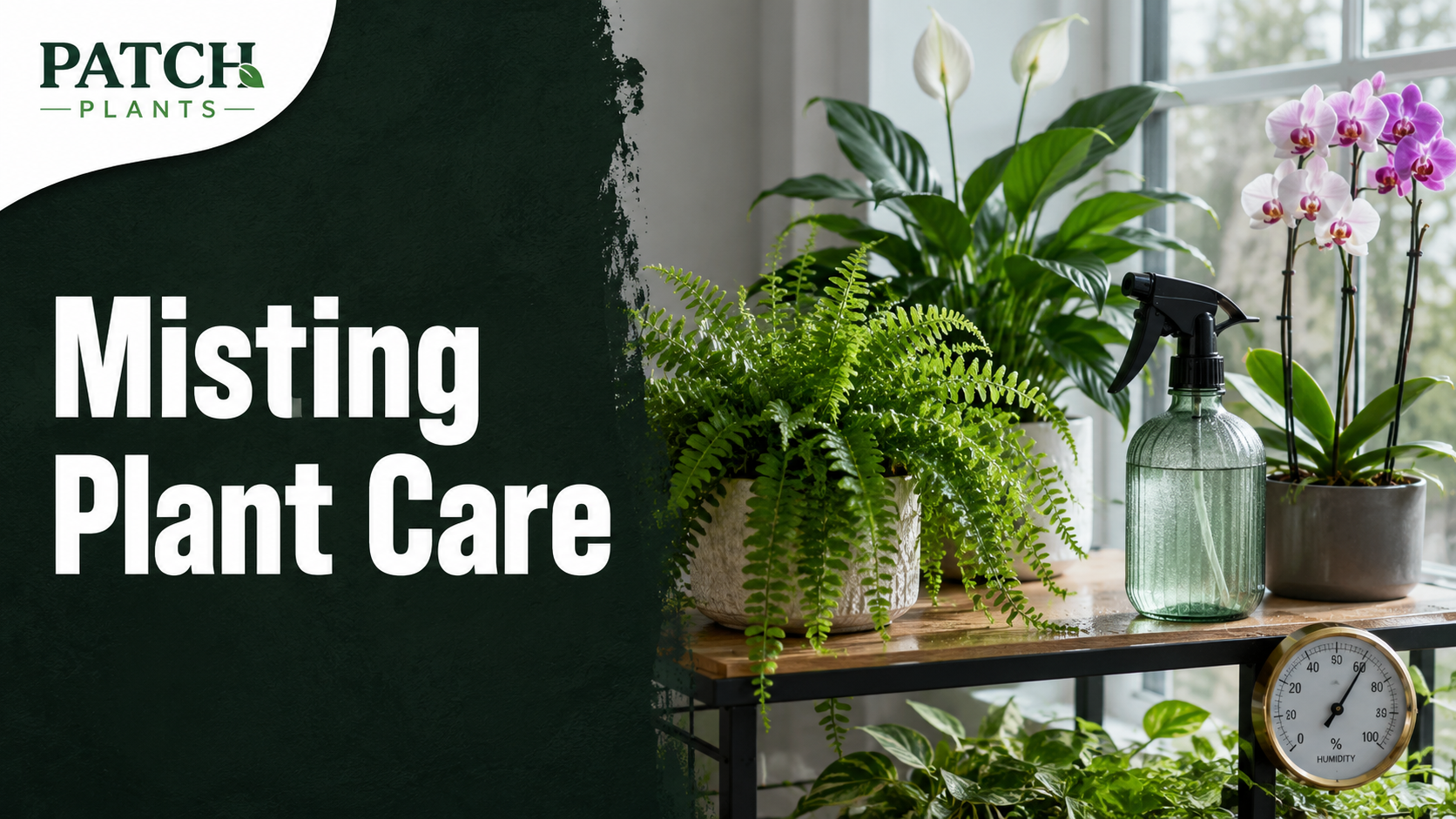
Misting for plants sounds like an easy fix for dry indoor air, but it is not always as helpful as people think. A light spray can freshen leaves, rinse dust, and suit a few humidity-loving plants. It can also leave foliage wet, encourage leaf spot, and give a false sense that the plant has enough humidity.
The real answer is simple: misting can help in some situations, but it is not a replacement for proper humidity, watering, light, airflow, and plant-specific care. This guide explains when to mist, when to avoid it, and what to use instead when your houseplants need more moisture in the air.
The Honest Answer
Misting for plants is useful only in limited situations. It can help clean leaves and give a short moisture boost to certain tropical plants, ferns, orchids, and air plants. It does not raise room humidity for long. Avoid misting succulents, cacti, fuzzy leaves, plants in low light, cold rooms, or any plant with fungal leaf spot, rot, or poor airflow.
Key Takeaways
- Misting for plants is not a long-term humidity solution.
- A light morning mist can suit some ferns, orchids, air plants, and tropical foliage plants.
- Wet leaves can increase leaf spot and fungal problems when airflow is poor.
- Do not mist cacti, succulents, fuzzy-leaved plants, or plants already showing disease signs.
- Humidifiers, pebble trays, terrariums, and grouped plants are usually better for steady humidity.
- Morning is the safest time to mist because leaves can dry before evening.
- This guide connects well with complete watering tips, humidity hacks, and DIY humidity tray.
Misting for Plants: What It Actually Does
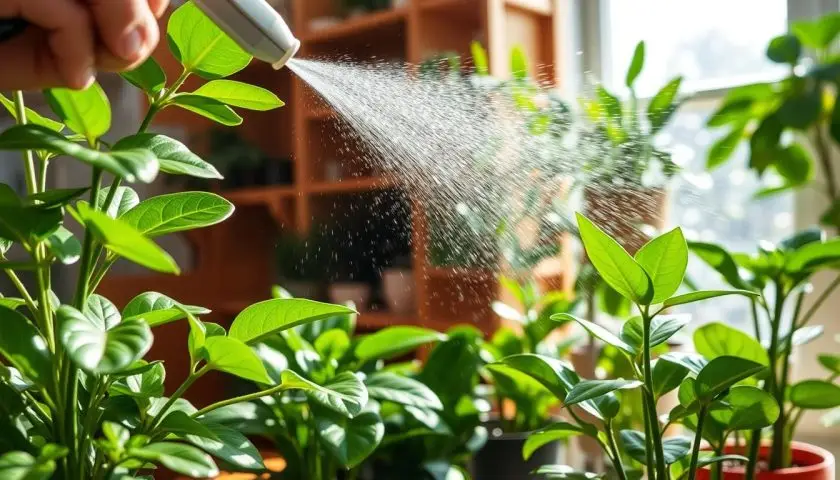
Misting adds water droplets to leaf surfaces and briefly raises moisture right around the plant. The key word is briefly. Once the water evaporates, the humidity around the plant usually drops again.
That does not make misting completely useless. It can remove dust, refresh some foliage, help with air plants, and encourage you to inspect leaves more often. But if your home is dry every day, a spray bottle will not create the same stable humidity that a humidifier or enclosed growing setup can provide.
| Misting Can Help With | Misting Does Not Fix | Better Long-Term Option |
|---|---|---|
| Dusty leaves | Dry room air all day | Humidifier or plant grouping |
| Air plant watering support | Underwatered soil | Proper root-zone watering |
| Short moisture boost | Chronic crispy leaf tips | Humidity tray or humidifier |
| Plant inspection routine | Low light stress | Better window placement |
| Some tropical foliage | Root rot or fungal disease | Drainage, airflow, and correct watering |
The Science Behind Plant Care Misting
Plants lose water through tiny openings on their leaves during transpiration. In very dry air, some plants lose moisture faster than they can replace it, especially thin-leaved tropical plants. This can lead to brown crispy tips, curled foliage, dried flower buds, and slow growth.
That is where plant care misting became popular. Many tropical houseplants come from naturally humid environments, so people try to copy that by spraying leaves. The problem is that natural humidity is constant. Misting is temporary.
Humidity vs wet leaves
Humidity means moisture in the air. Wet leaves mean water sitting on foliage. These are not the same thing. A fern may like humid air, but that does not mean it wants cold water sitting on its leaves all night.
Why dry indoor air matters
Indoor air can become very dry in winter because of heating. Dry air can stress humidity-loving plants such as ferns, Calatheas, Fittonias, and some orchids. In those cases, humidity support helps, but misting alone is usually too short-lived.
Why airflow matters
If leaves dry quickly after a light morning mist, the risk is lower. If water sits on leaves in a cool, shaded, crowded corner, disease risk increases. This is why the same misting habit can be harmless in one room and harmful in another.
Which Plants Benefit From Misting?
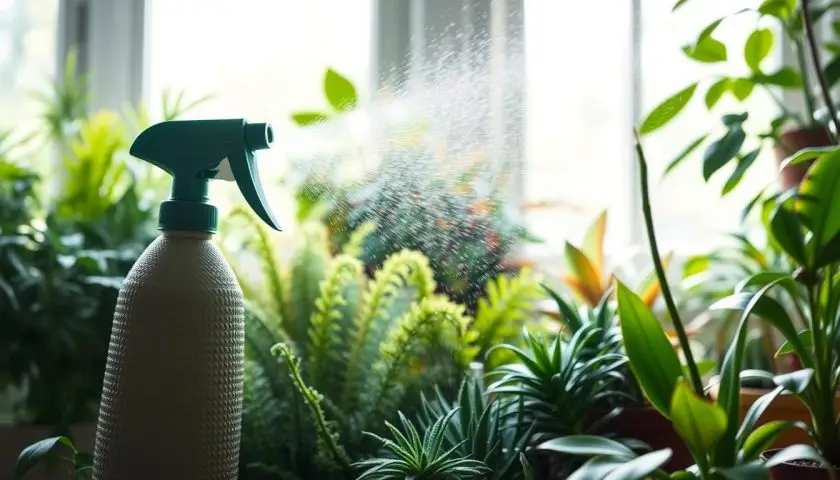
Some plants tolerate or benefit from occasional misting, especially when the mist is light, the room is warm, and leaves dry quickly. The best candidates usually have tropical or epiphytic habits.
| Plant Type | Misting Verdict | Better Care Note |
|---|---|---|
| Ferns | Can tolerate light misting | Use humidity support too |
| Orchids | Can help aerial roots if done carefully | Avoid water sitting in the crown |
| Air plants | Often useful | Let plants dry upside down after watering |
| Fittonia | May tolerate light misting | Consistent soil moisture is more important |
| Calathea and Maranta | Use caution | Humidifier is safer than wet leaves |
| Peace Lily | Occasional light mist is usually fine | Proper watering matters more |
Ferns
Ferns often prefer higher humidity, especially Boston Fern and similar thin-leaved types. A light mist may freshen foliage, but ferns usually respond better to consistent humidity from a humidifier, grouped plants, or a bright bathroom with real natural light.
For fern-specific help, read Boston Fern care guide and best bathroom plants.
Orchids and epiphytes
Some orchids and epiphytic plants can absorb small amounts of moisture through exposed roots or aerial structures. Still, avoid water collecting in crowns, leaf joints, or tight crevices. That trapped water can cause rot.
For orchid care, read Orchid care guide.
Air plants
Air plants are one of the clearer cases where misting can be useful, though many still need occasional soaking depending on your home. After misting or soaking, they must dry properly. Do not leave them wet in closed glass without airflow.
Fittonia
Fittonia likes moisture and humidity, but misting is not the main care trick. The soil should stay lightly and consistently moist, and the room should not be too dry. If it wilts often, review watering and humidity rather than spraying more.
Calathea and Maranta
These plants like humid air, but their leaves can also mark or crisp from poor water quality, dry air, or inconsistent moisture. A humidifier is usually better than frequent misting. For more help, see Calathea care guide.
Which Plants Should Not Be Misted?
Some plants are more likely to suffer from wet foliage than benefit from it. If a plant naturally stores water, has fuzzy leaves, grows in dry habitats, or sits in low light, misting can create problems.
| Plant Type | Why Misting Can Hurt | Better Care |
|---|---|---|
| Cacti | Dry-climate plants do not need wet foliage | Bright light and dry soil cycles |
| Succulents | Water can sit in rosettes and cause rot | Water soil only after drying |
| African Violets | Fuzzy leaves can spot or mark | Water carefully at soil level |
| Fuzzy-leaved Begonias | Moisture can cling to leaf hairs | Humidity without wet leaves |
| Snake Plants | Wet leaf bases can increase rot risk | Dry soil and good drainage |
| Plants with leaf spot | Water can spread disease | Improve airflow and keep foliage dry |
Cacti and succulents
Cacti and succulents are adapted to store water. They usually do not need misting indoors. Water trapped in rosettes, folds, or leaf joints can lead to rot, especially in cool rooms. For better care, read Succulent care guide and Cactus care guide.
Fuzzy-leaved plants
Fuzzy leaves hold droplets longer than smooth leaves. African Violets, some Begonias, Purple Passion Plant, and similar fuzzy foliage plants are better watered at soil level. For fuzzy foliage care, see Purple Passion Plant care and African Violet care guide.
Plants in low-light rooms
Low light slows drying. If you mist a plant in a dim corner, the leaves may stay wet too long. That is when misting shifts from harmless to risky. Improve light before adding more moisture. Use complete guide to indoor light if you are unsure about placement.
When Misting Helps
Misting can be useful when it has a clear purpose. The best reasons are not “because every plant needs it,” but specific tasks like cleaning, short-term freshness, or caring for plants that naturally use moisture from the air.
1. When leaves are dusty
A light spray followed by wiping can help clean broad leaves. Dust blocks light and makes plants look dull. For large leaves, spraying alone is not enough. Wipe gently with a soft cloth.
For more detail, read how to clean plant leaves without damaging them.
2. When caring for air plants
Air plants can use misting as part of their watering routine. The key is drying. After misting, they should not remain wet in a closed container or dark spot.
3. When refreshing some tropical plants
A light morning mist can freshen some tropical foliage, especially in warm rooms with airflow. It should be occasional and light, not a daily soaking.
4. When checking for pests
Misting routines can make you inspect plants closely. You may notice spider mites, mealybugs, aphids, scale, sticky residue, yellow leaves, or early leaf damage sooner.
5. When propagating some cuttings
Some cuttings benefit from a humid environment while rooting. Even then, a clear cover, propagation box, or controlled humidity setup is often better than repeated heavy misting.
When Misting Hurts
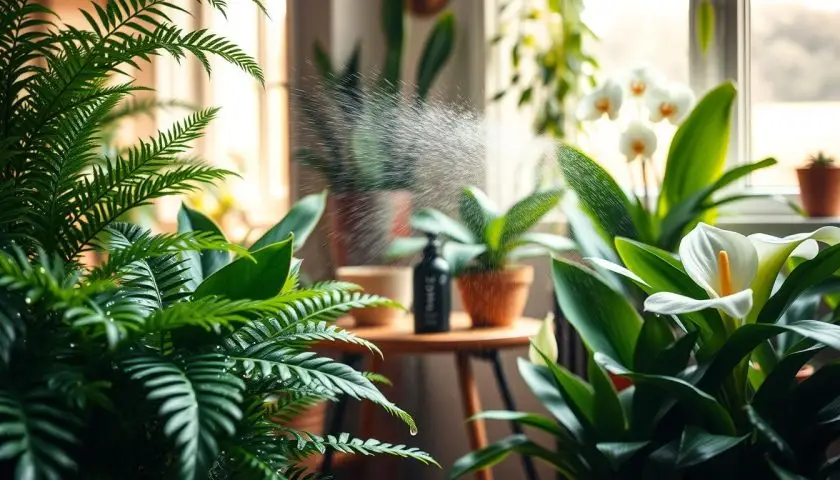
Misting hurts when it keeps foliage wet too long, replaces proper watering, or is used on plants that prefer dry leaves. Many indoor plant problems begin when care feels helpful but creates the wrong conditions.
1. Wet foliage in cool rooms
Cool wet leaves dry slowly. This can create the perfect setup for fungal or bacterial leaf problems. If the room is cold, skip misting and focus on better temperature and airflow.
2. Misting at night
Night misting is risky because leaves may stay wet for hours. Morning is safer because the plant has daylight and warmer room conditions to dry.
3. Misting plants with active disease
If a plant has leaf spot, mildew, rot, mushy stems, or suspicious marks, do not mist it. Keep foliage dry, isolate the plant if needed, and improve airflow.
4. Misting instead of watering properly
Misting leaves does not replace watering roots. Most houseplants take up most water through roots. If the soil is dry and the plant is wilting, spraying leaves is not enough.
5. Misting plants in low light
Low light already slows plant growth and soil drying. Adding wet foliage can make the environment even more disease-friendly. Move the plant to better light or choose a better low-light plant.
Signs Your Plant Needs More Humidity
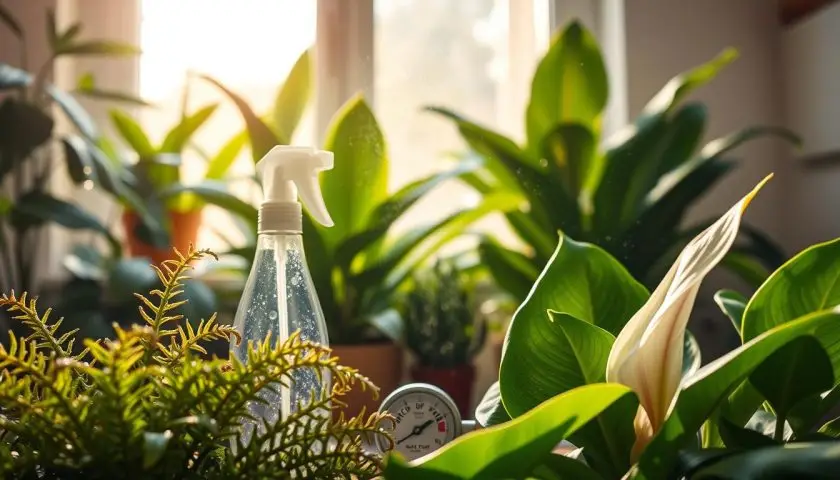
Low humidity signs can look like watering problems, so check the whole plant before reacting. A plant may have crispy tips because the air is dry, but it can also happen from underwatering, overwatering, fertilizer buildup, or harsh sun.
Common low-humidity signs
- Brown crispy leaf tips.
- Curling leaf edges.
- Thin leaves drying faster than usual.
- Flower buds drying before opening.
- Calathea, fern, or Fittonia foliage looking tired.
- Spider mites appearing more often in dry air.
Check these before blaming humidity
- Is the plant too close to a heater or vent?
- Is the soil too dry or too wet?
- Is the light too strong?
- Has fertilizer built up in the soil?
- Are roots healthy?
- Are pests present?
For symptom support, read why plant leaves turn yellow, leaf curl, browning and droop, and how to revive a dying plant.
How to Mist Plants Safely
If you decide misting is suitable for a plant, do it carefully. The goal is a light mist, not soaked leaves. Think of it as a small care tool, not a daily cure.
Step 1: Check the plant type
Do not mist automatically. Check whether the plant has smooth tropical foliage, fuzzy leaves, succulent leaves, active disease, or tight crowns that hold water.
Step 2: Mist in the morning
Morning misting gives leaves time to dry. Avoid misting late evening or night, especially in cool rooms.
Step 3: Use room-temperature water
Cold water can shock sensitive foliage. Room-temperature water is safer. Distilled or filtered water can reduce mineral spots on sensitive plants.
Step 4: Use a fine spray bottle
The best plant misting equipment is simple: a clean spray bottle that produces a fine mist. Avoid heavy droplets that run into leaf joints or crowns.
Step 5: Spray lightly from a distance
Hold the mister away from the plant and apply a light cloud of moisture. Leaves should look lightly refreshed, not dripping wet.
Step 6: Keep airflow comfortable
Good airflow helps leaves dry. Avoid misting plants crowded into dark corners, closed cabinets, or cold windowsills unless the setup has proper ventilation.
Step 7: Watch the plant after misting
If spots, marks, mildew, or mushy areas appear, stop misting. The plant is telling you the habit is not working in that location.
Misting Frequency for Plants
Misting frequency for plants depends on plant type, light, airflow, season, and room temperature. There is no universal schedule. “Mist every day” is too broad and often unnecessary.
| Plant Situation | Misting Frequency | Better Note |
|---|---|---|
| Air plants | As part of watering routine | Dry fully after misting or soaking |
| Ferns in warm bright rooms | Occasional light misting | Use humidity tray or humidifier too |
| Broad-leaved tropical plants | Occasionally for cleaning | Wipe leaves after spraying |
| Plants in winter low light | Rarely or never | Wet leaves dry slowly |
| Succulents and cacti | Do not mist | Water soil properly instead |
| Plants with leaf spots | Do not mist | Keep foliage dry and improve airflow |
Best Time to Mist Indoor Plants
The safest time for indoor plant misting is morning. The room is usually warming up, light is increasing, and leaves have time to dry during the day.
Morning is best
Morning misting lowers the chance of leaves staying wet overnight. It also fits well with plant checks because you can inspect leaves, soil, pests, and growth at the same time.
Avoid night misting
Night misting creates cool, damp foliage. This is one of the easiest ways to turn a harmless habit into a problem.
Avoid misting during harsh sun
Do not mist plants sitting in direct hot sun. Water droplets on leaves can mark foliage, and the plant may already be stressed by heat.
Best Water for Misting Plants
Water quality matters more for some plants than others. Many common houseplants tolerate normal tap water, but sensitive plants may show mineral spots, leaf marks, or brown tips if your water is hard.
Tap water
Tap water is fine for many plants if it is safe to drink. Letting it sit for a short time can bring it closer to room temperature.
Filtered water
Filtered water can reduce spots and residue. It is a good middle option for decorative foliage plants.
Distilled water
Distilled water is useful for sensitive plants, carnivorous plants, and plants that mark easily. It can also help prevent white mineral spots on glossy leaves.
Rainwater
Rainwater can be excellent if collected cleanly, but it is not always practical indoors.
Better Misting Solutions for Plants
If your goal is real plant humidity control, do not rely on misting alone. Use methods that keep humidity more stable around the plant.
Humidifier
A humidifier is usually the strongest option for dry homes, especially in winter. It helps the whole plant area rather than wetting only the leaf surface.
Pebble tray
A pebble tray can help create a small humidity zone. Keep the pot above the water line. The pot should not sit directly in water, or roots may stay too wet.
Grouping plants
Plants release moisture through transpiration. Grouping plants can create a slightly more humid microclimate around the leaves.
Terrarium or cloche
Small humidity-loving plants can do well in terrariums, cloches, or glass cabinets with proper airflow. Do not seal plants in stagnant wet air without monitoring them.
Bright bathroom with a window
A bathroom can help humidity-loving plants only if it has real natural light or a grow light. A dark humid bathroom is not better than a bright room with a humidifier.
For better humidity ideas, read humidity hacks without a humidifier, DIY humidity tray, and best bathroom plants.
Misting vs Humidifier vs Pebble Tray
| Method | Best For | Weak Point |
|---|---|---|
| Misting | Cleaning leaves and short moisture boost | Humidity effect is brief |
| Humidifier | Steady humidity for plant collections | Needs cleaning and monitoring |
| Pebble tray | Small humidity boost around one pot | Not enough for very dry rooms |
| Grouping plants | Natural microclimate | Can crowd plants if airflow is poor |
| Terrarium | Small humidity-loving plants | Can become too wet without airflow |
Common Mistakes With Misting Plant Care
Most misting problems come from doing it too often, doing it at the wrong time, or misting the wrong plant.
| Mistake | What Happens | Better Choice |
|---|---|---|
| Misting every plant | Dry-loving plants may rot or mark | Check plant type first |
| Misting at night | Leaves stay wet too long | Mist in the morning only |
| Soaking leaves heavily | Water collects in crowns and joints | Use a fine light mist |
| Misting diseased plants | Leaf spot can spread | Keep foliage dry and isolate if needed |
| Using misting instead of watering | Roots still dry out | Water the soil properly |
| Misting in low light | Leaves dry slowly | Improve light and airflow first |
Outdoor Plant Misting: Is It Different?
Outdoor plant misting is different because outdoor airflow, sunlight, and temperature can dry leaves faster. Still, misting is not the same as watering. Outdoor roots still need proper soil moisture.
When outdoor misting may help
- Refreshing heat-stressed patio plants briefly in the morning.
- Supporting seedlings in a warm protected setup.
- Helping some greenhouse plants with humidity.
- Cleaning dust from foliage.
When outdoor misting can hurt
- Late evening when leaves stay wet overnight.
- On plants prone to mildew or fungal leaf spot.
- During strong direct sun.
- In crowded spaces with poor airflow.
- When used instead of watering roots.
For outdoor care support, read how to keep outdoor plants alive, worst times to water your plants, and how to keep pests away from outdoor plants.
Plant-by-Plant Misting Guide
| Plant | Should You Mist? | Better Tip |
|---|---|---|
| Boston Fern | Occasionally, yes | Use humidity support too |
| Calathea | Use caution | Humidifier is better |
| Orchid | Carefully | Avoid water in the crown |
| Peace Lily | Occasionally | Water soil correctly |
| Monstera | For cleaning only | Wipe leaves and use humidity if needed |
| Snake Plant | No need | Keep soil dry between watering |
| Succulents | No | Water roots, not leaves |
| Cacti | No | Bright light and dry cycles |
| African Violet | Avoid | Keep fuzzy leaves dry |
| Purple Passion Plant | Avoid frequent misting | Use humidity without wet foliage |
Troubleshooting After Misting
If your plant looks worse after misting, stop for a while and inspect the plant carefully. The issue may be wet leaves, water quality, disease, or a room condition that makes misting unsuitable.
White spots on leaves
White spots after misting are often mineral residue from hard water. Use filtered or distilled water, or wipe leaves gently after spraying.
Brown spots after misting
Brown spots may come from leaf sensitivity, fungal or bacterial issues, harsh sun after wetting, or water sitting on leaves too long.
Yellow leaves after frequent misting
Yellowing is usually not caused by misting alone. Check overwatering, poor drainage, low light, and root health first.
Sticky leaves
Sticky leaves may mean pests such as aphids, mealybugs, or scale. Inspect undersides and stems closely.
Mold on soil
Mold on soil usually means moisture is staying too high around the pot. Improve airflow, reduce watering, and remove old fallen leaves.
For related help, read root rot guide, how to clean plant leaves, and signs you are overwatering.
Misting Care Checklist
| Before You Mist | Safe Answer | If Not |
|---|---|---|
| Is this plant safe to mist? | Smooth tropical foliage or air plant | Skip succulents, cacti, and fuzzy leaves |
| Is the room warm? | Leaves can dry quickly | Do not mist in cold rooms |
| Is there enough light? | Bright indirect light | Improve light before adding moisture |
| Is airflow good? | Gentle air movement | Avoid closed damp corners |
| Are leaves disease-free? | No spotting or rot | Keep foliage dry |
| Are you misting in the morning? | Yes | Avoid evening or night misting |
Helpful PATCH Guides for Misting, Humidity and Plant Care
Use these related PATCH guides to improve watering, humidity, indoor light, leaf care, pest prevention, and plant-specific routines.
Watering and Humidity Guides
- Complete watering guide
- Worst times to water your plants
- Signs you are overwatering
- Humidity hacks without a humidifier
- DIY indoor humidity tray
- Self-watering pots guide
Plant Problem Guides
- Plant Care hub
- Root rot guide
- How to revive a dying plant
- Leaf curl, browning and droop
- Why plant leaves turn yellow
- How to clean plant leaves
- Pruning basics
Indoor Light and Room Guides
- Complete guide to indoor light
- Low light house plants
- Office-friendly plants for artificial light
- Best bathroom plants
- Plants for bathroom no light
- Bathroom plants for mold
- Style indoor plants by room
Plant-Specific Guides
- Boston Fern care guide
- Orchid care guide
- Calathea care guide
- Peace Lily care guide
- Monstera care guide
- Purple Passion Plant care
- African Violet care guide
- Succulent care guide
- Cactus care guide
- Snake Plant care guide
- ZZ Plant care guide
- Spider Plant care guide
Indoor Plant Collections
- Indoor Plants hub
- Best indoor plants for beginners
- Best indoor plants for first-time plant parents
- Low-maintenance plants that thrive
- Best indoor plants for tiny apartments
- Oversized indoor plants
- Colorful foliage indoor plants
- Blooming indoor plants
Frequently Asked Questions
Is misting good for plants?
Misting can be good for some plants in small ways, such as cleaning leaves or refreshing certain tropical plants. It is not a reliable long-term humidity solution and can hurt plants if leaves stay wet too long.
Which plants benefit from misting?
Ferns, some orchids, air plants, Fittonias, and some tropical foliage plants may tolerate occasional light misting. They still need proper watering, light, humidity, and airflow.
Which plants should not be misted?
Avoid misting cacti, succulents, African Violets, many fuzzy-leaved plants, plants in low light, plants in cold rooms, and plants with fungal leaf spot, mildew, or rot.
How often should I mist indoor plants?
Do not mist by a fixed daily rule. Occasional morning misting is enough for plants that tolerate it. If a plant needs higher humidity every day, use a humidifier, pebble tray, plant grouping, or terrarium instead.
Does misting increase humidity?
Misting can increase moisture briefly right around the leaves, but the effect fades quickly after the water evaporates. It is not the best way to maintain steady humidity indoors.
Should I mist plants at night?
No. Night misting is risky because leaves can stay wet for many hours. Morning is safer because leaves have time to dry during the day.
Can misting cause fungus?
Yes, misting can contribute to fungal or bacterial leaf problems when foliage stays wet, airflow is poor, or the plant is already stressed.
Is a humidifier better than misting?
Yes, a humidifier is usually better if your goal is steady humidity. It raises moisture in the air instead of simply wetting the leaves for a short time.
Should I mist Monstera leaves?
You can mist Monstera lightly for cleaning, but it is better to wipe the leaves and provide humidity if the air is dry. Do not rely on misting as the main care method.
Can I mist outdoor plants?
You can mist some outdoor plants briefly in the morning, but it should not replace watering the soil. Avoid evening misting, mildew-prone plants, and misting during harsh sun.
Final Thoughts
Misting for plants is not good or bad by itself. It depends on the plant, the room, the timing, and the reason. A light morning mist can be useful for cleaning leaves or refreshing some humidity-loving plants. Frequent misting in low light, cold rooms, or poor airflow can do more harm than good.
Iowa State University Extension explains that misting may help clean foliage, but it does not raise humidity around houseplants for more than a few minutes and can promote or spread some diseases: Iowa State University houseplant care guide.
For healthier plants, treat misting as a small optional tool. If your plant truly needs humidity, choose a humidifier, pebble tray, terrarium, plant grouping, or a better room setup. Your plants need stable conditions more than a daily spray habit.
Final Recap
Misting can help clean leaves, support air plants, and briefly refresh some tropical foliage, but it is not a dependable way to raise indoor humidity. Avoid misting succulents, cacti, fuzzy leaves, diseased plants, low-light plants, and plants in cold rooms. If you mist, do it lightly in the morning with room-temperature water and good airflow. For real humidity support, use a humidifier, pebble tray, grouped plants, terrarium, or bright humid room. The safest plant care routine is simple: know the plant, water the roots correctly, keep leaves clean, improve humidity where needed, and avoid leaving foliage wet for too long.