🌿 Key Takeaways
- Philodendron represents one of the largest houseplant genera with 400+ species ranging from climbing vines to self-heading varieties — offering options for every indoor space and skill level
- Pink Princess Philodendron and other rare varieties command premium prices due to unstable variegation requiring specific propagation techniques to maintain pink coloring
- Heartleaf Philodendron (Philodendron hederaceum) ranks as the easiest beginner variety — tolerating low light, inconsistent watering, and neglect better than most houseplants
- Philodendron care fundamentals remain consistent across varieties: bright indirect light, well-draining soil, moderate watering when top soil dries, and 40-60% humidity for optimal growth
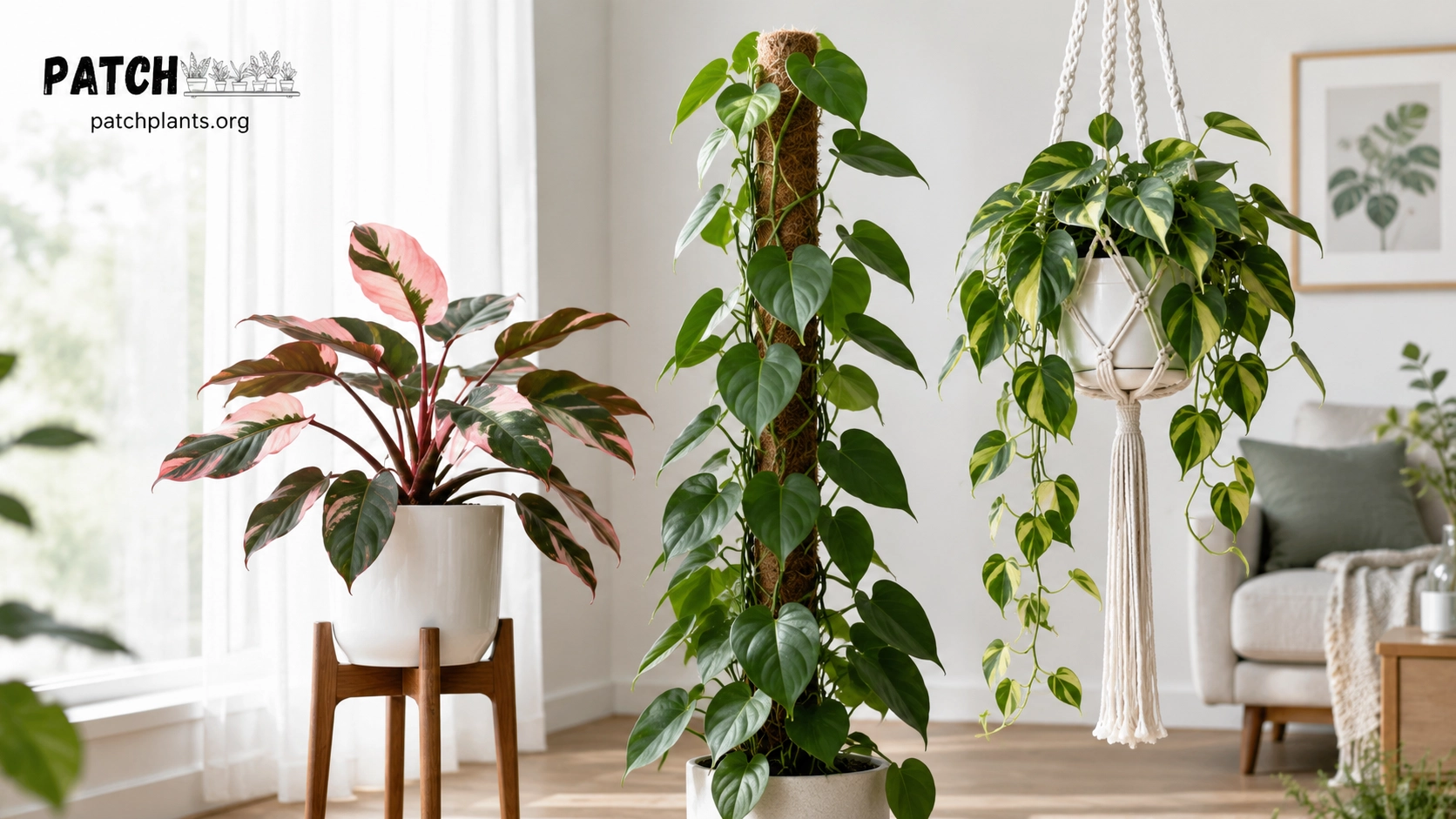
- Philodendron Brasil and Philodendron Birkin offer affordable colorful foliage without rare variety price tags — Brasil showing yellow-green variegation, Birkin displaying white pinstripes
- Split leaf Philodendron commonly refers to Monstera deliciosa (not true Philodendron) or Philodendron bipinnatifidum (self-heading variety) — care differs significantly between these species
- Philodendron plant toxicity affects all varieties — calcium oxalate crystals cause oral irritation in cats and dogs requiring careful placement in pet households
- Tree Philodendron (Philodendron selloum/bipinnatifidum) grows massive reaching 2+ metres indoors requiring substantial space and support unlike climbing varieties
- Philodendron micans offers velvet texture with burgundy-green iridescent leaves perfect for hanging baskets — one of the most visually unique varieties available
- Browse our indoor plant care guides for detailed care instructions covering every houseplant variety
Understanding Philodendron: The Ultimate Houseplant Genus
Philodendron encompasses over 400 species native to tropical Americas, making it one of the most diverse and popular houseplant genera. The name derives from Greek “philo” (love) and “dendron” (tree) — literally “tree lover” — referencing their natural climbing habit using aerial roots to ascend rainforest trees.
Philodendron plant varieties divide into two growth categories that determine care requirements and indoor placement:
Climbing/Vining Philodendrons:
- Heartleaf Philodendron (Philodendron hederaceum)
- Brasil Philodendron
- Philodendron Micans
- Pink Princess Philodendron
- Philodendron Gloriosum (technically a creeper)
- Require support structures or trailing positions
- Smaller mature leaves when grown trailing vs climbing
- Aerial roots develop along stems
Self-Heading/Tree Philodendrons:
- Philodendron Birkin
- Tree Philodendron (Philodendron selloum/bipinnatifidum)
- Philodendron Prince of Orange
- Philodendron White Princess
- Grow upright without support
- Larger mature specimens
- Non-climbing growth habit
The climbing varieties naturally develop smaller leaves when allowed to trail compared to when provided climbing support. A heartleaf Philodendron growing on a moss pole produces leaves 2-3x larger than the same plant in a hanging basket — understanding this growth pattern helps optimize displays.
For additional climbing plant options, our guide on low-light hanging plants covers 15+ trailing varieties perfect for vertical displays.
Popular Philodendron Varieties: Complete Species Guide
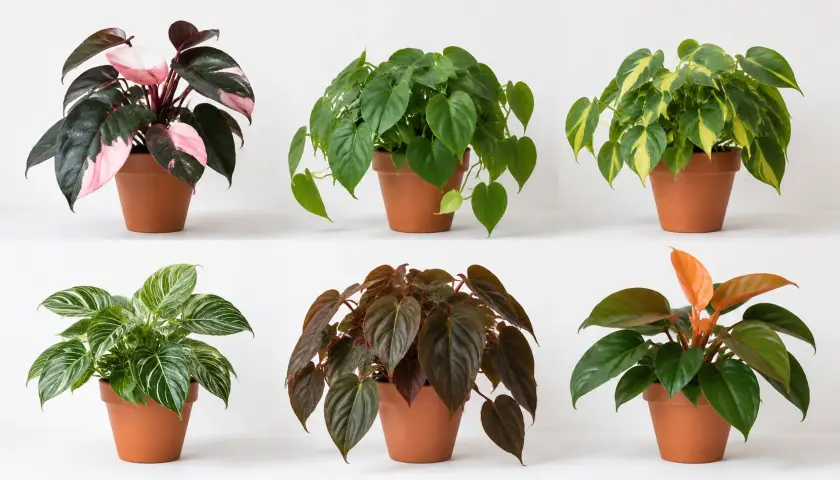
Pink Princess Philodendron — The Crown Jewel
Pink Princess Philodendron ranks as the most sought-after variety — dark green leaves splashed with hot pink variegation creating dramatic contrast. Single plants command $100-$300+ due to propagation challenges and unstable variegation.
Pink Princess Philodendron care requirements:
- Light: BRIGHT indirect light essential — insufficient light causes pink to revert to green
- Variegation stability: Variegation is unstable — plants can revert to solid green or all pink (which cannot photosynthesize)
- Propagation: Only propagate from stems showing pink variegation to maintain coloring in new plants
- Growth rate: Slow compared to green Philodendrons due to reduced chlorophyll
- Price: High due to demand and propagation challenges
Pink Princess care challenge: All-pink leaves cannot photosynthesize and will eventually die. Prune any all-green growth immediately to prevent reversion. Target balanced 50/50 pink-green variegation for healthiest growth.
Philodendron Pink Princess alternatives offering similar aesthetics at lower prices: Philodendron Erubescens (Blushing Philodendron) with burgundy-pink undersides, or explore our guide on colorful indoor plants for additional pink foliage options.
Heartleaf Philodendron — The Indestructible Beginner Variety
Heartleaf Philodendron (Philodendron hederaceum, also called heart leaf Philodendron) represents the easiest houseplant for beginners — tolerating neglect, low light, and inconsistent watering better than virtually any other species.
Why Heartleaf Philodendron excels for beginners:
- Tolerates low to bright indirect light (though prefers bright)
- Forgives inconsistent watering — bounces back from drought
- Fast growing — fills spaces quickly
- Easy propagation from any stem cutting
- Pest resistant
- Inexpensive and widely available
Heartleaf Philodendron care:
- Light: Low to bright indirect — more light = faster growth
- Water: When top 5cm dry — every 7-10 days typically
- Growth habit: Trailing or climbing depending on support
- Size: Vines reach 3+ metres when climbing
- Temperature: 18-27°C
Heart leaf Philodendron styling: Train on moss pole for larger leaves and upright growth, or allow to trail from hanging basket or shelf for cascading display. Our guide on how to style indoor plants by room covers positioning strategies.
For additional beginner-friendly options, our guide on best indoor plants for beginners covers 20+ forgiving species perfect for first-time plant parents.
Philodendron Brasil — Vibrant Yellow-Green Variegation
Philodendron Brasil represents a sport (natural mutation) of Heartleaf Philodendron displaying yellow-lime variegation on green leaves. It combines Heartleaf’s easy care with colorful indoor plants appeal at affordable prices ($15-30 typically).
Brasil Philodendron characteristics:
- Yellow-green variegated leaves
- Same easy care as Heartleaf
- Requires brighter light than green Heartleaf for variegation retention
- Fast growing when happy
- Widely available and affordable
Philodendron Brasil care:
- Light: Bright indirect essential for variegation — low light causes reversion to solid green
- Water: When top 5cm dry
- Variegation maintenance: Prune any all-green growth immediately to prevent reversion
- Growth rate: Fast — 30-60cm annually in good conditions
Brasil Philodendron reversion warning: New growth that emerges solid green will NOT develop variegation later. Prune it immediately at the node to encourage variegated growth instead.
Philodendron Birkin — White Pinstriped Self-Header
Philodendron Birkin grows as self-heading variety (doesn’t climb) with dark green leaves featuring white to cream pinstripes. Unlike climbing varieties, it grows upright without support making it perfect for tabletop displays.
Philodendron Birkin care essentials:
- Light: Bright indirect light — low light causes variegation to fade and leaf spacing to widen
- Water: When top 3-5cm dry — every 7-10 days
- Growth habit: Self-heading upright — no climbing support needed
- Mature size: 60cm tall and wide typically
- Variegation: Unstable — can revert to solid green or burgundy
Birkin care note: This variety originated as mutation of Philodendron Rojo Congo. Occasionally plants revert to burgundy-red (Rojo Congo) or solid green. Prune reverted growth immediately to maintain white pinstripes.
Philodendron Micans — Velvet Burgundy Leaves
Philodendron micans offers unique velvet texture with burgundy-green iridescent leaves that shimmer in light. Perfect for hanging baskets or trailing from shelves.
Philodendron micans care:
- Light: Bright indirect — colors deepen with adequate light
- Water: When top 3cm dry
- Texture: Soft velvety leaves unlike most Philodendrons
- Color: Burgundy-green with iridescent sheen
- Growth: Trailing vine perfect for baskets
Micans styling: The velvet texture and burgundy coloring create sophisticated displays when paired with glossy green plants. Position where light backlights leaves to showcase iridescent shimmer.
Split Leaf Philodendron — Identification Confusion
Split leaf Philodendron commonly refers to TWO completely different plants causing significant identification confusion:
Option 1: Monstera deliciosa (NOT actually Philodendron)
- Large fenestrated leaves with splits and holes
- Climbs via aerial roots
- Most common “split leaf” plant sold
- Our Monstera care guide covers complete care
Option 2: Philodendron bipinnatifidum (true Philodendron)
- Also called Tree Philodendron or Philodendron Selloum
- Self-heading massive variety
- Deeply lobed leaves (not fenestrated like Monstera)
- Grows 2+ metres indoors
Split leaf Philodendron care depends entirely on which species you have. Monstera and Philodendron bipinnatifidum require different care approaches despite both being called “split leaf Philodendron” in garden centers.
For proper Monstera care (the more common “split leaf” plant), our Monstera care guide provides complete growing instructions.
Tree Philodendron (Philodendron Selloum/Bipinnatifidum)
Tree Philodendron represents the largest self-heading variety — mature specimens reach 2+ metres tall and wide with deeply lobed leaves to 90cm long creating dramatic tropical displays.
Philodendron selloum care:
- Light: Bright indirect to moderate light
- Space: Requires 1.5+ metres clearance — NOT suitable for small spaces
- Water: When top 5cm dry — substantial root system demands consistent moisture
- Mature size: 2-3 metres indoors
- Growth rate: Moderate — slower than climbing varieties
Tree Philodendron placement: This massive variety works as floor plant focal point in large spaces. Not suitable for tabletops, small apartments, or areas with limited clearance. For large plant options, our guide on 20 oversized indoor plants covers additional statement varieties.
Philodendron Gloriosum — Creeping Velvet Beauty
Philodendron gloriosum grows as terrestrial creeper (along soil surface rather than climbing) with heart-shaped velvety leaves displaying prominent white veins.
Gloriosum care requirements:
- Light: Bright indirect essential for vein contrast
- Growth habit: Creeps horizontally along soil — doesn’t climb
- Potting: Requires wide shallow pot to accommodate horizontal growth
- Humidity: High 60%+ essential for velvet leaves
- Price: Moderate to expensive ($40-100)
Additional Popular Varieties
Philodendron Prince of Orange:
- Self-heading variety
- New leaves emerge bright orange, mature to green
- Easy care similar to Birkin
- 60cm mature size
White Knight Philodendron:
- Similar to Pink Princess but with white variegation
- Expensive due to rarity
- Unstable variegation requiring bright light
White Princess Philodendron:
- Self-heading with white variegation
- More stable than White Knight
- Moderate difficulty
Philodendron Moonlight:
- Lime-yellow new growth
- Self-heading compact variety
- Easy care for beginners
Philodendron Painted Lady:
- Yellow-green splashed variegation
- Climbing variety
- Moderate care requirements
Philodendron Verrucosum:
- Velvet leaves with iridescent veins
- High humidity essential
- Advanced grower variety
Philodendron Xanadu:
- Compact self-heading
- Deeply lobed leaves
- Excellent for lower light
Philodendron Ring of Fire:
- Variegated climbing variety
- Orange-red-yellow new growth
- Expensive collector variety
Philodendron Erubescens:
- Blushing pink undersides
- Affordable Pink Princess alternative
- Easy climbing variety
Complete Philodendron Care Guide — Universal Requirements
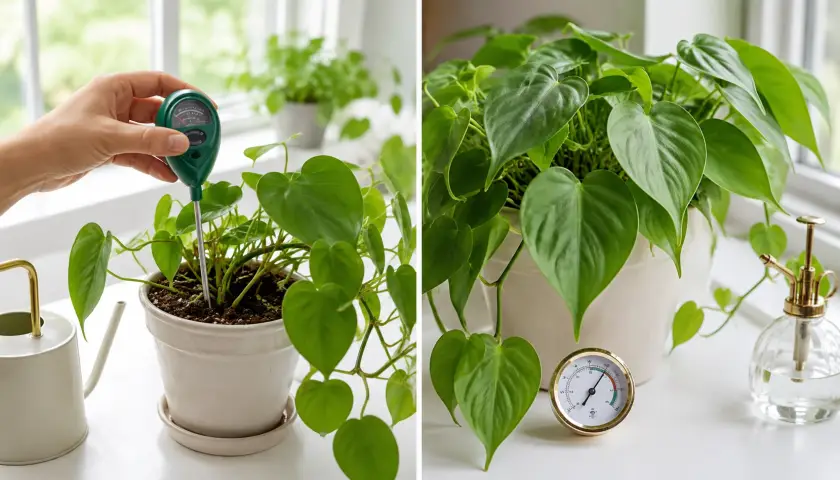
Light Requirements for Philodendron
Philodendron care success depends heavily on proper lighting — too little causes leggy growth and color fading, too much causes leaf scorch.
Ideal Philodendron light:
- Bright indirect light: 3-5 metres from south/west windows, or directly in front of sheer-curtained window
- Moderate indirect light: Acceptable for green varieties, insufficient for variegated types
- Low light: Tolerated by Heartleaf and Brasil but growth slows significantly
Light by variety:
- High light (essential): Pink Princess, White Knight, variegated varieties
- Moderate to bright: Birkin, Micans, Prince of Orange
- Low to bright (tolerant): Heartleaf, Brasil, Selloum
Signs of insufficient light:
- Long gaps between leaves (etiolation)
- Small new leaves
- Variegation fading to green
- Slow or no growth during spring/summer
- Leggy vining growth
Signs of excessive light:
- Yellow scorched patches on leaves
- Bleached pale appearance
- Brown crispy edges
For complete indoor light guidance, our complete guide to indoor light covers measuring light levels and optimizing positioning.
Watering Philodendron Plants
Philodendron plant watering follows consistent principles across varieties: allow partial soil drying between waterings, water thoroughly when needed, never allow standing water.
Watering schedule:
- Check soil moisture before watering — insert finger 3-5cm deep
- Water thoroughly when top portion dry — until draining from holes
- Frequency: Every 7-10 days in summer, every 10-14 days in winter (adjust based on conditions)
- Empty saucers after 15 minutes — never allow pot to sit in water
Watering by variety:
- Higher moisture: Gloriosum, Verrucosum, Painted Lady
- Moderate moisture: Most climbing varieties, Birkin, Micans
- Lower moisture tolerance: Heartleaf, Brasil, Selloum
Overwatering signs:
- Yellowing leaves throughout plant
- Soft mushy stems
- Mold on soil surface
- Root rot (brown mushy roots)
Underwatering signs:
- Drooping leaves
- Brown crispy edges
- Lower leaves yellowing and dropping
- Soil pulling away from pot edges
For complete watering guidance, our complete watering guide covers soil moisture management principles.
Overwatering causes more Philodendron deaths than any other factor. Our guide on signs you’re overwatering covers recognizing and correcting overwatering before it kills plants.
Humidity Requirements
Philodendron varieties originate from tropical rainforests with 60-80% humidity — significantly higher than typical home humidity of 30-40%. While Philodendrons tolerate average home humidity better than many tropicals, increasing humidity improves growth and leaf quality.
Humidity by variety:
- High humidity essential (60-70%): Gloriosum, Verrucosum, Melanochrysum
- Moderate humidity preferred (50-60%): Pink Princess, Micans, Painted Lady
- Average humidity adequate (40-50%): Heartleaf, Brasil, Birkin, Selloum
Increasing humidity:
- Humidifier (most effective): Maintain 50-60% humidity measured with hygrometer
- Bathroom placement: Steamy conditions ideal for high-humidity varieties
- Grouping plants: Creates localized humidity microclimate
- Pebble trays: Marginal improvement but better than nothing
Our guide on humidity hacks covers affordable techniques for tropical plant care without expensive humidifiers.
For high-humidity plant options, our guide on best plants for your bathroom covers 33 species thriving in steamy conditions.
Soil Mix for Philodendron
Philodendron plant care requires well-draining soil that retains some moisture while allowing excess water to drain freely — preventing both root rot and drought stress.
Ideal Philodendron soil mix:
- 40% potting soil
- 30% orchid bark or perlite (drainage)
- 20% peat moss or coco coir (moisture retention)
- 10% worm castings or compost (nutrition)
Alternative simple mix:
- 50% quality potting soil
- 30% perlite
- 20% orchid bark
Commercial options:
- Aroid mix (specifically formulated)
- Cactus/succulent mix (add peat for moisture retention)
- Regular potting soil amended with perlite (3:1 ratio)
Avoid: Heavy garden soil, pure peat moss, mixes without drainage components, constantly soggy soil.
For complete soil guidance, our guide on best soil mix for every type of plant covers creating custom mixes for specific plant needs.
Fertilizing Philodendron
Philodendron care includes regular feeding during growing season to maintain healthy vigorous growth.
Fertilizing schedule:
- Spring-Summer: Every 3-4 weeks with balanced liquid fertilizer at half strength
- Autumn: Reduce to every 6-8 weeks
- Winter: Stop completely — plants rest
Best fertilizer:
- Balanced liquid fertilizer (NPK 10-10-10 or 20-20-20 diluted)
- Half recommended strength
- Apply to pre-watered soil only
Signs of nutrient deficiency:
- Slow growth during spring/summer
- Small new leaves
- Pale yellow-green coloring
- Variegation fading on variegated types
Our guide on fertilizing indoor vs outdoor plants covers seasonal feeding schedules and nutrient requirements.
Propagating Philodendron: Easy Stem Cutting Method
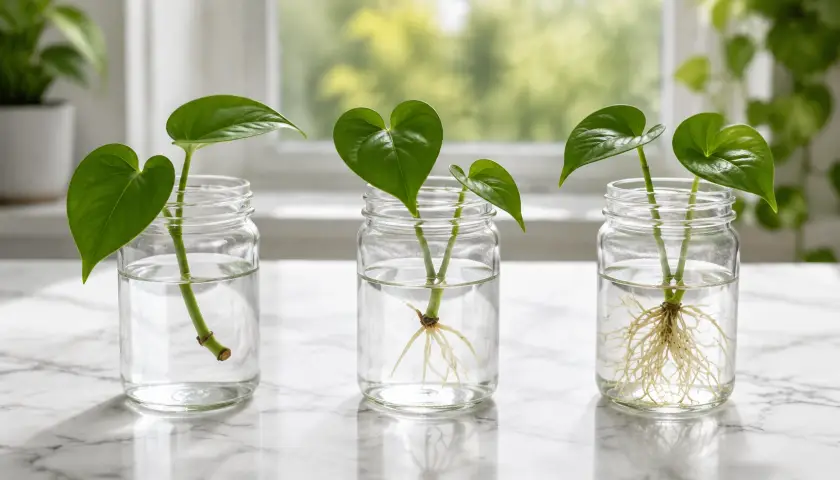
Philodendron propagation via stem cuttings ranks among the easiest houseplant propagation techniques — success rates approaching 90%+ for most varieties.
Philodendron propagation steps:
1. Select cutting location:
- Choose healthy stem with 2-3 leaves
- Identify node (bump on stem where leaf attaches)
- Cut must include at least 1 node to produce roots
2. Make the cut:
- Use clean sharp scissors or pruning shears
- Cut 1cm below node
- Include 2-3 leaves and 1-2 nodes per cutting
3. Root in water or soil:
Water propagation (easier to monitor):
- Place cutting in water with node submerged, leaves above water
- Change water every 3-5 days
- Place in bright indirect light
- Roots develop in 2-4 weeks
- Transplant to soil when roots reach 5cm long
Soil propagation (faster establishment):
- Dip cut end in rooting hormone (optional)
- Insert node into moist potting mix
- Keep soil consistently moist
- Roots develop in 3-4 weeks
Propagation success by variety:
- Easy: Heartleaf, Brasil, Micans (90%+ success)
- Moderate: Birkin, Prince of Orange, Selloum (70-80% success)
- Challenging: Pink Princess, Gloriosum, Verrucosum (50-70% success)
Pink Princess Philodendron propagation requires cuttings from variegated stems — cuttings from all-green or all-pink sections will not produce balanced variegation.
For complete propagation guidance, our guide on how to propagate houseplants covers techniques for every plant type.
Common Philodendron Problems and Solutions
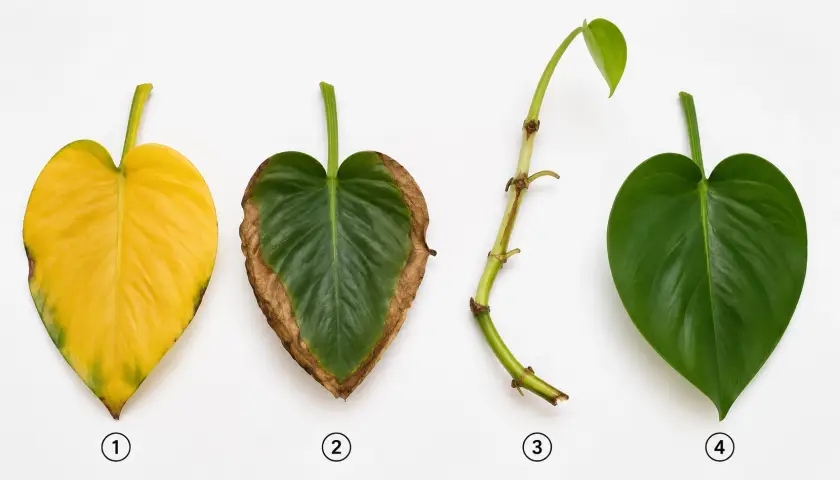
Yellow Leaves on Philodendron
Yellow leaves represent the most common Philodendron care problem with multiple possible causes.
Overwatering (most common cause):
- Multiple leaves yellowing throughout plant
- Soil stays wet for 7+ days
- Solution: Allow soil to dry more between waterings, improve drainage
Natural aging:
- Oldest bottom leaves yellowing one at a time
- Normal process as plant redirects energy to new growth
- Solution: Remove yellow leaves, continue normal care
Nutrient deficiency:
- Overall pale yellow appearance
- Slow growth
- Solution: Resume regular fertilizing schedule
Underwatering:
- Yellowing plus brown crispy edges
- Soil very dry, pulling from pot edges
- Solution: Water more frequently, ensure thorough watering
For complete yellow leaf diagnosis, our guide on why your plant leaves are turning yellow covers identifying and fixing every cause.
Brown Leaves and Edges
Brown crispy edges:
- Low humidity (most common)
- Inconsistent watering
- Fluoride/chlorine in tap water
- Solution: Increase humidity, use filtered water
Brown spots:
- Leaf spot disease from overwatering
- Cold damage from drafts
- Solution: Improve air circulation, avoid cold exposure
Brown and yellow together:
- Root rot from overwatering
- Check roots — healthy roots are white/cream, rotted roots are brown and mushy
- Solution: Repot in fresh soil, remove rotted roots
Our guide on leaf curl, browning, and droop covers troubleshooting leaf problems.
Leggy Growth and Small Leaves
Insufficient light causes leggy growth with long gaps between leaves.
Solutions:
- Move to brighter location
- Rotate plant weekly for even growth
- Prune leggy stems to encourage bushier growth
- Provide climbing support (larger leaves develop when climbing)
Variegation Reverting to Green
Variegated Philodendron varieties (Pink Princess, Brasil, Birkin, White Knight) can revert to solid green.
Causes:
- Insufficient light (most common)
- Natural genetic instability
- All-green growth outcompetes variegated growth
Solutions:
- Increase light significantly
- Prune ALL solid green growth immediately at the node
- Propagate only from variegated stems
Pests
Philodendron attracts common houseplant pests but less frequently than many species.
Common pests:
- Spider mites (webbing, stippled leaves)
- Mealybugs (white cottony clusters)
- Scale (brown bumps on stems)
- Fungus gnats (flying around soil)
Solutions:
- Isolate affected plant
- Wipe leaves with diluted neem oil solution
- Remove visible pests manually
- Improve air circulation
Repotting Philodendron Plants
Philodendron requires repotting every 18-24 months as roots fill container.
Signs repotting needed:
- Roots growing from drainage holes
- Water draining straight through without absorbing
- Growth slowed significantly
- Plant tipping over from top-heaviness
Repotting process:
- Choose pot 5cm larger in diameter
- Use fresh well-draining soil mix
- Gently loosen root ball before placing in new pot
- Water thoroughly after repotting
- Keep in bright indirect light during recovery
Repotting timing: Spring during active growth for fastest recovery.
For complete repotting guidance, our guide on how to repot a plant covers step-by-step techniques. Our guide on repotting mistakes to avoid covers common errors.
Philodendron Plant Toxicity and Pet Safety
Philodendron plant toxicity affects ALL varieties — calcium oxalate crystals in leaves and stems cause oral irritation in cats, dogs, and humans.
Toxicity symptoms in pets:
- Drooling and pawing at mouth
- Oral swelling and redness
- Vomiting
- Difficulty swallowing
- Decreased appetite
Severity: Moderate — rarely life-threatening but causes significant discomfort requiring veterinary attention.
Pet-safe alternatives: For non-toxic options, our guides on how to make your plants cat-friendly and how to make your plants dog-friendly cover safe plant selections.
Philodendron types ALL toxic — no variety is pet-safe. Keep out of reach or choose alternative plants for pet households.
Styling Philodendron in Different Spaces
Living Room Philodendron Displays
Philodendron plants suit various living room positions depending on variety and growth habit.
Climbing varieties (Heartleaf, Brasil, Micans):
- Train on moss pole or trellis near bright windows
- Allow to trail from high shelves creating cascading displays
- Combine multiple varieties for textural contrast
Self-heading varieties (Birkin, Prince of Orange, Selloum):
- Position as tabletop focal points
- Use as floor plants (Selloum) for large spaces
- Pair with climbing varieties for height variation
Office Philodendron Options
Philodendron varieties tolerating lower light and inconsistent care work perfectly for office environments.
Best office Philodendron:
- Heartleaf (most forgiving)
- Brasil (colorful and tolerant)
- Xanadu (compact self-header)
Our guide on office-friendly plants that survive fluorescent lighting covers additional workplace-appropriate varieties.
Bedroom Philodendron Placement
Philodendron care in bedrooms benefits from naturally higher nighttime humidity from breathing.
Best bedroom varieties:
- Micans (burgundy calming color)
- Heartleaf (air-purifying benefits)
- Birkin (compact tabletop size)
Our guide on how to decorate your bedroom with plants covers bedroom-specific plant selection and positioning.
Frequently Asked Questions
How do you care for a Philodendron?
Philodendron care requires bright indirect light, watering when top 5cm of soil dries (every 7-10 days typically), well-draining soil mix, 40-60% humidity, and temperatures between 18-27°C year-round. Feed with balanced liquid fertilizer at half strength every 3-4 weeks during spring and summer only.
What is the easiest Philodendron to care for?
Heartleaf Philodendron (Philodendron hederaceum) ranks as the easiest variety — tolerating low light, inconsistent watering, average humidity, and neglect better than any other type. It grows quickly, propagates easily, and costs $10-20 making it perfect for beginners.
How often should I water my Philodendron?
Water Philodendron plant when top 3-5cm of soil feels dry to touch — typically every 7-10 days in summer, every 10-14 days in winter. Always check soil moisture before watering rather than following rigid schedules. Water thoroughly until draining from holes, then empty saucer after 15 minutes.
Why is my Philodendron turning yellow?
Philodendron yellow leaves result from overwatering (most common cause showing multiple yellowing leaves), natural aging (single bottom leaves), nutrient deficiency (overall pale appearance), or underwatering (yellow plus brown crispy edges). Check soil moisture and adjust watering frequency accordingly.
Can Philodendron grow in low light?
Heartleaf Philodendron and Brasil Philodendron tolerate low light better than most houseplants but grow slower with smaller leaves and leggy spacing. Variegated varieties (Pink Princess, Birkin, White Knight) require bright indirect light minimum or variegation fades to solid green.
Is Philodendron toxic to cats and dogs?
Yes, Philodendron plant toxicity affects all varieties containing calcium oxalate crystals causing oral irritation, drooling, vomiting, and mouth swelling in cats and dogs. Keep all Philodendron types out of pet reach or choose non-toxic alternatives like Spider Plant, Calathea, or Peperomia.
How do you propagate Philodendron?
Philodendron propagates easily from stem cuttings: cut 2-3 leaf stem section including at least one node, place in water or moist soil, keep in bright indirect light, and roots develop in 2-4 weeks. Transplant to soil when water-rooted cuttings reach 5cm root length.
Related Plant Care Guides
- 🌿 Pothos Care Guide
- 🌿 Monstera Care Guide
- 🌸 Peace Lily Care Guide
- 🐍 Snake Plant Care Guide
- 🌱 ZZ Plant Care Guide
- 🕷️ Spider Plant Care Guide
- 🌿 Fiddle Leaf Fig Care Guide
- 🌿 Rubber Plant Care Guide
- 🌈 Colorful Indoor Plants Guide
- 💧 Complete Watering Guide
- 💡 Complete Indoor Light Guide
- 💨 Humidity Hacks Guide
- 🌱 How to Propagate Houseplants
- 🍃 Why Leaves Turn Yellow
- 🌿 Leaf Problems Guide
- 💧 Signs of Overwatering
- 🆘 How to Revive a Dying Plant
- 🌱 How to Repot a Plant
- ⚠️ Repotting Mistakes to Avoid
- 🌱 Best Soil Mix Guide
- 💧 Fertilizing Indoor vs Outdoor
- 🐾 Cat-Friendly Plants
- 🐾 Dog-Friendly Plants
- 🛁 Best Bathroom Plants
- 🏢 Office Plants Guide
- 🏠 Style Plants by Room
- 🛌 Bedroom Plant Guide
- 🌿 Best Indoor Plants for Beginners
- 🌿 Low-Light Hanging Plants
- 🌿 20 Oversized Indoor Plants
- 🌿 35 Low-Maintenance Plants
- 📂 Browse All Indoor Plants
Final Thoughts
Philodendron deserves its reputation as the ultimate houseplant genus — offering varieties suitable for every skill level, aesthetic preference, and indoor environment. From the bulletproof Heartleaf Philodendron tolerating beginner mistakes to the coveted Pink Princess Philodendron commanding collector attention, this diverse genus provides options spanning difficulty, price, size, and visual impact.
The fundamental Philodendron care requirements remain remarkably consistent across varieties: bright indirect light, well-draining soil, moderate watering when soil partially dries, and reasonable humidity. Master these basics with forgiving Heartleaf or Brasil, then confidently progress to demanding varieties like Gloriosum or Verrucosum as skills develop.
Philodendron plant versatility extends beyond care simplicity. Climbing varieties transform bare walls into living green installations when trained on moss poles or trellises, while self-heading types like Birkin and Prince of Orange create structured tabletop displays without sprawling. The Tree Philodendron anchors large spaces with architectural presence, and velvet-leaved Micans adds sophisticated texture to hanging baskets.
The propagation ease cannot be overstated — Philodendron stem cuttings root with near-certainty in plain water, allowing endless multiplication and sharing. A single Heartleaf Philodendron purchased for $15 generates dozens of new plants within months, making it both economical and rewarding for growers enjoying propagation.
Understanding variety-specific requirements prevents common pitfalls. Pink Princess Philodendron and other variegated types demand significantly brighter light than green varieties to maintain coloring — insufficient light causes irreversible reversion to solid green. Split leaf Philodendron identification confusion leads to improper care when Monstera and Philodendron bipinnatifidum receive identical treatment despite different needs.
The toxicity consideration remains important for pet households. All Philodendron types contain calcium oxalate crystals causing oral irritation in curious cats and dogs — no variety is pet-safe. Elevated placement or barrier protection becomes essential, or alternative non-toxic plants provide worry-free options.
Philodendron collection growth follows predictable patterns for enthusiasts. Most start with inexpensive Heartleaf or Brasil, quickly succeed, then add Birkin or Micans for color variation. As confidence builds, rare varieties like Pink Princess, White Knight, or Ring of Fire enter collections despite premium prices. The diversity ensures collections never feel complete — new discoveries and releases provide endless acquisition opportunities.
According to the Royal Horticultural Society, Philodendron ranks among the most effective houseplants for improving indoor air quality through natural filtration of common household pollutants — combining aesthetic appeal with functional air-purifying benefits that enhance living spaces beyond visual impact alone. 🌿