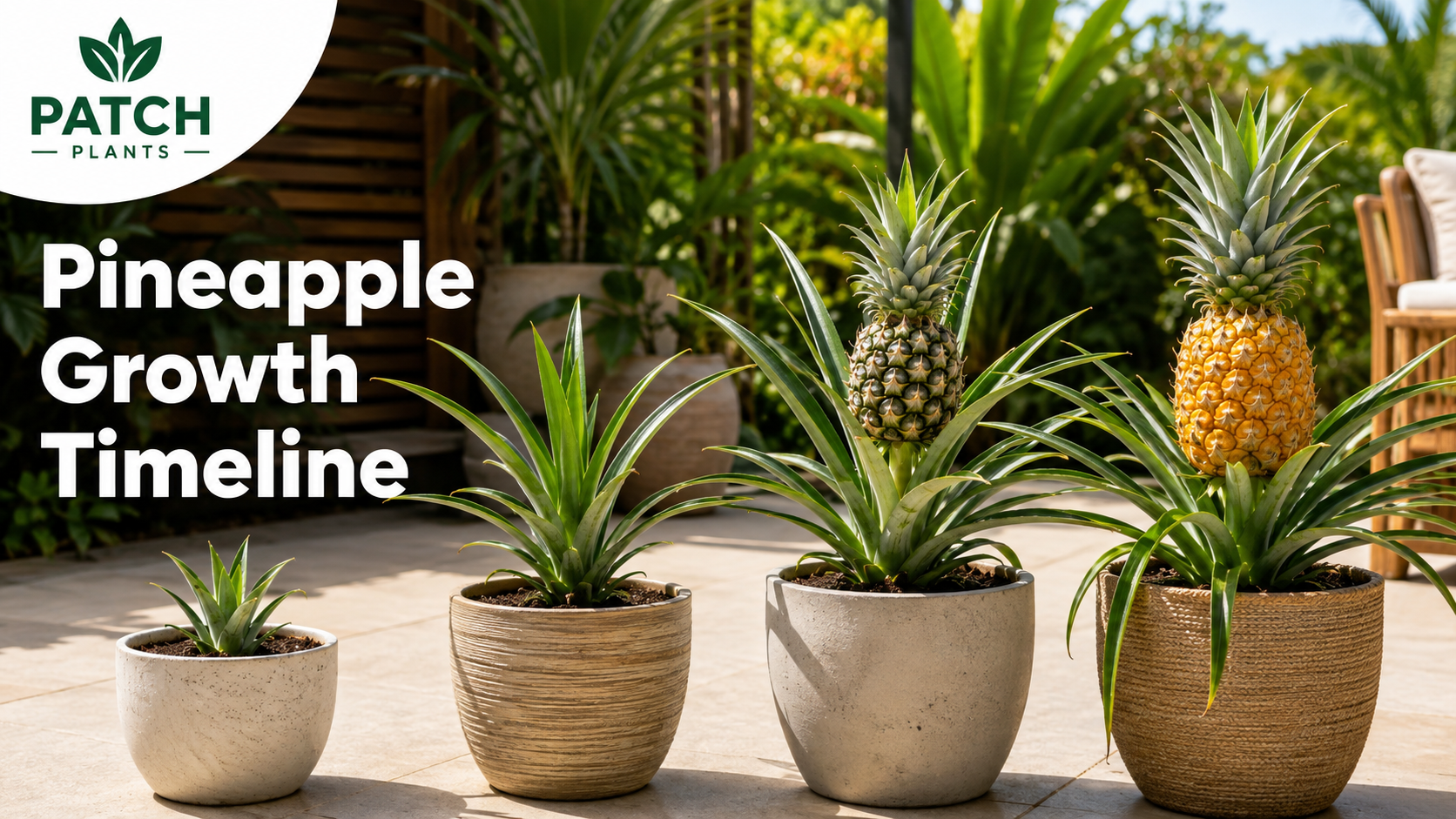
How long does it take pineapple to grow? Most home growers should expect about 18 to 24 months from planting to harvest in warm, bright conditions. In cooler homes, containers, or subtropical climates, the full pineapple cultivation timeline can stretch closer to 24 to 36 months.
Quick Answer
A pineapple usually takes 18 to 24 months to grow from planting to harvest in warm conditions. A store-bought crown often takes closer to 24 months or more, while pups, slips, and suckers can fruit faster because they start stronger. Light, warmth, drainage, plant size, and steady care all affect the final timeline.
Key Takeaways
- How long does it take pineapple to grow? Usually 18 to 24 months, but 18 to 36 months is realistic in cooler or less ideal conditions.
- Growing pineapple from crown is slower than growing from pups, slips, or suckers.
- The main pineapple growth stages are rooting, leaf growth, vegetative growth, flowering, fruit development, and harvest.
- Pineapple plants need strong light, warmth, good drainage, and careful watering.
- A container-grown pineapple can fruit, but the pot must be large enough and the plant must get plenty of sun.
- This article supports edible and container-growing guides like easiest outdoor edible plants for beginners, container gardening on patios, and planting potatoes in containers.
Introduction
Pineapple is not a quick crop. You do not plant it in spring and harvest it a few weeks later. It grows slowly, stores energy in its thick leaves, then flowers only when the plant is mature enough to support a fruit.
That slow pace is why the question how long does it take pineapple to grow matters so much. If you expect fruit in three months, the plant will feel disappointing. If you know the process can take two years or more, it becomes easier to enjoy each stage.
This guide explains the full pineapple growing timeline, from crown preparation to harvest. It also covers why some plants fruit faster, how containers affect growth, what signs show maturity, and how to care for pineapple plants indoors, outdoors, and on patios. For more edible growing help, use easiest outdoor edible plants for beginners, patio tomato plants, and garden calendar.
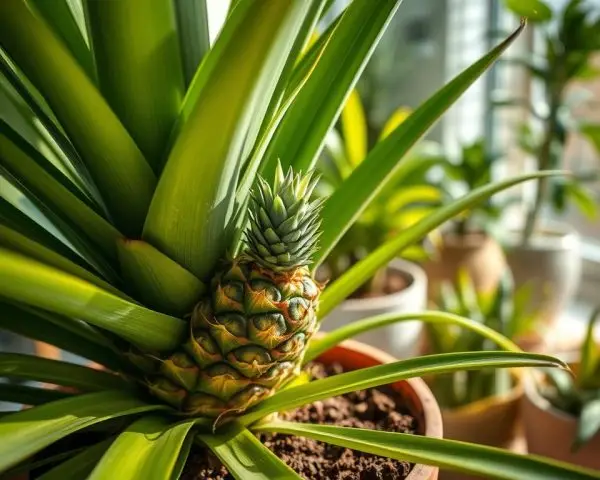
How Long Does It Take Pineapple to Grow? Full Timeline
The simple answer is that pineapple usually takes 18 to 24 months to grow from planting to harvest in warm, sunny conditions. In less ideal growing conditions, especially where the plant is indoors, shaded, cool, root restricted, or under-watered, the timeline can stretch to 24 to 36 months.
The exact pineapple plant maturity timeline depends on the starting material. A crown from a store-bought pineapple is usually slower. A pup, sucker, or slip from an established plant can be faster because it is already more developed.
| Starting Material | Typical Time to Fruit | Best For |
|---|---|---|
| Store-bought crown | 24 to 36 months | Beginners who want a fun project |
| Nursery pineapple plant | 18 to 24 months | Faster results and stronger starts |
| Pup or sucker | 18 to 24 months, sometimes faster | Growers with access to mature plants |
| Slip or hapa | 18 to 24 months | Warm climates and productive gardens |
| Indoor container plant | 24 to 36 months or longer | Bright homes, sunrooms, and patient growers |
Pineapple Growth Stages: 7 Steps from Crown to Fruit
The pineapple growth period is easier to understand when you break it into stages. A plant may look slow for months, but each stage is building toward flowering and fruiting.
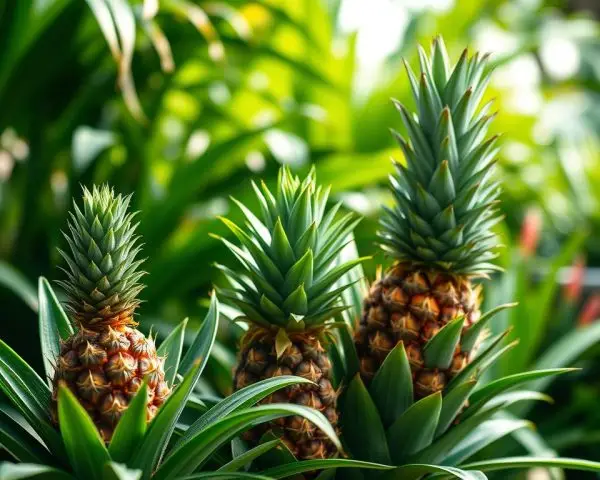
Stage 1: Crown preparation
If you are growing pineapple from crown, the first step is preparation. Twist or cut the crown from a healthy pineapple, remove excess fruit flesh, peel away a few lower leaves, and let the base dry for a day or two.
This drying step helps reduce rot. Pineapple crowns are fleshy, and planting them while wet or covered in fruit pulp can cause problems.
Stage 2: Rooting
Rooting can take a few weeks. Some growers root pineapple crowns in water first, while others plant directly into a free-draining mix. Direct planting is often safer because the crown does not sit in water for too long.
During rooting, the plant needs bright light, warmth, and lightly moist soil. It should not sit in soggy compost.
Stage 3: Early leaf growth
Once roots begin working, the plant slowly produces new leaves from the center. This stage can feel slow, especially indoors. New central growth is a good sign that the crown has established.
Stage 4: Vegetative growth
This is the longest stage. The pineapple builds a strong rosette of stiff leaves. The larger and healthier the plant becomes before flowering, the better its chance of producing a decent fruit.
Most of the pineapple plant growth rate depends on this stage. Strong sun, warmth, drainage, and regular light feeding all matter.
Stage 5: Flowering maturity
A pineapple plant usually needs to mature before it flowers. In good conditions, this may happen around 14 to 18 months, but home-grown plants can take longer. Flowering begins in the center of the rosette and eventually forms the fruit.
Stage 6: Fruit development
After flowering, the fruit develops slowly. What looks like one pineapple is actually many small fruitlets joined together. The fruit swells, changes color, and becomes more aromatic as it matures.
Stage 7: Harvest and ratoon growth
After harvest, the original plant will not produce the same main fruit again, but it may form pups, slips, or suckers. These can be used to grow new pineapple plants and continue the cycle.
Quick Pineapple Timeline by Month
| Time After Planting | What Usually Happens | What You Should Do |
|---|---|---|
| Week 1 to 4 | Crown dries, roots begin forming | Keep warm, bright, and lightly moist |
| Month 1 to 3 | New central leaves appear | Watch for rot and avoid overwatering |
| Month 3 to 12 | Leaf rosette expands | Increase sun exposure and feed lightly |
| Month 12 to 18 | Plant reaches stronger size | Keep care steady and avoid stress |
| Month 18 to 24 | Flowering and fruiting may begin | Support stalk if fruit gets heavy |
| Month 24 to 36 | Slower plants may finally fruit | Stay patient and keep light strong |
Why Some Pineapples Grow Faster Than Others
The answer to how long does it take pineapple to grow changes because not every pineapple plant starts from the same place. Some begin as tiny crowns. Others begin as strong suckers from mature plants.
Starting material matters
A crown is easy to find, but it is usually the slowest. Pups, slips, and suckers are often faster because they come from an established plant and may already have more stored energy.
Light makes a big difference
Pineapples need strong light to build enough energy for flowering. Outdoor full sun is best. Indoors, a sunny window or grow light may be needed. If your home is low-light, read complete guide to indoor light before expecting fruit.
Temperature controls speed
Pineapples are tropical plants. Warm conditions help them grow faster. Cool rooms, cold nights, or winter slowdowns can stretch the pineapple cultivation timeline.
Container size affects plant size
A small pot restricts roots, leaf growth, and fruit size. If you want a stronger pineapple plant, use a container that gives roots enough room without staying waterlogged.
Watering affects root health
Pineapple tolerates some dryness, but long drought slows growth. Constant wet soil is worse because it can cause root rot. For better habits, read complete watering guide and signs you are overwatering.
Can You Grow Pineapple from a Store-Bought Crown?
Yes, you can grow pineapple from a store-bought crown. It is one of the easiest ways to start, but it is also one of the slowest. If the crown is fresh and healthy, it can root and grow into a full plant.
Choose a healthy pineapple
Pick a pineapple with green, firm, fresh-looking leaves. Avoid crowns that are brown, mushy, loose, moldy, or badly dried out.
Remove fruit flesh
Fruit flesh left on the base can rot. Clean the crown carefully and expose the short stem at the base.
Dry before planting
Let the crown dry in shade for one to two days. This helps the cut surface callus before it touches soil.
Plant in a free-draining mix
Use a cactus-style or tropical potting mix with added perlite, bark, or coarse sand. The goal is drainage with enough moisture for new roots.
If you like slow but satisfying edible projects, you may also enjoy planting potatoes in containers, patio tomato plants, and edible flowers to grow outdoors.
Best Conditions for Pineapple Plant Care
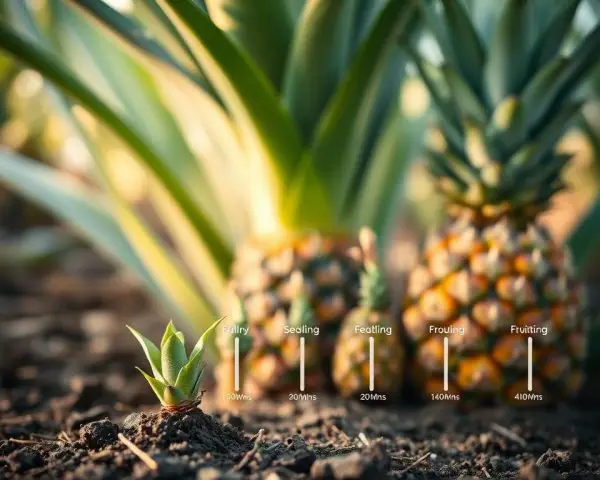
Light
Pineapple plants need full sun for best growth and fruiting. Outdoors, choose the brightest warm spot you have. Indoors, place the plant near the sunniest window and consider a grow light in winter.
Temperature
Warmth keeps the plant moving. Cool conditions slow growth and can delay flowering. Protect pineapple plants from frost, cold drafts, and freezing outdoor weather.
Soil
Pineapple plants need well-drained soil. A mix that stays wet for too long can damage roots. Use a loose potting mix and avoid heavy garden soil in containers.
Water
Water when the mix begins to dry. Pineapple plants do not like sitting in water. If the plant is in a pot, always use drainage holes and empty saucers after watering.
Airflow
Good airflow helps prevent fungal issues and keeps foliage healthy. This matters indoors, in humid rooms, and on covered patios.
Growing Pineapple in Containers
Pineapple in containers is a realistic option for patios, balconies, sunrooms, and warm indoor spaces. Containers also make it easier to move the plant indoors during cold weather.
Choose the right pot size
A young pineapple can start in a smaller pot, but a fruiting plant needs more room. A 3 to 7 gallon container is a practical size range for many home growers.
Use drainage holes
Drainage is essential. A pineapple plant may look tough, but wet roots can still rot. Avoid decorative pots without holes unless they are only being used as cover pots.
Use a sturdy container
A fruiting pineapple can become top-heavy. Choose a stable pot, especially if the plant is on a windy patio or balcony.
Repot when needed
If roots fill the pot, growth slows, or the plant tips easily, move it into a slightly larger container. For repotting help, read how to repot a plant and repotting mistakes to avoid.
| Container Size | Best Use | Growth Expectation |
|---|---|---|
| 1 gallon | Young crown or starter plant | Good for early rooting, not final fruiting |
| 3 gallon | Small established plant | Can grow well if light and water are good |
| 5 gallon | Most container pineapple plants | Better root room and stronger growth |
| 7 gallon | Larger fruiting plant | More stable and better for full-size growth |
Can Pineapple Grow Indoors?
Pineapple can grow indoors, but fruiting indoors is slower and less predictable. The plant needs more light than many common houseplants. A bright kitchen shelf may look nice, but it may not be bright enough for strong fruiting.
Indoor pineapple needs strong light
A south-facing window, sunroom, greenhouse, or full-spectrum grow light gives the best chance. If your plant becomes pale, stretched, or weak, light is probably too low.
Warm rooms help
Keep indoor pineapple plants away from cold windows, winter drafts, and unheated rooms. Warm, stable conditions help growth continue.
Do not overwater indoors
Indoor pots dry more slowly than outdoor pots. Check the soil before watering. If the lower mix stays wet, root problems can start.
Expect a longer timeline
An indoor pineapple plant may take closer to 24 to 36 months or longer to fruit. Some indoor plants never fruit if light is too weak.
For indoor growing support, read complete indoor light guide, low light house plants, and best indoor plants for beginners.
Watering and Feeding Through the Pineapple Growth Period
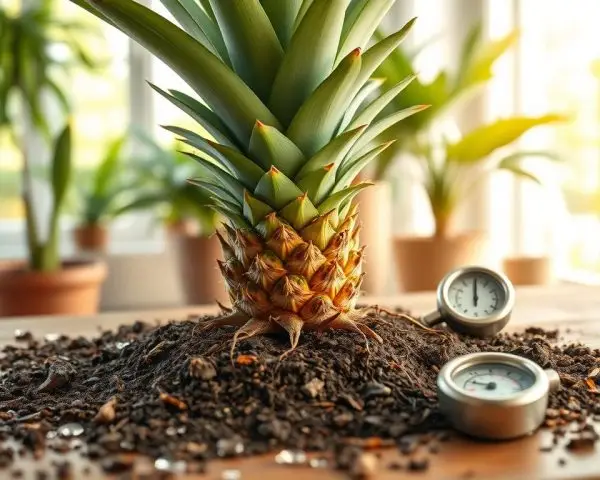
Watering young plants
Young crowns need light, steady moisture while rooting. Keep the mix barely moist, not soaked. If the crown wobbles or turns mushy, check for rot.
Watering established plants
Once established, pineapple plants can handle short dry periods. Water during dry spells, especially in containers, but let excess water drain away.
Feeding during vegetative growth
Feed lightly during active growth. The aim is to build a strong plant before flowering. A weak plant may produce a smaller fruit or take longer to flower.
Do not overfeed
Too much fertilizer can burn leaves or push weak growth. Use a gentle feeding routine and follow product directions.
Pause or reduce feeding in winter
If the plant slows down in winter, reduce feeding. Feeding a cold, low-light plant can cause more stress than benefit.
For feeding support, use fertilizing indoor vs outdoor plants and best soil mix guide.
How to Tell When a Pineapple Is Ready to Flower
A pineapple plant is ready to flower when it has enough size and stored energy. There is no exact leaf count that works for every home, but a mature plant usually has a strong rosette, thick central growth, and healthy leaves.
Signs of maturity
- The plant is wide and sturdy.
- Leaves are firm, green, and upright.
- The center growth is active.
- The plant has been growing for at least 14 to 18 months.
- The plant is receiving strong light and warmth.
Why flowering may be delayed
Low light, cool temperatures, small containers, root damage, overwatering, or poor nutrition can delay flowering. A pineapple that is alive but not growing strongly may need better conditions before it can fruit.
Should You Force a Pineapple to Flower?
Some growers use ethylene from ripe apples to encourage flowering, but this is best done only when the plant is mature and healthy. Forcing a small or stressed plant can lead to a weak fruit.
Wait until the plant is large enough
A bigger plant usually has better fruit potential. If the plant is still small, focus on growing leaves first.
Use forcing only as a gentle push
Forcing is not a replacement for good care. The plant still needs light, warmth, drainage, and enough stored energy.
Do not force a struggling plant
If the plant has yellow leaves, root rot, pests, or weak growth, fix those problems first. For plant recovery, read how to revive a dying plant.
Pineapple Harvesting Time: How to Know It Is Ready
Pineapple harvesting time arrives when the fruit is full-sized, aromatic, and changing color. The shell often starts turning yellow from the base upward.
Look at the shell color
A pineapple that is ready to harvest usually shifts from green toward yellow. It does not always need to be fully yellow, but some yellowing is a strong sign of maturity.
Smell the fruit
A ripe pineapple often has a sweet tropical aroma near the base. If there is no fragrance, it may need more time.
Check fruit size
The fruit should look full and developed. A tiny fruit may not improve much after harvest if it was picked too early.
Harvest with a clean cut
Use a clean sharp knife or pruners to cut the fruit from the stalk. Avoid pulling hard, which can damage the plant and nearby pups.
Common Pineapple Growing Problems
Slow growth
Slow growth usually means not enough light, cool temperatures, small pot size, weak roots, or low feeding. Pineapple is naturally slow, but it should still produce new leaves in active conditions.
Yellow leaves
Yellow leaves can come from overwatering, poor drainage, cold stress, or nutrient issues. Check the roots and soil moisture first. For more help, read why plant leaves turn yellow.
Brown leaf tips
Brown tips can happen from dry air, inconsistent watering, salt buildup, wind stress, or root stress. Trim only the dead brown part if needed.
Rotting crown
A rotting crown usually means the base stayed too wet or fruit flesh was left attached. Start with a clean crown and a free-draining mix.
Pests
Scale, mealybugs, and mites can affect pineapple plants. Inspect leaf bases and the central rosette. For pest help, read how to keep pests away from outdoor plants.
Fruit stalk bending
The fruit can become heavy. Use a bamboo stake and soft tie if the stalk leans badly.
How to Speed Up Pineapple Growth Safely
You cannot make a pineapple fruit overnight, but you can avoid delays. The best way to shorten the timeline is to keep the plant growing steadily.
Start with a pup or nursery plant
If speed matters, do not start from a small store-bought crown. A healthy pup, sucker, slip, or nursery plant usually starts ahead.
Give full sun
More usable light means more energy. Outdoors, choose a full-sun position. Indoors, use the brightest window or a grow light.
Use a large enough container
A root-restricted pineapple may stay small. Move the plant into a larger pot when it clearly needs more space.
Protect from cold
Cold slows growth. Bring container plants indoors before damaging temperatures arrive.
Water consistently, not constantly
Dryness slows growth, but soggy soil causes rot. Aim for steady moisture with drainage.
Best Places to Grow Pineapple at Home
Sunny patio
A sunny patio is one of the best places for pineapple in containers. The plant gets warmth, light, and airflow. For more patio growing ideas, read best plants for container gardening on patios.
Balcony
A warm, sunny balcony can work well if the pot is stable and not exposed to cold wind. For balcony support, read outdoor plants for coastal and windy environments.
Greenhouse
A greenhouse can extend the season and protect the plant from cold. Watch for overheating, pests, and drying pots.
Bright indoor window
A very bright window can keep pineapple growing indoors. A grow light may be needed in winter.
Warm outdoor garden
If you live in a warm frost-free area, pineapple can grow outdoors in the ground. Choose a full-sun, well-drained site.
Pineapple Care Checklist
| Care Area | Best Practice | Common Mistake |
|---|---|---|
| Light | Full sun or very bright indoor light | Keeping it in a dim room |
| Water | Water during dry periods and drain well | Letting soil stay soggy |
| Soil | Loose, well-drained potting mix | Using heavy garden soil in pots |
| Container | 3 to 7 gallon pot with drainage | Keeping fruiting plants in tiny pots |
| Temperature | Warm and frost-free | Leaving containers outside in cold weather |
| Harvest | Pick when fruit is full-sized, fragrant, and yellowing | Harvesting too early while fully green and immature |
Helpful PATCH Guides for Pineapple, Edible Plants, Containers, and Plant Care
Use these related guides to build a stronger edible garden, improve container care, and support healthy plant growth indoors and outdoors.
Edible and Container Growing Guides
- Easiest outdoor edible plants for beginners
- Planting potatoes in containers
- Patio tomato plants
- Rosemary plant indoors
- Edible flowers to grow outdoors
- Best plants for container gardening on patios
- Garden calendar
- Outdoor Plants hub
- PATCH Plants blog
Outdoor Plant Guides
- How to keep outdoor plants alive
- Low-maintenance outdoor plants
- Hardy outdoor plants
- Hardy plants with minimal watering
- Outdoor plants that survive British winters
- Outdoor plants for coastal and windy environments
- Drought-resistant plants
- Outdoor plants for storms and heatwaves
- Native plants that thrive in your region
- Shade-loving outdoor plants
Patio, Balcony, and Shade Guides
- Plants in pots in shade
- Small plants that like shade
- Year-round balcony plants
- Coastal and windy outdoor plants
- Outdoor garden color themes
- Create a colorful garden for all seasons
- Pollinator-friendly plants for urban spaces
- Wildlife-friendly garden design
Plant Care Guides
- Plant Care hub
- Complete watering guide
- Worst times to water plants
- Signs you are overwatering
- Root rot guide
- How to revive a dying plant
- Leaf curl, browning, and droop
- Why plant leaves turn yellow
- How to clean plant leaves
- Best soil mix guide
- How to repot a plant
- Repotting mistakes to avoid
- Fertilizing indoor vs outdoor plants
- Pruning basics
- Self-watering pots guide
Indoor Growing Guides
- Indoor Plants hub
- Complete guide to indoor light
- Low light house plants
- Best indoor plants for beginners
- Best indoor plants for first-time plant parents
- Best indoor plants for tiny apartments
- Low-maintenance plants
- Air-purifying indoor plants
- Blooming indoor plants
- Colorful foliage indoor plants
- Indoor plants that smell amazing
- Unusual indoor plants
- Rare houseplants
Bathroom and Low-Light Support Guides
- Best bathroom plants
- Plants for bathroom no light
- Bathroom plants for mold
- Low-light hanging plants
- DIY humidity tray
- Humidity hacks
Specific Plant Care Guides
- Snake Plant care guide
- ZZ Plant care guide
- Pothos care guide
- Spider Plant care guide
- Peace Lily care guide
- Boston Fern care guide
- Philodendron care guide
- Dracaena care guide
- Calathea care guide
- Monstera care guide
- Hoya care guide
- Anthurium care guide
- Orchid care guide
- African Violet care guide
- Succulent care guide
- Cactus care guide
- String of Pearls care
- Moss pole for plants
Pest and Outdoor Protection Guides
- How to keep pests away from outdoor plants
- Plants that keep bugs away
- Mosquito repellent plants
- Mosquito repellent plants for patios
- Shade plants that repel mosquitoes
- Herbs that keep mosquitoes away
Frequently Asked Questions
How long does it take pineapple to grow?
A pineapple usually takes about 18 to 24 months from planting to harvest in warm, sunny conditions. In cooler, indoor, container, or subtropical conditions, it can take 24 to 36 months.
How long does it take to grow pineapple from a store-bought crown?
A store-bought crown usually takes about 24 months or longer to fruit. It can take up to 36 months if light, warmth, or container size is limited.
Do pineapple pups grow faster than crowns?
Yes. Pups, suckers, slips, and larger planting material often grow faster than crowns because they start with more plant tissue and stored energy.
Can I grow pineapple indoors?
Yes, pineapple can grow indoors if it gets very bright light, warmth, drainage, and careful watering. Fruiting indoors is possible but usually slower and less reliable than outdoors.
What are the main pineapple growth stages?
The main pineapple growth stages are crown preparation, rooting, early leaf growth, vegetative growth, flowering maturity, fruit development, and harvest.
What slows down pineapple growth?
Low light, cool temperatures, waterlogged soil, small containers, poor drainage, pests, and weak planting material can all slow the pineapple growth period.
How do I know when pineapple harvesting time has arrived?
Harvest when the fruit is full-sized, fragrant, and the shell begins changing from green to yellow, often starting near the base.
Can a pineapple plant fruit more than once?
The main plant usually produces one central fruit, but it can produce pups or suckers after harvest. Those new plants can be grown on for future fruit.
What size pot does a pineapple plant need?
A young plant can start smaller, but an established container pineapple usually does best in a 3 to 7 gallon pot with drainage holes.
Final Thoughts
How long does it take pineapple to grow? For most home growers, the honest answer is about 18 to 24 months in good conditions and up to 36 months when light, warmth, or root space are limited. A crown is easy to start but usually slower. Pups, slips, suckers, and nursery plants can shorten the wait.
UF/IFAS explains that pineapple planting-to-harvest time depends on cultivar, cultural practices, and temperature, with 18 to 24 months common and 18 to 36 months possible in subtropical climates: UF/IFAS guide to pineapple growing in the home landscape.
The best way to reach harvest sooner is not to rush the plant. Give it full sun, warmth, a free-draining pot, careful watering, and enough time to build a strong rosette before flowering.
Final Recap
Pineapple is a slow but rewarding edible plant. It usually takes 18 to 24 months to grow from planting to harvest, and slower plants may need 24 to 36 months. Crowns are easy but slow, while pups and suckers often grow faster. The main pineapple growth stages are rooting, early leaf growth, vegetative growth, flowering, fruit development, and harvest. Keep the plant warm, bright, and well-drained, avoid waterlogged soil, use a large enough container, and harvest when the fruit is full-sized, fragrant, and turning yellow. Keep this article as support content for your edible plants, outdoor plants, container gardening, and plant care clusters.