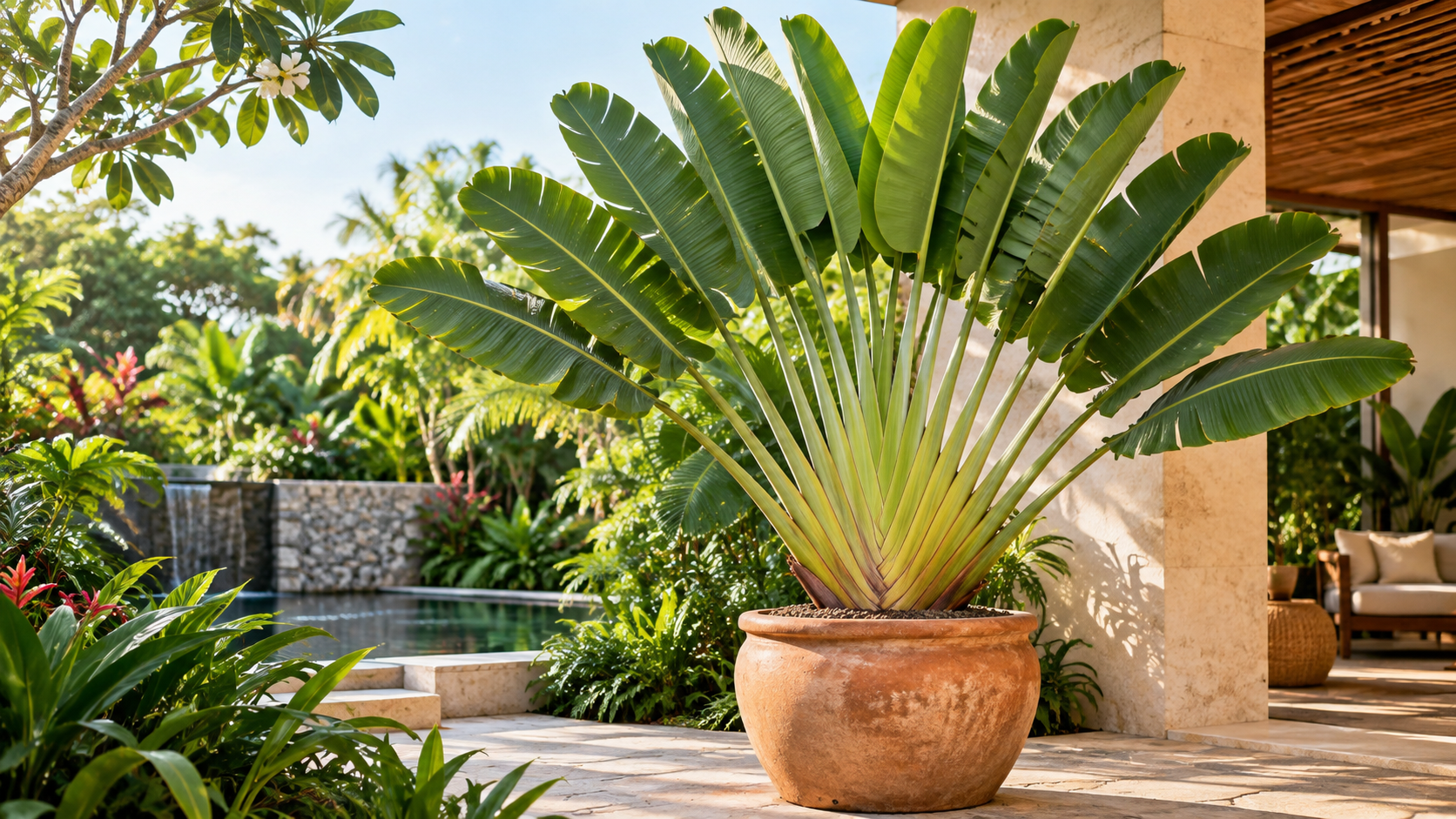
The travel palm plant, better known as the Traveler’s Palm or Ravenala madagascariensis, is one of the most dramatic tropical plants you can grow. Its huge paddle-shaped leaves emerge in a distinctive fan, creating the architectural look of a palm even though this species is not a true palm.
Native to Madagascar, Traveler’s Palm can eventually become a very large landscape plant in warm climates. Younger specimens can also be grown in large containers when they receive enough light, warmth, root space, and humidity. If you enjoy bold foliage, browse our Outdoor Plants guides, Indoor Plants collection, and wider Plant Care library.
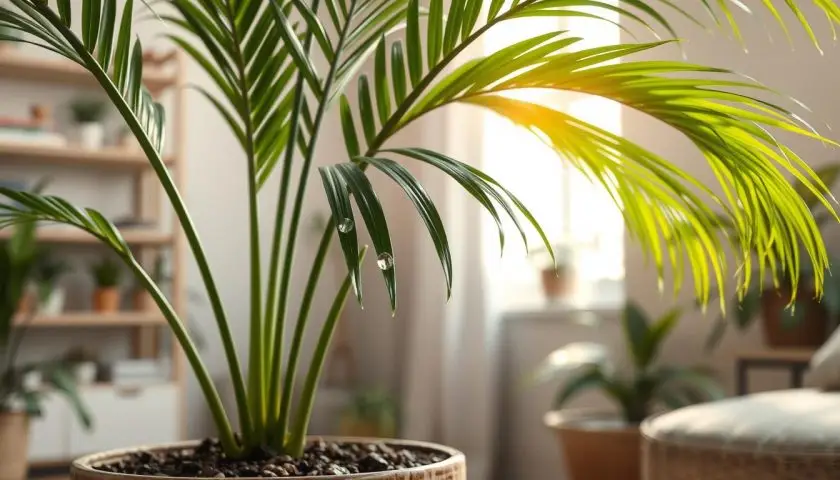
Quick Answer: Grow a Traveler’s Palm in very bright light, warm temperatures, an airy but moisture-retentive soil mix, and a container with excellent drainage. Water when the upper layer of soil begins to dry rather than following a rigid schedule. Give the plant plenty of vertical and horizontal space because mature foliage becomes extremely large.
Traveler’s Palm Plant Care at a Glance
| Care Factor | Best Conditions |
|---|---|
| Botanical name | Ravenala madagascariensis |
| Common name | Traveler’s Palm, Traveller’s Tree |
| Plant family | Strelitziaceae |
| Native range | Madagascar |
| Light | Very bright light; mature outdoor plants can tolerate substantial sun |
| Water | Consistent moisture with good drainage |
| Soil | Rich, airy, well-draining growing medium |
| Humidity | Prefers humid tropical conditions |
| Temperature | Warm; protect from frost and prolonged cold |
| Mature size | Potentially very large outdoors |
| Best use | Tropical landscapes, large patios, conservatories, large containers |
For the fundamentals behind these requirements, see our complete watering guide, soil mix guide, repotting guide, and pruning basics.
What Is a Traveler’s Palm?
Despite its common name, the Traveler’s Palm is not a botanical palm. Ravenala madagascariensis belongs to the Strelitziaceae family, the same broader plant family associated with bird-of-paradise relatives.
The plant develops huge leaves arranged in a striking fan. This unusual shape makes it a popular focal plant in tropical and subtropical landscapes.
The Royal Botanic Gardens, Kew identifies Traveler’s Palm as Ravenala madagascariensis, a species from Madagascar.
If you are building a tropical collection, explore our tropical house plants, outdoor plant collection, indoor growing guides, and Patch Plants homepage.
Is Traveler’s Palm a True Palm Tree?
No. Its common name comes mainly from its palm-like tropical appearance. Botanically, it belongs to a different family.
This distinction matters because you should not automatically apply every piece of conventional palm-tree advice to Ravenala. Start with plant-specific growing conditions and then use broader resources such as our Plant Care hub, watering guide, and potting soil guide.
How Large Does Traveler’s Palm Become?
This is not naturally a compact tabletop houseplant. In warm outdoor conditions, Traveler’s Palm can develop into a substantial tree-like specimen with enormous leaves.
That means placement should be considered before purchase. A young plant may look manageable, but it needs progressively more vertical and horizontal space.
For outdoor placement ideas, browse Outdoor Plants, our outdoor plant survival guide, and seasonal plant care advice.
Choose a Healthy Travel Palm Plant
Good care begins before you bring a plant home. Choose a healthy specimen with firm foliage, active new growth, a stable stem base, and no obvious pest infestation.
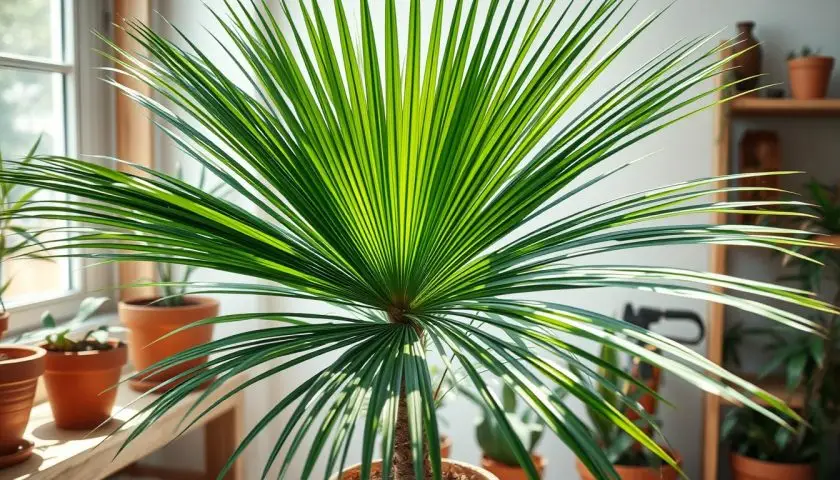
Signs of a Healthy Nursery Plant
- Firm green leaves
- Healthy emerging growth
- No obvious spider mites, scale, or other pests
- No unpleasant smell from the potting medium
- No widespread yellowing
- A stable root ball that is not sitting permanently in water
A few naturally torn leaf edges do not necessarily mean the plant is unhealthy. Large tropical leaves can tear from movement, wind, handling, and normal mechanical damage.
For diagnosing more concerning symptoms, use our Plant Care guides, watering resources, and pruning guide.
Prepare the Right Container and Soil
Container choice matters because the plant becomes increasingly top-heavy as its broad leaves develop.
Choose a Stable Container With Drainage
A drainage hole allows excess water to leave the root zone. Use a stable pot that is heavy enough to reduce tipping as the foliage expands.
If you are unsure how general container care affects roots, read our complete repotting guide, soil mix guide, and watering guide.
Use an Airy Tropical Potting Mix
A practical growing medium should retain useful moisture while still allowing air and excess water to move through the root zone.
| Possible Component | Purpose |
|---|---|
| Quality potting mix | Base growing medium |
| Perlite or pumice | Improves aeration |
| Fine or medium bark | Adds structure and drainage |
| Coco coir | Helps retain useful moisture |
Do not simply fill containers with dense garden soil. Container roots usually perform better in a purpose-built growing medium.
Read our complete soil mix guide for more information. If you are filling a rectangular planter or several rectangular containers, use the free Patch Plants Soil Calculator to estimate the volume required.
You can also use the potting mix calculator before a larger repotting project, then review our step-by-step repotting guide.
11 Traveler’s Palm Growing and Care Tips
1. Give the Travel Palm Plant Plenty of Bright Light
Light is one of the most important factors for strong growth. A young container plant needs a very bright location. Outdoor plants in suitable climates can handle substantially stronger light once properly acclimated.
Indoors, position the plant near your brightest available window rather than deep inside a dim room.
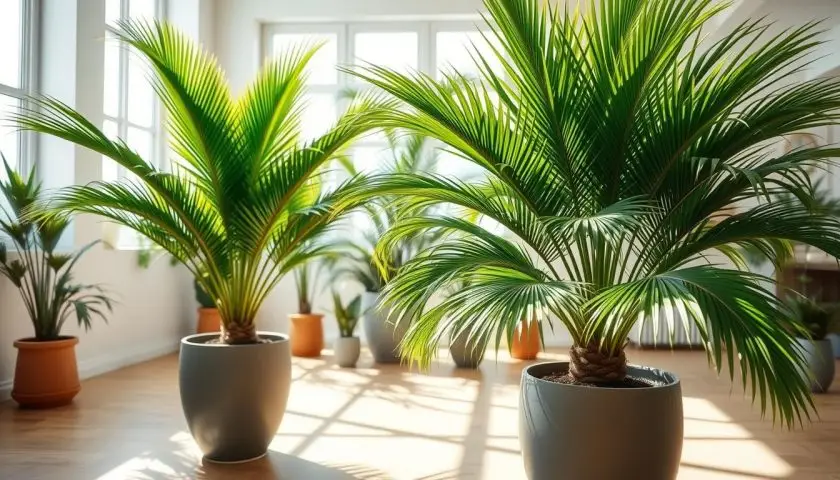
Bright Indoor Light
Large windows can provide the intensity a young container-grown specimen needs. If the foliage has been grown in lower light, avoid an abrupt move into scorching sun.
For broader lighting comparisons, explore the Indoor Plants hub, Outdoor Plants hub, and tropical plant guide.
Outdoor Sun Exposure
A landscape specimen can tolerate much stronger sun than a plant that has spent months indoors. Acclimation matters.
Move plants gradually when conditions change. Our outdoor plant care guide and seasonal plant guide can help you plan outdoor transitions.
Signs Light May Be Inadequate
- Very slow growth
- Weak, stretched development
- Declining vigor despite otherwise appropriate care
Before assuming light is the only issue, check watering using our watering guide and root conditions with our repotting guide.
2. Water Based on Soil Moisture, Not a Fixed Calendar
Traveler’s Palm appreciates consistent moisture during active growth, but that does not mean the root zone should remain permanently saturated.
Feel the upper portion of the potting medium before watering. When it begins to dry, water deeply enough to moisten the root ball and let the excess drain away.
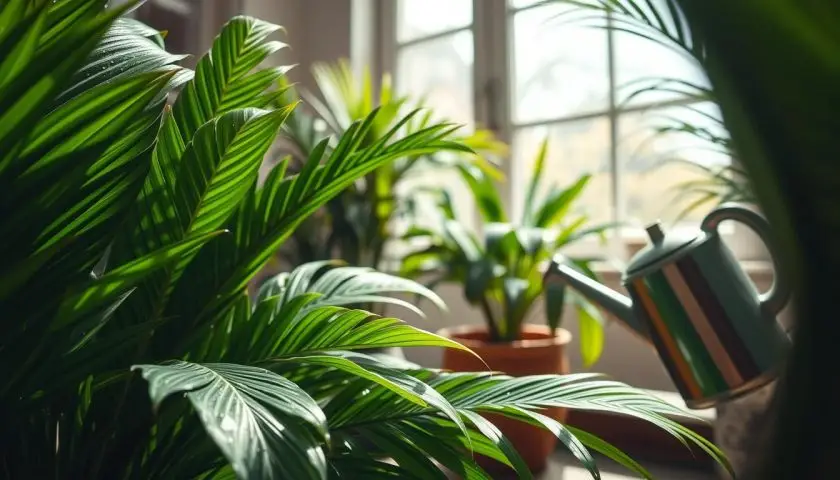
The safest principle is the same one explained in our complete guide to watering plants: observe the soil instead of blindly following a date on the calendar.
Why Watering Frequency Changes
A plant can dry faster because of:
- Higher temperature
- More sunlight
- Larger foliage
- Strong airflow
- A smaller container
- A faster-draining soil mix
It may dry more slowly in cool or lower-light conditions. Review the watering guide, Plant Care hub, and soil guide when adjusting your routine.
3. Maintain Warmth and Useful Humidity
This is a tropical species. Warm conditions support growth, while cold weather can cause significant stress.
Indoor air can become particularly dry around heating systems. A humidifier is more dependable than occasional misting when humidity is genuinely low.
For broader humidity and moisture advice, visit the Plant Care section, tropical houseplant guide, and watering guide.
Avoid Extreme Drafts
Keep container plants away from strong blasts of air-conditioning and extremely dry heating vents. Sudden environmental changes can stress leaves and roots.
Seasonal adjustments are covered further in our seasonal plant care guide and outdoor plant survival guide.
4. Feed During Active Growth
A large, actively growing plant needs nutrients, particularly when confined to a container where the available growing medium is limited.
Use a suitable balanced plant fertilizer according to the manufacturer’s label. More fertilizer is not automatically better.
Reduce unnecessary feeding when the plant has slowed significantly because of cooler temperatures or lower seasonal light.
Combine sensible feeding with the fundamentals described in our soil guide, watering guide, and plant care library.
5. Clean and Inspect Its Large Leaves
Broad foliage can accumulate dust indoors. Wipe dirty leaves carefully with a soft damp cloth while supporting them from underneath.
Large leaves can tear easily, so avoid pulling or bending them unnecessarily.
Inspect for Pests
Check leaf surfaces, undersides, petioles, and new growth regularly. Early identification makes pest management much easier.
If foliage starts yellowing or declining, compare watering, root conditions, light, and seasonal changes before making several adjustments at once.
The Plant Care hub, pruning guide, and repotting guide are useful references.
6. Repot When Roots Need More Space
Repotting should respond to the plant rather than an arbitrary yearly schedule.
Potential signs include:
- Roots filling most of the container
- Roots emerging heavily from drainage holes
- The root ball drying unusually quickly
- Water struggling to penetrate a root-packed pot
- The plant becoming unstable in relation to its container
When needed, move into a modestly larger container rather than an enormous pot.
Before repotting, read how to repot a plant and the best soil mix guide.
Calculate Fresh Potting Mix
For rectangular planters and suitable rectangular containers, our free Soil Calculator helps estimate how much growing medium you need.
Use the soil volume calculator before buying multiple bags of potting mix, then follow our repotting instructions to minimize root disturbance.
7. Allow Plenty of Space for Mature Growth
This is one of the biggest differences between Traveler’s Palm and smaller decorative houseplants. The fan can become extremely broad.
Do not place the plant where mature leaves must constantly rub against walls, doors, curtains, or people walking past.
Think Vertically and Horizontally
Before buying a large specimen, consider:
- Ceiling height
- Window height
- Width of the available area
- Door clearance
- Access for watering
- The difficulty of future repotting
For outdoor positioning, review the Outdoor Plants collection and outdoor growing tips. For container care, use the Plant Care library.
8. Protect Traveler’s Palm From Cold
Traveler’s Palm is adapted to tropical conditions rather than freezing winters. Container plants should be protected before temperatures become damaging.
If you move a specimen outdoors for warm weather, pay attention to the forecast and return it to protection well before frost.
Our autumn plant care guide, outdoor survival guide, and Outdoor Plants hub provide broader seasonal planning advice.
Avoid Cold Window Stress Indoors
During winter, do not let tropical foliage remain pressed against extremely cold glass. Keep the plant bright while protecting it from sudden cold drafts.
Indoor growers can also explore the Indoor Plants collection and tropical plant guide.
9. Diagnose Yellow Leaves and Brown Edges Carefully
Do not assume every yellow leaf means the same thing. Potential causes can include soil remaining excessively wet, very dry conditions, root stress, inadequate light, temperature stress, pest problems, or natural aging of older foliage.
If the Soil Is Constantly Wet
Review drainage, pot size, soil structure, and watering habits. Use our watering guide, soil guide, and repotting guide.
If the Soil Is Extremely Dry
Water thoroughly and then adjust your observation routine. Do not compensate by keeping the pot permanently saturated.
Again, the complete watering guide explains why soil checks are more reliable than a rigid schedule.
If Brown Edges Keep Appearing
Check humidity, inconsistent watering, mineral or fertilizer buildup, hot dry air, and physical leaf damage.
For general troubleshooting, browse Plant Care, pruning basics, and soil troubleshooting.
10. Propagate Only With Suitable Methods
Traveler’s Palm is not a typical stem-cutting houseplant. Cutting off an ordinary leaf stalk and putting it in water is not a reliable propagation method.
Propagation is more commonly associated with seed and, where suitable basal growth exists, careful separation rather than ordinary leaf or stem cuttings.
Do Not Damage the Main Plant
If you are unsure what growth you are looking at, avoid cutting into the base unnecessarily. A mature specimen is valuable and slow to replace.
After any legitimate division or transplanting work, use appropriate fresh growing medium based on the soil mix guide and estimate rectangular-container volume with the Soil Calculator.
Our broader Plant Care resources and repotting guide can help with root handling.
11. Acclimate a Container Plant Before Moving It Outdoors
A plant grown behind glass should not suddenly be placed into intense outdoor sun for an entire day.
Start in protected bright conditions and gradually increase exposure. This gives leaves time to adjust.
The same principle applies when bringing the plant back indoors: inspect it for pests, clean the foliage, and transition it before cold weather becomes a problem.
Use our outdoor plant care guide, seasonal care guide, and Outdoor Plants hub when planning seasonal moves.
Can You Grow a Traveler’s Palm Indoors?
Yes, particularly while the plant is young, but this is not the ideal long-term plant for a small room.
The two biggest limitations are light and size. Traveler’s Palm needs substantially brighter conditions and more space than many conventional houseplants.
A large conservatory, sunroom, greenhouse, atrium, or exceptionally bright high-ceilinged room is more suitable than a dark corner.
If your home has less available light or space, compare it with plants in our Indoor Plants guides or explore tropical house plants that may be easier to accommodate.
Can You Grow Traveler’s Palm Outdoors?
Outdoor conditions are closer to the way the species naturally grows, provided the climate remains suitably warm.
Choose a site with enough room for the enormous fan of foliage. Avoid squeezing the plant between buildings or paths where mature leaves will constantly be damaged.
For outdoor container and garden planning, use our Outdoor Plants hub, outdoor plant care guide, and seasonal growing guide.
Traveler’s Palm Watering Routine
| Condition | What to Do |
|---|---|
| Top layer beginning to dry | Check deeper moisture and water if needed |
| Soil remains constantly saturated | Reduce watering and investigate drainage |
| Hot active-growing weather | Check moisture more frequently |
| Cooler, slower-growth period | Allow the plant to use moisture before watering again |
| Water standing in saucer | Empty it after drainage |
For more detail, read our watering plants guide. You can also browse the Plant Care category, soil guide, and repotting guide.
Traveler’s Palm Soil and Repotting Checklist
- Use a container with drainage holes.
- Choose an airy growing medium.
- Avoid dense, compacted garden soil in containers.
- Repot when root development indicates more room is required.
- Do not automatically jump to an excessively large container.
- Use a heavier pot if the plant becomes top-heavy.
- Check that excess irrigation water can escape.
Before buying soil, read The Best Soil Mix for Every Type of Plant. Then use our free soil calculator for rectangular planters and appropriate rectangular growing spaces.
When roots need more room, follow our repotting guide. After repotting, return to the Plant Care hub for ongoing maintenance advice.
Traveler’s Palm Problems and Quick Fixes
| Symptom | Possible Factors to Check |
|---|---|
| Yellow foliage | Moisture, root health, light, temperature, aging |
| Brown edges | Dry air, moisture inconsistency, salts, physical damage |
| Slow growth | Light, temperature, nutrition, roots, season |
| Weak growth | Insufficient usable light or root problems |
| Constantly wet soil | Poor drainage, oversized pot, dense soil, excess watering |
| Plant tipping | Top-heavy growth or an unstable container |
Use the watering guide to diagnose moisture, the soil guide to assess drainage, and the repotting guide to inspect container problems.
For general maintenance, see pruning basics, plant care tips, and outdoor plant care.
Seasonal Care for Traveler’s Palm
Spring
Increasing warmth and light can stimulate stronger growth. Check roots, refresh your feeding routine if appropriate, and reassess whether the container still fits the plant.
Helpful resources include our repotting guide, soil guide, and Plant Care library.
Summer
Plants in strong light and warm conditions may use water more quickly. Check moisture more often without assuming that every hot day automatically requires watering.
Read our watering guide, outdoor plant guide, and Outdoor Plants resources.
Autumn
As light and temperature change, growth can slow and watering requirements may decrease.
Follow our autumn plant care guide, Plant Care hub, and watering advice.
Winter
Protect tropical specimens from cold, maintain the brightest practical location, and avoid automatically watering at summer frequency.
Indoor growers can browse the Indoor Plants category, while gardeners in warm climates can continue using the Outdoor Plants category.
How to Use Traveler’s Palm in a Garden or Home
Its strong fan shape makes Traveler’s Palm an architectural focal point rather than background greenery.
Tropical Landscape Focal Point
In suitable warm climates, give it enough open space for the fan to develop naturally.
Explore our Outdoor Plants guides, outdoor care advice, and seasonal gardening guide.
Large Patio Container
A substantial container can create a dramatic tropical look while giving you more control over soil and placement.
Use the soil mix guide, Soil Calculator, and repotting guide when planning large rectangular container projects.
Conservatory or Sunroom
A bright, tall space can suit younger container specimens better than a conventional low-ceilinged room.
Compare with other tropical choices in our tropical houseplant guide and Indoor Plants collection.
Helpful Patch Plants Guides for Traveler’s Palm Owners
Use these resources alongside this Traveler’s Palm guide:
- Patch Plants – latest gardening and plant-care resources.
- Outdoor Plants – outdoor growing and garden guides.
- Indoor Plants – container and houseplant advice.
- Plant Care – watering, soil, pruning, repotting, and troubleshooting.
- Complete Guide to Watering Plants.
- Best Soil Mix for Every Type of Plant.
- Soil Calculator.
- How to Repot a Plant.
- Pruning Basics.
- How to Keep Outdoor Plants Alive.
- Seasonal Plant Care in Autumn.
- Tropical House Plants.
Key Takeaways
- The travel palm plant is Ravenala madagascariensis, not a true botanical palm.
- It needs plenty of bright light and substantially more space than a typical small houseplant.
- Water according to soil moisture rather than a rigid calendar; use our watering guide for more help.
- Use an airy, moisture-retentive medium based on principles in our soil guide.
- Use the Soil Calculator when estimating mix for suitable rectangular planters.
- Choose a stable container with effective drainage.
- Repot according to root development; follow our repotting guide.
- Protect the plant from frost and prolonged cold conditions.
- Use our seasonal plant guide when outdoor conditions begin changing.
- Provide enough horizontal and vertical room for the distinctive fan.
- Use clean pruning practices when removing fully damaged foliage.
- Browse Outdoor Plants for more warm-climate growing guides.
Frequently Asked Questions
Is Traveler’s Palm actually a palm?
No. Ravenala madagascariensis belongs to the Strelitziaceae family rather than the true palm family. Its large tropical fan gives it a palm-like appearance.
Can Traveler’s Palm grow indoors?
Yes, especially while young, but it needs very bright conditions and considerable space. A conservatory, sunroom, greenhouse, or high-ceilinged bright room is generally more practical than a dark room. Browse our Indoor Plants guides for alternatives.
How often should I water Traveler’s Palm?
Do not water by a fixed number of days. Check the growing medium and water when the upper layer begins to dry. Allow excess water to drain. See our watering guide.
What soil is best for Traveler’s Palm?
Use an airy but moisture-retentive container mix with effective drainage. Read our soil mix guide for more information.
How much soil do I need when repotting?
The amount depends on container dimensions. For suitable rectangular planters, use our free Soil Calculator, then follow the repotting guide.
Why are Traveler’s Palm leaves turning yellow?
Check soil moisture, drainage, root condition, usable light, temperature, and natural leaf aging. Start with our Plant Care hub and watering guide.
Why are the leaf edges turning brown?
Possible causes include dry air, moisture inconsistency, mineral or fertilizer buildup, hot dry airflow, and physical leaf damage. Review general plant care before making several changes at once.
Does Traveler’s Palm need humidity?
It is a tropical plant and generally performs well in humid conditions. Avoid extremely dry air, particularly around heating systems.
Can Traveler’s Palm tolerate full sun?
Established outdoor specimens in suitable climates can grow with substantial sun exposure, but a plant raised indoors should be acclimated gradually before exposure to intense outdoor sunlight.
Can Traveler’s Palm survive frost?
It is a tropical species and should be protected from frost and damaging cold. Use our seasonal plant care guide when preparing container plants for cooler weather.
How do I repot a large Traveler’s Palm?
Choose a slightly larger stable container, use fresh airy growing medium, protect the roots from unnecessary damage, and ensure effective drainage. Follow our complete repotting guide.
How fast does Traveler’s Palm grow?
Growth depends heavily on light, warmth, root space, water, nutrition, and whether the plant is grown outdoors or confined to a container. Healthy tropical outdoor specimens generally have much greater growth potential than plants kept indoors.
Conclusion
The Traveler’s Palm is an impressive tropical plant, but successful care starts with understanding its scale. It is not a conventional compact palm or a plant that naturally belongs in a dark indoor corner.
Give it strong light, warm conditions, enough humidity, consistent moisture without waterlogging, an airy root environment, and plenty of room for the fan-shaped foliage to develop.
For your next steps, use the watering guide, soil mix guide, repotting guide, and Soil Calculator.
You can also continue exploring our Outdoor Plants guides, Indoor Plants guides, Plant Care resources, and latest articles from Patch Plants.