Money tree care comes down to three things: bright indirect light, thorough watering only when the top few centimetres of soil are dry, and a pot that drains freely. The money tree (Pachira aquatica) is a forgiving tropical plant, but it reacts quickly to soggy roots, cold drafts, and sudden moves, usually by yellowing or dropping leaves. Get those basics right and it will stay glossy and full for years.
Money Tree Care at a Glance
| Care Need | What It Needs |
|---|---|
| Botanical name | Pachira aquatica (many sold plants are the very similar Pachira glabra) |
| Light | Bright indirect light; some gentle morning sun is fine |
| Water | When the top 2–5 cm (1–2 in) of soil is dry; water thoroughly and drain |
| Soil | Well-draining indoor potting mix, with perlite or bark if dense |
| Temperature | About 18–27°C (65–80°F); keep above about 10°C (50°F) |
| Humidity | Average to moderate; dislikes very dry air near heaters |
| Feeding | Balanced liquid fertilizer, diluted, in spring and summer |
| Repotting | Every 2–3 years, or when roots fill the pot |
| Indoor size | Usually 1–2 m (3–7 ft), controlled by pruning and pot size |
| Pets | ASPCA lists it as non-toxic to cats and dogs |
Key Takeaways
- Check the soil before every watering. A fixed weekly schedule is the most common cause of root rot.
- Money trees hate being moved. Find a bright spot away from drafts and leave it there.
- Yellow leaves with wet soil usually mean overwatering. Leaf drop usually means a move, a draft, or a watering swing.
- A braided money tree is several separate plants woven together. Remove tight ties as stems thicken, and expect individual stems to age differently.
- Do not confuse it with jade plant or Chinese money plant, which need different care.
What Is a Money Tree?
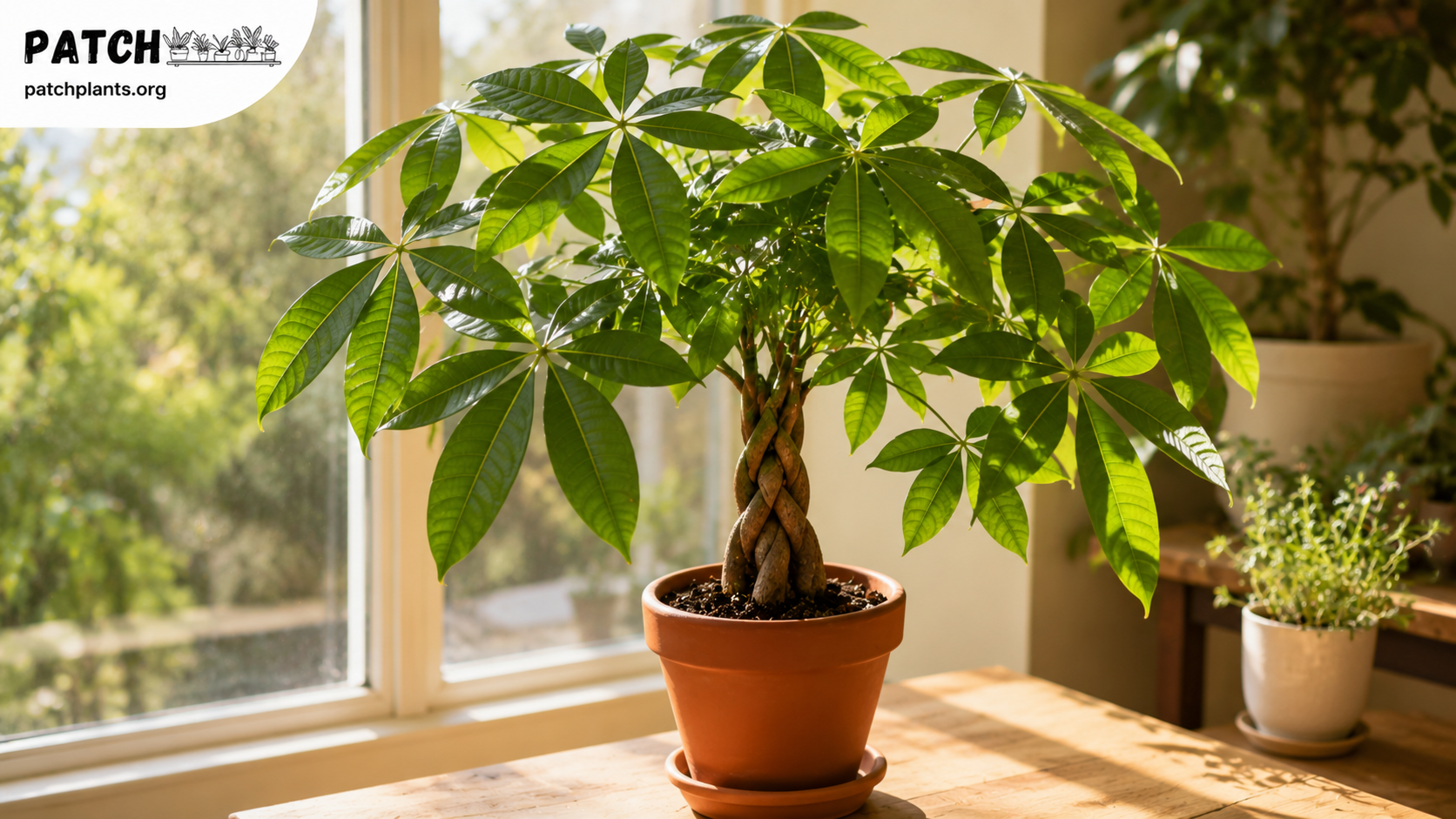
The money tree is Pachira aquatica, a tropical tree in the mallow family (Malvaceae) native to wetlands of Central and South America, where it can grow into a large tree. Indoors, a pot and pruning keep it to a manageable houseplant size.
Its leaves are palmate, meaning five to nine glossy leaflets fan out from one point like an open hand. Many money trees in shops are sold under the name Pachira aquatica but are actually the closely related Pachira glabra. The two look almost identical indoors and need the same care.
The name comes from Feng Shui and East Asian tradition, where the plant is linked with prosperity and good fortune. That symbolism is cultural, not scientific, but it makes the money tree a popular gift. For placement ideas, see our Feng Shui indoor plants guide.

Money Tree Care: 11 Essential Tips
1. Give It Bright, Indirect Light
Place your money tree near a bright window where it gets plenty of light without hours of hot direct sun. An east-facing window with gentle morning sun is ideal. A south- or west-facing room works if the plant sits a little back from the glass or behind a sheer curtain.
- Too little light: long, stretched stems, small new leaves, slow growth, leaning, and soil that stays wet for days.
- Too much direct sun: pale, bleached, or crispy brown patches on the side facing the window.
Turn the pot a quarter turn every couple of weeks so it grows evenly. If you move it into brighter light, do it gradually over a week or two. For help reading your room’s light, see our guide to indoor light.
2. Water Only When the Top Soil Is Dry
Money trees like moisture but cannot sit in soggy soil. Push a finger 2–5 cm (1–2 in) into the compost. If it is dry at that depth, water slowly and thoroughly until it runs out of the drainage holes, then empty the saucer after 10–15 minutes. If it is still damp, wait and check again in a few days.
In a bright, warm room that may mean watering every week or so in summer. In a cooler, dimmer room or in winter it may be every two to three weeks or longer. Let the soil tell you, not the calendar.
| Signs of Underwatering | Signs of Overwatering |
|---|---|
| Soil bone-dry and pulling from pot edges | Soil stays wet for a week or more |
| Pot feels very light | Several leaves turning yellow at once |
| Leaves droop or curl, then perk up after watering | Leaves droop even though soil is wet |
| Crispy leaf edges | Soft trunk base or sour-smelling soil |
Drooping does not always mean thirst. Waterlogged roots cannot take up water either, so always feel the soil first. See our complete watering guide and signs you are overwatering.
3. Use a Well-Draining Potting Mix
A good money tree mix holds some moisture but lets excess water drain quickly so roots get air. A quality indoor potting mix often works on its own. If it feels heavy or stays wet, try this flexible blend:
- 2 parts indoor potting mix
- 1 part perlite or pumice
- 1 part fine orchid bark
Avoid garden soil, which compacts in pots. Our soil mix guide explains what each ingredient does.
4. Choose a Pot With Drainage
Drainage holes are essential. If you love a decorative pot without holes, keep the money tree in its plastic nursery pot inside it and tip out any water that collects after watering.
Terracotta dries faster and suits people who tend to overwater. Plastic and glazed pots hold moisture longer. Whatever the material, choose a pot only slightly wider than the root ball, because a very large pot holds wet soil the roots cannot use.
5. Keep It Warm and Away From Drafts
Money trees are happiest at roughly 18–27°C (65–80°F) and should be protected from temperatures below about 10°C (50°F). They react strongly to sudden changes, often by dropping leaves.
Keep the plant away from:
- Air-conditioning and heating vents
- Radiators and fireplaces
- Cold windows in winter
- Exterior doors that open often in cold weather
Money trees can spend summer outdoors in a sheltered, shaded spot, but bring them back inside before nights drop below about 13°C (55°F), and check carefully for pests first.
6. Provide Moderate Humidity
Money trees cope with ordinary household humidity but appreciate a little more, especially in winter when heating dries the air. Very dry air can cause crispy leaf tips and encourages spider mites.
If your home is very dry, group plants together, use a pebble tray with the pot base above the water line, or run a humidifier nearby. Do not water more to “fix” dry air, which only risks root rot. More ideas: humidity hacks for houseplants.
7. Feed Lightly in Spring and Summer
Feed your money tree with a balanced liquid houseplant fertilizer, diluted to half strength, about once a month during spring and summer while it is actively growing. Stop in autumn and winter.
Never feed a plant with wet, rotting roots or one you have just repotted, and do not use fertilizer to try to fix poor light. A white crust on the soil means salts are building up. Flush the pot with plenty of clean water and feed less often.
8. Prune to Keep It Full and Compact
Money trees respond well to pruning. Trim in spring or early summer to control height, remove leggy stems, and encourage bushier growth.
- Use clean, sharp pruners.
- Cut just above a leaf node (where a leaf joins the stem). New shoots usually grow from just below the cut.
- Remove dead, yellow, or damaged leaves at any time.
- Avoid removing more than about a quarter of the foliage at once.
Prune the leafy canopy, not the braided trunk. See our pruning basics guide.
9. Repot Only When Needed
Money trees grow fairly slowly indoors and usually need repotting every two to three years. Repot in spring if roots circle the pot, push out of the drainage holes, the soil dries out very quickly, or the plant becomes top-heavy.
- Choose a pot about 3–5 cm (1–2 in) wider than the current one, with drainage holes.
- Ease the plant out, supporting the base of the trunk.
- Gently loosen circling roots and trim any that are soft or rotten.
- Replant at the same depth in fresh, well-draining mix and firm lightly.
- Water, let it drain, and return it to its usual bright spot.
Expect a few dropped leaves while it settles. Use our Soil Calculator to estimate how much potting mix you need, and see how to repot a plant for more detail.

10. Look After the Braided Trunk
A braided money tree is usually three to five separate young plants woven together while their stems were flexible. The braid is purely decorative, and care is the same as for a single-trunk plant, with a few extra checks:
- Remove tight ties. Many plants are sold with plastic ties, wire, or tape holding the braid. As stems thicken, these can cut into the bark. Carefully remove or loosen them once the braid holds its shape.
- Do not re-braid woody stems. Only young, green, flexible shoots can be trained. Forcing mature stems cracks them.
- Expect stems to differ. Because each stem is a separate plant, one may grow faster, weaker, or even die. If a stem turns soft, shrivelled, or black, cut it out at soil level so rot does not spread to the others. The braid will look looser but the remaining stems can stay healthy.
- Check the base. Soft or wrinkled trunk bases usually point to overwatering and rot.
11. Propagate From Stem Cuttings
Healthy stem cuttings taken in spring or summer can root, though success varies.
- Cut a healthy stem 15–20 cm (6–8 in) long with at least two leaf nodes, just below a node.
- Remove the lower leaves.
- Root it in water, changing the water every few days, or insert it into a small pot of moist, airy propagation mix.
- Keep it warm with bright indirect light and higher humidity, for example under a loose clear bag opened for air every few days.
- Roots typically form within several weeks. Pot water-rooted cuttings into soil once roots are a few centimetres long.
Cuttings grow as single stems. To create a new braid, root several cuttings in one pot and train them together while they are young and flexible.
Common Money Tree Problems and How to Fix Them

| Symptom | Most Likely Cause | What to Do |
|---|---|---|
| Yellow leaves, wet soil | Overwatering, poor drainage | Let the soil dry; check drainage and roots |
| Yellow leaves, dry soil | Underwatering | Water thoroughly; check more often |
| Sudden leaf drop | Recent move, cold draft, watering swing | Keep it in one stable spot; correct watering |
| Curling leaves | Dry soil, heat, direct sun, or pests | Check soil and leaf undersides |
| Brown, crispy tips | Dry air, uneven watering, fertilizer salts | Raise humidity; flush the soil; water consistently |
| Soft or wrinkled trunk base | Root or stem rot | Unpot, remove rotten roots or stems, repot |
| Leggy, stretched growth | Too little light | Move closer to a window; prune in spring |
| Sticky leaves, webbing, white fluff | Scale, spider mites, mealybugs | Isolate and treat |
Why Are My Money Tree Leaves Turning Yellow?
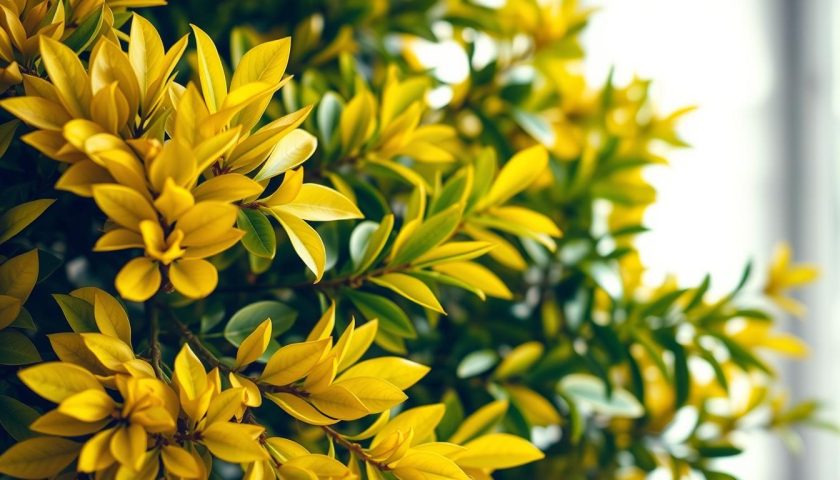
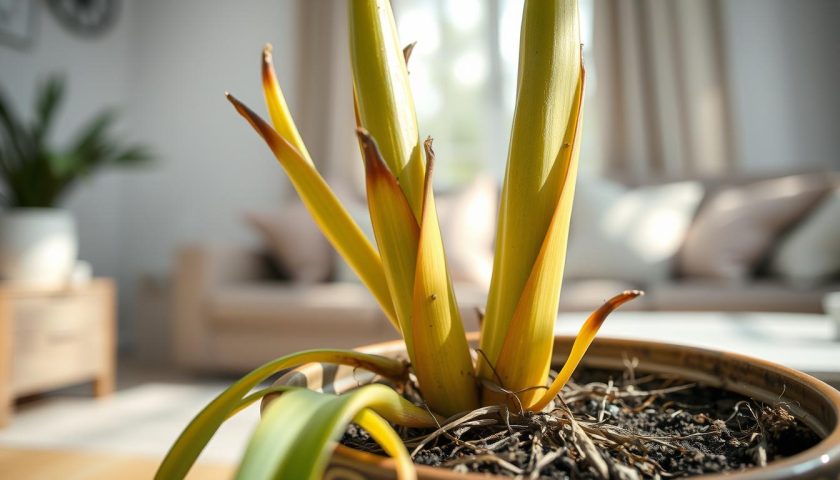
The most common cause is overwatering, especially when the soil stays damp for days in a dim room. Check the soil and drainage first. Other causes include underwatering, too little light, recent repotting, and pests. One or two old lower leaves yellowing occasionally is normal aging. See our guide to yellow leaves on plants.
Why Is My Money Tree Dropping Leaves?
Money trees are well known for dropping leaves after being moved, especially from a bright greenhouse or shop into a darker home. Cold drafts, heating vents, and big swings between dry and soggy soil cause the same reaction. Choose a bright, stable spot, keep watering consistent, and give it a few weeks. New leaves usually appear once it settles.
Why Are the Leaves Curling or Browning?
Curling with dry soil means the plant needs water. Curling or bleached patches on the sunny side mean too much direct sun. Fine webbing or speckling means spider mites. Brown crispy tips often come from dry air, inconsistent watering, or fertilizer buildup. Brown leaf tissue will not turn green again, so trim it for looks and focus on healthy new growth.
How to Save a Money Tree With Root Rot
- Remove the plant from its pot and shake off the wet soil.
- Healthy roots are firm and pale. Rotten roots are dark, mushy, and smell bad. Cut rotten roots away with clean scissors.
- Check each braided stem. Remove any that are soft or collapsed.
- Repot into a clean pot with fresh, well-draining mix.
- Water lightly, then wait until the top few centimetres are dry before watering again.
- Keep it in bright indirect light and skip fertilizer until new leaves appear.
If the whole base is rotten, take healthy cuttings from the top to start again. Read our root rot guide.
Money Tree Pests
Spider mites, scale insects, mealybugs, and aphids occasionally attack money trees, especially in warm, dry rooms. Check leaf undersides and stem joints when you water. Isolate an infested plant, wipe off pests with a damp cloth or a cotton bud dipped in rubbing alcohol, and use an insecticidal soap labelled for indoor plants if needed. Repeat weekly until no new pests appear.
Seasonal Money Tree Care
| Season | What to Do |
|---|---|
| Spring | Start monthly feeding, prune leggy growth, repot if root-bound |
| Summer | Check soil more often; protect from hot afternoon sun; watch for pests |
| Autumn | Stop feeding; water less as growth slows; bring outdoor plants inside |
| Winter | Water sparingly; keep away from cold windows and heaters; add humidity if air is dry |
How Big Does a Money Tree Get Indoors?
Indoors, money trees usually reach about 1–2 m (3–7 ft), depending on light, pot size, and pruning. They grow fastest in spring and summer in bright light. Regular pruning keeps them compact, and a money tree can even be grown as a bonsai-style plant. In the wild, the species can grow into a large tree.
Where to Put a Money Tree
The best spot is a bright room near, but not directly against, a window, with steady temperatures and space for the canopy. Living rooms and home offices with good light work well. Hallways and entrances only suit money trees if they are bright and draft-free. A larger money tree can also help divide an open-plan room. See our guide to plants as natural room dividers.
Money Tree vs Jade Plant vs Chinese Money Plant
Several plants share the “money” name but need very different care.
| Plant | Botanical Name | Light | Water | Pets (ASPCA) |
|---|---|---|---|---|
| Money tree | Pachira aquatica | Bright indirect | When top soil is dry | Non-toxic |
| Jade plant | Crassula ovata | Bright light with some sun | When soil is almost fully dry | Toxic |
| Chinese money plant | Pilea peperomioides | Bright indirect | When top soil is dry | Non-toxic |
Check the plant label before buying. Our jade plant care guide explains how its needs differ.
Is a Money Tree Safe for Cats and Dogs?
Yes. The ASPCA lists the money tree (Pachira aquatica) as non-toxic to cats and dogs. Chewing large amounts of any plant can still upset a pet’s stomach, and fertilizers and pest sprays should be kept out of reach. For more pet-friendly ideas, see our dog-friendly plant guide.
Common Money Tree Care Mistakes
- Watering on a fixed schedule instead of checking the soil.
- Using a pot without drainage or leaving water in the saucer.
- Moving the plant repeatedly, which triggers leaf drop.
- Placing it near vents, radiators, or cold windows.
- Keeping it in a dark corner, which leads to leggy growth and soggy soil.
- Leaving tight ties on a braided trunk.
- Overfeeding, especially in winter or after repotting.
- Repotting into a pot that is much too big.
Frequently Asked Questions
How often should I water a money tree?
Water when the top 2–5 cm (1–2 in) of soil is dry, then water thoroughly and empty the saucer. In bright, warm conditions that may be about once a week in summer. In cooler, darker rooms or in winter it may be every two to three weeks or less. Always check the soil first.
Why are my money tree leaves turning yellow?
Overwatering is the most common cause, especially if the soil stays wet for days. Check drainage and let the soil dry more between waterings. Underwatering, low light, recent repotting, and pests can also cause yellowing. An occasional old lower leaf turning yellow is normal.
Why is my money tree dropping leaves?
Money trees often drop leaves after being moved to a new spot, exposed to cold drafts or heating vents, or watered inconsistently. Place it in bright, stable conditions, check the soil before watering, and give it a few weeks to settle. New growth usually follows.
Is a money tree toxic to cats and dogs?
No. The ASPCA lists Pachira aquatica as non-toxic to cats and dogs. It is a good choice for pet owners, although eating large amounts of any plant can cause mild stomach upset. Do not confuse it with jade plant, which is toxic to pets.
How big does a money tree grow indoors?
Most indoor money trees reach about 1–2 m (3–7 ft) tall. Light, pot size, and pruning control the final size. Pruning in spring keeps the plant compact and bushy, and many people grow smaller plants as tabletop or bonsai-style specimens.
Final Thoughts
Good money tree care is about consistency: bright indirect light, water only when the top soil is dry, free drainage, and a warm spot away from drafts. When problems appear, check the soil and recent changes before reaching for the watering can or fertilizer.
For more detail on this species, see the NC State Extension Pachira aquatica profile and the RHS Pachira aquatica plant profile. With steady care and occasional pruning, your money tree can stay healthy and attractive for many years.