Bird of paradise plant care comes down to four things: lots of bright light, compost that stays moist in the growing season and drier in winter, warmth above 10 to 12°C, and patience. This tender South African evergreen rewards steady care with huge paddle-shaped leaves and, eventually, orange and blue flowers.
I am Sawera Shahid, a botanist at Patch Plants. This guide covers Strelitzia reginae and the giant white Strelitzia nicolai, indoors and outdoors, with care advice checked against the Royal Horticultural Society (RHS) and pet safety from the ASPCA. Where my earlier advice differed from RHS guidance, I have corrected it below.
Bird of Paradise Plant Care at a Glance
| Need | What the RHS Says |
|---|---|
| Light | Bright light, ideally beside a large sunny window; some shade while flowering because strong sun can fade the flower colour |
| Water (spring and summer) | Keep compost constantly moist but not saturated; warm weather may need daily watering |
| Water (winter) | Reduce through autumn; from the end of November let compost become fairly dry between waterings |
| Temperature | Keep above 10 to 12°C at all times |
| Humidity | Homes are often too dry, so mist regularly or use a tray of damp gravel |
| Feeding | Liquid houseplant fertiliser every two weeks in the growing season |
| Repotting | Slightly pot-bound encourages flowering; repot every couple of years in spring, after flowering |
| Flowering | Winter and spring; plants usually need to be five to ten years old |
Bird of Paradise Varieties
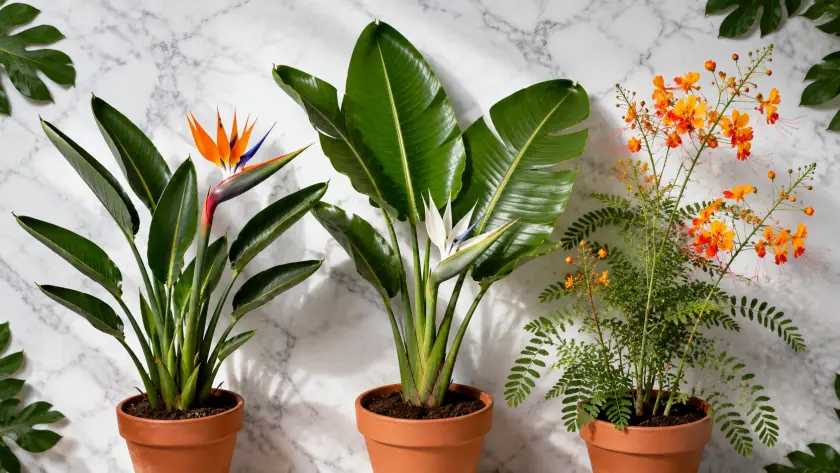
Standard Bird of Paradise (Strelitzia reginae)
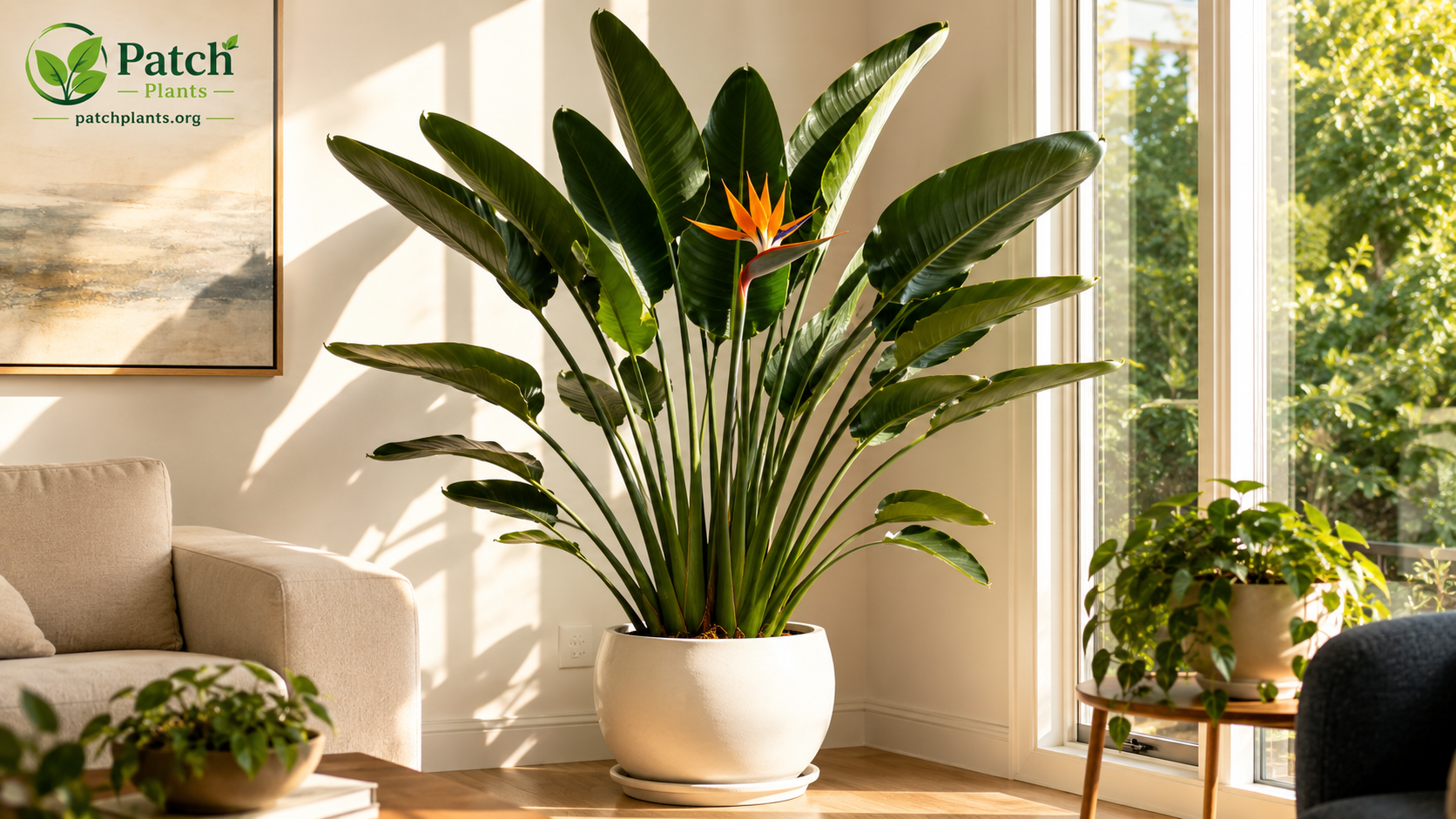
This is the orange-and-blue species most people mean. The RHS says it reaches at least 1.5m tall and 1m wide, so it suits a conservatory or large bright room. It is the species covered by the care advice in this guide.
White Bird of Paradise (Strelitzia nicolai)
The RHS notes that S. nicolai has blue and white flowers but can eventually reach 10m, which is too large for most homes. Indoors it is usually grown as a tall foliage plant. Its basic care matches S. reginae: bright light, regular water in growth and warmth. Our guide to oversized indoor plants covers similar large statement plants.
Mexican and False Bird of Paradise
These are different plants. The Mexican bird of paradise is a Caesalpinia and the false bird of paradise is a Heliconia, so their care is not the same as Strelitzia care. The ASPCA also warns that Caesalpinia and Poinciana gilliesii are more toxic than Strelitzia reginae, so check the botanical name on the label before you buy.
Light: The Key to Bird of Paradise Plant Care
The RHS says strelitzia needs bright light, ideally beside a large sunny window or in a conservatory. Wipe the leaves occasionally to remove dust and maximise the light they receive. Turn the pot a quarter each time you water so growth stays even and the plant does not lean towards the window.
Too little light is the usual reason for slow growth and no flowers. The RHS says brown leaf edges, slow growth and a lack of flowers usually mean conditions are not right. Read our complete indoor light guide to judge your windows.
Watering in Bird of Paradise Plant Care
In spring and summer, the RHS says to keep the compost constantly moist but not saturated, and warm weather may mean daily watering. Reduce watering through autumn, and from the end of November let the compost become fairly dry between waterings. Always empty the saucer so roots never sit in water.
My earlier advice was to let the soil dry out completely between waterings all year. The RHS guidance is different, so follow the seasonal pattern above and check the compost with your finger rather than watering to a fixed number of days. See our guides to watering plants and signs of overwatering.
Humidity and Temperature for Bird of Paradise Plant Care
The RHS says homes are often too dry for strelitzia, so mist the leaves regularly or stand the pot on a tray of damp gravel. Keep the plant above 10 to 12°C at all times, and ventilate once temperatures reach 20°C. Keep it away from cold draughts and heating vents. For more ideas, see our humidity hacks guide.
Soil and Repotting
For bird of paradise plant care, the RHS recommends a peat-free loam-based compost such as John Innes No. 3, with added grit for drainage. New plants usually need no repotting for a year or two, and being slightly pot-bound encourages flowering. Repot every couple of years in spring, after flowering, into a pot only slightly larger. Each spring, replace the top 5cm of compost with fresh compost.
See our soil mix guide, how to repot a plant and repotting mistakes to avoid.
Feeding Bird of Paradise
Feeding is the easiest part of bird of paradise plant care to get right. The RHS advises feeding every two weeks with a liquid houseplant fertiliser through the growing season, broadly spring to autumn. Follow the label dilution. Our guide to fertilizing indoor and outdoor plants explains the difference.
Bird of Paradise Care Outdoors in Summer
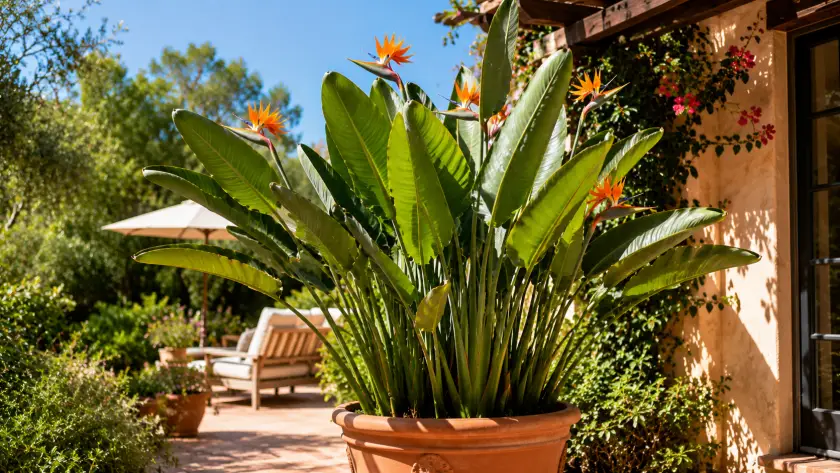
Outdoor bird of paradise plant care is optional, but the RHS says you can move strelitzia outdoors for summer, but keep it in its pot so it can come back indoors. Choose a warm, sunny, sheltered spot, because strong wind can shred leaves, snap stems or topple the top-heavy plant. Harden the plant off gradually, and bring it back in before night temperatures approach 12°C in late summer. Outdoor pots dry out faster, so check the compost often. See our low-maintenance outdoor plants guide for container basics.
Bird of Paradise Propagation
The RHS says division in early spring is the easiest method: cut offsets from the outside of a mature clump, each with healthy leaves and roots, using sturdy secateurs. Pot them in free-draining peat-free compost and water well. Growing from seed is possible but slow: the RHS says seed-grown plants may take five or more years, and up to ten, to flower. Our propagation guide covers general technique.
How to Get Bird of Paradise to Flower
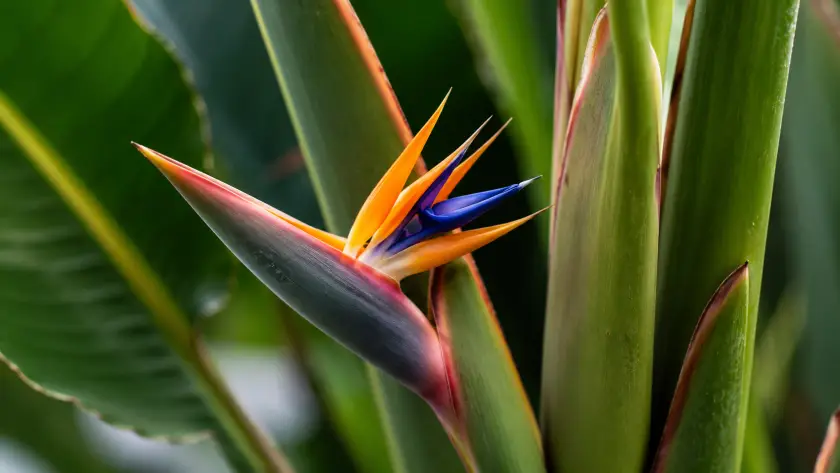
The RHS says the orange and blue flowers appear in winter and spring, each lasting up to a month, and that plants usually need to be five to ten years old before they flower. Buying a plant already in flower saves a long wait but costs more. For flowering, bird of paradise plant care means giving a mature plant its best chance: provide bright light, keep it slightly pot-bound, water and feed regularly in the growing season, and give some shade while it is in flower. Cut each flower stalk off once its flower has faded.
Common Bird of Paradise Plant Care Problems
| Problem | Likely Cause | What to Do |
|---|---|---|
| Brown leaf edges or tips | Dry air or irregular watering (RHS) | Mist daily or use a damp gravel tray; water and feed regularly |
| Slow growth, no flowers | Conditions not right, often too little light (RHS) | Move to a brighter spot; be patient with young plants |
| Shredded leaves | Wind, usually outdoors (RHS) | Choose a sheltered spot |
| Sap-sucking pests | Scale insects, red spider mites, mealybugs (RHS) | Check leaves regularly and act early |
| Yellow lower leaves | Often overwatering or an old leaf | Check drainage; trim tatty leaves at the base with sharp secateurs |
For more help, see yellow leaves on plants, leaf curl, browning and droop and how to revive a dying plant.
Is Bird of Paradise Toxic to Pets?
The ASPCA lists Strelitzia reginae as toxic to dogs, cats and horses, with mild nausea, vomiting and drowsiness, mainly from eating the fruit and seeds. It describes the toxic principles as gastrointestinal irritants and warns that Caesalpinia and Poinciana gilliesii, which share the common name, are more toxic. Keep the plant out of reach of pets, and if one chews it, call your vet or the ASPCA Animal Poison Control Center on (888) 426-4435. A consultation fee may apply. See our cat-friendly and dog-friendly plant guides for safer options.
Where to Place Bird of Paradise at Home
Good bird of paradise plant care starts with placement. Choose the brightest spot with room for a tall, top-heavy plant. A sunny living room corner beside a large window works best, and a well-lit home office is a good option too. Pair it with smaller foliage plants such as pothos, snake plant or monstera for layered texture. For more ideas, see how to style indoor plants by room and office-friendly plants.
Frequently Asked Questions
How do you care for a bird of paradise plant?
Give it bright light beside a large sunny window, keep the compost constantly moist but not saturated in spring and summer, and keep it above 10 to 12°C. Feed every two weeks in the growing season and let the compost become fairly dry from the end of November.
How do I get my bird of paradise to flower?
Be patient: the RHS says plants usually need to be five to ten years old. Keep them in bright light, slightly pot-bound, and well watered and fed in the growing season. Some shade while in flower helps keep the flower colour.
How often should I water bird of paradise?
There is no fixed schedule. In spring and summer keep the compost moist, which may mean daily watering in warm weather. From the end of November let it become fairly dry between waterings.
Can bird of paradise live outside?
It can spend summer outdoors in its pot in a warm, sunny, sheltered spot. Harden it off gradually and bring it indoors before night temperatures approach 12°C, because it is tender.
Is bird of paradise toxic to cats and dogs?
Yes, mildly. The ASPCA lists Strelitzia reginae as toxic to dogs, cats and horses, causing mild nausea, vomiting and drowsiness. Keep it out of reach.
Final Thoughts
As a botanist, I think bird of paradise plant care is simple once you accept two facts: it needs strong light, and it flowers on its own timetable. At Patch Plants, I write practical care guides for large houseplants, so pair this one with our best indoor plants for beginners if you want easier companions while you wait for flowers. Get light, water and warmth right, and your bird of paradise will become a statement plant.
Sources: RHS, How to grow strelitzia; ASPCA, Bird of Paradise Flower.

About the author
Sawera Shahid is a botanist with an MPhil in Botany and 5+ years of writing about plants. As founder and lead writer of Patch Plants, she writes practical, science-backed guides on indoor plants, outdoor gardens and plant problems, checked against RHS and university extension advice.