Wondering how to keep your jade plant healthy, compact, and thriving for years? Successful jade plant care starts with three essentials: bright sunlight, well-draining soil, and watering only when the growing medium has dried sufficiently.
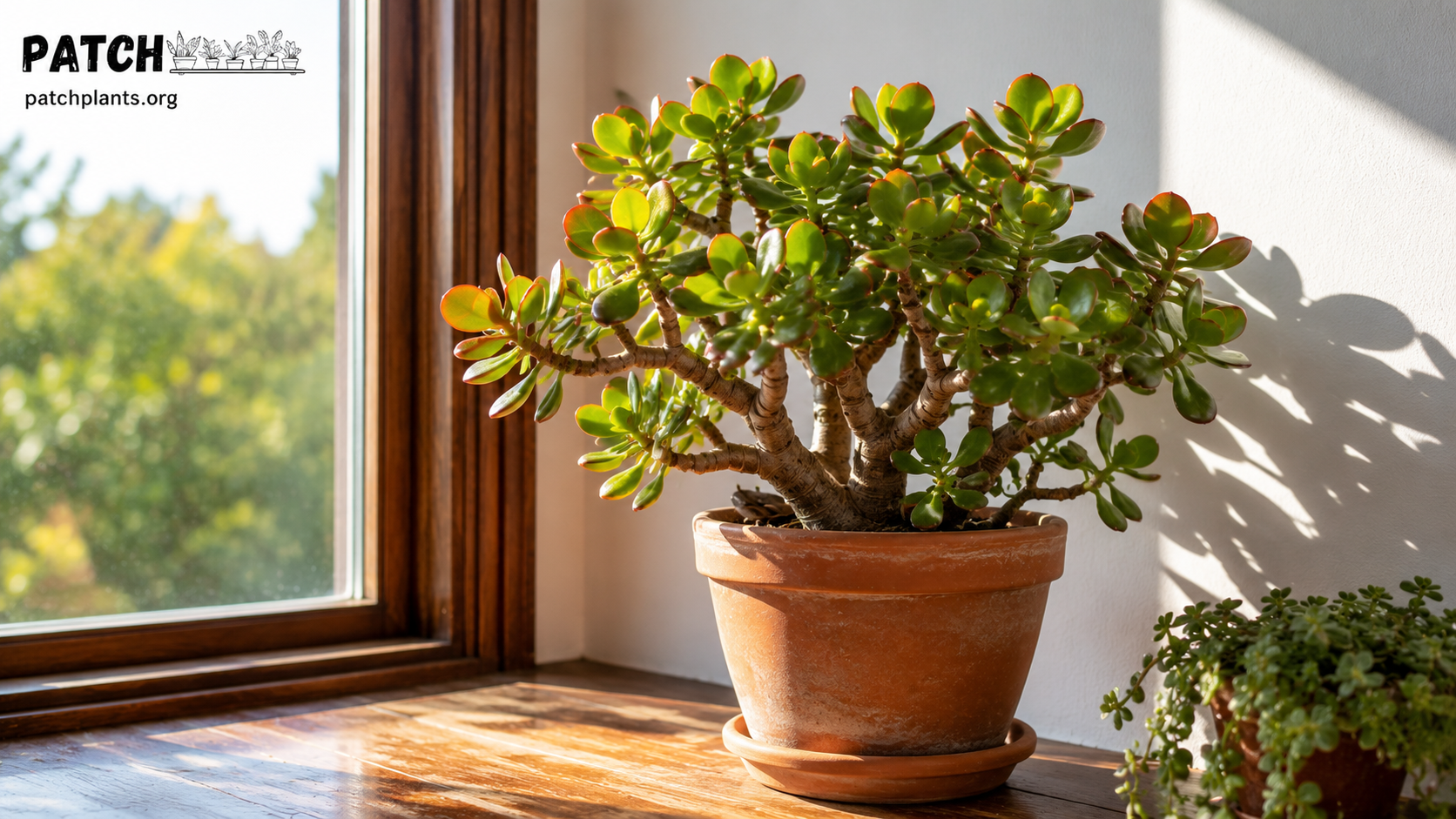
The jade plant (Crassula ovata) is a popular succulent known for its thick, glossy leaves, woody stems, and miniature tree-like appearance. Although it tolerates occasional neglect, improper watering and inadequate light can lead to yellow leaves, weak stems, leaf drop, and root rot.
In this complete jade plant care guide, you’ll discover 11 practical tips covering sunlight, watering, soil, fertilizer, pruning, repotting, and propagation. You’ll also learn how to encourage flowering, identify common problems, care for jade plants throughout the seasons, and protect them from winter temperatures.
Jade Plant Care at a Glance
| Care Requirement | Recommendation |
|---|---|
| Botanical name | Crassula ovata |
| Common names | Jade plant, friendship plant, lucky plant, money plant |
| Plant family | Crassulaceae |
| Light | Bright light; several hours of direct sun is beneficial after gradual acclimation |
| Watering | Water thoroughly after the potting mix has dried sufficiently |
| Soil | Fast-draining cactus or succulent potting mix |
| Container | Pot with drainage holes |
| Temperature | Normal indoor temperatures; protect from freezing conditions |
| Humidity | Average household humidity |
| Fertilizer | Light feeding during active spring and summer growth |
| Propagation | Stem cuttings and leaf cuttings |
| Pet safety | Toxic to cats and dogs if ingested |
Key Takeaways
- Healthy jade plants need strong light, a well-draining root environment, and a watering routine adjusted to their actual growing conditions.
- A bright south-facing or west-facing window is often suitable for indoor jade plant care in the Northern Hemisphere.
- Do not water on a rigid weekly schedule. Check moisture through the root zone before watering.
- Use a pot with drainage holes and avoid allowing water to accumulate in saucers or decorative outer pots.
- Prune and propagate during active growth for easier establishment and a fuller plant shape.
- Protect jade plants from freezing temperatures, and keep them away from cats and dogs.
What Is a Jade Plant?
The jade plant is an evergreen succulent shrub native to southern Africa. In its natural habitat, it grows on dry, rocky slopes and develops thick branches, a substantial trunk, and rounded, fleshy leaves that store water.
Its botanical name, Crassula ovata, refers to its thick, egg-shaped leaves. The plant belongs to the Crassulaceae family, which includes several other ornamental succulents.
A mature jade plant can resemble a small tree. Older stems gradually become woody, while younger stems remain green and succulent. Given suitable conditions, an established plant may live for decades and become a substantial part of an indoor plant collection.
Jade plants are also associated with friendship, good fortune, and prosperity in some cultural traditions. However, a jade plant is not the same species as the tropical money tree, Pachira aquatica. Our money tree care guide explains how to grow that separate houseplant.
11 Essential Jade Plant Care Tips for Healthy Growth
1. Give Your Jade Plant Enough Sunlight
Light is one of the most important factors in successful jade plant care indoors. Jade plants generally grow more compactly and develop stronger stems when they receive bright light, including several hours of suitable direct sunlight.
According to the University of Wisconsin–Madison Extension jade plant guide, jade plants do best with four or more hours of direct sunlight, although they can survive in bright indirect light.
Best Window for a Jade Plant
- South-facing window: Often an excellent indoor location in the Northern Hemisphere because it provides strong natural light.
- West-facing window: Can provide useful afternoon sunlight, although summer heat may require monitoring.
- East-facing window: Offers gentler morning sun and may support healthy growth in an otherwise bright room.
- North-facing window: May provide insufficient light in many Northern Hemisphere homes unless the room is unusually bright or supplemental lighting is available.
Window direction is only a starting point. Nearby buildings, trees, overhangs, seasons, and geographic location also affect how much usable light reaches the plant.
Signs Your Jade Plant Needs More Light
- Stems become unusually long or thin.
- There are large spaces between pairs of leaves.
- New growth appears small or weak.
- Branches lean strongly toward a window.
- The plant loses its compact, bushy appearance.
Older stretched stems will not shorten when conditions improve. However, new growth can become more compact after the plant receives better light.
Can Jade Plants Get Too Much Sun?
Yes, especially when a plant grown in a dim indoor location is suddenly moved into intense outdoor sunlight. Pale, dry, brown, or corky patches may indicate sun damage.
When moving a jade plant outside for summer, begin in a sheltered location with gentler light. Increase exposure gradually over one to two weeks while checking the leaves for signs of stress.
For help choosing the best location in your home, read our complete indoor light and grow light guide.
2. Water Your Jade Plant Only When It Needs It
Watering is a major part of how to care for a jade plant. These succulents store water in their leaves, stems, and roots, which helps them tolerate periods of dry conditions.
However, drought tolerance does not mean a jade plant should never receive a thorough watering. Both prolonged dehydration and consistently wet roots can cause damage.
How Often Should You Water a Jade Plant?
There is no reliable universal watering interval. A plant in a small terracotta pot near a sunny window may dry much faster than a plant in a large glazed pot in a cool room.
For established indoor jade plants, allow the potting mix to dry sufficiently between waterings. Then water thoroughly so moisture reaches the root system, and allow the excess to drain away.
Avoid keeping the plant permanently wet or leaving standing water in a saucer.
How to Check Soil Moisture
- Insert a wooden skewer into the growing medium to check moisture below the surface.
- For a deeper pot, inspect more than the top inch because the lower root zone may remain damp.
- Lift the pot occasionally to learn the difference between its freshly watered and dry weight.
- If the mix is still noticeably moist, wait before watering again.
- If the root zone has dried appropriately, water thoroughly and empty the saucer.
Signs that a jade plant may need water include mild leaf wrinkling, slightly reduced leaf firmness, and a consistently dry potting mix.
Be careful: wrinkled leaves can also occur when rotted roots cannot absorb water. If leaves look dehydrated while the soil remains wet, investigate root health instead of adding more water.
Jade Plant Watering in Summer vs. Winter
| Season | Watering Guidance |
|---|---|
| Spring | Check soil moisture regularly as growth resumes and daylight increases. |
| Summer | Water thoroughly after appropriate drying; warm, sunny locations may dry faster. |
| Fall | Reduce watering gradually as growth slows. |
| Winter | Water more sparingly, especially in cool rooms, while avoiding prolonged severe dehydration. |
Learn more from our complete plant watering guide and guide to recognizing overwatering.
3. Choose the Best Soil for Jade Plants
Jade plant roots need both moisture and oxygen. Soil that stays saturated for extended periods reduces airflow around the roots and increases the risk of decline.
The best soil for jade plants is a loose, well-draining container mix suitable for succulents.
Recommended Jade Plant Soil Mix
A commercially prepared cactus or succulent potting mix is a practical starting point. If the mix stays wet too long under your growing conditions, improve drainage with suitable mineral amendments.
One optional homemade recipe is:
- 2 parts cactus or succulent potting mix
- 1 part horticultural pumice or perlite
- Additional coarse mineral material only if the original mix remains excessively moisture-retentive
This is a flexible example, not a mandatory formula. Some commercial succulent mixes already drain well without modification.
Soil Types to Avoid
- Heavy, compacted garden soil in containers
- Potting mixes that remain constantly soggy
- Soil that has broken down and lost its structure
- Containers filled with soil but lacking proper drainage holes
If water runs straight around the edges of a badly dried peat-based mix without moistening the roots, the issue may be uneven rewetting rather than excessive drainage. Check the entire root zone rather than judging soil quality by surface appearance alone.
Our best soil mix guide explains the differences between succulent mixes and moisture-retentive mixes for tropical houseplants.
4. Select the Right Pot and Repot Only When Necessary
Jade plants often grow well in relatively snug containers. They do not need an oversized pot, and healthy specimens can remain in the same container for several years.
Choose a pot with at least one functional drainage hole. Terracotta is a useful option because moisture can evaporate through its porous walls, but plastic and glazed ceramic containers also work when watering is managed carefully.
When Should You Repot a Jade Plant?
Consider repotting when:
- Roots have significantly crowded the container.
- The plant has become unstable or top-heavy.
- Potting mix has deteriorated or drains poorly.
- Roots emerge heavily through the drainage holes.
- The plant dries unusually quickly because the root ball fills most of the container.
Spring, when active growth begins, is generally a suitable time for routine repotting. Repotting every two to three years may be helpful for some plants, but the actual need should determine the timing.
How to Repot a Jade Plant
- Prepare a clean container slightly larger than the existing root ball if additional room is needed.
- Add fresh succulent potting mix.
- Remove the plant carefully while supporting its heavy stems.
- Inspect roots for clearly damaged or decayed tissue.
- Keep healthy, firm roots whenever possible.
- Replant at roughly the same depth.
- Adjust watering to the condition of the roots and the moisture already present in the fresh mix.
If roots were heavily damaged or trimmed, water cautiously during recovery. Do not automatically soak an already moist mix.
For detailed guidance, see how to repot a plant and our common repotting mistakes guide.
5. Keep Jade Plants Warm and Protect Them From Frost
Jade plants generally grow well at comfortable indoor temperatures. A typical range around 65–75°F (18–24°C) is suitable for ordinary indoor growth, although healthy plants can tolerate variations around that range.
These succulents are not reliably frost-hardy. Outdoor jade plants may tolerate brief cool conditions, but freezing weather can cause serious damage to their fleshy leaves and stems.
If you grow your jade plant outside during summer, bring it indoors before freezing conditions arrive. Check nighttime forecasts rather than relying only on daytime temperatures.
Avoid placing indoor plants beside freezing window glass, heating vents, or air-conditioning outlets that create strong temperature changes.
Does a Jade Plant Need Humidity?
Jade plants do not require the high humidity associated with many tropical houseplants. Normal indoor humidity is generally adequate, and routine misting is unnecessary.
Good airflow and appropriate watering are more useful than attempting to create a constantly humid environment.
6. Fertilize Lightly During Active Growth
Jade plants are relatively slow-growing succulents and do not require heavy fertilizer applications. Too much fertilizer can lead to excess mineral salts in the potting mix and may stress the roots.
Use a balanced houseplant fertilizer at a diluted rate according to the label, primarily while the plant is actively growing during spring and summer.
Feeding approximately every six to eight weeks can be a reasonable starting point for some indoor plants, but it is not a compulsory schedule.
When Should You Avoid Fertilizing?
- During a cool winter rest period when growth has largely stopped
- When the plant has active root rot
- Immediately after severe root damage
- When the plant is badly dehydrated or otherwise stressed
- When fertilizer salts have already accumulated excessively in the mix
Watch for white crusts on the pot or growing medium, unusual leaf-tip damage, and poor growth despite otherwise suitable conditions.
For broader information about seasonal feeding, read our indoor and outdoor plant fertilizing guide.
7. Prune Your Jade Plant for Compact, Bushy Growth
Pruning helps a jade plant maintain an attractive shape and prevents heavy branches from making the plant unstable.
It can also encourage branching when stems have become long or uneven.
Best Time to Prune a Jade Plant
Spring or early summer is usually the best time for significant shaping because the plant is entering or already experiencing active growth.
How to Prune a Jade Plant
- Examine the plant and identify dead, damaged, or crossing branches.
- Use clean, sharp pruning tools.
- Cut selected stems just above suitable leaves or branching points.
- Remove only as much healthy foliage as necessary to achieve a balanced shape.
- Place the plant in suitable bright light so new growth develops more compactly.
If the plant has become leggy because of insufficient light, pruning alone will not solve the problem. Improve lighting first, then trim stretched stems as needed.
Healthy pieces removed during pruning can often be rooted to create new plants.
Our pruning basics guide explains how to make clean cuts and avoid common mistakes.
8. Propagate Jade Plants From Cuttings
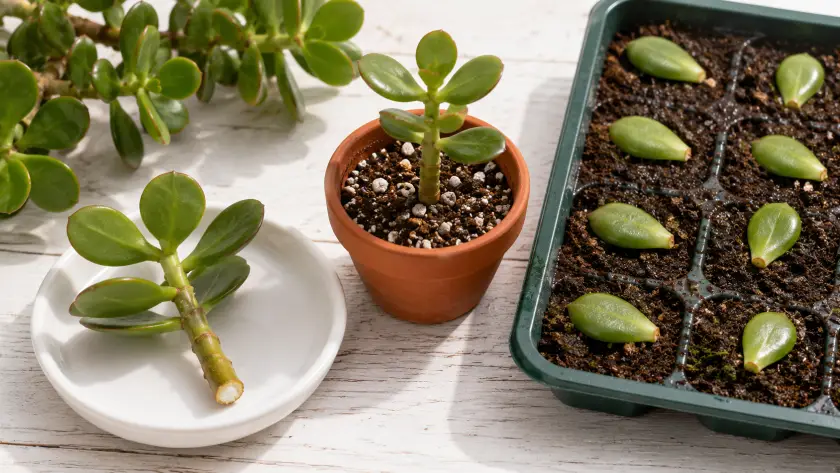
Jade plant propagation is relatively straightforward. Healthy stem cuttings and individual leaves can form roots and eventually establish new plants.
Stem cuttings are usually more practical when you want a reasonably sized new plant, while leaf propagation is useful for growing smaller plantlets over time.
How to Propagate a Jade Plant From a Stem
- Select a healthy, pest-free stem with several leaves.
- Cut a section approximately 3–5 inches (8–12 cm) long.
- Remove the lower leaves to expose part of the stem.
- Allow the cut end to dry and callus for several days.
- Plant the cutting in a small pot with a suitable, well-draining succulent mix.
- Keep it in bright, indirect light while it establishes roots.
- Water carefully to avoid leaving the unrooted stem in saturated soil.
- Watch for stable new growth over the following weeks.
Rooting speed depends on the temperature, season, cutting health, and growing medium. A cutting may take several weeks to establish.
Can You Grow a Jade Plant From One Leaf?
Yes. Gently remove a healthy, intact leaf and let its detached end dry. Place it on or near the surface of a suitable succulent mix in bright, indirect light.
Small roots and plantlets may emerge from the leaf base. Leaf propagation can take longer than stem propagation, and not every leaf develops into a new plant.
See our complete houseplant propagation guide for additional techniques.
9. Adjust Jade Plant Care for Each Season
One of the most helpful jade plant care tips is to change your routine as growing conditions change.
A plant receiving strong summer light may use water more quickly than the same plant during a cool, dark winter.
Spring Jade Plant Care
- Inspect the roots and potting mix.
- Repot if the plant genuinely needs additional room.
- Increase watering as active growth resumes.
- Begin appropriate diluted feeding.
- Prune and propagate healthy stems.
Summer Jade Plant Care
- Provide strong, suitable light.
- Acclimate gradually before moving outdoors.
- Check soil moisture more regularly during hot weather.
- Watch for leaf scorch and heat stress.
- Keep the pot draining properly after watering.
Fall Jade Plant Care
- Move outdoor plants inside before freezing conditions.
- Check foliage and stems for pests.
- Reduce feeding as growth slows.
- Allow the potting mix to remain drier between waterings.
Winter Jade Plant Care
- Keep the plant in the brightest suitable location.
- Water sparingly according to actual soil moisture.
- Avoid cold drafts and freezing temperatures.
- Limit fertilizer when the plant is not actively growing.
- Consider supplemental lighting if indoor daylight is inadequate.
10. Prevent Common Jade Plant Pests
Jade plants are generally resilient, but they can still develop pest problems. Mealybugs are particularly common, while scale insects and spider mites may also appear.
Signs of Mealybugs on Jade Plants
- White, cotton-like clusters around leaf joints
- Sticky residue on leaves or stems
- Distorted new growth
- Small insects hiding where branches meet
Isolate an affected plant from nearby houseplants. Remove visible pests where practical and use an appropriately labeled treatment if needed.
Rubbing alcohol applied carefully with a cotton swab is sometimes used for individual mealybugs, but avoid soaking the foliage or treating a large area without testing first. Jade leaves can be sensitive to certain pesticide sprays.
Inspect the plant repeatedly because pests can remain hidden in branch joints.
11. Monitor Leaves and Roots for Early Problems
The final essential habit in jade plant care is learning to interpret plant symptoms. Leaf appearance can reveal stress, but several different problems may produce similar symptoms.
Always consider soil moisture, root condition, light exposure, temperature, and recent changes together.
| Jade Plant Symptom | Possible Cause | Recommended Action |
|---|---|---|
| Wrinkled leaves and dry soil | Insufficient water | Water thoroughly if the roots are healthy. |
| Wrinkled leaves and wet soil | Possible root damage | Inspect roots before watering again. |
| Yellow leaves and mushy stems | Overwatering or root rot | Check drainage and root condition. |
| Long, weak stems | Inadequate light | Increase light gradually and prune appropriately. |
| Dry brown patches | Possible sun scorch or other tissue injury | Review recent light changes and treatments. |
| Sudden leaf drop | Water stress, temperature stress, or environmental change | Check roots, soil, and recent conditions. |
| White cotton-like clusters | Mealybugs | Isolate and treat the plant. |
Jade Plant Care Checklist for Beginners
Use this simple jade plant care checklist to keep your plant healthy without following an unnecessarily rigid schedule.
| Care Task | What to Do | When to Check |
|---|---|---|
| Sunlight | Provide bright light and suitable direct sunshine. | Whenever growth becomes stretched or seasons change. |
| Watering | Check the root-zone moisture before watering thoroughly. | Regularly, with frequency adjusted to conditions. |
| Drainage | Ensure water can escape through the pot’s drainage holes. | Every watering. |
| Fertilizer | Apply diluted fertilizer only during active growth. | According to the fertilizer label. |
| Pruning | Remove damaged branches and shape healthy growth. | As needed, preferably during active growth. |
| Repotting | Inspect root crowding, soil condition, and plant stability. | Each spring. |
| Pest inspection | Look for mealybugs, especially around leaf joints. | Weekly. |
| Winter protection | Protect the plant from frost and reduce watering as growth slows. | Fall and winter. |
For the best results, adjust this routine to your home’s light, temperature, humidity, and container size. A jade plant growing in a sunny terracotta pot may need different care from one in a cool room.
Popular Jade Plant Varieties and Lookalikes
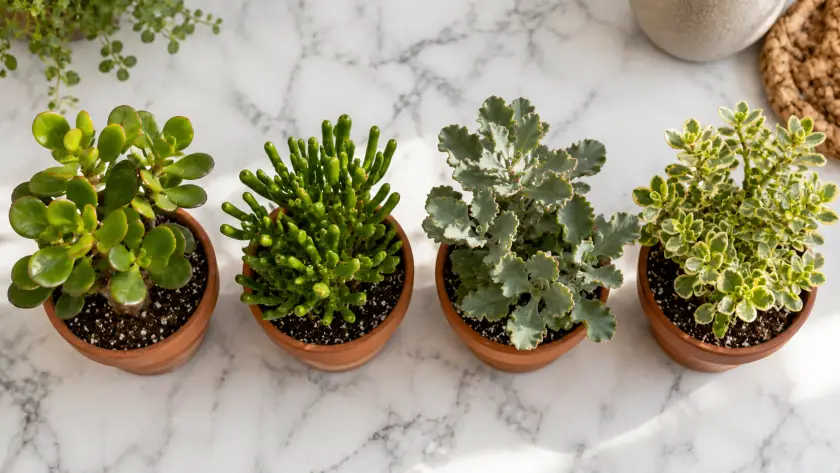
Different types of jade plants can have rounded, tubular, variegated, or wavy leaves. However, not every plant sold under a jade-related common name belongs to the same species.
Standard Jade Plant — Crassula ovata
The classic jade plant has thick oval leaves and branching stems that become woody with age. Healthy plants exposed to suitable strong light may develop attractive reddish leaf margins.
This is an excellent starting point for anyone learning how to care for jade plants indoors.
Gollum Jade — Crassula ovata ‘Gollum’
Gollum jade has distinctive tubular leaves with a rounded or slightly recessed tip. Under stronger light, the ends of the leaves may develop red coloration.
Gollum jade plant care follows the same basic principles as standard jade plant care: bright light, well-draining soil, careful watering, and protection from frost.
Hobbit Jade — Crassula ovata ‘Hobbit’
Hobbit jade is another distinctive cultivar with curled or tubular-looking leaves. It can be grown as a compact ornamental succulent or shaped into a miniature tree.
Give it appropriate strong light and avoid keeping its root system constantly wet.
Variegated Jade Plant
Variegated jade plants display combinations of green, cream, white, pink, or pale yellow foliage, depending on the cultivar and growing conditions.
The lighter leaf sections contain less chlorophyll. Variegated specimens may grow more slowly, and their pale tissues can be sensitive to abrupt exposure to intense sunlight.
Provide bright light while allowing the plant to acclimate gradually.
Ripple Jade — Crassula arborescens ‘Undulatifolia’
Ripple jade has wavy, blue-gray foliage and is often grouped with other jade plants in garden centers. Botanically, however, it belongs to Crassula arborescens, not Crassula ovata.
It appreciates well-draining soil and bright conditions, but it should be identified as a related species rather than a standard jade cultivar.
Elephant Bush — Portulacaria afra
Elephant bush is sometimes marketed as dwarf jade, although it belongs to a different botanical group.
It has smaller, rounded leaves and often reddish stems. Like true jade, it can be grown in containers and trained into attractive miniature tree forms.
Despite the similar appearance, elephant bush and jade plant should not be treated as botanically identical.
Jade Plant Bonsai Care

Jade plants are popular for bonsai-inspired displays because their stems become woody, their leaves are relatively small, and their growth can be shaped through pruning.
The goal is to build a balanced miniature tree over time rather than forcing a dramatic shape all at once.
How to Train a Jade Plant as Bonsai
- Select a healthy plant with a sturdy main stem.
- Choose the branches that will form the main structure.
- Prune crossing or poorly positioned stems.
- Remove unwanted growth gradually during active growth.
- Use a stable, well-draining container.
- Maintain enough light to encourage compact new growth.
Jade branches can be brittle, especially when mature. Heavy wiring and abrupt bending can damage stems, so pruning is often safer than aggressive wire training.
How Often Should You Water a Jade Bonsai?
A shallow bonsai-style pot may dry faster than a deeper container, but it still should not remain constantly wet. Check the growing medium regularly and water based on the actual moisture level.
A fixed schedule is unreliable because pot depth, root mass, room temperature, and light exposure vary significantly.
How to Get a Jade Plant to Flower
A mature jade plant may develop clusters of small white or pale pink, star-shaped flowers. However, flowering is less common indoors than in outdoor plants growing under favorable seasonal conditions.
Flower formation is influenced by maturity, adequate light, and seasonal conditions, including shorter days and cooler nights.
Conditions That May Encourage Jade Plant Flowers
- Mature growth: Established plants are generally more likely to flower than young cuttings.
- Bright light: Strong, appropriate light supports healthy growth and flowering potential.
- Shorter days: Natural seasonal changes in day length can help stimulate flower development.
- Cooler nights: A cool but frost-free autumn or winter period may encourage flowering.
- Reduced watering: Watering needs normally decline in cooler, slower-growing conditions.
The University of Wisconsin Extension notes that long nights and suitable cool, relatively dry conditions can help stimulate jade plant flowering.
Do not expose a plant to freezing temperatures or severe drought in an attempt to force blooms. Flowering is a possibility, not a guaranteed outcome of a particular schedule.
Jade Plant Problems: How to Diagnose and Fix Them
Why Is My Jade Plant Dropping Leaves?
Jade plant leaves may fall because of excessive watering, prolonged dryness, root stress, cold exposure, or sudden environmental changes.
Before changing your watering routine, inspect the soil. If it is consistently wet and the stems are soft, root damage may be involved. If the soil is dry and the leaves are wrinkled, the plant may need water.
Read our guide to leaf curl, browning, and drooping for additional troubleshooting.
Why Are Jade Plant Leaves Turning Yellow?
Yellow leaves can result from excessive moisture, root problems, inadequate light, or natural aging.
One older lower leaf becoming yellow does not automatically indicate disease. However, multiple yellow leaves appearing alongside a soft stem or persistently wet soil require closer investigation.
Our yellow plant leaves guide explains how to compare different possible causes.
Why Is My Jade Plant Leggy?
Leggy growth usually indicates insufficient light. Stems stretch toward available light, creating larger gaps between leaves and a less compact plant shape.
Move the plant into a brighter environment gradually. After conditions improve, prune selected stretched stems to encourage branching.
Remember that established elongated stems do not shrink; new growth must develop under improved lighting.
How Do You Save a Jade Plant With Root Rot?
Root rot is especially concerning because damaged roots can no longer absorb water efficiently. A jade plant with root rot may look dehydrated even when the surrounding soil is wet.
Steps to Treat Suspected Jade Plant Root Rot
- Remove the plant from its container carefully.
- Inspect the roots and lower stem for mushy or collapsing tissue.
- Check for an unpleasant, sour, or rotten smell.
- Remove clearly decayed roots using clean tools.
- Preserve healthy, firm roots, even if some are naturally tan or brown.
- Repot into a clean container with fresh, suitable succulent mix.
- Manage watering carefully while the reduced root system recovers.
- If the base is extensively rotten, consider propagating a healthy stem above the affected area.
Healthy roots do not have to be pure white. Root firmness and condition matter more than color alone.
Our guide to reviving a dying plant explains how to respond to damaged roots and other serious plant problems.
What Do Brown Spots on Jade Plant Leaves Mean?
Brown spots can have several causes, including sun scorch, physical damage, cold injury, pest damage, or disease.
Consider where the spots appear and whether they are spreading. Dry, pale brown patches after a sudden increase in sunlight suggest a different problem from soft, dark, water-soaked tissue.
Do not immediately apply fertilizer or pesticides without identifying the likely cause.
Is Jade Plant Toxic to Cats and Dogs?
Yes, jade plants are toxic to cats and dogs if ingested. The ASPCA lists jade plant as toxic to pets and identifies possible signs including vomiting, depression, and incoordination.
The ASPCA listing uses the older botanical name Crassula argentea, which is a synonym associated with the species commonly known today as Crassula ovata.
Keep jade plants where pets cannot reach them. If your cat or dog eats the plant, seek veterinary or animal poison control advice promptly.
For safer household plant choices, see our cat-friendly plants guide and dog-friendly plants guide.
Our Christmas cactus care guide also covers a popular alternative commonly considered non-toxic to cats and dogs.
Where Should You Keep a Jade Plant Indoors?
The best place for a jade plant is one that provides adequate light, reasonable temperature stability, and room for its branches to grow.
Living Room
A bright living room window can be an excellent location. A mature jade plant in terracotta or ceramic makes a strong decorative focal point.
For contrasting leaf shapes, you can display it near pothos or philodendron, while remembering that these tropical plants have different watering requirements.
Home Office
A sunny office windowsill or desk close to a bright window can work well. Avoid assuming that ordinary overhead office lighting provides enough light for compact succulent growth.
Explore our office plants guide for additional ideas.
Bedroom
A bedroom windowsill can support jade plant growth if it receives enough suitable natural light. Protect the plant from freezing window glass and cold drafts in winter.
Bathroom
Most dark bathrooms are unsuitable for jade plants. A particularly bright bathroom may work, but the plant still needs appropriate light and drainage.
For species more suited to bathroom conditions, see our best bathroom plants guide.
Common Jade Plant Care Mistakes to Avoid
- Watering every week without checking the soil: Soil moisture changes with growing conditions.
- Using a container without drainage: Standing water can damage succulent roots.
- Keeping the plant in low light: Weak lighting causes stretched growth.
- Moving it directly into intense sun: Sudden exposure can scorch leaves.
- Using an oversized pot: Extra unused potting mix may stay wet too long.
- Fertilizing a stressed plant: Feeding does not solve root or lighting problems.
- Ignoring cold weather: Jade plants are vulnerable to freezing conditions.
- Assuming every wrinkled leaf means underwatering: Root damage may produce similar symptoms.
- Pruning too aggressively: Removing excessive healthy foliage can weaken an already stressed plant.
- Confusing related succulents with true jade: Check botanical names when comparing varieties.
Frequently Asked Questions About Jade Plant Care
How do you care for a jade plant indoors?
Give your jade plant bright light, preferably with several hours of suitable direct sunlight. Grow it in a pot with drainage holes and fast-draining succulent soil. Water thoroughly when the mix has dried sufficiently, reduce watering during slower winter growth, and protect it from frost.
How often should I water a jade plant?
Watering depends on pot size, soil, light, temperature, and season. Rather than watering every fixed number of days, check the growing medium and water thoroughly after it has dried appropriately. Always empty excess water from the saucer.
Can jade plants survive in indirect sunlight?
Yes. Jade plants can survive in bright indirect light, but they generally develop more compact growth with several hours of suitable direct sunlight. Poor light may cause leggy stems and slower growth.
How do I make my jade plant grow faster?
Provide adequate bright light, healthy roots, appropriate watering, and light fertilizer during active growth. Avoid excessive feeding, which will not compensate for poor conditions. Jade is naturally a relatively slow-growing plant, especially indoors.
How do I get my jade plant to flower?
Keep the plant healthy as it matures and provide suitable bright light. Natural shorter days and a cool but frost-free seasonal period may encourage flower buds. Not every indoor jade plant blooms, and flowering should not be forced through extreme drought or cold exposure.
Final Thoughts: Keeping Your Jade Plant Healthy for Years
Successful jade plant care does not require a complicated routine. It requires paying attention to the plant’s growing conditions and avoiding the most common mistakes.
Start with bright light, a suitable container, and a fast-draining soil mix. Check moisture before watering, reduce care demands when winter growth slows, and watch for early signs of stress.
As your plant matures, you can shape it through pruning, propagate healthy cuttings, or develop it into a miniature tree. With consistent, appropriate care, a jade plant can remain a beautiful part of your indoor collection for many years.
If you are just beginning your houseplant journey, explore our best indoor plants for beginners for more practical plant choices.