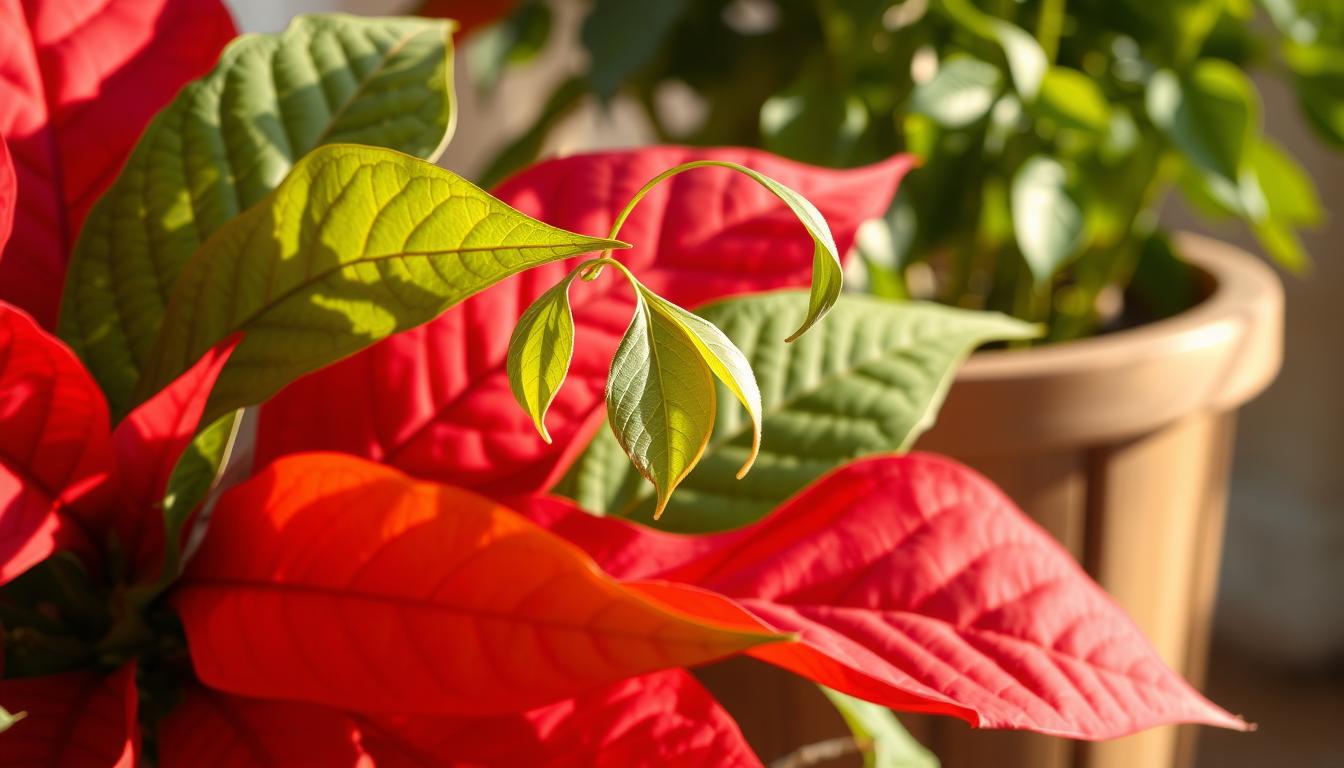
Poinsettia dropping leaves is almost always caused by cold, drafts or watering, not by disease. The RHS says the most common cause of leaf and bract drop is cold damage, and that cooler conditions than 13 to 16°C (55 to 60°F) cause “physiological shock”. If leaves drop after you bring the plant home, move it to a warm, bright spot out of drafts, water only when the surface of the compost feels dry, and the dropping should stop.
I am Sawera Shahid, a botanist at Patch Plants. If you have a poinsettia dropping leaves right now, or poinsettia leaves falling off after a shop visit, this guide shows how to work out the cause, what to change, and when the damage cannot be reversed.
Why Is My Poinsettia Dropping Leaves?
Extension services and the RHS agree on a short list of causes. Check them in this order, because the first two are by far the most common.
| Cause | What You See | Fix |
|---|---|---|
| Cold or chilly transport | Leaves and bracts fall over a couple of weeks | Keep above 13 to 16°C (55 to 60°F). Damage cannot be reversed (RHS) |
| Drafts and temperature swings | Leaf and flower drop near doors, vents, fireplaces and cold windows | Move to a stable, draught-free spot |
| Overwatering | Yellowing lower leaves, drooping, grey mould | Let the surface dry, empty saucers, check drainage |
| Underwatering | Lower leaves yellow and drop, compost pulls away from the pot | Water thoroughly, then let it drain |
| Heat from radiators | Dry, dropping leaves | Move away from heat sources |
| Pests | Sticky residue or visible insects | Check leaf undersides and stem joints |
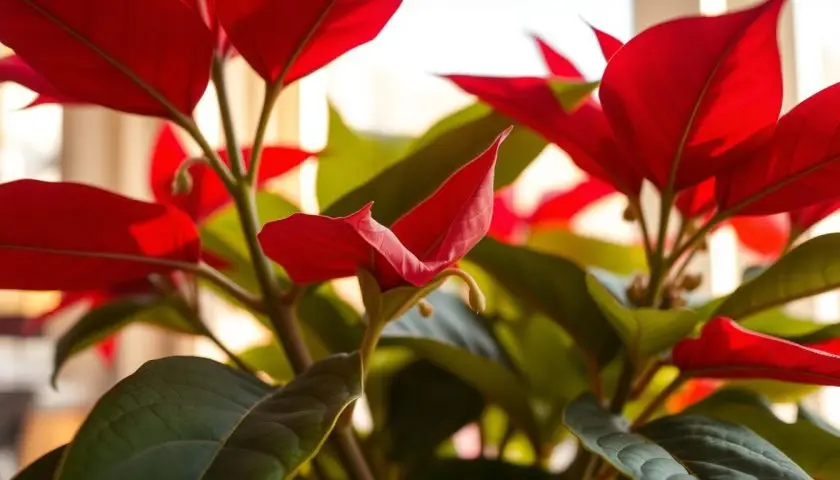
Cold Damage: The Most Common Reason for Poinsettia Dropping Leaves
The RHS says the most common cause of leaf and bract drop is cold damage, often from sale locations that are too chilly, and adds that leaves and bracts fall over a couple of weeks and this cannot be reversed. The RHS says drooping usually results from cold atriums or chilly pavements, and advises asking for wrapping, getting the plant to the car quickly and buying on mild days rather than frosty ones. The University of Illinois Extension warns against leaving poinsettias in a car or outside for long periods, because “sudden temperature fluctuations will cause poinsettias to drop their leaves.”
If your plant has had a cold journey, the leaves that have already dropped will not come back. What you can do is stop things getting worse by keeping the room warm and stable. The RHS says that if the drop starts after you get the plant home, you should check the room is warm and light and the compost is just moist, and the symptoms should stop once conditions improve.
Drafts and Heat: Another Reason for a Poinsettia Dropping Leaves
Several extension services list drafts as a cause of leaf drop. The University of Maryland Extension says leaf and flower drop may occur near heat vents, fireplaces, doors and windows, and the Penn State Extension adds cold windows to that list. The RHS also advises avoiding window sills with radiator heat, spots behind curtains on cold nights, draughty hearths and unheated rooms such as porches.
- Temperature: the University of Illinois Extension recommends 55 to 70°F, with 65°F ideal. Penn State suggests avoiding temperatures below 50°F, and says poinsettias cannot tolerate frost or freezing.
- Light: bright indirect light from a south, east or west window, away from direct sun. The RHS suggests a table a little way from a window.
- Stability: pick a spot and leave the plant there. Moving it between rooms exposes it to temperature swings.
For more on light levels, see our indoor light guide.
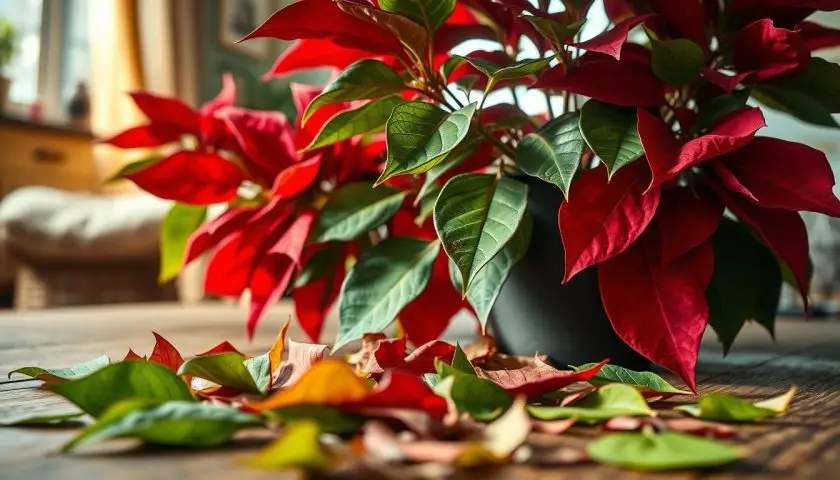
Watering Problems and Poinsettia Dropping Leaves
The University of Illinois Extension says “both insufficient water and too much water will cause the lower leaves to yellow and drop.” So watering has to be right in both directions.
- Check first. The RHS says to water only when the compost surface has begun to feel dry, and to water sparingly, since overwatering can damage plants. The University of Illinois suggests lifting the pot: if it still feels heavy, wait another day.
- Water thoroughly. Penn State says to water until it runs out of the drainage holes. The RHS suggests standing the pot in tepid water for 10 to 20 minutes, letting it drain, then returning it to its decorative pot.
- Never leave it standing in water. Penn State advises not letting plants sit in water-filled saucers for more than five minutes, to avoid root rot.
- Deal with the foil sleeve. The University of Maryland Extension says to remove the decorative foil or plastic, or poke holes in it, so excess water can drain. Penn State adds that sleeves should be removed promptly to prevent epinasty, the downward bending of leaf stalks.
For general watering technique, see our watering guide and signs you are overwatering. If the compost is constantly wet and stems are going soft, see our root rot guide.
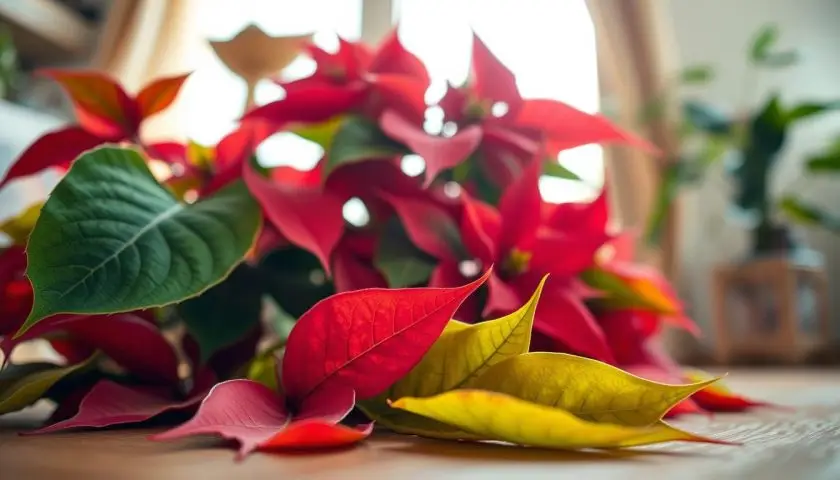
Pests and Disease on Poinsettias
The RHS says poinsettias generally have few pest or disease problems, with occasional issues from grey mould (from overwatering), scale insects and mealybugs. Check the undersides of the leaves and the points where leaves join the stem, as Penn State advises. If you find pests, isolate the plant and treat with a product labelled for them. See yellow leaves on plants for other causes of yellowing.
What to Do for a Poinsettia Dropping Leaves
- Move the plant to a bright, warm spot out of direct sun and away from drafts, vents and radiators.
- Check the temperature. Aim for stable conditions above 13 to 16°C (55 to 60°F).
- Check the compost. Water only if the surface has begun to feel dry, and empty the saucer.
- Remove any foil sleeve, or make drainage holes in it.
- Inspect leaf undersides and stem joints for pests.
- Be patient. The RHS says symptoms should stop once conditions improve, but leaves that have already dropped will not grow back on that stem.
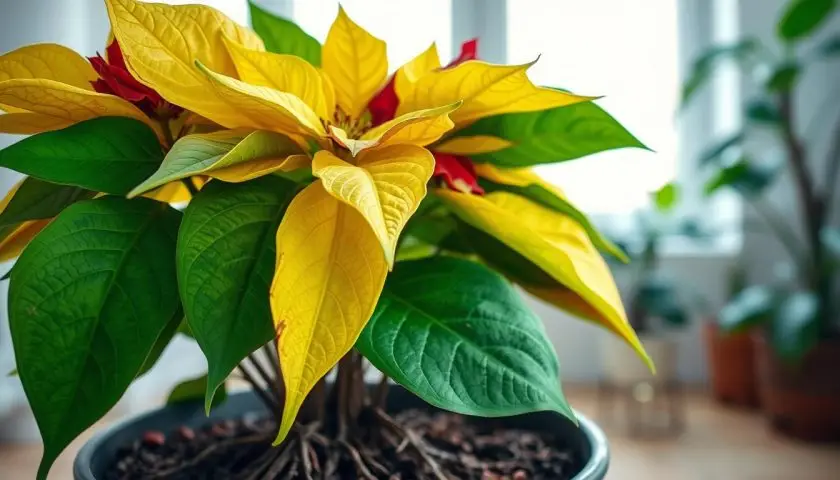
Is Some Poinsettia Dropping Leaves Normal?
A little lower leaf loss late in the season is normal as the plant ages, particularly after the colourful bracts fade. The University of Illinois Extension notes that a typical holiday poinsettia lasts about 8 weeks indoors. If the plant keeps most of its leaves and bracts, a few lower leaves dropping is not a cause for alarm. Heavy, rapid drop is the sign of a problem.
Acclimating Holiday Plants After You Bring Them Home
Acclimating holiday plants is where most leaf loss starts. The RHS advises choosing a plant that is not drooping or dropping leaves or bracts, asking for wrapping or using a bag, taking the plant to the car quickly and bringing it indoors as soon as possible. At home, the University of Illinois Extension says greenhouse wrapping is for transport, and plants should not be left in a car or outside for long periods. Pick a warm, bright spot, remove or pierce any decorative sleeve, and leave the plant alone for the first couple of weeks. Moving it from room to room is a common way to end up with a poinsettia dropping leaves.
Keeping a Poinsettia After Christmas
For the full yearly routine, see our poinsettia care guide. If you want to keep the plant, the RHS advises pruning hard to about 10cm (4in) in April, repotting in early May, keeping it light and cool over summer, and giving 8 to 10 weeks of days under 12 hours of light from late September to trigger bract colour. The RHS also notes that commercial plants are often treated with growth suppressants, so home-grown plants revert to their taller natural habit. Many people simply enjoy the plant over the holidays and then compost it, which is perfectly reasonable.
Are Poinsettias Safe for Pets?
The ASPCA lists poinsettia (Euphorbia pulcherrima) as toxic to dogs, cats and horses, but describes it as generally over-rated in toxicity. The irritant sap can cause mouth and stomach irritation, occasionally with vomiting. The RHS notes the sap can also irritate skin and eyes. Keep the plant out of reach, and contact a vet if your pet eats any. See our guides to cat-friendly and dog-friendly plants.
Frequently Asked Questions
Why are my poinsettia leaves falling off after I bought it?
Most often cold damage on the way home or at the shop. The RHS says it cannot be reversed, but keeping the plant warm and the compost just moist usually stops further drop.
Can a poinsettia recover from leaves falling off?
The plant can stabilise if conditions improve, but dropped leaves will not return. New growth is possible if you keep the plant long term and care for it through the year.
How often should I water a poinsettia dropping leaves?
Only when the surface of the compost has begun to feel dry. Water thoroughly, let it drain, and never leave it standing in a saucer of water.
What temperature stops a poinsettia dropping leaves?
The RHS gives a minimum of 13 to 16°C (55 to 60°F). The University of Illinois Extension recommends 55 to 70°F, with about 65°F ideal.
Are poinsettias poisonous to cats and dogs?
The ASPCA lists them as toxic, but generally over-rated in toxicity. The sap can irritate the mouth and stomach and occasionally cause vomiting.
Final Thoughts
A poinsettia dropping leaves is usually telling you about temperature or water. As a botanist, my advice is to buy on mild days, get the plant home warm, keep it away from drafts and radiators, and water only when the surface feels dry. Do that and most poinsettias will keep their leaves and colour through the holidays. For more help, explore Patch Plants and our indoor plants section.
Sources: RHS, How to grow poinsettias; University of Maryland Extension, Poinsettias; University of Illinois Extension, Keep poinsettias vibrant with grower’s tips; Penn State Extension, Poinsettias; ASPCA, Poinsettia.