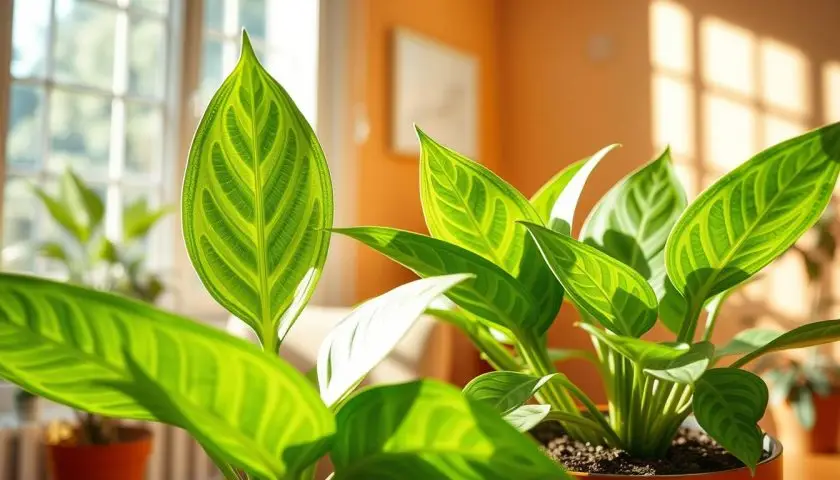
An arrowhead plant (Syngonium podophyllum, also sold as nephthytis) grows best in medium to bright indirect light, in a light, airy compost that is allowed to dry slightly between waterings, at about 18 to 24°C (65 to 75°F) and never below 15°C (59°F) in winter. I am Sawera Shahid, a botanist at Patch Plants. Clemson Extension describes the arrowhead plant as highly adaptable, which is why it is one of the easiest foliage plants to start with, and its leaves change shape as it matures.
This guide covers 8 easy tips for arrowhead plant care, the difference between juvenile and adult leaves, popular varieties, propagation, common problems and why the plant should stay indoors in warm climates.
Arrowhead Plant at a Glance
| Need | What Works |
|---|---|
| Light | Medium to bright indirect light; no direct sun |
| Water | When the compost has dried slightly; less in winter |
| Compost | Equal parts peat-free coir, vermiculite and perlite, or houseplant compost |
| Temperature | 18 to 24°C (65 to 75°F); minimum 15°C (59°F) in winter |
| Humidity | 50% or more preferred; tolerates less |
| Feeding | Diluted balanced feed monthly in spring and summer |
| Size | Most 90cm to 1.8m (3 to 6ft); dwarf types under 60cm |
| Pets | Toxic to dogs, cats and horses (ASPCA) |
The light, compost, humidity, feeding and size details come from Clemson Extension; the winter minimum comes from the RHS.
What Is an Arrowhead Plant?
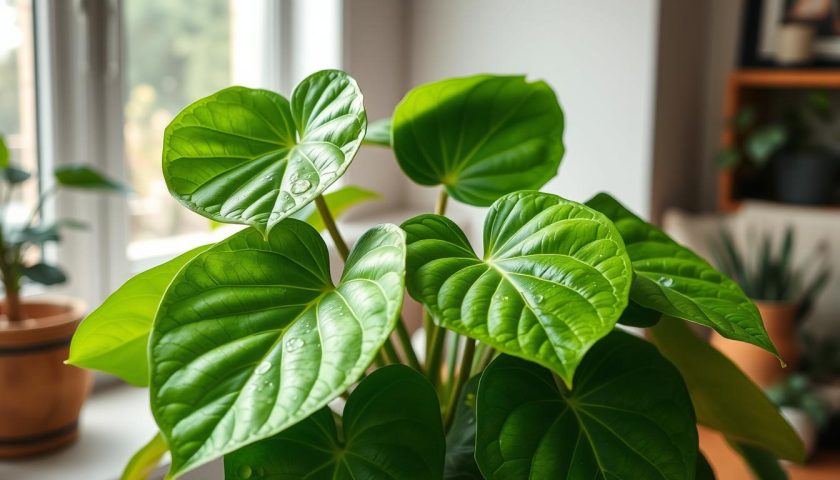
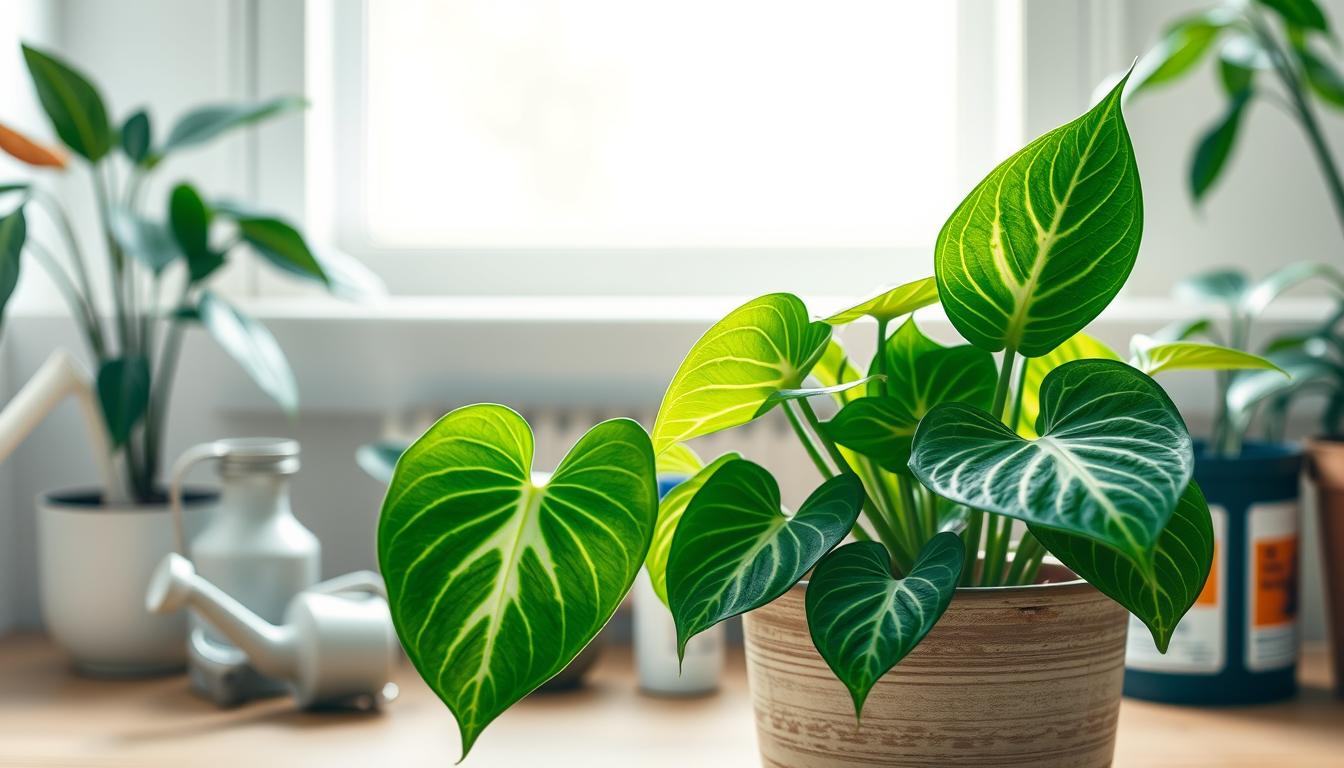
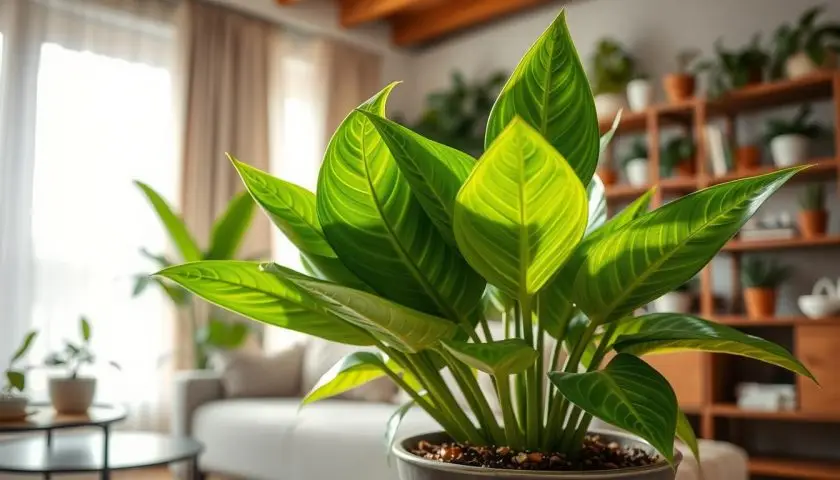
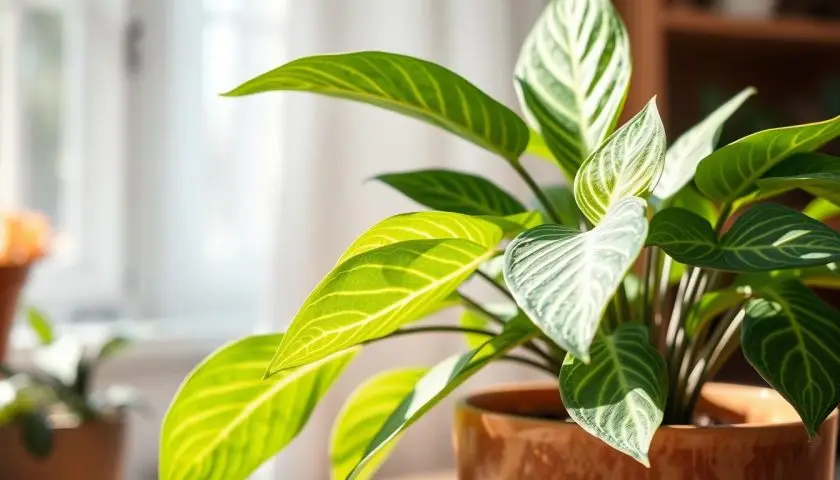
The arrowhead plant belongs to the arum family, Araceae, the same family as the Chinese evergreen. The RHS describes it as an evergreen climber, compact when young, with large arrow-shaped leaves veined and suffused with silvery white. It holds the RHS Award of Garden Merit. The RHS gives its native range as South America, and NC State Extension lists it from South America to Mexico.
Arrowhead plants are grown for their leaves. Flowers, which look like small arum lilies with cream spathes, are rarely produced indoors. The leaf colours vary widely, from plain green to cream, white, pink and bronze, depending on the variety.
Why Arrowhead Plant Leaves Change Shape
One of the most interesting things about the arrowhead plant is that its leaves change as it grows. Clemson Extension describes three stages:
- Juvenile: triangular, heart-shaped or arrow-shaped leaves on a compact plant, ideal for pots and hanging baskets.
- Intermediate: leaves with three leaflets, which appear as the plant starts to climb and receives more light.
- Mature: highly divided leaves with 5 to 11 leaflets on longer leaf stalks.
This is a classic trait of climbing aroids. In the wild, the plant starts on the shady forest floor and climbs towards the light, changing its leaf shape as it goes. Indoors, if you prefer the arrow-shaped juvenile leaves, keep the plant compact by trimming climbing stems; if you want to see the mature form, give it something to climb.
8 Easy Tips for Arrowhead Plant Care
1. Give it medium to bright indirect light
Clemson Extension notes that the arrowhead plant tolerates low light but does best in medium to bright indirect light, such as an east-facing window or a few feet back from a west-facing one. A north-facing window works, though leaf colour may look dull. Keep it out of direct sun. The RHS recommends bright indirect light for green cultivars and bright filtered light for variegated ones. For more on placement, see our complete guide to indoor light.
2. Use brighter light for variegated types
Clemson warns that variegated arrowhead plants can revert to solid green leaves in low light, because green tissue makes more of the plant’s food. Moving the plant to a brighter spot helps new leaves regain their pattern. If one stem keeps producing plain green leaves, trim it back so it does not take over.
3. Let the compost dry slightly between waterings
Clemson advises letting the compost dry slightly between waterings. The RHS suggests watering freely while the plant is growing and more sparingly in winter. Water thoroughly, let the excess drain away and never leave the pot standing in water, as wet compost can lead to stem rot. Our guide to signs you are overwatering shows what to look for.
4. Use a light, airy compost
Clemson recommends a mix of equal parts peat moss or coir, vermiculite and perlite. The RHS suggests houseplant compost. Either way, the aim is a compost that holds some moisture but lets air reach the roots. Choose peat-free coir if you are mixing your own, and always use a pot with drainage holes. For more, see the best soil mix for every type of plant.
5. Keep it warm
Clemson gives a preferred range of 18 to 24°C (65 to 75°F) and notes that the plant tolerates average home temperatures. The RHS rates it H1A, meaning it must be grown under cover all year, with a winter minimum of 15°C (59°F). Keep it away from cold windows and draughts in winter.
6. Raise the humidity if you can
Clemson notes that the arrowhead plant prefers humidity of 50% or higher but tolerates lower levels. In dry, heated rooms, standing the pot on a tray of moist pebbles helps. A DIY humidity tray is an easy option, and a bright bathroom also suits it.
7. Feed lightly in spring and summer
Clemson describes the arrowhead plant as not a heavy feeder. It suggests a balanced fertiliser at a reduced rate once a month in spring and summer, and less often if you are keeping the plant compact or growing it in low light. The RHS suggests a balanced liquid fertiliser every three or four weeks. Stop feeding in winter.
8. Give climbing plants support
Clemson notes that mature plants can be trained up a moss pole, trellis or bamboo stake. Supporting the stems encourages larger, more mature leaves. If you prefer a bushy, compact plant, the RHS suggests reducing its height in spring. Our guide to the moss pole for plants explains how to set one up.
Popular Arrowhead Plant Varieties
| Variety | Leaves (Clemson Extension) |
|---|---|
| ‘White Butterfly’ | Self-heading dwarf; mostly white to pale green leaves with green margins and white veins |
| ‘Neon Robusta’ | New leaves pink, maturing to green |
| ‘Pink Splash’ | Medium green with pink spots of varying size |
| ‘Maria Allusion Bronze’ | Reddish-bronze new growth, darkening to bronze-green |
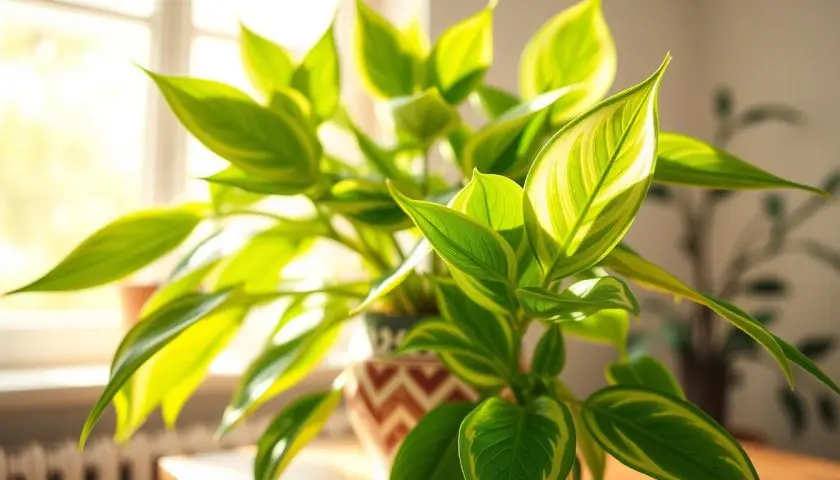
| ‘Albo-variegatum’ | Green with mottled white variegation and pink-tinted leaf stalks |
| ‘Holly’ | Very pale, almost white leaves with thin green margins |
| ‘Pixie’ | Dwarf, up to about 20cm (8in), with pale centres and dark green edges |
| ‘Three Kings’ | Each leaf patterned in dark green, light green and white |
Pink-leaved varieties are popular with collectors; our guide to plants with pink and green leaves has more options.
How to Propagate an Arrowhead Plant
The RHS recommends softwood stem tip cuttings or leaf bud cuttings taken in summer, rooted with bottom heat. NC State Extension also lists division and layering. The simplest method at home:
- Cut a healthy stem just below a node, the point where a leaf and aerial root grow.
- Remove the lowest leaf so the node is bare.
- Root the cutting in a jar of water or in moist, free-draining compost.
- Keep it warm and bright, out of direct sun.
- Pot up once roots are a few centimetres long.
Wear gloves, as the RHS notes the sap is a skin and eye irritant. Our guide on how to propagate houseplants covers the basics, and how to repot a plant explains potting on.
Common Arrowhead Plant Problems
| Problem | Likely Cause | What to Do |
|---|---|---|
| Variegated leaves turning green | Too little light (Clemson) | Move to brighter indirect light; trim reverted stems |
| Dull leaf colour | Low light, such as a north window | Move closer to a brighter window |
| Soft, collapsing stems | Stem rot from wet compost (Clemson) | Let compost dry slightly; check roots |
| Brown, water-soaked leaf spots | Bacterial leaf spot or blight (Clemson) | Remove affected leaves; keep foliage dry |
| Webbing and speckled leaves | Spider mites | Raise humidity; wipe leaves; treat early |
| White, cottony clusters | Mealybugs | Remove by hand and isolate the plant |
| Sticky leaves, clustered insects | Aphids | Wipe off and check new growth |
For more on mites, see our guide to spider mites on plants.
Arrowhead Plant Care Through the Year
| Season | What to Do |
|---|---|
| Spring | Trim to reduce height if needed (RHS), repot crowded plants and start monthly feeding. |
| Summer | Water freely as the compost dries slightly, take stem cuttings and check for spider mites. |
| Autumn | Reduce watering and stop feeding as growth slows. |
| Winter | Water sparingly, keep above 15°C (59°F) and away from cold glass. |
How to Display an Arrowhead Plant
Because its habit changes with age, the arrowhead plant can be used in several ways. Young, compact plants suit tabletops, shelves and mixed planters, and Clemson notes that juvenile plants work well in hanging baskets. Older plants can trail over the edge of a pot or be trained up a moss pole to make a tall, leafy column. Dwarf varieties such as ‘Pixie’ and ‘White Butterfly’ are good choices for small spaces and terrariums. Grouping an arrowhead plant with other humidity-loving foliage plants also helps raise the moisture in the air around them.
Keep Arrowhead Plants Indoors in Warm Climates
In frost-free regions, the arrowhead plant can escape gardens. UF/IFAS Extension states that it has become highly invasive in Florida, where it is listed as a Category I invasive species by the Florida Invasive Species Council, and that UF/IFAS does not recommend planting it anywhere in the state. If you live in a warm climate, keep your plant in a pot indoors or in a screened room, and never dump trimmings or old plants outside.
Is the Arrowhead Plant Safe for Pets?
No. The ASPCA lists arrow-head vine (Syngonium podophyllum) as toxic to dogs, cats and horses. It contains insoluble calcium oxalates, and listed signs include oral irritation, pain and swelling of the mouth, tongue and lips, excessive drooling, vomiting (not in horses) and difficulty swallowing. Keep the plant out of reach, and contact your vet or the ASPCA Animal Poison Control Center at (888) 426-4435 (a consultation fee may apply) if you are worried. Our guide to making your plants cat-friendly has more tips.
Frequently Asked Questions
Is an arrowhead plant easy to care for?
Yes. Clemson Extension describes it as highly adaptable. Give it indirect light, let the compost dry slightly between waterings and keep it warm, and it grows steadily. It also makes a good first climbing houseplant for beginners.
Is nephthytis the same as an arrowhead plant?
Yes. Nephthytis is a common name for Syngonium podophyllum, along with arrowhead vine and African evergreen, according to the RHS and the ASPCA.
Why are my arrowhead plant leaves changing shape?
This is normal. As the plant matures and climbs, its arrow-shaped juvenile leaves give way to leaves with three, then 5 to 11, leaflets.
Why is my variegated arrowhead plant turning green?
Too little light. Clemson notes that variegated types can revert to solid green in low light. Move the plant somewhere brighter, out of direct sun.
Is the arrowhead plant toxic to cats?
Yes. The ASPCA lists it as toxic to cats, dogs and horses because it contains insoluble calcium oxalates, which irritate the mouth and throat.
Final Thoughts
As a botanist, I love the arrowhead plant because it shows a climbing plant’s life story in its leaves. Watch it change from neat arrowheads to divided, hand-like leaves as it climbs, and you are seeing exactly how it would grow on a forest tree. Start with a compact variety on a bright shelf, and once you have the watering right, try training a second plant up a moss pole to watch its mature leaves develop.
Patch Plants guides are written to explain the science behind each plant’s habits, so caring for it feels intuitive. If you like easy foliage plants, browse our guides to low-light house plants and trailing plants for shelves.
Sources: Clemson Extension, Arrowhead Vine; RHS, Syngonium podophyllum; UF/IFAS Extension, Arrowhead vine; NC State Extension, Syngonium podophyllum; ASPCA, Arrow-Head Vine.

About the author
Sawera Shahid is a botanist with an MPhil in Botany and 5+ years of writing about plants. As founder and lead writer of Patch Plants, she writes practical, science-backed guides on indoor plants, outdoor gardens and plant problems, checked against RHS and university extension advice.