A Chinese evergreen (Aglaonema) needs indirect light, compost that is watered once the top 2.5 to 5cm (1 to 2in) has dried, steady warmth above about 13°C (55°F) and a pot that drains well. I am Sawera Shahid, a botanist at Patch Plants, and I often recommend Chinese evergreen to people who have struggled with other houseplants. Clemson Extension calls it one of the most durable houseplants, able to tolerate poor light, dry air, air-conditioning and drought. Its one real weakness is cold.
This guide covers how to choose a Chinese evergreen, the light, water, compost, temperature and feeding it needs, how to propagate it, the problems you are most likely to see and whether it is safe around pets. Each section explains the plant science behind the advice, so you can adjust it to your own home.
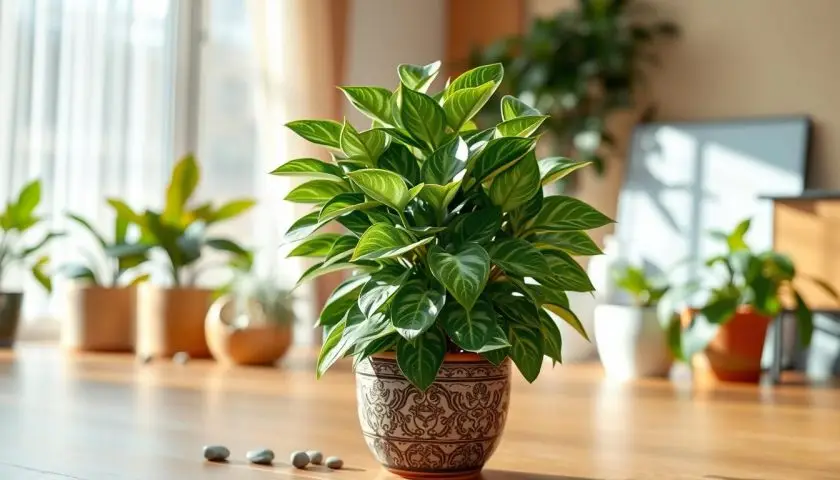
Chinese Evergreen Care at a Glance
| Need | What Works |
|---|---|
| Light | Low to moderate indirect light; no direct sun on the leaves |
| Water | When the top 2.5 to 5cm (1 to 2in) is dry; a little drier in winter |
| Temperature | Best at 20 to 27°C (68 to 80°F); avoid below 13°C (55°F) |
| Humidity | Tolerates average room humidity; prefers moderate |
| Compost | Well-drained, peat-free houseplant compost |
| Feeding | Balanced liquid fertiliser monthly in the growing season |
| Repotting | Every 2 to 3 years |
| Size | About 30 to 90cm (1 to 3ft) tall and wide |
| Pets | Toxic to dogs, cats and horses (ASPCA) |
The light, water, temperature and size ranges come from Clemson Extension; the feeding and repotting timings come from the RHS plant profiles for Aglaonema.
What Is a Chinese Evergreen?
Aglaonema is a genus in the arum family, Araceae. University of Florida IFAS Extension notes that it includes 21 known species native to Southeast Asia, where they grow in humid, heavily shaded tropical forest. Clemson Extension adds New Guinea to the native range. These plants have been grown in China and other Asian countries for centuries as symbols of good fortune, which is where the common name comes from, and UF/IFAS records that they reached Western growers in 1885.
Growing on the shaded forest floor explains why a Chinese evergreen copes with less light than most houseplants. It also explains its dislike of cold: a plant from steady tropical warmth has no defence against chilly windowsills. The RHS describes Aglaonema as rhizomatous evergreen perennials with short stems, long-stalked and often patterned leaves, and small greenish or cream spathes that are easy to miss.
Popular Chinese Evergreen Varieties
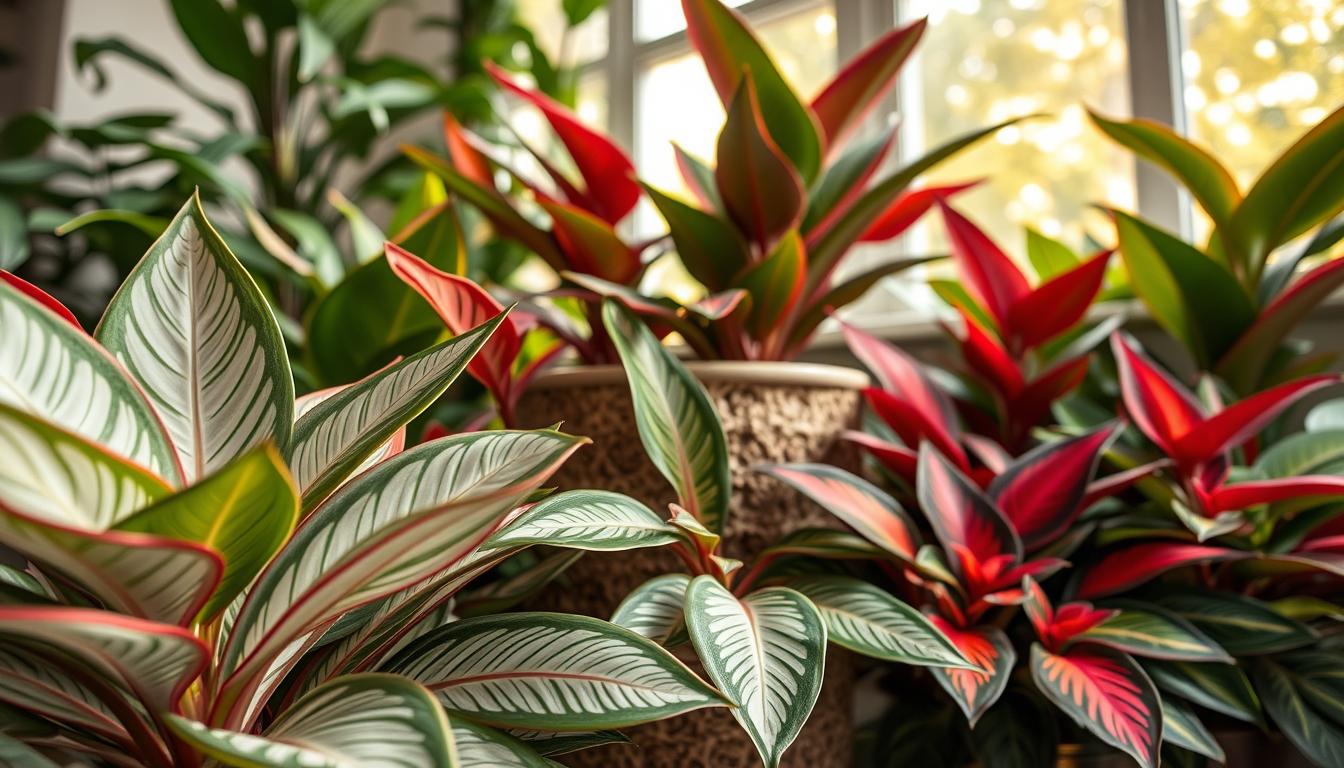
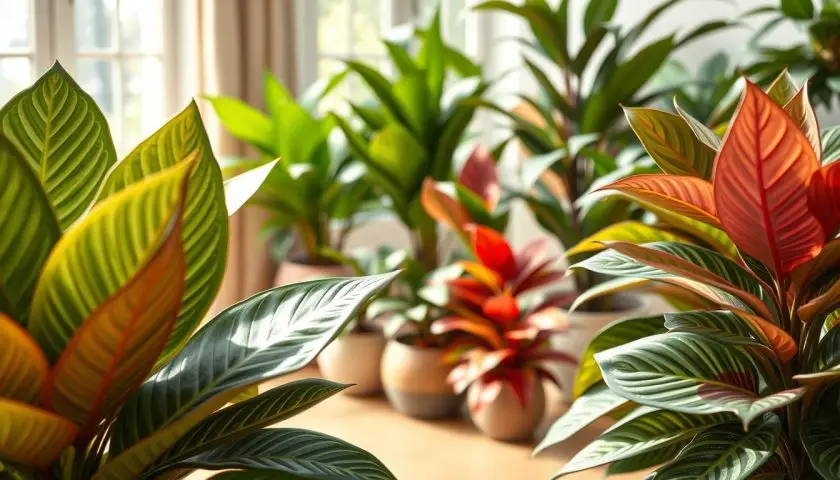
There are many cultivars, and leaf colour is the main difference between them. Here are some you are likely to find, with details from the RHS and Clemson Extension.
| Variety | Leaves | Light Notes |
|---|---|---|
| Aglaonema modestum | Shiny, dark green, about 20cm long with wavy edges; holds the RHS Award of Garden Merit | Copes with the lowest light |
| ‘Silver Bay’ | Large green leaves with dark margins and a paler centre; upright to around 90cm | Low to moderate light |
| ‘Maria’ | Rich green with pale silver-green chevron markings; slow-growing | Low to moderate light |
| ‘Maria Christina’ | Light green, heavily marked with silvery green | Moderate light |
| ‘Red Star’, ‘Light Pink Star’ | Pink and red with green splashes | Brighter light keeps colours strong |
| ‘Cherry’ | Pink mature leaves (Clemson Extension) | Moderate, bright indirect light |
For pink and red types, the RHS notes that colour depends on light levels: the brighter the spot, the more pronounced the colours. If you love colourful foliage, see our guides to plants with pink and green leaves and houseplants with patterned leaves.
Light for a Chinese Evergreen
Clemson Extension explains that solid green cultivars will grow in low light, while variegated and coloured types need low to moderate light. Neither likes direct sun on its foliage. The RHS similarly recommends bright, filtered light and warns that direct sun may burn the leaves.
In practice, a Chinese evergreen does well a few steps back from an east- or west-facing window, or near a north-facing one. Very dark corners slow growth and can dull the colours of variegated plants, so match the plant to the room: plain green types for dim spots, pink or silver types for brighter ones. Our complete guide to indoor light shows how to judge the light in your home, and our list of low-light house plants has more options for darker rooms.
How to Water a Chinese Evergreen
Clemson Extension recommends keeping the compost evenly moist but never too wet, and watering once the top 2.5 to 5cm (1 to 2in) has dried. A simple test is to push two fingers into the top of the compost: if it is dry, water; if it is cold and damp, wait. Clemson also advises using room-temperature water rather than very hot or cold water.
The RHS suggests watering moderately and allowing some drying out between waterings in winter, when growth slows. It also warns that excess water can lead to stem rot, and lists root and stem rots as a risk when compost stays too wet. Always water thoroughly, let the excess drain away and never leave the pot standing in water. If you are not sure whether you are overdoing it, our guide to signs you are overwatering will help.
Temperature and Cold Damage
Cold is the main thing that harms a Chinese evergreen. Clemson Extension gives 20 to 27°C (68 to 80°F) as the best range and advises avoiding temperatures below 13°C (55°F). UF/IFAS research on chilling injury found that Aglaonema can be damaged at temperatures from just above freezing up to about 15°C (59°F), and that damage can also happen during shipping and on shop display.
According to UF/IFAS, chilling injury shows as dark, greasy-looking patches on the leaves, and older leaves are much more sensitive than young ones. Cultivars also differ. In their trials, ‘Silver Queen’ was injured at 13°C (55°F), while ‘Silver Frost’ showed no injury at that temperature but heavy damage after a day at about 2°C (35°F). Some cultivars, such as ‘Emerald Star’ and ‘Jewel of India’, showed no visible injury after the same cold treatment. For a home grower, the lesson is simple: keep your Chinese evergreen away from cold windows, outside doors and draughts in winter, and carry it home well wrapped if you buy one in cold weather.
Humidity
Clemson Extension notes that most Chinese evergreens grow well in an average house with low to moderate humidity, and prefer moderate levels. The RHS profiles suggest higher humidity for some species. If leaf tips turn brown in a dry, heated room, a pebble tray or grouping plants together can help. Our guide to building a DIY humidity tray shows an easy method. Because they tolerate shade and like moderate humidity, Chinese evergreens can also work in a bathroom; see our list of low-light plants for bathrooms.
Compost and Pots
The RHS recommends well-drained, peat-free compost for Aglaonema, and Clemson Extension suggests a standard soilless mix with extra organic matter. The aim is compost that holds some moisture but drains freely, so the roots get air. Always use a pot with drainage holes. Our guide to the best soil mix for every type of plant explains how to adjust a mix.
Feeding a Chinese Evergreen
The RHS advises a balanced liquid fertiliser once a month during the growing season. Stop feeding in winter, when growth slows and the plant cannot use the extra nutrients. Chinese evergreens are slow growers, so feeding more often will not make them grow much faster and can lead to a build-up of salts in the compost.
Repotting a Chinese Evergreen
The RHS suggests potting on every 2 to 3 years. Spring is the best time, as the plant moves into active growth. Choose a pot only a little wider than the current one, because a much larger pot holds extra wet compost around the roots. The RHS notes that Aglaonema sap is a skin and eye irritant, so wear gloves when repotting or dividing. For a step-by-step guide, read how to repot a plant.
How to Propagate a Chinese Evergreen
Clemson Extension lists division, stem and tip cuttings, air-layering and seed as ways to propagate a Chinese evergreen. Division is the easiest at home.
- Division: in spring, the RHS advises removing basal shoots that have three or four leaves and their own roots, then potting them up separately.
- Tip cuttings: cut a healthy stem tip with several leaves and root it in moist compost in a warm, bright spot out of direct sun.
- Reviving a leggy plant: Clemson Extension notes that if the lower leaves drop and the stem becomes bare, you can remove the top and root it to start a new, compact plant.
Keep new divisions and cuttings warm, because cold slows rooting and raises the risk of rot. Our guide on how to propagate houseplants covers the basics.
Common Chinese Evergreen Problems
| Problem | Likely Cause | What to Do |
|---|---|---|
| Dark, greasy-looking patches | Chilling injury (UF/IFAS) | Move away from cold glass and draughts; remove badly damaged leaves |
| Yellow lower leaves and soft stems | Overwatering or cold, wet compost | Let the top 2.5 to 5cm dry; check roots for rot |
| Brown leaf tips | Very dry air or irregular watering | Water more evenly and raise humidity |
| Faded, pale colours | Too little light for a coloured cultivar | Move to brighter indirect light |
| Scorched, bleached patches | Direct sun | Move out of direct sunlight |
| White, cottony clusters | Mealybugs (RHS) | Remove by hand and isolate the plant |
| Sticky leaves, small insects | Aphids or scale (Clemson Extension) | Wipe leaves and treat early |
Clemson Extension also lists mites as a possible pest. If stems are collapsing at the base, read our guide to identifying and treating root rot.
Chinese Evergreen Care Through the Year
| Season | What to Do |
|---|---|
| Spring | Repot if needed, divide crowded plants and start monthly feeding. |
| Summer | Water when the top 2.5 to 5cm is dry, keep out of direct sun and check for pests. |
| Autumn | Stop feeding as growth slows; move away from windows that get cold at night. |
| Winter | Allow a little more drying between waterings and keep above 13°C (55°F). |
Is Chinese Evergreen Safe for Pets?
No. The ASPCA lists Chinese evergreen as toxic to dogs, cats and horses. It contains insoluble calcium oxalates, and listed signs include oral irritation, pain and swelling of the mouth, tongue and lips, excessive drooling, vomiting (not in horses) and difficulty swallowing. Keep the plant out of reach of pets, and contact your vet or the ASPCA Animal Poison Control Center at (888) 426-4435 (a consultation fee may apply) if you think a pet has chewed it. Our guide to making your plants cat-friendly has practical tips.
Frequently Asked Questions
Can a Chinese evergreen grow in low light?
Yes. Plain green cultivars grow in low light, according to Clemson Extension. Variegated and pink types need low to moderate light to keep their colour.
How often should I water a Chinese evergreen?
Water when the top 2.5 to 5cm (1 to 2in) of compost is dry, using room-temperature water. Let it drain fully, and water a little less often in winter.
Why are my Chinese evergreen leaves turning yellow?
Yellow lower leaves usually point to overwatering or cold, wet compost. An occasional old leaf yellowing is normal, but several at once means you should check the compost and roots.
What temperature does a Chinese evergreen need?
It grows best at 20 to 27°C (68 to 80°F). Avoid temperatures below 13°C (55°F), because cold can cause dark, greasy patches on the leaves.
Is Chinese evergreen toxic to cats and dogs?
Yes. The ASPCA lists it as toxic to dogs, cats and horses because it contains insoluble calcium oxalates, which irritate the mouth and throat.
Final Thoughts
As a botanist, I see the Chinese evergreen as a plant that rewards understanding its origins. It evolved in warm, shaded forest, so it forgives low light and the odd missed watering, but not a cold windowsill. Get the temperature right and it becomes one of the easiest, most decorative plants you can grow.
Here at Patch Plants, I write each guide to connect everyday care with the biology behind it, so you can read your plant’s leaves rather than guess. For more easy foliage plants, browse our guides to small low-light indoor plants and tropical house plants.
Sources: Clemson Extension, Chinese Evergreen; UF/IFAS Extension, Chilling Injury in Aglaonema; RHS, Aglaonema modestum; ASPCA, Chinese Evergreen.

About the author
Sawera Shahid is a botanist with an MPhil in Botany and 5+ years of writing about plants. As founder and lead writer of Patch Plants, she writes practical, science-backed guides on indoor plants, outdoor gardens and plant problems, checked against RHS and university extension advice.