Key Takeaways
- The best plants for bedroom spaces improve air quality, reduce stress, and support deeper sleep
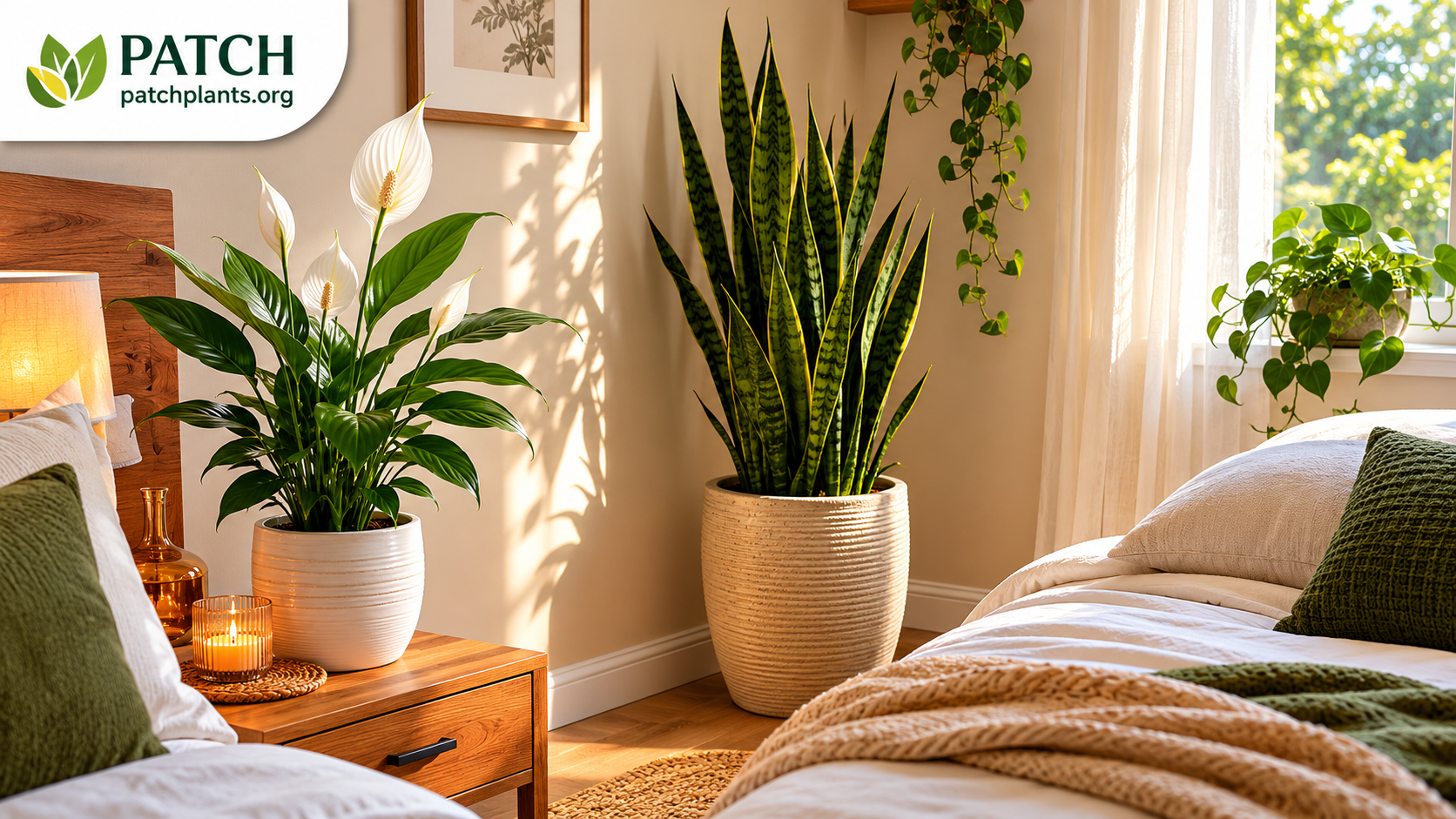
- Snake plants, pothos, peace lilies, and lavender rank among the top houseplants for bedroom use
- Low-light plants for bedroom corners include ZZ plant, cast iron plant, and philodendron
- Layering small, medium, and tall plants for bedroom décor creates visual depth without clutter
- Air purifying plants for bedroom spaces work best when placed near sleeping areas or windows
- Hanging plants for bedroom ceilings and shelves add vertical interest in compact rooms
- Oxygen plants for bedroom use — like aloe vera and snake plant — release CO₂ at night in small amounts but the net effect is still calming and air-freshening
- Bedroom feng shui with plants favours rounded leaves, healthy specimens, and calm placement
- Low maintenance plants for bedroom settings suit busy people — choose pothos, ZZ plant, or snake plant
- The best plants for bedroom style combine function with form — pick what suits your light, space, and personality
Introduction
Your bedroom should be the calmest room in your home. Not just because of the bed, the lighting, or the colour on the walls — but because of what you surround yourself with. And one of the simplest, most affordable changes you can make is adding the best plants for bedroom spaces to your layout.
Plants in the bedroom are not just a trend. They are a design decision, a wellness choice, and frankly, one of the easiest ways to transform how a room feels. Whether you have a sun-drenched double bedroom or a tiny dark box room with one north-facing window, there are bedroom plants that will work for you.
This guide walks you through everything — from choosing the right plants for bedroom air quality to arranging them well, styling them intentionally, and keeping them alive with minimal effort. By the end, you will know exactly which plants belong in your bedroom and how to place them.
Why the Best Plants for Bedroom Spaces Make Such a Difference
Before we get into specific varieties, it is worth understanding why bedroom plants earn their keep. The best plants for bedroom environments do more than look attractive. They interact with your space in ways that genuinely affect your wellbeing.
Here is what research and horticultural science tell us about good plants to have in your bedroom:
- Air filtration: Plants like the peace lily and snake plant absorb VOCs (volatile organic compounds) found in synthetic furniture, carpets, and paint. Our air-purifying indoor plants guide covers this in detail.
- Humidity regulation: Plants release moisture through transpiration. In dry bedrooms — especially in winter — this helps prevent dry skin, irritated sinuses, and cracked lips.
- Stress reduction: The presence of greenery has been shown in multiple studies to lower cortisol levels and create a sense of psychological safety.
- Visual calm: The colour green has a measurably calming effect on the nervous system. It is not coincidental that we associate nature with rest.
- Sleep support: Certain houseplants for bedroom use — particularly lavender and jasmine — have mild sedative properties when their scent is present in the room.
So no, bedroom plants are not just decorative. They are functional. The best plants for bedroom living genuinely earn their space.
The Best Plants for Bedroom Air Quality
Air quality is one of the biggest reasons people first start looking at indoor plants for bedroom settings. Bedrooms can become stale quickly — closed doors, synthetic materials, and little ventilation all contribute. The best plants for bedroom air quality tackle this quietly and continuously.
Snake Plant (Sansevieria)
One of the most reliable air purifying plants for bedroom use. The snake plant converts CO₂ to oxygen and is famously low-maintenance. It thrives in almost any light level, rarely needs watering, and looks architectural in any bedroom style. Our full snake plant care guide explains exactly how to keep it thriving.
Snake plants for bedroom corners are a classic choice — tall, upright, and quietly effective. It is regularly cited as one of the best plants for bedroom oxygen production among common houseplants.
Peace Lily (Spathiphyllum)
Elegant, effective, and easy to read — the peace lily droops visibly when it needs water, which makes it ideal for those who are still building plant-keeping habits. It ranks consistently among the best plants for bedroom air quality. Find full guidance in our peace lily care guide.
Pothos (Epipremnum aureum)
The pothos plant for bedroom settings is hard to beat. It trails beautifully from shelves or hanging planters, tolerates neglect, and cleans the air passably well. Our pothos care guide is a quick read for beginners. It is one of the best plants for bedroom spaces where you want both function and trailing visual drama.
Money Tree (Pachira aquatica)
Less commonly associated with air purification, but the money tree is a beautiful, upright option that suits a calm aesthetic. It is also a good conversation starter. See our money tree care guide for the basics.
Aloe Vera
A well-known oxygen plant for bedroom use, aloe vera is compact, sculptural, and genuinely useful — snap a leaf and you have a natural skin soother. Our aloe vera care guide makes it easy to look after. It is also one of the best plants for bedroom oxygen among succulents.
For a broader list of good plants to have in your bedroom based on air quality impact, our air-purifying indoor plants article is the place to start.
Best Plants for Bedroom Low Light: Not Every Room Gets Sun
This is a concern many people share. Not every bedroom faces south. Not every window is large. The good news is that plenty of excellent plants for bedroom low light conditions exist — and several of them are among the most attractive options available.
Best low light plants for bedroom settings:
ZZ Plant (Zamioculcas zamiifolia) Glossy, architectural, and nearly indestructible. The ZZ plant tolerates very low light and infrequent watering. Our ZZ plant care guide is a good starting point. It is one of the best plants for bedroom spaces that barely see the sun.
Philodendron Trailing or upright varieties both work well. Philodendrons adapt to lower light better than most tropical plants. Our philodendron care guide covers the main varieties. A good indoor plant for bedroom shelves and hanging positions.
Cast Iron Plant (Aspidistra elatior) Named for its toughness. The cast iron plant genuinely tolerates neglect, low light, and inconsistent watering. It lacks the visual drama of a monstera but holds its own as one of the best plants for bedroom spaces with minimal natural light.
Dracaena The dracaena family is large and varied — most varieties are comfortable in medium-to-low light and grow slowly, which suits bedroom environments well. See our dracaena care guide for variety-specific guidance.
Calathea Beautiful patterned foliage that thrives in indirect light. Calatheas are not the easiest house plants for bedroom beginners, but they reward patience. Our calathea care guide explains what they need. They are among the most visually striking plants for bedrooms with limited direct sunlight.
For more low light options, our low light hanging plants article has plenty of additional ideas that translate well into bedroom settings.
Houseplants for Better Sleep: The Science Behind the Calm
The idea that certain houseplants for better sleep actually work is not just folk wisdom. There is growing horticultural and psychological evidence supporting the use of specific plants in the sleeping room.
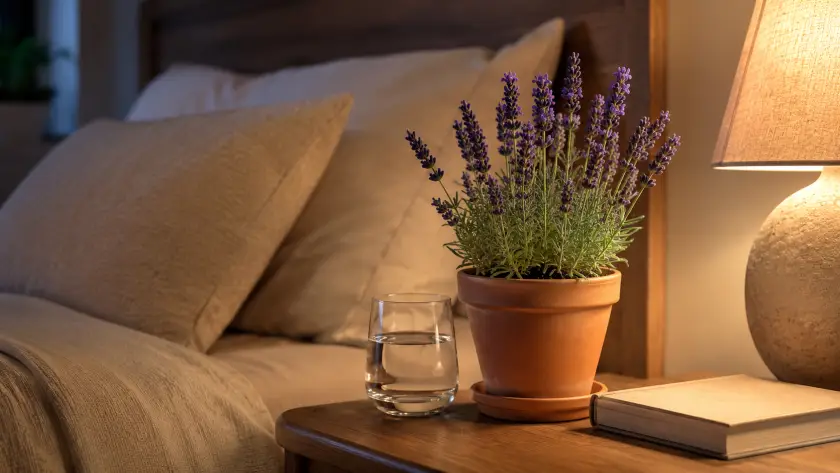
Lavender plant for bedroom
Lavender is perhaps the most cited plant for sleep. Its scent — linalool and linalool acetate — has a demonstrated effect on the parasympathetic nervous system, encouraging relaxation. A small potted lavender on a bedside table is a classic for a reason. It is one of the best plants for bedroom calm, not just aesthetics.
Jasmine plant for bedroom
Jasmine has a sweeter, heavier scent that research has linked to reduced anxiety and improved sleep quality. It looks beautiful trailing from a shelf or pot stand. One of the most underrated good plants for the bedroom.
Valerian
Less commonly kept as a houseplant but worth mentioning — valerian root is the basis of many natural sleep remedies, and the plant itself has calming properties when kept nearby.
Spider Plant (Chlorophytum comosum)
The spider plant is one of the most effective air cleaning plants for bedroom spaces, removing formaldehyde and carbon monoxide from the air. It is also incredibly easy to propagate — our spider plant care guide explains how. A good indoor plant for bedroom beginners.
English Ivy
English ivy is particularly effective at reducing airborne mould particles — relevant if your bedroom has any damp issues. It is a low-maintenance trailing plant that works well in hanging planters near windows.
For more information on which plants support indoor wellbeing broadly, the complete guide to indoor light is a useful read when planning where to position your bedroom plants.
How to Arrange Plants in Bedroom Spaces: The Layering Method
Knowing which plants to buy is only half the challenge. Knowing how to arrange plants in bedroom spaces is where most people get stuck. The answer is surprisingly simple: layer by height.
Think of your bedroom in three visual zones:
Low level — bedside tables, windowsills, floor-level trays. Small plants for bedroom tables work here: succulents, aloe vera, small pothos, lavender.
Mid level — plant stands, stools, chest of drawers. Medium plants for bedroom mid-height placement: peace lily, spider plant, calathea, ZZ plant.
High level — tall floor plants, hanging planters, shelf arrangements. Tall plants for bedroom corners: snake plant, dracaena, bird of paradise, fiddle leaf fig.
When you distribute plants across all three levels, your bedroom feels curated rather than cluttered. The eye travels naturally up and around the room, which creates a sense of depth and calm.
For tall plants specifically, our oversized indoor plants guide is full of statement options that work as natural room anchors.
Grouping rules for bedroom plant décor:
- Odd numbers (three plants together) look more natural than even groupings
- Mix leaf textures — combine broad leaves with trailing or fine-leaved varieties
- Vary pot materials — ceramic, wicker, terracotta, and matte metal all work together when kept within a colour palette
- Leave space between plants — breathing room matters visually and practically
If you have an alcove, a built-in wardrobe corner, or a bay window, these are prime spots for bedroom plant décor. Use them deliberately.
For room-by-room plant placement ideas, our how to style indoor plants by room guide has practical layout ideas that extend naturally to bedroom settings.
Stylish Plant Stands and Containers: The Detail That Elevates Everything
The best plants for bedroom spaces can still look mediocre in the wrong containers. This is where most plant setups fall flat — not the choice of plant, but the presentation.
Stylish plant stands lift your plants physically and visually. They create height variation when you do not have shelving, and they direct the eye. Material matters:
- Solid wood or teak — warm, natural, suits Japandi, Scandi, or boho aesthetics
- Matte black metal — modern and minimal, suits monochrome or industrial bedroom styling
- Brass or gold — works well with darker foliage plants and adds a touch of luxury
- Rattan or bamboo — casual, earthy, and lightweight; suits relaxed or tropical styling
The same principle applies to pots. Terracotta is breathable and suits drought-tolerant plants. Glazed ceramic retains moisture and suits humidity-loving plants. Always match your pot material to your plant’s watering needs as much as your aesthetic preferences.
Hanging plants for bedroom use deserve special mention. A trailing pothos or string of pearls in a hanging planter near a window adds vertical dimension that no floor or shelf plant can replicate. Our string of pearls care guide covers the trailing variety that looks stunning suspended near natural light.
Bedroom Feng Shui with Plants: How Energy Flows Through Greenery
Even if you approach feng shui purely as an interior design philosophy rather than a spiritual practice, its principles for plant placement in the bedroom are genuinely useful.
The core ideas behind bedroom feng shui with plants:
Choose rounded, soft leaf shapes. Pointed or spiky leaves — cacti, certain succulents, agaves — are considered to create sharp energy lines. In a bedroom, the goal is softness and flow. Rounded leaves like those on a pothos, peace lily, or money tree are preferred.
Keep plants healthy. A dying plant in feng shui terms represents stagnant or declining energy. Practically speaking, a drooping, yellowing plant does look sad and does affect the mood of the room. Our guide on why plant leaves turn yellow helps you catch problems early.
Do not overload the bedroom with plants. The bedroom is a place of rest, not a jungle. Two to five bedroom plants is a sensible range for most rooms. More than that and the room starts to feel busy rather than calm.
Position plants near windows where possible. Near the window, plants benefit from natural light and symbolically mark the threshold between inside and outside — between rest and the wider world.
Avoid placing plants directly above the bed. This is practical as much as philosophical — falling pots and dripping water are not restful. Position floor plants beside the bed rather than overhead.
For those who want to explore colour theory and room energy further, our colorful foliage indoor plants guide suggests plants that add tonal variation beyond standard green.
Small Plants for Bedroom Tables and Shelves
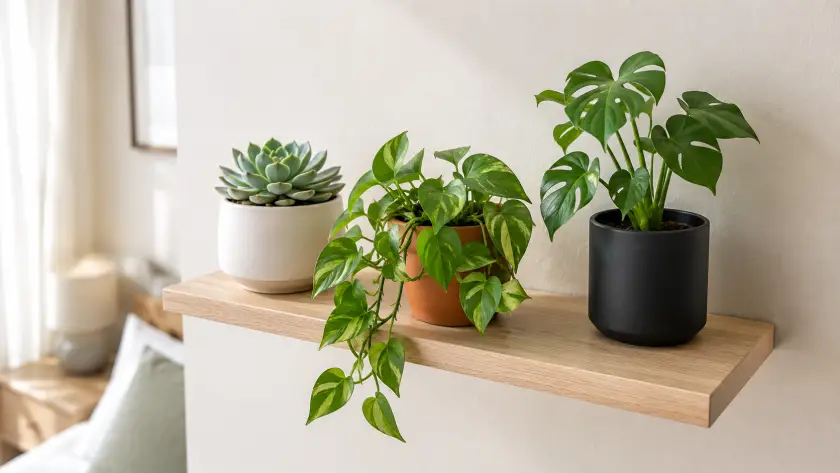
Not everyone has the space — or the desire — for large floor plants. Small plants for bedroom use are often more practical and more charming than their larger counterparts. Here are the best options for compact spaces:
Succulents — the most space-efficient plants for bedroom tables. They need minimal watering and come in hundreds of forms and textures. Our succulent care guide covers the essentials. They are among the best plants for a bedroom when space is tight.
African Violet — compact, flowering, and surprisingly easy. African violets bloom repeatedly and add colour without bulk. They prefer bright indirect light and modest humidity — conditions most bedrooms provide naturally.
Miniature Monstera (Rhaphidophora tetrasperma) — for those who love the look of a monstera but lack floor space. The mini monstera trails or climbs slowly and sits comfortably on a medium shelf. See our monstera care guide for care principles that apply broadly.
Jade Plant — slow-growing, sculptural, and long-lived. A jade plant on a bedside table can outlast the furniture. Our jade plant care guide explains the basics.
Cactus — one of the more debated cool plants for bedroom use. While feng shui recommends avoiding sharp spines in sleeping spaces, a small cactus in a sunny windowsill is low commitment and visually interesting. If you are considering one, our cactus care guide will be published soon.
For the best beginner-friendly options across size ranges, our best indoor plants for beginners list is a practical starting point.
Hanging Plants for Bedroom Ceilings and High Shelves
Hanging plants for bedroom settings are underused. Most people think horizontally — shelf here, table there — but vertical space in a bedroom is often completely wasted.
Hanging planters near windows make use of the strongest light source in the room. They also draw the eye upward, which makes low-ceilinged rooms feel taller. The best hanging plants for bedroom use:
- Trailing pothos — the most forgiving. Grows quickly, looks lush, tolerates shade.
- String of pearls — more delicate but visually dramatic. Needs good light. Our string of pearls care guide covers the specific needs.
- Boston fern — beautiful hanging fronds, loves humidity. Our Boston fern care guide is essential reading before committing to one.
- Spider plant — one of the most reliable hanging plants for bedroom and bathroom use. Produces trailing offshoots that look beautiful in a hanging planter.
- Hoya — slow-growing, waxy-leaved, and stunning when it eventually blooms. Our Hoya care guide is coming soon.
For more inspiration on low light hanging options, our low light hanging plants article has exactly what you need.
Low Maintenance Plants for Bedroom: For Busy People
Not everyone wants to be a plant parent in the full sense of the term. If you travel often, work long hours, or simply want greenery without guilt, low maintenance plants for bedroom settings are the answer.
The best low maintenance plants for bedroom spaces:
Snake plant — watered once every two to four weeks. Thrives on neglect. Genuinely one of the best plants for bedroom use for busy people.
ZZ plant — stores water in its rhizomes. Can go weeks without attention. One of the most forgiving house plants for bedroom settings.
Pothos — trails gracefully, grows vigorously, forgives almost anything. A good plants for the bedroom choice for those who forget.
Succulents and cacti — need water infrequently, tolerate bright windowsills, and come in every shape imaginable.
Rubber plant (Ficus elastica) — bold, architectural, and relatively easy. Our rubber plant care guide explains what it needs, which is not very much.
For a comprehensive list, our 35 low-maintenance plants that will thrive covers the full range across sizes and light requirements.
If you are worried about overwatering — a common mistake with bedroom plants — our signs you are overwatering guide is essential reading. And if things go wrong, our how to revive a dying plant guide has a clear rescue plan.
Bedroom Plant Décor Ideas by Style
One of the most enjoyable parts of choosing the best plants for bedroom spaces is matching them to your interior aesthetic. Here are bedroom plant décor ideas tailored to common bedroom styles:
Minimalist or Japandi bedroom One large snake plant or fiddle leaf fig. Clean pots — matte white, slate grey, or unglazed terracotta. No clutter. The plant is a statement, not an afterthought. Our fiddle leaf fig care guide explains how to keep this high-impact plant happy.
Boho or eclectic bedroom Layered heights, mixed textures, trailing plants everywhere. Combine macramé hanging planters with rattan stands and terracotta pots. Mix pothos, string of pearls, and a spider plant. Our colorful foliage guide adds tonal variety.
Modern or Scandi bedroom Two or three plants maximum. Focus on bold architectural forms — a ZZ plant, a dracaena, or a bird of paradise. Pots in matte black, white, or natural wood. See our bird of paradise care guide for this stunning option.
Romantic or vintage bedroom Flowering plants work well here. African violets, lavender, jasmine, and peace lilies all add softness. Use antique-style ceramic pots or vintage tin containers for character.
For room-by-room styling principles beyond the bedroom, our how to style indoor plants by room guide covers kitchen, hallway, and living room approaches you can adapt.
Practical Care Tips for Bedroom Plants
Choosing the best plants for bedroom spaces means nothing if you cannot keep them alive. Here are the most important care principles specific to bedroom environments:
Light assessment first. Before buying any plant, stand in your bedroom at midday and note where the strongest light falls. North-facing bedrooms need shade-tolerant plants (ZZ, pothos, cast iron). South-facing rooms can support almost anything, including succulents and lavender.
Watering in the bedroom. Most bedroom plants fail due to overwatering. The lower light and lower airflow in a bedroom means soil dries more slowly than in a kitchen or living room. Water less frequently than you think you need to. Our complete guide to watering tips covers this in full.
Repotting when needed. When roots start escaping the drainage holes, it is time to repot. Our how to repot a plant guide walks through the process step by step, and our re-potting mistakes to avoid guide covers what not to do.
Humidity in bedrooms. Most bedrooms are drier than other rooms. If you are growing moisture-loving plants like calathea or Boston fern, consider placing them on a humidity tray. Our humidity hacks guide and DIY humidity tray guide are both helpful here.
Soil selection. Different plants need different mixes. Our best soil mix for every plant type guide takes the guesswork out of this.
Leaf health. Keep bedroom plant leaves clean. Dust on leaves reduces photosynthesis. Wipe broad leaves gently with a damp cloth every few weeks. If leaves begin to curl or brown, our leaf curl, browning and droop guide explains what your plant is telling you.
Pet Safety in the Bedroom
If you share your bedroom with a cat or dog, plant safety becomes an important consideration. Several popular bedroom plants are toxic to pets.
Toxic to cats and dogs: peace lily, pothos, philodendron, aloe vera, snake plant (mildly toxic to dogs)
Safe for cats and dogs: spider plant, calathea, Boston fern, air plants (Tillandsia), most succulents (excluding jade)
Our cat-friendly plants guide and dog-friendly plants guide go into full detail on safe choices across all sizes and light levels.
If you are a pet owner, always check before buying. Many of the best plants for bedroom air quality are unfortunately on the toxic list for animals.
Article Summary
| Topic | Key Points |
|---|---|
| Best plants for bedroom air quality | Snake plant, peace lily, pothos, aloe vera |
| Best plants for bedroom low light | ZZ plant, philodendron, cast iron plant, dracaena |
| Houseplants for better sleep | Lavender, jasmine, valerian, snake plant |
| How to arrange plants in bedroom | Layer by height: low, mid, high level |
| Low maintenance plants for bedroom | Snake plant, ZZ plant, pothos, rubber plant |
| Hanging plants for bedroom | Trailing pothos, spider plant, Boston fern |
| Small plants for bedroom tables | Succulents, jade plant, African violet |
| Bedroom feng shui with plants | Rounded leaves, healthy specimens, 2–5 plants max |
| Pet-safe bedroom plants | Spider plant, calathea, Boston fern |
| Styling bedroom plants | Match aesthetic: minimalist, boho, Scandi, romantic |
Related Guides
- Air-Purifying Indoor Plants That Actually Work
- 35 Low-Maintenance Plants That Will Thrive
- How to Style Indoor Plants by Room
- Low Light Hanging Plants for Shelves, Showers and Ceilings
- Humidity Hacks: Keep Your Plants Happy Without a Humidifier
- Signs You Are Overwatering and How to Water the Right Way
- Best Indoor Plants for Beginners
- How to Revive a Dying Plant
Final Thoughts
The best plants for bedroom spaces are not the most expensive, the rarest, or the most dramatic. They are the ones that suit your light, fit your space, and match your lifestyle. A single well-chosen snake plant in a ceramic pot beside your bed can do more for the feel of a room than a dozen carelessly placed succulents.
Start small. Choose one plant that solves a specific problem — air quality, low light, relaxation — and see how it changes the room. Then add another. Bedroom plants tend to multiply naturally once you understand how much difference they make.
According to the Royal Horticultural Society, houseplants in living and sleeping spaces have been shown to contribute meaningfully to psychological wellbeing, with even a small number of plants making a measurable difference to mood and perceived air freshness.
Your bedroom should feel like a sanctuary. Plants, chosen and placed well, are one of the simplest ways to get there.
Frequently Asked Questions
What are the best plants for bedroom air quality? The best plants for bedroom air quality include snake plant, peace lily, pothos, spider plant, and aloe vera. These air purifying plants for bedroom spaces filter common VOCs and help maintain humidity, making the room feel fresher overnight.
Which plants are good for bedroom low light conditions? The best plants for bedroom low light environments include ZZ plant, cast iron plant, pothos, philodendron, and dracaena. These good plants for the bedroom thrive without direct sunlight and suit north-facing or windowless rooms.
Can houseplants in the bedroom help you sleep? Yes. Specific houseplants for better sleep — including lavender, jasmine, and valerian — have scent compounds that promote relaxation. Oxygen plants for bedroom use like snake plant and aloe vera also contribute to fresher air overnight.
How many plants should I keep in my bedroom? Two to five bedroom plants is the recommended range for most rooms. The best plants for bedroom settings work better in considered small groupings than in overwhelming numbers. Start with two and adjust based on your space and how much care you can provide.
What are the best low maintenance plants for bedroom settings? The best low maintenance plants for bedroom spaces are snake plant, ZZ plant, pothos, and rubber plant. These house plants for bedroom use can go weeks between watering, tolerate variable light, and are very difficult to kill with everyday neglect.
Are there good plants for bedroom spaces that are safe for cats? Yes. Spider plant, calathea, Boston fern, and air plants are all safe for cats and work well as bedroom plants. Avoid peace lily, pothos, and philodendron in rooms shared with cats, as these are mildly to moderately toxic.
Where should I place plants in my bedroom? Layer your bedroom plants across three height levels: small plants for bedroom tables and windowsills at low level, medium plants on stands or shelves at mid level, and tall plants for bedroom corners at high level. This creates visual depth and ensures each plant gets appropriate light.