Key Takeaways
- Mosquito repellent plants can help reduce mosquito activity around patios, doors, seating areas, balconies, and garden paths when they are used in the right place.
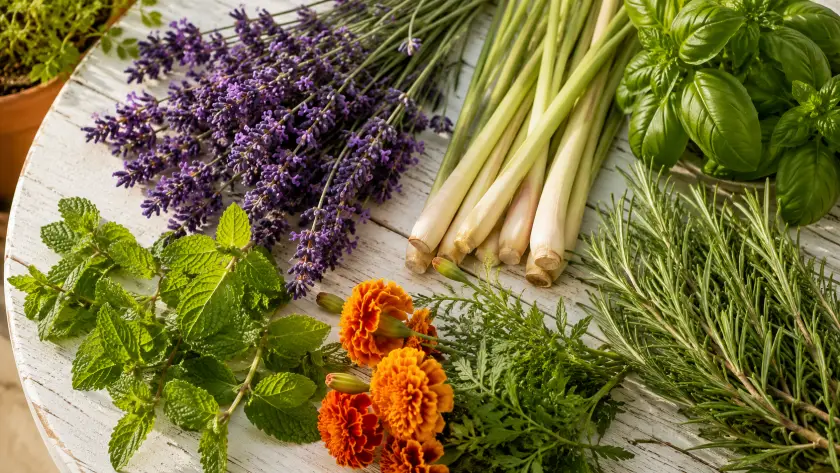
- The best plants that repel mosquitoes include lavender, lemongrass, citronella plant, marigold, basil, mint, rosemary, catnip, lemon balm, and scented geranium.
- Mosquito repellent plants for shade are more limited, but mint, lemon balm, and catnip can work well in partial shade where mosquitoes often rest.
- Outdoor plants to repel mosquitoes work best when grouped near the places people actually sit, walk, eat, or enter the home.
- Perennials that repel mosquitoes, such as lavender, rosemary, catnip, mint, and lemon balm, give better long-term value because they return year after year.
- Plants that keep mosquitoes away should be combined with standing-water control. Plants help, but they cannot solve a breeding problem on their own.
Introduction
Warm evenings outside should feel relaxing, not itchy. A good patio, balcony, or backyard can quickly become uncomfortable when mosquitoes start circling your ankles, hands, and face. Chemical sprays can help, but many gardeners prefer a softer first step: mosquito repellent plants.
The right plants that repel mosquitoes add fragrance, colour, herbs, pollinator value, and natural scent barriers around outdoor spaces. They will not create a magic invisible wall, but they can make your garden less attractive to mosquitoes when they are grown well and placed carefully.
This guide focuses on the keywords your page is already ranking for, including mosquito repellent plants, plants that repel mosquitoes, mosquito repellent plants for shade, outdoor mosquito repellent plants, perennials that repel mosquitoes, mosquito repellent plants for yard, and plants that keep mosquitoes away.
For wider garden pest support, read how to keep pests away from outdoor plants, best low-maintenance outdoor plants, and best plants for container gardening on patios.
Do Mosquito Repellent Plants Actually Work?
Yes, mosquito repellent plants can help, but they work best when expectations are realistic. Most repellent plants contain aromatic oils in their leaves, stems, or flowers. Mosquitoes tend to avoid strong scents such as citronella, lavender, mint, rosemary, basil, and lemon balm.
The important point is that live plants are usually less concentrated than essential oils or commercial repellents. A single small pot will not protect an entire backyard. A thoughtful layout of outdoor plants that repel mosquitoes near seating, doors, pots, paths, and shaded corners works much better.
For best results, use mosquito repellent plants as part of a full garden plan:
- Grow several repellent plants together.
- Place them near people, not hidden at the back of a border.
- Brush or gently crush leaves to release more scent.
- Keep plants healthy so they produce stronger aromatic oils.
- Remove standing water from pots, saucers, buckets, gutters, and birdbaths.
Best Mosquito Repellent Plants at a Glance
| Plant | Best Use | Sun or Shade | Annual or Perennial |
|---|---|---|---|
| Lavender | Sunny patios, borders, walkways | Full sun | Perennial |
| Lemongrass | Large pots, patio edges, warm gardens | Full sun | Tender perennial |
| Citronella plant | Doorways, pots, outdoor seating | Sun to part shade | Tender perennial |
| Marigold | Garden borders, vegetable beds, pots | Full sun | Annual |
| Basil | Kitchen doors, outdoor dining, windowsills | Sun | Annual |
| Mint | Containers, shaded corners, doorways | Sun to part shade | Perennial |
| Rosemary | Sunny borders, dry pots, seating areas | Full sun | Perennial |
| Catnip | Partial shade, herb beds, informal borders | Sun to part shade | Perennial |
| Lemon balm | Shade-tolerant pots, paths, herb gardens | Sun to part shade | Perennial |
| Scented geranium | Patio pots, hanging baskets, window boxes | Sun to bright light | Tender perennial |
The 10 Best Mosquito Repellent Plants
1. Lavender
Lavender is one of the best mosquito repellent plants for sunny gardens. It smells beautiful to people but produces a strong fragrance that mosquitoes tend to avoid. It also brings bees, butterflies, and soft colour into the garden.
If you want plants that repel mosquitoes near a seating area, lavender is a smart first choice. Place it along paths, beside benches, near patio chairs, or in sunny containers close to the door.
- Best for: Sunny patios, borders, pathways, seating areas.
- Light: Full sun.
- Care: Use free-draining soil and avoid overwatering.
- Good pairing: Rosemary, thyme, lemongrass, and marigold.
Lavender also fits well with low-maintenance outdoor planting because it handles dry, sunny conditions once established.
2. Lemongrass
Lemongrass is one of the strongest outdoor plants to repel mosquitoes because it is closely linked with citronella scent. It grows in tall grassy clumps, so it can also give structure around patios and garden edges.
Use lemongrass in large pots around a patio, balcony, or outdoor dining area. It performs best in warm, sunny positions where the leaves can release more fragrance.
- Best for: Patio edges, large pots, warm gardens, outdoor dining spaces.
- Light: Full sun.
- Care: Keep warm, water regularly in hot weather, and protect from frost.
- Good pairing: Basil, lavender, rosemary, and marigold.
If you are growing in pots, read container gardening on patios for pot size and drainage tips.
3. Citronella Plant
The citronella plant is one of the most recognised mosquito repellent plants. It is often sold as a lemon-scented geranium, and its leaves release a citrus fragrance when touched or brushed.
Citronella plant works best near doors, walkways, patio tables, and seating areas where people naturally pass by the plant. This movement helps release more scent from the leaves.
- Best for: Doorways, patios, pots, window boxes.
- Light: Sun to partial shade.
- Care: Protect from frost and avoid soggy soil.
- Note: Keep away from pets that chew plants.
4. Marigold
Marigolds are cheerful, affordable, and useful plants that repel mosquitoes in sunny beds and pots. Their strong scent helps deter several garden pests, and their bright flowers bring quick colour to borders and containers.
Use marigolds around vegetable beds, patio planters, front steps, and garden paths. They are especially useful as seasonal mosquito repellent plants for yard spaces because you can plant them in groups without spending too much.
- Best for: Vegetable beds, sunny borders, patio containers, entrance pots.
- Light: Full sun.
- Care: Deadhead regularly for more flowers.
- Good pairing: Basil, lavender, rosemary, and lemongrass.
5. Basil
Basil is one of the most practical mosquito repellent plants because it is useful in the kitchen as well as the garden. Its strong scent can help deter mosquitoes and flies near outdoor dining areas.
Place basil on outdoor tables, near kitchen doors, beside BBQ areas, or on a sunny windowsill. If you want indoor plants that repel mosquitoes, basil is one of the easiest options for a bright kitchen window.
- Best for: Outdoor dining, kitchen windowsills, BBQ areas, small pots.
- Light: Bright sun.
- Care: Keep evenly watered and pinch flowers to encourage leaves.
- Bonus: Edible leaves for cooking.
For watering help, read the complete watering guide.
6. Mint
Mint is a strong-scented herb and one of the best mosquito repellent plants for shade because it tolerates partial shade better than many sun-loving herbs. It is useful near doors, windows, seating areas, and damp corners.
Always grow mint in a pot. In the ground, it can spread fast and become difficult to control. Container growing also lets you move it exactly where mosquito pressure is highest.
- Best for: Containers, shaded seating, doorways, kitchen windowsills.
- Light: Sun to partial shade.
- Care: Keep in pots and trim often.
- Bonus: Edible leaves for drinks, teas, and cooking.
7. Rosemary
Rosemary is one of the best perennials that repel mosquitoes for sunny gardens. It has woody stems, evergreen leaves, and a strong herbal scent that suits patios, raised beds, and dry borders.
Use rosemary near seating areas, outdoor kitchens, gravel gardens, and sunny paths. It also works well in containers if the pot has sharp drainage.
- Best for: Sunny borders, patio pots, herb gardens, seating areas.
- Light: Full sun.
- Care: Avoid wet roots and heavy shade.
- Good pairing: Lavender, thyme, sage, and lemongrass.
For soil and drainage, read the best soil mix guide.
8. Catnip
Catnip is a useful mosquito repellent plant for informal gardens, herb beds, and partial shade. It has a strong scent, soft foliage, and purple flowers that also support pollinators.
Catnip is especially useful for people looking for shade loving plants that repel mosquitoes. It can handle more shade than lavender or rosemary, though it still flowers best with some sun.
- Best for: Partial shade, herb gardens, cottage borders, pollinator areas.
- Light: Sun to partial shade.
- Care: Cut back after flowering to refresh growth.
- Note: Cats may be attracted to it.
9. Lemon Balm
Lemon balm is one of the best mosquito repellent plants that grow in shade or partial shade. Its lemony leaves release scent when touched, making it useful along paths, patio edges, and shaded seating areas.
Like mint, lemon balm can spread, so it is often easier to manage in pots. Use it where you want gentle greenery, lemon scent, and a practical herb that can handle less-than-perfect sun.
- Best for: Partial shade, paths, pots, shaded seating corners.
- Light: Sun to partial shade.
- Care: Trim regularly and grow in containers if needed.
- Bonus: Leaves can be used for herbal tea.
10. Scented Geranium
Scented geraniums are attractive outdoor mosquito repellent plants for pots, hanging baskets, and window boxes. Lemon-scented varieties are especially useful around seating areas and entry points.
They are not as hardy as lavender or rosemary in cold areas, but they are excellent for summer containers. Use them where you want flowers, foliage, and fragrance together.
- Best for: Patio pots, hanging baskets, window boxes, doorways.
- Light: Full sun to bright light.
- Care: Protect from frost and avoid overwatering.
- Good pairing: Marigold, basil, lavender, and lemongrass.
Shade Plants That Repel Mosquitoes
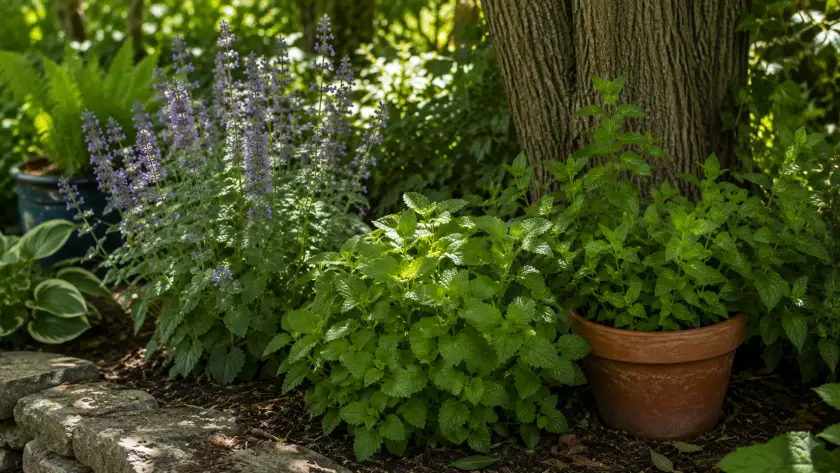
Many popular mosquito repellent plants prefer full sun, but mosquitoes often rest in shaded, damp, still areas. That is why mosquito repellent plants for shade deserve their own section.
The best shade plants that repel mosquitoes are:
- Mint: Best in pots near shaded doors, paths, and seating.
- Lemon balm: Good for partial shade and shaded herb corners.
- Catnip: Useful in partial shade and pollinator-friendly borders.
- Basil: Can handle light shade, though it performs best with sun.
- Scented geranium: Can work in bright partial shade in containers.
If you need more low-light outdoor ideas, read shade-loving plants for outdoor spaces.
Mosquito Repellent Plants for Patio, Pots, and Yard Spaces
To improve rankings for terms like mosquito repellent plants for yard, mosquito repellent plants outdoor, patio plants that repel mosquitoes, and outdoor plants repel mosquitoes, your layout matters as much as the plant list.
For patios
Use lemongrass in large pots at the corners, lavender beside seating, basil on the dining table, and mint near the door. This creates several scent zones around the area people use most.
For balconies
Choose compact pots of lavender, rosemary, basil, mint, and lemon balm. If the balcony is exposed, use heavier containers and read year-round balcony plants for wind and weather advice.
For backyards
Plant lavender and rosemary along sunny paths, marigolds around beds, lemongrass near seating, and lemon balm or mint in shaded corners. This helps cover more of the yard without relying on one plant.
For front doors
Use scented geranium, lavender, rosemary, basil, or mint in pots close to the entrance. These plants that keep mosquitoes away work best when placed where mosquitoes may enter the home.
Indoor Plants That Repel Mosquitoes
Some indoor plants that repel mosquitoes can help near windows, doors, kitchens, and bright ledges. They are not a full indoor mosquito solution, but they can support a cleaner scent barrier near entry points.
Best indoor options include:
- Basil: Best for sunny kitchen windowsills.
- Mint: Good near doors and windows in bright light.
- Lemon balm: Useful in bright indoor spots and easy to trim.
- Rosemary: Good in very bright windows with airflow.
- Lavender: Works indoors only if light is strong enough.
For indoor growing support, read complete guide to indoor light and air-purifying indoor plants.
Plants That Keep Mosquitoes Away: What Works Best?
The best plants that keep mosquitoes away are usually the ones with strong fragrance, healthy growth, and strategic placement. A struggling plant with weak growth will not produce the same aromatic effect as a healthy plant in the right light.
Use this simple formula:
- Full sun patio: Lavender, lemongrass, rosemary, basil, marigold.
- Partial shade seating: Mint, lemon balm, catnip.
- Doorways: Citronella plant, scented geranium, mint, basil.
- Backyard borders: Lavender, rosemary, marigold, catnip.
- Containers: Mint, basil, citronella plant, lavender, lemon balm.
- Perennial planting: Lavender, rosemary, mint, lemon balm, catnip.
How to Use Mosquito Repellent Plants Properly
Mosquito repellent plants give better results when you use them intentionally. Do not hide them far away from the spaces where people sit. Place them where scent matters.
- Put pots near people: Seating areas, patios, BBQ spots, doors, and windows matter most.
- Group plants: One pot is helpful, but mixed containers create a stronger scent zone.
- Use containers: Pots let you move plants wherever mosquitoes are worst.
- Brush the leaves: Light contact helps release scent from mint, citronella, lemon balm, and rosemary.
- Keep plants healthy: Good light, drainage, and watering improve growth and fragrance.
- Remove standing water: Empty saucers, buckets, old pots, trays, and birdbaths regularly.
For practical outdoor plant health, read how to keep your outdoor plants alive.
Backyard Mosquito Control Checklist
If you want to improve results for searches like how to keep mosquitoes away outside, plants to keep mosquitoes away, and what plants repel mosquitoes, add this checklist to your routine:
- Empty water from plant saucers once a week.
- Turn over unused pots, trays, buckets, and watering cans.
- Clean birdbaths and refresh water regularly.
- Keep gutters clear so water does not collect.
- Move dense containers apart to improve airflow.
- Trim overgrown shrubs where mosquitoes can rest.
- Place mosquito repellent plants near seating and doors.
- Use fans on patios when possible because mosquitoes are weak fliers.
- Support natural predators with a wildlife-friendly garden.
For more natural garden balance, read how to design a wildlife-friendly garden.
Common Mistakes to Avoid
- Expecting one plant to protect the whole garden: Use several plants in the right places.
- Putting sun plants in shade: Lavender, rosemary, and lemongrass need strong light.
- Letting pots sit in water: Standing water can undo the benefit of repellent planting.
- Planting mint directly in borders: Mint spreads quickly, so pots are safer.
- Ignoring pet safety: Some scented plants are not ideal for pets that chew leaves.
- Using tiny pots: Small containers dry too quickly and stress the plants.
- Forgetting airflow: Damp, still corners are more mosquito-friendly.
For pet-safe planning, read dog-friendly plants and cat-friendly plants.
Frequently Asked Questions
What are the best mosquito repellent plants?
The best mosquito repellent plants are lavender, lemongrass, citronella plant, marigold, basil, mint, rosemary, catnip, lemon balm, and scented geranium. For strongest results, use several together near patios, doors, and seating areas.
What plants repel mosquitoes?
If you are asking what plants repel mosquitoes, start with strong-scented herbs and flowers. Lavender, lemongrass, rosemary, mint, basil, lemon balm, catnip, marigold, and citronella plant are the most useful choices for home gardens.
Do plants that repel mosquitoes really work?
Yes, plants that repel mosquitoes can help reduce mosquito activity nearby, especially when leaves are warm, healthy, and aromatic. They work best as part of a wider plan that includes standing-water removal and good airflow.
What are the best mosquito repellent plants for shade?
The best mosquito repellent plants for shade are mint, lemon balm, and catnip. They tolerate partial shade better than lavender, rosemary, and lemongrass.
What are good shade plants that repel mosquitoes?
Good shade plants that repel mosquitoes include mint, lemon balm, catnip, and scented geranium in bright partial shade. These are useful near shaded patios, side yards, and north-facing corners.
What are the best outdoor plants to repel mosquitoes?
The best outdoor plants to repel mosquitoes are lemongrass, lavender, rosemary, citronella plant, marigold, mint, basil, catnip, and lemon balm. Use them in pots, borders, and near seating areas.
What are the best mosquito repellent plants for yard spaces?
The best mosquito repellent plants for yard spaces are lavender and rosemary for sunny borders, lemongrass for patio edges, marigolds for flower beds, and mint or lemon balm for partial shade.
Are there perennials that repel mosquitoes?
Yes. Perennials that repel mosquitoes include lavender, rosemary, mint, lemon balm, and catnip. In mild climates, lemongrass and scented geranium may also return, but they need frost protection in colder areas.
What mosquito repellent plants grow in shade?
The best mosquito repellent plants that grow in shade are mint, lemon balm, and catnip. They still perform better with some light, but they can handle partial shade more reliably than sun-loving herbs.
What plants keep mosquitoes away from the patio?
For patios, use lemongrass in large pots, lavender near chairs, basil on the table, mint by the door, and marigolds around sunny edges. This mix gives better coverage than one plant alone.
What plant is best for mosquitoes?
Lemongrass is one of the strongest choices because of its citronella-like scent. Lavender is the best all-round choice because it is beautiful, fragrant, pollinator-friendly, and easy to use in sunny gardens.
Can mosquito repellent plants be grown in pots?
Yes. Many mosquito repellent plants grow well in pots, including mint, basil, citronella plant, lavender, rosemary, lemon balm, and marigold. Pots are useful because you can move plants closer to seating areas.
Are mosquito repellent plants safe for dogs?
Some are safer than others. Lavender, rosemary, basil, and lemon balm are generally better choices around dogs than citronella geranium or scented geranium. Always check plant safety if your dog chews leaves.
What plants deter mosquitoes and flies?
Basil, mint, lavender, rosemary, marigold, and lemongrass are useful plants for deterring mosquitoes and flies around outdoor dining areas, kitchen doors, and patios.
Related Guides
- How to keep pests away from outdoor plants
- Best low-maintenance outdoor plants
- Shade-loving plants for outdoor
- Best plants for container gardening on patios
- Best plants for small outdoor spaces
- Year-round balcony plants
- How to keep your outdoor plants alive
- Wildlife-friendly garden guide
- Complete watering guide
- Best soil mix guide
- Dog-friendly plants guide
- Cat-friendly plants guide
- Outdoor Plants hub
- Plant Care hub
Final Thoughts
Mosquito repellent plants are a smart, natural way to make outdoor spaces more comfortable. Start with the high-impact plants first: lemongrass for sunny patio edges, lavender and rosemary for borders, basil near outdoor dining, mint in pots, and lemon balm or catnip for partial shade.
The most important thing is placement. Plants that repel mosquitoes should be close to where people sit, eat, walk, and enter the home. A plant at the far end of the garden will not help as much as one beside the patio chair or back door.
The CDC also recommends removing standing water around the home by emptying, scrubbing, covering, or turning over items that hold water, including planters, pools, birdbaths, flowerpot saucers, and buckets. That makes this the best practical partner to any plant-based mosquito strategy: CDC mosquito control at home guide.
What to Remember
The best mosquito repellent plants are lavender, lemongrass, citronella plant, marigold, basil, mint, rosemary, catnip, lemon balm, and scented geranium. Use sun-loving plants in bright areas, shade-tolerant plants in partial shade, and containers near patios, doors, balconies, and backyard seating. For the best results, combine repellent planting with standing-water control, healthy plant care, and smart garden layout.