🌿 Key Takeaways
- String of pearls care centres on three non-negotiables: bright indirect light for at least six hours daily, completely dry soil between waterings, and a fast-draining cactus or succulent mix that prevents root rot.
- How to care for string of pearls comes down to one golden rule — when in doubt, underwater. These bead-like leaves store water efficiently and recover from mild dehydration far faster than from overwatering.
- String of pearls light requirements are higher than most houseplants — a south or west-facing window with bright indirect light is ideal, with harsh afternoon sun filtered through a sheer curtain to prevent leaf scorch.
- String of pearls shriveling is the earliest visible stress signal and almost always indicates dehydration — plump firm beads signal health, while flat or puckered pearls signal it’s time to water thoroughly.
- String of pearls propagation is straightforward and rewarding — stem cuttings root readily in water or directly in moist soil, making this one of the easiest succulents to multiply for shelf displays or gifting.
- String of pearls soil must be fast-draining above all else — a quality cactus mix amended with perlite or pumice prevents the waterlogging that causes root rot in as little as a few days of sitting wet.
- String of pearls turning brown most commonly results from one of two opposite problems — sunburn from direct harsh light, or root rot from waterlogged soil — identifying which is happening determines the correct fix.
- String of pearls toxic to cats and dogs — yes, Senecio rowleyanus is confirmed toxic to both, causing vomiting, diarrhea, and lethargy if ingested. Always position out of reach using ceiling hooks or high wall-mounted shelves.
- String of pearls fertilizer should be a balanced liquid feed diluted to half-strength, applied monthly during spring and summer only — never in autumn or winter when the plant is resting and growth has naturally slowed.
- String of pearls care indoors rewards patient, observant plant parents with one of the most dramatic trailing displays available — cascading bead-like vines that genuinely stop visitors mid-sentence when grown well.
There are houseplants that grow quietly in corners, fulfilling their purpose without much fanfare. And then there is the string of pearls — a plant so visually distinctive, so immediately captivating, that it reliably stops people mid-sentence when they spot it trailing from a high shelf. Those perfect, pea-shaped beads strung along impossibly slender stems look less like something that grew and more like something someone crafted, carefully and with great patience.
Senecio rowleyanus originates from the dry, rocky terrain of Southwest Africa, where it evolved as a creeping ground cover — trailing across soil and draping over rocky outcroppings to find shade and preserve moisture in an environment that offered very little of either. Those remarkable bead-like leaves are not decorative accidents; they’re highly efficient water storage vessels evolved specifically for drought survival. Understanding this origin transforms string of pearls plant care from a set of arbitrary rules into a logical response to the plant’s natural conditions.
This complete string of pearls care guide covers every variety worth knowing, every care requirement in detail, every common problem with its exact solution, and everything you need about propagation, repotting, pet safety, and room styling. Whether you’re troubleshooting a struggling plant or setting up your first specimen correctly from the start, you’ll find the answers here. For more beautiful trailing options to display alongside your string of pearls, our low-light hanging plants guide covers the best cascading varieties for every shelf and ceiling hook in your home.
What Is String of Pearls? Understanding Senecio Rowleyanus
The string of pearls plant (Senecio rowleyanus, recently reclassified as Curio rowleyanus) is a trailing succulent from the Asteraceae family, native to the dry coastal cliffs and rocky ground of Southwest Africa. In its natural habitat, this plant grows horizontally across the ground, its stems threading through rocks and shade, storing water in those iconic spherical leaves to survive months without rainfall.
The pea-shaped leaves — the plant’s defining feature — evolved their rounded form to maximise internal volume relative to surface area, minimising water loss through transpiration while maximising storage capacity. A translucent stripe running along each bead acts as a light window, allowing photosynthesis to continue inside the leaf without the entire surface being exposed to harsh sun. This elegant evolutionary solution is why string of pearls care indoors requires bright but indirect light — too much direct sun overwhelms this internal light-management system.
In the home, string of pearls is grown primarily as a hanging or trailing plant, with mature specimens producing stems reaching 60–90cm in length. It’s one of the most striking members of a broader family of bead and chain succulents that includes string of bananas (Curio radicans), string of dolphins, and string of turtles — each with its own distinctive leaf shape but sharing the same basic care requirements. For more dramatic foliage options to complement your trailing collection, see our guide on colorful foliage indoor plants.
String of Pearls Varieties Worth Growing
Standard String of Pearls — Senecio Rowleyanus
The classic variety remains the most widely available and arguably the most beautiful — uniform green spherical beads on slender trailing stems. Mature plants produce tiny white daisy-like flowers with a faint cinnamon-clove scent, a pleasant bonus for patient growers. Standard string of pearls is the best starting point for anyone new to how to care for string of pearls before attempting more temperamental varieties.
Variegated String of Pearls
Variegated string of pearls displays cream, white, and green patterned beads — more visually complex than the standard variety and considerably more demanding to maintain. The variegation means reduced chlorophyll and therefore a greater need for bright, consistent light to sustain healthy growth. Variegated string of pearls care follows the same principles as standard care but with one critical addition: this variety will not tolerate low light at all. The cream sections of variegated leaves contain no chlorophyll and cannot photosynthesise — the plant relies entirely on the green portions, making adequate light genuinely non-negotiable.
String of Bananas — Curio Radicans
Often sold alongside string of pearls, string of bananas produces crescent-shaped leaves resembling tiny bananas rather than spheres. It’s considered slightly easier than string of pearls due to greater tolerance for inconsistent watering and lower light conditions — a good alternative for those who struggle with the classic version. Both varieties appear in our 35 low-maintenance plants guide for their relative ease once established correctly.
Complete String of Pearls Care Guide
Light Requirements for String of Pearls
String of pearls light requirements are the single most important factor determining whether this plant thrives or slowly declines. In its natural habitat, string of pearls grows in bright but diffused light — often shaded by larger plants or rocks while still receiving high ambient brightness. Replicating this indoors means finding the brightest indirect light position available.
Ideal light conditions:
- Best position: South or west-facing window, 30–60cm back from the glass — enough brightness without direct afternoon sun hitting the beads
- Filtered direct light: A sheer curtain over a south-facing window provides the ideal balance of brightness and protection
- Minimum requirement: Six hours of bright indirect light daily — below this, stems become leggy and beads shrink and space further apart
- Grow lights: Full-spectrum LED grow lights work effectively if natural light is insufficient, positioned 15–30cm above the plant for 12–14 hours daily
Signs of too much direct light:
- Beads turning translucent then shriveling even with adequate watering
- Brown, scorched patches appearing on individual pearls
- Crispy, dry stems nearest the window
Signs of insufficient light:
- Stems becoming long and leggy with large gaps between beads
- Beads reducing in size over time
- Very slow or completely stalled growth even during spring and summer
- Variegated varieties losing their cream colouring, reverting toward plain green
For complete guidance on measuring and optimising indoor light positions, our complete indoor light guide covers every room type and window orientation in detail.
How to Water String of Pearls Correctly
Watering is where most string of pearls plant care goes wrong — and almost always in the same direction. Overwatering is by far the leading cause of string of pearls death, causing root rot that progresses quickly in the compact root system of this small succulent. The plant’s evolved drought tolerance means it is genuinely more forgiving of underwatering than overwatering, and this should guide every watering decision.
How often to water string of pearls:
- Spring and summer: Water when the top half of the soil is completely dry — typically every 7–14 days depending on pot size, light level, and room temperature
- Autumn: Reduce to every 14–21 days as growth slows
- Winter: Water only every 3–4 weeks — the plant is resting and moisture demand drops significantly
- Method: Water thoroughly until water drains from the bottom, then empty the saucer completely after 15 minutes
String of pearls water needs — reading the plant:
- Plump, firm, spherical beads: Perfectly hydrated — maintain current schedule
- Slightly flat or puckered beads: Mildly dehydrated — water thoroughly now
- Heavily shriveled, soft beads: Significantly underwatered — soak pot in water for 15 minutes then drain
- Mushy, translucent, or dropping beads: Overwatered — check roots immediately for rot
If your string of pearls is shriveling despite regular watering, the problem is almost always root rot rather than dehydration — damaged roots cannot transport water to the beads even when moisture is present in the soil. Our overwatering signs guide covers how to diagnose and correct this before permanent damage sets in. For broader moisture management principles, our complete watering guide is essential reading.
Humidity and Temperature
Unlike tropical houseplants that demand high humidity, string of pearls care indoors actually benefits from drier conditions that mirror its desert origins. Standard home humidity levels of 30–50% are perfectly adequate — there is no need for humidifiers, misting, or pebble trays with this plant. In fact, high humidity combined with poor air circulation creates conditions conducive to fungal problems.
Temperature requirements:
- Growing season (spring–summer): 18–27°C (65–80°F) — the warmer end of this range encourages faster bead development
- Winter rest period: 10–15°C (50–60°F) — a cooler winter period encourages the semi-dormancy that promotes strong spring growth
- Absolute minimum: 7°C (45°F) — below this causes permanent cell damage to the water-filled beads
Avoid: Cold drafts from windows in winter, air conditioning vents blowing directly onto the plant, and sudden temperature drops which can cause mass bead drop. Keep away from exterior walls in cold months.
String of Pearls Soil — Getting the Mix Right
The right string of pearls soil mix is the foundation of successful long-term care. Standard potting compost retains too much moisture for this drought-adapted succulent — roots sitting in damp soil for more than a day or two begin to rot. The goal is a mix that drains almost immediately while still providing enough structure to support the root system.
Ideal string of pearls soil mix:
- 50% quality cactus or succulent potting mix
- 30% perlite (improves drainage and aeration significantly)
- 20% coarse horticultural grit or pumice
Commercial alternatives that work:
- Pre-mixed cactus and succulent soil used straight from the bag (most brands drain adequately)
- Standard potting mix amended with 40–50% perlite — more economical if you already have compost
Always avoid:
- Standard multi-purpose compost without amendment — retains too much moisture
- Garden soil — heavy, compacting, and inadequate drainage
- Peat-heavy mixes — water-repellent when dry, then waterlogged when wet
For complete soil guiwww.dance covering every succulent and houseplant type, our best soil mix guide covers custom mixes and commercial alternatives for every situation.
Fertilizing String of Pearls
String of pearls fertilizer requirements are minimal compared to most houseplants — these desert succulents evolved in nutrient-poor rocky soil and react poorly to heavy feeding. Over-fertilizing causes salt buildup in the soil that burns roots and causes the tip damage and discolouration that many growers mistake for other problems.
Fertilizing schedule:
- Spring and summer: Feed monthly with a balanced liquid fertilizer (NPK 10-10-10) diluted to half the recommended strength
- Autumn: Stop feeding — growth is slowing and the plant doesn’t need or use additional nutrients
- Winter: No feeding at all — the plant is resting
Application tips:
- Always water the plant the day before fertilizing — never apply fertilizer to dry soil
- Flush the soil with plain water every 2–3 months to clear salt accumulation
- White crusty deposits on the soil surface indicate fertilizer salt buildup — flush thoroughly
Our fertilizing guide covers seasonal feeding schedules for all succulent types including string of pearls and its relatives.
String of Pearls Repotting
String of pearls repotting should happen every 2–3 years, or sooner if roots are visibly emerging from drainage holes or the plant is drying out unusually quickly. This plant has a relatively small, shallow root system and actually performs well in slightly tight conditions — being root-bound slightly encourages flowering in mature specimens.
Signs repotting is needed:
- Roots growing from drainage holes
- Soil drying out within 2–3 days of watering
- Plant drying out faster than usual despite no change in care
- Noticeably slowed growth even in peak growing season
Repotting process:
- Choose a new pot only 2–3cm larger — too large a pot creates excess soil volume that stays wet too long
- Always choose a pot with drainage holes — terracotta is ideal as it allows evaporation through the walls
- Spring repotting gives the fastest recovery — avoid repotting in winter
- Handle stems carefully — they snap easily and detached stems can be used for propagation
- Allow the plant to settle for one week before watering after repotting
For step-by-step repotting instructions, our how to repot a plant guide walks through every stage. Our repotting mistakes guide covers the errors that most commonly damage delicate trailing succulents during the process.
String of Pearls Propagation — Two Reliable Methods
String of pearls propagation is one of the most satisfying aspects of growing this plant — new plants root readily and quickly, making it easy to fill hanging baskets, create gifts, or replace an older leggy specimen with fresh vigorous growth. Both methods below work reliably when the plant is in its active growing season (spring and summer).
Method 1 — Soil Propagation (Recommended)
Soil propagation produces stronger, better-established plants than water propagation because roots develop directly in their permanent growing medium, eliminating the transplant shock that water-rooted cuttings experience when moved to soil.
- Step 1: Select a healthy stem at least 10cm long with plump, firm beads — avoid leggy or stressed stems
- Step 2: Using clean scissors, cut the stem cleanly just below a node (the point where a bead meets the stem)
- Step 3: Remove beads from the bottom 3–4cm of the cutting to expose bare stem
- Step 4: Allow the cutting to callous (dry) for 24 hours — this prevents rot at the cut end
- Step 5: Press the bare stem section into slightly moist cactus mix, either burying it vertically or laying it flat with nodes touching the soil
- Step 6: Place in bright indirect light and allow soil to dry almost completely between very light mistings
- Step 7: Roots typically develop within 2–4 weeks — gentle resistance when tugged indicates successful rooting
Method 2 — Water Propagation
Water propagation allows you to watch root development visibly, which is satisfying for beginners wanting to confirm progress. The tradeoff is that water-rooted plants experience some shock when transferred to soil and typically take longer to establish than soil-propagated cuttings.
- Step 1: Take a healthy stem cutting 10–15cm long, remove beads from the bottom 3–4cm
- Step 2: Allow to callous for 24 hours before placing in water
- Step 3: Suspend the bare stem end in water — use a glass jar and balance the cutting across the rim so the pearls remain completely above the waterline. Wet beads rot quickly.
- Step 4: Change water every 3–4 days to prevent bacterial buildup
- Step 5: Roots typically appear within 2–3 weeks — transfer to soil mix once roots reach 2cm length
For comprehensive propagation guidance covering division, cuttings, and water methods across all houseplant types, our complete propagation guide covers every technique in detail.
Troubleshooting Common String of Pearls Problems
String of Pearls Shriveling — Dehydration or Root Rot?
String of pearls shriveling is the most common problem growers encounter, and correctly diagnosing the cause is critical because the two most likely causes require opposite responses.
Dehydration (most common):
- Beads look flat, wrinkled, or puckered but remain firm when touched
- Soil is bone dry 2–3cm below the surface
- Solution: Water thoroughly, allow to drain completely, increase watering frequency slightly
- Recovery: Beads plump up within 24–48 hours of adequate watering
Root rot (also causes shriveling despite moist soil):
- Beads look shriveled despite soil feeling moist or damp
- Beads feel soft or mushy rather than firm
- Stems at soil level may appear dark, soft, or discoloured
- Solution: Remove from pot immediately, inspect roots — brown mushy roots indicate rot. Trim away damaged roots with sterile scissors, allow to dry for 24 hours, repot in fresh dry cactus mix
String of Pearls Turning Brown
String of pearls turning brown appears for several distinct reasons, each producing slightly different symptoms.
Sunburn (brown patches on upper side of beads):
- Beads develop dry, papery brown patches facing the light source
- Affected beads shrink and eventually drop
- Solution: Move away from direct sun immediately — damaged beads won’t recover but new growth will be healthy
Root rot (brown mushy stems at soil level):
- Stems turning dark brown and soft at the base
- Often accompanied by a faintly unpleasant smell from the soil
- Solution: Unpot immediately, remove rotted roots and stems, repot in dry fresh mix
Underwatering (brown dry tips spreading along stems):
- Stem tips drying and browning while beads also shrivel
- Soil completely dry well below surface
- Solution: Water thoroughly and establish more consistent watering schedule
Our leaf curl, browning, and droop guide covers every browning scenario across all houseplant types. For yellow bead or leaf issues, our yellow leaves guide provides additional diagnosis help.
String of Pearls Not Growing
If your string of pearls is not growing during spring or summer, the most common causes are insufficient light, being in the wrong season (winter dormancy is completely normal), or a pot that’s too large creating excess soggy soil volume.
- Insufficient light: Move to a brighter position — this is the most frequent cause of growth stalling
- Winter dormancy: Normal — growth resumes naturally in spring without intervention
- Pot too large: Excess soil volume stays wet too long, suppressing root and stem growth
- Root bound: Completely filled pot can slow growth — time to repot into the next size up
- Nutrient deficiency: If no feeding has occurred in over a year, begin gentle monthly feeding in spring
If the plant looks beyond recovery, our plant rescue guide covers step-by-step intervention techniques for severely struggling plants.
Common Pests on String of Pearls
String of pearls is generally pest-resistant compared to tropical houseplants, but several pests do appear — most commonly in response to stress from incorrect care conditions.
Mealybugs (most common):
- White cottony clusters appearing in stem joints and at soil level
- Cause sticky residue on beads and surrounding surfaces
- Treatment: Remove manually with alcohol-dipped cotton swab, then treat with diluted neem oil solution weekly for 3–4 weeks
Spider mites:
- Fine webbing between beads and stems, especially in dry conditions
- Tiny moving dots visible on stem surfaces
- Treatment: Increase humidity temporarily, wipe with neem oil solution, repeat weekly
Fungus gnats:
- Small flies hovering around soil — larvae damage roots in consistently moist soil
- Prevention: Allow soil to dry completely between waterings — fungus gnats cannot breed in dry soil
- Treatment: Sticky yellow traps plus soil drench with diluted neem oil
Is String of Pearls Toxic to Cats and Dogs?
String of pearls toxic to cats — yes, confirmed. String of pearls toxic to dogs — also yes. Senecio rowleyanus is listed as toxic to both cats and dogs by the ASPCA, with ingestion causing symptoms including drooling, vomiting, diarrhea, and lethargy. The toxic compounds are concentrated throughout the plant — leaves, stems, and roots.
The severity of reaction depends on the amount ingested and the size of the animal. Small amounts typically cause mild gastrointestinal upset; larger quantities can cause more serious symptoms. If you suspect your pet has chewed or ingested any part of a string of pearls, contact your veterinarian immediately.
Safe placement strategies for pet households:
- Ceiling hooks: The most reliable option — ceiling-hung planters are genuinely out of reach for all cats and dogs
- High wall-mounted shelves: Effective for dogs; use only if your cats cannot reach the shelf from adjacent furniture
- Glass terrariums: Fully enclosed terrariums keep both plant and pets completely separated
- Rooms with closed doors: Simple but effective — designate a plant room that pets cannot access
For pet-safe alternatives that provide similar trailing drama without toxicity risk, our cat-friendly plants guide and dog-friendly plants guide cover every non-toxic trailing and hanging option available. The spider plant is completely non-toxic and produces cascading offshoots that provide some of the same visual trailing interest as string of pearls.
How to Style String of Pearls by Room
A healthy, well-grown string of pearls is one of the most visually striking plants available for home styling — those cascading bead-like stems create a dramatic waterfall effect that very few other plants match. The key is positioning that serves both the plant’s light requirements and your aesthetic vision simultaneously.
Hanging Display — The Classic Approach
String of pearls is best displayed hanging — whether from a ceiling hook, a wall bracket, or a high shelf — allowing stems to trail downward freely. In hanging baskets, mature plants develop trails reaching 60–90cm, creating a true curtain of beads that becomes a genuine focal point in any room. Position near a bright window where the plant receives indirect light while the trailing stems catch natural light beautifully.
For more hanging and trailing inspiration to build around your string of pearls display, our low-light hanging plants guide covers every trailing variety suited to shelves, ceilings, and bathroom positions.
Shelf and Mantel Styling
High shelves and mantels work beautifully for string of pearls — the elevation allows stems to trail downward while the plant sits in a more accessible position for watering and care. Pair with solid-textured, non-trailing plants for contrast: a snake plant or ZZ plant beside a trailing string of pearls creates a striking combination of upright architectural form against cascading softness. See our complete room-by-room plant styling guide for positioning principles across every room type.
Bedroom Placement
String of pearls works beautifully in bedrooms when displayed on a high dresser or wall-mounted shelf near a south or west-facing window. The trailing stems create a calming, organic visual element that complements minimalist bedroom styling particularly well. Our bedroom plant decorating guide covers complete styling ideas for trailing and hanging plants in sleep spaces.
Bathroom Display
Bathrooms with adequate natural light work well for string of pearls — the slightly higher humidity from showers doesn’t harm this plant as long as air circulation is good and the pot drains freely. Position near a bright bathroom window and ensure the soil dries fully between waterings. See our 33 best bathroom plants guide for the complete list of trailing and hanging options suited to bathroom environments.
For larger statement plants to display alongside your string of pearls collection, our 20 oversized indoor plants guide covers dramatic specimen plants that create the lush, layered indoor garden look. Browse our best indoor plants for beginners guide for additional easy-care companions to build your collection around.
FAQ: String of Pearls Care
How do you care for a string of pearls plant?
String of pearls care requires bright indirect light (6+ hours daily), watering only when the top half of the soil is completely dry, fast-draining cactus or succulent soil, and temperatures between 18–27°C during the growing season. The three most important factors in order of importance are: correct light, correct watering, and correct soil drainage. Get these three right and most other problems resolve themselves.
How often should I water string of pearls?
Water your string of pearls every 7–14 days in spring and summer when the top half of the soil is dry, every 14–21 days in autumn, and every 3–4 weeks in winter. Always check soil moisture by touch before watering rather than following a rigid schedule — environmental conditions vary too much for fixed schedules to be reliable. See our complete watering guide for detailed seasonal moisture management.
Why is my string of pearls shriveling?
String of pearls shriveling indicates either dehydration (firm beads that look flat or puckered — water thoroughly now) or root rot (soft mushy beads despite moist soil — unpot and inspect roots immediately). The distinction is critical: dehydration is fixed by watering, while root rot requires removing damaged roots and repotting in dry fresh mix. See our overwatering signs guide for diagnosis help.
Is string of pearls toxic to cats and dogs?
Yes — string of pearls is toxic to cats and dogs. The ASPCA lists Senecio rowleyanus as toxic to both species, causing vomiting, diarrhea, drooling, and lethargy if ingested. Position using ceiling hooks or high wall-mounted shelves completely out of reach. For non-toxic trailing alternatives, see our cat-friendly plants guide and dog-friendly plants guide.
Why is my string of pearls turning brown?
String of pearls turning brown results from three main causes: sunburn (dry papery patches on top of beads — move away from direct sun), root rot (soft brown stems at soil level — unpot and treat immediately), or underwatering (brown dry tips with shriveling beads — water thoroughly and increase frequency). Identify which pattern matches your plant to apply the correct solution. Our browning and droop guide covers every cause in detail.
How do you propagate string of pearls?
String of pearls propagation works best through stem cuttings taken in spring or summer. Take a healthy 10cm cutting, remove beads from the bottom 3–4cm of stem, allow to callous for 24 hours, then press the bare stem section into slightly moist cactus mix. Roots develop within 2–4 weeks in bright indirect light. Alternatively, suspend the bare stem end in water (keeping beads dry) and transfer to soil once roots reach 2cm. Our complete propagation guide covers both methods in full detail.
What soil is best for string of pearls?
The best string of pearls soil is a fast-draining cactus or succulent mix amended with 30–40% perlite or coarse grit. Standard potting compost retains too much moisture for this drought-adapted succulent and causes root rot. A terracotta pot with drainage holes combined with fast-draining soil is the most reliable combination for long-term string of pearls health. See our complete soil mix guide for exact ratios and commercial alternatives.
Why is my string of pearls not growing?
If your string of pearls is not growing during spring or summer, the most common causes are insufficient light (the most frequent issue — move to a brighter position), winter dormancy (completely normal — wait for spring), a pot that’s too large (excess soil stays wet too long suppressing growth), or nutrient deficiency (begin gentle monthly feeding in spring). Our plant rescue guide covers recovery strategies for severely struggling specimens.
🔗 Related Guides
- 🌿 Pothos Care Guide
- 🌿 Philodendron Care Guide
- 🌿 Spider Plant Care Guide
- 🌿 Snake Plant Care Guide
- 🌿 ZZ Plant Care Guide
- 🌿 Monstera Care Guide
- 🌿 Rubber Plant Care Guide
- 🌿 Fiddle Leaf Fig Care Guide
- 🌿 Calathea Care Guide
- 🌸 Peace Lily Care Guide
- 🌵 Aloe Vera Care Guide
- 🎄 Christmas Cactus Care Guide
- 💰 Money Tree Care Guide
- 🌿 Low-Light Hanging Plants Guide
- 🌿 20 Oversized Indoor Plants
- 🌿 Best Indoor Plants for Beginners
- 🌿 35 Low Maintenance Plants That Thrive
- 🌈 Colorful Foliage Indoor Plants
- 💡 Complete Indoor Light Guide
- 💧 Complete Watering Guide
- 💧 Signs You’re Overwatering
- 💨 Humidity Hacks Guide
- 🌱 Best Soil Mix Guide
- 🌱 Fertilizing Indoor vs Outdoor Guide
- 🌱 How to Repot a Plant
- ⚠️ Repotting Mistakes to Avoid
- 🌱 How to Propagate Houseplants
- 🍃 Why Leaves Turn Yellow
- 🌿 Leaf Curl, Browning and Droop Guide
- 🆘 How to Revive a Dying Plant
- 🐾 Cat-Friendly Plants Guide
- 🐾 Dog-Friendly Plants Guide
- 🛁 33 Best Bathroom Plants
- 🏠 Style Indoor Plants by Room
- 🛌 Decorate Your Bedroom with Plants
- 🌿 Air Purifying Indoor Plants
- 🌿 Best Low Maintenance Outdoor Plants
- 📂 Browse All Indoor Plants →
- 📂 Browse All Outdoor Plants →
- 📂 Browse All Plant Care Guides →
🌿 Final Thoughts
The string of pearls plant rewards those who take the time to understand it rather than those who simply follow a rigid care schedule. Its origins in arid Southwest Africa explain every requirement it has — the need for bright light, the preference for dry soil, the tolerance for neglect and intolerance for overwatering. Once these origins are understood, string of pearls care becomes logical and intuitive rather than mysterious.
Start with the fundamentals: the right soil, the right pot, the right position. A south or west-facing window, a terracotta pot with drainage holes, a fast-draining cactus mix, and a watering schedule that always errs on the side of less rather than more. These four things account for the vast majority of string of pearls success stories — and the absence of any one of them accounts for most of the failures.
Whether you’re growing the classic string of pearls succulent or experimenting with the more demanding variegated string of pearls, the same principles apply. Learn to read your plant — plump beads signal contentment, shriveling signals stress, and prayer-like stem movement toward light signals it wants a brighter position. This direct feedback makes string of pearls, despite its reputation, a genuinely rewarding plant to grow once the learning curve is behind you.
According to the Royal Horticultural Society (RHS), succulents like string of pearls thrive best when given a distinct dry rest period in winter with significantly reduced watering — confirming that the single most important seasonal adjustment any string of pearls grower can make is simply to water far less from November through February, allowing the plant to rest and build the energy reserves that drive strong spring growth. 🌿Watching a delicate, bead-like vine cascade down is magical. I was captivated by its whimsical look when I first brought it home. But, I soon learned it needed special care to thrive. Welcome to this guide by Sawera Shahid from patchplants.org, to help you keep your plant healthy.
Whether you’re a seasoned collector or new to plant parenting, knowing how to care for a string of pearls is key. We’ll cover everything, so you can ensure your plant thrives at home. For inspiration, check out these trailing plants that look great on shelves.
This string of pearls care guide is your ultimate resource. By following these steps, you can turn your home into a lush, green sanctuary.
Key Takeaways
- Provide bright, indirect light to maintain the density of the beads.
- Allow the soil to dry out completely between watering sessions.
- Use well-draining soil mixes to prevent root rot in your succulent.
- Always move your plant to a sink for watering to avoid water pooling on shelves.
- Keep your plant away from curious pets, as it can be toxic if ingested.
Key Takeaways
Learn the best way to care for string of pearls with this quick guide. Taking care of these delicate plants is rewarding. Just follow a few simple steps to keep your plant vibrant and healthy all year.
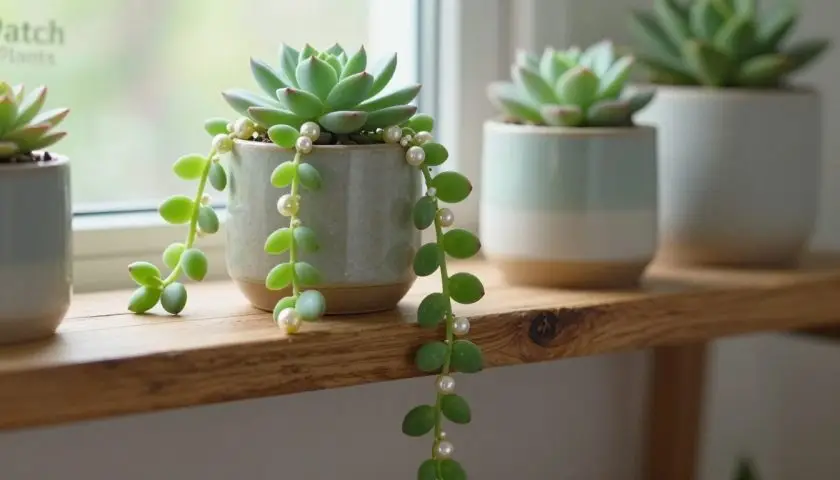
Here are the key steps to keep your plant thriving:
- Provide bright, indirect sunlight for at least six hours daily.
- Use a well-draining cactus or succulent potting mix.
- Ensure your pot has drainage holes to prevent root rot.
- Water only when the top inch of soil feels completely dry.
- Avoid getting water on the delicate “pearls” to prevent decay.
- Keep the plant in a room with moderate humidity levels.
- Maintain temperatures between 70°F and 80°F during the growing season.
- Fertilize sparingly during the spring and summer months.
- Prune long, leggy stems to encourage fuller growth.
- Monitor for common pests like mealybugs regularly.
Understanding the best care for string of pearls means balancing light and moisture. For the best way to care for string of pearls, be consistent. Proper care for string of pearls prevents issues like shriveled leaves or root rot.
“To nurture a plant is to feed not just the roots, but the soul of your home.”
The following table provides a quick summary of the environmental conditions required for optimal health:
| Factor | Ideal Range | Frequency |
|---|---|---|
| Sunlight | Bright, Indirect | Daily |
| Watering | Dry Soil | Bi-weekly |
| Temperature | 70°F – 80°F | Constant |
| Fertilizer | Balanced Liquid | Monthly |
By following this best care for string of pearls, you’ll create a great environment for your succulent. Consistent care for string of pearls is key to success with this unique plant.
Understanding Your String of Pearls
The String of Pearls is more than a trendy houseplant; it’s a botanical wonder with a rich history. To give the best String of pearls plant care, knowing its natural habitat is key. This knowledge helps you create a similar environment at home.
The Origin of Senecio rowleyanus
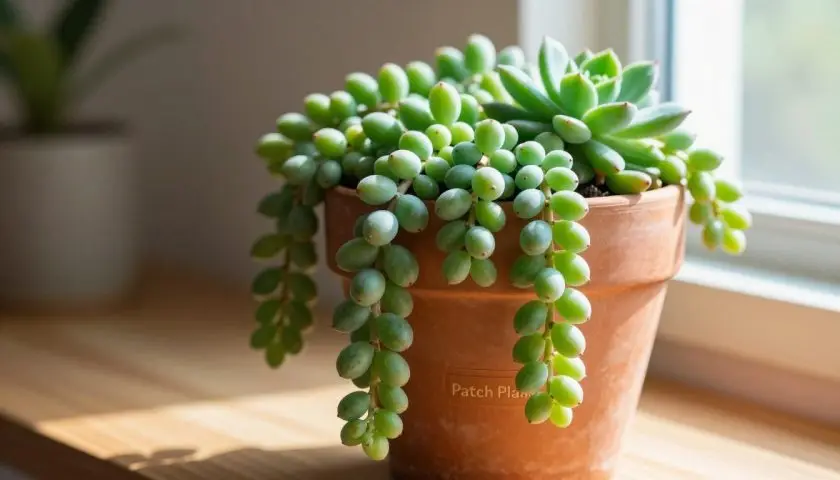
This String of pearls plant comes from dry, rocky areas in Southwest Africa. It grows as a creeping vine, often trailing on the ground or hanging from rocks to find shade. Its adaptation to dry climates means it needs very little water.
If you’re searching for hardy plants that can survive on minimal water, this succulent is perfect. Knowing its wild roots helps you care for it better. It does best in a dry, well-drained spot.
Why This Succulent is Unique
The plant’s standout feature is its pea-shaped leaves. These leaves are highly efficient water storage vessels. They help the plant survive long droughts without damage.
That’s why proper String of pearls succulent care is crucial for indoor gardeners. The right light and water balance keeps its unique look. For more tips, check out this String of pearls succulent guide to avoid common mistakes.
Mastering String of Pearls Care Requirements
Creating the right environment is key for a healthy string of pearls plant care routine. By mimicking its natural habitat, you encourage strong growth. Focus on light, temperature, and humidity to create a perfect home for your plant.
Optimizing Sunlight Requirements
Knowing your string of pearls sunlight requirements is crucial. These plants love bright, indirect light. If they stretch or look thin, they need more light.
To care for your string of pearls plant well, place it near a south or west window. They like bright spots but avoid direct sun to prevent burning. Always check their string of pearls light requirements to keep them healthy.
Managing Humidity and Temperature
This succulent prefers a stable, moderate humidity environment. It doesn’t need extra misting or high humidity. In fact, it’s better suited for drier spots than humid ones.
For more information, check out low light hanging plants for damp areas like bathrooms. Your string of pearls prefers a drier spot.
Ideal Indoor Conditions
As a popular string of pearls indoor plant, it thrives in temperatures between 70°F and 80°F. Good air circulation prevents fungal issues. Avoid stagnant corners.
Consistent string of pearls care indoors means keeping it away from cold drafts or heating vents.
Seasonal Adjustments
During cooler winter months, your plant’s growth slows. Reduce watering and keep it in a cooler room, around 55°F to 60°F. These changes help it rest for new growth in spring.
| Factor | Optimal Range | Notes for Success |
|---|---|---|
| Light | Bright, Indirect | Avoid harsh, direct sun |
| Temperature | 65°F – 80°F | Keep away from drafts |
| Humidity | Low to Moderate | Avoid high-moisture areas |
| String of pearls succulent plant care | Consistent | Monitor for seasonal changes |
Watering Techniques for Healthy Succulents
Learning how to water your succulent is key to a beautiful display. These plants store water in their leaves, so they’re very sensitive to moisture. Knowing your string of pearls water needs helps avoid common problems that harm the plant.
How Often to Water Your String of Pearls
Figuring out how often to water string of pearls depends on your home’s environment. In spring and summer, water when the top half of the soil is dry. In winter, the plant needs much less water.
Always check the soil before watering. If you’re new to how to take care of a string of pearls plant, it’s better to underwater than overwater. Wait until the pearls look a bit less plump before watering.
Identifying Signs of Thirst vs. Overwatering
Your plant will tell you when it needs water. If the pearls look flat or puckered, it’s thirsty. But if they’re mushy, translucent, or falling off, it’s overwatered.
What to do if your plant is shriveling
If your string of pearls shriveling, don’t worry. It usually means the plant is dehydrated. Water it well, making sure the pot drains. In a few days, the leaves should look round again.
Preventing root rot through proper drainage
To care for your string of pearls well, focus on drainage. Use a pot with holes to prevent water from staying around the roots. Trapped water can cause root rot, which is hard to fix.
| Condition | Visual Sign | Action Required |
|---|---|---|
| Thirsty | Flat, wrinkled pearls | Water thoroughly |
| Overwatered | Mushy, translucent leaves | Check roots and dry soil |
| Healthy | Plump, firm spheres | Maintain current schedule |
Soil and Fertilization Best Practices
A lush, trailing display starts with the right soil. String of pearl care needs a substrate that’s rocky and stable for its roots.
Choosing the Right Soil Mix
A well-draining string of pearls soil mix is key to avoid root rot. Don’t use regular potting soil, as it holds too much water.
Opt for a cactus or succulent blend instead. Add perlite, pumice, or coarse sand to help water drain fast.
Fertilizing for Optimal Growth
Proper string of pearls plant nutrition is more than just watering. These plants need a light feed during their growing season.
Regular string of pearls fertilization keeps the beads vibrant green. Without it, the vines may thin out or stop growing.
When to feed your plant
Feed your plant during the growing season, from spring to early autumn. Avoid fertilizing in winter when growth slows down.
Choosing the best fertilizer type
Choose a balanced, water-soluble succulent fertilizer. Always dilute it to half-strength to protect the roots.
“Succulents thrive when they are treated with patience and the right mineral balance, allowing them to store energy effectively for their unique trailing display.”
Propagation Methods for Expanding Your Collection
Learning to multiply your favorite trailing succulents is easy. String of pearls propagation lets you grow new plants from old ones. This way, you can fill up a pot or share with friends.
Water Propagation Techniques
Water propagation is fun to watch as roots grow. Cut a healthy stem, remove the bottom inch, and put it in water. Make sure the pearls stay dry to avoid rot.
Change the water often to keep it fresh. When the roots are an inch long, move the cutting to soil.
Soil Propagation for Stem Cuttings
Soil propagation makes plants stronger. It lets roots grow into their home. Keep the soil moist but not wet.
Step-by-step guide to successful rooting
Here’s how to make your cuttings grow:
- Choose a healthy stem that’s at least four inches long.
- Put the cutting on damp soil, laying it flat.
- Press the nodes into the soil to help them root.
- Keep it in bright, indirect light and mist the soil.
“Patience is the most important tool in a gardener’s kit, when waiting for roots to grow.”
Think about what you need before choosing a method. Here’s a comparison:
| Feature | Water Method | Soil Method |
|---|---|---|
| Root Visibility | High | None |
| Transplant Shock | Moderate | Low |
| Growth Speed | Fast | Steady |
| Maintenance | Frequent water changes | Occasional misting |
Troubleshooting Common Issues
If your trailing vines look a bit off, don’t worry. Most problems can be fixed easily. Knowing how to care for string of pearls plants means spotting stress signs early. Quick action can stop your plant from dying.
Why Your String of Pearls is Turning Brown
Seeing your plant turning brown means it’s time to check your watering. Brown tips often mean the plant needs more water or is getting too much sun. On the other hand, mushy brown spots can mean too much water, causing rot.
First, check the soil moisture. If it’s dry, water well. If it’s wet, change the soil to a mix that drains well.
Addressing Stunted Growth
If your string of pearls is not growing, it might need more energy. This can happen if the pot is too big or if it’s not getting enough light. Strategic pruning can help.
Trim off long or damaged stems with clean scissors. This string of pearls pruning helps the plant focus on growing new, healthy parts.
Identifying and Treating Common Pests
String of pearls pests can show up indoors. Watch the undersides of leaves for signs of pests. Catching them early is key to keeping your plants safe.
Dealing with mealybugs and spider mites
Mealybugs look like small, white cotton balls, while spider mites leave dusty webs. Use a cotton swab with rubbing alcohol to clean them off. For bigger problems, try a mild insecticidal soap or neem oil spray.
| Symptom | Likely Cause | Recommended Action |
|---|---|---|
| Mushy brown leaves | Overwatering | Reduce water and check drainage |
| Crispy, dry stems | Underwatering | Increase watering frequency |
| White cottony spots | Mealybugs | Apply rubbing alcohol |
| Fine webbing | Spider mites | Use neem oil or insecticidal soap |
Pet Safety and Toxicity Warnings
When learning how to care for a string of pearls, you might focus on light and water. But, as a responsible plant parent, pet safety is key. These plants are beautiful but risky for pets.
Understanding Toxicity to Cats and Dogs
The Senecio rowleyanus is toxic to cats and dogs. If your pet eats the leaves, they might get sick. Symptoms include vomiting, diarrhea, or feeling very tired.
Since the plant is string of pearls toxic to cats and string of pearls toxic to dogs, watch your pets closely. Even a little bit can make them uncomfortable. If you think your pet ate the plant, call your vet right away.
“The most effective way to enjoy indoor greenery with pets is to prioritize placement that keeps curious paws and noses away from potentially harmful foliage.”
Safe Placement Strategies for Pet Owners
You don’t have to choose between pets and plants. Use strategic placement to keep them safe. Here are some ideas to protect your pets and keep your garden.
| Placement Method | Safety Level | Best For |
|---|---|---|
| Ceiling Hooks | High | Active cats |
| Wall-Mounted Shelves | Medium | Curious dogs |
| Glass Terrariums | High | Small spaces |
| High Mantels | Medium | Limited floor space |
Hanging planters are the best way to keep plants out of reach. Make sure the planter is well-attached to the ceiling or a high wall. This way, you can enjoy your plant without worrying about pets getting sick.
Creative Room Styling and Display Ideas
Once your plant is healthy, it can become a stunning piece of living art. Many beginners wonder, are string of pearls hard to care for when they grow long, beautiful vines? The truth is, with the right setup, these plants become the room’s highlight.
Best Hanging Planters for Trailing Vines
Hanging planters are the best way to show off your plant’s cascading stems. When you focus on proper succulent string of pearls care, you need a container that drains well and looks minimalist. You can find many DIY string of pearls plant home projects to make custom hangers that fit your style.
Styling on Shelves and Mantels
Putting your pots on high shelves or mantels creates a dramatic waterfall effect. If you’re caring for variegated string of pearls, make sure the shelf gets enough bright, indirect light. This keeps the unique colors vibrant. For areas with changing weather, consider outdoor plants that can withstand storms and heatwaves to add to your indoor collection.
Creating a Succulent Gallery Wall
A gallery wall groups different pots for a lush, jungle-like look. Proper care for string of pearls houseplant varieties means keeping them at eye level or slightly above. Use wall-mounted brackets or floating shelves to add depth to your space.
| Display Method | Best For | Care for string of pearls succulent |
|---|---|---|
| Hanging Basket | Maximizing vertical space | Excellent drainage |
| Floating Shelf | Showcasing long vines | Easy access to light |
| Wall Bracket | Creating a focal point | Controlled environment |
Related Guides
We’ve put together a list of helpful resources for your indoor jungle. These guides help you care for your care of string of pearls and other succulents easily.
- 🌈 Colorful Indoor Plants Guide
- 🌿 Air Purifying Plants Guide
- 🌿 Monstera Care Guide
- 🌿 Pothos Care Guide
- 🌸 Peace Lily Care Guide
- 🐍 Snake Plant Care Guide
- 🕷️ Spider Plant Care Guide
- 🌱 ZZ Plant Care Guide
- 🌿 Rubber Plant Care Guide
- 🌿 Fiddle Leaf Fig Care Guide
- 💡 Complete Indoor Light Guide
- 💧 Complete Watering Guide
- 💨 Humidity Hacks Guide
- 💧 Fertilizing Indoor vs Outdoor
- 🌱 Best Soil Mix Guide
- 🌱 How to Repot a Plant
- ⚠️ Repotting Mistakes to Avoid
- 🌱 How to Propagate Houseplants
- 🍃 Why Leaves Turn Yellow
- 🌿 Leaf Curl, Browning, Droop Guide
- 💧 Signs of Overwatering
- 🆘 How to Revive a Dying Plant
- 🐾 Cat-Friendly Plants Guide
- 🐾 Dog-Friendly Plants Guide
- 🛁 Best Bathroom Plants
- 🏠 Style Indoor Plants by Room
- 🛌 Decorate Bedroom with Plants
- 🌿 Best Indoor Plants for Beginners
- 🌿 Low-Light Hanging Plants
- 🌿 35 Low-Maintenance Plants
- 📂 Browse All Indoor Plants
Essential Succulent Care for Beginners
Starting with desert plants can be a bit daunting. Our beginner guide covers the basics of light, water, and soil. It ensures you know how to care for string of pearls succulent right from the start.
Best Indoor Plants for Low Light
Not all parts of your home get plenty of sunlight. If you’re looking to add more plants, this guide shows the best ones for low light. They’re perfect for areas that don’t get much sun.
How to Repot Succulents Without Damage
Learning string of pearls repotting is key for your plants’ health. This guide walks you through how to repot your plants. It helps them get the space they need to grow without hurting their stems.
Conclusion
Adding a unique trailing succulent to your home makes any space lively. You might wonder if these plants are easy to care for. They have specific needs, but they’re rewarding once you learn the basics.
Many beginners ask if string of pearls are hard to take care of. The truth is, success comes from consistent observation. If you’re curious about other resilient plants, check out spider plant care. It’s a great way to add more charm to your collection.
Are string of pearl plants easy to care for? Yes, if you provide the right environment. Following the care instructions helps you avoid common mistakes like overwatering or bad light.
Are string of pearls easy to take care of in the long run? Yes, if you watch their moisture levels and seasonal needs. You now know how to keep your plant healthy and lush for years. Enjoy watching your vines grow and thrive in your favorite room.