Key Takeaways
- To style indoor plants by room successfully, every placement decision should begin with the room’s actual light level — the most beautifully styled plant in the wrong light conditions declines within weeks, undermining both the aesthetics and the investment the plant represents.
- Indoor plants for living room styling benefit most from layering by height — one tall floor specimen in a corner, a medium plant on a console or side table, and a trailing vine on a shelf creates visual depth and botanical interest that a collection of same-sized plants arranged on one surface cannot achieve.
- Kitchen plants should be chosen for both practicality and aesthetics — culinary herbs (basil, rosemary, mint, thyme) on a kitchen windowsill provide fresh ingredients alongside visual greenery, while trailing pothos on open shelving adds lushness without consuming counter space needed for food preparation.
- Hallway plants face the most challenging conditions in any home — typically narrow, often dark, and exposed to temperature fluctuations from front doors — making low-light, drought-tolerant specimens like snake plant, ZZ plant, and cast iron plant the most reliable choices for this underrated styling opportunity.
- Entryway plants create first impressions that shape how guests experience the entire home — tall, structural specimens like snake plant or money tree in statement pots beside a front door communicate genuine design intention and set a botanical tone that carries through the whole interior.
- Bathroom plants have access to the most plant-friendly natural humidity available anywhere in the home — shower steam and bath vapour create atmospheric moisture conditions that peace lily, boston fern, calathea, and air plants thrive in, often without any supplementary humidifier or misting.
- Bedroom plant styling should prioritise calming forms and air-purifying qualities over dramatic visual impact — soft, rounded leaf forms (pothos, peace lily, spider plant) complement the restful function of the bedroom better than the bold architectural statements that suit living rooms.
- How to decorate living room with plants effectively requires considering not just individual plants but the interaction between plants and existing furniture, lighting, and colour palette — a deep green monstera against a white wall creates a different effect from the same plant against a dark feature wall, and matching pot materials to room finishes (terracotta with warm tones, ceramic with cool minimalist schemes) ties the plant into the room’s design language.
- Indoor plant decor ideas for cohesive multi-room styling use repeating elements to create visual continuity — the same pot material or finish in different sizes across rooms, the same colour palette of plant foliage (all green vs. variegated vs. colourful), or the same structural approach (always one tall, one trailing) creates a designed rather than random appearance.
- The most effective way to style indoor plants by room is to start with one well-chosen, correctly positioned plant in each room rather than multiple plants in awkward positions — a single perfectly placed snake plant in a hallway creates more impact than five poorly positioned plants that compete with the architecture.
Introduction
There is a significant difference between having plants and styling indoor plants by room. Having plants means placing whatever you bought where it fits. Styling indoor plants means understanding each room’s specific conditions, aesthetic character, and functional requirements, then choosing plants, containers, and positions that work with the room rather than simply existing in it.
Every room in a home offers different light levels, humidity, temperature, and spatial constraints. What works as a living room plant — a large statement monstera with dramatic split leaves that catches light from a south-facing window — looks wrong in a dark narrow hallway. The humidity-loving fern that thrives beside your bath would decline rapidly on a dry office desk. Indoor plants by room isn’t just about aesthetics. It’s about matching biological requirements to environmental realities while simultaneously considering how the plant’s form, texture, and colour contribute to the room’s overall character.
This complete room-by-room guide covers how to style indoor plants in every room of the home — from the first impression of the entryway through the kitchen, living room, hallway, bathroom, bedroom, and office — with specific plant recommendations, positioning guidance, container choices, and the styling principles that make plant placement look intentional rather than accidental. For the care knowledge that keeps your styled plants healthy, our individual plant guides cover every species mentioned in complete detail.
Why Room-Specific Plant Styling Matters
Before covering individual rooms, one principle underpins everything: style indoor plants by room with the room’s actual conditions as the starting constraint, not the plant’s visual appeal. The most beautiful plant in the wrong conditions is a dying plant — and a dying plant in a styled space undermines everything around it more dramatically than no plant at all.
The four environmental factors that determine which plants suit which rooms are light, humidity, temperature, and air circulation. Our complete indoor light guide covers light assessment in detail. Our humidity hacks guide covers humidity management across different room types. Understanding these two factors alone transforms plant styling from a decorative exercise into one where plants genuinely thrive rather than slowly decline in their styled positions.
Living Room Plants — Statement, Scale, and Style

The living room offers the most plant styling opportunity in any home — typically the largest, best-lit, and most visually prominent space, it’s where indoor plants for living room styling can reach its full potential. The living room is where how to decorate living room with plants moves from a question about which plants to buy into a genuine interior design discipline.
Scale and Layering
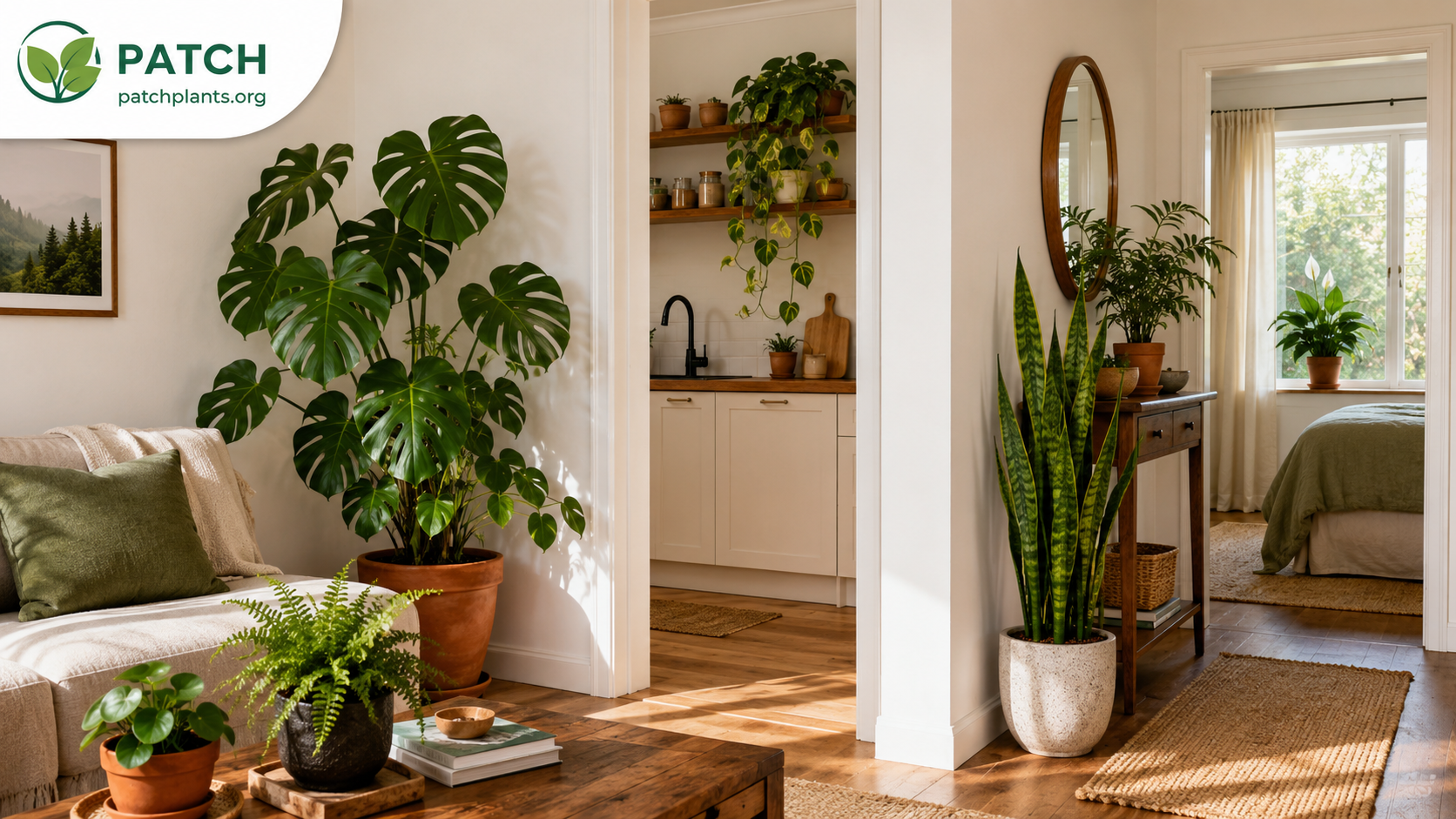
Indoor plants for living room styling works best with a layered approach that uses different plant heights to create visual depth across the room. A single large monstera or fiddle leaf fig as a corner floor plant provides the room’s botanical anchor — a large structural element that defines the corner space and gives the eye a natural focal point. A medium-height plant — rubber plant, peace lily, or pothos in a larger pot — near a window or beside a sofa provides the middle layer. A trailing plant — pothos, string of pearls, or tradescantia — on a high shelf or plant stand provides the third layer.
This three-layer approach to indoor plants for living room displays transforms a collection of plants into a botanical composition that reads as intentional rather than accumulated. See our 20 oversized indoor plants guide for the best large specimens for living room corner statements.
Best Plants for Living Room
Plants for living room positions near good natural light — south or west-facing windows: monstera, fiddle leaf fig, bird of paradise, rubber plant.
Plants for living room positions with moderate indirect light: pothos, philodendron, peace lily, calathea, spider plant.
Large plants for living room corners and floor positions: snake plant, ZZ plant, dracaena, money tree.
Container Choices for Living Room Plant Styling
Living room plants look most considered when containers relate to the room’s existing design language. Warm-toned rooms (terracotta walls, wooden floors, warm neutrals) suit terracotta, raw clay, or woven basket pots that echo the material palette. Cool minimalist rooms (white walls, concrete surfaces, grey tones) suit glazed ceramic, matte white, or black pots that complement rather than contrast. The goal of indoor plant decor ideas for living rooms is always cohesion — plants that feel like part of the room’s design rather than additions to it.
Kitchen Plants — Practical, Pretty, and Fragrant
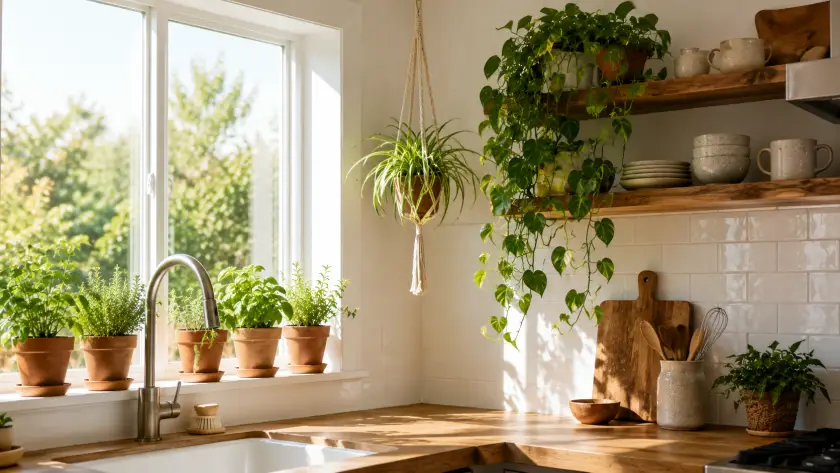
The kitchen is one of the most underrated spaces for style indoor plants by room opportunities. It combines the practical requirement for easily accessible culinary herbs with the aesthetic opportunity of trailing plants on open shelving, small specimens on window ledges, and hanging plants in corners — creating a room that feels alive and genuinely used rather than purely functional.
Herb Gardens as Kitchen Plant Styling
Culinary herbs positioned near the kitchen sink or on a windowsill with good light are the most functional kitchen plants available — they provide fresh cooking ingredients alongside genuine visual greenery in a space where both are valued. Basil, rosemary, mint, thyme, and chives all grow well in small pots on south or east-facing kitchen windowsills.
For styling impact, use matching clay or terracotta pots in consistent sizes — the uniformity creates a designed appearance even from a small collection of herbs. A terracotta drainage saucer beneath each pot or a shared tray unifies the grouping visually.
Trailing Plants on Kitchen Shelving
Open kitchen shelving is one of the best display opportunities for trailing plants — a single pothos allowed to trail along a shelf edge adds lushness without consuming the counter space needed for food preparation. Spider plant offshoots hanging from a high shelf add playful movement. Philodendron heartleaf on a shelf beside cookbooks creates a genuinely styled, inhabited-looking kitchen.
Kitchen Plant Care Considerations
Kitchens experience more temperature and humidity fluctuation than most rooms — steam from cooking, heat from ovens, and cold drafts from windows all affect plants positioned near these sources. Position kitchen plants away from direct heat from the hob and away from cold drafts from frequently opened windows. See our complete watering guide for adapting watering to the variable conditions kitchens create.
Best kitchen plants: Pothos, peace lily, spider plant, culinary herbs, aloe vera (near a bright kitchen window, functional for minor burns). See our indoor plants that smell amazing guide for fragrant kitchen plant options.
Hallway Plants — The Forgotten Styling Opportunity

Hallways are the most challenging room for style indoor plants by room — typically narrow, often darker than other rooms, exposed to temperature fluctuations from front doors, and lacking the floor space that plants need to make genuine visual impact. These constraints make hallway plant styling one of the most satisfying design problems to solve well.
Working With Hallway Constraints
Hallway plants must be narrow in profile (not wide-spreading), tolerant of low light, and capable of making vertical rather than horizontal impact. The snake plant is the defining hallway plant — its upright, sword-like leaves grow vertically without spreading, making it ideal for the narrow floor space beside a front door or at the end of a hallway. A tall snake plant in a tall narrow pot beside a coat rack or console table adds instant botanical architecture without obstructing movement.
ZZ plant, cast iron plant, and slim dracaena varieties all suit hallway conditions for the same reasons — vertical growth, low light tolerance, and drought resistance that buffers the inconsistent care that busy hallway positions often receive.
Hallway Plant Styling Techniques
Wall-mounted planters eliminate floor space requirements entirely — a series of small wall-mounted pots with trailing plants at different heights creates a vertical botanical feature on an otherwise blank hallway wall without using any floor space.
Mirror and plant combinations — positioning a plant in front of or beside a wall mirror doubles its visual impact. The reflected greenery creates the impression of a larger, more abundant botanical display and bounces available light back onto the plant itself, improving growing conditions in what may be a darker hallway.
Proportion and pedestal — a single entryway plant elevated on a small plant stand or pedestal often reads more effectively in a hallway than a large floor specimen, as the elevation brings the plant to eye level where its detail can be appreciated. See our low-light hanging plants guide for hanging options that work in hallway positions.
Entryway plant ideas: Snake plant in a tall ceramic pot, ZZ plant in a matte black planter, money tree as a statement welcome plant, cast iron plant for the darkest entryway positions.
Bathroom Plants — Humidity Havens
Bathrooms provide the most naturally plant-friendly atmospheric conditions available in any home — shower steam and bath vapour regularly bring bathroom humidity to 80–100%, creating conditions that tropical humidity-loving plants evolved for. The challenge is light rather than moisture, making bathroom plants selection primarily about choosing species that tolerate the typically lower or indirect light of bathroom windows.
The Best Bathroom Plant Styling Approach
Bathroom plants styled at different heights throughout the space create the spa-like botanical atmosphere that makes a bathroom genuinely restorative. A peace lily or small monstera on the floor beside the bath, a spider plant or pothos on a shelf or cabinet top, and air plants hanging from ceiling hooks or mounted on the wall above the shower together create a layered botanical environment that uses the full vertical height of the space.
For specific bathroom plant selection and complete styling guidance, our 33 best bathroom plants guide covers every position and light level in a bathroom environment. The humidity hacks guide covers how bathroom humidity can be supplemented in drier guest bathrooms.
Best bathroom plants: Peace lily, boston fern, calathea, pothos, spider plant, air plants, snake plant (for lower-light bathrooms).
Bedroom Plants — Calm, Softness, and Air Quality
The bedroom’s function — rest, relaxation, personal sanctuary — should shape bedroom plant styling as directly as its physical conditions. Bold, dramatic architectural plants (fiddle leaf fig, large monstera, bird of paradise) that suit living room statement positions often feel visually loud in bedrooms designed for calm. Softer, rounder-leaved plants with gentle forms create the botanical atmosphere that complements the bedroom’s restorative purpose.
Bedroom Plant Positioning
Nightstand plants: The most intimate indoor plant decor idea — a single small plant on a bedside table creates an immediate botanical presence that shapes how the room feels from bed. Compact varieties of peace lily, a small pothos in a ceramic pot, or a single haworthia succulent all work beautifully in this position. Choose pots with soft, tactile finishes (matte ceramic, natural stone) rather than highly polished surfaces.
Window positions: The bedroom window is prime real estate for plants that need more light — a spider plant on a bedroom windowsill, a small rubber plant beside a bright window, or a pothos trailing from a high shelf near the window all make excellent bedroom plant choices.
Floor corners: Larger bedroom plant specimens work well in floor corners — snake plant, monstera (in bedrooms with bright natural light), or dracaena all create a significant botanical presence without requiring the display effort of living room layered compositions.
For complete bedroom plant styling and placement guidance, see our decorate bedroom with plants guide. For fragrant options that support sleep quality, see our indoor plants that smell amazing guide.
Best bedroom plants: Peace lily, pothos, snake plant, spider plant, ZZ plant, calathea, monstera (in bright bedrooms).
Office Plants — Focus, Function, and Form
The home office requires the most disciplined approach to style indoor plants by room — the goal is plants that improve the working environment without creating visual distraction or demanding care attention during work hours. See our improve home office with plants guide and office-friendly plants guide for comprehensive office plant guidance.
Office Plant Styling Principles
Desk plants: The most practical office indoor plant decor idea — a single compact plant on the desk provides the documented focus and wellbeing benefits of plant presence without consuming the working surface space that productivity requires. ZZ plant (compact variety), haworthia, pothos in a small pot, or peace lily all work as desk plants that require watering only every 10–21 days.
Shelf plants: A row of small matching plants on a bookshelf behind a desk creates a visually cohesive botanical backdrop for video calls and provides genuine greenery without using desk space. Matching pot sizes and finishes is particularly important here — visual uniformity reads as designed rather than accumulated.
Corner floor plants: Snake plant, dracaena, and larger ZZ plant in floor positions beside desks or in office corners add significant visual presence while tolerating the low light and inconsistent watering that busy working days inevitably create. See our 35 low-maintenance plants guide for office plant selections.
Indoor Plant Decor Ideas — Styling Principles That Work Across Every Room
Pot and Container Selection
The container is as much part of the indoor plant decor idea as the plant itself. Containers should relate to the room’s existing material palette — terracotta and woven textures suit warm, organic, or Scandinavian-influenced interiors; glazed ceramic and matte finishes suit contemporary, minimalist, or monochromatic schemes; stone, concrete, and slate suit industrial or urban aesthetics.
The single most effective container styling principle for style indoor plants by room is using the same material in different sizes across a room rather than different materials in matching sizes — repeating the material creates visual cohesion even when pot sizes and plant species vary significantly.
Plant Grouping
Indoor plant decor ideas that group plants by odd numbers (3, 5, or 7) rather than even numbers create displays that read more naturally and dynamically than symmetrical pairs. Group plants at different heights — one tall, one medium, one low or trailing — within the same corner or shelf space to create botanical compositions with visual interest across the full height of the space.
Group plants with contrasting textures (large-leaved monstera beside fine-leaved fern, broad rubber plant leaf beside spiky snake plant) and similar colours to create displays that are visually rich without being chaotic.
Seasonal Plant Rotation
Style indoor plants by room with seasonal rotation in mind — moving plants between rooms as seasonal light changes, swapping specimen plants for seasonal flowering varieties, or rotating the positions of plants that benefit from different light levels at different times of year keeps interiors visually dynamic and responds to changing plant needs. See our garden calendar 2026 for seasonal timing guidance.
Troubleshooting Styled Plants
Plant declining in styled position: The most common indoor plant decor problem — a plant looks beautiful in its chosen position but declines within weeks. Check light levels first (most common cause), then check watering frequency is appropriate for the actual conditions rather than a standard schedule. See our why leaves turn yellow guide, leaf curl browning and droop guide, and how to revive a dying plant guide.
Plants look cluttered rather than styled: The most common styling mistake — too many plants in a small space. Edit ruthlessly. One well-chosen, correctly sized plant in a beautiful pot creates more impact than five mismatched plants competing for the same space. The 35 low-maintenance plants guide and best indoor plants for beginners guide can help narrow down the best specimen for each room.
Pots don’t relate to the room: Inconsistent container choices are the most visible indoor plant decor idea failure. Standardise pot materials across a room and the styling immediately improves even with the same plants.
Frequently Asked Questions
How do I style indoor plants by room effectively? Start with the room’s actual light conditions and choose plants that genuinely suit those conditions — this is the foundation of successful style indoor plants by room practice. Then apply the layering principle (tall, medium, trailing), choose containers that relate to the room’s existing design language, and position plants where they contribute to the room’s function rather than obstruct it. See our complete indoor light guide for light assessment.
What are the best indoor plants for living room styling? The best indoor plants for living room positions depend on available light. In bright rooms: monstera, fiddle leaf fig, bird of paradise, rubber plant. In moderate light: pothos, philodendron, peace lily, calathea, snake plant. For corner floor statements regardless of light: snake plant and ZZ plant. See our 20 oversized indoor plants guide for large living room statement plant options.
How do I decorate a living room with plants without it looking cluttered? How to decorate living room with plants without clutter: use the three-layer principle (one tall floor plant, one medium height, one trailing) rather than multiple plants at the same height; choose three to five plants maximum rather than filling every surface; standardise pot materials to create visual cohesion; and resist adding plants just because a surface is empty — empty surfaces create visual breathing room.
Which plants work best for hallways and entryways? Hallway plants and entryway plants need low-light tolerance and vertical rather than spreading growth. Snake plant, ZZ plant, cast iron plant, and slim dracaena varieties are the most reliable. Position beside console tables, coat racks, or at the end of hallways in statement pots. Wall-mounted planters eliminate floor space requirements entirely for very narrow hallways. See our snake plant care guide.
Can the same plant work in multiple rooms? Yes — pothos, peace lily, snake plant, and spider plant are the most versatile indoor plants that work across multiple room types, tolerating the range of light, humidity, and temperature conditions across a typical home. However, even versatile plants perform and look best in conditions that suit them — a peace lily in a bathroom’s humidity grows more vigorously than the same plant in a dry bedroom, and choosing room-appropriate plants over simply versatile ones produces better results both practically and aesthetically.
How do I make indoor plant styling look cohesive across different rooms? Indoor plant decor ideas for cohesion across rooms: use the same pot material or finish throughout (all terracotta, all matte white, all glazed ceramic) even when pot sizes and plant species vary; maintain consistent scale relative to room size (large plants in large rooms, compact plants in smaller ones); and choose foliage colours that complement the home’s overall colour palette. Repeating one well-chosen container material across all rooms creates a botanical thread that ties the home’s plant collection into a designed whole rather than an accumulated one.
Related Guides
- Decorate Bedroom with Plants
- 33 Best Bathroom Plants
- 20 Oversized Indoor Plants
- Office-Friendly Plants Guide
- Improve Home Office with Plants
- Complete Indoor Light Guide
- Humidity Hacks Guide
- Complete Watering Guide
- Low Light Hanging Plants
- Monstera Care Guide
- Fiddle Leaf Fig Care Guide
- Rubber Plant Care Guide
- Bird of Paradise Care Guide
- Snake Plant Care Guide
- ZZ Plant Care Guide
- Pothos Care Guide
- Peace Lily Care Guide
- Calathea Care Guide
- Philodendron Care Guide
- Spider Plant Care Guide
- Boston Fern Care Guide
- Dracaena Care Guide
- Money Tree Care Guide
- Aloe Vera Care Guide
- Christmas Cactus Care Guide
- String of Pearls Care Guide
- Jade Plant Care Guide
- Succulent Care Guide
- Why Leaves Turn Yellow
- Leaf Curl Browning Droop Guide
- How to Revive a Dying Plant
- Signs You’re Overwatering
- How to Repot a Plant
- Best Soil Mix Guide
- Fertilizing Indoor vs Outdoor
- 35 Low Maintenance Plants
- Best Indoor Plants for Beginners
- Rare Houseplants Guide
- Colorful Foliage Indoor Plants
- Air Purifying Indoor Plants
- Indoor Plants That Smell Amazing
- 23 Blooming Indoor Plants
- Cat Friendly Plants Guide
- Dog Friendly Plants Guide
- Garden Calendar 2026
- Best Low Maintenance Outdoor Plants
- Browse All Indoor Plants →
- Browse All Plant Care →
Final Thoughts
Styling indoor plants by room is ultimately about creating living environments where both the plants and the people in them genuinely thrive — rooms that look designed rather than decorated, where plants contribute to each space’s character and function rather than simply occupying available surfaces. The difference between a home with plants and a home where plants are styled is the difference between decoration and design.
The most sustainable approach to style indoor plants by room is the iterative one — start with one well-chosen plant in each room, placed correctly for both light conditions and visual impact, and add only when the first plant is thriving. A home built slowly this way, one perfect plant at a time in each room, develops a botanical coherence that instant collection-buying rarely achieves.
According to the Royal Horticultural Society (RHS), the placement of plants in domestic interiors — particularly in relation to available light and room conditions — is the single most significant factor in determining both the health of the plant and the success of the aesthetic contribution it makes to the space, reinforcing that style indoor plants by room with conditions as the primary constraint produces the best outcomes for both plant and interior. 🌿