
Key Takeaways
- The most damaging of all repotting mistakes is overpotting — choosing a pot significantly larger than the current one creates excess soil volume that roots can’t access, holding moisture long enough to cause the root rot that the repotting was never going to fix.
- When not to repot plants is as important a skill as knowing when to repot — repotting during dormancy (autumn and winter), immediately after purchase, during flowering, or when a plant is already stressed from another cause all produce plant stress after repotting that can set plants back for months.
- Signs your plant needs repotting are specific and verifiable — roots circling the inside of the pot, roots emerging from drainage holes, soil that dries out within 24 hours of watering, and a plant that tips over because it’s too top-heavy for its container. Any single symptom in isolation is insufficient — look for multiple indicators before deciding to repot.
- How to repot a plant without killing it requires soil-drying before the repot (never repot into wet soil), gentle root handling, correct pot sizing (only 2–5cm larger in diameter), species-appropriate fresh soil, and a full 2–4 week post-repot recovery period without fertilizer.
- Common repotting errors include using the same soil type for all plants regardless of their drainage needs — succulents in moisture-retentive compost and tropical moisture-lovers in fast-draining cactus mix both create problems within weeks of repotting.
- Root damage repotting caused by aggressive untangling, tearing, or cutting of healthy roots delays recovery and creates entry points for bacterial rot — roots should be gently teased apart with fingers, not pulled forcefully or cut with unsterilised tools.
- Plant care after repotting determines whether the repot succeeds — water lightly (not thoroughly) immediately after repotting, keep in stable indirect light for 2 weeks, withhold fertilizer for 4–6 weeks, and don’t move the plant repeatedly to check its progress.
- Repotting a rootbound plant is genuinely necessary when the root mass has become so dense that it’s pushing the plant out of its pot, circling tightly around the inside of the container, or completely replacing the soil volume — but mild root binding in some species (peace lily, spider plant) actually stimulates flowering and shouldn’t be immediately treated.
- The best time to repot plants is spring — when active growth is beginning, root systems are vigorous enough to establish quickly in new soil, and the full growing season ahead provides maximum recovery time before the slower winter months.
- Why is my plant dying after repotting is one of the most searched plant care questions because transplant shock is both extremely common and completely preventable — the combination of correct timing, gentle handling, appropriate pot size, correct soil, and patient aftercare eliminates most repotting casualties.
Introduction
Repotting should be a fresh start — a moment where a crowded, depleted plant gets new space, new soil, and renewed growing conditions. In practice, repotting mistakes turn it into one of the most common causes of plant decline. Plants that were growing steadily suddenly droop for weeks. Plants that were root-bound develop rot in their new oversized pots. Plants that got repotted in winter never quite recover their momentum before the following spring.
The frustrating truth about common repotting errors is that most of them come from good intentions applied at the wrong time, in the wrong pot size, with the wrong soil, or with too much urgency to help a plant that wasn’t actually asking for help at all. Understanding when not to repot plants is genuinely as important as knowing the correct repotting technique — because the plants most frequently harmed by repotting are those that didn’t need repotting in the first place.
This complete guide covers every significant repotting mistakes scenario, exactly how to repot a plant without killing it, the specific signs your plant needs repotting that justify the intervention, and the plant care after repotting protocol that determines whether the process succeeds. For connected guidance, our how to repot a plant guide, best soil mix guide, what is root rot guide, and signs of overwatering guide cover every related topic in detail.
Why Repotting Isn’t Always the Answer
The most important concept in avoiding repotting mistakes is recognising that most houseplant problems are not caused by pot size. Yellow leaves, drooping, stunted growth, and poor vigour — the symptoms that prompt most repotting decisions — are all equally caused by incorrect watering, insufficient light, inappropriate soil, pest infestation, and nutrient deficiency. Repotting addresses none of these causes, and the additional stress of the repot can accelerate the decline it was supposed to solve.
Before deciding to repot, check in sequence: Is the soil correct? Is the light adequate? Is the watering schedule right? Are pests present? Has the plant been fed recently? Only when these factors are ruled out should pot size and root condition be evaluated as potential causes. Our complete watering guide, complete indoor light guide, and how to revive a dying plant guide cover these diagnostic checks in full detail.
Plants also actively prefer stability. Every repotting — however carefully done — disrupts the root system, changes the soil chemistry, and requires the plant to redirect energy from growth and flowering toward re-establishing its root network in unfamiliar conditions. This is why plant stress after repotting is universal rather than exceptional — the question is whether the disruption is justified by genuine root-bound conditions, and whether the timing minimises the duration and severity of that stress.
The 8 Most Common Repotting Mistakes
Mistake 1: Overpotting — Choosing Too Large a Pot
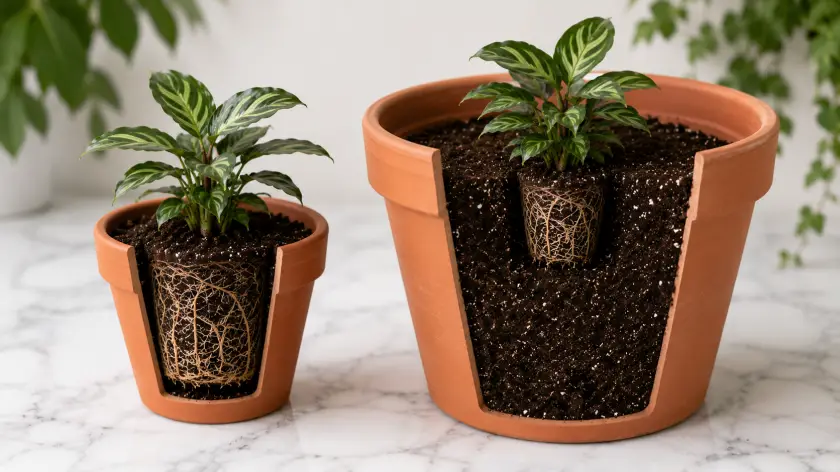
Overpotting issues are responsible for more post-repotting plant deaths than any other repotting mistakes — and the logic that produces them is entirely understandable. A larger pot means more room to grow, so why not give the plant plenty of space to expand into? The problem is that plants in significantly oversized pots are surrounded by large volumes of soil that their root systems cannot reach or efficiently drain moisture from, creating persistently wet conditions that cause the root rot that kills far more plants than being root-bound ever would.
The correct pot size for plants is 2–5cm larger in diameter than the current pot for most houseplants — enough new soil to provide fresh nutrients and slight additional root space without creating the moisture-retaining volume excess that causes overpotting problems. For slow-growing plants like snake plant, ZZ plant, and succulents, even 2cm diameter increase is sufficient. For fast-growing plants like monstera, pothos, and philodendron, 5cm is appropriate.
Signs of overpotting: Soil remaining wet for more than 2 weeks after watering, yellowing lower leaves appearing within weeks of repotting, and the plant looking worse rather than better 3–4 weeks after the repot — all classic repotting mistakes indicators. See our signs of overwatering guide and what is root rot guide for what to do if overpotting has already occurred.
Mistake 2: Wrong Timing — Repotting at the Wrong Season
Repotting plants in winter is one of the most consistently damaging repotting mistakes available — because winter is precisely when most houseplants enter a period of reduced metabolic activity, slower growth, and decreased root development capacity. A plant repotted in winter has limited ability to generate the new root growth needed to establish in fresh soil, leaving it sitting in unfamiliar conditions with minimal recovery capacity for months until growing conditions improve in spring.
The best time to repot plants is spring — March through May in the Northern Hemisphere — when active growth is beginning, root systems are vigorous and generating new tip growth, and the full growing season ahead provides maximum time for root establishment before the following winter slowdown. Early summer repotting is acceptable for most plants. Autumn repotting is workable for tropical plants being brought inside before the first frost, but only early autumn before growth has slowed significantly.
When not to repot plants based on timing: never in winter (November through February for most houseplants), never immediately before or during flowering (repotting stress causes flower and bud drop), and never during or immediately after a period of stress from another cause — overwatering recovery, pest treatment, or environmental change. Our garden calendar 2026 guide covers seasonal repotting timing for all plant types.
Mistake 3: Using the Wrong Soil
Soil mistakes when repotting produce slow, difficult-to-diagnose problems because the consequences — root rot from inadequate drainage or drought stress from excessive drainage — develop gradually rather than immediately after the repot. Using standard multipurpose compost for all plants regardless of their drainage requirements is the most common version of this mistake.
Correct soil for repotting by plant type:
Succulents, cacti, snake plant, ZZ plant, aloe vera — gritty cactus mix with 40–50% perlite. Moisture retention in standard compost creates root rot within months. Tropical foliage plants (monstera, pothos, philodendron, rubber plant) — quality potting compost with 20–30% perlite added. Boston fern, calathea — moisture-retentive mix with peat or coco coir base. Orchids — specialist orchid bark, never standard compost. Our best soil mix guide covers correct soil compositions for every plant type in complete detail.
Never reuse old soil from the same pot. Old soil is depleted of nutrients, may harbour the bacteria and fungi responsible for any root rot the plant experienced, and has often lost the structural properties (aeration, drainage) that make it effective. Always use fresh soil for every repotting.
Mistake 4: Root Damage from Aggressive Handling
Root damage repotting occurs when roots are torn, pulled forcefully, or cut with unsterile tools during the unpotting and separation process. Roots that are damaged during repotting create entry points for the bacterial and fungal infections responsible for root rot, delay the establishment of the root system in new soil, and produce the drooping and wilting that owners often misinterpret as transplant shock when it’s actually active infection progressing from the damage sites.
How to repot a plant without killing it through root handling: allow soil to dry completely before repotting (dry soil falls away from roots more readily and with less root disturbance), slide the plant from its pot by inverting and tapping the base rather than pulling at the stem, use fingers rather than tools to gently tease apart roots that are matted or circling, and use clean sterilised scissors (wiped with 70% isopropyl alcohol) for any roots that genuinely need cutting — removing only dead, mushy, or extensively damaged roots rather than healthy tissue.
For repotting a rootbound plant where roots have formed a dense solid mass, soak the root ball in water for 15–20 minutes before attempting separation — the water penetrates the mass and makes gentle root teasing possible without the tearing that dry roots require. Our how to repot a plant guide covers the complete root handling process step by step.
Mistake 5: Repotting Immediately After Purchase
Repotting a newly purchased plant is among the most common repotting mistakes for enthusiastic plant owners — and the reasoning is understandable. The plant arrives in nursery plastic, the soil often seems poor quality, and the instinct is to give it an immediate upgrade. But a newly purchased plant is already experiencing the significant stress of environmental change — new light levels, new temperature, new humidity, new water chemistry — and adding repotting stress simultaneously before the plant has had any chance to acclimate compounds multiple stressors that the plant may not recover from successfully.
When not to repot plants after purchase: wait a minimum of 4–6 weeks after bringing a new plant home before repotting, unless the plant is visibly root-bound to the point of being pushed out of its nursery pot or the nursery soil is clearly waterlogged and causing active root rot. During the 4–6 week acclimation period, maintain stable conditions — consistent light, correct watering, no fertilizer — and allow the plant to establish before adding repotting stress.
Mistake 6: Repotting a Stressed or Sick Plant
Repotting mistakes that accelerate plant decline most rapidly typically involve repotting a plant that is already under significant stress from another cause — overwatering, pest infestation, disease, or environmental shock. The reasoning is usually that repotting will help fix the underlying problem, but a plant with a compromised root system or active disease has minimal resources to recover from the additional stress of repotting.
When not to repot plants that are already stressed: treat the underlying cause first. Overwatered plants with root rot should have rot treated (roots trimmed, soil changed) as part of an emergency rescue — this is an exception where soil change is essential — but the focus is on treating the rot rather than upgrading the pot. Pest-infested plants should be treated completely before repotting. Plants recovering from overwatering or environmental shock should be stabilised for at least 3–4 weeks before any elective repotting. Our how to revive a dying plant guide covers the distinction between emergency soil change for root rot treatment and elective repotting.
Mistake 7: Not Watering Before Repotting
Repotting into bone-dry soil or repotting a plant whose current soil is bone dry causes unnecessary root tip desiccation during the exposed period between unpotting and repotting. The exposed fine root tips — which are the most active absorptive tissue in the root system — are extremely sensitive to dehydration and can die within minutes of air exposure if completely dry.
How to repot a plant without killing it through pre-repot watering: water the plant thoroughly 24 hours before repotting. This ensures roots are hydrated and resilient enough to handle the exposure and handling of repotting without tip desiccation, while ensuring the soil is firm enough to come away cleanly rather than crumbling excessively. Never repot into wet soil — the waterlogging creates root rot conditions — but well-hydrated roots from a 24-hour pre-watering represent the optimal starting condition.
Mistake 8: Fertilizing Immediately After Repotting
Fertilizing immediately after repotting is a common repotting error that damages the fresh new roots that the plant is generating to establish in its new soil. The newly cut or disturbed root ends are particularly sensitive to fertilizer salt concentration, and feeding at full strength immediately after repotting causes fertilizer burn that sets back establishment and can turn a successful repot into a month-long decline.
Plant care after repotting fertilizing protocol: withhold all fertilizer for 4–6 weeks after repotting. Fresh potting soil contains sufficient nutrients for this period. When resuming feeding, start at half the recommended dose for the first 2 applications before returning to normal feeding. Our fertilizing indoor vs outdoor plants guide covers post-repotting feeding schedules in detail.
Signs Your Plant Needs Repotting — The Reliable Indicators
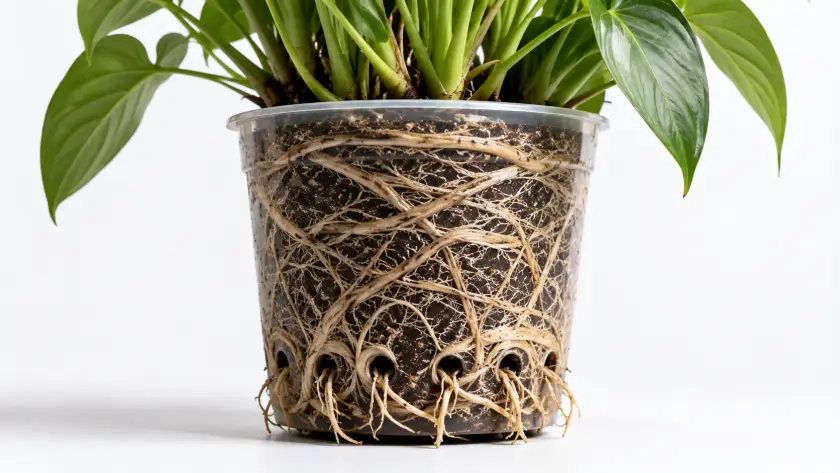
Signs your plant needs repotting are specific and multiple — a single indicator in isolation is rarely sufficient justification for repotting given the stress it causes. Look for a combination of these before deciding to repot:
Root emergence — roots growing through drainage holes or visibly emerging from the pot base are the clearest signs your plant needs repotting. This indicates the root ball has filled the container and roots are actively seeking additional space.
Rootbound confirmation — slide the plant from its pot and inspect the root ball. A plant that needs repotting shows roots circling tightly around the interior of the pot, forming a solid mass that has largely replaced the soil volume. Repotting a rootbound plant is genuinely necessary at this stage. A plant with roots that are simply visible at the edge of the soil but not tightly circling does not need repotting.
Rapid soil drying — soil that dries out completely within 24–48 hours of thorough watering indicates that the root mass has displaced most of the soil volume and there is insufficient soil to hold adequate moisture between waterings.
Plant tipping — a plant that tips over because it is top-heavy for its container has outgrown its current pot structurally as well as in terms of root space.
Water not absorbing — water that sits on the surface rather than absorbing, or that runs immediately through the pot without wetting the soil, indicates either severely compacted soil or a root mass so dense that water cannot penetrate.
What is NOT a reliable sign: Yellow leaves alone, drooping alone, slow growth alone, or any single symptom that could equally be explained by incorrect watering, poor light, or nutrient deficiency. Check these causes before concluding repotting is needed.
When NOT to Repot Plants — The Complete List
When not to repot plants covers more situations than most guides acknowledge:
Winter (November–February): Most houseplants are in reduced activity or dormancy. Root establishment in new soil is slow, and the plant sits in unfamiliar conditions with no growth momentum to recover. Repotting plants in winter causes the prolonged sulking and decline that gives repotting its nervous-making reputation. Wait for spring.
During flowering: Repotting stress causes bud drop and flower loss in most flowering houseplants. Wait until flowering is complete before repotting peace lily, orchids, anthurium, christmas cactus, and money tree.
Immediately after purchase: Allow 4–6 weeks acclimation before repotting new plants.
During recovery from another problem: Treat the underlying cause first — overwatering, pests, environmental stress — before adding repotting stress.
When roots are only mildly bound: Mild root binding in peace lily, spider plant, and many orchids actually stimulates flowering. When not to repot plants includes any situation where the plant is performing well despite somewhat crowded roots.
After a significant environmental change: Moving from outdoors to indoors, from one room to another, or from a nursery to a home all represent environmental stresses that the plant needs to recover from before repotting is appropriate.
How to Repot a Plant Without Killing It — The Correct Process
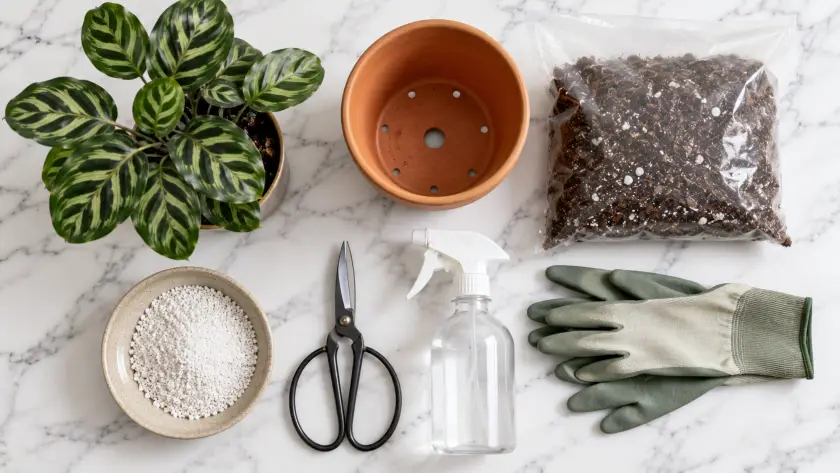
Step 1 — Prepare: Water the plant thoroughly 24 hours before repotting. Prepare the new pot (clean, drainage holes clear), fresh species-appropriate soil, and clean sterile scissors. Work in a space where soil mess is manageable.
Step 2 — Unpot: Allow soil to dry slightly from the pre-watering before unpotting (the 24-hour gap helps here). Invert the pot, support the plant at soil level with your hand, and tap the pot base firmly. The root ball should slide out intact. Never pull at the stem.
Step 3 — Inspect roots: Examine the root ball for signs of rot (dark mushy roots), root-bound circling (roots forming a solid wall around the outside of the root ball), and overall root health. Remove dead, mushy, or excessively circling roots with clean sterile scissors. Gently tease apart any matted roots with fingers.
Step 4 — Repot: Add a layer of fresh soil to the base of the new pot. Position the root ball so the plant sits at the same depth as in the original pot — never bury the stem. Fill around the root ball with fresh soil, firming gently to eliminate air pockets without compacting. Leave 2–3cm between soil surface and pot rim for watering.
Step 5 — Water lightly: Water lightly after repotting — enough to settle the soil without saturating it. Do not water thoroughly for the first week — roots need to begin exploring new soil before encountering full moisture levels.
Step 6 — Recovery position: Place in stable indirect light — not the brightest available position, not a dark corner — for 2 weeks. Avoid drafts, direct sun, and temperature fluctuations. Do not move the plant repeatedly to check progress. Our complete indoor light guide covers optimal recovery positioning.
Plant Care After Repotting — The Recovery Protocol
Plant care after repotting determines whether a correctly executed repot produces the improvement intended:
Watering: Water lightly for the first week, then resume normal watering schedule for that specific plant. The fresh soil retains moisture more effectively than the depleted old soil, so initial watering needs are lower than you might expect. See our complete watering guide.
Light: Stable indirect light for 2 weeks. Direct sun on a recently repotted plant adds additional stress to already-disrupted roots. After 2 weeks, gradually return to the plant’s optimal light position.
Fertilizer: None for 4–6 weeks. Fresh soil provides sufficient nutrition for this period. See our fertilizing guide.
Humidity: Maintain normal humidity for the plant type. Humidity tents can help for high-humidity lovers like calathea and boston fern during the first week. See our humidity hacks guide.
What to expect: Mild drooping and reduced growth for 1–3 weeks is normal plant stress after repotting — this is the plant redirecting energy toward root establishment. New growth appearing after 3–4 weeks indicates successful establishment. Continued worsening after 3 weeks warrants investigation. See our leaf curl browning and droop guide and why leaves turn yellow guide for post-repotting symptom diagnosis.
Why is my plant dying after repotting? The most common causes are overpotting (too much soil volume causing waterlogging), incorrect soil type, repotting at the wrong time of year, or fertilizing too soon after repotting. Check each factor in sequence before concluding the repot was unsuccessful.
Repotting Frequency — How Often Do Plants Actually Need It?
Repotting frequency varies significantly by species, growth rate, and pot material. As a general guide: fast-growing tropical plants (monstera, pothos, philodendron) typically need repotting every 12–18 months. Moderate growers (peace lily, rubber plant, spider plant) need repotting every 2 years. Slow growers (snake plant, ZZ plant, jade plant) need repotting every 3–4 years. Succulents and cacti every 2–3 years.
These are guidelines, not schedules — always use the signs your plant needs repotting indicators above to confirm repotting is actually needed before acting on a time-based assumption.
Frequently Asked Questions
What are the most common repotting mistakes? The most damaging repotting mistakes are overpotting (choosing a pot too large), wrong timing (repotting in winter or during dormancy), using incorrect soil for the plant type, aggressive root handling causing root damage repotting, repotting a stressed or newly purchased plant before it has acclimated, and fertilizing immediately after repotting before roots have recovered. Most repotting plants mistakes come from good intentions applied without accurate diagnosis of whether repotting is actually necessary.
How do I know when my plant really needs repotting? Signs your plant needs repotting include roots growing through drainage holes, roots visibly circling the inside of the pot when unpotted, soil drying within 24 hours of thorough watering, and the plant tipping due to top-heaviness. Never repot based on a single symptom — look for multiple indicators and eliminate other causes (incorrect watering, poor light) before deciding to repot.
What is the best time to repot plants? The best time to repot plants is spring — March through May — when active growth is beginning and the full growing season provides maximum time for root establishment. Early summer is acceptable. When not to repot plants based on season: winter, immediately before or during flowering, and during any period of stress from another cause.
How do I repot without causing transplant shock? Avoiding transplant shock requires correct preparation (water 24 hours before), gentle root handling (never pull or tear), correct pot sizing (only 2–5cm larger), correct soil type, light initial watering, stable indirect light for 2 weeks after repotting, and no fertilizer for 4–6 weeks. See our how to repot a plant guide for the complete process.
Should I water after repotting? Water after repotting lightly immediately after the repot — enough to settle the soil and provide initial moisture for roots without saturating the new soil. For the first week, water sparingly rather than thoroughly. After the first week, resume the correct watering schedule for the specific plant. Never fertilize for the first 4–6 weeks. Our complete watering guide covers post-repotting watering in detail.
Why is my plant dying after repotting? Why is my plant dying after repotting — the most common causes are overpotting creating waterlogged soil conditions, wrong soil type causing drainage problems, repotting during winter when the plant lacks recovery capacity, fertilizing too soon causing root burn, or aggressive root handling creating infection entry points. Check each factor in sequence. Mild drooping for 1–3 weeks is normal plant stress after repotting — continued worsening after 3 weeks requires investigation using our how to revive a dying plant guide.
Related Guides
- How to Repot a Plant
- Best Soil Mix Guide
- What Is Root Rot Guide
- Signs You’re Overwatering
- How to Revive a Dying Plant
- Complete Watering Guide
- Complete Indoor Light Guide
- Humidity Hacks Guide
- Fertilizing Indoor vs Outdoor
- Leaf Curl Browning Droop Guide
- Why Leaves Turn Yellow
- Garden Calendar 2026
- Snake Plant Care Guide
- ZZ Plant Care Guide
- Pothos Care Guide
- Monstera Care Guide
- Peace Lily Care Guide
- Philodendron Care Guide
- Rubber Plant Care Guide
- Spider Plant Care Guide
- Calathea Care Guide
- Boston Fern Care Guide
- Jade Plant Care Guide
- Succulent Care Guide
- Aloe Vera Care Guide
- Christmas Cactus Care Guide
- Money Tree Care Guide
- Bird of Paradise Care Guide
- Dracaena Care Guide
- Fiddle Leaf Fig Care Guide
- String of Pearls Care Guide
- 23 Blooming Indoor Plants
- Truth About Self-Watering Pots
- 35 Low Maintenance Plants
- Best Indoor Plants for Beginners
- 33 Best Bathroom Plants
- 20 Oversized Indoor Plants
- Office Friendly Plants Guide
- How to Propagate Houseplants
- Best Low Maintenance Outdoor Plants
- Cat Friendly Plants Guide
- Dog Friendly Plants Guide
- Browse All Plant Care →
- Browse All Indoor Plants →
Final Thoughts
Repotting mistakes are universal — every experienced plant owner has overpotted a succulent, repotted something in November that then sulked until March, or pulled too hard at a root ball and watched the plant droop for weeks afterward. The knowledge in this guide doesn’t make you immune to these mistakes, but it does make them recognisable before you make them rather than only afterward when the damage is already done.
The most important reframe in approaching repotting correctly is shifting from “my plant looks unhappy so I should do something” to “I need to accurately diagnose why my plant looks unhappy before deciding whether repotting is the right intervention.” Most of the time, it isn’t — and the plant that was already stressed by incorrect watering or poor light doesn’t need the additional stress of a repot to recover. When repotting genuinely is indicated, the correct timing, pot size, soil, and aftercare make the difference between a plant that establishes quickly and thrives and one that spends months recovering from being helped.
According to the Royal Horticultural Society (RHS), incorrect repotting — particularly overpotting and repotting during dormancy — is among the leading causes of preventable houseplant loss in UK homes, with the majority of repotting casualties resulting from size and timing errors rather than any inherent difficulty in the repotting process itself. 🌱
[…] annually for fast-growing mint and basil. Our how to repot guide covers every step, and our repotting mistakes guide prevents the most common herb repotting […]
[…] more pot care, read self-watering pots guide, repotting mistakes, and how to repot a […]
[…] For more potting help, read best soil mix guide, how to repot a plant, and repotting mistakes to avoid. […]
[…] For potting basics, use best soil mix guide, how to repot a plant, and repotting mistakes to avoid. […]
[…] If roots fill the pot, growth slows, or the plant tips easily, move it into a slightly larger container. For repotting help, read how to repot a plant and repotting mistakes to avoid. […]