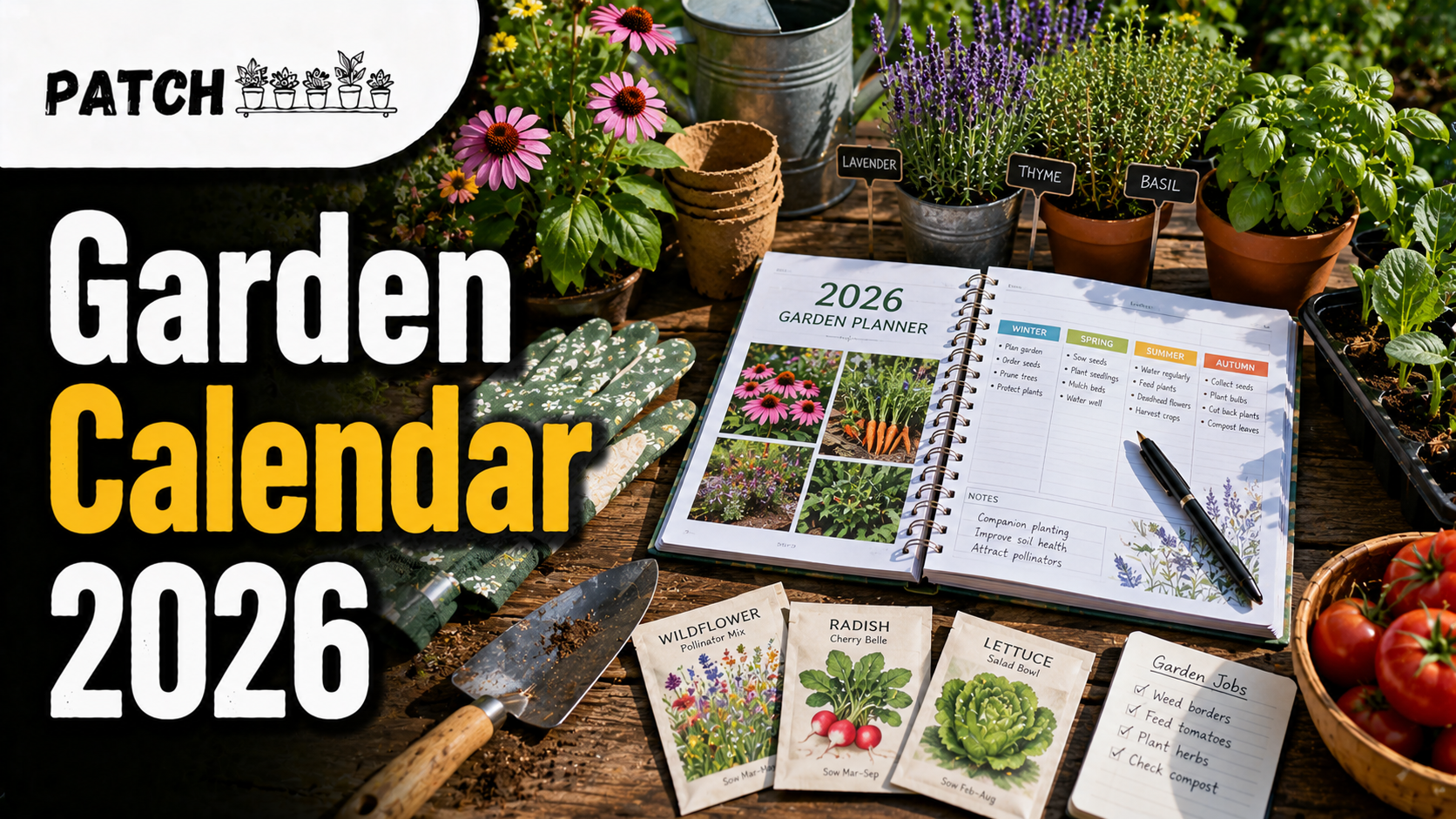
A garden calendar is a month-by-month plan for what to sow, plant, prune, water, feed and harvest, so you stop guessing every weekend. The guide below is written for a temperate Northern Hemisphere garden, and the key is to anchor your timing to your own last frost date rather than to a printed date. Frost dates, rainfall and heat vary a lot between gardens, so treat every month as a guide and adjust.
I am Sawera Shahid, a botanist at Patch Plants. I keep my own calendar simple: one short list per month, plus notes on what worked, which makes every year easier than the last.
How to Use This Monthly Garden Calendar
Start by finding your average last spring frost date from your local weather service or extension office. Cool-season crops are planted first, several weeks to a couple of months before that date, while warm-season crops wait until after it, as Penn State Extension explains. Purdue Extension adds that warm-season crops need soil that has reached at least 60°F (about 16°C) and that making several plantings within the recommended window improves your chances.
| Crop Group | Examples | Timing |
|---|---|---|
| Cool-season | Peas, spinach, lettuce, radishes, kale, onions, carrots | Early spring and again in early autumn |
| Warm-season | Tomatoes, peppers, beans, cucumbers, squash, courgettes (zucchini) | After the last frost, once soil is warm |
If you work in beds, our mulch calculator and soil calculator take the guesswork out of quantities, and the full set sits in our garden calculators hub.
Garden Calendar: Month-by-Month Guide

January: Plan, Clean and Prepare
January is for planning. Review last year’s notes, clean tools, order seeds and check stored bulbs and tubers. In mild areas you can plant bare-root shrubs, trees and roses when the ground is workable, and protect winter containers from freezing. For cold-season ideas, see outdoor plants that survive British winters.
February: Start Seeds and Prepare Beds
Days lengthen and seed packets come out. Start only what you have enough light and warmth for, such as onions and leeks, and begin hardy seeds indoors if you have a bright spot. Check pruning jobs, but avoid heavy cutting in hard frost, and remove dead or damaged wood when it is safe. Clean pots and prepare raised beds before spring gets busy.
March: Spring Preparation Begins
Soil warms and weeds wake up. Sow hardy crops such as peas, early salads and broad beans where the soil can be worked, and start tomatoes, peppers and basil indoors for planting out later. Mulch beds, feed hungry shrubs, check supports and refresh containers. Our soil mix guide helps with potting mixes.
April: Sow, Plant and Protect
April is when active garden care begins. Sow carrots, beetroot, spring onions and hardy herbs, plant hardy flowers, divide crowded perennials and refresh patio pots. Keep fleece handy, because frost can still return on clear nights.
May: Plant Tender Crops Carefully
Warm afternoons can be misleading. Harden off seedlings gradually and plant tender crops such as tomatoes, beans, courgettes and cucumbers only after frost risk has passed. Check pots daily in warm spells and begin regular feeding. For small spaces, see year-round balcony plants and best plants for small outdoor spaces.
June: Water, Feed and Support
Growth is fast. Sow quick crops such as salad leaves, beans and beetroot, stake tall plants, feed tomatoes, deadhead flowers and water deeply. Check for pests early, and see how to keep pests away from outdoor plants.
July: Manage Heat and Harvest
Heat, dry soil and pests can arrive together. Water early in the morning, harvest often, shade vulnerable pots and raise your mower height in dry spells. Plant scented herbs near seating areas, and see mosquito repellent plants. For hot weather, read heat tolerant plants and top drought-resistant plants.
August: Harvest, Save Seed and Plan Autumn
Keep watering containers, harvest regularly and collect seed. Sow late salads and hardy greens where your climate allows, and plan autumn bulbs and cool-season containers. Watch young shrubs and trees for drought stress.
September: Plant, Repair and Refresh
Warm soil and returning rain make September one of the best planting months. Plant spring bulbs, perennials, shrubs and trees, sow cool-season vegetables, repair lawns and divide perennials. For wildlife, see our wildlife-friendly garden guide and pollinator-friendly plants.
October: Bulbs, Compost and Winter Prep
Plant spring bulbs, garlic, onions and hardy shrubs. Clear diseased leaves, mulch beds, clean pots and check drainage before heavy rain. Our autumn plant care guide and 15 hardy outdoor plants help with choices.
November: Protect Roots and Reduce Damage
Cold nights, wet soil and storms become likely. Plant bare-root trees, shrubs and roses when the soil is neither frozen nor waterlogged, lift pots onto feet, store tender bulbs and check stakes. See coastal and windy outdoor plants and winter plants for outside.
December: Rest, Protect and Plan Ahead
Growth slows. Check winter protection, water sheltered pots during dry spells, avoid planting into frozen or saturated soil, and use the quiet to order seeds, organise tools and plan next year’s beds.
Vegetable Planting Calendar

Vegetables are the most timing-sensitive crops, so a vegetable planting calendar matters most here. Purdue Extension suggests sowing hardy crops such as broccoli, peas and spinach roughly 4 to 6 weeks before your last spring frost, and semi-hardy crops such as beets, lettuce and carrots 2 to 4 weeks before it. Tender crops such as tomatoes go out after the last frost, and very tender crops such as peppers wait at least two weeks longer.
In practice, plan in winter, sow cool crops in early spring, plant tender crops after frost, harvest and succession-sow through summer, and plant garlic, onions and hardy greens in autumn. Beginners do well with salad leaves, radishes, beans, herbs and tomatoes in pots. See easiest outdoor edible plants.
Flower Planting Calendar
Your garden calendar should include flowers, because the best flower gardens are layered by season rather than planted all at once. Plant spring bulbs in autumn, hardy annuals in spring or autumn, tender annuals after frost and perennials in mild windows. Add shrubs and evergreens for structure. For long-season colour, see native plants and colourful garden for all seasons.
Seed Starting Calendar
A good seed starting calendar works backward. For tender crops such as tomatoes, peppers and basil, count backward from your last frost date. Your seed packet gives the recommended number of weeks, and starting too early produces leggy, weak seedlings that are hard to manage indoors. Use clean trays, give seedlings strong light, avoid overwatering and sow in small batches. Succession sowing is safer than planting everything in one week.
Container, Balcony and Raised Bed Garden Calendar

Pots dry out, heat up and freeze faster than ground beds, so they need more frequent checks.
- Spring: refresh compost, repot crowded plants and plant herbs and compact flowers.
- Summer: water deeply, feed regularly and shade vulnerable pots.
- Autumn: reduce feeding, add hardy plants and bulbs.
- Winter: lift pots onto feet and shelter vulnerable containers from freezing wind and wet.
Raised beds warm faster and drain better, which gives crops a strong start. Add compost and repair frames in winter, sow and transplant in spring, mulch in summer and plant garlic or hardy greens in autumn. For pots, read the container gardening guide, self-watering pots guide and how to repot a plant.
Pruning and Watering Through the Year
Pruning belongs in every monthly garden calendar, and it depends on the plant. Some flower on old wood and are pruned after flowering, others flower on new wood, and some are best cut during dormancy. Avoid heavy pruning during hard frost, heatwaves or drought, remove dead or diseased growth when you see it, and check how a shrub flowers before cutting. Our pruning basics guide has more.
Watering should change with the season. New plants need steady moisture in spring, deep watering in summer dry spells, and enough in autumn to establish roots. In winter only sheltered pots and dry spells need attention. Water deeply, preferably in the morning, rather than giving light daily sprinkles. See our watering guide, worst times to water plants and signs you are overwatering.
Lawn and Greenhouse Notes
Lawns follow growth, not habit, so build them into your garden calendar too. Spring is for light repair, feeding where needed and careful mowing, summer for a higher mower height, autumn for repair and overseeding, and winter for staying off frozen or waterlogged grass. If maintenance is a burden, replace some lawn with pollinator borders or low-maintenance planting.
A greenhouse extends the season and deserves its own garden calendar, but it overheats quickly. Use late winter and spring for seed starting, summer for tomatoes, peppers and cucumbers, autumn for late crops and protection, and winter for cleaning and frost checks. Ventilation matters as much as warmth, because still, humid air invites pests and disease.
Common Garden Calendar Mistakes
- Following dates too rigidly. Local frost dates and weather matter more than the printed month.
- Sowing too early. Weak, leggy seedlings are harder to grow than slightly later, strong ones.
- Planting tender crops before frost passes. One cold night can undo weeks of work.
- Neglecting containers. Pots need more watering and protection than ground beds.
- Skipping mulch. It conserves moisture, reduces weeds and protects roots.
- Not keeping notes. A calendar becomes far more useful when you record what worked.
Frequently Asked Questions
What is a garden calendar?
A garden calendar is a month-by-month plan for sowing, planting, pruning, watering, feeding and harvesting, adjusted to your climate and frost dates.
What should I plant each month?
It depends on your last frost date and soil temperature. Plant cool-season crops early in spring and autumn, and warm-season crops only after frost has passed and the soil has warmed.
Is this a beginner gardening calendar?
Yes. It keeps each month to a short list of jobs covering vegetables, flowers, containers, raised beds and lawns, so you can start without a complicated spreadsheet.
How do I find my last frost date?
Check your local weather service or extension office for the average last spring frost date, then treat it as an estimate. Purdue Extension notes there is still a 10% chance of a later frost.
Does this calendar work in the Southern Hemisphere?
The tasks work, but the months shift by about six months. Use the seasons rather than the month names, and anchor your timing to local frost dates.
Final Thoughts
A garden calendar is not about rigid rules. It gives each season its job: plan in winter, sow in spring, maintain through summer, plant in autumn and protect in winter. For seasonal jobs by month, the RHS monthly gardening advice is a handy companion, though it comes from a UK organisation, so adjust for your own climate. As a botanist, my best tip is to keep a note of what worked each month and update your calendar every year. For more outdoor guidance, explore Patch Plants and our outdoor plants section, starting with best low-maintenance outdoor plants.
Sources: Penn State Extension, Cool-season vs warm-season vegetables; Purdue Extension, HO-186-W; RHS, Monthly gardening advice.

About the author
Sawera Shahid is a botanist with an MPhil in Botany and 5+ years of writing about plants. As founder and lead writer of Patch Plants, she writes practical, science-backed guides on indoor plants, outdoor gardens and plant problems, checked against RHS and university extension advice.