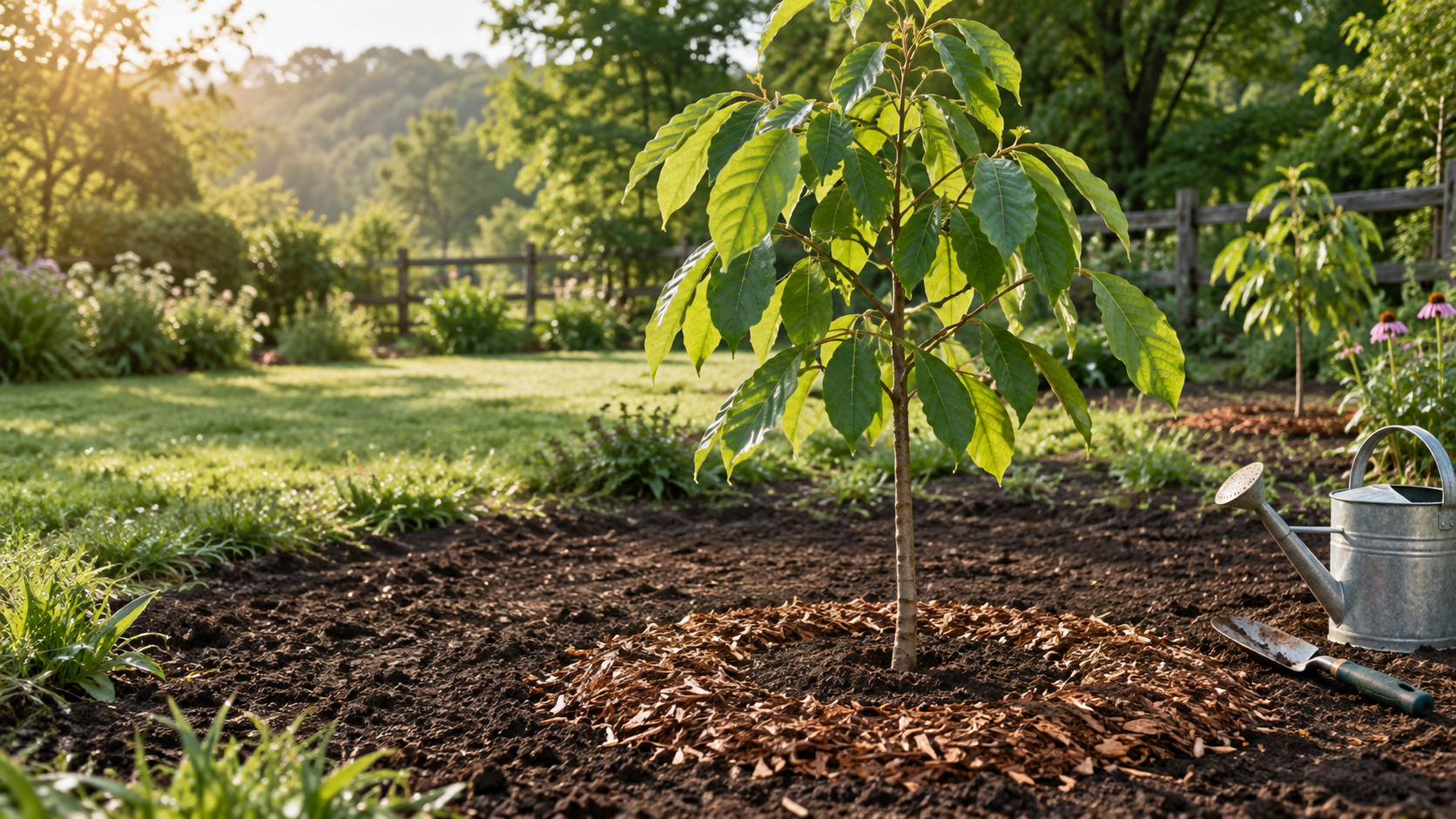
Pawpaw (Asimina triloba) is a North American native fruit tree known for large, distinctive fruits with soft, custard-like flesh. Although established trees can become attractive landscape specimens, newly planted pawpaws deserve careful handling because disturbing or damaging their root systems can make establishment more difficult.
This guide walks through 11 practical tips for planting a pawpaw tree, from choosing a healthy specimen and preparing the site to watering, mulching, protecting young growth, planning for pollination, and troubleshooting problems after planting.
For more seasonal growing advice, browse the Patch Plants Outdoor Plants guides and our broader Plant Care library.
QUICK ANSWER
How Do You Plant a Pawpaw Tree?
Choose a site with fertile, well-drained soil and enough long-term space for the tree. Dig a hole wider than the root system but avoid planting the tree deeper than it was previously growing. Handle the roots carefully, position the root flare appropriately, backfill, and water thoroughly after planting.
Keep the root zone evenly moist while the young tree establishes, add organic mulch without piling it against the trunk, and consider temporary protection from intense sun where necessary.
If fruit is your goal, plan for cross-pollination by growing genetically different pawpaw trees close enough for effective pollen transfer.
PATCH PLANTS SUMMARY
Key Takeaways
- Choose a healthy pawpaw suited to your growing conditions.
- Allow enough room for the tree’s mature size before planting.
- Select fertile soil that drains adequately while retaining useful moisture.
- Protect newly established pawpaws from excessive environmental stress.
- Handle the root system carefully during planting.
- Do not bury the trunk unnecessarily deeply.
- Water according to soil moisture, rainfall, weather, and establishment needs.
- Mulch the root zone but keep mulch away from the trunk.
- Reduce competition from grass and weeds around young trees.
- Plant genetically different pawpaws if reliable fruit production is your goal.
- Diagnose yellowing, wilting, or slow growth by checking the entire growing environment.
Understanding Pawpaw Before Planting
Pawpaw is a deciduous tree native to eastern North America. Understanding its woodland background helps explain why young pawpaw trees and mature fruiting specimens can have somewhat different site requirements.
Young plants may benefit from protection from intense exposure while becoming established. Older trees grown for fruit generally benefit from abundant sunlight once they are sufficiently established.
This means a good pawpaw tree planting guide must consider both the first few seasons and the tree’s eventual growing environment.
If you are planning a larger garden, browse our outdoor growing guides before choosing permanent planting positions.
Tip 1: Start With a Healthy Pawpaw Tree
Successful planting of a pawpaw tree becomes much easier when the tree arrives with a healthy root system and vigorous top growth.
Inspect nursery stock before purchasing whenever possible. Look for a sturdy stem, viable buds or healthy foliage when in leaf, and an overall absence of serious physical damage.
Container-Grown Pawpaws
A container-grown specimen can be convenient because the roots remain surrounded by their growing medium during transport. However, you should still inspect the container for obvious root crowding or poor plant health.
Bare-Root Pawpaws
Bare-root trees require particularly careful handling because exposed roots should not be allowed to dry out before planting.
Avoid Unnecessary Root Disturbance
Pawpaws can be sensitive to root disturbance, so handle the root system gently. Do not aggressively tear apart healthy roots merely because you would do so with a more tolerant landscape plant.
If you are uncertain whether roots are healthy or decaying, our root rot identification guide explains general signs of unhealthy root tissue.
Tip 2: Make Sure Your Climate and Space Are Suitable
Before digging, consider whether the location can support a pawpaw over the long term.
Check Regional Suitability
Winter temperatures, summer conditions, rainfall, soil, and cultivar choice can all affect performance. Gardeners in the United States can use the USDA Plant Hardiness Zone Map as one part of their planning, while remembering that hardiness zones describe minimum-temperature patterns rather than every aspect of climate.
Think About Mature Size
Do not choose a location based only on the size of the nursery tree. Allow room for future canopy and root development.
Keep appropriate clearance from structures, fences, paths, and other permanent features.
Our Outdoor Plants library contains additional guides that can help when planning mixed garden spaces.
Tip 3: Choose the Right Amount of Sunlight
Light requirements deserve special attention when planting a pawpaw tree. Young pawpaws naturally occur in environments where they can receive some protection, while established trees intended for fruit production generally benefit from stronger sunlight.
Protect Young Trees When Necessary
A newly planted specimen that has been grown under protected nursery conditions may not be prepared for an abrupt move into intense summer sun.
Temporary shade can help during establishment, particularly when planting conditions are hot and exposed.
Plan for the Mature Tree
Temporary shade should not force you to choose a permanently unsuitable location. Think about the mature tree and its future access to sunlight.
If you are comparing plants for exposed areas, our guide to outdoor plants can help you continue planning the rest of the landscape.
Tip 4: Check Soil and Drainage Before Planting
A suitable planting site should provide moisture without leaving the root system chronically waterlogged.
Pawpaws generally perform well in fertile soil with organic matter and adequate drainage.
Observe What Happens After Rain
Before planting, inspect the location after rainfall. Water that remains pooled for extended periods can signal a drainage problem.
Do Not Create a Water-Holding Planting Hole
Simply replacing the soil inside a hole with a dramatically different mixture can sometimes create an undesirable interface between the planting hole and surrounding soil.
Instead, evaluate the broader planting area and address genuine drainage or soil problems appropriately.
Understand Your Existing Soil
Our soil guide explains important concepts such as drainage, moisture retention, and aeration.
If you are also filling raised beds, rectangular planters, or garden beds elsewhere in your landscape, the free Patch Plants Soil Calculator can help you calculate how much soil you need.
Tip 5: Choose an Appropriate Pawpaw Tree Planting Season
The best time to plant a pawpaw tree depends on your climate, the type of nursery stock, current weather, and whether you can provide reliable aftercare.
Cooler planting conditions can reduce some of the stress associated with transplanting compared with placing a tree during extreme summer heat.
Spring Planting
Spring can provide a useful establishment window once the ground is workable and local conditions are suitable.
Fall Planting
Fall may also be possible in suitable climates, but local winter conditions and the plant’s ability to establish before severe weather should be considered.
Avoid Extreme Conditions
Do not choose a planting day simply because the calendar says it is the correct season. Severe heat, drought, saturated soil, or frozen ground can make planting unnecessarily stressful.
Tip 6: Planting Paw paw Tree at the Correct Depth
Correct depth is one of the most important parts of how to plant a pawpaw tree.
Dig Wide Rather Than Excessively Deep
Prepare a hole wide enough to accommodate the root system without forcing roots into an unnaturally tight space.
Avoid automatically digging a deep pit and then burying the tree’s lower trunk.
Locate the Root Flare
The transition between trunk and major roots should not disappear far below the finished soil surface.
Check the tree before planting because nursery container soil can sometimes obscure the original root flare.
Handle Roots Carefully
Pawpaw roots deserve gentle handling. Preserve as much healthy root tissue as possible during transplanting.
Backfill Without Excessive Compaction
Return soil around the root system carefully. Avoid aggressively stamping the planting area into a hard mass.
Water After Planting
Watering after backfilling helps settle soil around roots. From this point onward, watering should respond to actual soil moisture and weather.
Our complete watering guide explains why soil type, temperature, plant size, and rainfall change irrigation needs.
Tip 7: Keep the Root Zone Consistently Moist During Establishment
Newly planted trees have a smaller effective root system than established trees, so moisture management deserves close attention.
However, “consistent moisture” does not mean keeping the soil permanently saturated.
Check the Soil Before Irrigating
Inspect moisture below the immediate surface. Recent rainfall may mean irrigation is unnecessary, while hot, dry conditions can increase water demand.
Water the Root Zone Thoroughly
When irrigation is required, apply water to the root zone rather than providing only a superficial splash at the trunk.
Adjust to Weather and Soil
Sandy soil, clay-rich soil, rainfall, temperature, wind, and tree size can all change how quickly water is lost.
This is why the same principle used in our watering guide applies here: observe conditions instead of relying blindly on a calendar.
If foliage begins yellowing, our yellow leaves troubleshooting guide can help you evaluate moisture alongside other causes.
Mulch a Newly Planted Pawpaw Correctly
Organic mulch can help conserve soil moisture, moderate soil-temperature fluctuations, and reduce competition from grass and weeds.
Spread Mulch Across the Root Zone
Apply an appropriate layer over the soil rather than concentrating everything directly beside the trunk.
Keep Mulch Away From the Trunk
Avoid building a “mulch volcano.” The trunk base should remain visible rather than being buried beneath a mound of constantly damp material.
Mulch is useful for moisture management, but it should complement—not replace—checking actual soil conditions.
Tip 8: Protect Young Pawpaw Trees During Establishment
Young pawpaw tree care may require temporary protection while the tree adapts to its permanent site.
Protect Against Excessive Sun When Needed
If a young plant came from protected conditions and is being planted in a highly exposed location, temporary shade can reduce abrupt stress.
Protect Against Animal Damage
Where deer, rabbits, rodents, or other animals threaten young trees, appropriate physical protection can help prevent bark and shoot damage.
Protect the Trunk From Equipment
Lawn mowers and string trimmers can severely injure young bark. A mulched vegetation-free zone also reduces the need to operate equipment immediately beside the trunk.
Stake Only When Necessary
A tree in a reasonably sheltered site may not require staking. If support is genuinely needed because the root ball cannot remain stable, use a system that supports the tree without rigidly immobilizing the trunk.
Tip 9: Plant More Than One Pawpaw if You Want Fruit
Pollination is an important consideration when growing pawpaw trees for fruit.
For more reliable fruit set, plant genetically different pawpaws rather than assuming a single isolated tree will provide a dependable harvest.
Choose Genetically Different Trees
Two seedlings are genetically different, while named cultivars should be selected so you are not simply planting genetically identical material.
Consider Flowering Overlap
The trees must flower at compatible times for pollen to move effectively between them.
Do Not Space Pollination Partners Too Far Apart
Keep pollination in mind when designing the planting area. Trees do not need to touch, but excessively separating potential pollination partners makes pollen transfer less convenient.
This is another reason to plan the entire outdoor growing area before planting permanent fruit trees.
Tip 10: Support Establishment Without Overdoing Fertilizer or Pruning
A newly planted pawpaw primarily needs a healthy root environment, appropriate moisture, suitable light, and protection from unnecessary stress.
Do Not Fertilize Automatically
A soil test can help identify genuine nutrient deficiencies. Adding large quantities of fertilizer to a newly planted tree without evidence of need is not automatically beneficial.
Keep Grass and Weeds Under Control
Vegetation immediately around a young tree competes for water and nutrients.
Maintain a mulched area while keeping mulch clear of the trunk.
Prune Conservatively
Remove dead, damaged, or problematic branches when appropriate, but avoid unnecessary heavy pruning immediately after planting.
Our Pruning Basics guide explains general principles for making cleaner, more purposeful cuts.
Tip 11: Troubleshoot Problems Early
Pawpaw tree troubleshooting works best when you investigate several environmental factors rather than assuming one symptom always has one cause.
| Symptom | Check First | Helpful Resource |
|---|---|---|
| Yellow foliage | Moisture, drainage, roots, nutrients | Yellow Leaves Guide |
| Wilting | Soil moisture and transplant stress | Watering Guide |
| Wet soil and declining roots | Drainage | Root Rot Guide |
| General decline | Whole planting environment | Plant Rescue Guide |
Yellow Pawpaw Leaves
Yellowing does not automatically prove overwatering. Check soil moisture, drainage, roots, nutrient conditions, transplant stress, and whether only older foliage is affected.
Use our guide to yellow leaves as a broader diagnostic reference.
Newly Planted Pawpaw Is Wilting
Check soil moisture first. Dry soil may indicate insufficient water, while saturated soil can also damage roots and interfere with normal water uptake.
Our watering guide can help you evaluate moisture rather than guessing from wilt alone.
Pawpaw Is Growing Slowly
A newly planted tree may devote considerable resources to establishment. Check light, moisture, competition, root condition, and overall site suitability before adding fertilizer.
Roots Are Dark or Decaying
If roots are soft, decaying, or associated with persistently saturated soil, investigate drainage immediately.
Compare the root system with our root rot guide.
Tree Is Declining After Transplanting
Transplanting itself can stress a tree. Avoid responding by simultaneously changing water, fertilizer, pruning, soil, and exposure unless there is a clear reason.
Work through the growing environment systematically, using our plant rescue guide for general troubleshooting principles.
Pawpaw Tree Planting Checklist
- Choose a healthy tree.
- Confirm regional and site suitability.
- Plan for the tree’s mature size.
- Consider future sunlight as well as young-tree protection.
- Check soil drainage before planting.
- Dig wide enough for the root system.
- Keep the root flare at an appropriate level.
- Handle roots carefully.
- Water thoroughly after planting.
- Monitor moisture during establishment.
- Mulch without burying the trunk.
- Reduce grass and weed competition.
- Protect young bark where animals or equipment pose a risk.
- Use staking only when necessary.
- Plan for genetically different pollination partners if fruit is desired.
KEEP GROWING WITH PATCH PLANTS
Related Guides and Tools
- Explore Outdoor Plant Care & Growing Guides.
- Browse our Plant Care Guides.
- Learn how to water plants correctly.
- Recognize signs of overwatering.
- Learn how to identify root rot.
- Understand why plant leaves turn yellow.
- Read our soil and potting mix guide.
- Use the free Soil Calculator.
- Learn the fundamentals of plant pruning.
- Follow our plant rescue guide.
- Return to Patch Plants for more gardening guides.
Check Your Local Growing Conditions Before Planting
Cold-hardiness information is useful when choosing permanent fruit trees, but hardiness zones are only one part of site selection. U.S. gardeners can check the USDA Plant Hardiness Zone Map and combine that information with local soil, rainfall, heat, and extension guidance.
Frequently Asked Questions About Planting a Pawpaw Tree
What is the best time to plant a pawpaw tree?
The best planting period depends on climate and nursery stock. Spring is commonly useful once the ground is workable, while fall can be appropriate in some climates. Avoid planting during severe heat, drought, frozen soil, or other extreme conditions.
How deep should I plant a pawpaw tree?
Avoid burying the trunk deeply. Identify the root flare and position the tree so the trunk-to-root transition remains appropriately near the finished soil level. Digging a wide hole is generally more useful than digging an unnecessarily deep one.
Does a young pawpaw tree need shade?
Young pawpaws can benefit from protection from intense sunlight, especially when they have been grown under sheltered conditions. Temporary shade can help during establishment while the long-term site still provides suitable light for the mature tree.
How often should I water a newly planted pawpaw tree?
Do not use one fixed schedule for every site. Check soil moisture and account for rainfall, temperature, wind, soil type, and tree size. Keep the root zone adequately moist during establishment without leaving it chronically waterlogged.
Do I need two pawpaw trees to get fruit?
For reliable fruit production, planting genetically different pawpaws is generally recommended because cross-pollination is important. Consider cultivar identity and overlapping bloom periods when planning your trees.
How far apart should pawpaw trees be planted?
Spacing depends on cultivar, mature size, landscape design, and whether fruit production is the goal. Allow enough room for mature canopies while keeping pollination partners reasonably close to one another.
Should I fertilize a pawpaw immediately after planting?
Do not assume fertilizer is automatically required. Establish appropriate moisture and root conditions first, and base nutrient additions on soil conditions, plant performance, and locally appropriate recommendations.
Should I mulch around a pawpaw tree?
Yes. Organic mulch can conserve moisture and reduce weed competition. Spread it across the root zone while leaving clear space around the trunk instead of piling mulch against the bark.
Why is my newly planted pawpaw wilting?
Check moisture first, but remember that both overly dry and poorly drained soil can contribute to wilt. Root disturbance, heat, intense sunlight, and transplant stress may also be involved.
Can I grow one pawpaw tree by itself?
A single pawpaw can be grown as a landscape tree, but if your goal is dependable fruit production, plan for another genetically different pawpaw that can provide compatible pollen.
Final Thoughts on Planting a Pawpaw Tree
Successful planting of a pawpaw tree comes down to getting the fundamentals right from the beginning: a suitable site, healthy planting material, careful root handling, correct planting depth, appropriate moisture, mulch, and protection during establishment.
If fruit is your goal, think beyond the first tree. Planning for genetically different pawpaws and future pollination is part of planting an orchard that can eventually become productive.
After planting, observe the tree rather than automatically adding water or fertilizer whenever something looks different. Check moisture, drainage, sunlight, roots, weather, and recent changes before deciding what action to take.
Continue with our Outdoor Plants guides, explore the Plant Care library, use our free Soil Calculator for upcoming garden projects, or return to Patch Plants for more practical growing advice.