🌿 Key Takeaways
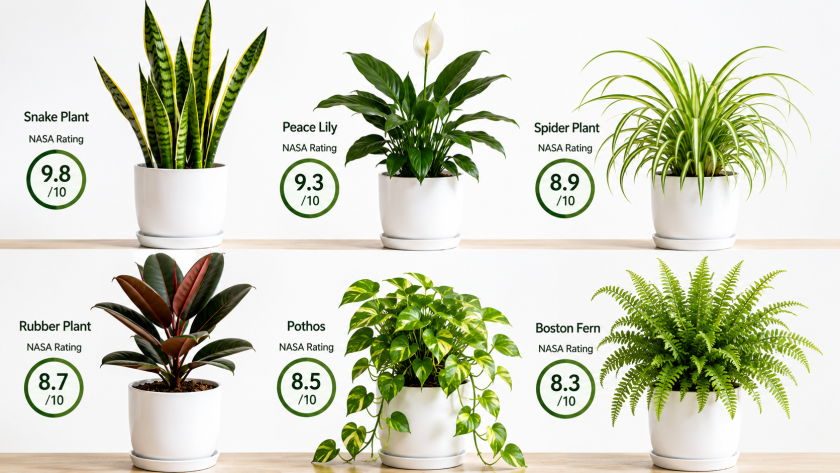
- Air purifying plants help filter indoor air toxins including formaldehyde, benzene, and trichloroethylene through natural photosynthesis and absorption — NASA studies confirm effectiveness in controlled environments
- Best air purifying plants include Snake Plant, Peace Lily, Spider Plant, and Rubber Plant offering proven toxin removal combined with easy care requirements
- Air purifying indoor plants require adequate numbers for measurable impact — NASA recommends 1 plant per 100 square feet for optimal air cleaning effectiveness
- Indoor plants that purify air work best when combined with proper ventilation and regular leaf cleaning — dust blocks filtering capacity reducing effectiveness
- Plants that purify the air vary in effectiveness by species and toxin type — some excel at formaldehyde removal while others target benzene or ammonia
- Air purifying plants for bedroom like Snake Plant and Aloe Vera release oxygen at night improving sleep quality unlike most plants that only produce oxygen during day
- Low-maintenance air-purifying plants including Snake Plant, Spider Plant, and Pothos tolerate neglect, inconsistent watering, and low light while still cleaning air
- NASA air purifying plants list from 1989 Clean Air Study remains most cited source identifying top species for indoor air quality improvement
- Natural air purifier plants cost-effectively supplement mechanical air purifiers while providing aesthetic, mood, and humidity benefits beyond air cleaning
- Browse our complete indoor plant guides for detailed care instructions for every air-purifying variety
Why Indoor Air Quality Matters More Than You Think
Indoor air quality affects health more significantly than most people realize. We spend 90% of our time indoors where air can contain 2-5x higher pollutant concentrations than outdoor air according to EPA studies. Common household items release volatile organic compounds (VOCs) continuously:
Common indoor air pollutants:
- Formaldehyde: Pressed wood furniture, carpets, fabrics, cleaning products
- Benzene: Tobacco smoke, stored fuels, synthetic fibers, plastics
- Trichloroethylene: Dry cleaning, printing inks, paints, adhesives
- Ammonia: Window cleaners, floor waxes, fertilizers
- Xylene: Rubber, leather, vehicle exhaust, tobacco smoke
Air purifying plants offer natural filtration supplementing mechanical air purifiers. While not replacing HEPA filters for allergen removal, plants that purify the air provide cost-effective continuous cleaning plus aesthetic and psychological benefits.
How Do Air Purifying Indoor Plants Actually Work?
Air purifying indoor plants clean air through three primary mechanisms:
1. Leaf absorption: Leaves absorb gaseous pollutants through stomata (tiny pores) during photosynthesis. Pollutants dissolve in moisture on leaf surfaces then transport to roots where microbes break them down.
2. Root-zone biodegradation: Soil microorganisms in root zones metabolize pollutants absorbed through leaves or directly from air passing through soil. This process often exceeds leaf absorption effectiveness.
3. Transpiration: Plants release moisture increasing humidity and creating air circulation that draws pollutants toward root zones for microbial breakdown.
Plant that purifies air effectiveness depends on:
- Leaf surface area (larger = more absorption)
- Growth rate (faster = more air processing)
- Stomata density (more pores = greater uptake)
- Root-zone microbial activity (higher = better breakdown)
For understanding plant biology basics, our guide on complete indoor light requirements covers photosynthesis fundamentals affecting air purification capacity.
Best Air Purifying Plants — Complete NASA-Approved List
1. Snake Plant (Sansevieria trifasciata) — The Night Oxygen Producer
Snake Plant tops every NASA air purifying plants list for unique CAM photosynthesis allowing nighttime oxygen production — making it the premier air purifying plants for bedroom placement.
Why Snake Plant excels as air purifier:
- Absorbs formaldehyde, nitrogen oxides, benzene, xylene, toluene
- Produces oxygen at night (unique among most houseplants)
- Tolerates neglect, low light, inconsistent watering
- Requires minimal care making it top low-maintenance air-purifying plants choice
Snake Plant air purifier effectiveness:
- NASA Clean Air Study: removed 52.6% of benzene in 24 hours
- Removes formaldehyde continuously
- Best performance in bedroom environments
Care requirements:
- Light: Low to bright indirect — more light increases purification
- Water: Every 2-3 weeks when soil completely dry
- Toxicity: Toxic to cats and dogs
Our complete Snake Plant care guide covers detailed growing instructions for maximum air purification effectiveness.
2. Peace Lily (Spathiphyllum) — The Mold Spore Specialist
Peace Lily ranks as one of the best air purifying plants for bathrooms and humid spaces — excelling at mold spore removal beyond standard VOC filtration.
Peace Lily air purifying capabilities:
- Removes mold spores, formaldehyde, benzene, ammonia, trichloroethylene
- Increases humidity through high transpiration rates
- Visually indicates water needs through dramatic wilting
- Thrives in low to moderate light
Peace Lily effectiveness data:
- NASA study: removed 23% of formaldehyde in 24 hours
- Significantly reduces airborne mold spores
- Humidifies dry indoor air
Care essentials:
- Light: Low to bright indirect — blooms with more light
- Water: When top 2-3cm dry — wilts when thirsty but recovers quickly
- Humidity: Average to high preferred
- Toxicity: Toxic to cats and dogs
For complete Peace Lily growing instructions, our Peace Lily care guide provides detailed care information.
For additional bathroom plant options, our guide on best plants for your bathroom covers 33 humidity-loving species.
3. Spider Plant (Chlorophytum comosum) — The Beginner-Friendly Purifier
Spider Plant combines best air purifying plants effectiveness with extreme ease of care — perfect for beginners starting indoor plants that purify air collections.
Spider Plant purification abilities:
- Removes formaldehyde, carbon monoxide, xylene
- Produces numerous offsets for easy propagation
- Pet-safe (non-toxic to cats and dogs)
- Thrives on neglect
Effectiveness:
- NASA: removed 95% of formaldehyde in sealed chamber within 24 hours
- Particularly effective against carbon monoxide
- One of fastest-growing purifying plants
Care requirements:
- Light: Moderate to bright indirect
- Water: When top 3cm dry — very forgiving
- Growth: Produces “babies” on long stems for free propagation
Our Spider Plant care guide covers propagation techniques and care optimization.
4. Rubber Plant (Ficus elastica) — The Toxin Removal Specialist
Rubber Plant excels as plants that remove indoor pollutants with particular effectiveness against formaldehyde — all while tolerating lower light than many purifying species.
Rubber Plant purification strengths:
- Removes formaldehyde, carbon monoxide, carbon dioxide, trichloroethylene
- Large glossy leaves provide extensive surface area
- Tolerates lower light better than most purifiers
- Grows large providing substantial air cleaning capacity
Care essentials:
- Light: Moderate to bright indirect
- Water: When top 5cm dry
- Size: Can reach 2+ metres indoors
- Toxicity: Toxic to cats and dogs
Our Rubber Plant care guide provides complete growing instructions.
For additional large plant options, our guide on 20 oversized indoor plants covers statement varieties.
5. Pothos (Epipremnum aureum) — The Easy-Care Air Cleaner
Pothos ranks among the most low-maintenance air-purifying plants — tolerating neglect while continuously filtering formaldehyde and benzene.
Pothos purification capabilities:
- Removes formaldehyde, benzene, carbon monoxide, xylene
- Trailing vines create extensive leaf surface area
- Grows quickly providing rapid air cleaning expansion
- Roots easily from cuttings for free multiplication
Care requirements:
- Light: Low to bright indirect — tolerates very low light
- Water: When top 5cm dry — very forgiving
- Growth: Vines reach 3+ metres providing substantial purification
- Toxicity: Toxic to cats and dogs
Our Pothos care guide covers all varieties and care techniques.
6. Areca Palm — The Natural Humidifier
Areca Palm tops oxygen-boosting houseplants lists while simultaneously removing xylene and toluene — plus adding substantial moisture to dry indoor air.
Areca Palm benefits:
- Removes xylene, toluene, formaldehyde
- Transpires up to 1 litre of water daily humidifying dry air
- Large size processes significant air volume
- Elegant tropical aesthetic
Care essentials:
- Light: Bright indirect essential for health
- Water: Keep soil consistently moist but not waterlogged
- Humidity: Moderate to high preferred
- Size: Reaches 2+ metres indoors requiring substantial space
7. Boston Fern — The Formaldehyde Fighter
Boston Fern excels at formaldehyde removal ranking among the most effective leafy green air purifiers in NASA testing.
Formaldehyde removal champion:
- NASA: Highest formaldehyde removal rate of tested species
- Also removes xylene and benzene
- Humidifies dry air through high transpiration
- Classic hanging basket aesthetic
Care requirements:
- Light: Moderate indirect — no direct sun
- Water: Keep soil consistently moist — high water needs
- Humidity: High 50-60% essential — bathroom placement ideal
- Maintenance: More demanding than many purifiers
8. Dracaena Varieties — The Versatile Purifiers
Dracaena species provide plants that purify indoor air options for every space — from compact tabletop varieties to floor-standing statement plants.
Popular Dracaena air purifiers:
- Dracaena marginata: Removes benzene, formaldehyde, trichloroethylene
- Dracaena fragrans (Corn Plant): Removes formaldehyde, benzene
- Dracaena deremensis: Removes trichloroethylene, xylene
Care essentials:
- Light: Low to bright indirect — very adaptable
- Water: When top 5cm dry
- Size: Varieties from 60cm to 2+ metres
- Toxicity: Toxic to cats and dogs
9. Aloe Vera — The Multitasking Succulent
Aloe Vera combines air purifying plants capabilities with medicinal properties — removing formaldehyde and benzene while providing gel for skin care.
Dual-purpose plant:
- Removes formaldehyde, benzene
- Gel soothes burns and skin irritation
- Extremely low maintenance
- Compact size suits small spaces
Care requirements:
- Light: Bright indirect to direct sun
- Water: Every 2-3 weeks when soil completely dry
- Soil: Well-draining cactus mix essential
- Propagation: Produces offsets easily
Our Aloe Vera care guide provides complete growing instructions.
10. Chinese Evergreen (Aglaonema) — The Low-Light Champion
Chinese Evergreen provides air purifying plants for small spaces solution — tolerating lower light while removing benzene and formaldehyde.
Low-light air purification:
- Removes benzene, formaldehyde
- Thrives in low to moderate light
- Compact size perfect for offices and apartments
- Colorful varieties available
Care essentials:
- Light: Low to moderate — tolerates office fluorescent lighting
- Water: When top 5cm dry
- Growth: Slow compact growth
- Toxicity: Toxic to cats and dogs
Our guide on office-friendly plants that survive fluorescent lighting covers additional workplace options.
11. Philodendron — The Fast-Growing Filter
Philodendron varieties provide indoor plants that purify air with rapid growth generating substantial leaf surface area quickly.
Philodendron purification:
- Removes formaldehyde
- Fast growth creates extensive filtering capacity
- Climbing or trailing varieties for flexible placement
- Easy propagation
Care requirements:
- Light: Moderate to bright indirect
- Water: When top 5cm dry
- Growth: Vines reach 3+ metres when climbing
- Toxicity: Toxic to cats and dogs
Our Philodendron care guide covers all popular varieties.
12. Bamboo Palm — The Formaldehyde Specialist
Bamboo Palm excels as natural air filter for homes — particularly effective against formaldehyde from furniture and carpets.
Formaldehyde removal:
- NASA: High formaldehyde, benzene, trichloroethylene removal
- Also filters xylene and toluene
- Elegant tropical appearance
- Pet-safe (non-toxic)
Care essentials:
- Light: Bright indirect preferred
- Water: Keep soil consistently moist
- Space: Requires 1.5+ metres clearance
- Humidity: Moderate to high preferred
How Many Air Purifying Indoor Plants Do You Actually Need?

Air purifying plants effectiveness depends on adequate numbers. NASA research suggests 1 medium-large plant per 100 square feet (9.3 square metres) for measurable air quality improvement.
Recommended quantities by room:
Bedroom (150 sq ft / 14 sq m):
- 2 Snake Plants for nighttime oxygen
- 1 Aloe Vera for additional purification
- Total: 2-3 plants
Living Room (250 sq ft / 23 sq m):
- 1 large Rubber Plant or Areca Palm (floor plant)
- 2 medium plants (Peace Lily, Dracaena)
- 1-2 small plants (Pothos, Spider Plant)
- Total: 4-5 plants
Home Office (120 sq ft / 11 sq m):
- 1 Snake Plant or Dracaena
- 1 Spider Plant or Pothos
- Total: 2-3 plants
Small Apartment (600 sq ft / 56 sq m):
- 6-8 medium-large plants distributed throughout
- Mix varieties for broader toxin coverage
Reality check: While NASA research used sealed chambers, real homes have ventilation reducing plant impact. View plants that purify the air as air quality supplements, not replacements for proper ventilation and mechanical air purifiers.
Best Air Purifying Plants for Specific Rooms
Air Purifying Plants for Bedroom
Air cleaning plants for bedrooms should prioritize nighttime oxygen production and low maintenance.
Top bedroom choices:
- Snake Plant: Produces oxygen at night, removes formaldehyde
- Aloe Vera: Nighttime oxygen, compact size for nightstands
- Spider Plant: Pet-safe, excellent formaldehyde removal
- Peace Lily: Increases humidity, removes multiple toxins
Bedroom placement:
- Place Snake Plant on dresser or floor near bed
- Position Aloe on nightstand in sunny window
- Hang Spider Plant from ceiling or place on high shelf
Our guide on how to decorate your bedroom with plants covers bedroom-specific styling.
Air Purifying Plants for Home Office
Best indoor plants to purify air in offices tolerate lower light, dry air, and inconsistent care.
Top office choices:
- Pothos: Tolerates fluorescent lighting, easy care
- Snake Plant: Minimal maintenance, low light tolerant
- Chinese Evergreen: Compact, colorful varieties available
- Dracaena: Variety of sizes for different spaces
Air Purifying Plants for Bathrooms
Natural air purifier plants for bathrooms should thrive in high humidity with moderate to low light.
Top bathroom choices:
- Peace Lily: Removes mold spores, loves humidity
- Boston Fern: Thrives in steam, high transpiration
- Spider Plant: Humidity-tolerant, pet-safe
- Pothos: Adapts to bathroom conditions easily
Pet-Safe Air Purifying Plants vs Toxic Varieties

Air purifying plants safe for cats and dogs represent important consideration for pet households.
Pet-safe air purifiers (non-toxic):
- Spider Plant — excellent purification, completely safe
- Bamboo Palm — removes formaldehyde, pet-friendly
- Boston Fern — formaldehyde specialist, non-toxic
- Areca Palm — humidifier + purifier, safe for pets
Toxic air purifiers (keep away from pets):
- Snake Plant — very effective but toxic if ingested
- Peace Lily — excellent purifier but causes oral irritation
- Pothos — great low-light option but toxic to pets
- Philodendron — fast-growing but contains calcium oxalate
- Rubber Plant — formaldehyde removal but toxic
- Aloe Vera — dual-purpose but toxic if eaten
- Dracaena varieties — all toxic to cats and dogs
For comprehensive pet-safe options, our guides on cat-friendly plants and dog-friendly plants cover non-toxic alternatives.
NASA Air Purifying Plants Study — What It Actually Says
The famous NASA air purifying plants study from 1989 remains most cited source on plant air purification — but often misunderstood.
Study methodology:
- Sealed chambers testing individual plants
- Controlled environments with specific toxin concentrations
- 24-hour testing periods
- Measured pollutant reduction percentages
Key findings:
- Plants removed 50-90% of VOCs in sealed chambers within 24 hours
- Soil microbes contributed significantly to removal
- Leaf surface area correlated with effectiveness
- Different plants targeted different pollutants
Real-world limitations:
- Home air exchanges with outdoor air unlike sealed chambers
- Requires numerous plants for equivalent effect
- Continuous pollutant generation in homes vs one-time chamber exposure
- Plant placement and health affect performance
Takeaway: Plants that purify the indoor air work but require adequate numbers combined with ventilation for best results. View as supplement to proper air exchange and filtration, not standalone solution.
Maximizing Air Purification Effectiveness

Best air purifying indoor plants perform optimally when properly maintained.
Maximizing purification:
1. Keep leaves clean:
- Dust blocks stomata reducing absorption capacity
- Wipe large leaves monthly with damp cloth
- Shower small-leaved plants or spray with water
- Clean leaves absorb 20-30% more pollutants
2. Optimize soil health:
- Healthy root-zone microbes enhance purification
- Use quality potting mix with organic matter
- Avoid overwatering which kills beneficial microbes
- Repot when rootbound to maintain soil effectiveness
3. Ensure adequate light:
- More light = more photosynthesis = more air processing
- Position plants appropriately for species light needs
- Rotate plants weekly for even light exposure
- Supplement with grow lights in dark spaces
4. Maintain plant health:
- Fertilize during growing season for vigorous growth
- Prune dead foliage reducing effectiveness
- Monitor for pests reducing plant vitality
- Replace declining plants maintaining purification levels
5. Increase numbers:
- More plants = more purification
- Distribute throughout spaces rather than clustering
- Mix varieties for broader toxin coverage
- Start with proven effective species
For complete plant care guidance, our complete watering guide covers maintaining optimal plant health.
Air Purifying Plants vs Mechanical Air Purifiers
Indoor plants air purifying capabilities complement mechanical purifiers rather than replacing them.
Plant advantages:
- Cost-effective (one-time purchase + minimal maintenance)
- Aesthetic value improving space appearance
- Psychological benefits reducing stress
- Humidity addition benefiting dry climates
- Natural sustainable solution
- No electricity costs
Plant limitations:
- Requires adequate numbers for measurable impact
- Maintenance needed (watering, cleaning, repotting)
- Some varieties toxic to pets
- Slower purification than HEPA filters
- Cannot filter allergens like pollen or pet dander
- Effectiveness varies by plant health
Mechanical purifier advantages:
- Rapid air processing (entire room in hours)
- HEPA filters remove allergens, dust, pollen
- Consistent performance regardless of plant health
- Works in any room without light requirements
Mechanical purifier limitations:
- Initial cost ($100-500+)
- Ongoing filter replacement costs
- Electricity consumption
- Noise from fan operation
- No aesthetic or psychological benefits
- Creates dry air in some models
Best approach: Combine natural air purifying plants with mechanical filtration for comprehensive air quality management. Plants provide passive continuous filtering plus aesthetic benefits while mechanical purifiers handle rapid purification and allergen removal.
Common Mistakes Reducing Air Purification Effectiveness
House plants that purifies the air underperform when improperly cared for.
Mistakes to avoid:
Insufficient numbers:
- Single plant provides minimal air quality impact
- Requires 1 plant per 100 sq ft minimum
- Solution: Gradually build collection targeting room-appropriate quantities
Dusty leaves:
- Dust blocks stomata preventing gas exchange
- Reduces purification by 30%+
- Solution: Monthly leaf cleaning with damp cloth
Poor plant health:
- Dying plants provide zero purification
- Pest-infested plants focus energy on survival not purification
- Solution: Regular care maintenance and pest monitoring
Wrong species selection:
- Choosing plants for appearance over purification effectiveness
- High-maintenance varieties dying from neglect
- Solution: Prioritize proven effective low-maintenance air-purifying plants
Inadequate light:
- Low light reduces photosynthesis and purification
- Plants decline slowly providing less cleaning
- Solution: Match plants to available light or supplement with grow lights
For plant problem diagnosis, our guide on how to revive a dying plant covers rescue techniques.
Low-Maintenance Air-Purifying Plants for Busy People
Low-maintenance air-purifying plants provide air cleaning without intensive care demands.
Easiest air purifiers:
1. Snake Plant (easiest overall):
- Water every 2-3 weeks
- Tolerates low light to bright indirect
- No fertilizer needed
- Survives months of neglect
2. Pothos:
- Water weekly when dry
- Grows in very low light
- Occasional fertilizing optional
- Trails or climbs flexibly
3. Spider Plant:
- Water when top 3cm dry
- Moderate light adequate
- Produces offsets automatically
- Pet-safe bonus
4. Chinese Evergreen:
- Water every 7-10 days
- Thrives in low light
- Minimal pest problems
- Compact slow growth
5. Dracaena varieties:
- Water every 10-14 days
- Low to bright indirect light
- Minimal care needed
- Variety of sizes available
For additional low-maintenance options, our guide on 35 low-maintenance plants that will thrive covers easy-care varieties.
Frequently Asked Questions
Do air purifying plants really clean the air?
Yes, air purifying plants remove toxins from indoor air through leaf absorption and root-zone microbial breakdown. NASA studies confirm effectiveness in controlled environments removing 50-90% of VOCs in 24 hours. However, real homes require numerous plants (1 per 100 sq ft minimum) for measurable impact as air exchanges with outdoors unlike sealed test chambers.
What are the best indoor plants for air purification?
Best air purifying plants include Snake Plant (nighttime oxygen producer removing formaldehyde, benzene), Peace Lily (mold spore and ammonia removal), Spider Plant (formaldehyde and carbon monoxide), Rubber Plant (formaldehyde specialist), and Pothos (low-light tolerant multi-toxin remover). All appear on NASA’s recommended air purifiers list.
How many air purifying plants do I need per room?
NASA recommends 1 medium-large plant per 100 square feet (9.3 square metres) for measurable air quality improvement. A 250 sq ft living room benefits from 4-5 medium plants or 2-3 large plants. Bedrooms (150 sq ft) need 2-3 plants minimum. More plants provide better purification — view these as minimums not maximums.
Are there pet-safe air purifying plants?
Yes, pet-safe air purifying plants include Spider Plant (excellent formaldehyde removal, non-toxic), Bamboo Palm (formaldehyde specialist, safe), Boston Fern (high purification, safe), and Areca Palm (humidifier + purifier, non-toxic). Avoid Snake Plant, Peace Lily, Pothos, Philodendron, Rubber Plant, Aloe, and Dracaena — all effective purifiers but toxic to cats and dogs.
Can air purifying plants improve sleep quality?
Yes, air cleaning plants for bedrooms like Snake Plant and Aloe Vera improve sleep by producing oxygen at night (most plants only produce oxygen during day), increasing humidity reducing dry air irritation, and filtering toxins continuously. Peace Lily also works well adding humidity and removing formaldehyde affecting sleep quality.
Do air purifying plants work in low light?
Some air purifying low light plants function in darker spaces including Pothos (tolerates very low light while removing formaldehyde), Snake Plant (adapts to low light with slower growth), Chinese Evergreen (thrives under fluorescent office lighting), and Philodendron (moderate to low light acceptable). Purification effectiveness decreases in low light but continues at reduced rates.
How do you maintain air purifying plants for maximum effectiveness?
Maximize indoor plants that purify air effectiveness by cleaning leaves monthly (dust blocks purification), providing adequate light for photosynthesis, watering consistently maintaining plant health, fertilizing during growing season, ensuring proper numbers (1 per 100 sq ft minimum), and replacing declining plants promptly. Healthy vigorous plants purify significantly more than struggling specimens.
Related Plant Care Guides
- 🐍 Snake Plant Care Guide
- 🌸 Peace Lily Care Guide
- 🕷️ Spider Plant Care Guide
- 🌿 Pothos Care Guide
- 🌿 Rubber Plant Care Guide
- 🌿 Philodendron Care Guide
- 🌿 Aloe Vera Care Guide
- 💡 Complete Indoor Light Guide
- 💧 Complete Watering Guide
- 🆘 How to Revive a Dying Plant
- 🐾 Cat-Friendly Plants Guide
- 🐾 Dog-Friendly Plants Guide
- 🛁 Best Bathroom Plants
- 🏢 Office Plants Fluorescent Lighting
- 🛌 Decorate Bedroom with Plants
- 🌿 Best Indoor Plants for Beginners
- 🌿 35 Low-Maintenance Plants
- 🌿 20 Oversized Indoor Plants
- 💰 Money Tree Care Guide
- 🎄 Christmas Cactus Care
- 🌿 Low-Light Hanging Plants
- 🏡 Low-Maintenance Outdoor Plants
- 📂 Browse All Indoor Plants
Final Thoughts
Air purifying plants offer far more than aesthetic enhancement — they provide measurable indoor air quality improvements through natural biological filtration that operates continuously without electricity costs. While NASA’s Clean Air Study demonstrated dramatic pollutant reduction in sealed chambers, real-world effectiveness requires adequate plant numbers combined with proper care and realistic expectations.
The most effective approach combines best air purifying plants like Snake Plant, Peace Lily, Spider Plant, and Rubber Plant with mechanical air purifiers for comprehensive air quality management. Plants handle passive continuous filtering plus provide humidity, aesthetic appeal, and psychological benefits while HEPA purifiers manage rapid purification and allergen removal.
Plants that purify the air work optimally when properly maintained — clean leaves absorb toxins efficiently, healthy root zones support beneficial microbes breaking down pollutants, and adequate numbers ensure sufficient processing capacity. A 250 square foot living room benefits from 4-5 medium plants minimum, while bedrooms improve with 2-3 strategically placed varieties including nighttime oxygen producers like Snake Plant.
Pet safety considerations matter significantly for households with curious cats and dogs. While highly effective purifiers like Snake Plant, Peace Lily, and Pothos contain toxic compounds, pet-safe alternatives including Spider Plant, Bamboo Palm, and Boston Fern provide excellent air cleaning without toxicity risks.
Low-maintenance air-purifying plants like Snake Plant, Pothos, and Spider Plant suit busy lifestyles — tolerating inconsistent watering, low light conditions, and minimal fertilizing while continuing to filter formaldehyde, benzene, and other VOCs. These beginner-friendly varieties allow anyone to improve indoor air quality regardless of gardening experience.
The investment in indoor plants that purify air pays dividends beyond measurable pollutant reduction. Studies confirm plants reduce stress, improve concentration, increase humidity in dry climates, and create more pleasant living environments — benefits that compound over years as collections grow and mature plants provide increasing purification capacity.
Natural air purifier plants represent sustainable long-term air quality solutions requiring only initial purchase costs plus minimal ongoing care expenses. Unlike mechanical purifiers needing filter replacements and electricity, plants multiply through propagation, improve with age as size increases, and continue filtering indefinitely with basic maintenance.
Starting an air purifying indoor plants collection begins simply with one or two proven effective varieties like Snake Plant or Spider Plant positioned strategically in bedrooms or living areas. Gradual expansion based on observed benefits and developing care skills builds comprehensive air cleaning systems improving every room while creating living green spaces enhancing overall quality of life.
According to the Royal Horticultural Society, indoor plants improve air quality through both direct pollutant absorption and indirect benefits including increased humidity, reduced airborne dust through electrostatic attraction to leaf surfaces, and psychological effects encouraging better ventilation habits — demonstrating that plant benefits extend beyond simple chemical filtration to encompass broader environmental and behavioral improvements. 🌿