

🌿 Key Takeaways
- A colorful garden for all seasons is achievable in any yard, patio, or balcony — with the right flower garden planning and plant selection
- How to design a flower garden that stays vibrant year-round requires layering spring bulbs, summer perennials, autumn bloomers, and winter structural plants
- Colored perennials are the backbone of any year round garden — they return reliably each season without replanting
- Annual flower garden ideas provide the seasonal color punch that fills gaps between perennial bloom periods
- Three season perennial garden plans use overlapping bloom times to ensure continuous color from spring through autumn
- How to plan a flower garden successfully starts with knowing your USDA hardiness zone — this determines what survives your winters
- Simple flower garden design follows one core rule — group plants by bloom time and height, then fill gaps with seasonal annuals
- Browse our full outdoor plant guides for companion planting and garden design ideas
Why a Four-Season Garden Is More Achievable Than You Think
When most people picture a colorful flower garden, they imagine spring blooms or a vibrant summer border. But what if your garden could stay genuinely interesting in every month of the year — not just two seasons of peak beauty but four distinct, evolving displays that shift with the light, the temperature, and the plants’ own natural rhythms?
This is the idea behind a colorful garden for all seasons: a thoughtfully designed outdoor space that thrives with visual interest even when the weather is at its most challenging. Not a garden that looks spectacular for six weeks and then retreats into bare soil and waiting. A year round garden that always has something to offer — whether that is the electric color of summer perennials, the jewel tones of autumn asters, the subtle drama of frost-dusted evergreen foliage, or the surprise of winter-blooming witch hazel in January.
It is entirely achievable. You do not need to be a professional landscaper, own a large garden, or have years of horticultural experience. With the right flower garden planning, a clear understanding of how to design a flower garden that layers bloom times across all four seasons, and the right mix of plants for your specific climate — your outdoor space can become a genuine four-season wonder.
This complete guide covers everything — from garden design plans and flower garden layout ideas to specific plant selections for each season, DIY flower garden projects, container gardening, wildlife-friendly approaches, and the seasonal maintenance that keeps a colorful garden for all seasons looking its best year after year.
Step 1 — Know Your Growing Zone Before Any Garden Design Planning
Why Hardiness Zones Are the Foundation of All Garden Plans
Before you choose a single plant, sketch a single flower garden layout, or invest in any garden design plans, you need to understand your USDA Plant Hardiness Zone. This is not the most exciting part of flower garden planning — but it is absolutely the most important.
Your hardiness zone tells you the average minimum winter temperature in your area — the key factor that determines which plants survive your winters and which do not. A beautiful perennial that performs brilliantly in Zone 8 will die completely in Zone 5. Understanding this before you invest in plants saves significant money, time, and disappointment.
| USDA Zone | Minimum Winter Temperature | Example Regions |
|---|---|---|
| Zone 3 | -40°F (-40°C) | Northern Minnesota, Manitoba |
| Zone 5 | -20°F (-29°C) | Chicago, Philadelphia |
| Zone 6 | -10°F (-23°C) | Mid-Atlantic, Pacific Northwest |
| Zone 7 | 0°F (-18°C) | Southern UK, Virginia, Tennessee |
| Zone 8 | 10°F (-12°C) | Pacific Coast, Georgia, Texas |
| Zone 9 | 20°F (-7°C) | Florida Panhandle, Los Angeles |
| Zone 10 | 30°F (-1°C) | Southern California, Miami |
For UK gardeners: most of England and Wales falls into the equivalent of USDA Zones 8–9, with Scotland and exposed northern areas closer to Zones 7–8. This means most temperate perennials perform reliably, but genuinely tropical plants require winter protection.
Our guide on native plants that thrive in your region covers how to use regional plant databases to identify the species best adapted to your specific climate — an excellent complement to hardiness zone research.
Step 2 — Understand Bloom Times Before Designing Your Flower Garden Layout
Think in Seasons, Not Just Colors
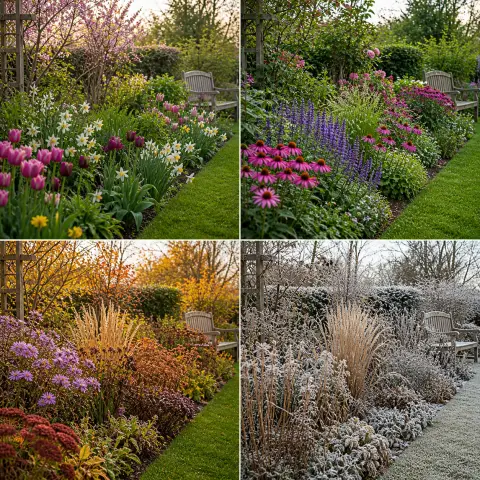
The single most important principle in how to plan a flower garden for year-round color is thinking in bloom times rather than simply in colors. Anyone can choose plants that look beautiful in a catalogue. The skill in flower garden planning is choosing plants whose bloom periods overlap and succeed each other across all four seasons — creating continuous color rather than one spectacular peak followed by months of visual silence.
Four-season bloom calendar:
| Season | Primary Bloomers | Supporting Plants |
|---|---|---|
| Early Spring | Snowdrops, crocus, winter aconite | Hellebores, pulmonaria |
| Mid Spring | Tulips, daffodils, hyacinths | Aubrieta, forget-me-nots |
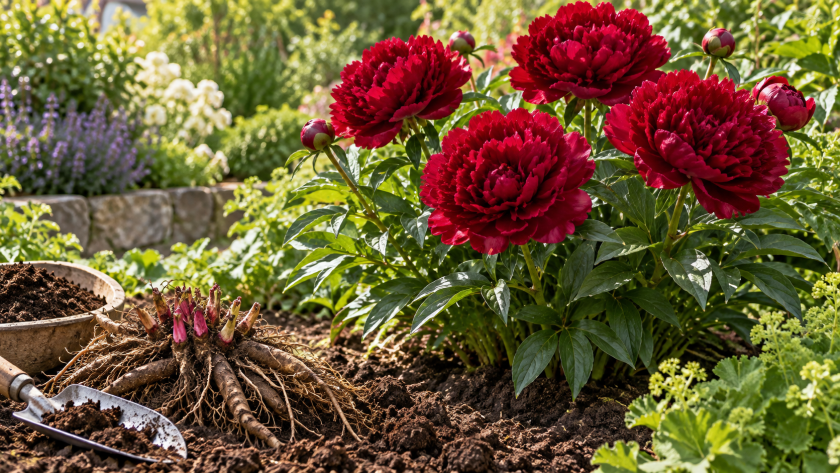
| Late Spring | Alliums, aquilegia, geraniums | Peonies, iris |
| Early Summer | Roses, delphiniums, salvias | Geraniums, nepeta |
| Midsummer | Lavender, echinacea, rudbeckia | Coreopsis, agapanthus |
| Late Summer | Helenium, crocosmia, dahlias | Verbena, zinnias |
| Early Autumn | Asters, sedums, anemones | Chrysanthemums, schizostylis |
| Mid Autumn | Late chrysanthemums, kaffir lily | Ornamental grasses |
| Winter | Witch hazel, hellebores, cyclamen | Mahonia, viburnum |
This bloom calendar is the foundation of your garden design plans — identify the gaps in your current planting, then fill them with species from the underrepresented seasons.
Three Season Perennial Garden Plans — The Most Practical Approach
Three season perennial garden plans — covering spring through autumn — are the most achievable starting point for most gardeners, with winter interest added progressively as confidence and budget allow.
A three season perennial garden plan works by layering plants with successive bloom periods:
Layer 1 — Spring foundation (March–May): Hardy bulbs underplanted beneath perennials. Tulips, daffodils, alliums, and muscari emerge and bloom before perennials fill the space — then disappear naturally as summer growth overtakes them.
Layer 2 — Summer structure (June–August): Perennial backbone plants that provide the main color display. Roses, salvias, geraniums, echinacea, rudbeckia, and lavender form the visual heart of the summer colorful flower garden.
Layer 3 — Autumn transition (September–November): Late-season perennials and ornamental grasses that extend the color display beyond summer. Asters, heleniums, sedums, and ornamental grasses come into their own as earlier plants fade — ensuring the garden retains visual interest right through the first frosts.
Step 3 — Flower Garden Design: Combining Annuals and Perennials
Colored Perennials — The Backbone of Every Year Round Garden
Colored perennials are the foundation of any colorful garden for all seasons — they return reliably each year, establish stronger root systems over time, and provide the consistent seasonal rhythm that gives a flower garden landscape its character.
The best colored perennials for year-round garden impact work across multiple seasons — either through extended bloom periods, attractive seed heads that persist into winter, or foliage that remains interesting after flowers have faded.
Best colored perennials for all-season impact:
Spring-Blooming Colored Perennials
- Hellebores (Helleborus species) — bloom from January through April in shades of deep purple, pink, cream, and almost-black. One of the most valuable colored perennials for winter-to-spring transition
- Pulmonaria — blue, pink, and white flowers in early spring with attractively spotted foliage that persists through summer
- Primulas — cheerful early color in almost every shade, naturalises beautifully in moist woodland conditions
Summer-Blooming Colored Perennials
- Echinacea (Coneflower) — one of the best long-blooming summer perennials. Flowers from July through September, followed by attractive seed heads that persist through winter and feed birds. Our pollinator-friendly plants guide identifies echinacea as one of the most valuable pollinator plants available
- Salvia — extraordinarily long blooming season from June through October in blue, purple, pink, and red. Tolerates drought once established. An excellent low-maintenance colored perennial for sunny borders
- Geranium (Hardy Geranium/Cranesbill) — one of the most versatile and reliable colored perennials in any climate. Blooms spring through summer, produces attractive autumn foliage, and fills garden gaps with minimal care
- Rudbeckia (Black-Eyed Susan) — golden yellow flowers from July through October, followed by dark seed heads that extend interest into winter and attract finches
Autumn-Blooming Colored Perennials
- Asters — the quintessential autumn colored perennial. Masses of daisy-like flowers in purple, pink, blue, and white from August through October, just as most summer perennials are fading
- Sedum (Hylotelephium) — flat-topped flower heads in pink and burgundy from late summer through autumn, followed by attractive dried seed heads that persist through winter
- Helenium (Sneezeweed) — vivid orange, red, and mahogany daisy flowers from August through October. One of the most underused autumn perennials in garden design
Annual Flower Garden Ideas — The Seasonal Color Punch
Annual flower garden ideas provide the flexibility and instant impact that colored perennials alone cannot deliver. While perennials establish the seasonal rhythm, annual flower garden ideas fill gaps, add unexpected color, and allow you to experiment with different flower garden designs each year without permanent commitment.
The best approach to annual flower garden ideas is to use them strategically — not as the primary planting, but as the fill-in that keeps the colorful flower garden looking full and vibrant between perennial bloom periods.
Best annuals by season:
Spring annuals:
- Pansies and violas — cold-tolerant, available in extraordinary color range, perfect for front flower garden ideas where seasonal impact matters most
- Sweet peas — fragrant climbers that add vertical interest and cut flower potential
- Foxgloves (biennial) — dramatic spires in pink, purple, and white
Summer annuals:
- Zinnias — one of the most vibrant and heat-tolerant summer annuals. Excellent cutting flower and butterfly magnet
- Marigolds — orange and yellow tones, natural pest deterrent, extremely low maintenance
- Cosmos — feathery foliage and daisy flowers in pink, white, and burgundy from June through frost
- Nasturtiums — trailing or climbing, edible flowers, thrives in poor soil. Our guide on edible flowers to grow in your outdoor garden covers nasturtiums and other edible annuals in detail
Autumn annuals:
- Ornamental kale and cabbage — architectural foliage plants in purple, cream, and green for late-season colorful flower garden interest
- Chrysanthemums — the quintessential autumn annual, available in every color except blue
Step 4 — How to Design a Flower Garden: Layout and Structure
Simple Flower Garden Design — The Core Principles
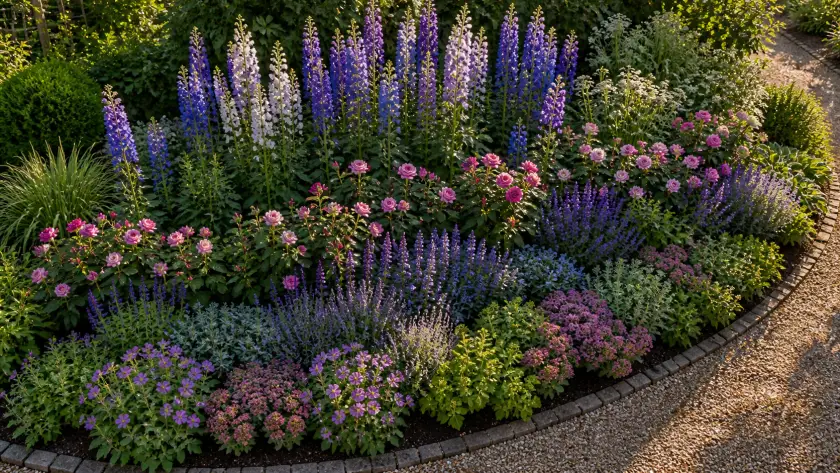
Simple flower garden design does not require professional training or expensive software. It requires understanding three fundamental principles that professional garden designers apply instinctively:
Principle 1 — Plant in Layers by Height
Every effective flower garden layout places the tallest plants at the back (or centre for island beds), medium-height plants in the middle zone, and low-growing plants at the front edge. This creates visual depth and ensures no plant is hidden behind taller neighbours.
Height layering for flower garden layouts:
- Back layer (over 90cm): Delphiniums, hollyhocks, tall grasses, thalictrum, dahlias
- Middle layer (45–90cm): Rudbeckia, echinacea, salvia, roses, helenium
- Front layer (under 45cm): Hardy geraniums, asters, sedum, low annuals, edging plants
Principle 2 — Group Plants in Odd Numbers
Flower garden designs look most natural when plants are grouped in threes, fives, and sevens rather than in pairs or single specimens. Odd-numbered groupings create a flowing, organic feel that mirrors how plants colonise naturally in the wild.
Principle 3 — Repeat Key Plants Through the Border
Repetition creates cohesion in flower garden landscape design. Repeating the same plant — or plants with similar colors or textures — at intervals through the border creates rhythm and unity. Without repetition, even a beautiful collection of plants can look chaotic and disconnected.
Flower Garden Layout Ideas — By Garden Type
Front Flower Garden Ideas — Impact from the Street
Front flower garden ideas require a different approach from back garden designs — the planting must look attractive from a distance, maintain year-round structure, and require manageable maintenance given its visibility.
Best front flower garden ideas:
- Low clipped hedges (box, lavender, or rosemary) as structural edging with seasonal color plants within
- Repetition of a single key plant — roses, lavender, or ornamental grasses — for cohesive visual impact from the street
- Spring bulbs underplanted beneath standard roses or small trees for layered seasonal interest
- Evergreen structure plants supplemented with seasonal annual planting at key moments
DIY Flower Garden — Raised Bed Design
A DIY flower garden using raised beds is one of the most practical approaches for beginners — raised beds provide excellent drainage, warm soil faster in spring, suppress weeds more effectively, and make gardening accessible for those with limited mobility.
DIY flower garden raised bed construction:
- Minimum 30cm depth for perennials — 45cm or deeper for shrubs and roses
- Fill with a mix of topsoil (60%), well-rotted compost (30%), and horticultural grit (10%) for excellent drainage
- Position in full sun for maximum plant choice — at least 6 hours direct sun daily
- Install drip irrigation or soaker hose from the start — much easier than retrofitting
Garden Arrangements Ideas — Container Color Through the Seasons
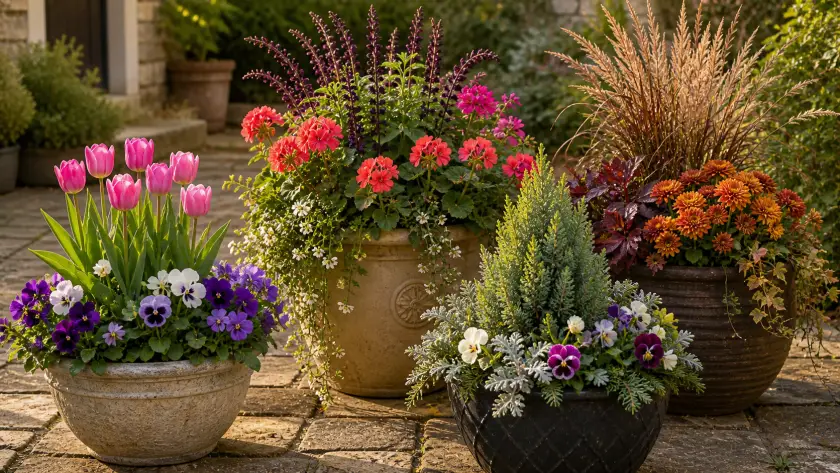
Garden arrangements ideas using containers allow year-round color in any space — from a small urban balcony to a large country garden where pots provide seasonal accents beside permanent planting.
Seasonal container garden arrangements ideas:
Spring container: Dwarf tulips + violas + trailing ivy — classic combination that performs from February through May
Summer container: Agapanthus or osteospermum (thriller) + trailing pelargoniums (spiller) + upright salvias (filler) — the thriller/filler/spiller combination produces the most balanced summer container display
Autumn container: Ornamental grass (upright structure) + asters (color) + trailing heuchera (foliage) — extends seasonal interest through October and November
Winter container: Dwarf conifer or skimmia (evergreen structure) + winter pansies (color) + trailing ivy (ground cover) — maintains interest through the coldest months
For detailed advice on choosing plants for outdoor containers, our guide on the best plants for container gardening on patios covers container planting across all seasons in detail.
Step 5 — Flower Garden Landscape: Creating Year-Round Structure
Garden Landscape Design — The Role of Structure Plants
Garden landscape design that sustains year-round interest relies on structural plants — the permanent woody framework of trees, shrubs, and evergreens that holds the flower garden landscape together when seasonal flowers are not at their peak.
Without structural plants, a colorful flower garden looks stunning in summer and completely bare in winter. With the right structural backbone, even a winter garden retains visual interest — through form, texture, bark, berries, and evergreen foliage.
Best structural plants for year-round garden landscape design:
Trees with Four-Season Interest
- Paperbark maple (Acer griseum) — spring flowers, summer shade, fiery autumn color, and extraordinary peeling cinnamon bark visible all winter
- Serviceberry (Amelanchier) — white spring blossom, red summer berries for birds, fiery autumn foliage, elegant bare winter silhouette
- Sargent’s cherry (Prunus sargentii) — breathtaking spring blossom, rich autumn color, attractive bark in winter
Shrubs for Year-Round Garden Structure
- Witch hazel (Hamamelis) — blooms January–February with spidery yellow, orange, or red flowers on bare branches — one of the most valuable winter-blooming shrubs available
- Mahonia — evergreen with architectural spiky foliage, fragrant yellow winter flowers, and blue berries in spring
- Viburnum — many species offer spring blossom, summer berries, and autumn foliage in a single shrub — excellent garden landscape design anchors
- Dogwood (Cornus) — grown for vivid red or orange bare stems in winter that glow against frost, snow, or grey skies
Evergreen Structure for Winter Garden Landscape
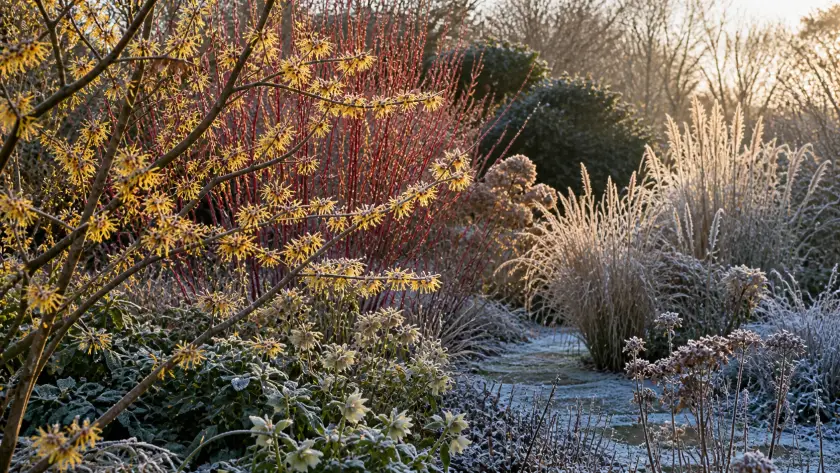
- Golden conifers add warm yellow-gold tones to the winter garden — particularly effective in low winter light
- Clipped box or yew — formal structure that reads clearly even in bare winter conditions, providing year-round flower garden landscape framework
- Hellebores — evergreen perennials that bridge the gap between the structural shrubs and the seasonal flowering plants
Flower Garden Landscaping With Ornamental Grasses
Flower garden landscaping that incorporates ornamental grasses achieves something no other plant category can match — seasonal interest from summer through winter in a single planting.
Ornamental grasses flower in late summer, develop attractive seed heads in autumn, and persist through winter as elegant, frost-catching structures that catch early morning light. They also provide movement and sound — rustling gently in the wind in ways that rigid, woody plants cannot.
Best ornamental grasses for flower garden landscaping:
- Miscanthus sinensis — large, impressive clumps with silky plumes from August through winter
- Pennisetum — fluffy, fox-tail plumes in late summer and autumn
- Stipa gigantea — golden oat grass with spectacular translucent seed heads from June through winter
- Carex — evergreen sedges in bronze, gold, and green — provide year-round low-maintenance structure in shaded positions
Step 6 — Flower Garden Planning: Season by Season Action Plan
How to Plan a Flower Garden — The Complete Seasonal Schedule
How to plan a flower garden for year-round success requires a seasonal rhythm of planting, maintenance, and forward planning that builds on itself over time.
Spring Flower Garden Planning and Action
March–May priorities:
Garden preparation:
- Clear winter debris from beds — but leave some seed heads standing until mid-March as bird food and overwintering insect habitat
- Cut back ornamental grasses and herbaceous perennials to ground level as new growth appears
- Top dress all beds with 5–7cm of well-rotted garden compost — the single most valuable spring garden task
- Mulch immediately after composting — retains moisture, suppresses weeds, and gives beds a clean, finished appearance
Planting:
- Plant bare-root roses, trees, and shrubs immediately if not done in autumn — bare-root planting finishes by end of March
- Divide established perennials that have become congested — replant divisions and pot spare plants for sharing or selling
- Sow hardy annual seeds directly into prepared soil — cosmos, nigella, cornflowers, and poppies all direct-sow well from April onward
- Plant summer-flowering bulbs: dahlias (after last frost), gladioli, begonias, cannas
Forward planning:
- Visit nurseries and garden centres to observe what is flowering now — this is the most reliable research method for identifying plants missing from your year round garden
- Order or purchase dahlia tubers and tender perennials for the summer display
- Review your garden design plans from last season — what worked, what gaps appeared, what needs replacing
Summer Flower Garden Planning and Maintenance
June–August priorities:
Maintenance:
- Deadhead regularly — removing spent flowers redirects plant energy into new bud production and extends the flowering period significantly. This is the single most impactful summer maintenance task for a colorful flower garden
- Water deeply and infrequently — encouraging deep root development rather than shallow surface roots. Always water in the morning. Our guide on the worst times to water your plants explains exactly why timing matters as much as quantity
- Stake tall perennials (delphiniums, dahlias, tall salvias) before they collapse in summer storms
- Feed container plants weekly with a liquid balanced fertilizer — pots exhaust their nutrients quickly in the growing season
Planting:
- Fill gaps left by faded spring plants with annual flower garden ideas — instant color from marigolds, zinnias, and cosmos transplants fills bare patches within days
- Plant out tender perennials and annuals once all frost risk has passed — usually mid-May to early June depending on region
Forward planning:
- Order autumn-flowering bulbs (nerines, colchicum, schizostylis) for September planting
- Research and order spring bulbs for autumn planting — the best varieties sell out early
Autumn Flower Garden Planning and Planting
September–November priorities:
Planting:
- Plant spring bulbs — this is the most important single autumn planting task for flower garden planning. Tulips, daffodils, alliums, muscari, and crocus planted in September through November produce the spring display that makes every other seasonal transition feel rewarding
- Plant evergreen and deciduous shrubs and trees — autumn planting allows root establishment before spring growth demand
- Pot up tender plants (dahlias, cannas, begonias) before first frost and store in a frost-free location
Maintenance:
- Leave seed heads of rudbeckia, echinacea, teasel, and ornamental grasses standing through winter — they provide bird food, overwintering insect habitat, and frost-catching structures that contribute to year round garden interest
- Apply final compost mulch of the season to protect perennial root systems from winter cold
- Clean and store tools, empty and clean pots, and organise the garden for winter
Forward planning:
- Photograph the garden in all four seasons throughout the year — these photos are invaluable for garden design plans and identifying gaps in seasonal coverage
- Order seed catalogues for the following year — winter is the planning season
Winter Flower Garden Planning
December–February priorities:
Structural work:
- Prune deciduous trees and shrubs while bare — the skeleton of the plant is clearly visible and pruning cuts heal before spring growth begins
- Plan structural changes — new paths, raised beds, boundary planting, or significant garden landscape design alterations are easier to visualise in winter when seasonal planting is not masking the underlying structure
Planning and design:
- Draw or refine your garden design plans using winter photographs to identify bare patches
- Order seeds for the following spring — sow slow-growing perennials and half-hardy annuals from January indoors under grow lights
- Research new plant varieties for the following season
Flower Garden Suggestions by Garden Type
Front Flower Garden Ideas — High-Impact Designs
Front flower garden ideas that create maximum visual impact with manageable maintenance:
Cottage-style front garden: Mixed planting of roses, lavender, alliums, hardy geraniums, and sweet peas in soft pink, purple, and white tones. Self-seeding annuals like foxgloves and aquilegias fill gaps naturally. Highly romantic and genuinely low maintenance once established.
Contemporary front garden: Structured planting of ornamental grasses, architectural perennials (salvias, echinaceas), and clipped evergreen shrubs. Clean lines, limited color palette (typically one or two colors maximum), and high visual impact from a distance.
Wildlife front garden: Native plant planting using native plants that thrive in your region — wildflowers, native grasses, berry-producing shrubs. Our guide on designing a wildlife-friendly garden covers this approach in comprehensive detail.
Garden Suggestions for Shaded Areas
Flower garden suggestions for gardens with significant shade — a common challenge that limits plant choice considerably:
- Hellebores — one of the best shade perennials for winter and spring color
- Hostas — dramatic foliage plants for summer shade interest
- Astilbe — feathery plumes in pink, white, and red for moist shaded positions
- Foxgloves — tall biennial spires that naturalise beautifully in dappled woodland shade
- Ferns — structural foliage plants for deep shade where flowering plants struggle
Our guide on shade-loving plants for outdoor spaces covers shaded flower garden landscape design in detail — an essential read for gardeners with north-facing or heavily shaded plots.
Garden Suggestions for Dry, Low-Maintenance Planting
For gardeners wanting a colorful flower garden with minimal watering requirements, drought-resistant planting offers a practical and increasingly relevant solution:
- Lavender — one of the most reliable, fragrant, and bee-attractive drought-tolerant perennials
- Salvias — Mediterranean herbs with extraordinary drought tolerance and long summer bloom periods
- Echinacea — once established, survives extended drought while providing summer-long color
- Sedums — succulent perennials that require virtually no supplemental watering once established
- Ornamental grasses — most species are extremely drought tolerant once their root systems develop
Our guide on top drought-resistant plants gives a comprehensive list of plants suitable for low-water colorful flower garden design across different climate zones.
Garden Design Plans: Color Themes and Combinations
How to Choose a Color Theme for Your Flower Garden Design
Flower garden designs that use a deliberate color theme create more impact than random plant collection. The most effective garden design plans work with one of the following approaches:
Hot Color Schemes — Reds, Oranges, Yellows
Hot-colored colorful flower gardens feel energetic and vibrant — best suited to sunny garden positions where the intensity of warm-colored blooms is complemented by strong natural light.
Hot color palette plants: Crocosmia, helenium, kniphofia, rudbeckia, dahlia (orange and red varieties), hemerocallis (daylily), geum.
For detailed color combination guidance, our guide on color themes for your outdoor garden from cool blues to sunset shades covers hot and cool palette design across all garden types.
Cool Color Schemes — Blues, Purples, Whites
Cool-colored colorful flower gardens feel calming and sophisticated — ideal for garden seating areas where the relaxing quality of blue and purple tones enhances the outdoor living experience.
Cool color palette plants: Lavender, salvias, agapanthus, geranium (blue varieties), alliums, catmint, delphiniums, veronicastrum.
Monochromatic Schemes — One Color Family
Monochromatic flower garden designs using a single color in all its shades — from palest blush to deepest burgundy in a pink scheme, or from cream through gold to deep orange in a warm scheme — create elegant, cohesive displays that look incredibly sophisticated with relatively simple planting.
Pollinator and Wildlife Gardens — The Sustainable Approach to Colorful Gardening
Making Your Colorful Garden Work for Wildlife
The most sustainable approach to creating a colorful garden for all seasons is one that simultaneously supports local wildlife — pollinators, birds, and beneficial insects that reduce pests and improve the health of the entire garden ecosystem.
Garden inspiration from the wildlife gardening approach:
- Choose single-flowered varieties over heavily doubled cultivars — single flowers provide accessible nectar that pollinators can actually reach
- Include plants that bloom in early spring and late autumn — these periods are when pollinators are most food-stressed
- Leave seed heads standing through winter — they feed birds through the coldest months
- Include a water source — even a simple dish of water placed near a colorful flower garden significantly increases wildlife diversity
Our dedicated guide on pollinator-friendly plants for urban outdoor spaces identifies the most valuable plants for supporting bees, butterflies, and other pollinators in a colorful flower garden context.
Gardening Landscape Design — The Bigger Picture
Garden Landscape Design Principles Beyond the Flower Border
Gardening landscape design that creates genuinely beautiful outdoor spaces works beyond the individual plant border to consider the whole garden as a designed environment — including paths, surfaces, structures, water features, and the relationship between planted areas and hard surfaces.
Landscaping ideas for colorful gardens:
- Curved borders rather than straight lines — curved flower garden layouts feel more natural and generous than rigid straight edges
- Path materials that complement planting — gravel, stepping stones, or mown grass paths through wildflower areas all frame planting differently
- Vertical structure — arches, obelisks, trellises, and pergolas allow climbing plants to add height and enclosure that ground-level flower garden landscape cannot achieve
- Water features — even a small reflecting pool or bird bath adds sound, wildlife interest, and a focal point that anchors the surrounding garden landscape design
Frequently Asked Questions
How Do I Create a Colorful Garden for All Seasons?
Creating a colorful garden for all seasons requires four things working together: colored perennials with staggered bloom times, annual flower garden ideas to fill seasonal gaps, structural plants providing winter interest, and a flower garden planning approach that thinks in bloom time sequences rather than simply in color. Start with a three season perennial garden plan covering spring through autumn, then add winter structural interest as your confidence and budget develop.
How to Design a Flower Garden From Scratch?
How to design a flower garden from scratch: start by knowing your hardiness zone and observing your garden’s light levels throughout the day. Draw a simple flower garden layout with dimensions. Choose a simple flower garden design principle — cottage, contemporary, or wildlife-friendly. Select colored perennials for your backbone planting, add annual flower garden ideas for seasonal color, and include at least two or three structural plants for winter interest. Plant in layers by height — tallest at back, shortest at front.
What Are the Best Colored Perennials for a Year Round Garden?
The best colored perennials for a year round garden across all seasons include: hellebores (winter–spring), geraniums (spring–summer), salvias (summer–autumn), echinacea (summer–autumn), asters (autumn), and sedums (late summer–winter seed heads). Combining these six genera alone provides color interest from February through December in most temperate climates.
What Annual Flower Garden Ideas Work Best?
The most versatile annual flower garden ideas for seasonal colorful flower garden impact: pansies and violas for spring and autumn, cosmos and zinnias for summer cutting garden abundance, marigolds for pest-deterring summer color, and ornamental kale for autumn and winter. Rotate annuals through seasonal gaps left by perennials as each bloom period ends.
How to Plan a Flower Garden Layout?
How to plan a flower garden layout effectively: measure your bed and draw it to scale. Mark existing plants and note their bloom times. Identify seasonal gaps — months with no color. Choose plants specifically for the gap periods. Group plants in odd numbers, layer by height (tall at back, short at front), and repeat key plants at intervals through the border for cohesion. Leave space for paths of access for maintenance — even a 30cm access gap behind a border prevents damage to plants during deadheading and dividing.
Can Container Gardening Achieve Year-Round Color?
Yes — garden arrangements ideas using containers can achieve genuine year round garden color in any space. Rotate containers by season: spring bulb containers replaced by summer tender perennial combinations, then autumn chrysanthemum and grass arrangements, then winter evergreen and pansy containers. The key is having containers prepared and ready before the previous seasonal display finishes — so the transition is seamless rather than leaving bare positions.
What Are the Best Garden Suggestions for Low-Maintenance Year-Round Color?
For low-maintenance colorful garden for all seasons, focus on: colored perennials that require dividing only every 3–5 years (echinacea, rudbeckia, asters), structural evergreen shrubs that need pruning only once annually, ornamental grasses that look excellent from summer through winter with minimal intervention, and native plants adapted to your local conditions that need no supplemental watering once established. Our guide on best low-maintenance outdoor plants for busy gardeners gives a comprehensive list of the most reliable low-effort plants for colorful garden design.
Related Guides on Patch Plants
- 🌈 Color Themes for Your Outdoor Garden: Cool Blues to Sunset Shades
- 🦋 How to Design a Wildlife-Friendly Garden (Even in Small Yards)
- 🌸 Pollinator-Friendly Plants for Urban Outdoor Spaces
- 🌿 Native Plants That Thrive in Your Region — Why They Matter
- 🌱 Edible Flowers to Grow in Your Outdoor Garden
- 🪴 Best Plants for Container Gardening on Patios
- 🌵 Top Drought-Resistant Plants for Low-Water Gardens
- 🌿 Shade-Loving Plants for Outdoor Low-Light Garden Spaces
- 💧 Worst Times to Water Your Plants — Avoid These Mistakes
- 🌱 Browse All Outdoor Plant Guides
Final Thoughts
A colorful garden for all seasons is not a single perfect design decision — it is an accumulating series of small, thoughtful choices made over months and years. The spring bulbs planted in October that surprise you in March. The colored perennials that establish quietly for two seasons before suddenly performing magnificently in their third year. The structural shrub added almost as an afterthought that becomes the backbone of the winter garden.
How to plan a flower garden for all seasons is ultimately about developing the habit of looking at your garden not as it is right now but as it will be — in three months, in six months, in three years. Flower garden planning is forward-looking by nature. The best garden design plans are living documents, revised each season as you learn what thrives in your specific conditions and what your garden reveals to you year by year.
Start with a simple flower garden design. Choose five colored perennials that cover spring, summer, and autumn. Add one structural plant for winter interest. Fill gaps with annual flower garden ideas as each season demands. Water thoughtfully, deadhead consistently, divide occasionally. And walk through your garden in every season — not just when it is at its most spectacular, but when it is quiet, when it is transitioning, when it is preparing for something you have not yet seen.
According to the Royal Horticultural Society, gardens designed with year-round seasonal interest provide significantly greater wellbeing benefits than single-season gardens — the continuous engagement with a living, changing outdoor space produces measurably greater connection to nature and satisfaction with the home environment. 🌿


[…] four times a year. For inspiration on achieving genuinely year-round outdoor color, our guide on creating a colorful garden for all seasons gives a complete seasonal planning framework applicable to container […]
[…] more colour planning, read create a colorful garden for all seasons and blooming indoor […]
[…] Colorful garden for all seasons […]
Thanks for sharing. I read many of your blog posts, cool, your blog is very good. https://www.binance.com/register?ref=QCGZMHR6
[…] Create a colorful garden for all seasons […]