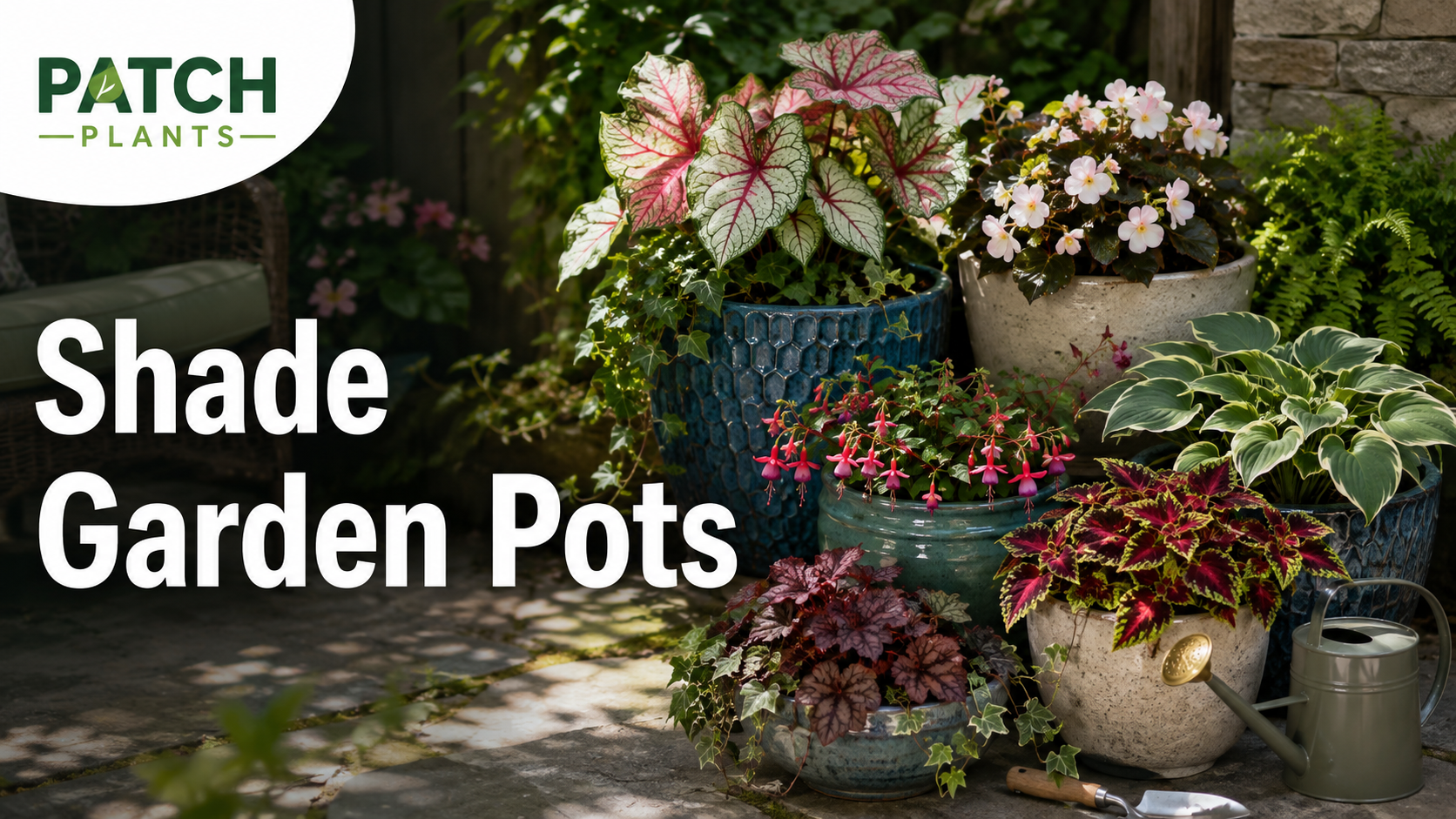
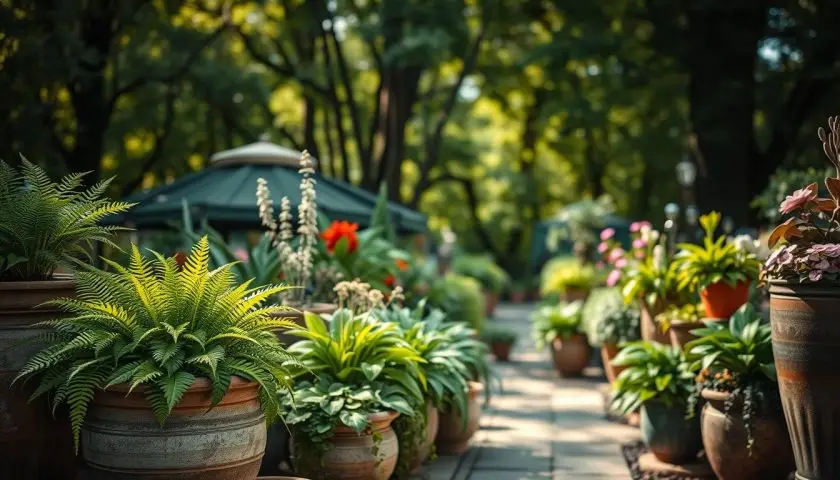
Shade garden pots can turn a dark patio, porch, balcony, doorway, courtyard, or side path into a soft, leafy container display. You do not need full sun to create beautiful outdoor pots. You need plants that enjoy filtered light, dappled shade, morning sun, or cooler low-light corners.
The best shade containers are not just green. They can include flowers, silver leaves, burgundy foliage, trailing vines, tropical shapes, soft ferns, and year-round structure. This guide covers 17 plants that work well in shaded pots, plus the potting mix, watering, drainage, and design tips that help them look full.
Best Picks at a Glance
The best shade garden pots combine plants that like similar light and moisture. Use begonias, New Guinea impatiens, fuchsia, torenia, and browallia for flowers. Use coleus, caladium, heuchera, hosta, polka dot plant, oxalis, hardy cyclamen, and lungwort for colourful foliage. Use Japanese painted fern, asparagus fern, English ivy, and Japanese forest grass for texture, trailing edges, and movement.
Key Takeaways
- Shade garden pots work best when you match plants to the exact shade level.
- Light shade and partial shade support more flowers than deep shade.
- Full shade pots usually look best with foliage, texture, and trailing plants.
- Containers need drainage holes because shade plants can still rot in soggy compost.
- Shade pots still need watering, especially under trees, balconies, walls, and roof edges.
- Use the thriller, filler, and spiller formula for balanced containers.
- Use this guide with container garden plants for shade, plants in pots in shade, and small plants that like shade.
Shade Garden Pots at a Glance
| Plant | Best Feature | Best Shade Type |
|---|---|---|
| Begonia | Long-lasting flowers | Light shade |
| New Guinea Impatiens | Bright blooms | Light to partial shade |
| Coleus | Bold foliage colour | Light to partial shade |
| Caladium | Tropical leaves | Light to partial shade |
| Fuchsia | Hanging flowers | Light shade |
| Torenia | Small shade flowers | Light shade |
| Browallia | Violet-blue flowers | Light shade |
| Heuchera | Colourful leaves | Partial shade |
| Hosta | Bold leaves | Partial to full shade |
| Japanese Painted Fern | Silver texture | Dappled to full shade |
| Asparagus Fern | Soft arching foliage | Light shade |
| English Ivy | Trailing evergreen edges | Partial to full shade |
| Japanese Forest Grass | Movement and softness | Partial shade |
| Polka Dot Plant | Pink, white, or red patterned leaves | Light shade |
| Oxalis | Clover-like leaves | Light to partial shade |
| Hardy Cyclamen | Cool-season flowers and patterned leaves | Partial shade |
| Lungwort | Speckled leaves and early flowers | Partial shade |
Understand the Shade Before You Plant
Shade is not one simple condition. A bright porch with no midday sun is very different from a deep corner under dense trees. Before buying plants, watch the space for a full day and notice when light reaches the pots.
Full shade
Full shade gets little or no direct sun. It is best for foliage-first containers with hostas, ferns, ivy, lungwort, and other shade-tolerant leaves. Heavy flowering is harder in full shade.
Partial shade
Partial shade usually means a few hours of direct sun, often morning sun, with shade for the rest of the day. This is one of the best conditions for mixed shade containers.
Dappled shade
Dappled shade comes through tree branches or open canopies. It suits woodland-style pots with ferns, hostas, heucheras, cyclamen, and Japanese forest grass.
Dry shade
Dry shade is tricky because plants get both low light and limited moisture. It often happens near walls, under roof edges, under balconies, or beneath trees. Use larger pots, water deeply, and mulch the surface.
For more shade planning, read shade-loving plants for outdoor spaces, plants in pots in shade, and container garden plants for shade.
How to Plan Shade Garden Pots for Your Space
Good shade containers start with the place, not the plant label. Check light, water access, wind, foot traffic, and pot size before deciding what to grow.
Step 1: Measure the available light
Spend one day checking the area in the morning, midday, and late afternoon. A pot that gets two hours of gentle morning sun can grow more flowers than a pot in deep, cold shade.
Step 2: Match plants to moisture
Do not mix thirsty ferns with plants that prefer to dry slightly. A mixed pot works best when every plant has similar water needs.
Step 3: Check access
Shade pots still need care. Place them where you can water, trim, deadhead, and check pests easily.
Step 4: Leave room for mature growth
A small nursery plant can double or triple in size during the season. Avoid overstuffing long-term pots with too many plants.
Planting Shade Garden Pots Step by Step
Planting shade containers is simple, but the details matter. Drainage, compost quality, planting depth, and watering all affect how well the display settles.
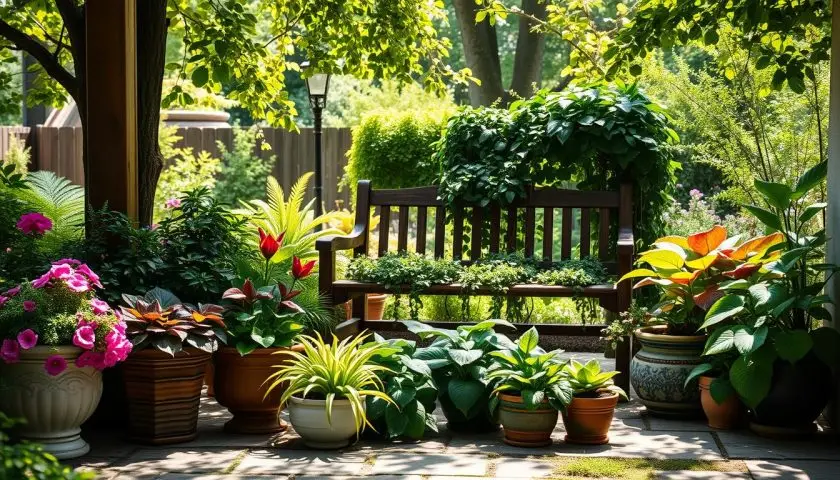
Step 1: Choose a pot with drainage holes
Drainage holes are essential. A decorative pot without drainage can trap water around the roots and cause rot, even in shade.
Step 2: Use fresh potting mix
Use fresh container compost or a high-quality potting mix. Old mix can become compacted, nutrient-poor, or pest-filled.
Step 3: Arrange before planting
Place taller plants at the back or centre, mounded plants around them, and trailing plants near the edge. Step back and check the shape before filling gaps.
Step 4: Plant at the right depth
Keep each plant at the same depth it was growing in the nursery pot. Do not bury crowns, stems, or rhizomes too deeply.
Step 5: Water thoroughly
Water until moisture reaches the full root zone and drains from the bottom. This settles the mix and removes dry pockets.
Step 6: Acclimate gently
Newly planted pots can still stress in heat or wind. Keep them in bright shade while roots settle, then move them to the final spot if needed.
17 Plants for Beautiful Shade Garden Pots
These plants give you colour, foliage, texture, trailing edges, and seasonal interest. Use them alone in statement pots or combine them in mixed containers.
1. Begonia
Begonias are reliable flowers for shaded pots. They work well in porch planters, window boxes, hanging baskets, and low bowls where you want long-lasting colour.
- Best for: Bright flowers in light shade.
- Care: Keep evenly moist but not soggy.
- Design tip: Pair with coleus or ivy for contrast.
2. New Guinea Impatiens
New Guinea impatiens bring larger flowers and bold leaves to shaded containers. They often handle brighter shade better than traditional bedding impatiens.
- Best for: Colourful patio pots.
- Care: Water before plants wilt hard.
- Design tip: Use one strong flower colour for a clean look.
3. Coleus
Coleus gives shade pots dramatic foliage in burgundy, lime, pink, copper, red, and patterned combinations. It is useful when flowers are limited.
- Best for: Bold foliage colour.
- Care: Pinch tips to keep plants bushy.
- Design tip: Use dark coleus with chartreuse spillers.
4. Caladium
Caladium has large heart-shaped leaves in white, green, pink, and red patterns. It gives a tropical feel to shady garden pots.
- Best for: Tropical foliage displays.
- Care: Keep warm and evenly moist.
- Design tip: Pair with ferns or begonias for soft contrast.
5. Fuchsia
Fuchsia is excellent for shaded hanging baskets and elevated pots. Its pendant flowers look especially good where they can be seen from below.
- Best for: Hanging baskets and tall containers.
- Care: Keep cool, watered, and sheltered from hot afternoon sun.
- Design tip: Let it spill over the edge with ivy or lamium.
6. Torenia
Torenia, also called wishbone flower, is a compact flowering plant that handles light shade well. It works in small pots and window boxes.
- Best for: Small shade containers.
- Care: Keep soil evenly moist during flowering.
- Design tip: Use with low foliage plants at the pot edge.
7. Browallia
Browallia gives violet-blue or white flowers and compact growth. It is a useful filler where you want soft colour in light shade.
- Best for: Front-of-container colour.
- Care: Avoid letting it dry hard.
- Design tip: Combine with silver foliage or deep purple leaves.
8. Heuchera
Heuchera, or coral bells, is one of the best foliage plants for shade containers. Leaves can be lime, amber, burgundy, silver, purple, or caramel.
- Best for: Year-round or long-season foliage colour.
- Care: Avoid waterlogged winter compost.
- Design tip: Use one heuchera as the colour anchor in a mixed pot.
9. Hosta
Hostas give bold leaves and a classic shade-garden look. Compact varieties are especially good for containers.
- Best for: Large leaves and calm green structure.
- Care: Keep evenly moist and protect from slugs.
- Design tip: Pair blue hostas with silver ferns or dark heuchera.
10. Japanese Painted Fern
Japanese painted fern adds silver, green, and burgundy tones to shade pots. It softens hard patio edges and works well with hostas.
- Best for: Fine texture and woodland style.
- Care: Keep moist but not waterlogged.
- Design tip: Place near dark containers so the silver leaves stand out.
11. Asparagus Fern
Asparagus fern is grown for soft, airy foliage. It can brighten a shaded pot without heavy flowers.
- Best for: Soft arching texture.
- Care: Protect from harsh sun and cold exposure.
- Design tip: Use as a light-textured filler around bolder leaves.
12. English Ivy
English ivy is a strong trailing plant for shaded pots. It softens edges, hides pot rims, and adds evergreen structure.
- Best for: Trailing evergreen foliage.
- Care: Trim regularly so it does not overwhelm the pot.
- Design tip: Use variegated ivy to brighten dark containers.
13. Japanese Forest Grass
Japanese forest grass, or Hakonechloa, adds graceful movement to shade containers. Its arching leaves look beautiful in wider pots.
- Best for: Movement and elegant texture.
- Care: Keep evenly moist in containers.
- Design tip: Pair golden forms with burgundy heuchera.
14. Polka Dot Plant
Polka dot plant brings pink, white, red, or spotted foliage to small shade pots. It is best as a seasonal filler in sheltered containers.
- Best for: Small colour accents.
- Care: Pinch leggy stems to keep it compact.
- Design tip: Use with simple green plants so the pattern does not feel busy.
15. Oxalis
Oxalis has clover-like leaves and delicate flowers. Purple-leaved forms give strong contrast in shaded pots.
- Best for: Compact foliage and delicate texture.
- Care: Watch dormancy and avoid overwatering resting plants.
- Design tip: Pair purple oxalis with pale begonias or silver fern.
16. Hardy Cyclamen
Hardy cyclamen is useful for cool-season shade pots. It offers patterned leaves and delicate flowers when many summer plants have faded.
- Best for: Autumn, winter, or early spring interest.
- Care: Plant tubers at the right depth and avoid soggy conditions.
- Design tip: Use with ivy and small ferns for a woodland pot.
17. Lungwort
Lungwort, or Pulmonaria, has speckled leaves and early flowers. It is useful in shaded perennial containers with a natural style.
- Best for: Early flowers and patterned leaves.
- Care: Keep moist, cool, and well-drained.
- Design tip: Combine with hosta and fern for a layered woodland pot.
Best Plants by Shade Garden Pot Style
| Pot Style | Best Plants | Why It Works |
|---|---|---|
| Flowering shade pot | Begonia, impatiens, fuchsia, torenia, browallia | Gives colour in light shade |
| Foliage-first pot | Hosta, heuchera, caladium, coleus, lungwort | Looks good even when flowers are limited |
| Woodland pot | Fern, cyclamen, lungwort, hosta, ivy | Natural look for dappled shade |
| Tropical shade pot | Caladium, coleus, begonia, asparagus fern | Big leaves and warm colour |
| Trailing pot | English ivy, fuchsia, oxalis, asparagus fern | Softens pot edges and hanging baskets |
| Cool-season pot | Hardy cyclamen, ivy, heuchera, fern | Better when summer annuals fade |
Choosing the Best Pots for Shade Gardens
The pot matters as much as the plant. Shade containers need enough root space, drainage, and stability. Larger containers are usually easier to manage because they hold moisture more evenly.
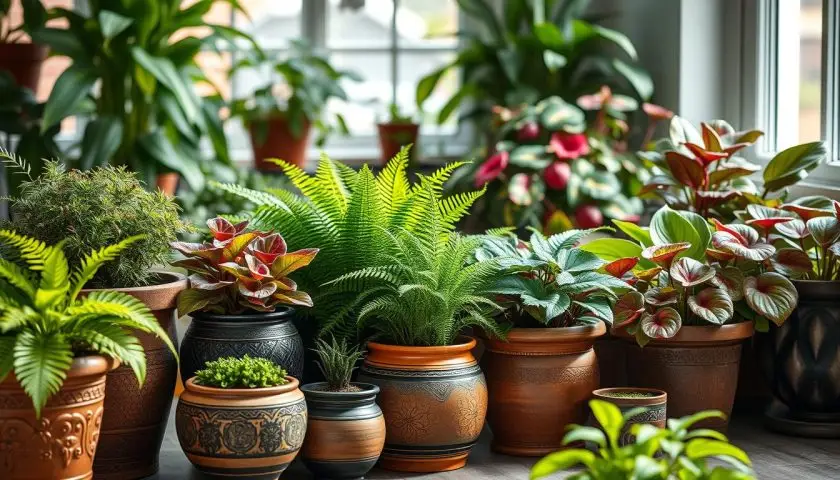
Terracotta pots
Terracotta looks natural and suits cottage-style shade pots, but it dries faster and can crack in freezing weather if not frost-resistant.
Glazed ceramic pots
Glazed pots hold moisture longer and add colour. They can be heavy, so place them before filling with compost.
Resin and composite pots
Resin pots are lighter and often more affordable. They are useful for balconies and rented spaces where weight matters.
Concrete and stone pots
Concrete and stone containers look high-end and stay stable, but they are heavy and may be difficult to move once planted.
Metal containers
Metal containers can look stylish, but they may heat or cool quickly. Use them with care and make sure they have drainage.
Pot size guide
| Plant Type | Best Pot Size | Care Note |
|---|---|---|
| Small annuals | Medium pots or window boxes | Water often in warm weather |
| Hostas and heucheras | Medium to large pots | Give room for roots and leaf spread |
| Ferns | Medium pots with moisture-retentive mix | Avoid drying out hard |
| Japanese forest grass | Wide pots | Let the arching habit show |
| Mixed containers | Large pots | More stable and easier to water evenly |
For more pot ideas, read container gardening on patios, self-watering pots guide, and how to repot a plant.
Best Potting Mix for Shade Garden Pots
A good shade garden potting mix should hold moisture without becoming heavy or waterlogged. Most shade plants prefer steady moisture, but roots still need oxygen.
Simple shade potting mix
- 2 parts fresh container potting mix.
- 1 part compost or well-rotted organic matter.
- 1 part fine bark, perlite, pumice, or grit if the mix feels dense.
- Slow-release fertilizer if you are planting a seasonal flowering display.
For foliage containers
Hostas, heucheras, ferns, lungwort, and ivy usually prefer a mix that stays lightly moist but drains well. Avoid compost that dries into a hard block.
For flowering containers
Begonias, impatiens, fuchsia, torenia, and browallia often need more regular feeding and watering during active flowering.
For long-term containers
Refresh the top layer of compost each year. Long-term pots may eventually need dividing, repotting, or a full compost refresh.
For deeper soil support, read best soil mix guide, repotting mistakes to avoid, and fertilizing indoor vs outdoor plants.
Designing Beautiful Shade Garden Containers
Shade containers look best when you design with texture and contrast. Because flowering can be lighter in shade, foliage becomes more important.
Use the thriller, filler, and spiller formula
- Thriller: Tall or bold plant, such as caladium, Japanese forest grass, fuchsia, or a large fern.
- Filler: Mounded plant, such as begonia, heuchera, coleus, hosta, or impatiens.
- Spiller: Trailing plant, such as English ivy, fuchsia, oxalis, or asparagus fern.
Repeat colour
Repeat one colour across several pots so the display feels planned. For example, pair burgundy coleus with purple oxalis, then repeat that tone in a nearby heuchera.
Mix leaf sizes
Large hosta leaves look better beside fine ferns or trailing ivy. Small leaves and big leaves together make a shaded pot look fuller.
Brighten dark corners
Use silver, lime, white, cream, or pale pink foliage in the darkest spots. Dark burgundy leaves can disappear in deep shade unless paired with lighter plants.
Shade Garden Pot Combination Ideas
Use these combinations as starting points. Adjust them based on your climate, pot size, and shade level.
Colourful porch pot
- Thriller: Coleus.
- Filler: Begonia.
- Filler: New Guinea impatiens.
- Spiller: English ivy.
Soft woodland container
- Thriller: Japanese painted fern.
- Filler: Hosta.
- Filler: Lungwort.
- Spiller: Hardy cyclamen or ivy.
Tropical shade pot
- Thriller: Caladium.
- Filler: Coleus.
- Filler: Begonia.
- Spiller: Asparagus fern.
Hanging shade basket
- Thriller: Upright fuchsia.
- Filler: Torenia.
- Filler: Browallia.
- Spiller: Trailing fuchsia or ivy.
Elegant foliage pot
- Thriller: Japanese forest grass.
- Filler: Heuchera.
- Filler: Hosta.
- Spiller: English ivy.
Caring for Shade Garden Pots
Shade pots are lower heat than sunny pots, but they are not maintenance-free. They still need water, feeding, grooming, and pest checks.
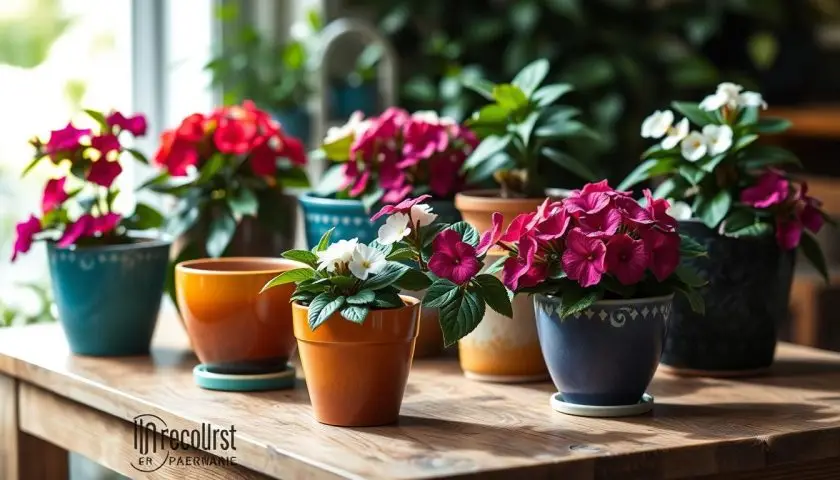
Watering shade pots
Check moisture below the surface. Shade pots may dry slowly after rain but dry surprisingly fast under trees, roof edges, or covered balconies.
Feeding shade pots
Use slow-release fertilizer in seasonal displays or liquid feed during active growth. Do not overfeed slow-growing plants in deep shade.
Deadheading flowers
Remove spent flowers from begonias, impatiens, fuchsia, torenia, and browallia to keep the container tidy and encourage longer flowering.
Trimming foliage
Trim coleus, polka dot plant, ivy, oxalis, and asparagus fern when stems become too long or uneven.
Refreshing tired displays
Seasonal annuals may fade by late summer or autumn. Replace tired plants with hardy cyclamen, ivy, heuchera, or small ferns for cooler months.
Watering Shade Garden Pots Correctly
| Situation | Watering Need | Watch Out For |
|---|---|---|
| Light shade summer pot | Check often in warm weather | Wilted flowers and dry top layer |
| Full shade foliage pot | Water when upper mix starts drying | Soggy compost and root rot |
| Under trees | Check deeply, not just surface | Tree canopy blocking rain |
| Under roof overhang | Water manually | Rain may not reach pot |
| Winter shade pot | Water less often | Cold wet roots |
Simple watering method
- Push a finger into the compost before watering.
- Water only when the mix is starting to dry at root level.
- Water slowly until moisture drains from the bottom.
- Empty saucers if they stay full.
- Mulch large pots to reduce drying.
For watering support, read complete watering tips, worst times to water plants, and signs you are overwatering.
Common Problems With Shade Garden Pots
Most shade container problems come from poor drainage, too little usable light, overwatering, dry root balls, pests, or overcrowded plants.
| Problem | Likely Cause | First Fix |
|---|---|---|
| Yellow leaves | Overwatering, old leaves, low nutrients, poor drainage | Check compost moisture and drainage holes |
| Leggy growth | Too little usable light | Move to brighter filtered light |
| Few flowers | Too much shade or low feeding | Use light shade and feed active bloomers |
| Wilting | Dry root ball, heat, root rot, or wind | Check soil before watering more |
| Slug damage | Cool damp shade | Check under rims and remove pests early |
| Fungal spots | Crowding, wet leaves, poor airflow | Improve spacing and remove affected leaves |
| Root rot | Waterlogged compost | Improve drainage and repot if needed |
Yellow leaves
One yellow old leaf is normal. Several yellow leaves at once usually mean watering, drainage, roots, nutrients, or light need checking.
Leggy plants
Plants stretch when they are searching for more light. Move the pot closer to brighter shade, rotate it regularly, and pinch back plants such as coleus and polka dot plant.
Slugs and snails
Slugs love shaded, damp containers. Check under leaves, under pot rims, and around hostas, begonias, and young foliage.
Fungus gnats
Fungus gnats often appear when compost stays too wet. Let the surface dry slightly where the plant allows and avoid keeping saucers full.
For plant problem support, read yellow leaves on plants, leaf curl, browning and droop, root rot guide, and how to keep pests away from outdoor plants.
Seasonal Care for Shade Garden Pots
| Season | Main Task | Care Tip |
|---|---|---|
| Spring | Plant, refresh, divide, and top-dress | Check old containers before new growth fills them |
| Summer | Water, feed, deadhead, and trim | Do not assume shade pots stay wet |
| Autumn | Replace tired annuals | Add cyclamen, ivy, heuchera, or small ferns |
| Winter | Protect roots and prevent waterlogging | Raise pots on feet where frost and rain are issues |
For seasonal help, read garden calendar, seasonal plant care in autumn, and outdoor plants that survive British winters.
Shade Garden Pots Checklist
| Task | Best Choice | Avoid |
|---|---|---|
| Shade check | Match plants to light, partial, dappled, or full shade | Using flower-heavy plants in deep shade |
| Pot choice | Use drainage holes and enough root space | Closed decorative pots with trapped water |
| Potting mix | Fresh mix that holds moisture but drains | Heavy compacted garden soil |
| Plant mix | Group plants with similar water needs | Mixing thirsty ferns with dry-loving plants |
| Design | Use height, fillers, and trailers | Planting everything at one level |
| Watering | Check below the surface | Watering daily without checking |
| Maintenance | Trim, deadhead, and remove yellow leaves | Letting crowded plants block airflow |
Common Mistakes With Shade Garden Pots
| Mistake | What Happens | Better Choice |
|---|---|---|
| Choosing sun-loving plants | Weak growth and poor flowering | Use true shade-tolerant plants |
| Skipping drainage holes | Root rot and sour compost | Use pots with clear drainage |
| Using tiny pots | Fast drying and crowded roots | Choose larger containers where possible |
| Overwatering in full shade | Yellow leaves and fungus gnats | Check the compost before watering |
| Ignoring dry shade | Wilting even without sun | Water deeply and mulch the surface |
| Expecting heavy blooms in deep shade | Disappointing flower displays | Use foliage, contrast, and texture |
| Forgetting pests | Slugs, aphids, and rot spread | Inspect leaves and pot rims often |
Helpful PATCH Guides for Shade Garden Pots
Use these related PATCH guides to plan shade containers, choose plants, improve watering, build better soil, and fix plant problems.
Shade and Container Guides
- Container garden plants for shade
- Plants in pots in shade
- Small plants that like shade
- Shade-loving plants for outdoor spaces
- Container gardening on patios
- How to keep outdoor plants alive
- Outdoor Plants hub
Outdoor Plant Planning Guides
- Garden calendar
- Seasonal plant care in autumn
- Hardy outdoor plants
- Outdoor plants for British winters
- Low-maintenance outdoor plants
- Outdoor plants for coastal and windy spaces
- Outdoor plants for storms and heatwaves
- Color themes for your outdoor garden
- Create a colorful garden for all seasons
Watering, Soil and Feeding Guides
- Complete watering guide
- Worst times to water plants
- Signs you are overwatering
- Best soil mix guide
- How to repot a plant
- Repotting mistakes to avoid
- Fertilizing indoor vs outdoor plants
- Self-watering pots guide
Plant Problem Guides
- Plant Care hub
- Yellow leaves on plants
- Why plant leaves turn yellow
- Leaf curl, browning and droop
- Root rot guide
- How to revive a dying plant
- How to clean plant leaves
- Pruning basics
- How to keep pests away from outdoor plants
Edible and Patio Container Guides
- Easy outdoor edible plants
- Patio tomato plants
- How to plant tomatoes in a pot
- Japanese cucumber plant
- Planting potatoes in containers
- Growing potato plants in pots
- Purple Basil plant
- Edible flowers to grow outdoors
Indoor Plant Guides for Container Skills
- Indoor Plants hub
- Tropical house plants
- Small low light indoor plants
- Low light house plants
- House plants that like direct sunlight
- Best indoor plants for beginners
- Best indoor plants for first-time plant parents
- Best indoor plants for tiny apartments
- Trailing plants for shelves
- Style indoor plants by room
Frequently Asked Questions
What are the best shade garden pots plants?
The best plants for shade garden pots include begonias, New Guinea impatiens, coleus, caladium, fuchsia, torenia, browallia, heuchera, hosta, Japanese painted fern, asparagus fern, English ivy, Japanese forest grass, polka dot plant, oxalis, hardy cyclamen, and lungwort.
Can I make beautiful pots in full shade?
Yes, but use foliage, texture, and trailing plants more than flowers. Ferns, hostas, ivy, lungwort, cyclamen, and heuchera are better choices for deeper shade than heavy-flowering annuals.
What flowers grow well in shaded pots?
Begonias, New Guinea impatiens, fuchsia, torenia, and browallia can flower well in light shade or partial shade. Deep shade usually gives fewer blooms.
What is the best potting mix for shade garden pots?
Use fresh container potting mix that holds some moisture but drains well. Avoid heavy garden soil because it can compact in pots and hold too much water.
Do shade garden pots need drainage holes?
Yes. Drainage holes are essential because roots can rot if water sits at the bottom of the pot, even when the container is in shade.
How often should I water shade garden pots?
Check the compost before watering. Shade pots need less water than full-sun pots, but containers under trees, walls, balconies, or roof edges can still dry quickly.
How do I make shaded planters look full?
Use tall plants, mounded fillers, and trailing plants together. Mix bold leaves, fine texture, colourful foliage, and soft spillers for a layered container.
Why are my shade pots leggy?
Leggy growth usually means the pot is too dark or the plants need pinching. Move the container to brighter filtered light and trim long stems.
How do I stop slugs in shade pots?
Check pots in the evening, look under rims and leaves, remove slugs by hand, keep the area tidy, and avoid leaving dead foliage around the pot.
Can shade pots stay outside in winter?
Hardy plants can stay outside if the pot is frost-resistant and drains well. Tender plants such as caladiums, polka dot plants, and many begonias need winter protection in cold climates.
Final Thoughts
Shade garden pots look best when you work with shade instead of fighting it. Use flowers in light shade, foliage in deeper shade, and trailers to soften the edges. Choose a pot with drainage, use fresh compost, water by feel, and trim plants before they become crowded.
RHS explains that container plants need suitable containers, drainage, compost, regular watering, and care that matches the plant and site: RHS guide to growing plants in containers.
For the best results, start with one large container rather than several tiny pots. A bigger pot gives roots more room, holds moisture more evenly, and makes it easier to build a full, balanced display.
Final Recap
Shade garden pots can bring colour, texture, flowers, trailing foliage, and calm greenery to patios, porches, balconies, doorways, courtyards, and shaded garden corners. Strong plant choices include begonia, New Guinea impatiens, coleus, caladium, fuchsia, torenia, browallia, heuchera, hosta, Japanese painted fern, asparagus fern, English ivy, Japanese forest grass, polka dot plant, oxalis, hardy cyclamen, and lungwort. Match plants to full shade, partial shade, dappled shade, or dry shade before planting. Use containers with drainage holes, fresh potting mix, suitable plant spacing, and a mix of tall, mounded, and trailing shapes. Water carefully, feed during active growth, deadhead flowers, trim leggy stems, watch for slugs and root rot, and refresh tired pots as the seasons change.